
Thousands Displaced as 7.8 Magnitude Earthquake Strikes Mindanao; Safe Water and Emergency Support Urgently Needed
Mindanao, Philippines — Communities across Mindanao are struggling to recover after a powerful magnitude 7.8 earthquake struck off the coast of Sarangani Province on the 8th of June, causing widespread destruction, displacing thousands of families, and disrupting access to essential services.
The earthquake, one of the strongest to hit the region in recent years, was felt across several regions in Mindanao. In the hardest-hit areas of Sarangani, South Cotabato, Sultan Kudarat, Davao Occidental, and General Santos City, homes, schools, roads, bridges, and water systems sustained significant damagefamilies seek safety in evacuation centers, open spaces, and temporary shelters according to latest report of the Department of Social Welfare and Development (DSWD) as of June 10.
For many communities, the crisis did not end when the ground stopped shaking from the earthquake.
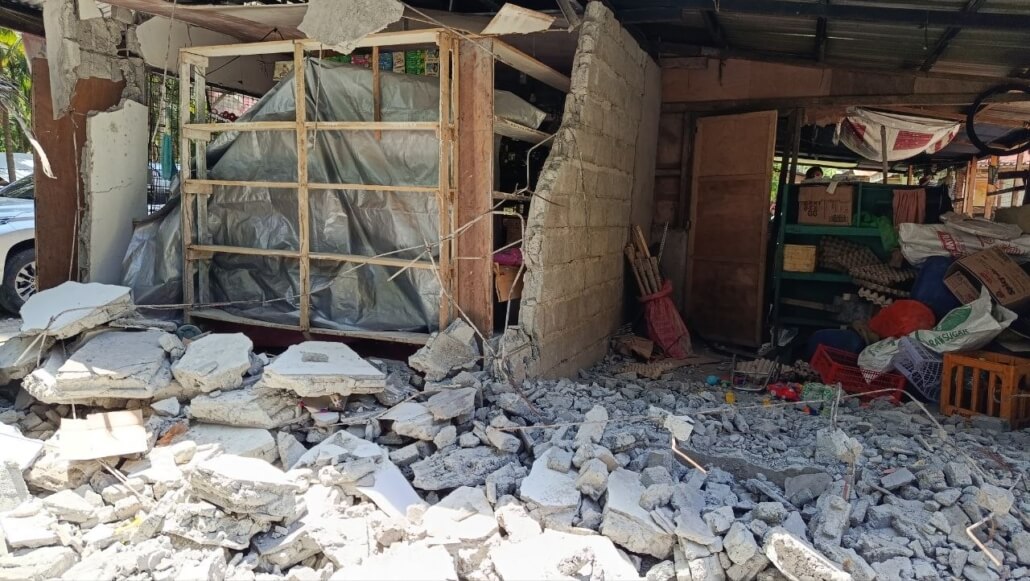
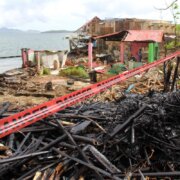
In photo: Debris surrounding a damaged house in Barangay Sapu Masla, Malapatan. Its residents are forced to evacuate since the structure of the home is no longer safe. (Photo by Yasraf Gayao for Action Against Hunger)
The Philippine Institute of Volcanology and Seismology (PHIVOLCS) records that more than 2,000 aftershocks have been recorded since the main earthquake, forcing families to remain outdoors and heightening fears of returning to damaged homes and buildings. In several municipalities, residents continue to sleep in makeshift shelters or along roadsides, uncertain whether their homes are safe. Aftershocks have also compounded the damage to infrastructure, triggering landslides and destroying roads, leaving some areas isolated and inaccessible to first responders.
Water systems damaged, communities face growing risks
Among the most urgent concerns identified by emergency response team of Action Against Hunger and our partners, is access to safe water.
In the municipality of Glan, which is one of the areas most severely affected by the earthquake, critical water infrastructure has been heavily damaged, leaving communities without reliable access to potable water. In Malapatan, families are relying on untreated spring water sources while local authorities struggle to meet growing demand through limited water rationing efforts.
“After the earthquake destroyed our home, we had nowhere to go,” shares Evelyn, 43, living in Barangay Poblacion in Malapatan.
She shares that when the earthquake struck, they could not leave because she was recovering from a post-cesarean operation. Her family decided to build a makeshift shack as their temporary shelter.
“Now we survive in our small shack, I stay afloat by sharing the only clean water source I have with others for a small fee, so I can provide for my children.”
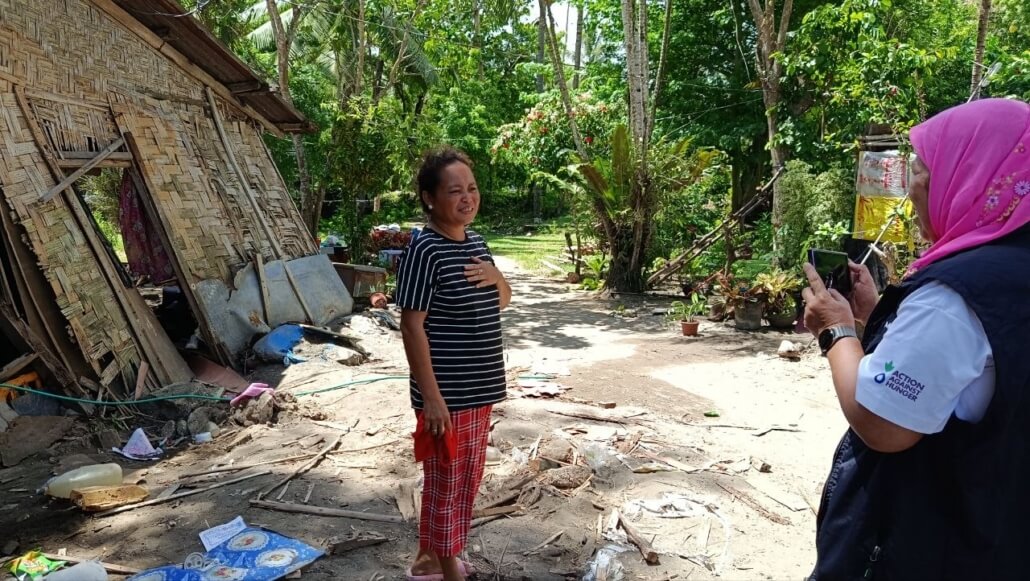
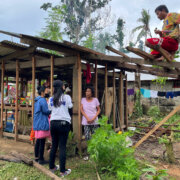
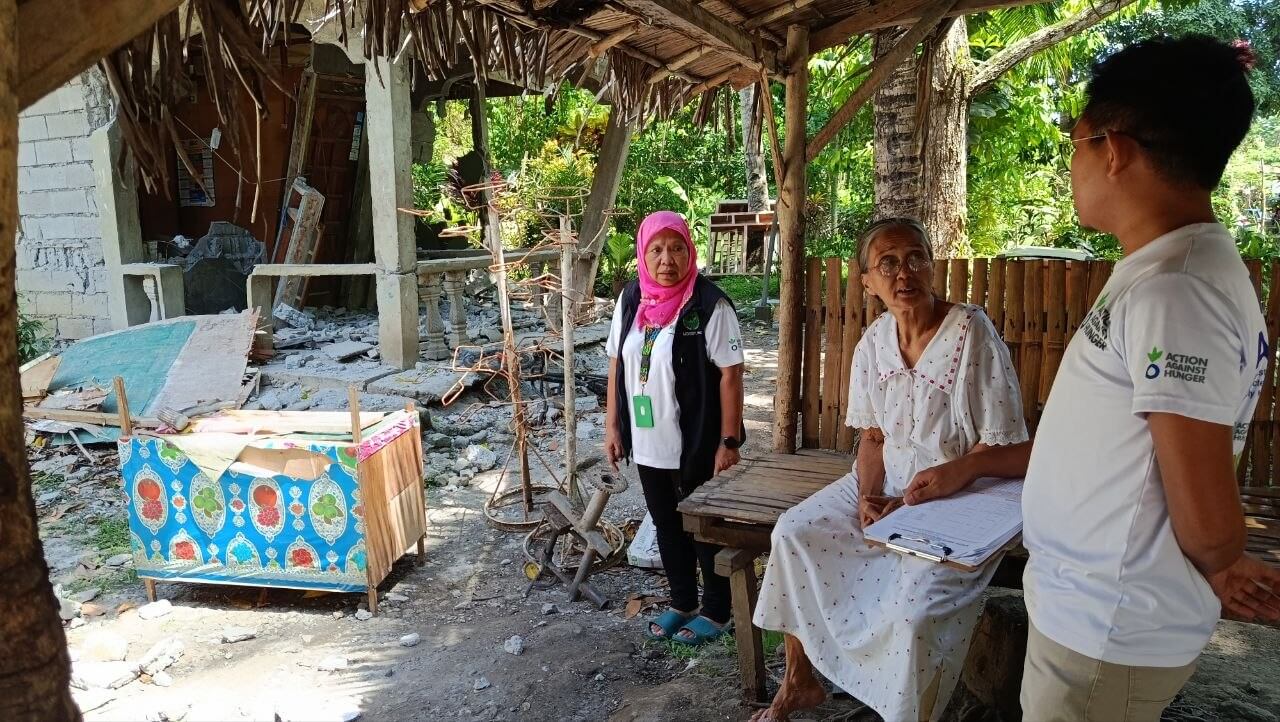
In photo: Evelyn, one of the residents whose house in Barangay Poblacion, Malapatan was completely destroyed following the 7.8 magnitude earthquake in Sarangi Province, shows Action Against Hunger and MOSEP emergency response team what’s left o her old home. (Photo by Yasraf Gayao for Action Against Hunger)
In evacuation sites across affected municipalities, water supply remains insufficient and sanitation facilities are stretched beyond capacity.
“Safe water is emerging as one of the most immediate humanitarian needs,” says Action Against Hunger Country Director, Suresh Murugesu.
“Without urgent support, communities face increased risks of waterborne diseases, particularly among children, older people, and vulnerable households.”
Communities remain displaced amid ongoing aftershocks
The earthquake has caused extensive displacement across coastal, urban, and upland communities.
In Sarangani Province, many families are choosing to stay in open spaces rather than enter buildings due to concerns about structural damage and continuing aftershocks. In some municipalities, damaged roads and collapsed bridges have made it difficult for responders to reach isolated communities and fully assess the scale of the damage.
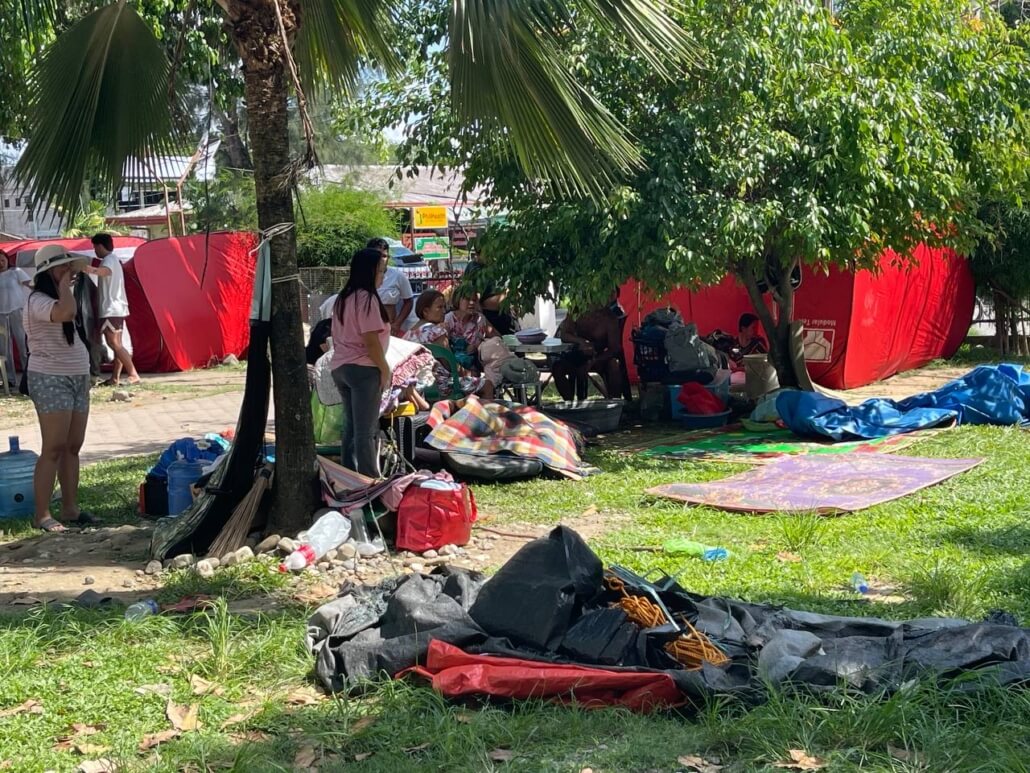
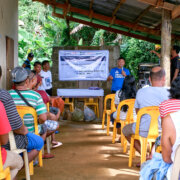
In photo: Evacuees sheltering in modular tents provided by the Department of Social Welfare and Development (DSWD) in Población, Municipality of Glan (Photo by Macy Daproza for Action Against Hunger).
Schools have also been heavily affected, with more than 1,000 classrooms reported major damaged across Mindanao as reported by the Department of Education. Since the earthquake struck on the first day of school, classes remain suspended as safety concerns and infrastructure damage have disrupted normal operations. Health services remain under pressure as hospitals and medical facilities continue treating injured individuals while facing shortages of medical supplies.
Beyond the visible damage, many affected families are experiencing fear, uncertainty, and trauma. Children, women, older persons, and people with disabilities are particularly vulnerable as displacement continues and access to support services remains limited.
Action Against Hunger Deploys Emergency Teams
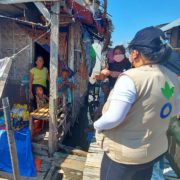
Within hours of the earthquake, we mobilized our Mission Emergency Response Team (MERT) and deployed staff to Sarangani Province and General Santos City to conduct rapid needs assessments and coordinate with local authorities, humanitarian partners, and community leaders.
Working alongside members of the ACCESS Consortium and local partners such as the Mindanao Organization for Social and Economic Progress (MOSEP), Action Against Hunger is assessing the situation in affected municipalities, identifying priority needs, and supporting coordination efforts to ensure assistance reaches the most vulnerable communities.
We are also coordinating closely with government agencies, humanitarian partners, health authorities, and WASH stakeholders to support information sharing and preparedness planning as the situation evolves.
To enable a rapid response, Action Against Hunger is in the process of commencing initial and small-scale life-saving multi-sectoral emergency interventions in affected areas. As assessments continue and needs become clearer, we are seeking additional support to expand the emergency response capacity, with priority multi-sectoral interventions including multi-purpose cash assistance and health support, with hopes of enabling affected households to address their most pressing needs with dignity.
Priority needs continue to emerge
While assessments are ongoing and access remains challenging in some locations, several urgent needs have already been identified:
- Safe drinking water and emergency water supply
- Hygiene kits and sanitation support
- Emergency shelter materials and essential household items
- Food assistance for displaced and isolated communities
- Medical supplies and support to health facilities
- Psychosocial support for affected families and children
Humanitarian needs are expected to become clearer in the coming days as assessment teams gain access to more communities and authorities continue validating damage reports.
Standing with communities in their recovery
As aftershocks continue and communities begin the difficult process of recovery, Action Against Hunger remains committed to supporting affected families and working alongside local authorities, agencies, and partners to address immediate needs and help communities rebuild safely.
We continue to monitor the evolving situation and stand ready to scale up our response as the needs increase.
Action Against Hunger is calling for continued support to ensure that families affected by the earthquake have access to safe water, food, shelter, healthcare, and protection as they recover from this devastating disaster.
Read our latest Situation Report on the
SitRep #5: Magnitude 7.8 Earthquake in Mindanao (SOCCSKSARGEN)
SitRep #4: Magnitude 7.8 Earthquake in Mindanao (SOCCSKSARGEN)
SitRep #3: Magnitude 7.8 Earthquake in Mindanao (SOCCSKSARGEN)
SitRep #2: Magnitude 7.8 Earthquake in Mindanao (SOCCSKSARGEN)
SitRep #1: Magnitude 7.8 Earthquake in Mindanao (SOCCSKSARGEN)