From Rainwater to Safe Sanitation: Nirajon’s Story
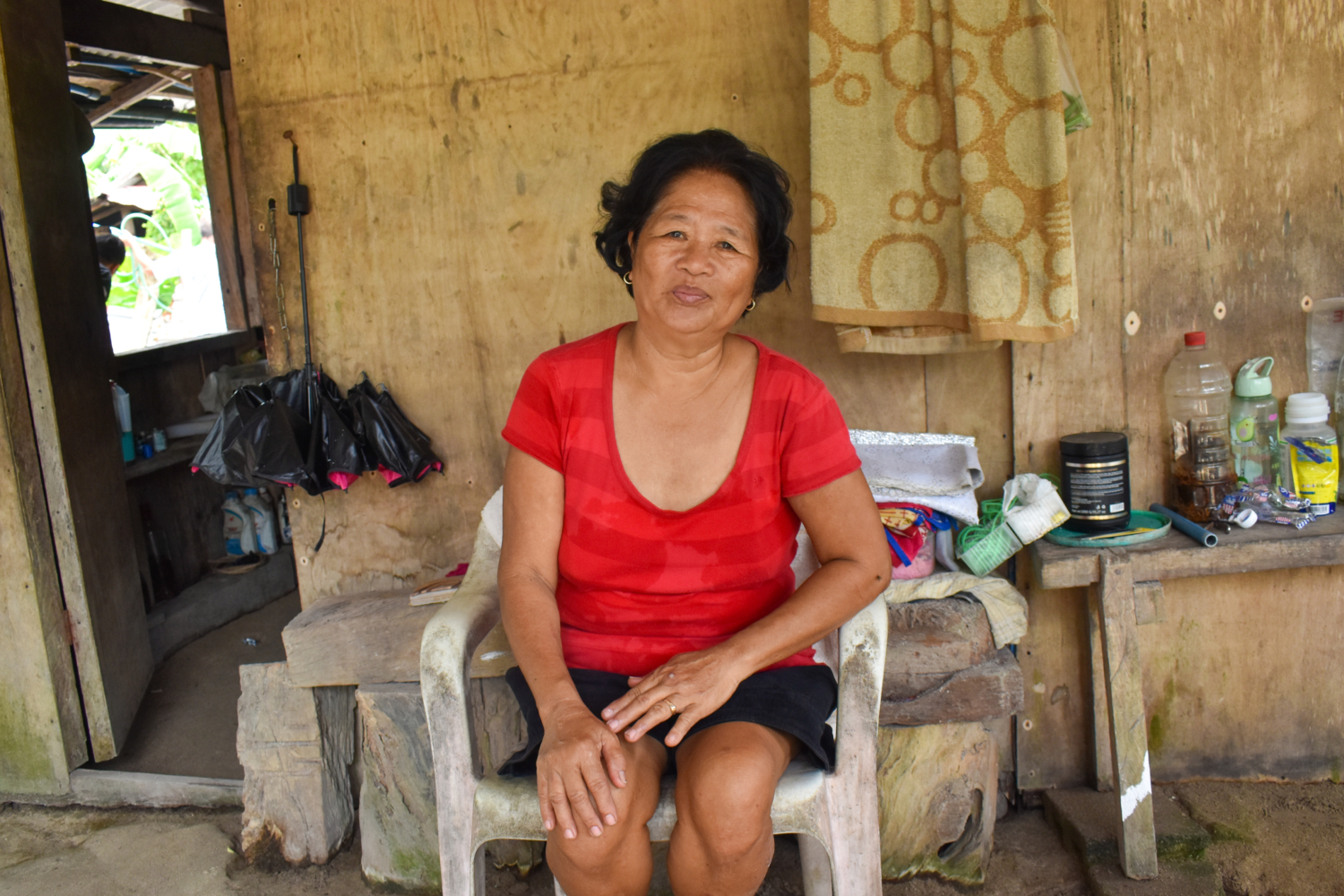
Nirajon, 66, lives in Barangay Baybay, Burgos, Surigao del Norte. She leads a humble life together with her husband, Segundo, 63. Together, they take care of their home and share daily responsibilities, from preparing meals to washing clothes and dishes, tasks that depend heavily on access to water. In their community, owning a proper toilet is sometimes considered a luxury for many families, and access to clean water has long been a serious challenge. Now, after working with UNICEF and Action Against Hunger, she has realized how something as simple as a proper toilet and reliable water access can make a big difference in everyday life.
A simple life shaped by hardship
Nirajon lives a humble life together with her husband, Segundo. They take care of their home and share daily responsibilities, from preparing meals to washing clothes and dishes. Originally from the municipality of Santa Monica, Nirajon married Segundo Segundo in 2007, 19 years after her first marriage. Together, they form a big family: she has six children from her previous marriage, all of whom now have their own families and live in different places. Segundo also has seven children.
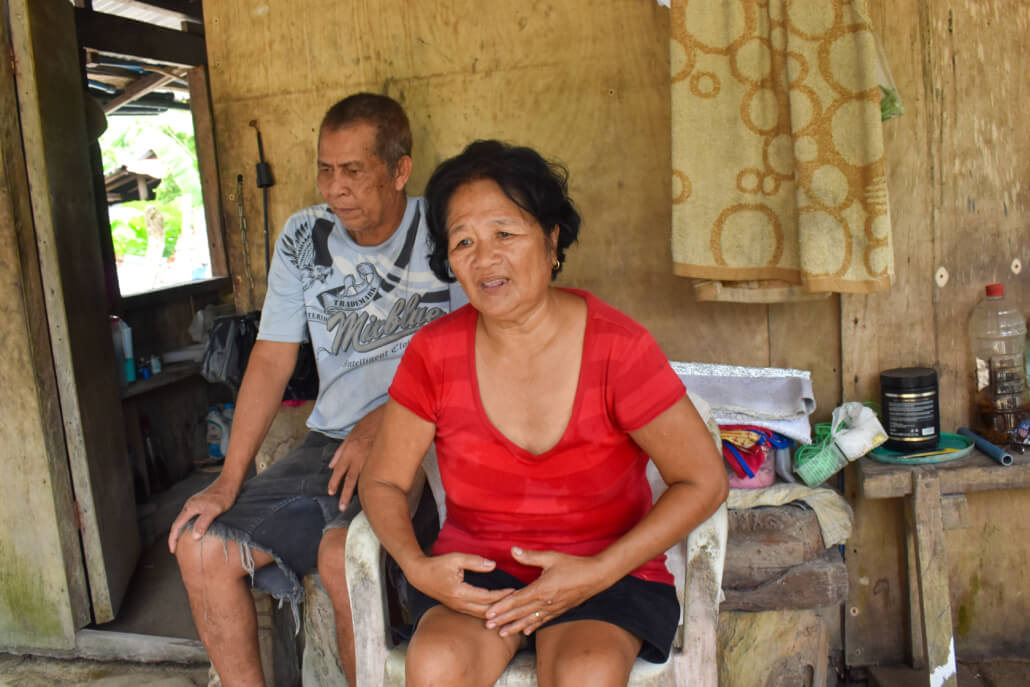
In photo: Nirajon (right) and her husband, Segundo (left, outside their home in Barangay Baybay. Photo by Martina Vercoli for Action Against Hunger, 2026
Financially, they mostly rely on the government’s social pension program, receiving limited financial aid as senior citizens. Sometimes, their children help them cover basic needs.
“It is very hard for us to get through the month,” shares Nirajon. “We buy rice first, then, if there is money left, we buy vegetables, fruits, coffee, meat, but it really depends on our children’s support.”
A typical day for Nirajon begins with breakfast and preparing rice, the essentials of their meals. Together, they take care of their home and rest after lunch, listening to music, relaxing, or going to church. Their routine is simple, but it reflects the care they have for each other.
But Nirajon shares that her life has not always been simple.
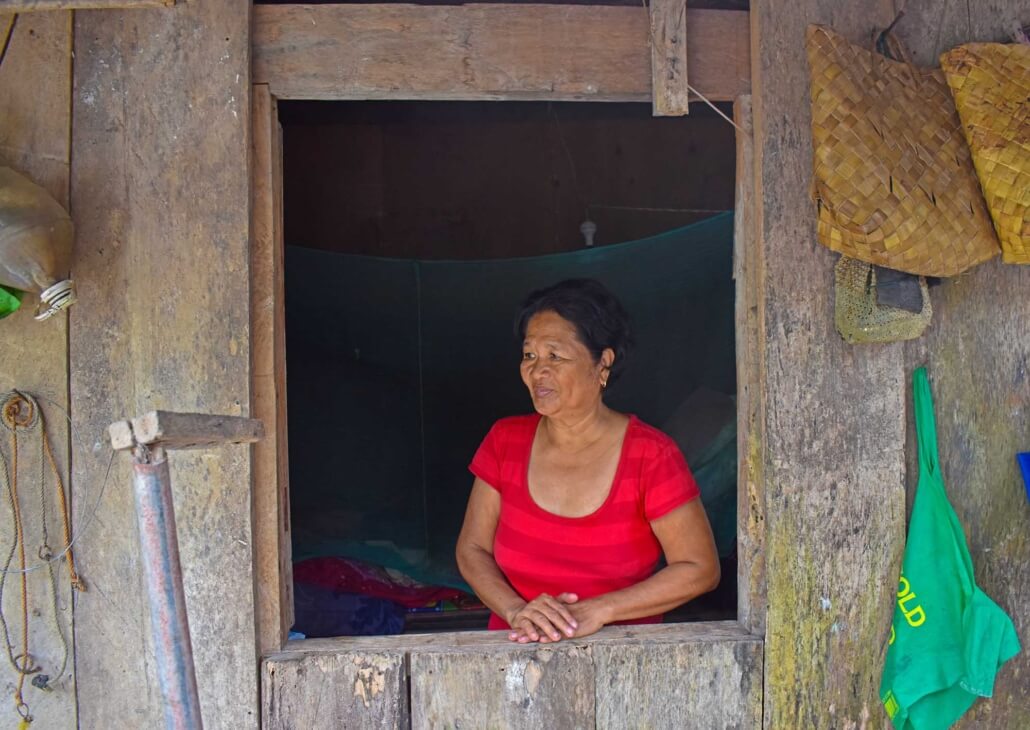
In photo: Nirajon looks outside her window. Photo by Martina Vercoli for Action Against Hunger, 2026.
Growing up as the eldest of eight children, Nirajon spent her childhood helping her family with chores, collecting firewood, and missing out on leisure. She recalls, “My entire life, I never had relaxation. Since I was a child, I have had no free time. After school, I had to work and help my family. On Saturday, I had to go to the mountains to collect firewood. When I was a child, I used to look at children playing and feel sad because I could not join them. I could not have that type of luxury, relaxation.”
Married at 18, she faced additional challenges raising six children largely on her own without her first husband’s support. She was 48 years old when he passed away.
When disasters make survival even harder
Like the lives of many Filipinos, environmental disasters have also affected her life.
“In my life, I also experienced severe typhoons, including Yolanda¹ in 2013 and Odette². In 2021, which was the strongest typhoon I have ever experienced to this day. I remember everything flying around. It was very scary. My house was totally damaged.”
She recalls the night of Typhoon Odette vividly. “The house was destroyed by very strong winds. That night, I remember thinking I hope nothing like this will happen ever again. I hope I won’t have to experience anything like this ever again in my life.”
“Recovering after Typhoon Odette was one of the hardest things I have ever had to do. All my belongings were wet and damaged. My main worry at the time was how to provide food and water. I was able to recover thanks to the aid of different NGOs.”
A daily struggle for water and sanitation
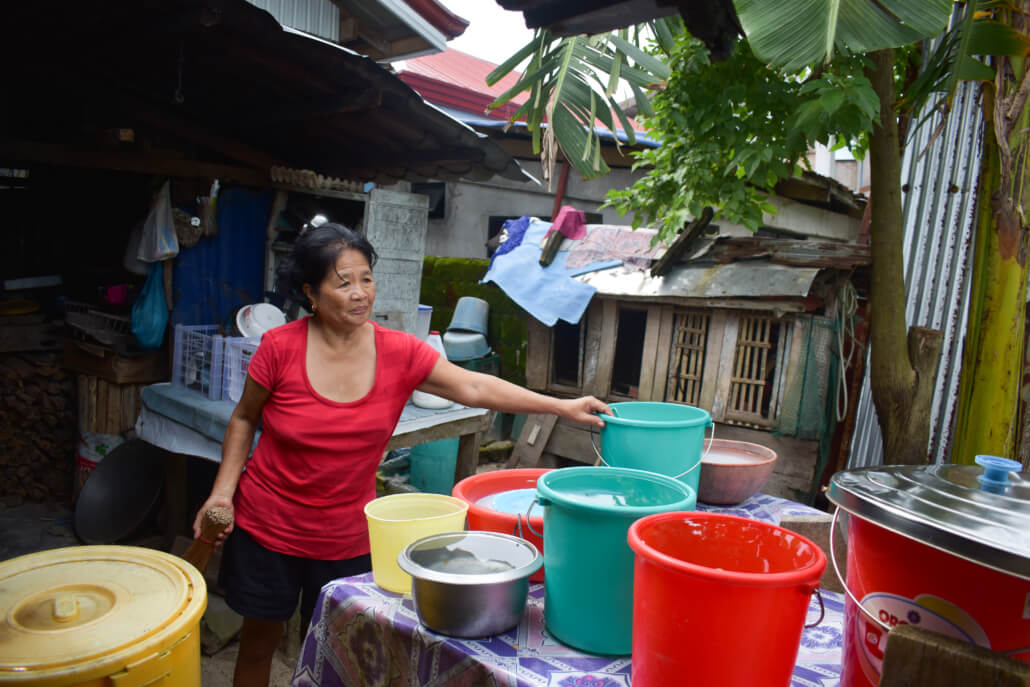
In photo: Nirajon in the backyard of their home, making sure that the buckets are filled with water for her daily necessities. Photo by Martina Vercoli for Action Against Hunger, 2026
Access to water and sanitation has long been a challenge for Nirajon and her family. In the past, they relied on a hand pump in their community that often broke, leaving them without a reliable water source for days. Drinking water had to be purchased separately, and everything—from cooking to bathing—was affected by the lack of clean water.
The household also lacked a proper toilet.
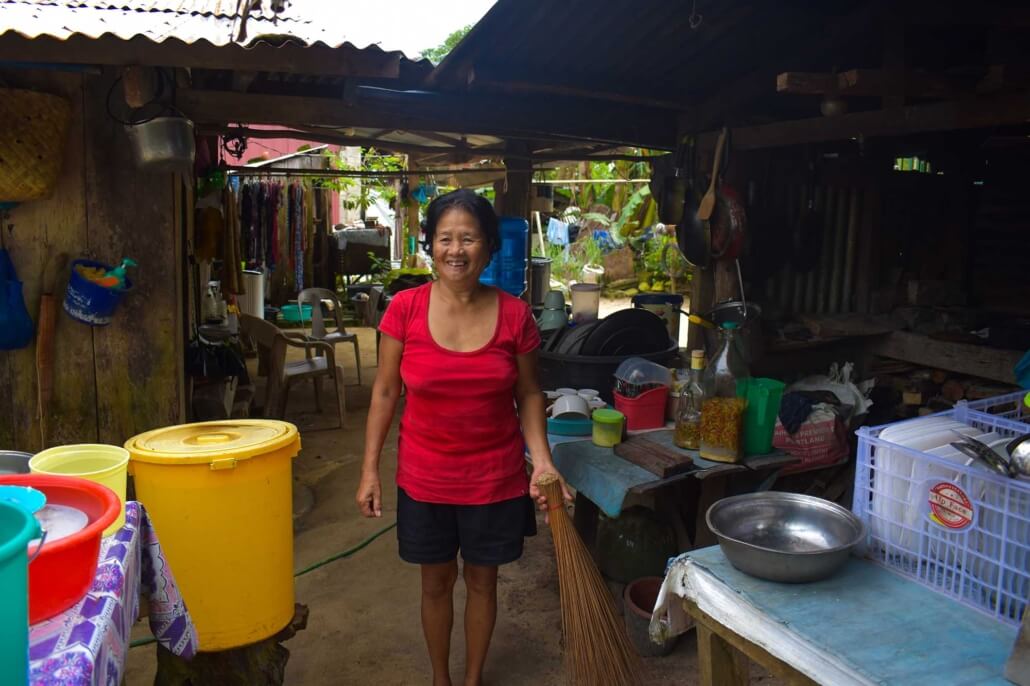
In photo, Nirajon takes a break from cleaning their backyard. Photo by Martina Vercoli for Action Against Hunger, 2026
“When I was younger, I used a simple squat-type toilet provided by the government. It was just a plastic bowl over a pit with bamboo walls for privacy. I remember it was very difficult to manage my menstrual period there.”
When she got married for the first time, she started to use only wooden toilets in her new home because they were the cheapest option. “The wooden toilet was uncomfortable. But we had no choice. We could not afford anything else.”
After marrying her husband, Segundo, 63, they started to share the toilet with their neighbors. “It was very difficult to share the toilet because we could not access it 24/7. It was always busy, especially when there were visitors during celebrations or gatherings. I had to wait a lot before using it.”
A turning point: rebuilding with support
Everything began to change when Nirajon’s family, with support from the Typhoon Odette Recovery and Rehabilitation towards Climate Resilience project, began building a resilient toilet with a rainwater collection system.
The project is implemented by Action Against Hunger and UNICEF, with funding support from the Government of New Zealand through its Ministry of Foreign Affairs and Trade.
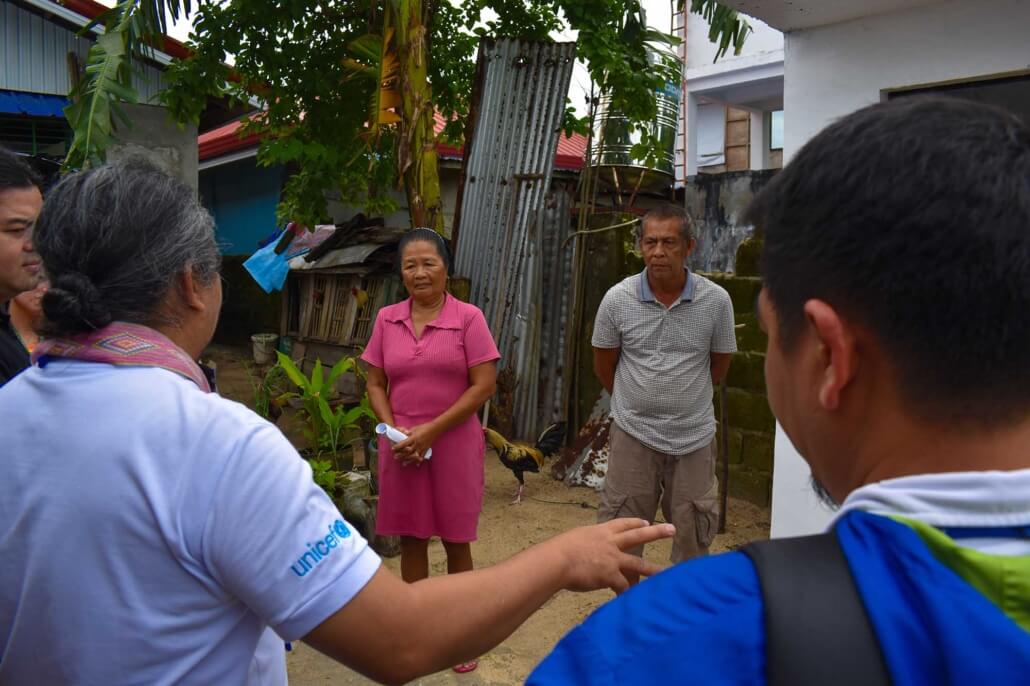
In photo: Nirajon and her husband Segundo talk to the team of UNICEF and Action Against Hunger about the benefits provided by the resilient toilet and the water collection system in their backyard. Photo by Martina Vercoli for Action Against Hunger, 2026.
Through the project, Action Against Hunger and UNICEF provided technical guidance and key materials for the septic tank, helping establish a model for safer and more resilient sanitation facilities. This technical guidance included site assessment and planning, guidance on the design and layout of the toilet, supervision during key stages of construction, and practical advice to ensure the structure would be safe, durable, and resilient to flooding and extreme weather conditions. Support was also provided on how to properly install and maintain the rainwater collection system to ensure a reliable and safe water supply.
To complete the construction, however, families were expected to take an active role by contributing labor and covering the remaining costs. For Nirajon, this was made possible with the support of her daughter, who works abroad and contributed significantly to the expenses needed to finish the toilet.
This shared effort reflects the approach of the initiative, where communities are supported with the knowledge and initial resources to build improved facilities. At the same time, households take ownership of completing and maintaining them. Alongside this, a community water system was also established, improving access to water for drinking, cooking, and bathing.
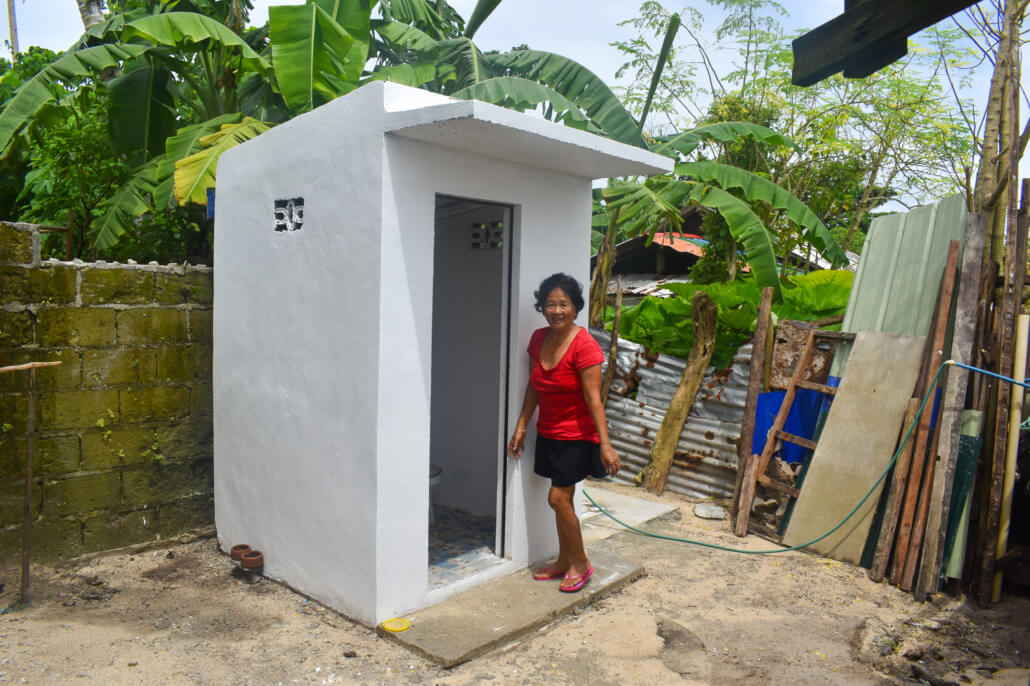
In photo: Nirajon stands outside the resilient toilet that they were able to build in her backyard with the support of Action Against Hunger and UNICEF. Photo by Martina Vercoli for Action Against Hunger, 2026
“It was very important for me to prioritize the resilient toilet construction. For too long, we did not have our own proper toilet facilities. Now, at our age, with the support we received, it was finally time to complete it,” she explains.
“Before, we could not build a toilet because we had no financial means. When we found out about the Action Against Hunger and UNICEF project, we thought it was the right moment to do it.”
Privacy, dignity, and comfort at last
Now, Nirajon and Segundo, along with their house guests, can use the toilet anytime. She no longer has to ask or wait. The new system provides privacy, convenience, and proper hygiene, allowing her to maintain her dignity and health, and ensuring that even when their grandchildren visit, they also have access to a safe and proper toilet.
“Now we have water every time I need to use the toilet. This allows us to maintain proper hygiene. That water can also be used to take a bath,” she says. “For the elderly, this toilet is way more comfortable.”
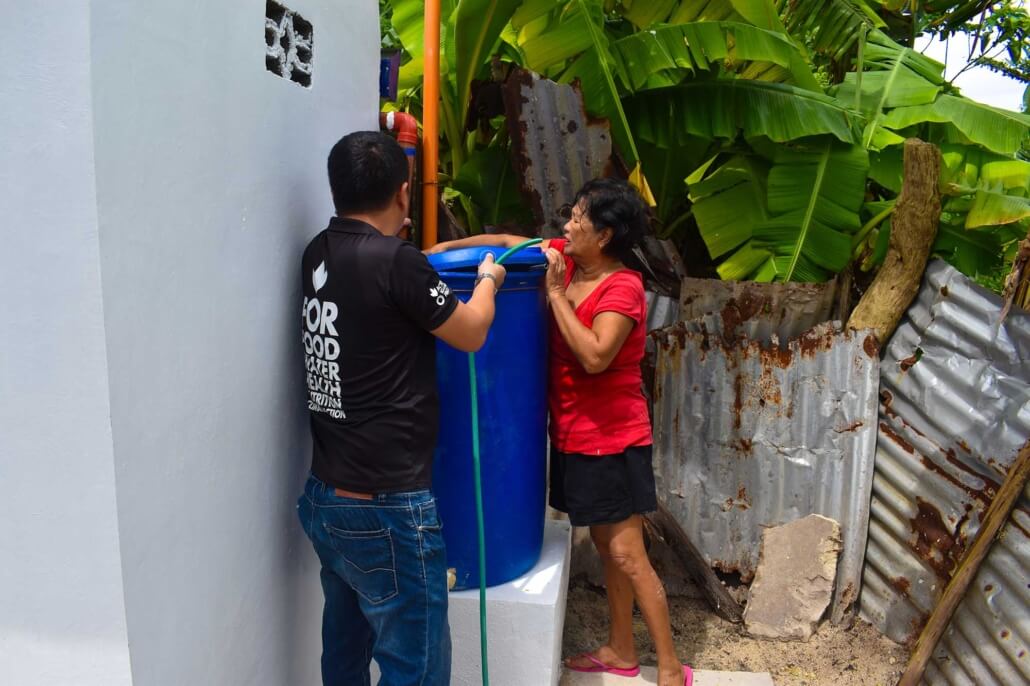
In photo: Nirajon and Action Against Hunger staff check the rainwater collection system next to the resilient toilet. Photo by Martina Vercoli for Action Against Hunger, 2026
A model for the community
Beyond her household, Nirajon sees how access to sanitation remains a challenge for many in her community. She shares that many families still lack proper toilet facilities, and some continue to practice open defecation. For many, having a toilet is still seen as a privilege.
“I think the main constraint that prevents people in the community is the financial one. Some people are also not allowed to build on the land they live in because they don’t own it, or they are not allowed to construct.”
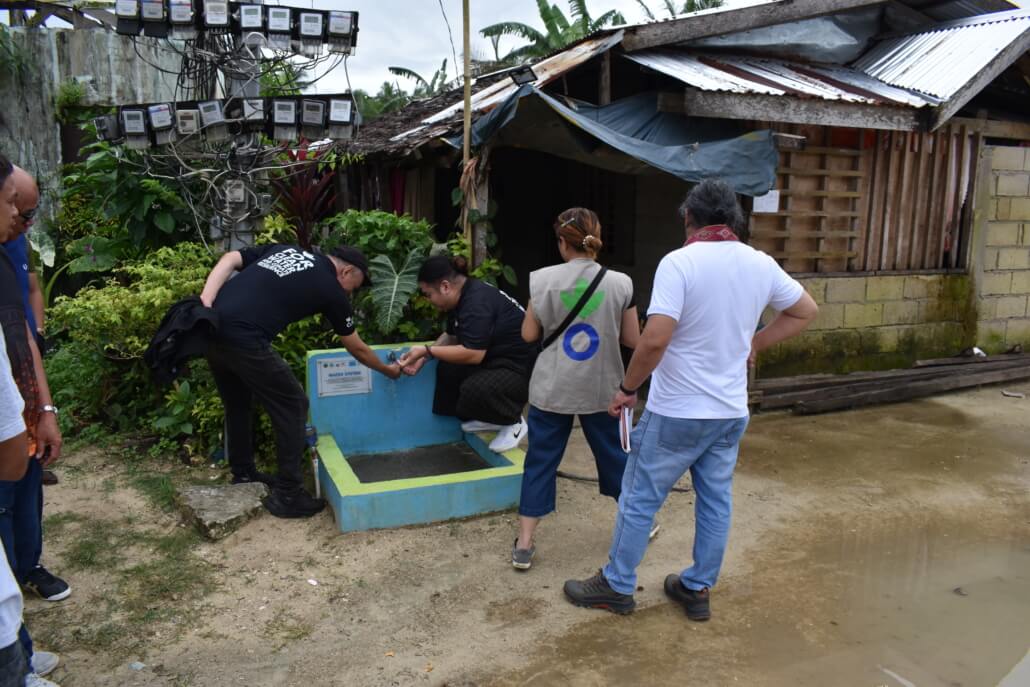
In photo: Action Against Hunger and UNICEF staff use the water system installed through the project in Barangay Baybay, Surigao del Norte. Photo by Martina Vercoli for Action Against Hunger, 2026
Nirajon’s and Segundo’s resilient toilet has now become a model for the community. She hopes others will be encouraged to replicate it in their own households.
A continuing need for safe water and sanitation
Nirajon’s story shows how essential access to water and sanitation is for everyday life. Clean water and safe sanitation are not only basic needs for hygiene and dignity, but also critical foundations for good health and nutrition. Without them, families are more exposed to disease, and children and older people are especially at risk of malnutrition and illness that can deepen cycles of hunger. Through initiatives such as the Typhoon Odette Recovery and Rehabilitation towards Climate Resilience Program, communities are supported to rebuild safer and more resilient sanitation facilities.
Yet for many families, having a safe and dignified toilet remains out of reach.
Nirajon’s experience highlights the urgent need for continued support, greater awareness, and sustained investment in water, sanitation, and hygiene. Ensuring universal access to these services is not only about infrastructure, but about protecting health, improving nutrition, and advancing the broader goal of ending hunger.
[1] International name: Haiyan
[2] International name: Rai
Written by: Martina Vercoli

