Siargao Youth Reaffirm their role in Shaping Climate Solutions for the Island’s Future
Del Carmen, Siargao — As climate change, environmental degradation, and rapid development continue to reshape island communities, young people across Siargao are stepping forward with ideas, innovations, and a shared commitment to protect the future of the island they call home.
On 6-7 October 2026, more than 100 youth participants, together with government representatives, environmental advocates, educators, civil society organizations, development partners, and private sector stakeholders, gathered at the Del Carmen Convention Center for the Siargao Youth Climate Congress (SYCC) 2026, a youth-led platform designed to transform local challenges into practical and locally driven solutions.
Held as part of the 1st Siargao Climate Week and the 30th anniversary celebration of the Siargao Islands Protected Landscape and Seascape (SIPLAS), the Siargao Youth Climate Congress brought together diverse voices to explore pathways toward a more resilient, sustainable, and inclusive future for Siargao. The event was organized by Action Against Hunger in close collaboration with the Municipality of Del Carmen, through the Siargao Green Economy Project funded by the Spanish Agency for International Development Cooperation or the Spanish Cooperation (AECID).
“The Siargao Youth Climate Congress provides a platform for young leaders to learn, collaborate, and develop innovative solutions to some of the most pressing challenges facing island communities,” shared Action Against Hunger Country Director, Suresh Murugesu.
Far more than a two-day event, the youth congress represented the culmination of months of work by young people from municipalities across the island.
Since August, participants have been engaged in a structured innovation process that encouraged them to identify pressing environmental and climate challenges in their communities, consult local stakeholders, and develop solutions grounded in the realities of island life.
During a second round of workshops in September, youth teams refined these ideas into project concepts and prototypes with support from mentors and technical experts.
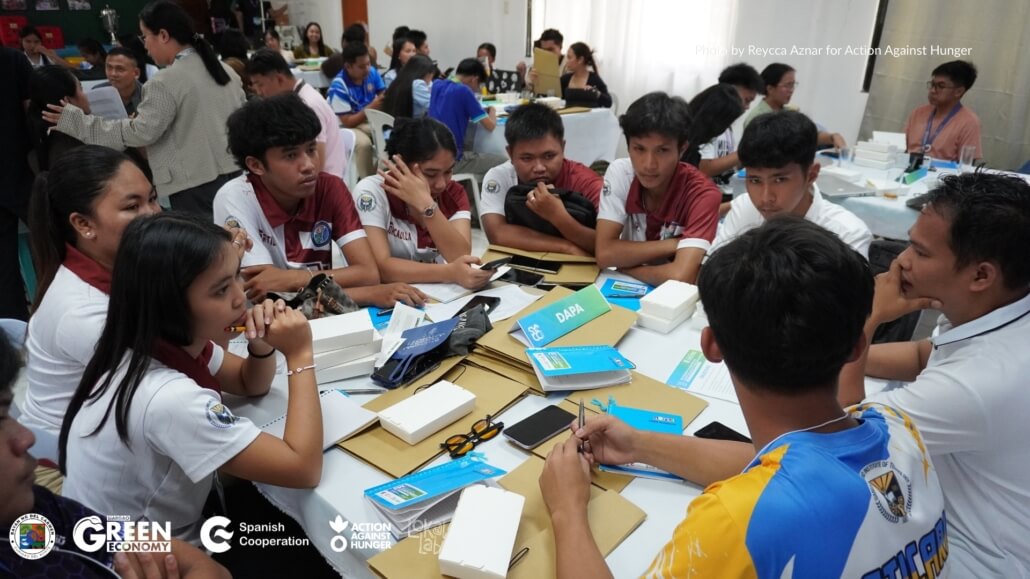
In photo: Youth participants from across the island of Siargao work in teams to identity climate related issues affecting their communities during the ideation workshop in August 2026 (Photo by Reycca Aznar for Action Against Hunger)
Janna Rose, one of the young innovators explained,
“The workshops were a good process because it is the first time that we were encouraged to look at and discover the problems in our municipality and to identify the solutions and innovation we would then pursue.”
The result was a diverse portfolio of youth-led initiatives addressing issues such as waste management, circular economy, biodiversity conservation, sustainable agriculture, climate resilience, environmental stewardship, and sustainable livelihoods.
“The Siargao Youth Congress was designed to ensure that we awaken, we capacitate, we empower the youth of Siargao. It is a model of youth development that can be sustained, replicated, and scaled in other communities, especially those qualified as isolated and disadvantaged,” shared Hon. Alfredo Coro II in his opening remarks.
One of the main highlights during the youth congress was when youth teams pitched their projects before various stakeholders present during the event—creating opportunities for mentorship, partnerships, technical support, and future implementation.
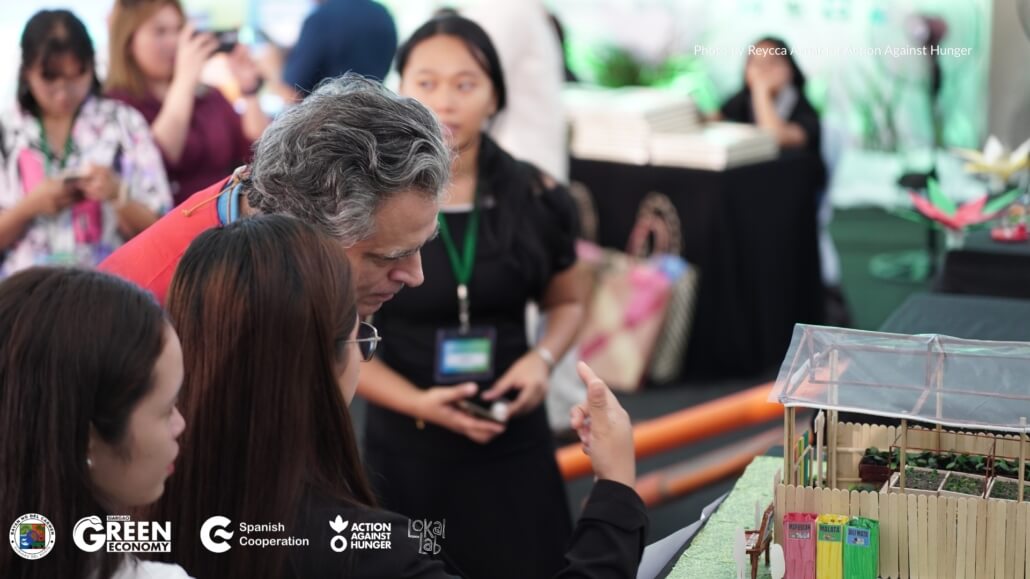
In photo: Youth participants discuss their projects with Francisco Quesada Benavente, Programme Manager of the Spanish Cooperation, during the innovation gallery showcased during the Siargao Youth Climate Congress (Photo by Reycca Aznar for Action Against Hunger)
The youth congress took place at a critical moment for Siargao. The island’s ecosystems, including mangroves, wetlands, coastal habitats, and marine resources, play a vital role in supporting livelihoods, food security, tourism, and climate resilience. At the same time, communities continue to face increasing pressures from climate-related hazards, environmental degradation, waste management challenges, and rapid development.
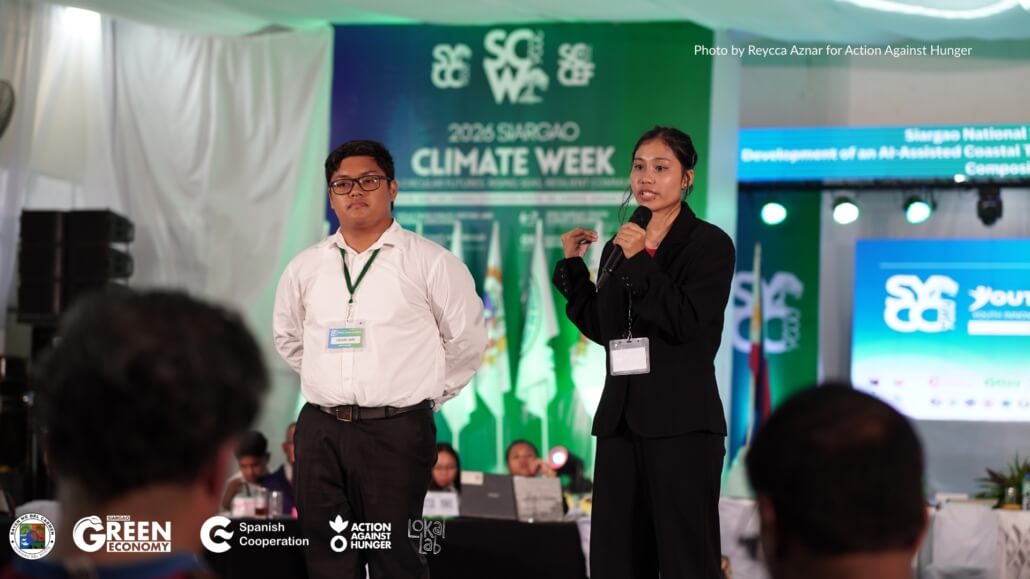
In photo: One of the youth innovation groups from the Municipality of Dapa pitched their innovation project in front of a panel of experts during the first day of the congress. (Photo by Reycca Aznar for Action Against Hunger)
Recognizing that today’s decisions will shape the island’s future, the youth congress placed young people at the center of discussions on sustainable development and environmental stewardship.
Through keynote sessions, youth dialogues, project pitching, debates, and field immersions, participants explored how climate action, biodiversity conservation, circular economy approaches, nature-based solutions, and sustainable livelihoods can contribute to a resilient and thriving Siargao.
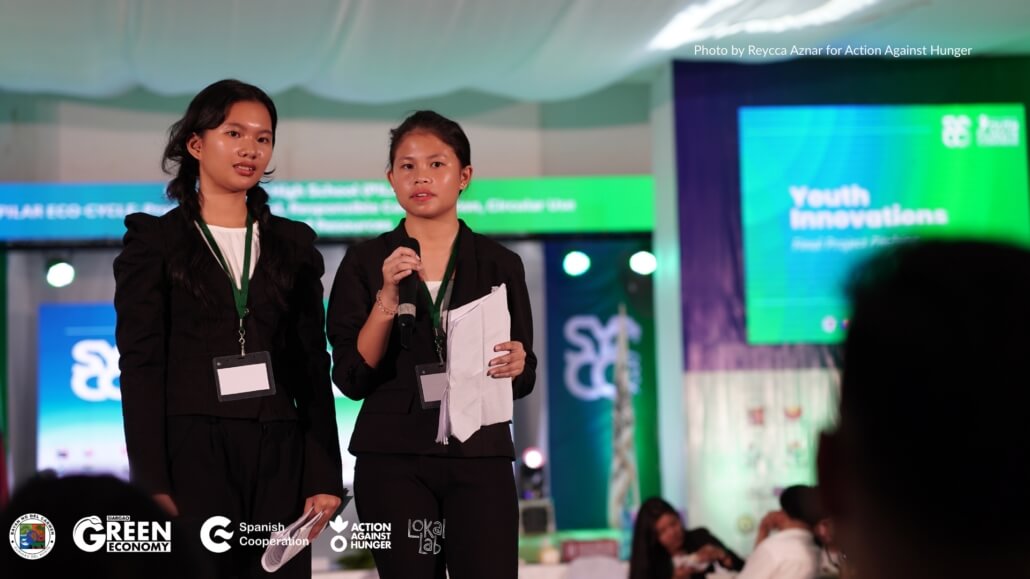
In photo: Youth innovation group from the Municipality of Santa Monica pitched their innovation project in front of a panel of experts during the first day of the congress. (Photo by Reycca Aznar for Action Against Hunger)
Key sessions during the youth congress featured representatives from government agencies, local government units, academic institutions, development organizations, and environmental groups. These included keynote speeches, messages and panel discussions with representatives from the Spanish Cooperation, National Youth Commission, Action Against Hunger, Climate Change Commission, International Organization for Migration, United Nations Development Programme, Forest Foundation, Archipelago Philippines, Lokal Lab, Department of Science and Technology, and the Siargao Island Protected Landscape and Seascape, among others.
Also among the distinguished guests were Violeta Dominguez Acosta (Head of Spanish Cooperation), Asec. Romell Antonio Cuenca (Deputy Country Director of the Climate Change Commission), Asec. Romeo Montenegro (Deputy Executive Director of the Mindanao Development Authority), Engr. Noel Ajoc (Regional Director for the Department of Science and Technology – Caraga), Hon. Sitti Djalla Turabin-Hataman (Mayor of Isabela City, Basilan), and Manuel Caberte (Siargao Schools Division Superintendent of the Department of Education).
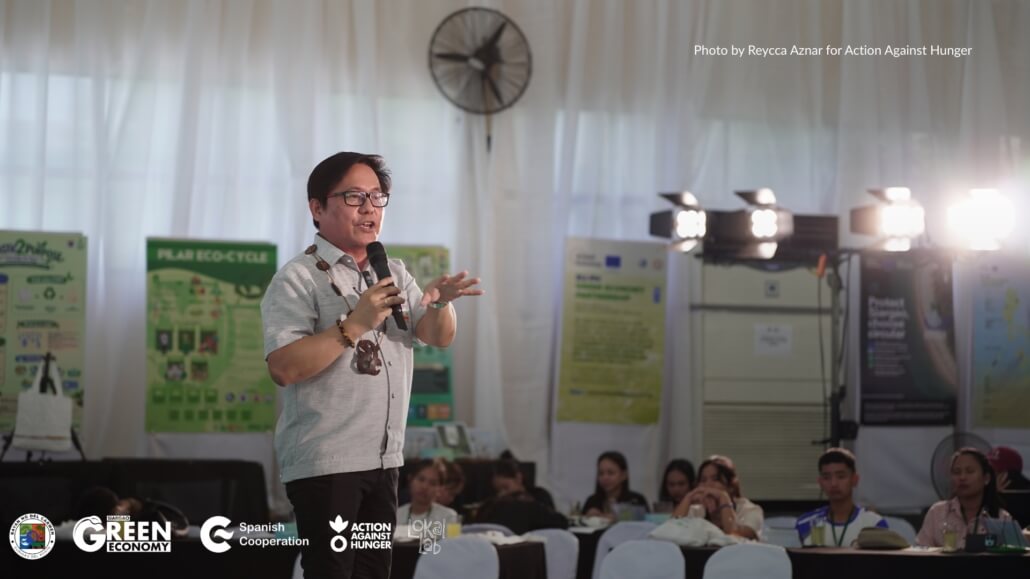
In photo: Asec. Romeo Montenegro, Assistant Secretary of the Mindanao Development Authority (MinDA) delivers a keynote address on sustainable island development, resilient livelihoods, and regional development opportunities for Siargao (Photo by Reycca Aznar for Action Against Hunger)
Discussions highlighted climate adaptation, ecosystem protection, waste reduction and resource recovery, sustainable tourism, water and sanitation, and green and blue economy opportunities that can generate livelihoods while safeguarding the island’s natural resources.
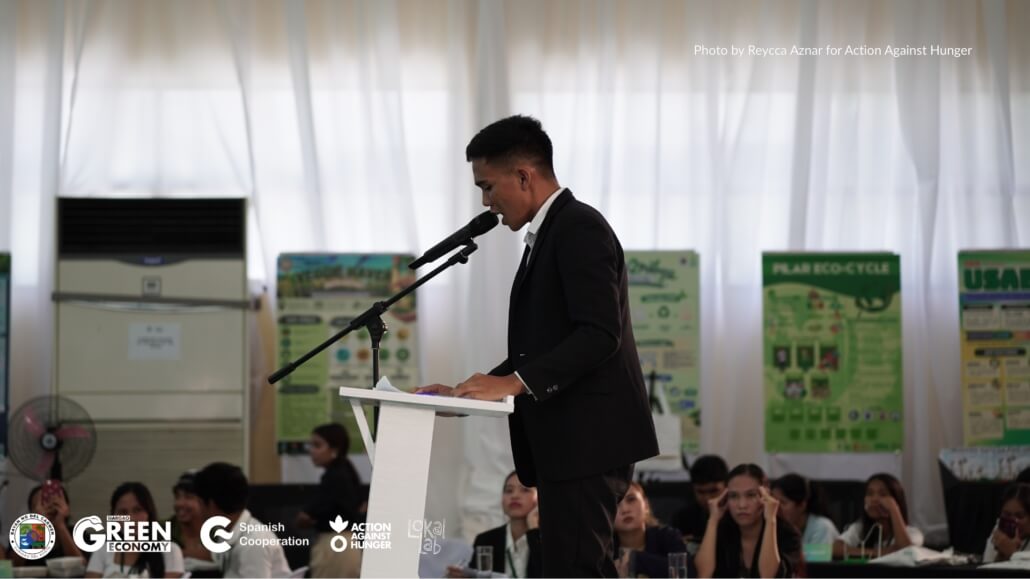
In photo: Youth debater addresses the crowd about environmental preservation in the face of accelerating commercial development (Photo by Reycca Aznar for Action Against Hunger)
As part of the two-day congress, youth participants also took part in outdoor activities and field immersions to see how climate action, circular solutions, and ecosystem-based approaches are being practiced in Siargao. These included a coastal clean-up and visits to barangays in Del Carmen to explore waste management and sorting, including discussions on waste-to-fuel initiatives.
In photo: Youth Participants collect waste during coastal clean-up activity in the mangroves of the municipality of Del Carmen. (Photo by Reycca Aznar for Action Against Hunger)
Facilitated with the SIPLAS Protected Area Management Office (PAMO) and Del Carmen Municipal Environment and Natural Resources Office (MENRO), the activities gave participants an opportunity to connect the ideas discussed during the congress with existing community practices and local environmental initiatives.
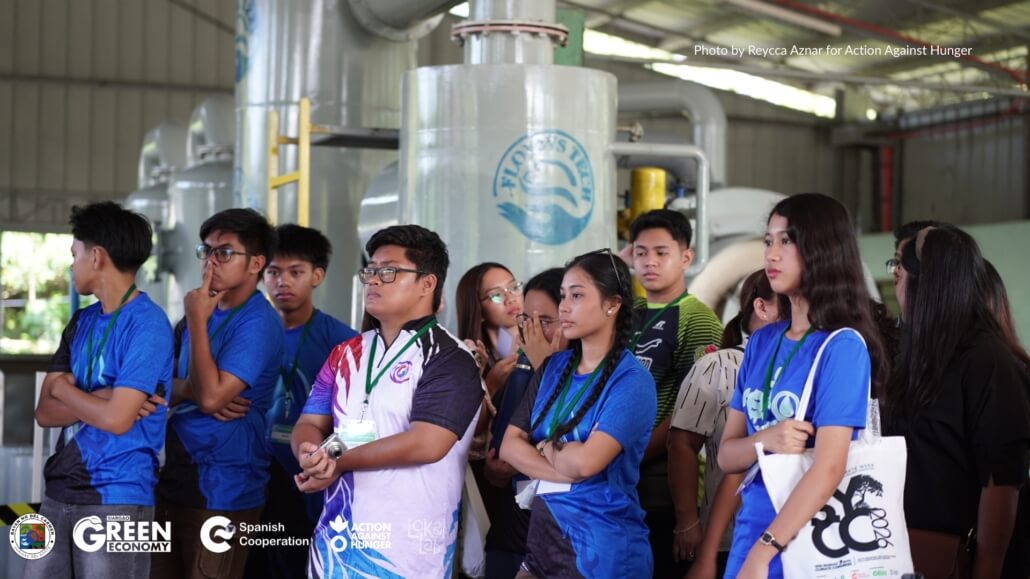
In photo: As part of the youth congress, participants took part in field immersions relating to waste management with a site visit of the Del Carmen waste-to-fuel facility guided by the Municipal Environment and Natural Resources Office. (Photo by Reycca Aznar for Action Against Hunger)
Highlighting the importance of collaboration, Francisco Quesada Benavente, Programme Manager of the Spanish Cooperation, emphasized that addressing Siargao’s complex challenges requires a shared vision and collective action,
“Success requires partnerships between local governments, communities, schools and universities, civil society organizations, the private sector, national government agencies, and development partners. It requires all of us working together toward a common vision for Siargao’s future.”
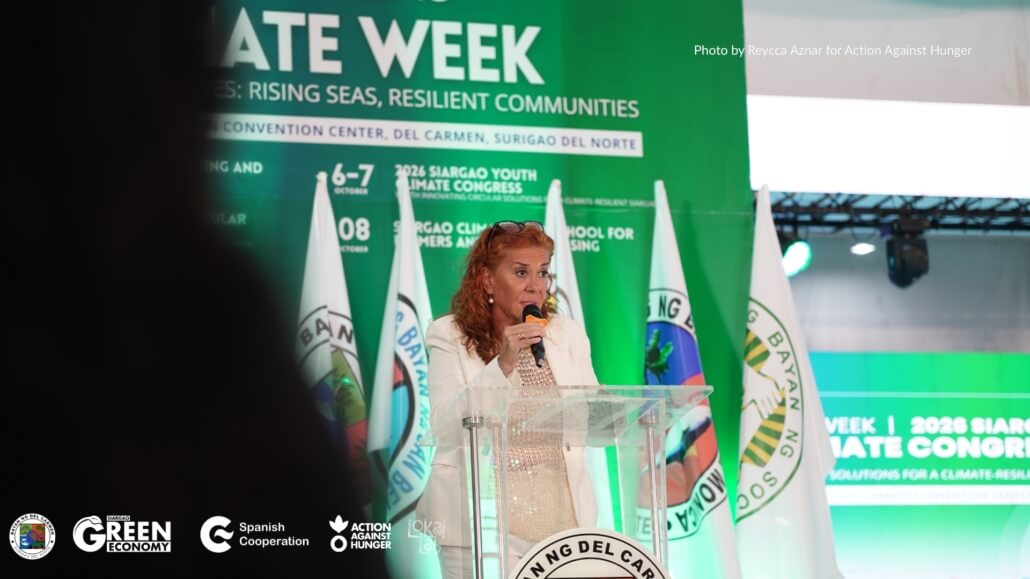
In photo: Violeta Dominguez Acosta, Head of Spanish Cooperation in the Philippines delivers closing address on the second day of the Siargao Youth Climate Congress. (Photo by Reycca Aznar for Action Against Hunger)
A major outcome of the youth congress was the development and presentation of the Siargao Youth Climate Manifesto, a collective statement reflecting the aspirations, recommendations, and commitments of young people toward a climate-resilient and environmentally sustainable Siargao. The Manifesto calls for stronger youth participation in decision-making, greater protection of critical ecosystems, accelerated adoption of circular economy practices, investment in sustainable livelihoods, and stronger collaboration among communities, government institutions, civil society, and the private sector.
“The Siargao Youth Climate Congress has shown that young people are not only the leaders of tomorrow, but the changemakers of today. AECID is proud to support youth voices driving gender-responsive climate action, resilience, and sustainable development. We welcome the Youth Climate Manifesto as a powerful commitment to action and advocacy,” expressed Violeta Domiguez Acosta in her closing remarks.
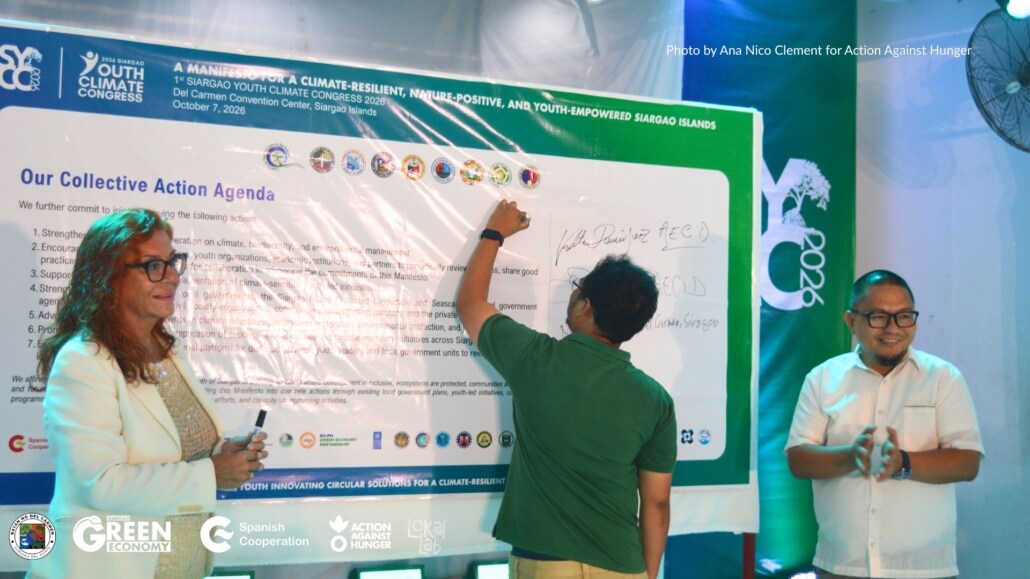
In photo: A youth participant signs the Collective Action Agenda of the Manifesto during the congress closing. He is accompanied by Violeta Dominguez Acosta, Head of the Spanish Agency for International Development Cooperation (left) and the Hon. Alfredo Coro II, Mayor of Del Carmen (right). (Photo by Ana Nico Clement for Action Against Hunger)
Next Steps
Following the youth congress, Action Against Hunger and its partners will work to disseminate the Siargao Youth Climate Manifesto to relevant stakeholders and explore opportunities to integrate its recommendations into local and national environmental and development discussions. Selected youth-led project concepts will be connected with potential mentors, partners, and financial support mechanisms to further develop and implement their ideas.
“The SYCC 2026 has taught us a lot of things about other municipalities in Siargao,” shares Jazmine, one of the young innovators and participants. “It has taught us that Siargao is not just for tourism but that it is also an island home to many people who should take good care of it for the next generation to come.”
The relationships and partnerships established during the youth congress will also serve as a foundation for continued collaboration among youth organizations, local governments, civil society, academic institutions, and development partners working toward a more climate-resilient and environmentally sustainable Siargao.
“I hope the project and connections we have gathered through this process will flourish and that the projects will be realized,” added Jazmine.
By bringing together ideas, expertise, and local leadership, the Siargao Youth Climate Congress demonstrated that young people are not only future leaders. They are already contributing to solutions, building partnerships, and helping shape the sustainable future of their communities today.
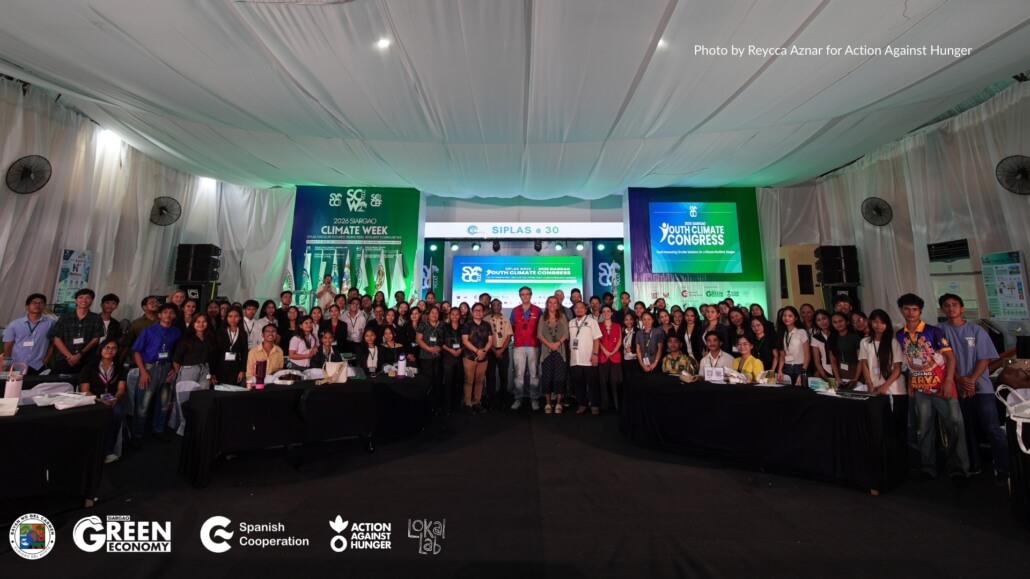
In photo: Participants of the 2026 Siargao Youth Climate Congress gather for a photo with Action Against Hunger, the Spanish Agency for International Development Cooperation, and Municipal Mayor of Del Carmen
−
−
Alfredo Coro II, and other notable guests and speakers. (Photo by Reycca Aznar for Action Against Hunger)
About the Siargao Green Economy Project
The Siargao Green Economy Project seeks to strengthen climate resilience and sustainable development in Siargao by promoting innovative and locally led solutions that balance environmental protection with economic opportunity. Funded by the Spanish Agency for International Development Cooperation and implemented by Action Against Hunger Philippines and Lokal Lab, the project supports initiatives on circular economy, waste management, sustainable tourism, biodiversity conservation, nature-based solutions, climate adaptation, and youth leadership. Working closely with local government units, communities, civil society organizations, youth groups, and other stakeholders, the Siargao Green Economy project advances a resilient and nature-positive future for Siargao.