Family Navigates Loss, Fear, and Recovery in Sarangani
The last time she experienced an earthquake of this scale was in the early years of her marriage. Today, Domana Sagli is 83 years old and the eldest in a household shared by four families, including many of her grandchildren. Since the earthquake struck Sarangani, she has not been able to sleep. With limited mobility, she is confined to her home, overcome by dizziness and fear each time the ground begins to shake.
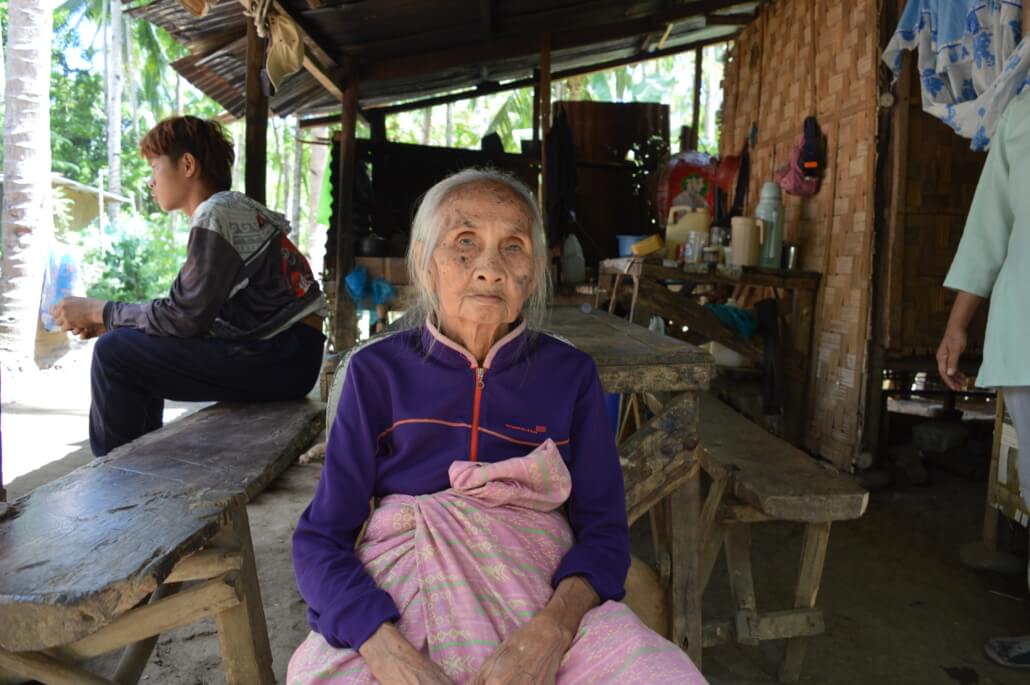
In photo: Domana Sagli, 83 years-old, sits in front of the house she has lived in for 30 years (Photo by Ana Nico Clement for Action Against Hunger)
The 7.8-magnitude earthquake that struck Sarangani and nearby areas on the 8th of June 2026 in Mindanao caused widespread destruction, damaging homes, triggering landslides, and cutting off entire communities. Continuous aftershocks and heavy rains have further compounded risks, particularly for remote and already vulnerable populations.
Her son, Nalio, was tending to his farm when the earth, so familiar to him, began to tremble. Putting aside his own fear, he rushed down the mountain to reach his family. Together, they watched as the hill in front of their home crumbled in a landslide that has permanently altered the landscape. Even now, aftershocks and rains continue to trigger soil erosion, making the land increasingly unstable. For families like the Saglis, years of increasing flooding and environmental degradation had already made their surroundings more fragile, amplifying the impact of the disaster.
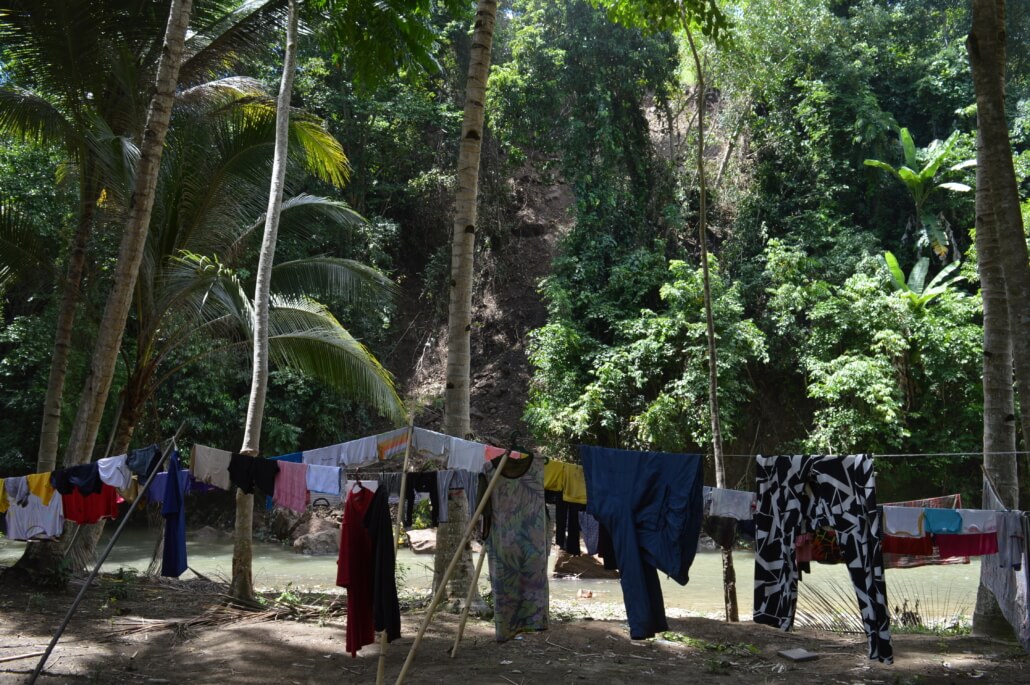
In photo: View from the Sagli family’s settlement where the landslide has taken away parts of their farming land. (Photo by Ana Nico Clement for Action Against Hunger)
The family has lived on this land for 30 years but over time, the risks have grown. Each year, the water level rises higher, sometimes reaching their home.
“Last year, the water level reached our knees. Our comfort room was washed away,” Nalio recalls. “This time, most of the damage was to our trees.”
When he returned to check on his crops, the losses were clear.
“The crops are damaged. I lost about 200 banana trees. We don’t know how we will keep working. Our livelihood is what will suffer the most.”
With crops destroyed and income disrupted, accessing sufficient food has become increasingly difficult.
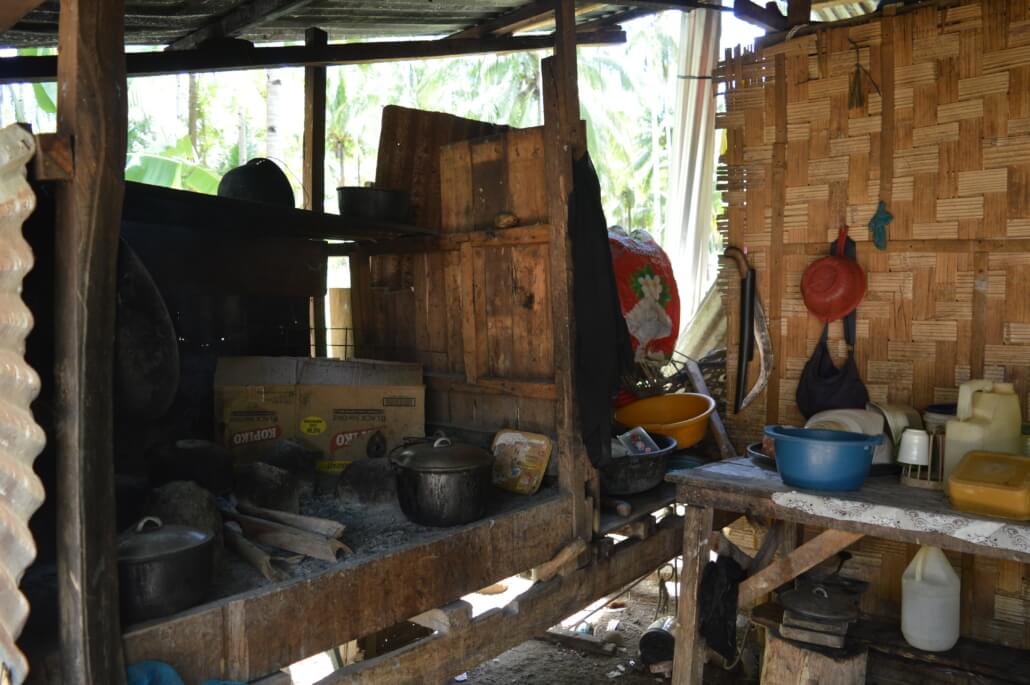
In photo: Inside the kitchen of the Sagli family home. (Photo by Ana Nico Clement for Action Against Hunger)
“We have not received any food so far, so we buy at the store and ask to pay later on,” the family shares.
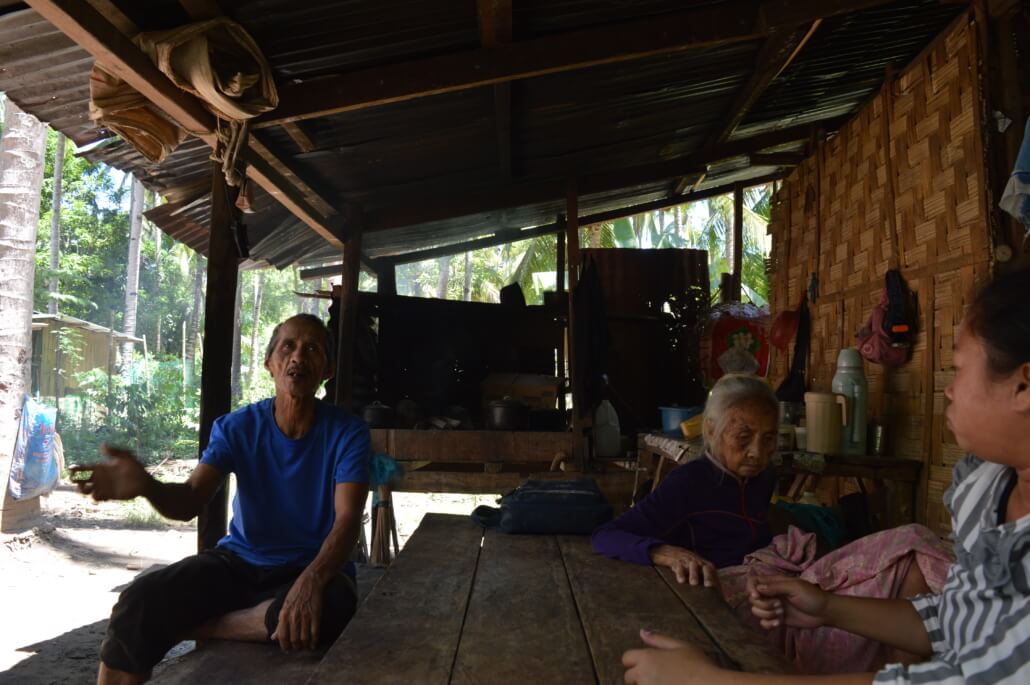
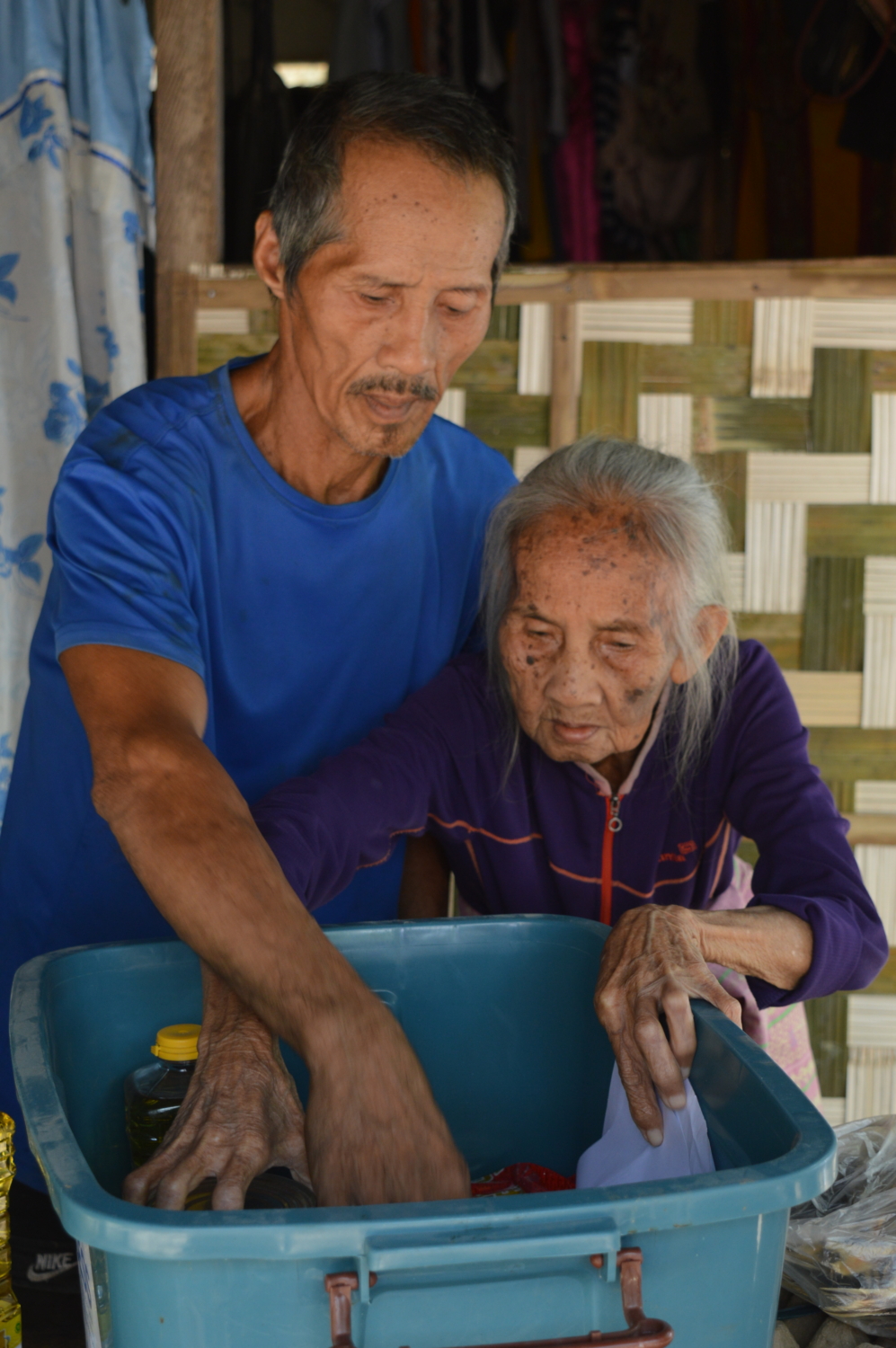
In photo: Domana (right) and Nalio (left) Sagli, mother and son, around a table in their home in Purok Malaygang, Barangay Sapu Masla, Malapatan, Sarangani. (Photo by Ana Nico Clement for Action Against Hunger)
Their situation is further complicated by the isolation of Purok Malaygang, home to the Blaan indigenous community. Normally accessible by crossing a bridge, the area has been cut off since the earthquake destroyed this vital connection. For several days, the passage was not possible, and the few nearby markets remained closed. It has been difficult for families to move and for humanitarian assistance to reach them.
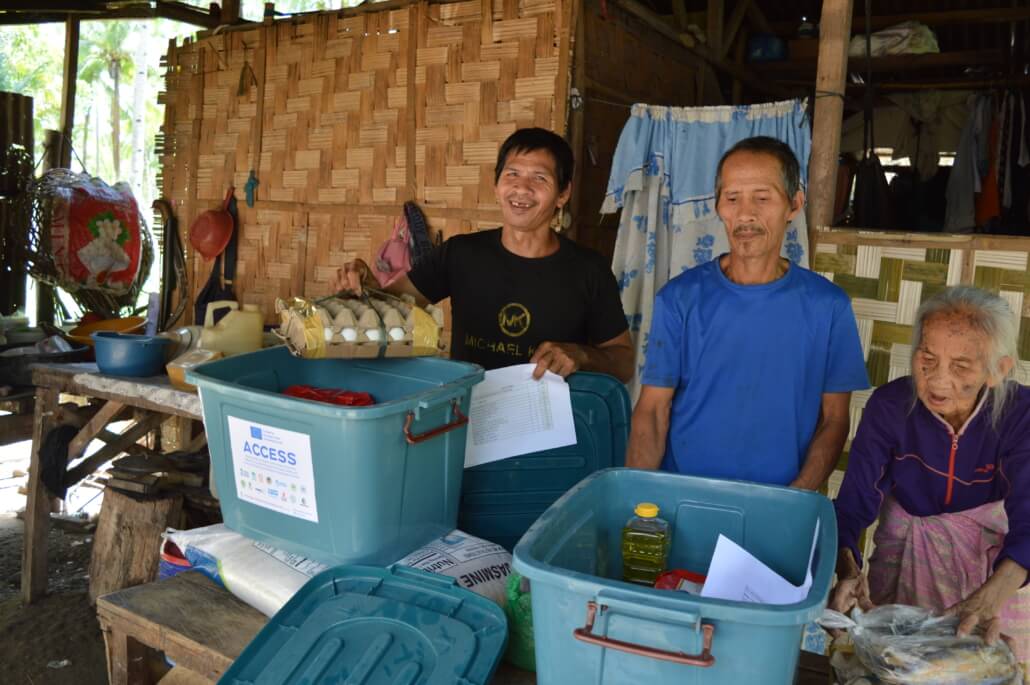
With funding from the EU Civil Protection and Humanitarian Aid through the ACCESS consortium’s rapid response mechanism, Action Against Hunger and the Mindanao Organization for Social and Economic Progress (MOSEP) are reaching communities to deliver food kits to the Sagli family and other affected households. Designed to provide immediate life-saving assistance during crises, ACCESS enables rapid support to communities facing sudden shocks, while laying out the groundwork for continued recovery assistance.
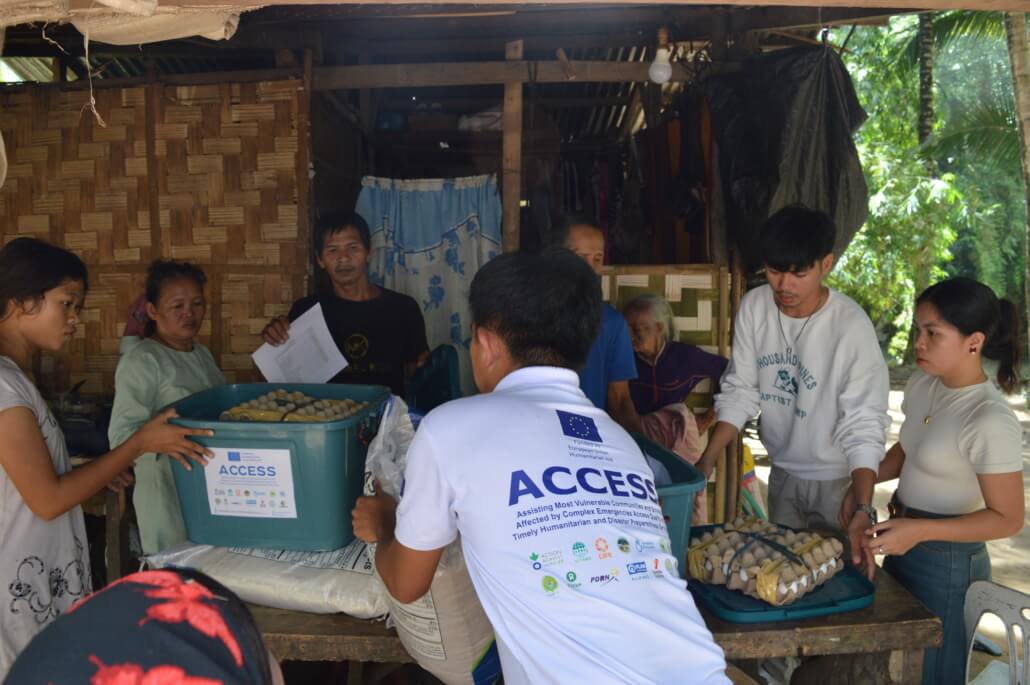
In photo: Action Against Hunger’s ACCESS Emergency Response team member presents the food kit to the family. (Photo by Ana Nico Clement for Action Against Hunger)
The delivery of food brings a moment of relief and hope to a family doing its best to cope with compounding shocks. But recovery will take time. For the Sagli family, it is not only about rebuilding what was lost but learning to live with the uncertainty of a landscape that continues to shift beneath them.
Nalio describes the psychological toll:
“Yesterday, there was a big aftershock when I went back. I almost jumped from the trauma. I am still terrified every time I feel it again.”
Children are also struggling to cope.
“When they experience aftershocks, they don’t know where to go and run away.”
These reactions highlight the urgent need for mental health and psychosocial support, particularly for children and older people who are among the most affected. Action Against Hunger is prepared to respond to these needs and support affected communities in their recovery.
Their experience reflects that of many families across affected areas, where loss, fear, and uncertainty continue in the days following the quake. Beyond immediate food shortages, communities face compounded challenges, including loss of livelihoods, unsafe living conditions, limited access to markets and safe drinking water, and increasing psychosocial distress.
As aftershocks persist and access remains fragile, sustained support will be critical. Action Against Hunger remains on the ground in Sarangani, working alongside communities to ensure that recovery reaches even the most isolated, supporting those like the Sagli family, not only to meet immediate needs, but to regain a sense of security.
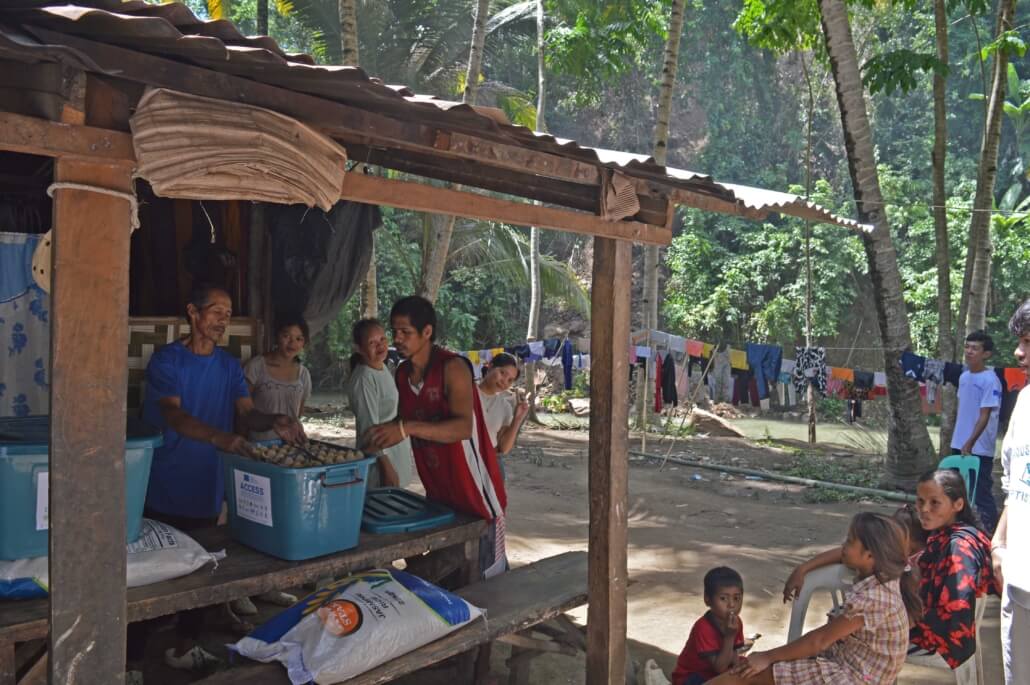
In photo: Sagli family opening the contents of their food kits. The landslide can be observed in the background (Photo by Ana Nico Clement for Action Against Hunger).
About the response:
ACCESS is a European Union Humanitarian Aid-funded project serving the most affected and underserved communities in the Philippines, where chronic armed conflict, natural hazards, recurrent displacement, and intensifying climate-related risks continue to threaten lives and livelihoods. It is implemented by a consortium of 14 local and international organizations: ACCORD, Action Against Hunger Philippines, CARE Philippines, Community Organizers Multiversity (COM), Humanity & Inclusion Philippines, Integrated Mindanaons Association for Natives (IMAN), Kadtabanga Foundation for Peace and Development Advocates, Mindanao Organization for Social and Economic Progress (MOSEP), Oxfam Pilipinas, People’s Disaster Risk Reduction Network (PDRRN), Plan International Pilipinas, Save the Children Philippines, United Youth for Peace and Development (UNYPAD), and United Youth of the Philippines – Women (UnYPhil-Women).
Written by: Ana Nico Clement
Edited by: Joyce Sandajan