Where Roots Run Deep, New Seeds Take Hold
Burgos, Siargao ─ Marked annually on November 25th, the National Day for Youth in Climate Action highlights the contributions of young Filipinos who are not only inheriting the impacts of climate change but are also helping shape responses to it. In Siargao, Janna’s story is one example of what that leadership can look like.
Janna Rose has always felt closely connected to the place she calls home. The island’s landscapes shaped her childhood, and eventually, her sense of purpose. At 24, she is one of many young islanders turning that connection into climate action.
Tracing the Roots
On the northern coast of Siargao, where impressive waves line the shoreline and green hills meet the sea, nature and daily life become deeply intertwined. For those who grew up here like Janna, climate change is not just an abstract concept and protecting the environment has long felt personal.
“Burgos is a coastal municipality, and I am from a very peaceful and green area which really influenced me to be passionate when it comes to preserving and protecting our environment.”
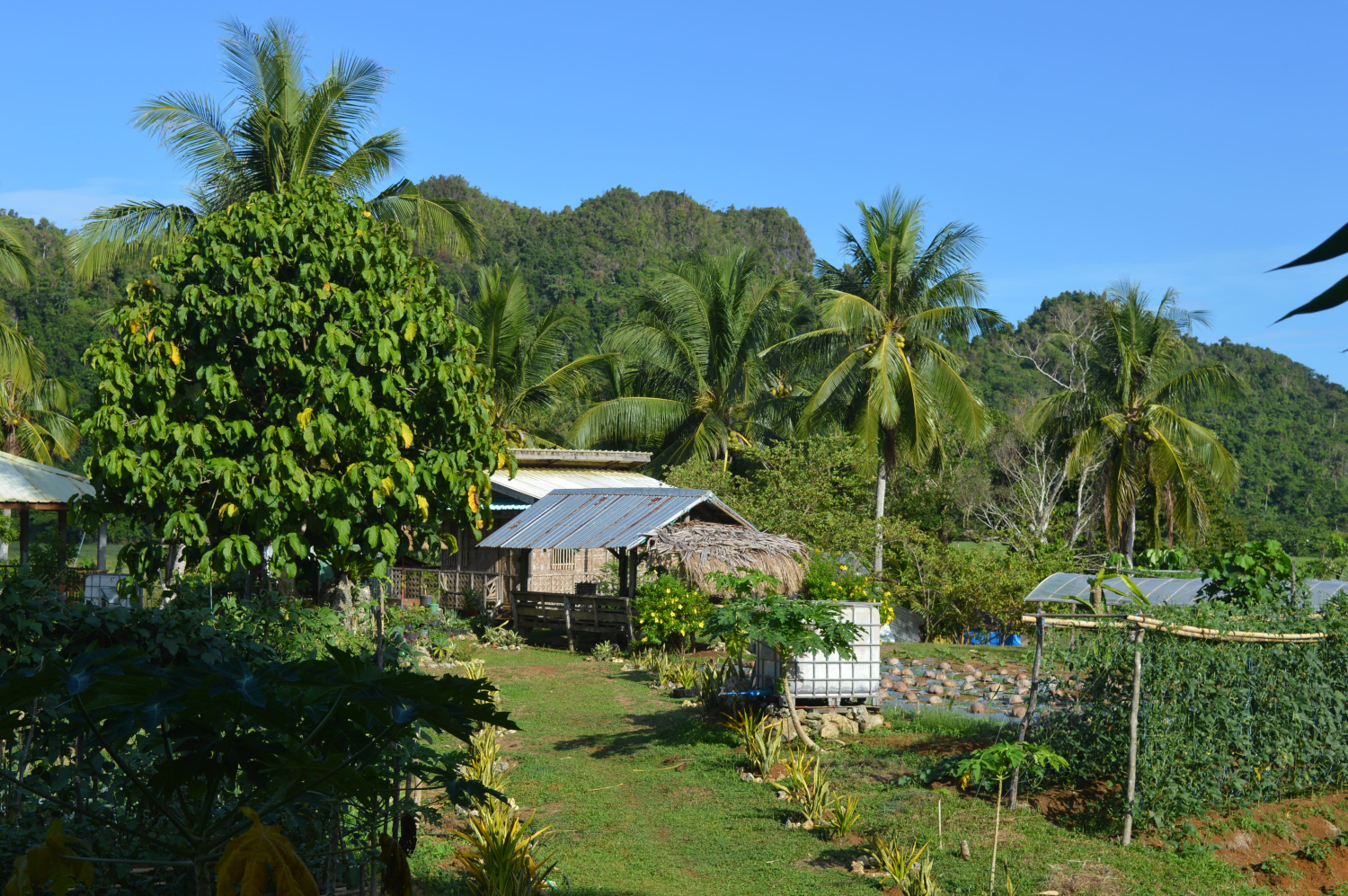
In photo: Demo Farm in the Municipality of Burgos. (Photo by Ana Nico Clement for Action Against Hunger)
We meet at the flourishing Demo Farm in the Municipality of Burgos, in Siargao island. Surrounded by rows of vegetables and young plants, it is easy to understand why the setting inspired her vision for the future.
Her commitment began early.
“Since elementary school, I was already part of the State of Youth where we have projects in the science clubs, I was also crowned the Queen of Kalikasan (Nature), so my heart is really in for the environment.”
Over the years, that passion continued to grow. Janna became active in her community, participated in local initiatives, joined the Sangguniang Kabataan (Youth Council), and pursued studies in civil engineering. Even in her chosen field, she sees opportunities to work with nature.
“I also try to adopt more nature-based solutions, contributing to environmental protection,” she ads.
For the past months, Janna has been part of a youth innovation process under the Siargao Green Economy Project. Through workshops facilitated by Action Against Hunger and local partners, over 100 young people from across the island were encouraged to examine the environmental challenges affecting their communities, understand their underlying causes, and develop practical solutions grounded in local realities.
As an active youth leader, Janna joined alongside fellow students and young people from across Siargao.
Together, they belong to a generation that has witnessed both the beauty and the fragility of island life.
Many still remember the devastation left by Super Typhoon Rai, locally known as Odette, in 2021. More recently, prolonged heat and drought associated with El Niño have left visible marks on the landscape. At the same time, a growing tourism industry brings both opportunities and new pressures for the island’s natural resources.
“It is very important to relate the youth to climate change. Right now, the news talks a lot about monsoon and El Niño, and how the climate will impact us and I think we have to know about it.”
Among the issues that concern her most is one she encounters every day.
“I have noticed a lot of changes on the island. However, the segregation of waste is still a problem. Many people still don’t practice proper waste disposal and that is very painful to my eyes.”
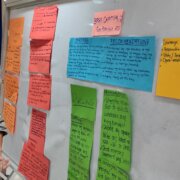
These reflections became the starting point of the innovation process. Participants were asked to identify environmental concerns affecting their communities, from climate change and biodiversity loss to waste management and development pressures.
The approach reflects a growing recognition that young people are not simply beneficiaries of climate action, but essential actors within it. Celebrated each year through the National Day for Youth in Climate Action, youth leadership is increasingly acknowledged as critical to building resilient communities in the face of environmental change.
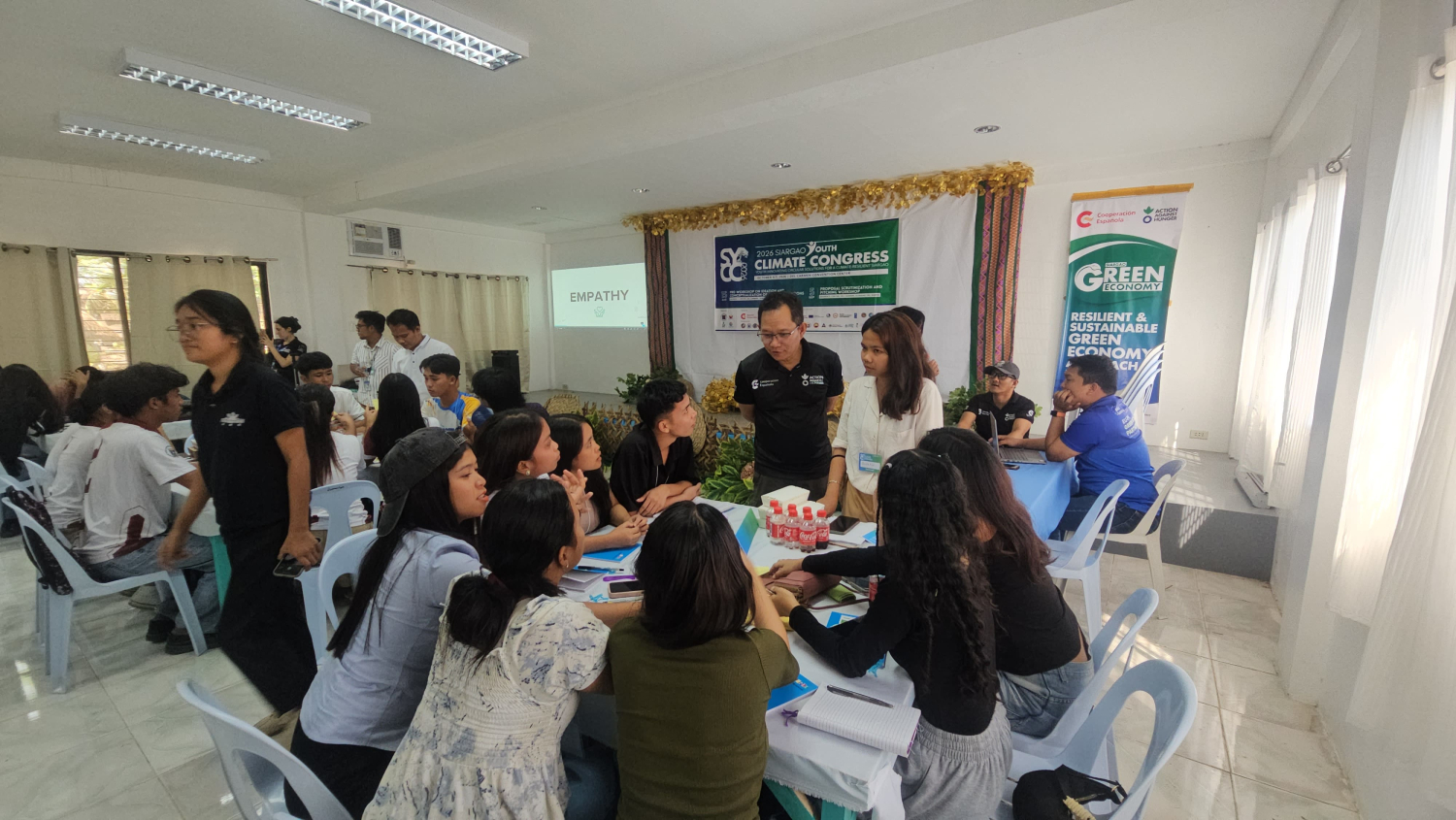
In photo: Project BINHI’s group pictured discussing climate challenges affecting their community with Action Against Hunger Field Officer during the ideation process. (Photo by Reycca Aznar for Action Against Hunger)
For many, it was the first time they had been invited not only to talk about these challenges, but also to imagine themselves as part of the solution.
“It was a good process because it is the first time we were encouraged to look at and discover the problems in our municipality and identify the solutions and innovation we would pursue.”
Finding New Seeds
As ideas began to take shape, Janna’s team found inspiration in one simple question.
What if Burgos had its own community nursery?
The result was BINHI (BINHI is a Tagalog term for seed), short for Burgos Integrated Nursery for Horticultural Innovation, a youth-led initiative focused on seed collection, seedling production, and community greening efforts.
The project responds to a common challenge. Tree-planting activities are frequently organized across communities, yet access to planting materials is often limited and long-term maintenance can be difficult. BINHI aims to create a local nursery managed by young volunteers, providing seedlings for households, schools, barangays, and community organizations.
The idea emerged after a visit that left a lasting impression on the team.
“The project started because we went to a nursery that is adapted from Japan and we were amazed because the area was very hot and they don’t have water, but they were able to grow seeds and donate them. After that, we thought, what if we had this kind of nursery in Burgos?”
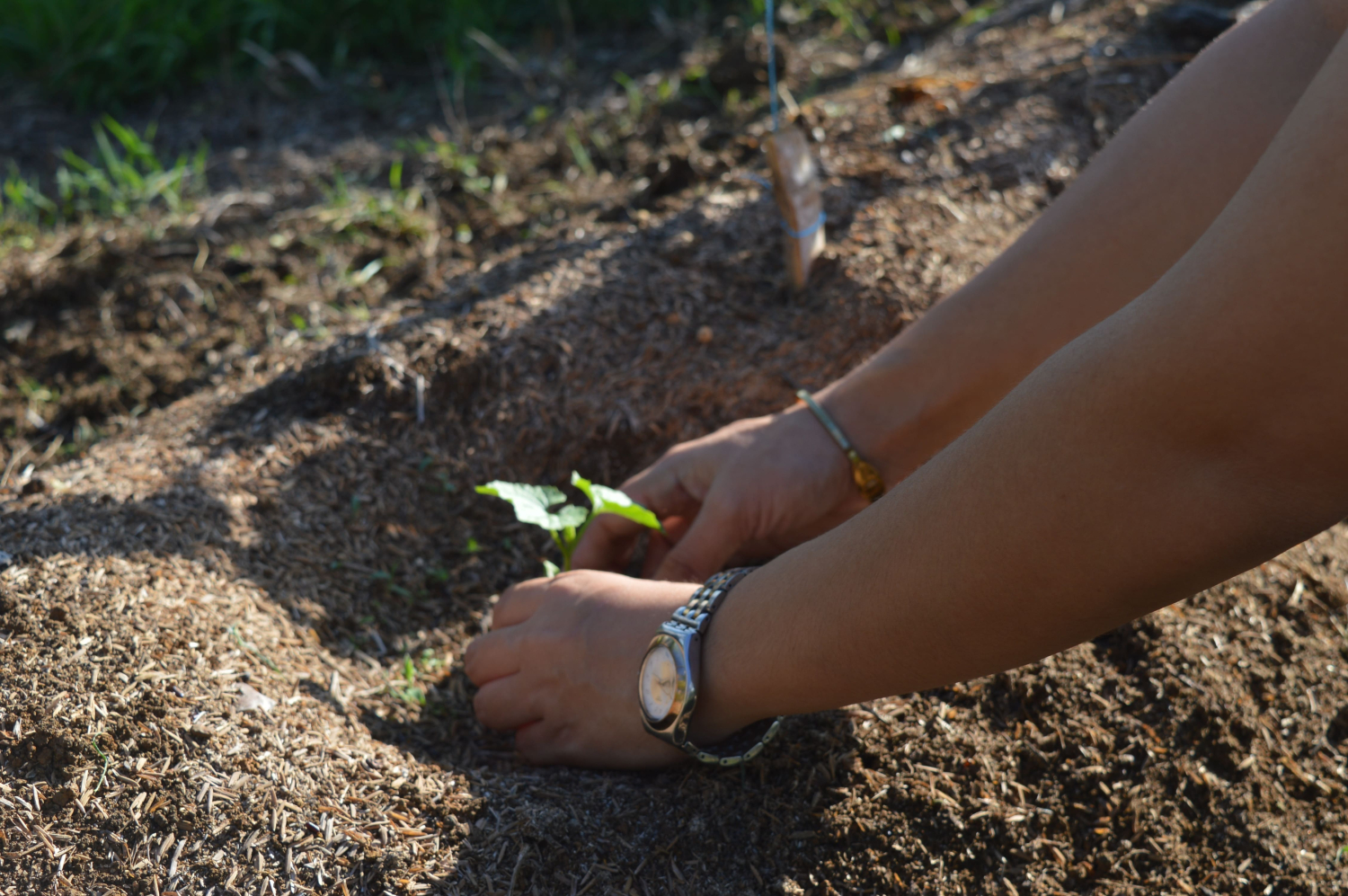
In photo: A young plant cared for by Janna. (Photo by Ana Nico Clement for Action Against Hunger)
For Janna and her team, the process was a lesson in learning by doing.
“I knew nothing about nurseries, but I feel like an expert now because for the past months we were thinking and ideating the project.”
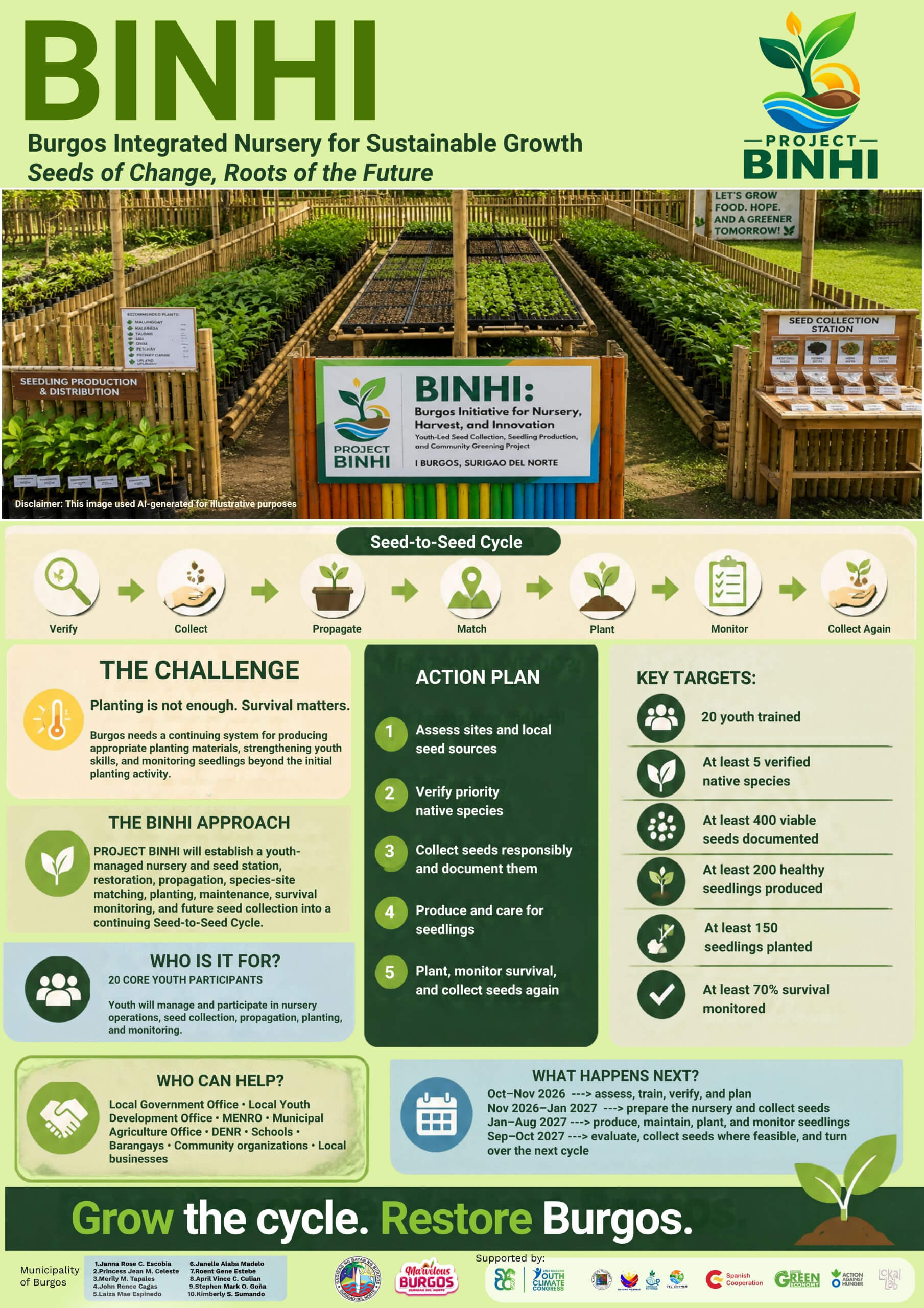
In Photo: Poster developed by the BINHI team and exhibited in the Youth Innovation Gallery during the Siargao Youth Climate Congress in October 2026. (Poster by Janna Escobia, Janelle Madelo, Princess Celeste, Merily Tapales, April Culian, John Goña
Laiza Espinedo, Kimberly Sumando)
Like the seedlings they hope to grow, the idea slowly began to take root.
Planting on Fertile Soil
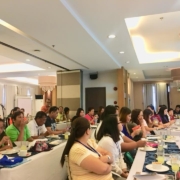
During the Siargao Youth Climate Congress, teams presented their ideas before a panel of experts representing environmental, academic, and development organizations. Participants received feedback, technical guidance, and recommendations to strengthen their proposals.
Janna served as one of BINHI’s lead presenters.
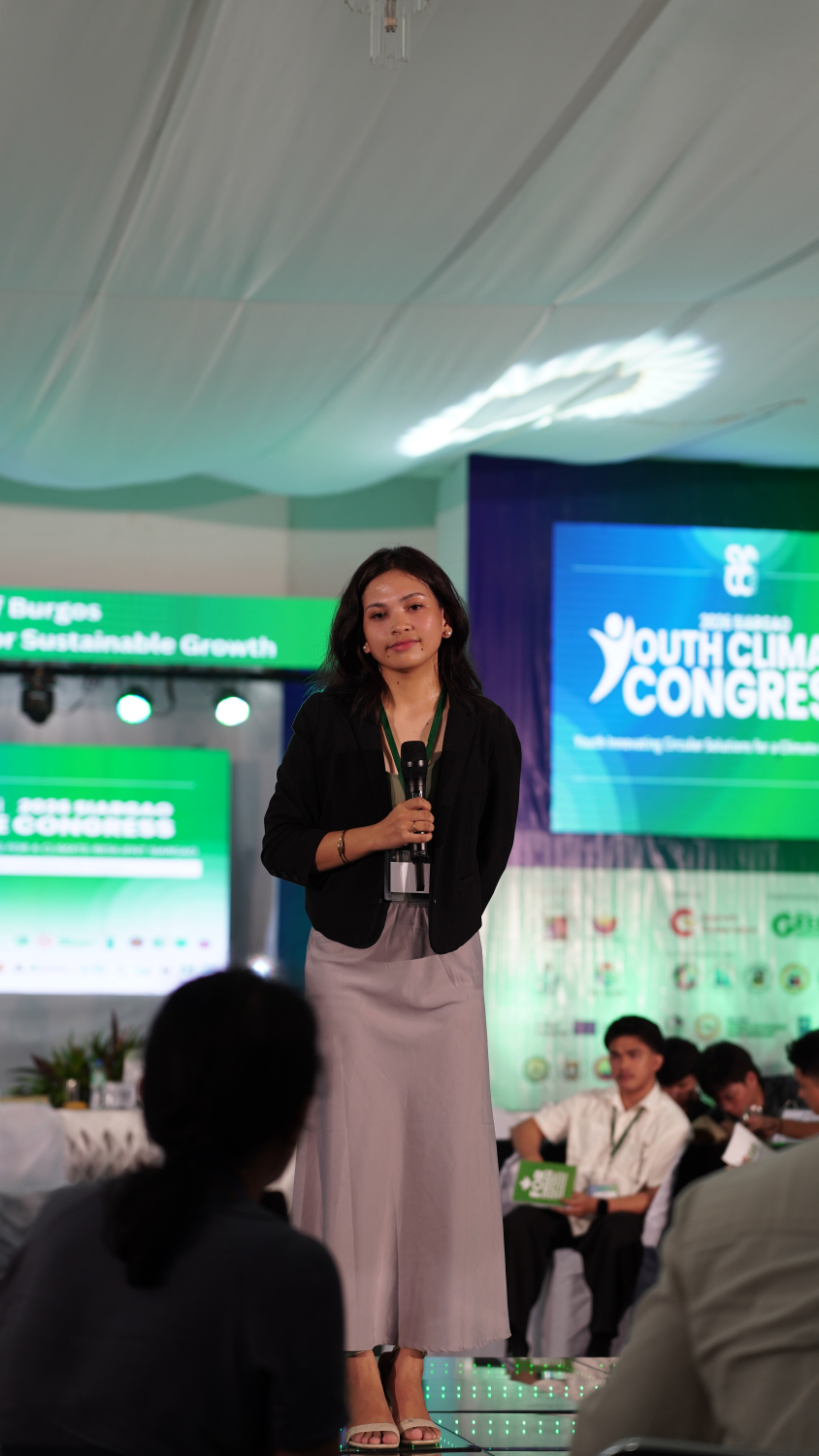
In photo: Janna pitching project BINHI during the Siargao Youth Climate Congress (Photo by Reycca Aznar for Action Against Hunger)
The feedback proved invaluable.
“I heard a lot of comments from prestigious people who gave us knowledge that will help project BINHI. For example, SIPLAS discouraged us from planting Mahogony that is very invasive and suggested other native plants instead.”
The experience demonstrated that good ideas grow stronger when nurtured collectively.
Cultivating Growth
On an island where roots run deep, new seeds are already beginning to take hold.
As the congress concluded, over 100 participants from eight municipalities in Siargao gathered to pledge their support for a more inclusive, climate-resilient, nature-positive, and youth-empowered future for Siargao.
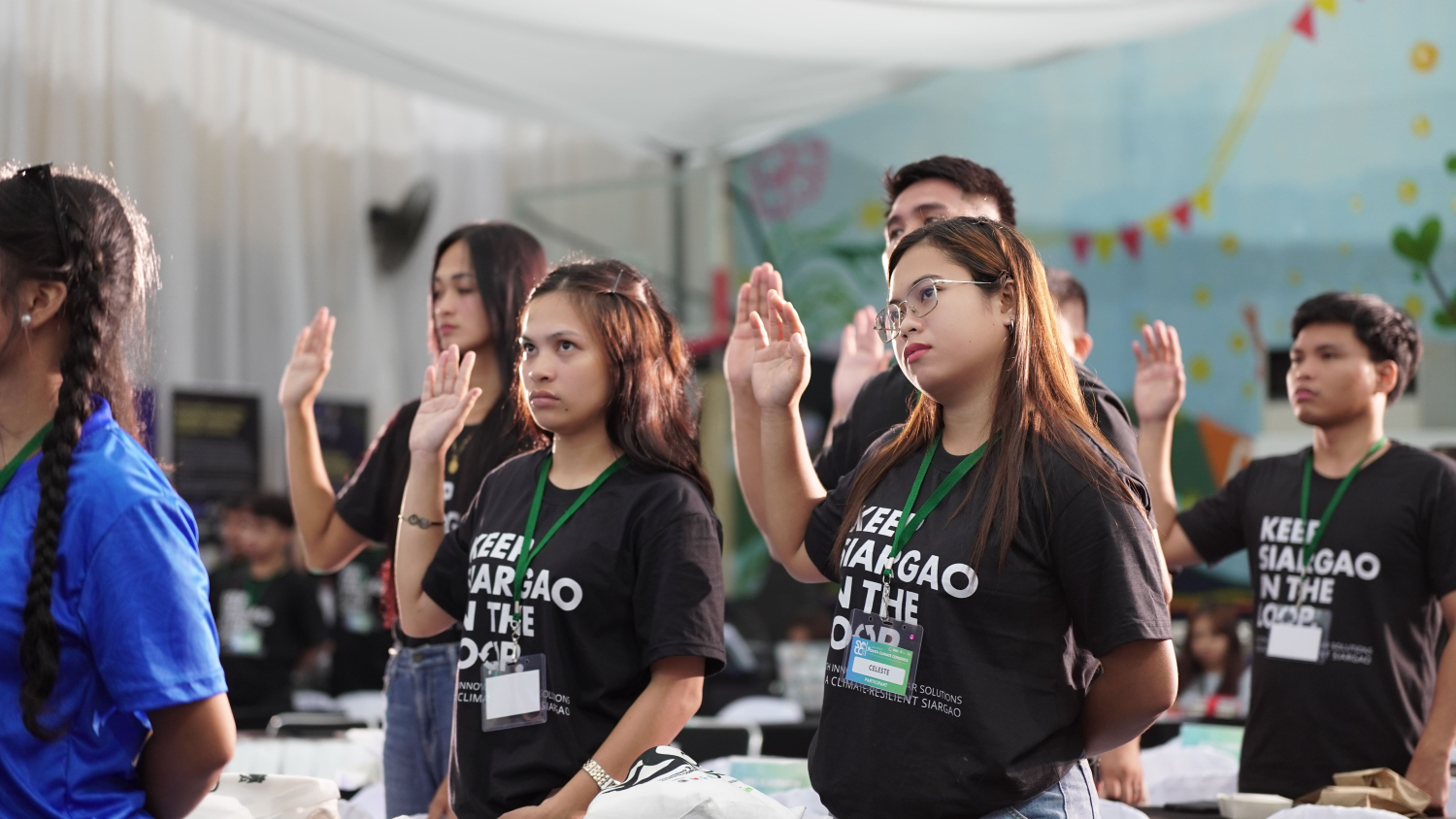
In photo: Janna and teammates from project BINHI pledge to the Manifesto for an Inclusive Climate-Resilient, Nature-Positive, and Youth-Empowered Siargao Islands during the closing of the congress. (Photo by Reycca Aznar for Action Against Hunger)
The experience left Janna feeling hopeful.
“I feel united because we have the same goal to protect our nature.”
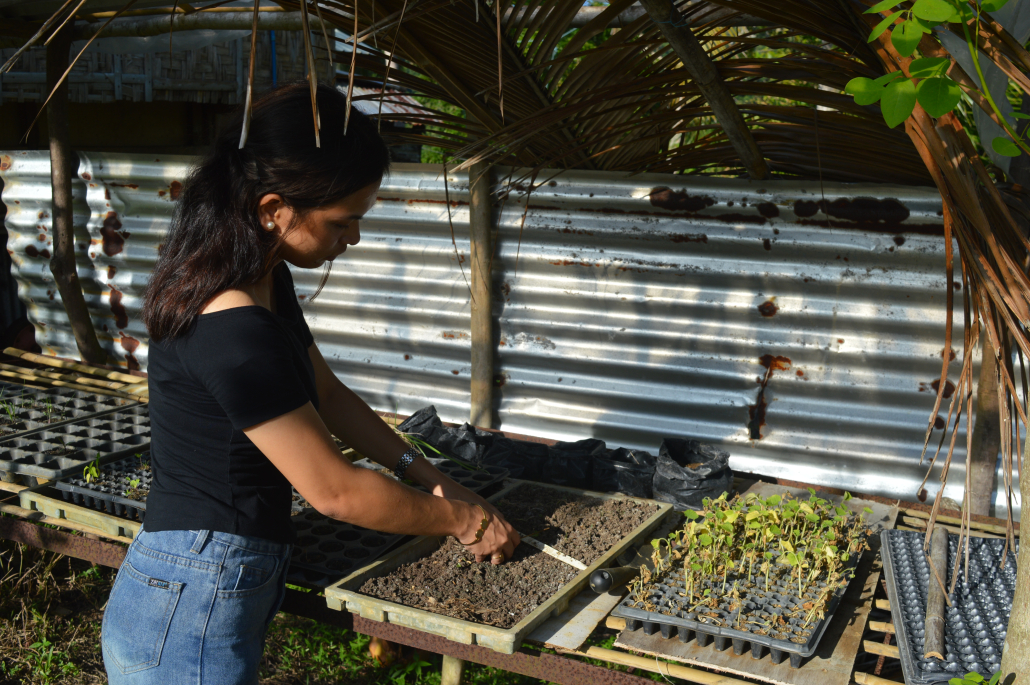
Standing at the Demo Farm, she looks toward the area where the nursery is planned to take shape in the future.
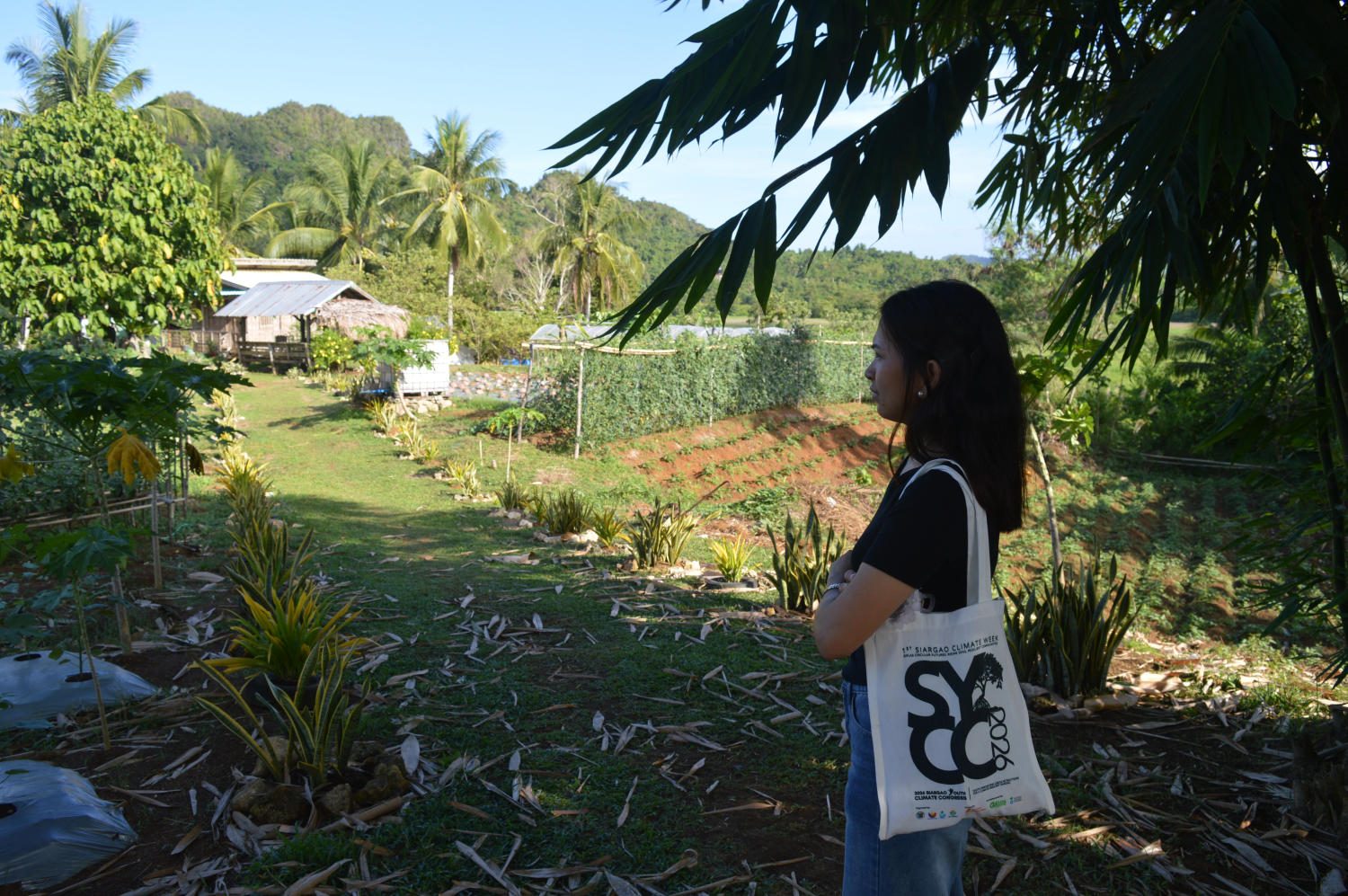
In photo: Janna with SYCC looks onto the farm where the nursery is planned to one day see the light of day in San Mateo, Burgos. (Photo by Ana Nico Clement for Action Against Hunger)
The vision may still be at its earliest stage, but like any seed, growth begins long before it becomes visible.
Across the Philippines, the National Day for Youth in Climate Action recognizes the role young people play in building a more sustainable future. In Burgos, that role looks like a group of young volunteers planning a community nursery. It looks like seedlings prepared for future greening initiatives. And it looks like young leaders like Janna, turning concern for their environment into action rooted in their own communities.
What started as conversations about environmental challenges has become a project rooted in community ownership, local knowledge, and a shared commitment to caring for the island.
Janna believes young people have an important role to play in that future.
“Youth are very much active on different platforms, and they can use their voice to influence. Being passionate is our greatest power to influence the world.”
And when asked what message she would leave for others, she returns to the same value that guided her journey from participant to changemaker- collective action.
“I would like to say that if we have one decision to make about the environment it would be to be united, to protect and preserve what we have.”
She cultivates this same spark when talking about her teammates and the BINHI project.
“This project will see the light because it is achievable and my co-members are passionate about it. I think we can because we want to.”
About the Siargao Green Economy Project
The “Resilient and Sustainable Green Economy Approach” or Siargao Green Economy Project fosters climate resilience and green economies in Siargao Island through inclusive, gender-transformative governance and private sector engagement.
The Siargao Green Economy Project initiates the identification, design, and implementation of durable solutions linked with circular economy. Our main objective is to improve solid waste management systems and promote green economic initiatives, enhancing community resilience, and environmental sustainability.
Operating on a local scale, the project is supporting local governance and empowering local communities, private sector, and other stakeholders in building resource-efficient and green economies. Alongside, we are strengthening gender-inclusive and transformative community preparedness, mitigation and prevention for disasters and while enhancing resilience to climate change.
The Siargao Green Economy Project is implemented by Action Against Hunger, with funding from the Spanish Agency for International Development Cooperation (AECID).
Written by: Ana Nico Clement