When Challenges Collide, Collective Care Rallies Around an Ailing Child
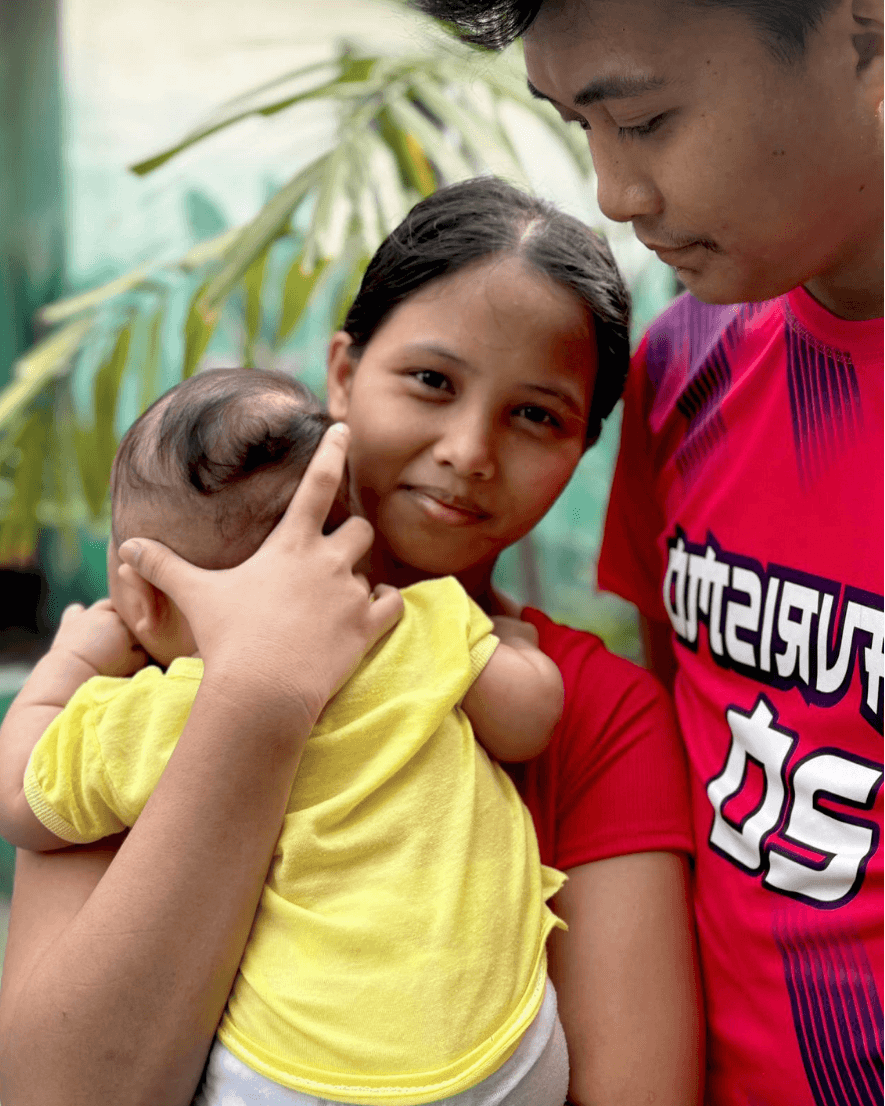
GLAN, Sarangani ─ When two-month-old Zane Gabriel developed severe pneumonia, his family was already struggling to make ends meet. Then a powerful earthquake struck their home, adding to their financial pressures and disrupting access to healthcare. Through it all, parents, grandparents, non-governmental organizations, health workers, and community members rallied around one small child.
At just two months old, Zane Gabriel was fighting for every breath.
His family knew he needed medical care, but reaching it was not simple. His parents relied on the support of grandparents already facing financial difficulties. Then, before they could fully respond to his worsening condition, a powerful earthquake struck southern Mindanao.
Suddenly, the family was facing two emergencies at once.
“The earthquake happened so fast, the stress doubled, and we had to face both the quake and the child’s illness,” shares his grandmother.
The infant’s condition worsened. Every breath became more difficult. The family had no choice but to bring him to the nearest health facility in the municipality of Glan.
Health facilities were already operating under strain after the earthquake injured many people and damaged critical medical infrastructure. From their home in Barangay Cablalan, the journey there is costly. Damage to roads and landslides made travel even more difficult for many communities.
Once there, the family learned that the nearest facility lacked the breathing apparatus Zane Gabriel urgently required. From Glan, he was transferred to the Municipality of Alabel and later to a hospital in General Santos City, where he would spend more than a month in intensive care.
While Zane’s grandmother worried about mounting expenses at home, his mother, Regane, faced a different reality over an hour and a half away, spending day after day beside her son in the hospital.
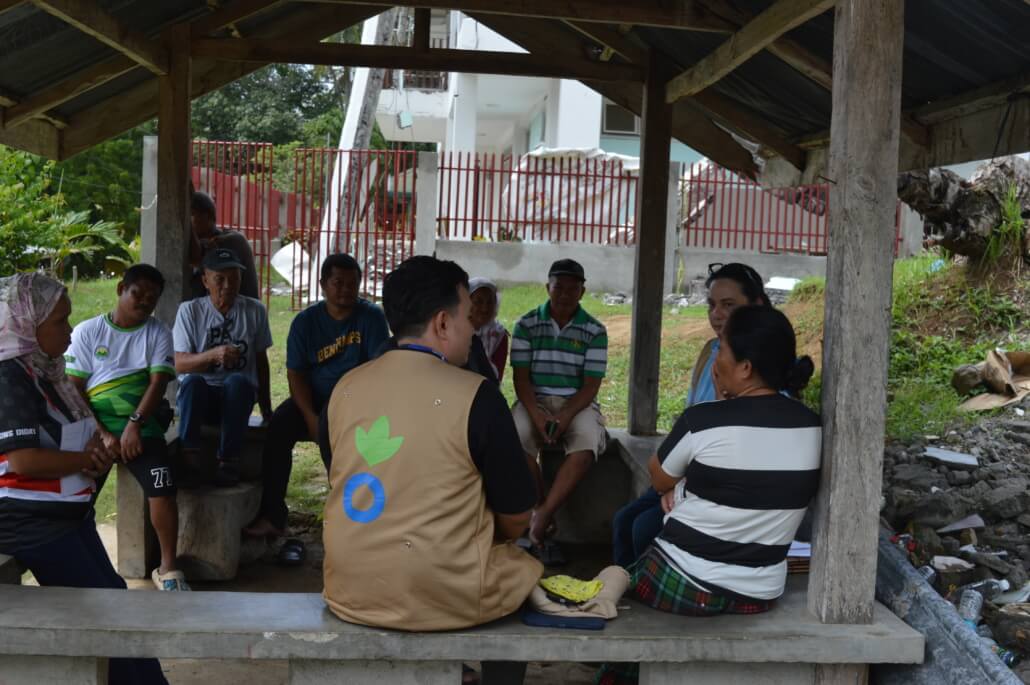
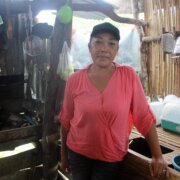
In photo: Jermilyn (grandmother) speaks with the Field Health Officer of Action Against Hunger in front of the now destroyed barangay hall in Cablalan, Glan. (Photo by Ana Nico Clement for Action Against Hunger)
Field Officers from Action Against Hunger met Zane Gabriel’s grandmother, Jermilyn, during this uncertain time. She was consumed by concern for the infant and about the growing medical bill her family could not afford.
“My husband, the grandfather, is a tricycle driver, so he is not earning much. We have received a prescription being released on a daily basis.
So far, we could not keep up with the bills, let alone with the medical ones. It’s very hard, and that is why I’m so emotional right now,” shares Jermilyn.
The grandparents were earning less than before the earthquake. Fewer people were commuting as families across the community faced their own struggles recovering from the damage and interruptions.
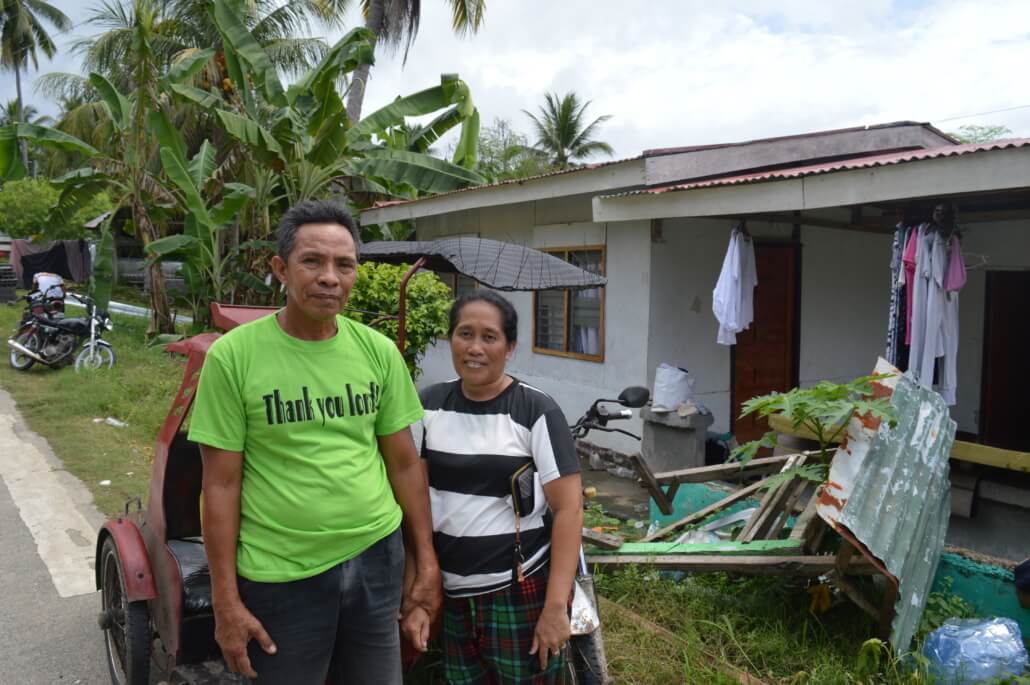
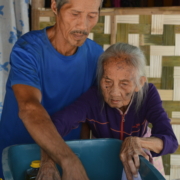
In photo: Zane Gabriel’s grandparents, Jermilyn and her husband, pictured in front of the tricycle he uses for work. Since the earthquake, less people have been asking for his services, and their income has consequently suffered (Photo by Ana Nico Clement for Action Against Hunger)
At just 18 years old, Jermilyn’s daughter, Regane, had hoped to complete senior high school before pursuing college. Those plans are now temporarily on hold as she focuses on her son’s recovery. Her partner, Gerald, 22, is an incoming fourth-year college student. While he continues working toward completing his studies, the young couple continues to rely on their families for financial support.
The uncertainty surrounding Zane Gabriel’s condition has also delayed Regane’s plans to return to school.
“Both Gerald, the father of our child, and I have temporarily put our studies on hold because our priority right now is taking care of Zane while he is hospitalized,” Regane mentions.
With limited resources, they are doing their best to meet both their daily needs and afford the medical expenses associated with caring for their infant. Their son’s hospitalization has become the family’s immediate priority, requiring them to focus their time, energy, and resources on his recovery.
Meanwhile, the medical bill kept growing. Regane spent weeks in Glan close to her son, while Jermilyn was often unable to afford the journey to visit her grandson.
“I have not seen him in a long time. I could not go before for financial reasons. The commute expense and the food also need to be secured for my daughter,” explained Grandmother Jermilyn.
In Barangay Cablalan, Jermilyn shared her case with friends and organizations like Action Against Hunger, present on the ground, in the hope of finding support. She shares, “I am praying but it is still very difficult. I am asking for assistance from everyone I know, including my friends. Even my friends and family need help but still I am relying on them. This is what keeps my spirit up.”
Indeed, the magnitude 7.8 earthquake severely hit her barangay, and the entire community was affected by this new reality. Like many others in Cablalan, their family has also had to recover from the earthquake. Their home sustained damage, but the primary concern remained her grandson’s health.
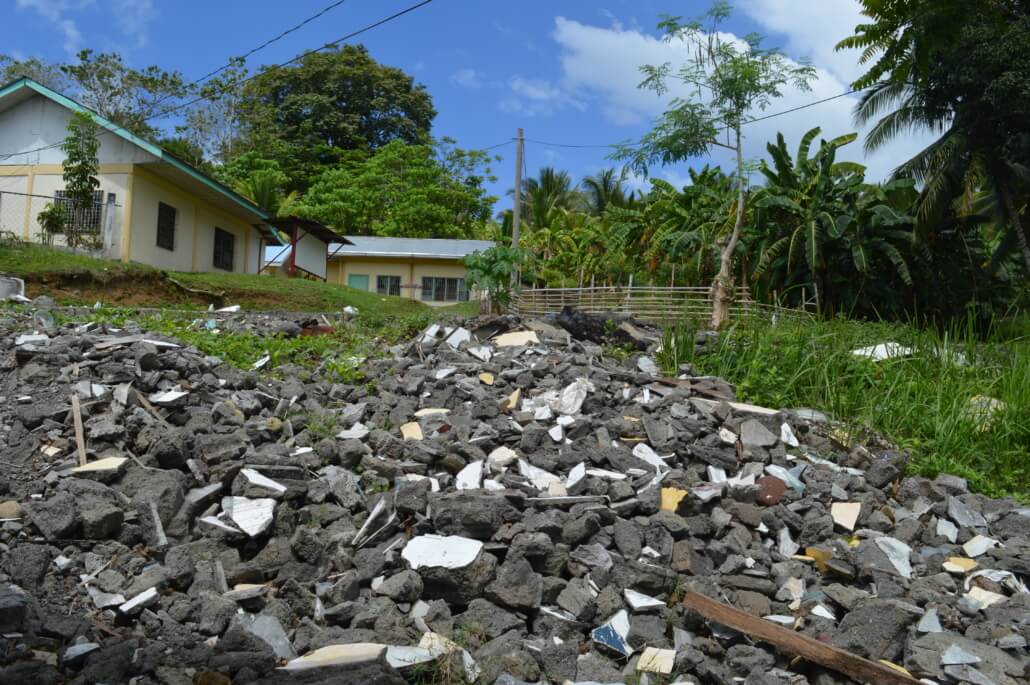
In Photo: Destruction in the city centre of Cablalan (Photo by Ana Nico Clement for Action Against Hunger)
As medical bills continued to grow and the family struggled to balance hospital visits with daily expenses, Action Against Hunger’s emergency response team identified the household as needing additional health support. Through funding from the Swedish International Development Cooperation Agency (Sida), the family received financial assistance to help ease some of the immediate hardships while Zane Gabriel remained hospitalised. Regane extends gratitude for the response,
“Your support eased some of the burden we were carrying and allowed us to focus more on caring for our son during this difficult time.
It reminded us that we were not facing this challenge alone, and for that, we are deeply appreciative.”
As first-time parents navigating a prolonged hospitalization, Regane and Gerald often found the process overwhelming. Beyond financial support, Action Against Hunger’s team helped connect the family with hospital social workers and available assistance programs they did not know existed.
“Beyond the financial assistance, what truly made a difference was the guidance you provided throughout our journey.
Helping us process our hospital billing by referring us to the hospital social worker opened opportunities for additional assistance that we did not know were available.”
Over a month later, with time and continuous care, Zane Gabriel’s health has improved.
Today, Zane Gabriel is still recovering from pneumonia. Although the doctors have advised that he can already be discharged, they encouraged both his parents, to continue closely monitoring his condition at home for any signs that his illness may return.
“Since he is still very young and has not yet received his routine vaccinations, they recommended bringing him home as soon as it is safe to do so to reduce his risk of exposure to other communicable diseases in the hospital,” explained Regane. “We remain hopeful that he will continue to recover and grow stronger each day.”
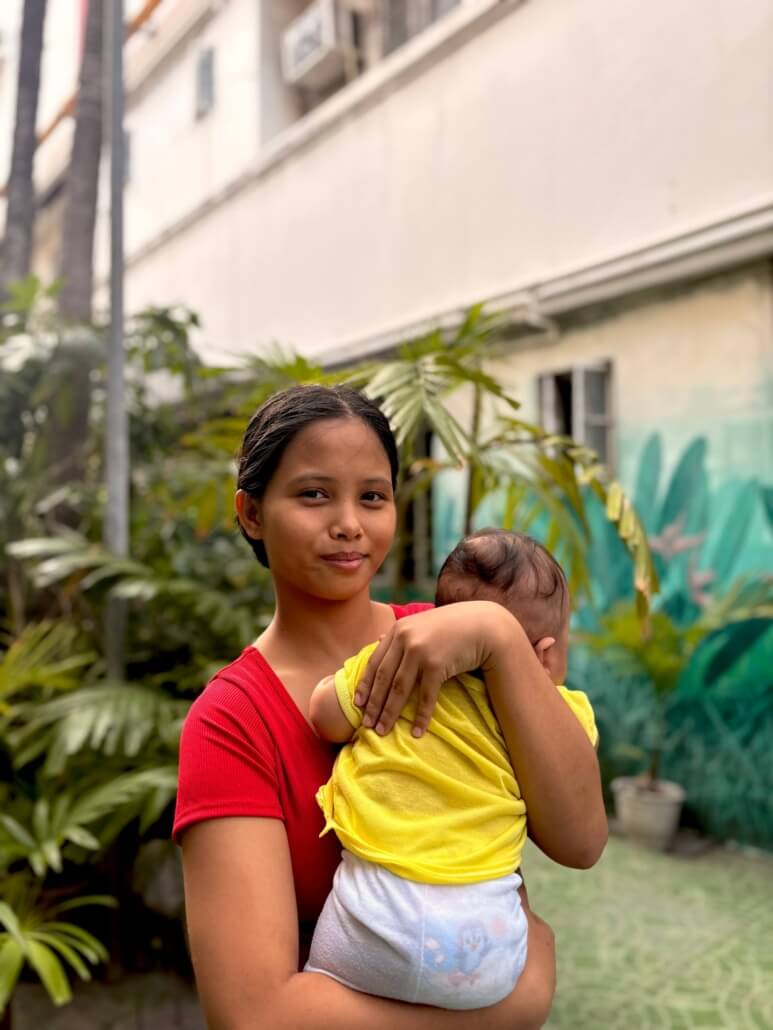 More than a month after entering intensive care, Zane Gabriel’s health is finally improving. However, the baby has yet to be officially discharged from the hospital due to pending billing. Action Against Hunger facilitated the referral with social services to support the process and assist with the necessary arrangements.
Still, for the first time in weeks, they are beginning to imagine the future again.
For grandmother Jermilyn, that future includes seeing both her daughter and grandson thrive. “I want my daughter Regane to finish school, to get a nice degree and a great job. I hope Zane Gabriel gets better and that we can put him through school.”
Regane shares similar aspirations for her son,
“My greatest hope is to see my son, Zane, grow up healthy and have the bright future I have always dreamed for him.
To my baby, I want you to keep fighting because your father and I are here beside you, doing everything we can to help you recover.”
Grandparents, parents, medical workers, friends, and community members each play a role in supporting children like Zane Gabriel. Action Against Hunger helped strengthen this network of care by connecting the family to available services and resources while supporting their immediate financial needs.
Throughout months of uncertainty, Zane Gabriel’s parents and grandparents carried him through every setback. In return, the infant’s determination inspired them to keep going.
“Throughout this journey, we have learned just how strong he truly is. Despite the many injections, medical procedures, and the discomfort he has gone through, he continues to smile,” his mother expresses with pride.
“Seeing his cheerful spirit, even during difficult days in the hospital, gives us strength and reminds us to stay hopeful. He has taught us that resilience can come even from someone so small.”
ABOUT THE RESPONSE
As part of its emergency response to the Sarangani earthquake, Action Against Hunger, through support from the Swedish International Development Cooperation Agency (Sida), is helping affected communities access essential health services despite disruptions caused by damaged infrastructure, displacement, and financial hardship.
The response includes logistical and financial support for vulnerable individuals requiring healthcare, including transportation assistance, referrals, and support for health-related expenses. Action Against Hunger also works closely with Rural Health Units, Local Government Units, and referral hospitals to strengthen continuity of care and ensure vulnerable populations can access appropriate services.
In addition, the organization is supporting frontline health workers through training, mentoring, and on-the-job supervision on mental health and psychosocial support, psychological first aid, protection-sensitive approaches, and safe referral pathways. These efforts help strengthen local health systems and improve access to timely, coordinated, and quality care for earthquake-affected populations.
Interview by: Raphael Emperio and Ana Nico Clement
Written by: Ana Nico Clement

 Alexane Simon