Tag Archive for: #WASH

Water for Equality: A School Where Girls Can Learn with Dignity

March 22 marks World Water Day, a global moment to reflect on the essential role of water in our lives. This year, the theme “Water for Equality” reminds us that the water crisis affects everyone, but not equally. When safe water and sanitation are out of reach, inequalities deepen, and both women and young girls carry the heaviest burden. According to the United Nations, across the world, females spend more time collecting water, face greater health and safety risks, and are more likely to miss out on education and opportunities.

Where water flows, equality grows. And when water is absent, inequality flourishes.

For young female students, these challenges start early. In the Philippines, the World Bank states that 8% of girls have reported skipping classes due to their menstruation and the challenges it entails, including the lack of water and the difficulty of maintaining proper hygiene in schools. In Siargao, water shortages are common for young students, even though the island receives a lot of rain each year. Rapid tourism growth and changing weather patterns continue to put pressure on local water sources.


In the municipality of San Benito on Siargao Island stands Nuevo Campo Elementary School, a small public school serving 60 children from kindergarten to Grade 6. Each day, young learners fill their classrooms with energy and hope. For years, limited access to water affected the daily routines of both students and teachers.
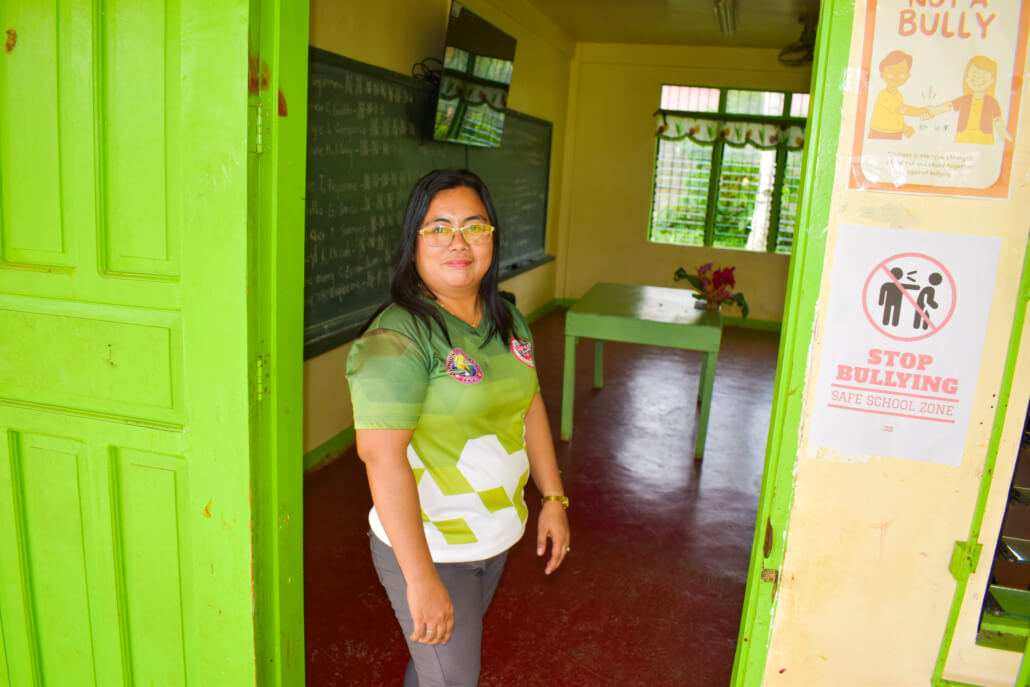
In photo: Teacher Elisavil stands in front of the classroom where she teaches daily at Nuevo Campo Elementary School in the Municipality of San Benito. Photo by Martina Vercoli for Action Against Hunger.

While the lack of water affected all children, it had a particularly different impact on young female students.

“Without water in the restrooms, girls could not wash themselves properly or manage their hygiene with dignity,” says Elisavil, a grade six teacher  who has taught for 16 years. According to her, girls faced confusion and discomfort during their first menstruation. Having no water in the restrooms made the situation worse. Some delayed changing their sanitary pads, leading to stains on their clothes, and comments from male classmates often caused embarrassment and shame. In some cases, girls would go home to clean themselves at the expense of valuable learning time.

In the past, Elisavil recalls the frustration of being unable to fully support her students. “Many girls skipped classes to manage their periods at home, missing lessons and opportunities,” she shares.
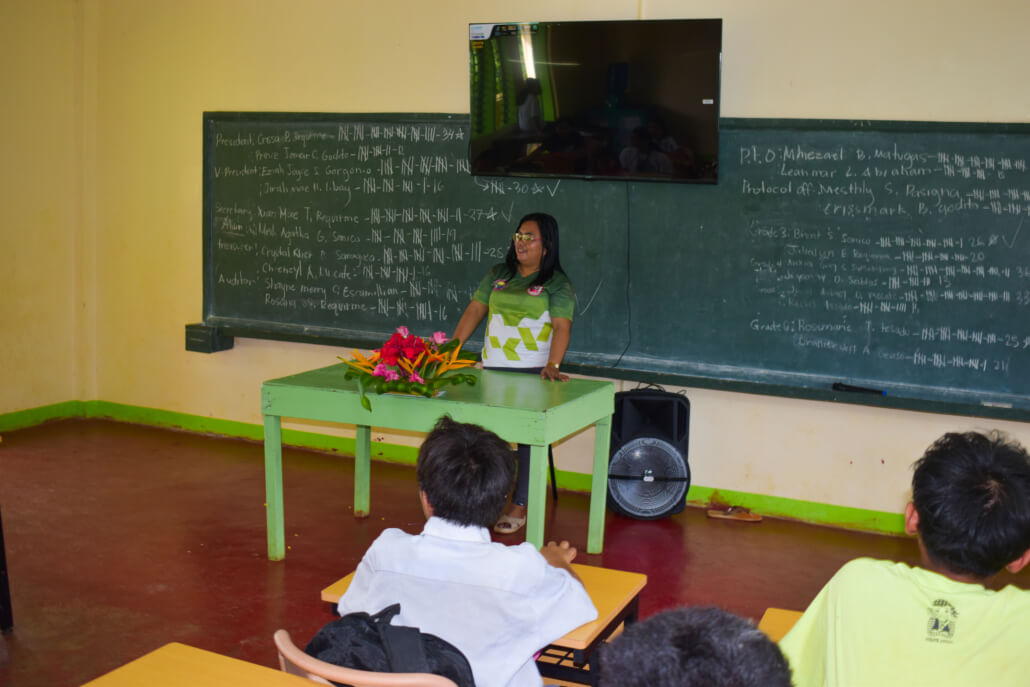
In photo: Elisavil discusses in one of the classes of Nuevo Campo Elementary School in the Municipality of San Benito. Photo by Martina Vercoli for Action Against Hunger.

Today, she actively promotes hygiene and equality in her classroom, guiding proper handwashing and toothbrushing practices, and educating students about responsible water use.

Privacy concerns were also significant. Students sometimes entered bathrooms assigned to the opposite gender to find water, creating uncomfortable situations.
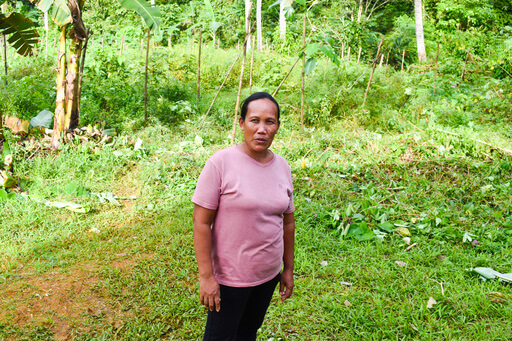

In photo: Jena, President of the Parents-Teachers Association at Nuevo Campo Elementary School in San Benito, Surigao del Norte. Photo by Martina Vercoli for Action Against Hunger.

Jena, 49, a parent and now president of the Parents and Teachers Association, confirmed these struggles. Having grown up in Nuevo Campo and attended the same elementary school, she now voluntarily manages school maintenance, ensures Water, Sanitation, and Hygiene facilities function properly, and oversees the safety and well-being of students. She is, in every sense, the guardian of the school’s water system.
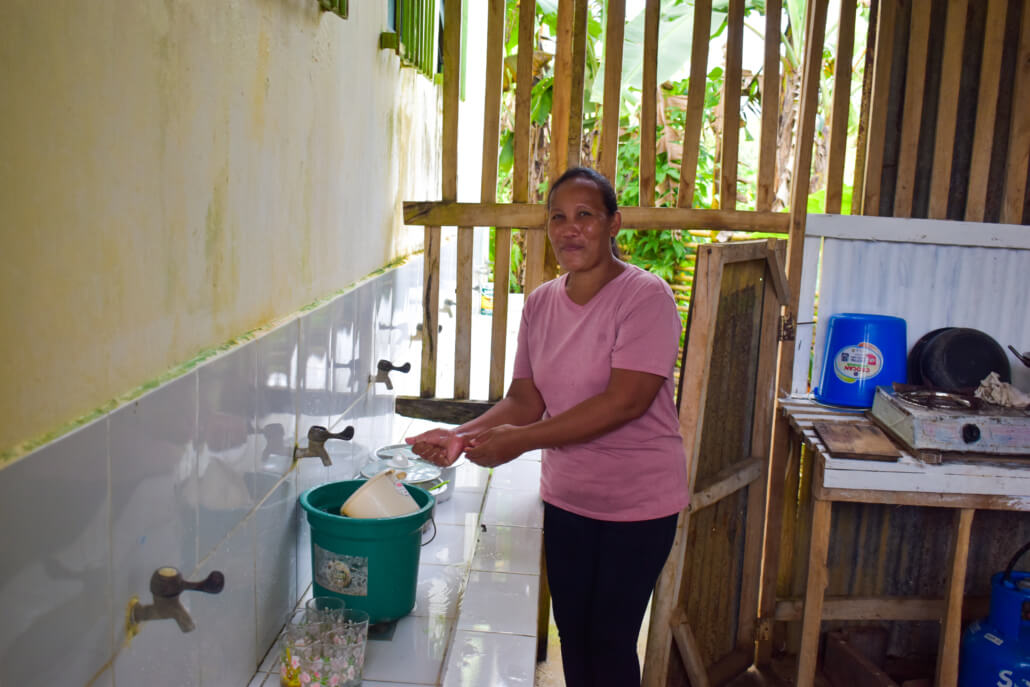
In photo: Jena, President of the Parents-Teachers Association at Nuevo Campo Elementary School in San Benito, Surigao del Norte, washes her hands inside the school kitchen. Photo by Martina Vercoli for Action Against Hunger.

Jena’s day begins early by cleaning the surroundings, checking the water system, and turning on the pump when pressure is low to ensure water reaches all faucets. Before the rehabilitation of the WASH facilities, she would walk back and forth up to five times a day to nearby water sources to ensure students had access, especially girls needing privacy for menstrual hygiene. She also cooks for the students, distributes food, washes dishes, and helps maintain the school garden.

Amid the challenges they faced, figures like Elisavil and Jena, became pillars of support.
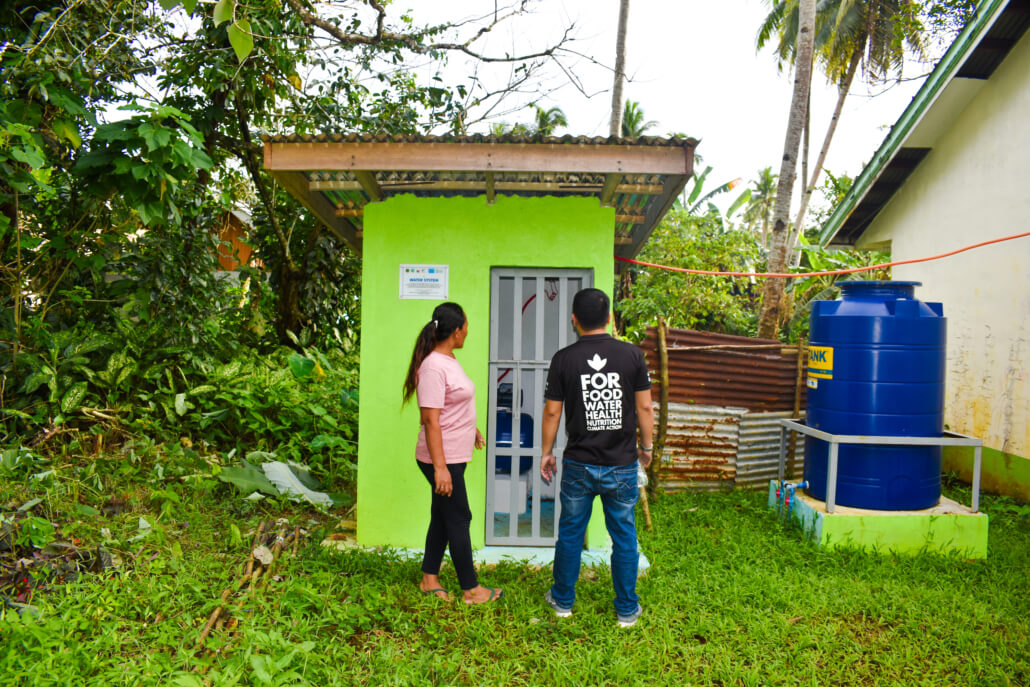
In photo: Jena and Action Against Hunger Engineer, Mark Alain Punzalan, stand in front of the new pump house and elevated water tank at Nuevo Campo Elementary School in San Benito, Surigao del Norte. This was implemented by Action Against Hunger together with UNICEF. Photo by Martina Vercoli for Action Against Hunger.

Through the Typhoon Odette Recovery and Rehabilitation towards Climate Resilience project, implemented by Action Against Hunger and UNICEF, with the funding support of the government of New Zealand through the Ministry of Foreign Affairs and Trade, the school received a pump house and an elevated water tank, ensuring a consistent water supply. Handwashing facilities were also repaired, providing students with safer and more reliable access to water.

Improved water access has made daily routines easier, particularly for young girls. They can manage hygiene more safely and privately, attend classes more comfortably, and focus better on their studies.

For Jena, “water for equality means that reliable access allows young girls to attend school with dignity, confidence, and equal opportunities to learn.” Elisavil echoes this, explaining that water for equality ensures every child has equal access to sanitation facilities, recognizing that the same problem, like lack of water, does not affect all students equally.

When communities put women and girls at the center of water solutions, everyone benefits.

Women like Elisavel and Jena, who support young female students during critical moments, are true water heroes—leaders, caretakers, and advocates for change.


Written by: Martina Vercoli
Editor: Joyce Sandajan

Read more

WATER, HYGIENE, AND HOPE: SUPPORTING NANAY CARMEN AFTER THE FLOOD

When Typhoon Kristine (Severe Tropical Storm Trami) struck Barobaybay, Camarines Sur, 76-year-old Nanay Carmen faced rising floodwaters, putting her already fragile health at risk. Like many vulnerable individuals, she struggled with limited access to clean water and basic hygiene products. Thanks to our intervention, with the support of UNICEF, we provided her with essential hygiene and water kits, allowing her to regain a sense of comfort and dignity. Discover her story…


Rising waters and anxiety

On the evening of October 20, 2024, 76-year-old Carmen C. Panuelos—known in her community as Nanay Carmen—felt anxious as heavy rains from Typhoon Kristine (known internationally as Severe Tropical Storm Trami) began flooding her neighborhood in Barobaybay, Bicol, Camarines Sur. The swelling Bicol River isolated the entire community for five days, making it too dangerous to seek help in neighboring areas.

Nanay Carmen, who has lived with high blood pressure, arthritis, and an untreated goiter for 30 years, stayed awake all night, worried about the rising waters surrounding her home. By 9:00 AM the next morning, October 21, 2024, the floodwaters had risen to chest height, forcing her to evacuate. With the support of barangay officials, she and her granddaughter, Elma, were transported by boat to the barangay hall, which served as an evacuation center.

Challenges in the Evacuation Center

The evacuation center, though a refuge, presented its own challenges. The cold, crowded conditions and lack of sanitation facilities strained Nanay Carmen’s health. By October 22, she developed a fever, and barangay health workers attended to her immediately. With shared, poorly equipped bathrooms and limited water supply, she struggled to meet her basic hygiene needs. Often, she avoided using the bathroom due to her mobility limitations and the lack of privacy. Unable to bathe, she felt uncomfortable and longed for her home, where she could restore some normalcy.

The long road to recovery

Food shortages added to her struggles, leaving her hungry and yearning to cook her own meals. By October 24, Nanay Carmen returned home, navigating knee-high floodwaters to find comfort in her familiar surroundings. However, she has since battled a persistent cough and cold, and her anxiety spikes whenever it rains heavily.
Nanay Carmen, a widow, lives with her 40-year-old son, her primary source of support. However, her son recently lost his job due to the typhoon’s impact, further straining their already limited financial resources. Together, they face daily challenges, especially in addressing Nanay Carmen’s health and hygiene needs.

Assistance through hygiene and water kits

On November 2, 2024, Nanay Carmen received hygiene and water kits from Action Against Hunger and UNICEF, with support from the UK Foreign, Commonwealth and Development Office, for the first time. The kits contained essential items such as soap, laundry detergent, and water storage containers, which were otherwise unaffordable on her limited budget. These supplies enabled her to bathe, do laundry, and store water, addressing long-neglected needs.

Accompanying hygiene promotion sessions were equally impactful, helping Nanay Carmen understand the importance of proper hygiene practices for health and well-being. She shared her gratitude, saying, “Maraming salamat sa Action Against Hunger at UNICEF sa hygiene and water kits. Dahil sa kakulangan ng budget, hindi namin ito nabibili, kaya malaking tulong ito sa amin. Nabigyan ako ng pag-asa dahil sa malaking tulong ninyo.”

“Thank you to Action Against Hunger and UNICEF for the hygiene and water kits. Due to our limited budget, we can’t usually afford them, so this is a big help to us. Your support has given me hope.”

Nanay Carmen received essential hygiene and water kits.

Through the hygiene and water kits, Nanay Carmen regained the ability to care for herself and her surroundings. Despite her ongoing challenges, she is determined to apply what she learned about hygiene, improving her self-care while moving forward with renewed hope.


To know more about our emergency response : click here


Prepared by: Michelle D. Labay, MEAL Officer
Contributor: Mirriam Solleza, WASH Cluster Information Manager
Edited by: Joyce Sandajan, Communications Manager


Safe water in a safe community

For Aslani Atha Casim and his family, getting clean water and safe access to hygiene facilities was a struggle in their community. The 27-year-old farmer lives with his wife and three kids in Barangay Baya, located in the Municipality of Ganassi, Lanao Del Sur.

Residents of Barangay Baya used to get their water from the nearby river which is half a kilometer away from the community. To get there, Aslani and his family would need to either hike or ride a horse so they could fetch water, do laundry, and take baths.

“It’s not easy because my wife and I have to carry heavy water containers going back home,” says Aslani. On rainy days, going to the river was difficult because the road would become slippery. This made Aslani worry about his family’s safety.

Through the ECHO-funded REACH Project, Action Against Hunger provided water, sanitation, & hygiene support to the community of Baya. This included rehabilitating the communal toilet that is separate for men and women. We also repaired existing tap stands to extend the water supply, so residents no longer need to travel far to access water from the river. Apart from this, the community also received hygiene promotion sessions that talked about personal hygiene, as well as maintaining the cleanliness of the communal toilets.

Solar lights were also installed to lighten the areas around the water and sanitation facilities and make the facilities safer to use in the evenings. Community members including the family of Aslani have participated in the hygiene promotion activities and learned about the good hygiene practices as well the prevention of water and sanitation related diseases. Health seeking and hygiene behavior were reinforced by these sessions since access to WASH facilities were made available in consideration of respect and dignity.

Aslani shares that the intervention has impacted their everyday lives now that they have WASH facilities that are socially inclusive.

He also highlighted that the new facilities make the women and children in their community feel safer. “I’m grateful that the toilet for men is separated from the women’s toilet. Children become more conscious of their hygiene, which is good because the facility is child friendly. “It has made people’s lives easier. We don’t have to ride a horse or walk under the sun. I don’t need to worry when my wife wants to wash the laundry because the [comfort room] is just a walking distance near our house,” Aslani said.

Since WASH facilities are available, more people have been coming to their barangay to get water. “This is a huge help for every Muslim in our barangay especially since Ramadhan is approaching and everyone would need water and [comfort room] for ablution,” Aslani added.


With support from European Civil Protection and Humanitarian Aid Operations (ECHO), the “Response to the Unmet Humanitarian Needs of the Most Vulnerable Conflict-Affected Populations in Mindanao” or REACH 3 Project is implemented by ACCORD Incorporated, Action Against Hunger Philippines, CARE Philippines, Community Organizers Multiversity, IDEALS, Inc., Nisa Ul-Haqq Fi Bangsamoro, United Youth of the Philippines-Women, and Oxfam Pilipinas.

Read more

Women for WASH: Celebrating Women and Girls in Science

Let’s celebrate the International Day for Women and Girls in Science! We recognize and honor the achievements of women and girls in the field of science and their critical role in achieving and sustaining clean water and sanitation.

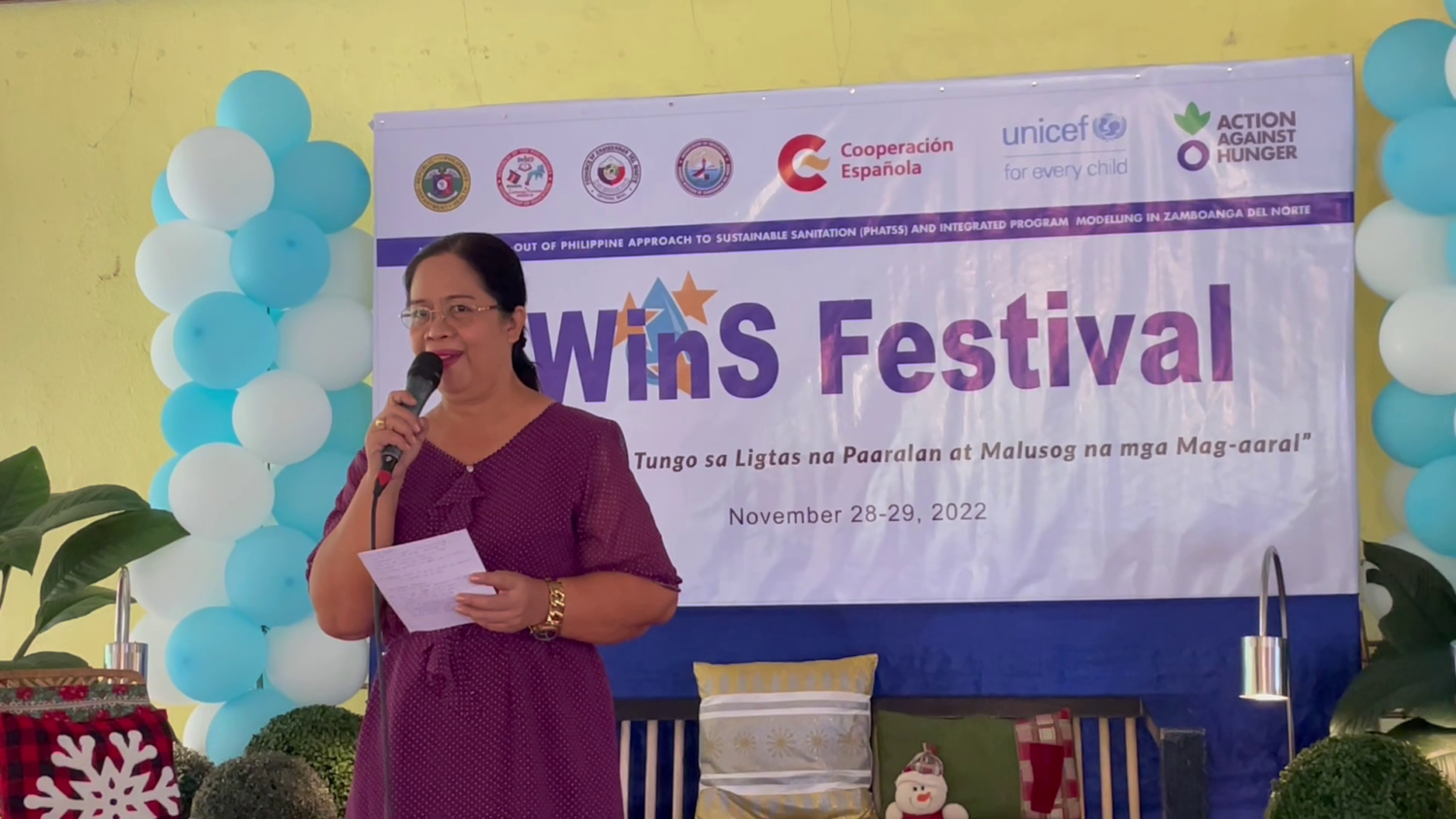
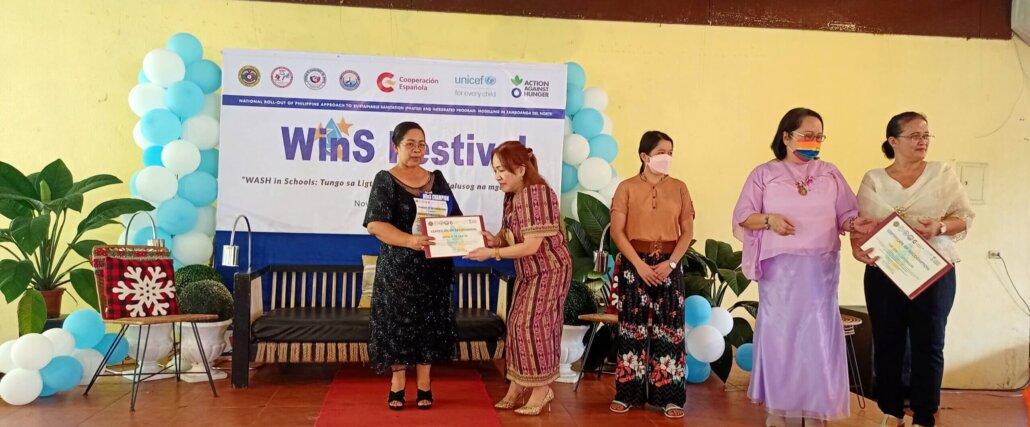
Miela De Gracia, an esteemed educator and former principal of the Sindangan Pilot Demonstration School in Sindangan, Zamboanga del Norte. Both Miela and her school were among the five awarded champions of the Department of Education’s Comprehensive Water, Sanitation and Hygiene in Schools (WinS) Program last November 28 to 29, 2022.

To qualify as a WinS Champion, the school must sustain a three-star rating for three consecutive years. The rating will be based on the comprehensive criteria judged on hygiene, sanitation, water, deworming, and health education.


“It really takes shared leadership, shared governance, and shared responsibilities with the community to achieve something,”


With the continuous support of Action Against Hunger and the United Nations Children’s Fund (UNICEF) Philippines through the “National Roll-out of Philippine Approach to Sustainable Sanitation (PhATSS) and Integrated Program Modelling in Zamboanga del Norte” Project, Miela and her school are able to sustain ideal sanitation and hygiene standards.

Miela shares that this achievement was not due to her efforts alone, but rather it was the support of her community that made a difference. “It really takes shared leadership, shared governance, and shared responsibilities with the community to achieve something,” she adds.

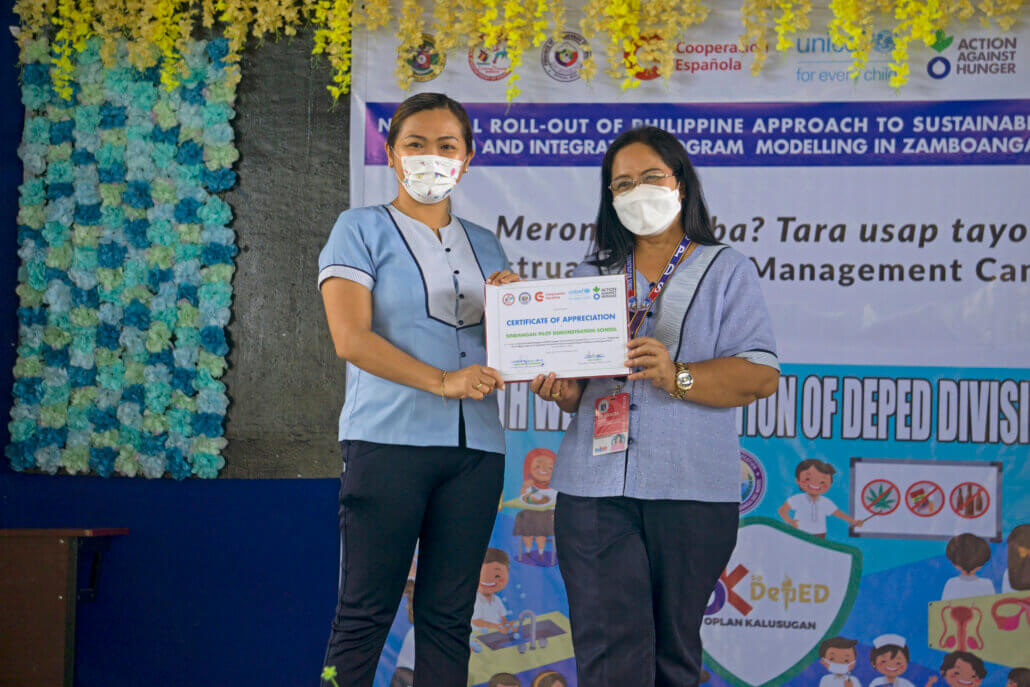
Miela’s school, under her leadership, also led the Menstrual Health Management Campaign last September 29, 2022.

In photo: Miela receives a certificate of appreciation during the Menstrual Health Management Campaign last September 29, 2022. (Photo by Eden Somodio for Action Against Hunger)

The involvement of women and girls in STEM is not just important to have clean water and sanitation for all, as underscored by Sustainable Development Goal 6, but to achieve all 17 sustainable development goals.

By promoting the participation of women and girls in this field, we are ensuring that the perspectives and experiences of half of the world’s population are represented in developing solutions to water and sanitation issues.


The National Roll-out of Philippine Approach to Sustainable Sanitation (PHATSS) and Integrated Program Modelling in Zamboanga del Norte Project is funded by the UNICEF, and implemented by Action Against Hunger Philippines, with the support of the Spanish Agency for International Development Cooperation (AECID) and in coordination with the Provincial Government of Zamboanga del Norte. Read more

Staying healthy and safe in times of crisis

“I still remember how hard the wind and rain were that night. The children were crying out of fear.”

These were the words of 34-year-old Geraldine Quire-Quire as she recalls their night at the evacuation center when Typhoon Odette (internationally named Rai) made landfall in Siargao on the 16th of December 2021. As a mother, her family’s safety is her top priority.

Already pregnant with their third child, Geraldine had to take care of their two children and her disabled aunt by herself in the wake of Odette’s rampage. Geraldine’s husband was away in the city working as a watchman at the time.

The intensity of the typhoon was a horrific experience for the children, according to her. To make matters worse, they went home to find that the typhoon had partially damaged their house.

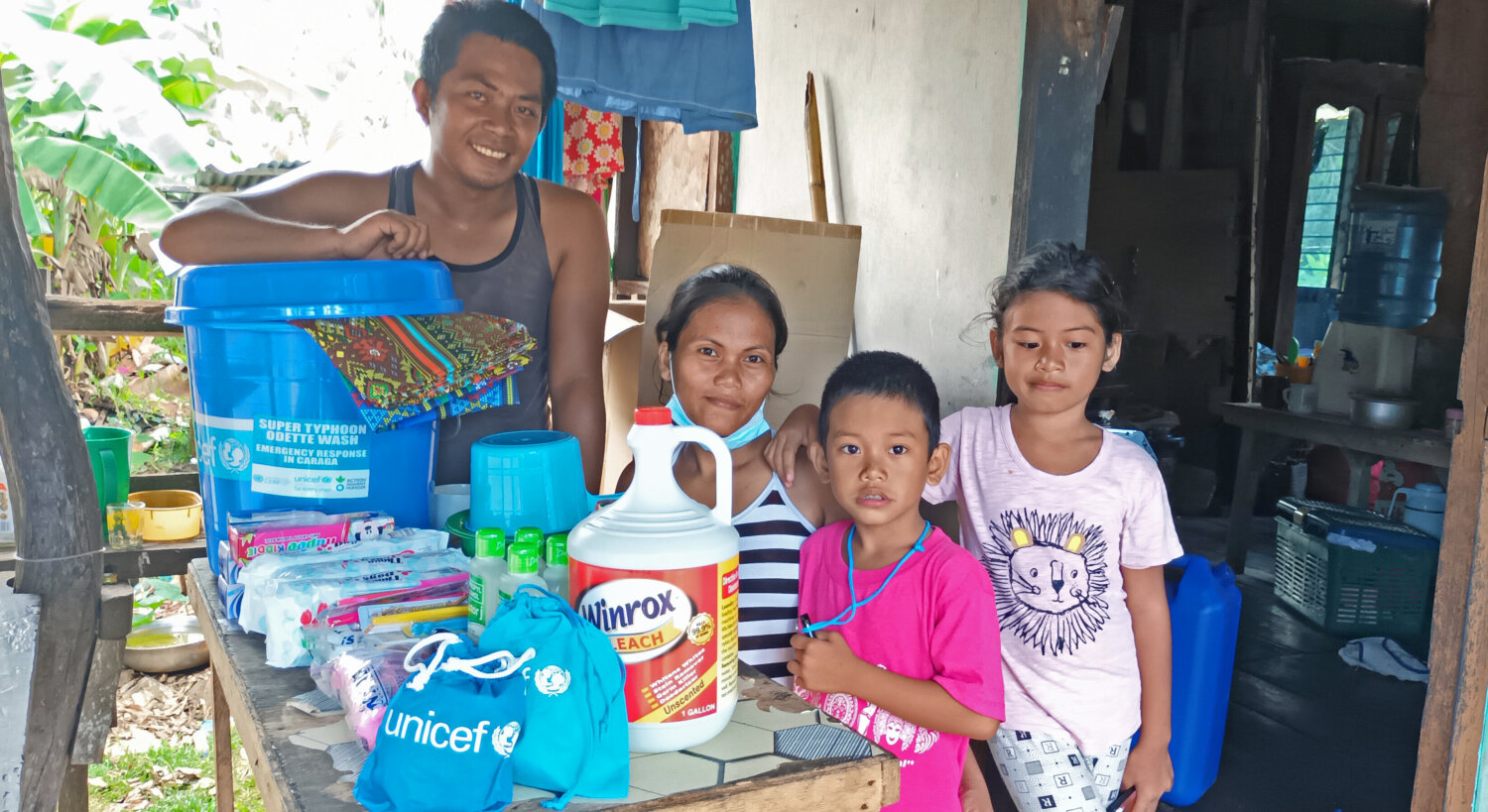
Months later, Geraldine finds some comfort in the life-saving support they received different organizations and government agencies. They are one of the families in Barangay Opong in Taganaan, Surigao del Norte who received water, sanitation, & hygiene materials from UNICEF Philippines through Action Against Hunger’s Super Typhoon Emergency WASH Response in Caraga. According to Geraldine, some of the items will prove to be useful when she gives birth.


Geraldine also participated in the hygiene promotion sessions of Action Against Hunger. After hearing reminders on COVID safety and how to practice proper hygiene and sanitation, she was eager to teach her children these hygiene habits.

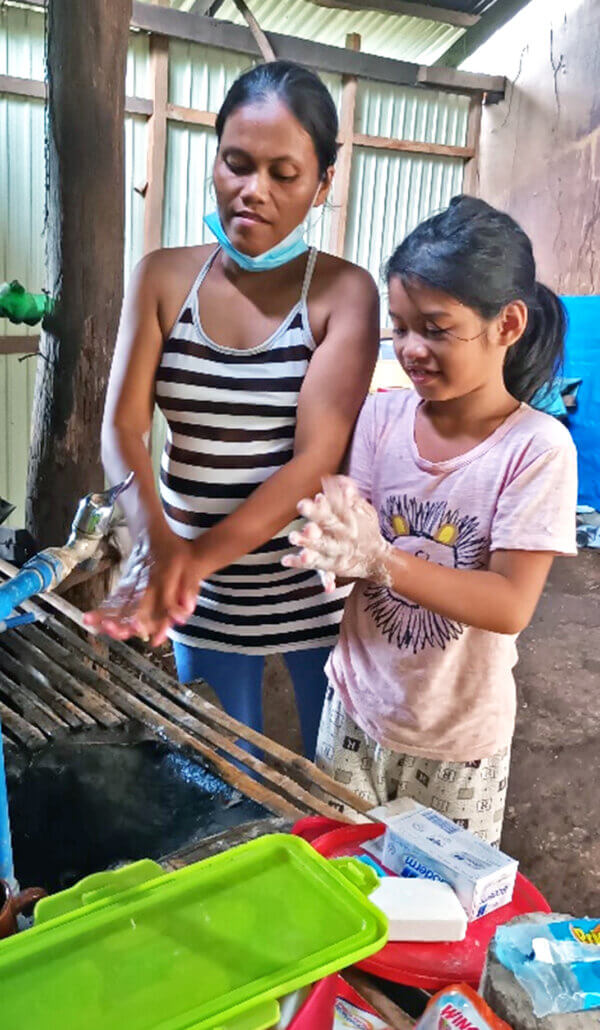
In photo: Geraldine teaches her eldest daughter how to properly wash hands with soap and water based on what she learned from Action Against Hunger’s hygiene promotion sessions. (Photos by Abdul Alim Talusob for Action Against Hunger)

As of July 18, we have reached 81,957 people in Surigao del Norte with life-saving WASH support. Aside from giving access to safe water and sanitation services, our goal is to ensure that families like Geraldine’s adopt and sustain proper hygiene practices.

Our Super Typhoon Odette Emergency WASH Response in CARAGA is funded by the United Nations Central Emergency Fund (UN CERF), the Republic of Korea, and the Government of Japan through the United Nations Children’s Fund (UNICEF) Philippines


Written by Adam Lacson, edited by Joyce Sandajan Read more

PBA 2021: Converging efforts with local government and RHUs to strengthen health and nutrition initiatives in Mindanao

Limited access to quality health care has been one of the identified humanitarian gaps within remote areas even before the pandemic. This immediately took a turn for the worse when COVID-19 negatively impacted these health systems. Many primary healthcare services have become inaccessible due to the lockdown restrictions or overcapacity of patients. Conflict-affected communities─especially the poor, displaced, and those in other vulnerable conditions─are at greater risk more than ever.

This is why our Program-Based Approach (PBA) in Mindanao has been coordinating with rural health units to ensure that primary health services are available, sustainable, and easily accessed by vulnerable communities.

Since the second quarter of 2021, we have been sponsoring medical-dental missions of the local government with support funding from the Swedish International Development Agency (SIDA).

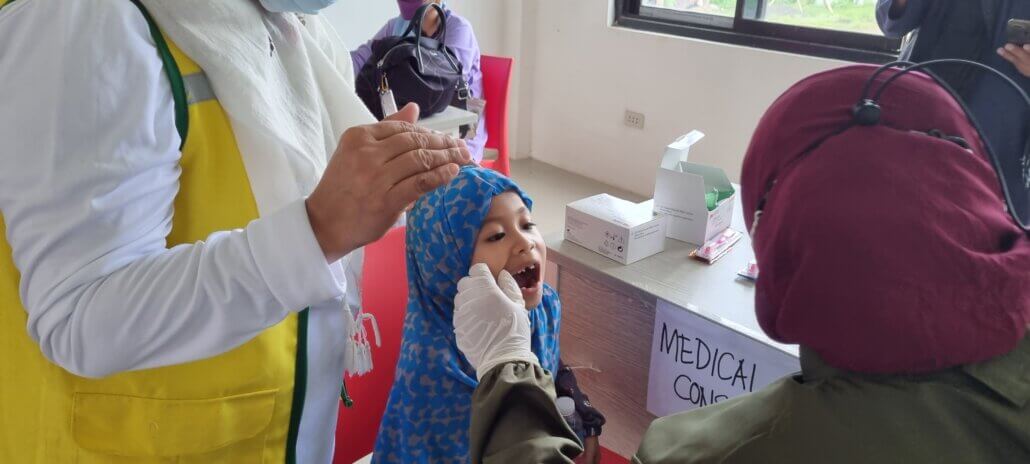
Dental Services during the Health Mission at Lumbatan last August 23, 2021 (Photo by PBA Mindanao 2021 for Action Against Hunger)

A total of 1,202 people—collectively from Binidayan and Lumbatan of Lanao del Sur—participated in a series of activities from July 26 to September 2. Our nutrition screening activities were also integrated with the health mission to converge our health initiatives on the ground.

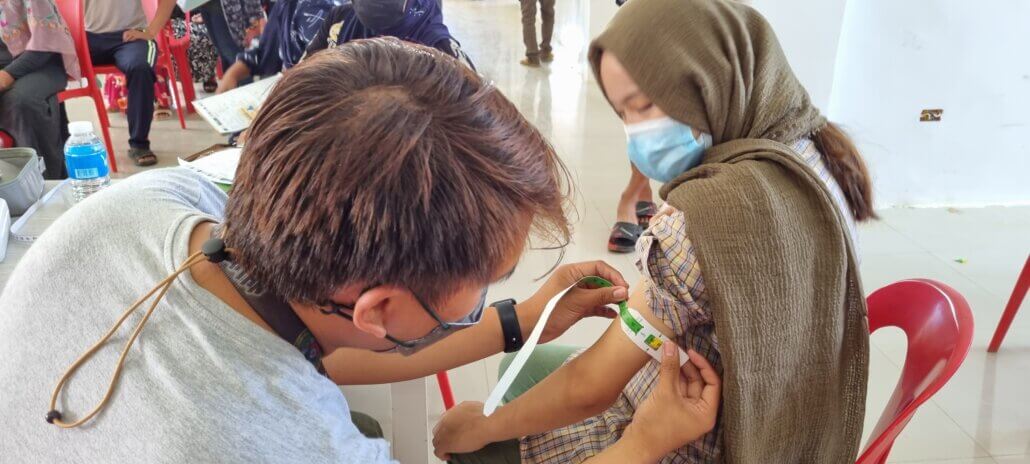
MUAC Screening during the Health Mission at Lumbatan on September 2, 2021 (Photo by PBA Mindanao 2021 for Action Against Hunger)

Following the nutrition screening, all individuals identified to have severe or moderate acute malnutrition were then referred to the RHUs to receive appropriate care and treatment. To supplement their nutritional needs, they will also receive financial assistance from our multi-purpose cash program.

Nutrition Awareness Session during the Health Mission in Binidayan on July 26, 2021(Photo by PBA Mindanao 2021 for Action Against Hunger)

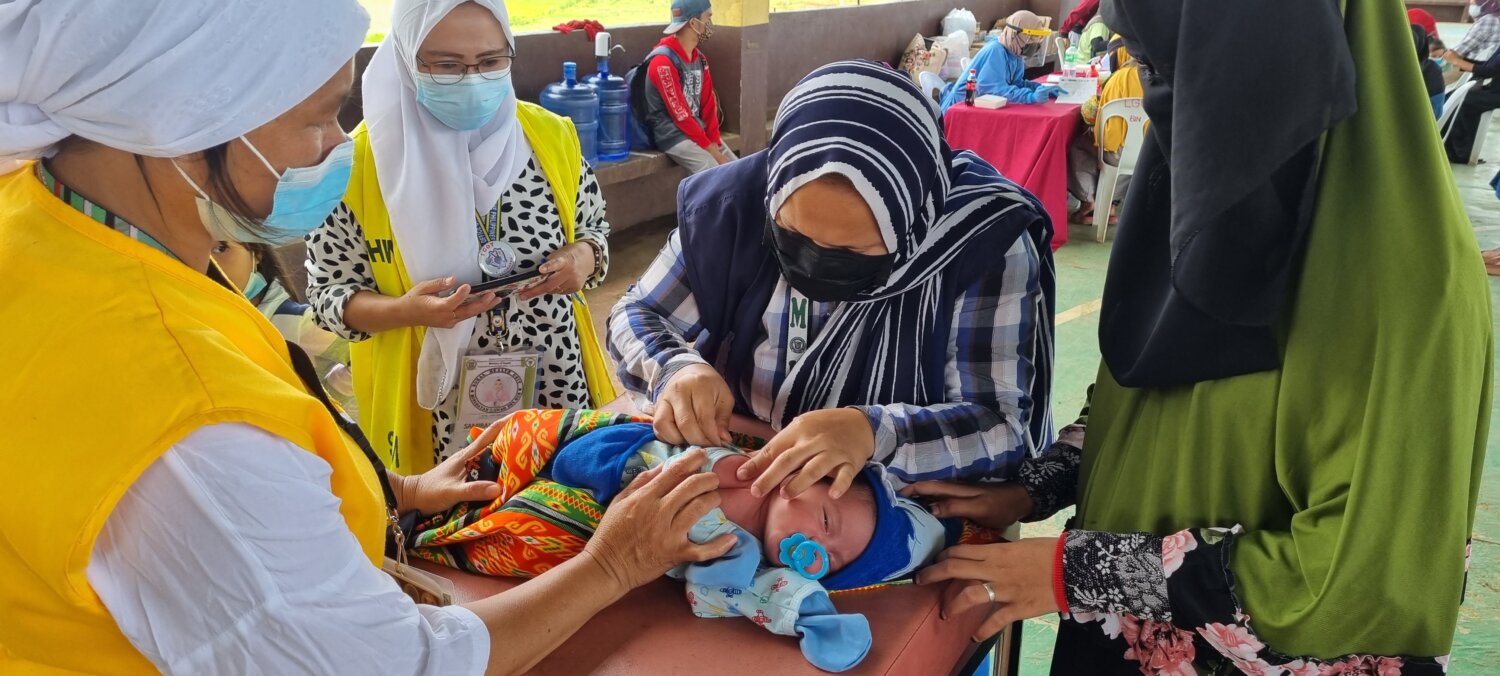
Aside from these interventions, nutrition-awareness sessions were also held to refresh or heighten the participants’ knowledge of good health practices. In Binidayan, pregnant and lactating women (PLW) who are at nutritional risk also received hygiene kits and hygiene promotion sessions.

Hygiene Kit Distribution for PLWs at Binidayan during the Health Mission on July 26, 2021 (Photo by PBA Mindanao 2021 for Action Against Hunger)

Our efforts to stop and prevent hunger continues. We aim to fully protect, assist, and advocate for disadvantaged communities that are at greater risk to societal, environmental, and health crises.

The Program-Based Approach (PBA), otherwise referred to as ‘Multi-Sectoral Lifesaving Assistance to People Most Vulnerable to the COVID-19 Pandemic, Conflict, and Disasters ─ Mindanao Program 2021’ is funded by the Swedish International Development Cooperation Agency (SIDA) and implemented by Action Against Hunger Philippines.


Written by Joyce Anne Sandajan Read more

Limited Access to Clean and Safe Water is One of the Many Underlying Causes of Malnutrition

Limited access to clean and safe water is one of the many underlying causes of malnutrition.

In order to address this, we truck water into affected areas and install storage tanks and reservoirs. Where water is scarce or unsafe, we protect natural springs, decontaminate wells, install and rehabilitate hygiene infrastructures and pipe water into hard-to-reach communities and health facilities.

Throughout our presence in the Philippines, we have been actively strengthening our water, sanitation & hygiene programs to support communities against preventable diseases.

???? ???? ?? ??? ???? ???????? ??? ???? ??? ??? ??? ??? ??? ????????:
https://actionagainsthunger.ph/what-we-do/#water-sanitation

(Photos by EJ Villafranca for Action Against Hunger)

Our Teams Distribute Hygiene Kits and Build Latrines and Hand-Washing Stations to Prevent Outbreaks of Diseases During a Crisis

Prior to the pandemic, our teams distribute hygiene kits and build latrines and hand-washing stations in the communities we work with to prevent outbreaks of diseases during a crisis. In communities at risk, we construct water filters made from basic materials and teach healthy practices like hand-washing, cooking with clean utensils, and drawing water from protected sources.

Read more about our WASH projects and find out how you can support us: https://actionagainsthunger.ph/what-we-do/#water-sanitation

Real Life Heroes – Abubakar Balabagan

As humanitarian workers, our field teams have time and time again shown great dedication at ground level in reaching even the most isolated communities. One great example would be Abubakar “Bhaks” Balabagan who has always given his best efforts despite the risks and challenges.

Get to know Bhaks and what makes him one of our Real-Life Heroes!


What motivates you to become a humanitarian worker?
My purpose, which is to help people in the community who are suffering during disasters, and saving lives as well.

Why are you making this sacrifice?
It makes me fulfilled. I am happy to help vulnerable people in the community through Action Against Hunger and be able to have a role in providing free and direct access to beneficiaries – because it is one of the organization’s principles.

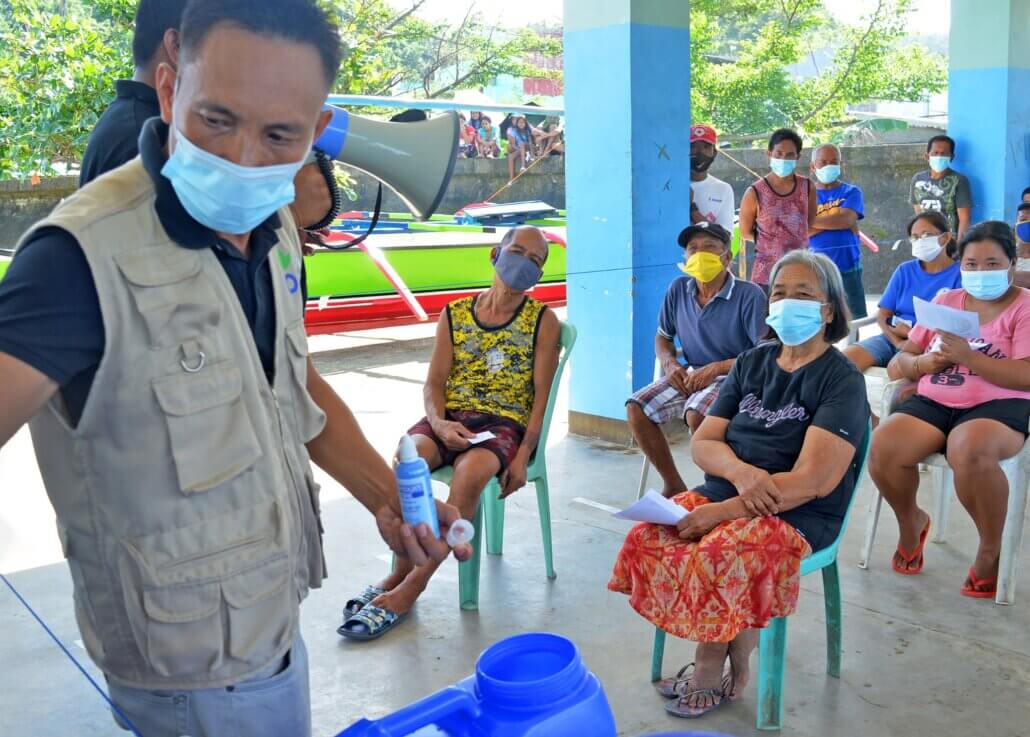
Bhaks teaches participants how to use the hyposol solution during the hygiene promotion session in Baras, Catanduanes. (Photo by Joyce Anne Sandajan for Action Against Hunger)

What have been the challenges to your work because of the COVID-19 pandemic?
The pandemic is very challenging because the risk of contracting and/or transmitting the virus can happen anytime and anywhere if not careful. Because of this, we have to limit gathering beneficiaries in small areas for activities like hygiene promotion sessions.

What motivates you to keep doing your work even with these challenges?
My motivation comes from the people I serve. When I became a humanitarian worker, I became more conscious of the people’s daily struggles and have a deeper understanding on how different their situations are. For instance, many of them are striving to survive the economic downturn during this pandemic.

What are you most proud of?
The thought that the work that I do, in some way or another, will have a ripple effect that will impact the lives of the people I serve.

Bhaks has been working with Action Against Hunger for more than 4 years. Now, he is currently part of our Typhoon Rolly (Goni) Emergency Response Team as one of the Project Assistants.


The Emergency Assistance to Typhoon Affected Communities in Catanduanes and Albay Province, Philippines is funded by by USAID’s Bureau for Humanitarian Assistance, and implemented by Action Against Hunger Philippines, and CARE Philippines. Read more

Trained to Train her Fellow Evacuees: Meet Soraya Camid, one of our #RealLifeHeroes

“So kapangunab sa lima na ipakalidas ko mga sakit (Proper handwashing helps a lot in preventing diseases.)”

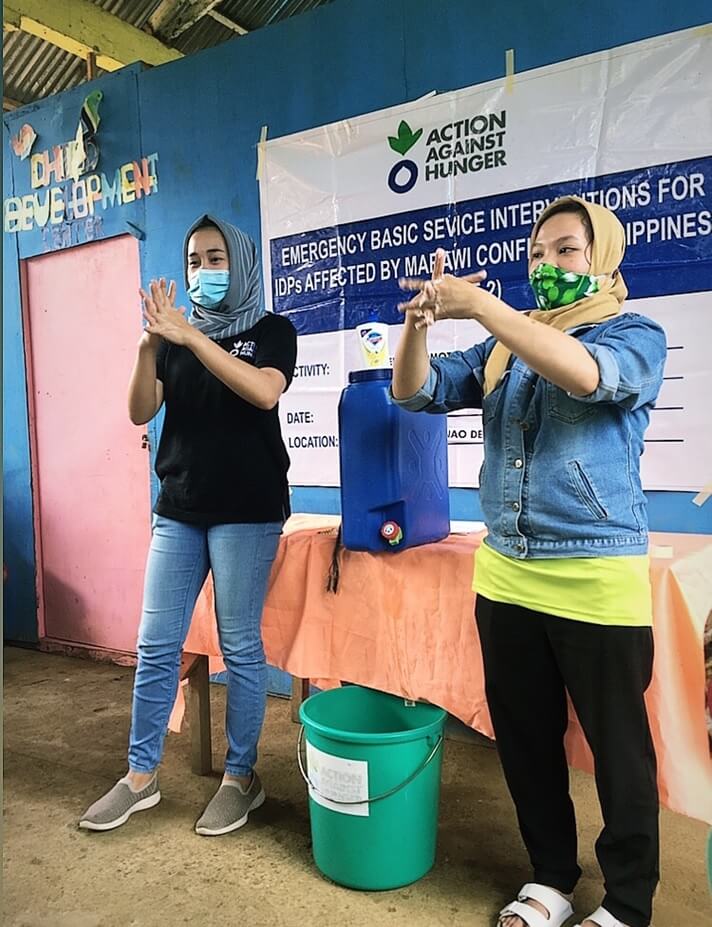
This is Soraya Camid’s constant advice to her fellow evacuees. Soraya and her family were one of the many people who were displaced because of the Marawi Siege back in 2017. After being trained by Action Against Hunger on basic hygiene promotion, she now volunteers as a Community Hygiene Promoter (CHP) in Sugod, Madalum, Lanao del Sur.

Last October 15, Soraya, together with her fellow CHPs and our Iligan team, celebrated #GlobalHandwashingDay by raising awareness on the importance of handwashing in preventing disease transmission and saving lives. They conducted a hygiene promotion session in Madalum, wherein Soraya shares her gained knowledge on WASH with her community.

Despite the struggles she experienced, Soraya moves forward and works hard to influence her community positively, making her one of our Real-Life Heroes. (Photos by Lowelyn Sumayo for Action Against Hunger)


Written by Lowelyn Sumayo.