Tag Archive for: #UNICEF

Lighting the way for health: A midwife’s journey to bring safer health services to mothers and children in Mapayag

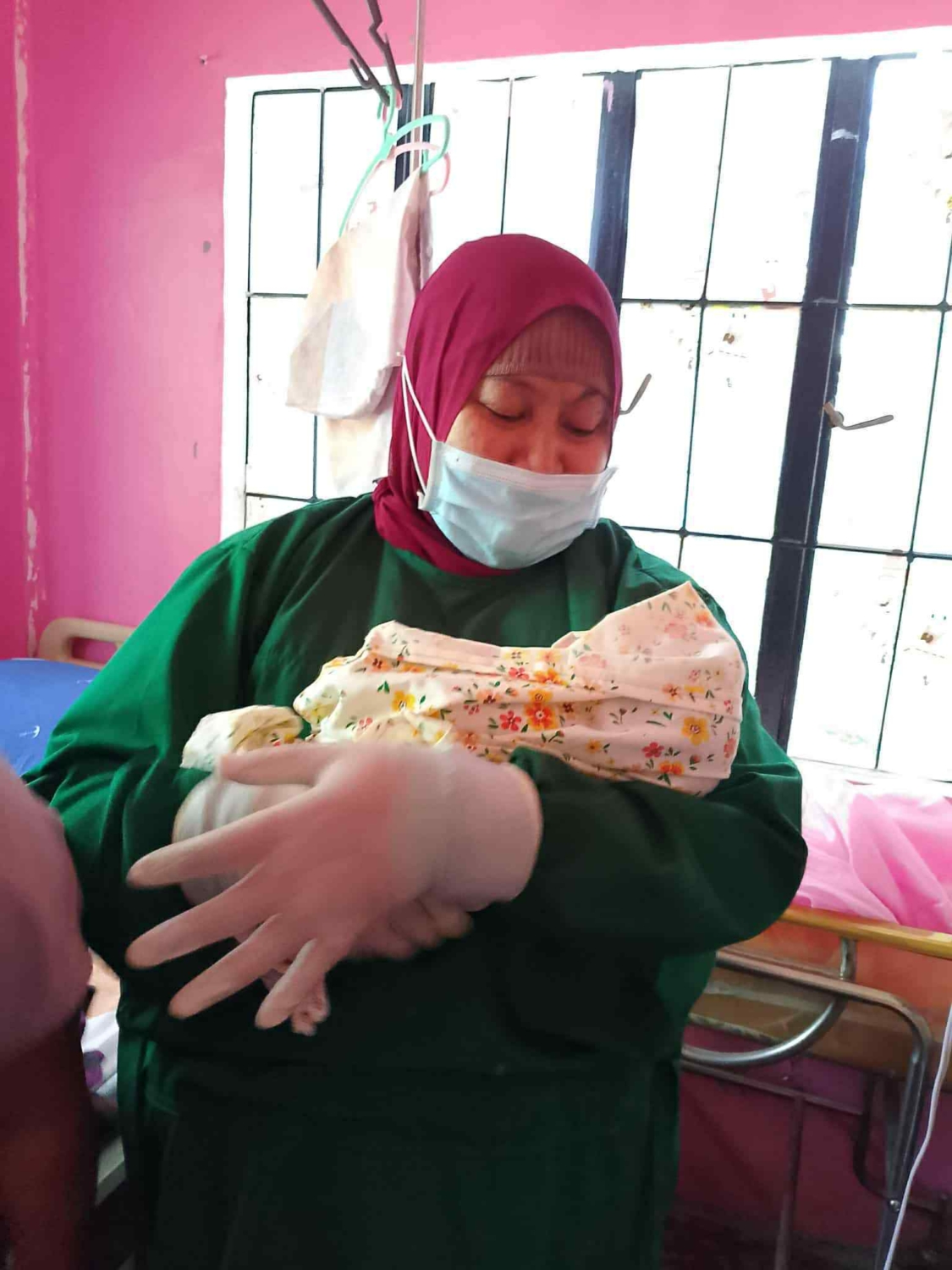
DATU ANGGAL MIDTIMBANG, MAGUINDANAO DEL SUR — In Barangay Mapayag, where resources have long been scarce, midwife Zei has become a constant presence, ensuring mothers and children receive the care they need.

For more than a decade, Zei, 53, has walked the extra mile—literally and figuratively—for her community. A midwife at the health station in Barangay Mapayag, Zei travels two hours every day from her home in Sultan Kudarat just to open the small facility that caters to more than 3,700 residents.
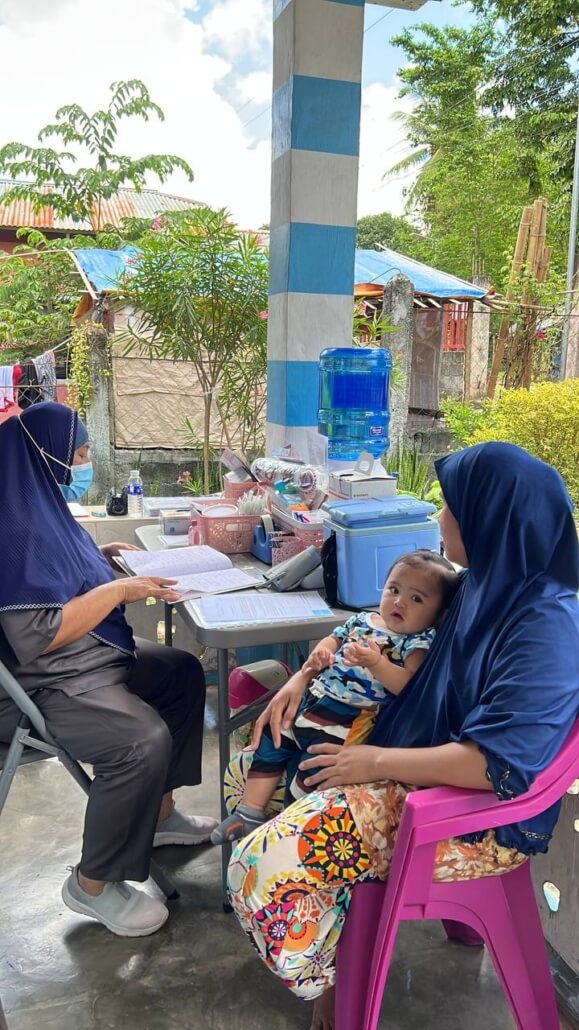
In photo: Before assessing a child’s nutritional status, the Zei carefully gathers essential details such as medical history, appetite, and overall health condition.
Photo by Moner Dipatuan for Action Against Hunger

Her commitment to her work never wavered, yet the conditions she faced each day were far from ideal. For years, the barangay health station in Mapayag struggled without a reliable water supply. Maintaining basic sanitation and hygiene, which is a necessity in any health facility, became a constant uphill battle.

“I buy two big buckets from a water truck every week for fifty pesos. Sometimes, when it rains, we collect water just so we have something for cleaning.” – Zei, Midwife

Zei bore much of the cost herself, spending around fifty pesos a week from her modest salary to buy water from a truck, just to keep the health station clean. She claims, mula pa noong 2013, wala pong sariling tubig ang BHS. Ang ginagawa ko, bumibili ako ng tubig mula sa water truck—dalawang malaking balde, bale fifty pesos iyon bawat linggo. Minsan kapag umuulan, nag-iipon din po kami para may magamit panglinis(Since 2013, the BHS hasn’t had its own water supply. I buy two big buckets from a water truck every week for fifty pesos. Sometimes, when it rains, we collect water just so we have something for cleaning.)
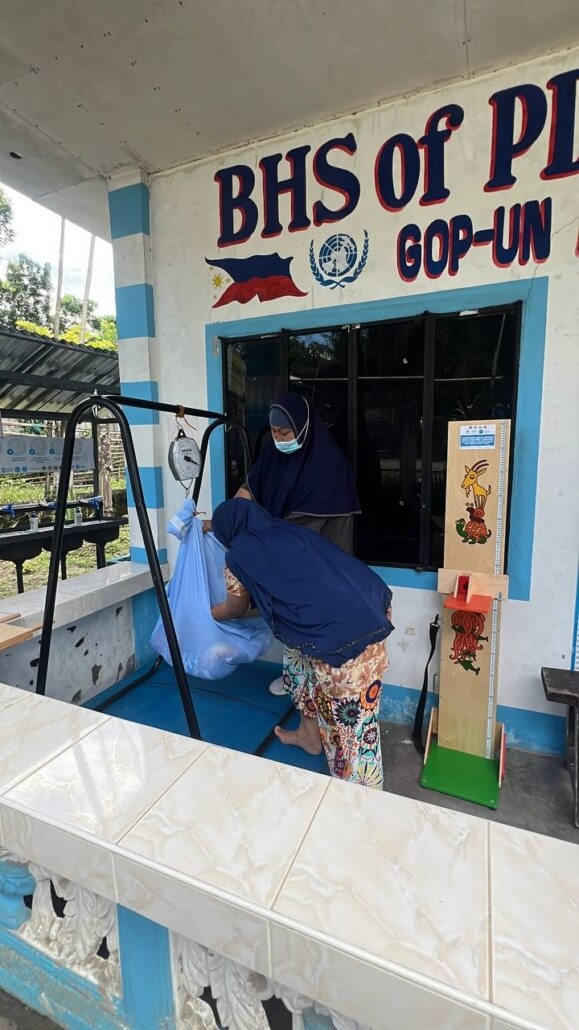
n photo: A child’s weight, height, and MUAC are measured to
monitor nutritional status and check for signs of malnutrition.
Photo by Moner Dipatuan for Action Against Hunger

The strain was not hers alone to carry. Families who came to the health station also shared the burden, especially expectant mothers. Zei shares that kapag may naganganak, pinapadala ko ang husband or kamag-anak nung manganganak ng dalawa hanggang tatlong timba ng tubig para may malinis na magamit (Whenever someone is about to give birth, I would ask the husband or relatives to bring two to three buckets of water so we would have clean water to use.)

“Before, I had to close the BHS as early as 3PM. I worried about the lack of light, the lack of water, and my safety if I stayed longer. So when emergencies happened at night, people went straight to the hospital because the BHS was closed.”

By 2017, another challenge made the situation even more difficult: the health station lost electricity. Without power, the facility was plunged into darkness by late afternoon, forcing Zei to close as early as 3 PM.

The lack of lighting not only limited services but also raised safety concerns. Emergencies that occurred at night went unanswered, leaving families with no option but to travel far to the nearest hospital.

Dati maaga pa lang, mga 3PM, nagko-close na po ako ng BHS. Concern ko talaga yung walang ilaw, walang tubig, iniisip ko rin ang safety ko if mag-stay dito. Kaya pag gabi na may emergencies, diretso na ang mga tao sa hospital kasi sarado ang BHS (Before, I had to close the BHS as early as 3PM. I worried about the lack of light, the lack of water, and my safety if I stayed longer. So when emergencies happened at night, people went straight to the hospital because the BHS was closed,) she added.

Despite these hardships, Zei pressed on—often improvising with outdated or makeshift equipment, and carrying the weight of her community’s needs almost entirely on her own.

In 2025, UNICEF, together with Action Against Hunger, began formally working with the Ministry of Health in the Bangsamoro Autonomous Region in Muslim Mindanao (BARMM) through the project “Strengthening Health and Nutrition Service Delivery Capacities in Early Learning, Alternative Learning, and Community Health,” supported by funding from the Korea International Cooperation Agency (KOICA).

The project seeks to enhance the capacity of Early Childhood Care and Development facilities to deliver essential health, nutrition, and water, sanitation & hygiene services. Through this initiative, the BHS in Mapayag started experiencing long-awaited improvements in its facilities and services.

“This project by Action Against Hunger and UNICEF has been such a huge help. First of all, we now have water both inside and outside the BHS. I no longer need to buy or fetch it myself.”

In Mapayag, one of the first major changes was access to water. A rainwater catchment system was installed and connected through piped water to the health station. Handwashing stations were also built—both inside and outside the facility—for the use of staff and patients alike. For the first time in more than a decade, Zei no longer had to buy or fetch water herself.

Families also felt the difference, as they no longer needed to bring buckets during childbirth. “Sa tulong po na ito, I hope na mas marami pa ang mga taong maserbisyuhan, makita nila ang kahalagahan ng kalusugan, lalo na sa mga bata (Because of this support, I truly hope that more people will be served and that they will come to recognize the importance of health, especially for their children,) said Zei.

Another long-awaited change came with the installation of solar power.

The provision of a solar panel system, complete with battery and inverter, meant that the health station could finally function even after dark.

For Zei, this was a turning point—allowing her to stay at the BHS 24 hours a day from Monday to Friday. Emergencies at night could now be attended to within the community, rather than requiring long trips to distant hospitals.

She shares, ngayon, kahit may manganak ng gabi o madaling araw, andito ako. Open po ang BHS (Now, even if someone gives birth late at night or early in the morning, I’m here. The BHS is open.)

“Now, even if someone gives birth late at night or early in the morning, I’m here. The BHS is open [..] Since we were trained under PIMAM, I now know the proper way to check children. Even the barangay health workers and nutrition scholars are more confident now and I have more support.”

The project also addressed small but crucial details that affected daily health practices. Soap and cleaning materials were provided to help maintain hygiene standards. Drainage issues behind the facility, once a source of stagnant water and potential disease, were resolved through a proper soak pit system.

Patients visiting the BHS could now wash their hands easily, helping promote better hygiene behaviors such as frequent handwashing and safe waste disposal.
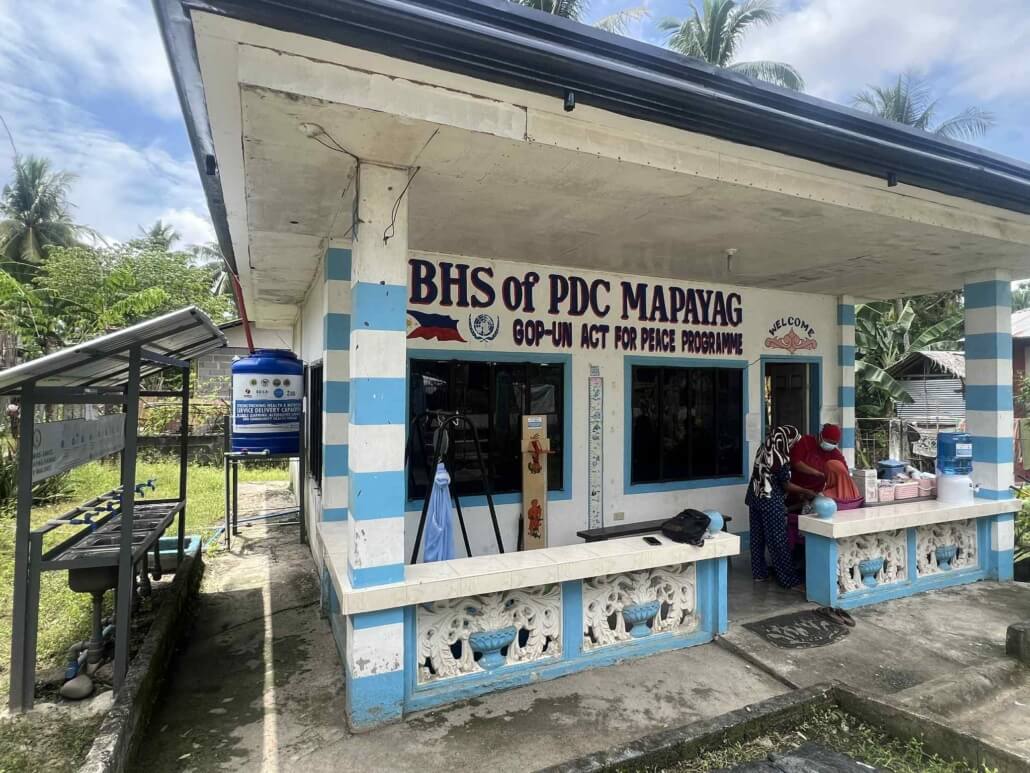
In photo: The rain water catchment system in the barangay health station of Mapayag. Hygiene advocacy materials were also placed near the handwashing station. Photo by Moner Dipatuan for Action Against Hunger

Equally important were the tools that made Zei and her colleagues’ work more accurate and effective.

For years, they had been using improvised equipment—bathroom scales meant for adults to weigh children, and torn paper charts taped to the wall as makeshift height boards. With new anthropometric tools such as height boards, weighing scales, and MUAC tapes, health workers could now properly monitor children’s growth and detect malnutrition early.

Training and capacity building completed the transformation. Barangay health workers (BHWs) and barangay nutrition scholars (BNS) received guidance that gave them more confidence in assisting Zei.

“Since we were trained under PIMAM, alam ko na po ang proper way ng pag-check sa bata. Kahit ang mga BHW at BNS ngayon, confident na sila. Hindi na ako lahat ang gumagawa gaya ng dati” (Since we were trained under PIMAM, I now know the proper way to check children. Even the barangay health workers and nutrition scholars are more confident now and I have more support,) Zei added.
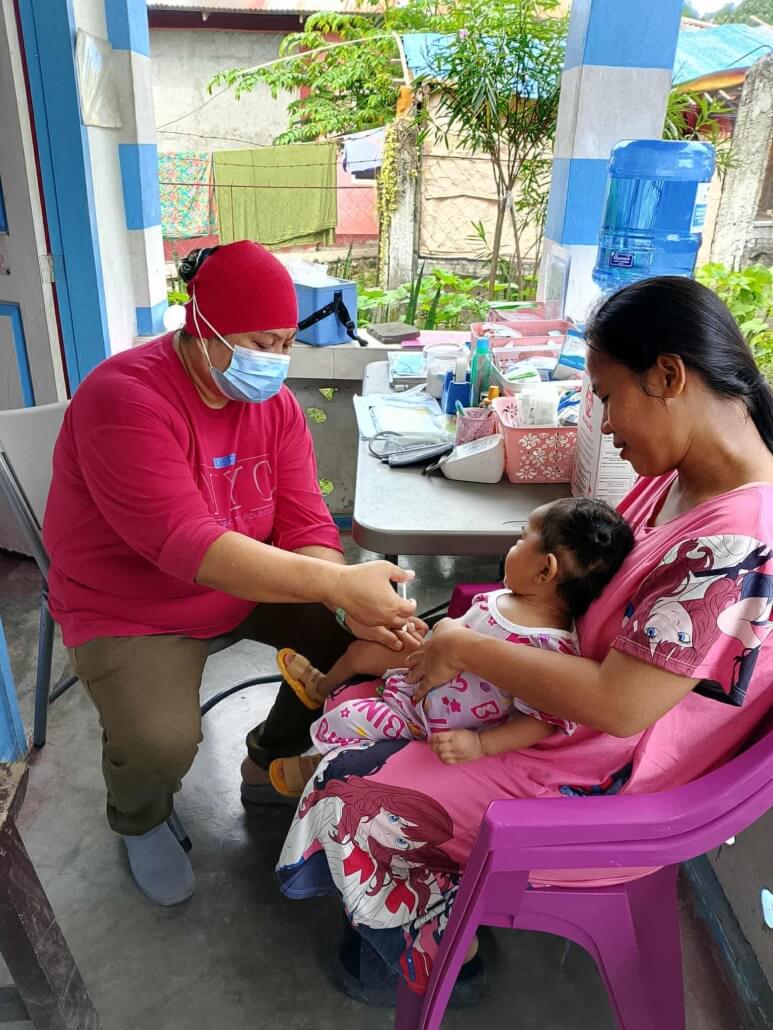
In photo: Zei administers routine immunizations, conducted every Wednesday at the BHS. Photo by Moner Dipatuan for Action Against Hunger

The results are clear in the numbers: immunization rates in Mapayag rose from 39 in July to 76 percent by August 2025, while the number of consultations nearly doubled within the same period. Mothers who previously resisted bringing their children now come voluntarily.

Zei explains, ngayon din po, ‘yong mga nanay ng mga batang mahirap papuntahin dito sa BHS at magpa immunize ng anak nila, ay pumupunta na po dito sa BHS at hindi na kailangan pilitin at balik-balikan. Siguro dahil narinig nila yung tulong na ginawa ng Action Against hunger at UNICEF, pati ang pagbabago dito sa BHS ay na-engganyo na silang pumunta dito na di na kailangan pilitin katulad dati (These days, even mothers from farther side of the barangay, those we usually struggle to convince, are now coming to the barangay health station to have their children immunized. We no longer need to convince them or follow up repeatedly. I think it’s because they’ve heard about the support provided by Action Against Hunger and UNICEF, and they’ve seen the improvements made to the BHS. The changes have encouraged them to come voluntarily—unlike before, when it was a struggle to get them here.)

Her colleagues in other barangays have also taken notice. Madalas sinasabi nila, blessed daw ako at ang BHS namin kasi kami ang napiling tulungan. Sana matulungan din ang ibang BHS na nangangailangan ng parehong support” (Other midwives often say how blessed I am, that our BHS was chosen to receive support. I hope other health stations in need will also be helped in the same way,) said Zei.

“We no longer need to convince them or follow up repeatedly. I think it’s because they’ve heard about the support provided by Action Against Hunger and UNICEF, and they’ve seen the improvements made to the BHS. The changes have encouraged them to come voluntarily—unlike before, when it was a struggle to get them here.”

For Zei, the transformation of the health station in Mapayag is more than just about infrastructure—it is about dignity, safety, and hope.

Families who once had to endure long travel for care now find reliable support close to home. And for the midwife who has walked this journey for over a decade, the changes have strengthened her resolve to keep serving.


*PIMAM – Philippine Integrated Management of Acute Malnutrition


The “Strengthening Health and Nutrition Service Delivery Capacities in Early Learning, Alternative Learning, and Community Health” project is implemented by Action Against Hunger together with UNICEF, thanks to the funding support of the Korean government through the Korea International Cooperation Agency (KOICA).
Read more

Washing Away Worries: How a Day Care Worker’s Persistence Helped Bring Water and Hope to a Remote Community

For eight years, Tarhata Watamama has served as the daycare worker in Barangay Mapayag with patience, commitment, and an unshakable belief in every child’s right to learn and grow in a safe and healthy environment. 

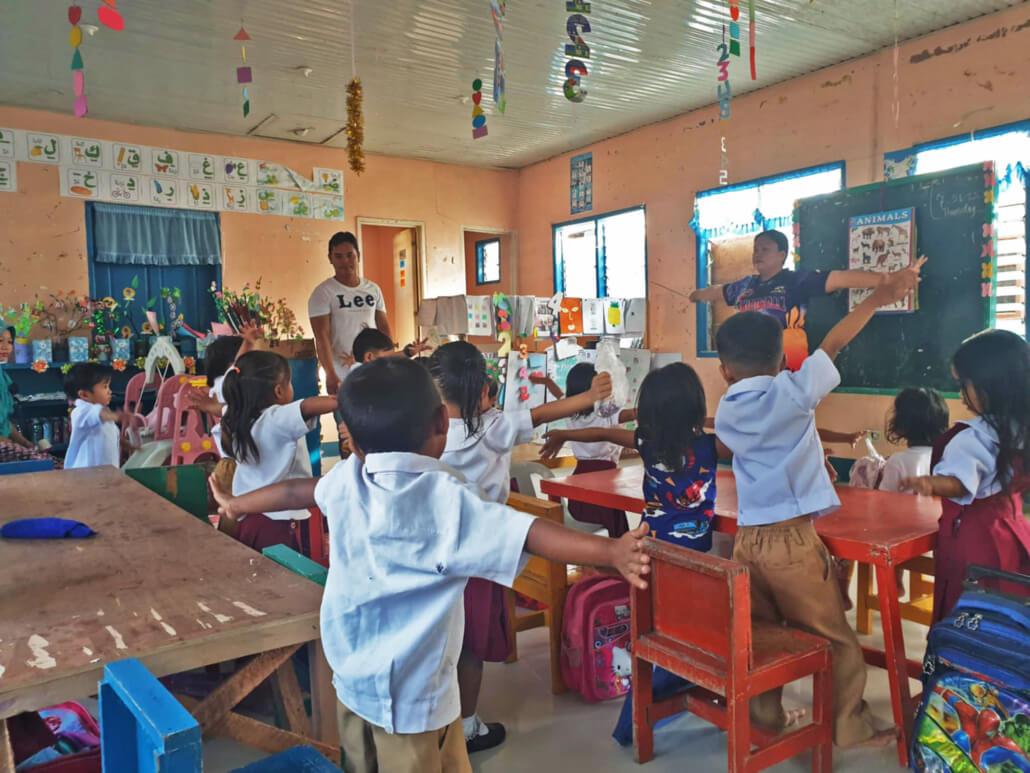
DATU ANGGAL MIDTIMBANG, MAGUINDANAO DEL SUR ─ At 40 years old, she currently teaches 32 students daycare learners (12 boys and 20 girls) in a small daycare center where limited resources services and structural gaps pose daily challenges. One of her long-standing struggles had been access to clean water.

“Mula po nung nasira ang aming handwashing [facility], hindi na po nakakapaghugas ng kamay ang mga bata tuwing may klase. Minsan po ang mga magulang ng mga bata ay nag-iigib ng tubig sa mga kapitbahay. (Ever since the handwashing facility broke down, the children could no longer wash their hands during classes. Sometimes, the parents would fetch water from neighbors,)” she explained.

While the barangay local government unit (BLGU) has been supportive in trying to meet the center’s needs, the lack of a functioning water supply system and adequate sanitation and hygiene facilities remained unresolved for a long time. Water had to be fetched from nearby homes and stored for use in washing and cleaning the daycare center, making daily hygiene activities difficult.

“Ever since the handwashing facility broke down, the children could no longer wash their hands during classes. Sometimes, the parents would fetch water from neighbors.” – Tarhata

Hindi talaga kami makapaghugas ng kamay nang maayos. Wala rin kaming mga gamit tulad ng sabon, panlinis, o kahit timba. (We really couldn’t carry out proper handwashing. We didn’t even have basic supplies like soap, cleaning materials, or even pails.”)

With no anthropometric tools of their own, growth monitoring, which is essential for tracking the physical development of young children, was also hampered. Tarhata had to borrow tools such as height boards and weighing scales from the nearby barangay health station (BHS), just to fulfill her responsibilities as an early childhood care and development (ECCD) worker.

But things started to change when the center was selected as one of the beneficiaries of the “Strengthening Health and Nutrition Service Delivery Capacities in Early Learning, Alternative Learning, and Community Health” project.

With funding from the Republic of Korea through the Korea International Cooperation Agency (KOICA), Action Against Hunger and UNICEF Philippines aim to improve access to health, nutrition, water, sanitation, hygiene (WASH), and education services for over 20,000 people in the Bangsamoro Autonomous Region in Muslim Mindanao (BARMM) through this project. With a special focus on young children, pregnant & lactating women, and persons with disabilities, the initiative is strengthening the capacity of 19 health and learning facilities across the region.

Following a series of consultations with the MSSD and the Municipal Government of Datu Anggal Midtimbang and joint technical assessments by Action Against Hunger and UNICEF, critical WASH and nutrition-related interventions were carried out at the daycare center. These included the repair of the water supply through the installation of a water pump, which was then piped directly to the daycare center’s toilet and a newly constructed handwashing station. A rainwater catchment system was also installed to further enhance water availability. In addition, the handwashing facility was improved, and the daycare center was provided with essential supplies and materials for hygiene, sanitation, and nutrition—including soap, pails, drinking water containers, cleaning materials, and growth monitoring tools such as a height board and weighing scale.

“Napakalaking tulong po talaga itong ginawa po ni UNICEF at Action Against Hungert sa aming daycare center. Ngayon, di na kami mahihirapan. May tubig na po, may hugasan ng kamay. Bago mag-recess pinapahugas ko na ang mga bata (This is such a big help. Thanks to UNICEF and Action Against Hunger, it’s no longer difficult for us. We now have water and a handwashing station. I let the children wash their hands before eating at recess.)” Tarhata shared with a smile.

With access to water restored, Tarhata immediately began integrating proper hygiene practices into daily routines. The children, she noted, were more than willing to embrace the change.

Thanks to UNICEF and Action Against Hunger, it’s no longer difficult for us. We now have water and a handwashing station. I let the children wash their hands before eating at recess. It’s wonderful to see the children enjoying handwashing now that there’s plenty of water, a proper station, and soap. They want to wash their hands all the time.”

“Nakakatuwa nga po dahil sa meron nang maraming tubig, handwashing area, at mga sabon, ang mga bata ay nag-eenjoy at gusto laging maghugas ng kamay, (It’s wonderful to see the children enjoying handwashing now that there’s plenty of water, a proper station, and soap. They want to wash their hands all the time.)” she added.

The impact goes beyond just hygiene. The daycare center also received height boards and weighing scales, allowing Tarhata to carry out growth monitoring on site. Parents no longer need to fetch water every morning. Children no longer need to leave the daycare premises just to wash up, which helps reduce potential risks and disruptions during class time.

“Isa din po sa pinasasalamatan po namin ay yung mga gamit tulad ng timba, lalagyan ng inuming tubig, sabon, at gamit panlinis. Lalo na po ang height board at timbangan. Wala po kaming kakayahan na bumili ng mga ito. May tulong po ang LGU, at suportado naman po ni Kapitan, pero kulang pa rin. Kaya salamat po talaga sa Action Against Hunger at UNICEF, (We’re really thankful for the supplies—pails, drinking water containers, soap, cleaning materials, and especially the height board and weighing scale. We could never afford these. Our LGU and Barangay Captain are supportive, but their resources are limited. That’s why we are truly grateful to Action Against Hunger and UNICEF.)” she emphasized.

For Tarhata, this is more than an improvement in infrastructure—it is an investment in dignity, safety, and opportunity.

“Sana po itong project ay marami pang matulungan na daycare centers at daycare workers, (I hope this project can reach more daycare centers and workers like me. Many still need help—especially when it comes to having access to water.)” she said hopefully. 

Her story is a powerful example of how the right support, provided at the right time, can uplift not just a center or a worker—but an entire community.


The “Strengthening Health and Nutrition Service Delivery Capacities in Early Learning, Alternative Learning, and Community Health” project is implemented by Action Against Hunger together with UNICEF, thanks to the funding support of the Korean government through the Korea International Cooperation Agency (KOICA).
 

Written by Joyce Sandajan.
Contributors: Debbie Alaban, Moner Dipatuan
Photos by Noraisa Labing Duton and Norkisa Ayob Musa for Action Against Hunger


Read more

WORLD WATER DAY – ADVOCATING FOR CLEAN WATER FOR CHILDREN AND COMMUNITIES THROUGH ENVIRONMENTAL CONSERVATION IN SIARGAO

SIARGAO  ISLAND – Access to clean and safe water is a critical issue in Siargao, where climate change and pollution threaten water security for children and communities. To address this, Action Against Hunger and UNICEF led initiatives, supported by New Zealand Aid, in Burgos, Siargao, in celebration of World Water Day. These activities focused on reducing pollution through a coastal clean-up and educating communities on sustainable water management, aligning with both organizations’ commitment to safeguarding access to clean water and promoting  climate-resilient water, sanitation, and hygiene (WASH) services.

Water security in Siargao is not only about access but also about protecting the island’s natural water sources from pollution. The increasing accumulation of waste along the coastline directly threatens marine biodiversity and the cleanliness of freshwater supplies.  

To address this, on March 24, as part of the World Water Day celebration, a community-led coastal clean-up was conducted, bringing together residents, barangay officials, and government agencies to clear debris from a 5-kilometer stretch of Burgos’ shoreline. 

Through this clean-up initiative, part of the “Typhoon Odette Recovery and Rehabilitation Towards Climate-Resilient Programme”, Action Against Hunger highlights the importance of waste management in maintaining water security. Indeed, left unchecked, waste accumulation on beaches and coastal areas degrades water sources, making it even more challenging to provide clean and safe drinking water. 

Around 30 people from different barangays of the municipality of Burgos participated in the post-celebration activity for World Water Day. Action Against Hunger, together with the community members and the local government representants, took part in collecting a total of 17 sacks of waste from the shoreline. 


Action Against Hunger team, community members, and local representatives joined forces to clean the beach in Barangay Baybay in Burgos, as a post-celebration activity of World Water Day. (Photo by Alexane Simon for Action Against Hunger.)

In photo: Plastic waste collected during the beach clean-up session in the Municipality of Burgos, Siargao Island. (Photo by Alexane Simon for Action Against Hunger.)

Among the collected waste, a significant portion consisted of plastics. These include plastic bottles washed ashore, broken fishing nets, and microplastics. The presence of microplastics is particularly alarming as these tiny fragments enter marine ecosystems and ultimately pose serious risks not only to marine species but also to human health through food consumption. 

This issue is even more pressing given that Siargao Islands is a Protected Landscape and Seascape (SIPLAS), a designated conservation area aimed at preserving its rich biodiversity and natural resources. The accumulation of plastic waste in such a protected zone highlights the urgent need for stronger waste management practices and community engagement to safeguard the island’s ecosystems. 

In photo: Wendie Gonia, the Municipal Environment and Natural Resources Officer of Burgos introducing the advocacy of the World Water Day Celebration to the students of Burgos Central Elementary School. (Photo by Alexane Simon for Action Against Hunger)

In this way, the community of Burgos is already taking proactive steps in this direction. This clean-up session is not the first one they’ve conducted this year.  

“A month ago, we already conducted a beach clean-up session and collected 25 sacks of waste. This brings the total to 42 sacks of waste gathered within less than a month,” says Wendie Gonia, the Municipal Environment and Natural Resources Officer (MENRO) for Burgos.  

By participating in these kinds of activities, residents and local representatives are actively contributing to the coastal and environmental protection including local water sources and further reinforcing the vital link between clean water, proper sanitation, and environmental health. “It is clear that we need to advocate to change practices and behaviors to protect our coasts,” she emphasized. 

Effectively controlling pollution is crucial, as poor waste management threatens water quality and endangers ecosystems and human health. Coastal pollution – particularly plastic waste – contaminates marine environments and increases the risk of waterborne diseases, directly affecting communities’ access to safe drinking water. 


What happens to the collected waste after the clean-up?  

After the clean-up, the collected sacks were subsequently transported to a designated center. In the municipality of Burgos, the waste is carefully sorted for proper disposal, with most recyclable materials transported to the local government’s material recovery facility (MRF) in Barangay Poblacion. Meanwhile, residual waste is taken to the residual containment area in Sitio Patag. 

Finally, plastic bottles and metal waste are collected by a local company responsible for processing recyclable materials off the island. These are then repurposed into useful items such as school chairs. Glass waste, on the other hand, will be processed locally, by the LGU within the month using the newly acquired equipment. 

By involving community members and with the mobilization of the local government, the initiative fosters environmental responsibility and raises awareness of the vital connection between pollution control, clean water access, and climate resilience.  

Specifically, the participation of the Office of the Municipal Environment and Natural Resources (MENRO), the Municipal Disaster Risk Reduction and Management (MDRRM), and the Department of Environment and Natural Resources through the Protected Area Management Office of the Protected Landscape and Seascape (DENR-PAMO–SIPLAS) , is crucial as these key representatives play a vital role in enforcing long-lasting positive change. 

It’s important to note that Siargao’s coastal and island communities are among the most at-risk in the Philippines, frequently facing natural disasters such as typhoons, floods, and landslides. The island’s limited infrastructure and geographical isolation pose additional challenges, including restricted access to clean water and sanitation services. Many municipalities, including Burgos, San Benito, Del Carmen, Pilar, and Santa Monica, are classified as 4th to 6th classthese are considered low-income municipalities and are often faced with limited resources to invest in critical lifelines for their constituents. 

The devastating impact of Typhoon Odette in December further exacerbated these vulnerabilities, causing widespread damage, reducing household incomes, and increasing health risks—particularly for children, women, and other vulnerable groups. In response, Action Against Hunger has been actively supporting the island’s recovery through resilience-building initiatives to ensure that their communities are better equipped to face future challenges. 


SCHOOL INTERVENTION ON WASH PROMOTION

In addition to the clean-up activity, World Water Day was also an opportunity to engage with students and school personnel on the importance of WASH. Action Against Hunger conducted an interactive session in the Burgos Central Elementary School to present key WASH promotion initiatives, focusing on hygiene practices and safe water consumption. This intervention was an opportunity to raise awareness among young people about their role in adopting sustainable hygiene behaviors.  

In Picture: Action Against Hunger team introducing sustainable hygiene behaviors to the students of Burgos Central Elementary School – Photo by Alexane Simon for Action Against Hunger

During this intervention, DENR-PAMOSIPLAS also participated – introducing their action, explaining to the students the biodiversity and the importance for them to preserve the forests of their island. By involving schools in WASH and environmental advocacy, the initiative reinforces the long-term sustainability of sanitation practices ensuring that future generations understand and uphold these essential principles. 


OUR ACTIONS 

“Typhoon Odette Recovery and Rehabilitation Towards Climate-Resilient Programme,” a partnership between Action Against Hunger Philippines, UNICEF and New Zealand Aid, aimed at strengthening climate-resilient WASH services in disaster-affected areas. 

Our action aims to improve local governments’ WASH services and governance mechanisms for disaster recovery, rehabilitation, and climate change adaptation and to improve access to clean water, promote hygiene, and ensure proper sanitation to reduce waterborne illnesses and improve public health.  

Through technical training, resource provision, and strategic planning, the project enhances regional and provincial capabilities in WASH and Disaster Risk Reduction (DRR). By aligning operational management with national and regional action plans, the project ensures long-term sustainability and community resilience in the municipalities of Burgos, San Benito, Del Carmen, Pilar, and Santa Monica, in Siargao Island.  

FOR A SUSTAINABLE FUTURE 

By fostering sustainable practices and strengthening local capacities, this initiative contributes to the long-term well-being of Siargao’s communities, ensuring a safer and healthier environment for future generations. The project aligns closely with UNICEF’s advocacy for children’s rights, ensuring that underserved areas receive the necessary support for resilient and inclusive development. 


The World Water Day beach clean-up and school intervention serve as crucial reminders that improving water quality and sanitation requires both community participation and systemic change. By addressing pollution, raising awareness, and enhancing WASH services, this initiative ensures that access to clean water is not only about infrastructure but also about advocating to preserve the environment that sustains it. 

To know more about the project, check out the project briefer:
Typhoon Odette Recovery and Rehabilitation Towards Climate-Resilient ProgrammeTyphoon Odette Recovery and Rehabilitation Towards Climate-Resilient Programme


Written by: Alexane Simon
Contributors / Editors: Maricel Vina Menez, Joyce Sandajan

PROMOTING CHILDREN’S HEALTH AND HYGIENE DURING EMERGENCIES

Barangay Catanusan, located in Minalabac—one of the three poorest areas in the province—was severely affected by flooding when Tropical Storm Kristine passed through, followed by five other storms. The residents faced tremendous hardship as the rising waters endangered lives, and even now, the community continues to struggle with the aftermath. Homes, livelihoods, and essential services, including daycare centers, were submerged. UNICEF, Action Against Hunger, and the Center for Disaster Preparedness, with support from the UN Central Emergency Fund, are working closely with parents and teachers to ensure that children receive vital hygiene education.

CAMARINES SUR ─ During the storm surge, Barangay Catanusan in the Municipality of Minalabac was heavily impacted. “Our barangay is located in a low-lying area. Due to our geography, we serve as a catch basin for Minalabac. When it rains for three days, we are already flooded,” shared Melinda Nalzaro, a daycare center teacher in the community.

Between October and November 2024, no less than six storms hit the region, bringing heavy rainfall to Barangay Catanusan and leaving homes, livelihoods, services, and residents devastated. The daycare center, located just two meters from the Bicol River, was also severely impacted by the flooding.

In photo: Elna Quirante, a 29-year-old mother whose child attends the daycare center in Barangay Catanusan, shares her experience during the flooding caused by Severe Tropical Storm Kristine. (Photo by Alexane Simon for Action Against Hunger)

For instance, Elna Quirante, a 29-year-old mother whose child attends the daycare center, did not evacuate on October 21, initially thinking it would just be a mild storm. The following evening, floodwaters had already entered their home, forcing them to seek higher ground. For two nights, they sheltered on their roof, surrounded by water more than two meters deep. On October 24, rescuers arrived and evacuated them to a relative’s house for seven days.

In photo: Melinda Nalzaro, a teacher at the daycare center in Catanusan, shares how she braved the floodwaters to save equipment and materials from the daycare. (Photo by Alexane Simon for Action Against Hunger)

The Catanusan Daycare Center, one of the registered evacuation centers, sheltered eight families. However, floodwater quickly rose to about six feet. The rapid increase in water levels prompted an immediate evacuation. “The current was strong, so I prioritized getting the pregnant women and persons with disabilities to safety first. It was terrifying because it took about eight to ten people to push the boat against the strong current,” Melinda recalled.

The next day, despite the flooding, Melinda returned alone to the daycare to rescue their belongings. “I tried to save whatever I could, placing the freezer on a table to prevent damage. Unfortunately, I ended up with body pains from all the heavy lifting. I managed to retrieve my laptop, but it no longer works. I also secured important documents for child development workers, though most of the folders and records were damaged or lost in the flood,” she said.

As she made her way back, the water level had risen even higher. “The flood was already chest-deep. I slipped and nearly drowned, but thankfully, a man nearby saw me and pulled me out,” she recalled.

While Melinda talks about her experience, Elna shares how the disaster took a toll on their emotional well-being. “The flood left not only physical damage but also deep emotional trauma. Since then, every storm warning prompts my family to evacuate immediately, fearing a repeat of the disaster.”

To mitigate the impact on children, Melinda incorporated disaster awareness into her teaching. “At the daycare, I always prepare books about calamities. Whenever there’s a storm or flood, I do storytelling sessions to help ease the children’s fears and prevent them from becoming too traumatized.”

Despite these challenges, they continue to support the children, helping them feel safe and secure in the face of uncertainty

Support for Health and Hygiene During Emergencies


To ensure the health and hygiene of children and their families during emergencies, Action Against Hunger’s team is actively engaging with the youngest members of the community, providing essential hygiene education.

As part of the Emergency Response to Multi-Storms Project supported by UNICEF, children from the Catanusan Daycare Center participated in an interactive session on February 4, focusing on key hygiene habits such as proper handwashing and toothbrushing to prevent waterborne diseases.

In photo: Children of the daycare center learning the importance of proper hygiene practices (Photo by Alexane Simon for Action Against Hunger)

In photo: Children of the daycare center learning the importance of proper hygiene practices (Photo by Alexane Simon for Action Against Hunger)

The recent floods severely impacted access to clean water, damaging the daycare center’s electric water pump—the main source of drinking and cooking water. At the same time, families are now forced to buy bottled water, adding to their financial strain. For families like Elna’s, who were already struggling to meet basic needs before the storms, the situation has become even harder. The added expense of purchasing clean water to avoid contamination-related illnesses costs her family around 280 pesos per month.

Without a reliable water source, children face a higher risk of waterborne diseases. In this context, hygiene promotion activities are more critical than ever. Our efforts not only help prevent illnesses in the immediate aftermath of the storm but also contribute to long-term health and well-being, reinforcing positive hygiene habits that will benefit the community for years to come.

With the support of the United Nations Central Emergency Fund and together with UNICEF, and the Center for Disaster Preparedness, each child received a hygiene kit containing soap, a reusable water bottle, a toothbrush, and toothpaste, equipping them with essential tools to maintain proper hygiene despite the challenges.

In photo: Melinda Nalzaro, with the children of the daycare center after they received the hygiene kits. (Photo by Alexane Simon for Action Against Hunger)

Melinda emphasized the importance of these efforts, stating, “Action Against Hunger’s activities, with UNICEF’s support, are a huge help. They teach children proper hygiene practices, such as daily toothbrushing drills, so these habits become routine. The children are aware of these practices, but parents, especially those with infants, sometimes forget to remind them.”

Ensuring that children learn, and practice proper hygiene remains essential in preventing disease and safeguarding community health. The stories of Elna and Melinda reflect the importance of timely humanitarian aid in disaster recovery. While recovery takes time, sustained support from Action Against Hunger teams on the ground remains crucial in helping communities like Barangay Catanusan rebuild stronger and be better prepared for future disasters.

Aside from UNICEF’s WASH support, Elna’s family also received cash assistance from Action Against Hunger’s emergency response focused on food security and livelihoods, totaling 9,000 pesos for food and essentials during a period of lost income.

From hygiene promotion to cash assistance, humanitarian assistance continues to play a crucial role in helping survivors rebuild their lives.


Written by: Alexane Simon
Contributor: Lileth Lascano and Joyce Anne Sandajan 


WATER, HYGIENE, AND HOPE: SUPPORTING NANAY CARMEN AFTER THE FLOOD

When Typhoon Kristine (Severe Tropical Storm Trami) struck Barobaybay, Camarines Sur, 76-year-old Nanay Carmen faced rising floodwaters, putting her already fragile health at risk. Like many vulnerable individuals, she struggled with limited access to clean water and basic hygiene products. Thanks to our intervention, with the support of UNICEF, we provided her with essential hygiene and water kits, allowing her to regain a sense of comfort and dignity. Discover her story…


Rising waters and anxiety

On the evening of October 20, 2024, 76-year-old Carmen C. Panuelos—known in her community as Nanay Carmen—felt anxious as heavy rains from Typhoon Kristine (known internationally as Severe Tropical Storm Trami) began flooding her neighborhood in Barobaybay, Bicol, Camarines Sur. The swelling Bicol River isolated the entire community for five days, making it too dangerous to seek help in neighboring areas.

Nanay Carmen, who has lived with high blood pressure, arthritis, and an untreated goiter for 30 years, stayed awake all night, worried about the rising waters surrounding her home. By 9:00 AM the next morning, October 21, 2024, the floodwaters had risen to chest height, forcing her to evacuate. With the support of barangay officials, she and her granddaughter, Elma, were transported by boat to the barangay hall, which served as an evacuation center.

Challenges in the Evacuation Center

The evacuation center, though a refuge, presented its own challenges. The cold, crowded conditions and lack of sanitation facilities strained Nanay Carmen’s health. By October 22, she developed a fever, and barangay health workers attended to her immediately. With shared, poorly equipped bathrooms and limited water supply, she struggled to meet her basic hygiene needs. Often, she avoided using the bathroom due to her mobility limitations and the lack of privacy. Unable to bathe, she felt uncomfortable and longed for her home, where she could restore some normalcy.

The long road to recovery

Food shortages added to her struggles, leaving her hungry and yearning to cook her own meals. By October 24, Nanay Carmen returned home, navigating knee-high floodwaters to find comfort in her familiar surroundings. However, she has since battled a persistent cough and cold, and her anxiety spikes whenever it rains heavily.
Nanay Carmen, a widow, lives with her 40-year-old son, her primary source of support. However, her son recently lost his job due to the typhoon’s impact, further straining their already limited financial resources. Together, they face daily challenges, especially in addressing Nanay Carmen’s health and hygiene needs.

Assistance through hygiene and water kits

On November 2, 2024, Nanay Carmen received hygiene and water kits from Action Against Hunger and UNICEF, with support from the UK Foreign, Commonwealth and Development Office, for the first time. The kits contained essential items such as soap, laundry detergent, and water storage containers, which were otherwise unaffordable on her limited budget. These supplies enabled her to bathe, do laundry, and store water, addressing long-neglected needs.

Accompanying hygiene promotion sessions were equally impactful, helping Nanay Carmen understand the importance of proper hygiene practices for health and well-being. She shared her gratitude, saying, “Maraming salamat sa Action Against Hunger at UNICEF sa hygiene and water kits. Dahil sa kakulangan ng budget, hindi namin ito nabibili, kaya malaking tulong ito sa amin. Nabigyan ako ng pag-asa dahil sa malaking tulong ninyo.”

“Thank you to Action Against Hunger and UNICEF for the hygiene and water kits. Due to our limited budget, we can’t usually afford them, so this is a big help to us. Your support has given me hope.”

Nanay Carmen received essential hygiene and water kits.

Through the hygiene and water kits, Nanay Carmen regained the ability to care for herself and her surroundings. Despite her ongoing challenges, she is determined to apply what she learned about hygiene, improving her self-care while moving forward with renewed hope.


To know more about our emergency response : click here


Prepared by: Michelle D. Labay, MEAL Officer
Contributor: Mirriam Solleza, WASH Cluster Information Manager
Edited by: Joyce Sandajan, Communications Manager


Shaping Healthy Communities through Inclusive Menstrual Hygiene Management

“Abi nako sakit siya or something. Nabalaka kaayo ko. So pag-abot ni Mama, ako dayun siya gi-estoryahan. (I thought it was kind of a disease. I got worried. So, I told my mom when she arrived home,” shares 12-year-old Ezzeah, a Grade 5 student in Sindangan Pilot Demonstration School (SPDS). She shares her story of when she had her first menstrual period two years ago.

The first menstrual period is a transforming event for girls. Dealing with menstruation for the first time was disquieting for Ezzeah. Her female peers had similar experiences. Nixie, age 10, says she felt uncomfortable, anxious, and even embarrassed when to her friends or teachers. She had instead called her grandmother to fetch her in school when she got her period.

On the contrary, 6th grader Lakiesha shared that she felt excited and happy when she finally got her first period. “Kabalo naman ko ato kay sige ko tudluan sa akong Ate og Mama kung dug-on. Na andam na (I already knew what to do when I had my period because my sister and my mom taught me how. I’ve been prepared),” she explained. But despite this, she still had a hard time. Some of their classmates would tease them if they had mood swings whenever they had their periods. Fortunately, Lakeisha knows how to handle such situations and would remind them that what she was experiencing was normal.

These girls first learned menstruation at home, so they understood it before their first period. However, misconceptions about menstruation were further clarified among their peers after a lesion on the reproductive system during class.

Open discussion with the students, both boys and girls, on menstrual hygiene was also helpful in containing bullying in school according to their teachers.

“Sa una, abi nako inig dug-on ang bayi kay mamatay na (At first, I thought girls would die when they had their period),” said one of the boys in Lakeisha’s class. Raising awareness on menstruation and menstrual hygiene allowed the students of Sindangan Pilot Demonstration School (SPDS) to be more sensitive to and supportive of their female classmates.

With Action Against Hunger’s support through the Sustainable Sanitation Project funded by UNICEF, the Schools Division of Zamboanga del Norte launched its first Menstrual Hygiene Management (MHM) Campaign last September 2022 at Sindangan Pilot Demonstration School. Ezzeah, Nixie, Lakeisha, Eric, and other students from grades 4 to 6 were among those who joined the campaign.

All schools should have [WASH facilities] so that women will not be ashamed during their menstruation.”

Aside from being launched in SPDS, the campaign activity was also simultaneously launched across all educational institutions under the Schools Division Officer of Zamboanga del Norte. During the campaign, the Menstrual Hygiene Management materials that were used to educate and raise awareness were provided by Action Against Hunger with the collaboration of the SDO.

After the campaign, the students now emphasize the importance of period-friendly water, sanitation, and hygiene (WASH) facilities and having access to sanitary products in school so that everyone will be clean and comfortable, especially during menstruation. “All schools dapat may mga ing-ana (WASH facilities) para ang mga women dili na sila maulaw nga ginadugo sila (All schools should have [WASH facilities] so that women will not be ashamed during their menstruation),” Eric suggests.

For girls who have experienced menstruation, Ezzeah hopes for other girls to open up and never be afraid or ashamed. She shares her advice to girls who experience bullying, “Dili jud maulaw. Mag-estorya jud og tinuod aron makabalo pud sila na mali ang ilang ginabuhat sa pagbully sa inyuha (Don’t be ashamed. Open-up so that they will know that bullying you is wrong).”

Teachers have expressed that the campaign was a great initiative to advocate for menstrual hygiene but stressed that this is only the first step. Teachers, parents, school heads, and the local government units should continuously work together in ensuring that the needs of all girls and boys that are crucial to their hygiene and health are sustainably achieved.

For example, the class advisers emphasized that it is very important for them as educators to provide guidance to their students on handling menstruation, for boys not to laugh at girls, and ensure that they have sanitary supplies available in their Health Corner. “Teachers always see to it that there’s open discussion among the students on menstrual hygiene,” said Teacher Manuelita, a homeroom adviser for the Grade 4 students.


“Part of our science lesson plan for grade 5 students is to talk about the puberty stage, menstruation, male and female reproductive system. Students are already informed about menstruation, and it is normal,” Teacher Anna mentioned. As an extra effort, she even advised her pupils to bring their MHM kits.

“Integrated man gud na siya sa lesson especially during the pandemic. Naapil na siya sa among Homeroom Guidance during the pandemic time (Menstruation is already integrated in our Homeroom Guidance especially during pandemic times), Teacher Cicilia added.

“Teachers always see to it that there’s open discussion among the students on menstrual hygiene.”

The high awareness of the students on menstrual hygiene of SPDS is attributed to the guidance of their parents, lectures in school, and their easy access to social media. The head of Barangay Poblacion mentioned that the children of their community today are even more knowledgeable about menstruation because they can now access more information and raise awareness online.

Even the local government unit has its way of campaigning MHM through their Barangay Health Workers. They continue to educate their community on how to properly manage menstrual hygiene and debunk myths like “walking around the house” or “cracking an egg” during menstruation.

MHM awareness helps to develop not only the knowledge and understanding of the children on menstrual hygiene and their puberty but also helps to build self-awareness and respect. Agustina Magalso, the Assistant School Principal of SPDS, added that “once the child is already informed about Menstrual Hygiene Management, especially our young ladies, they will learn more about self-respect and self-value.”

Teachers and parents as well envision having an organized, safe, and sociable environment for their children without barriers between men and women, boys, and girls. To reach this vision, Ivie Ututalum, WASH in Schools (WinS) Coordinator, agrees that schools should improve WASH facilities and provide proper information about MHM. “Knowledge materials on menstrual hygiene should be visible,” she stressed.

Agustina also emphasized how important it is to sustain the advocacy, especially among girls with special needs enrolled in their Special Education. The school, with the support of the LGU and other stakeholders, will continue to strive for a better and safer environment for the younger generation.

The “National Roll-out of Philippine Approach to Sustainable Sanitation (PhATSS) and Integrated Program Modelling in Zamboanga del Norte,” is a project funded by the United Nations Children’s Fund (UNICEF) and implemented by Action Against Hunger.

One of the components of the project is to support the subnational implementation of PhATSS and WASH in Schools (WinS) within Zamboanga del Norte. Through the implementation of WINS, the PHATSS sanitation grade level of the province will scale up. This will ensure that school toilets are child-friendly, functional, and clean boys’ and girls’ toilets, including menstrual hygiene management.

Educating both girls and boys about menstruation is crucial to building empathy, understanding, and supportive environments. By fostering open and proactive conversations and promoting awareness and participation at the community level, we have the power to create a society that embraces menstruation as a normal part of life.


Written by Eden Somodio, edited by Joyce Sandajan

Women for WASH: Celebrating Women and Girls in Science

Let’s celebrate the International Day for Women and Girls in Science! We recognize and honor the achievements of women and girls in the field of science and their critical role in achieving and sustaining clean water and sanitation.

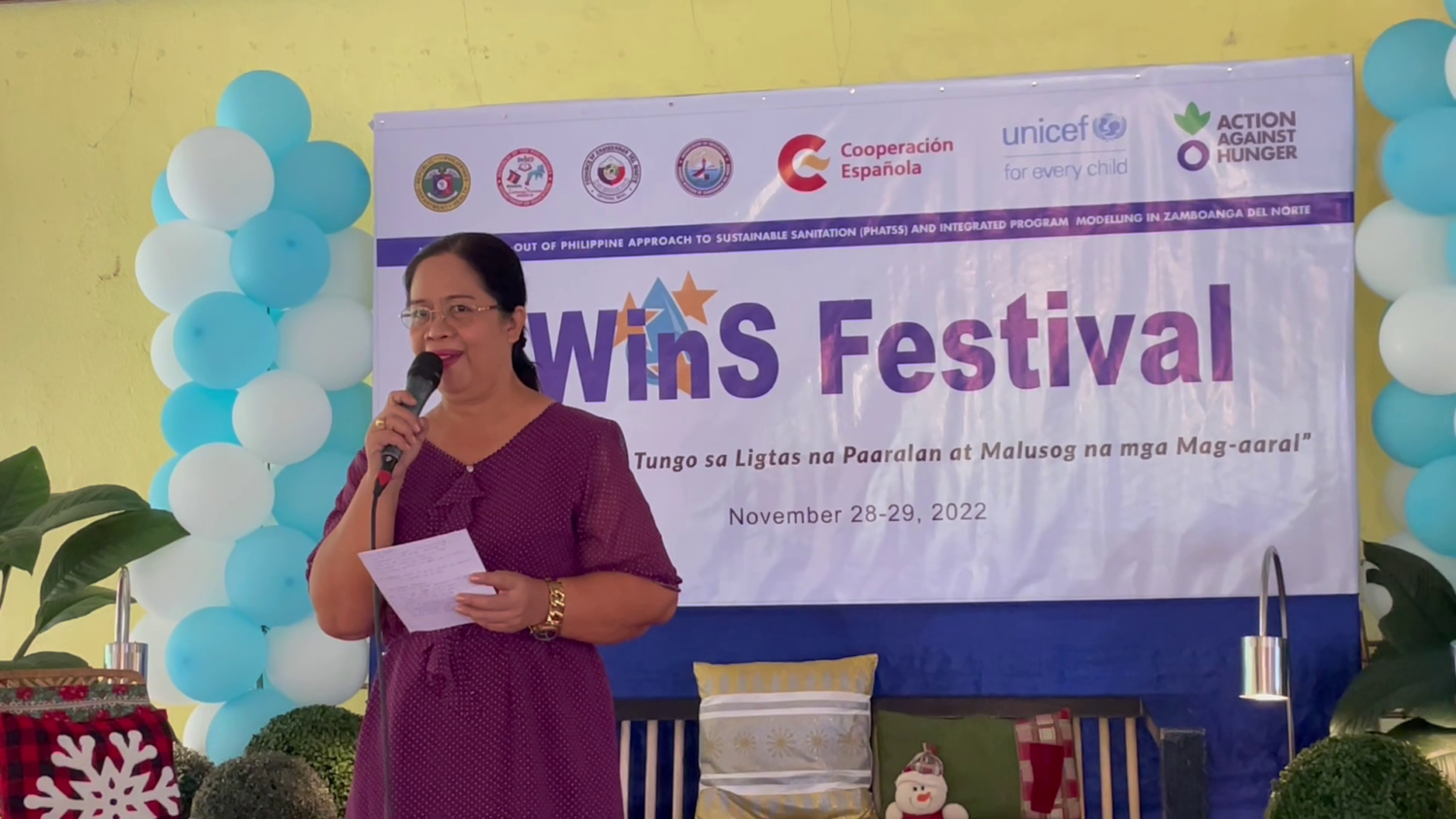
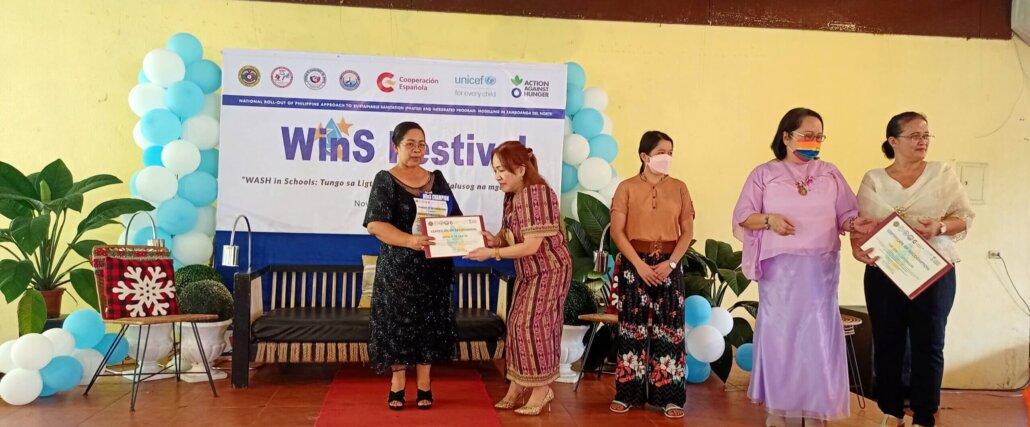
Miela De Gracia, an esteemed educator and former principal of the Sindangan Pilot Demonstration School in Sindangan, Zamboanga del Norte. Both Miela and her school were among the five awarded champions of the Department of Education’s Comprehensive Water, Sanitation and Hygiene in Schools (WinS) Program last November 28 to 29, 2022.

To qualify as a WinS Champion, the school must sustain a three-star rating for three consecutive years. The rating will be based on the comprehensive criteria judged on hygiene, sanitation, water, deworming, and health education.


“It really takes shared leadership, shared governance, and shared responsibilities with the community to achieve something,”


With the continuous support of Action Against Hunger and the United Nations Children’s Fund (UNICEF) Philippines through the “National Roll-out of Philippine Approach to Sustainable Sanitation (PhATSS) and Integrated Program Modelling in Zamboanga del Norte” Project, Miela and her school are able to sustain ideal sanitation and hygiene standards.

Miela shares that this achievement was not due to her efforts alone, but rather it was the support of her community that made a difference. “It really takes shared leadership, shared governance, and shared responsibilities with the community to achieve something,” she adds.

Miela’s school, under her leadership, also led the Menstrual Health Management Campaign last September 29, 2022.

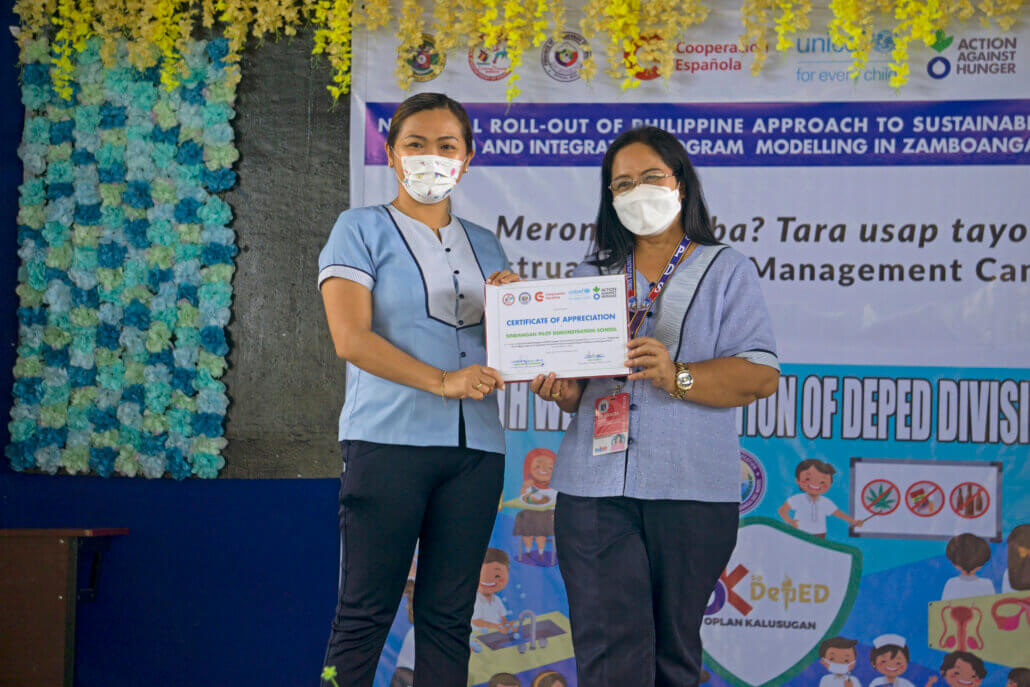
In photo: Miela receives a certificate of appreciation during the Menstrual Health Management Campaign last September 29, 2022. (Photo by Eden Somodio for Action Against Hunger)

The involvement of women and girls in STEM is not just important to have clean water and sanitation for all, as underscored by Sustainable Development Goal 6, but to achieve all 17 sustainable development goals.

By promoting the participation of women and girls in this field, we are ensuring that the perspectives and experiences of half of the world’s population are represented in developing solutions to water and sanitation issues.


The National Roll-out of Philippine Approach to Sustainable Sanitation (PHATSS) and Integrated Program Modelling in Zamboanga del Norte Project is funded by the UNICEF, and implemented by Action Against Hunger Philippines, with the support of the Spanish Agency for International Development Cooperation (AECID) and in coordination with the Provincial Government of Zamboanga del Norte. Read more

Stories from the Field: A Future Doctor

“I want to be a doctor so that I can help people who are victims of disasters,” said 11-year-old Marilou “Monique” Consigna.

Seeing in her own eyes how Typhoon Odette swept her community in Barangay Sta. Paz in San Isidro, Siargao, Monique wants to inspire and influence others so that future generations of children will make a difference.

Monique is 11 years old and currently studying 5th grade in Sta. Paz Elementary School in the Municipality of San Isidro. Her father died last January of 2022 due to sickness, and her mother which is a day care teacher, is now the sole provider for their family. She has six siblings, three of whom have already started their own families.

In the midst of the typhoon, her family evacuated to her sister’s house on the other side of Brgy. Sta Paz. Because of the severe gusts and heavy downpour, they were terrified, appalled and sobbing. For them, it felt like the end of the world at the time. She realized at that point that she was still a child who wants to live life to the fullest. She stills wants to play like any other children and her life should not end there. When they returned home, they were devastated to see that their home had been completely wrecked by the fallen coconut trees and some of parts of their roofing were removed. Despite of what happened, she is still thankful that all their family members were safe and that they were still alive.

She promised to herself that she will work hard in her studies, she particularly enjoys studying English.

Someday, she wants to help her family and community. She wants to be a doctor so that she may aid catastrophe victims. She will use her life to inspire and influence others so that future generations of children will make a difference.

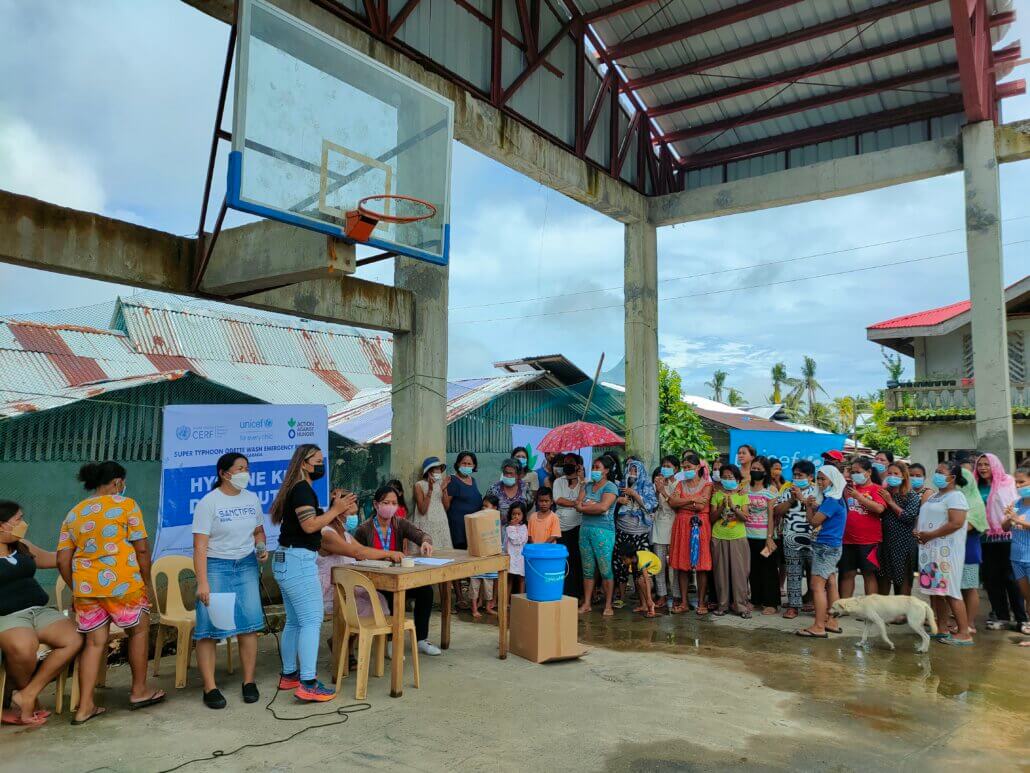
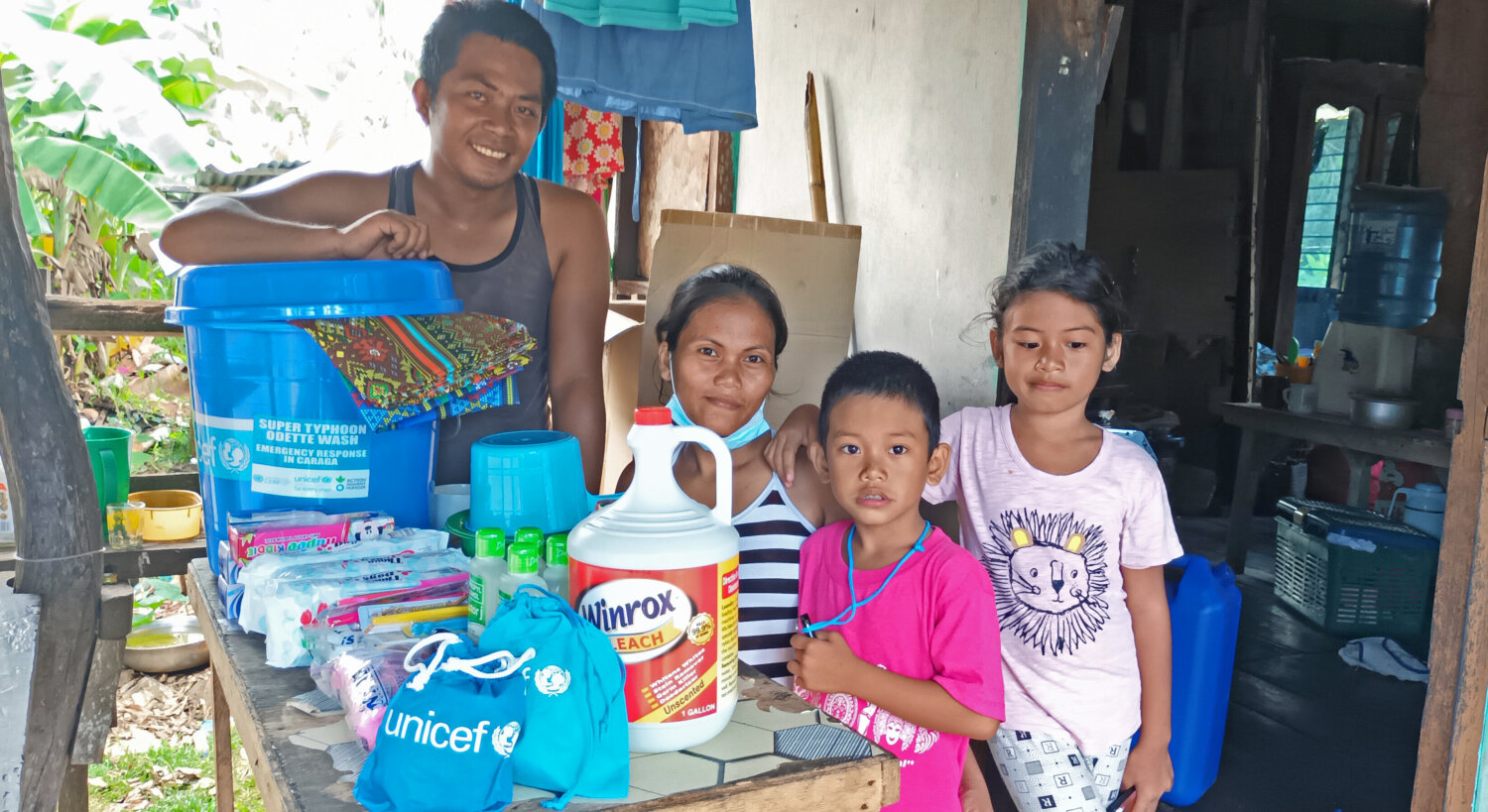
With the support of UNICEF Philippines, Monique’s family was one of the typhoon-affected families who received access to safe water through emergency WASH kits.


Our Super Typhoon Emergency WASH Response in CARAGA is funded by the United Nations Central Emergency Fund (UN CERF), the Republic of Korea, and the Government of Japan through the United Nations Children’s Fund (UNICEF) Philippines. Read more

Staying healthy and safe in times of crisis

“I still remember how hard the wind and rain were that night. The children were crying out of fear.”

These were the words of 34-year-old Geraldine Quire-Quire as she recalls their night at the evacuation center when Typhoon Odette (internationally named Rai) made landfall in Siargao on the 16th of December 2021. As a mother, her family’s safety is her top priority.

Already pregnant with their third child, Geraldine had to take care of their two children and her disabled aunt by herself in the wake of Odette’s rampage. Geraldine’s husband was away in the city working as a watchman at the time.

The intensity of the typhoon was a horrific experience for the children, according to her. To make matters worse, they went home to find that the typhoon had partially damaged their house.

Months later, Geraldine finds some comfort in the life-saving support they received different organizations and government agencies. They are one of the families in Barangay Opong in Taganaan, Surigao del Norte who received water, sanitation, & hygiene materials from UNICEF Philippines through Action Against Hunger’s Super Typhoon Emergency WASH Response in Caraga. According to Geraldine, some of the items will prove to be useful when she gives birth.


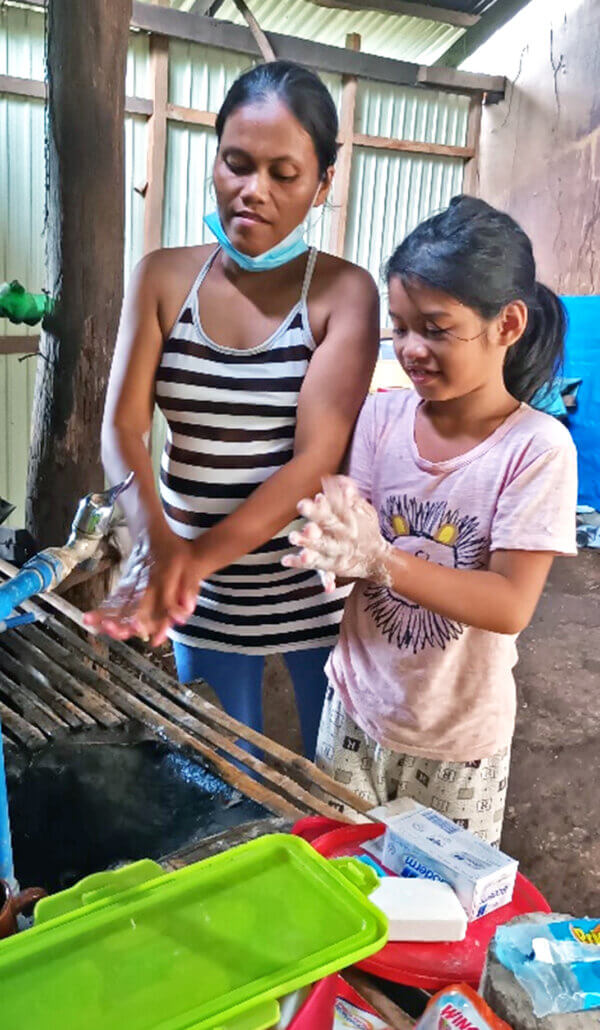
Geraldine also participated in the hygiene promotion sessions of Action Against Hunger. After hearing reminders on COVID safety and how to practice proper hygiene and sanitation, she was eager to teach her children these hygiene habits.

In photo: Geraldine teaches her eldest daughter how to properly wash hands with soap and water based on what she learned from Action Against Hunger’s hygiene promotion sessions. (Photos by Abdul Alim Talusob for Action Against Hunger)

As of July 18, we have reached 81,957 people in Surigao del Norte with life-saving WASH support. Aside from giving access to safe water and sanitation services, our goal is to ensure that families like Geraldine’s adopt and sustain proper hygiene practices.

Our Super Typhoon Odette Emergency WASH Response in CARAGA is funded by the United Nations Central Emergency Fund (UN CERF), the Republic of Korea, and the Government of Japan through the United Nations Children’s Fund (UNICEF) Philippines


Written by Adam Lacson, edited by Joyce Sandajan Read more

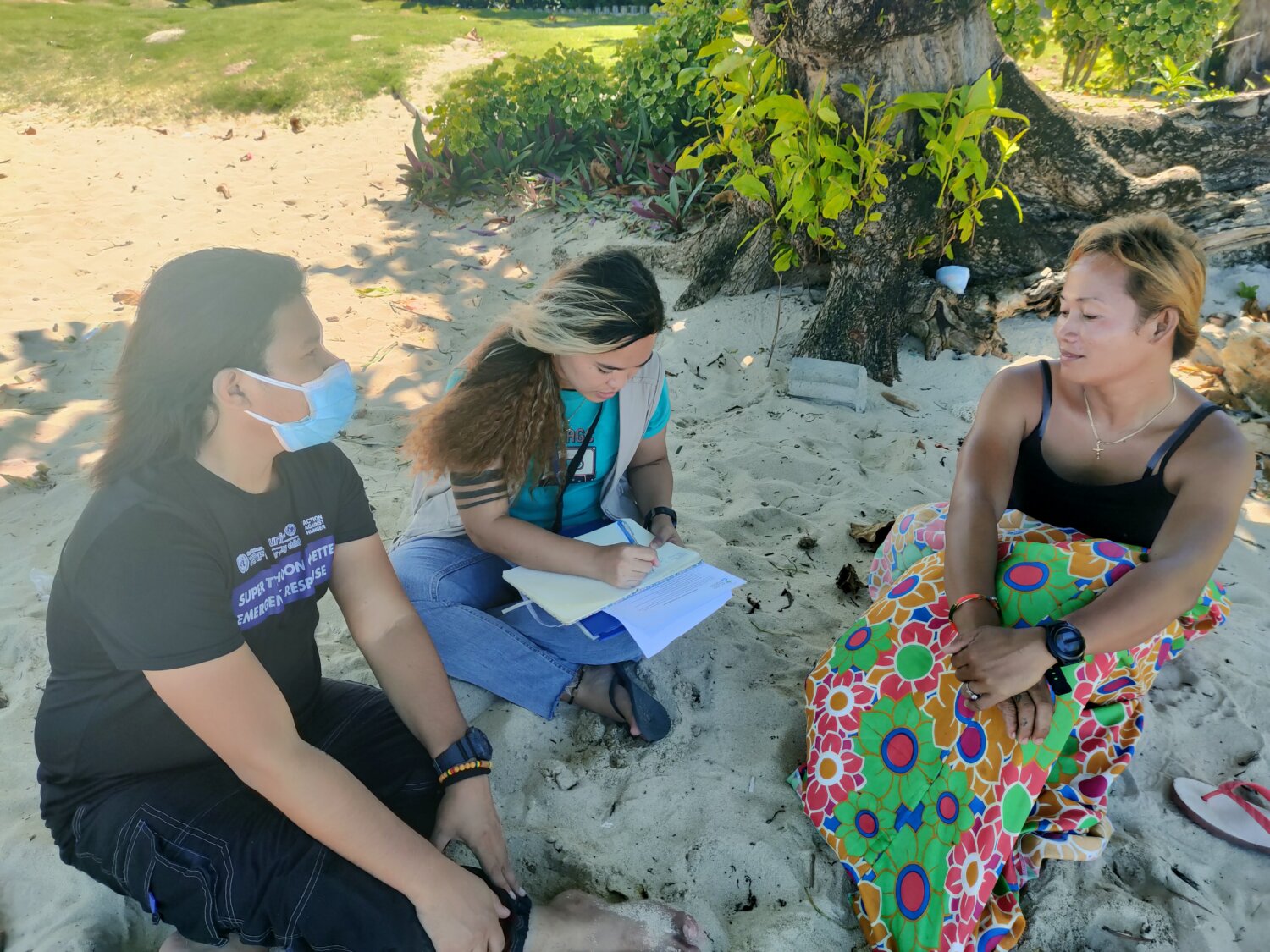
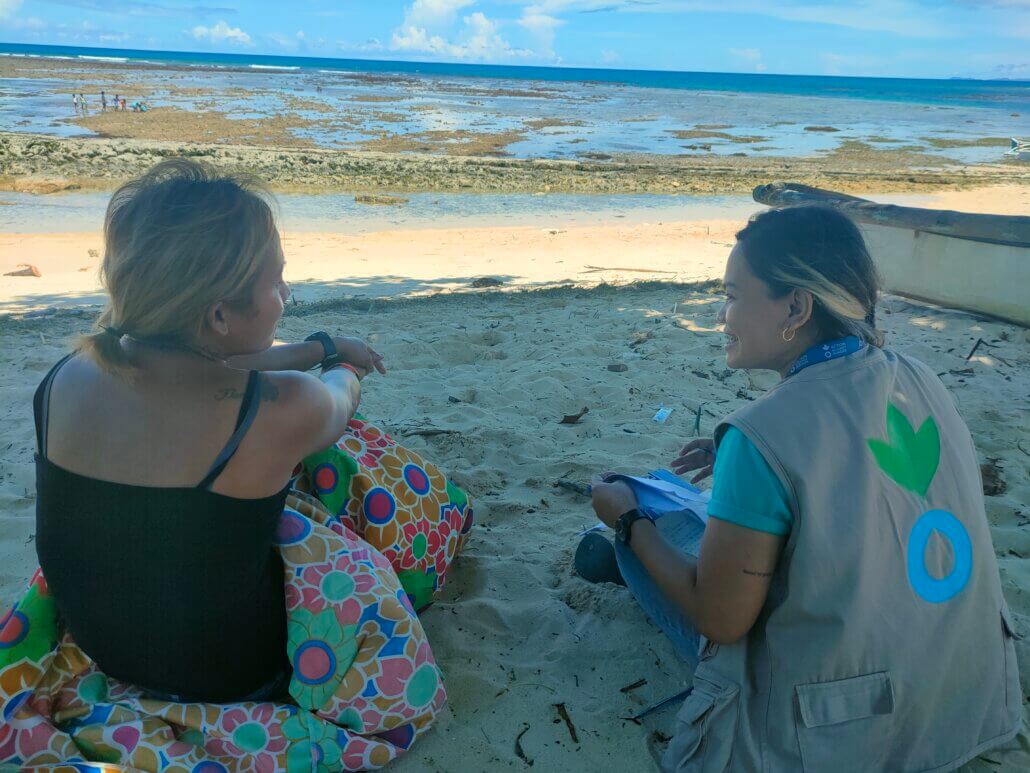
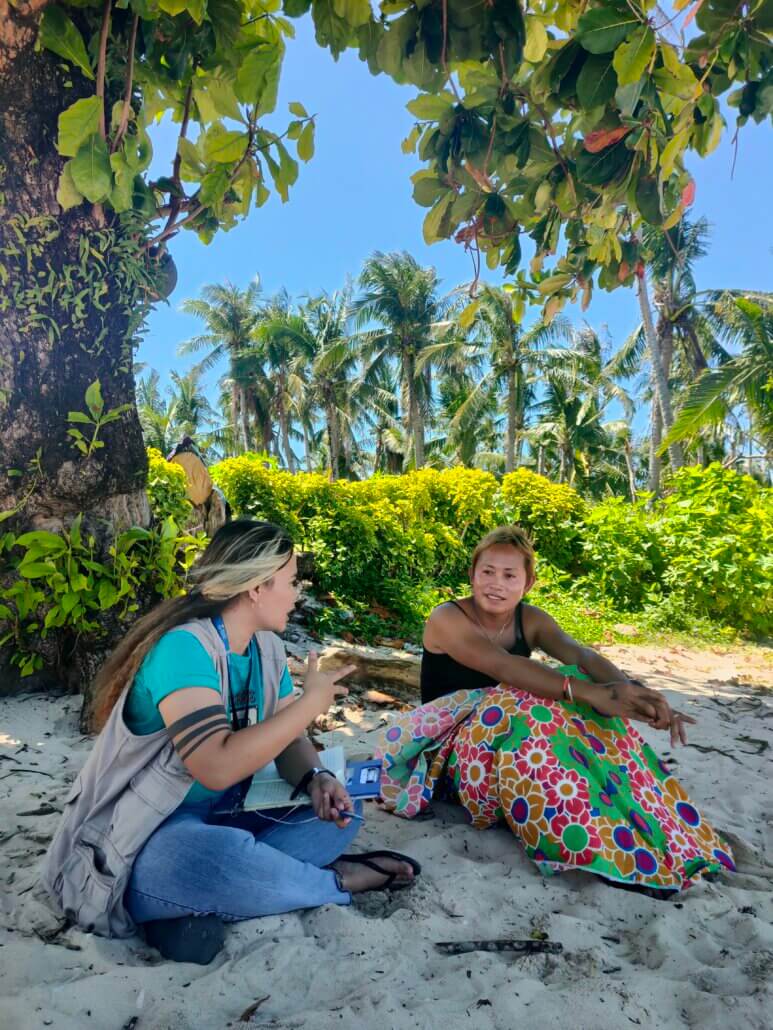
Stories from the Field: Jomel Flores

GENERAL LUNA, SIARGAO — Jomel Flores, 31 years old, a member of the LGBT community, and her family were among the hundreds of thousands of Filipinos who were severely impacted by Typhoon Odette’s fury in the islands of Siargao last December 2021. According to her, it was the most horrifying and distressing experience she’s ever had so far in her life.

Rai made its landfall on December 16, 2021 bringing torrential rains, violent winds, floods and storm surges. Jomel and her family took refuge at Anajawan Elementary School in the Municipality of General Luna. They had been warned that the typhoon would be powerful, but when it came, it was significantly more powerful than the locals had anticipated. They were astonished, scared, and afraid when the wind began to blow erratically, pelting them with heavy showers. During that time, children and adults were screaming and crying and all she could do at that second was to pray harder that it will come to pass.

Their experience in the evacuation facility was really difficult, she says. With COVID-19 still a threat, it worried her that there was no social distancing, and they could only use one comfort room.

After spending three days at the evacuation center, they returned home only to find out that their house had been partially destroyed, with some of their roof gone, causing their personal belongings to become damp and damaged. This rendered Jomel speechless and all she could think at that moment was to cry. Despite the fact that it was the saddest and most agonizing event she had ever had, she was still thankful that all of her family members were safe and alive. “That was the most important thing, material stuffs may be replaced, but life will never be replaced,” she says.

It’s been months since Typhoon Odette, but Jomel still sheds tears every time she remember the horrific experience they went through. Despite being one of the most frightening experiences they’ve had, Jomel is thankful that all of their family members are alive and safe. “That’s the most important thing. Material stuff come and go, but one’s life can never be replaced,” she says

Her hope for the future is to become financially stable and to open a large ihaw-ihaw (barbecue) store to support her family. She also wants to make a modest contribution to her community by offering inexpensive healthy meals. She aspires to be the change she wishes to see in the world.

The Flores family is among the thousands of affected families in Surigao del Norte who were given life-saving water, sanitation, & hygiene support immediately after Typhoon Odette made landfall on December 16.


The Super Typhoon WASH Emergency Response in CARAGA is implemented by Action Against Hunger with funding from the United Nations Central Emergency Response Fund (UN CERF) and United Nations Children’s Fund (UNICEF). Read more