Held by hope: Two stories of survival during Typhoon Tino

Held by hope: Two stories of survival during Typhoon Tino

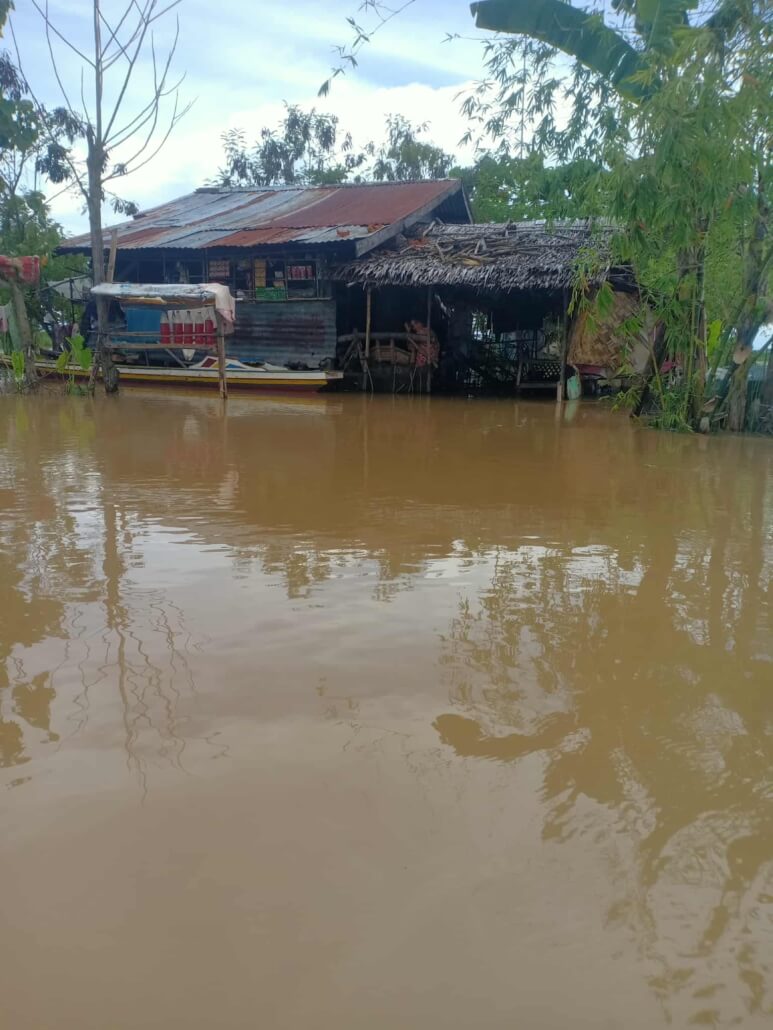
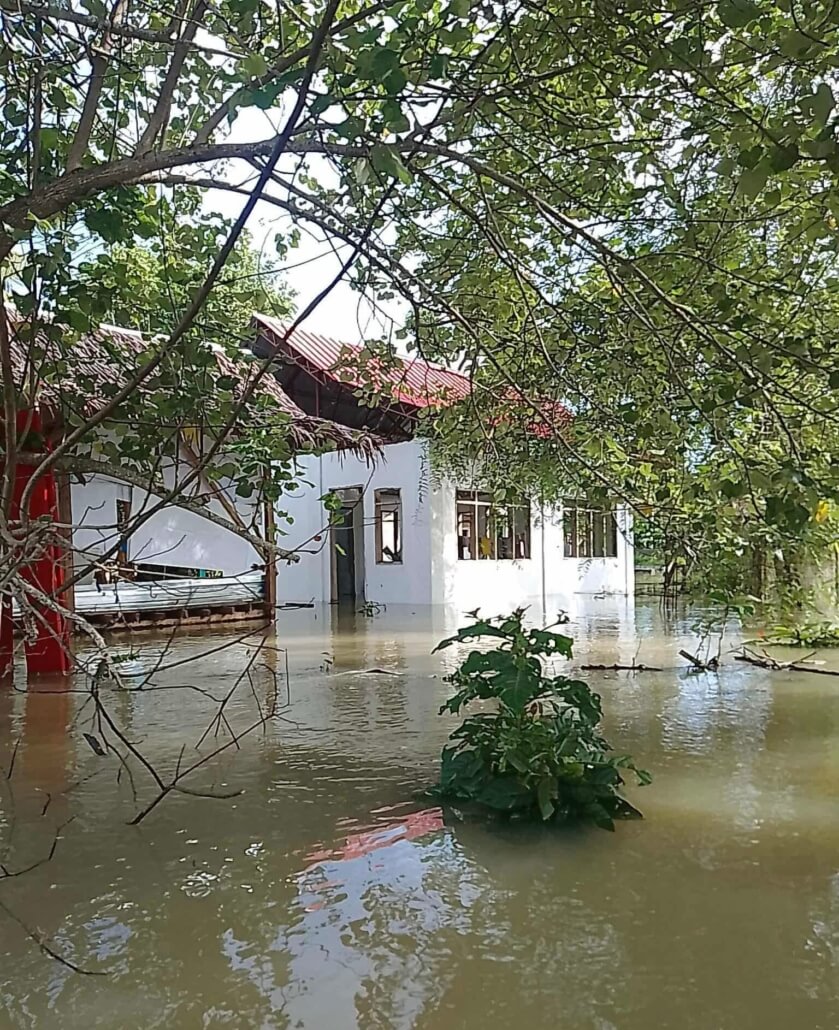
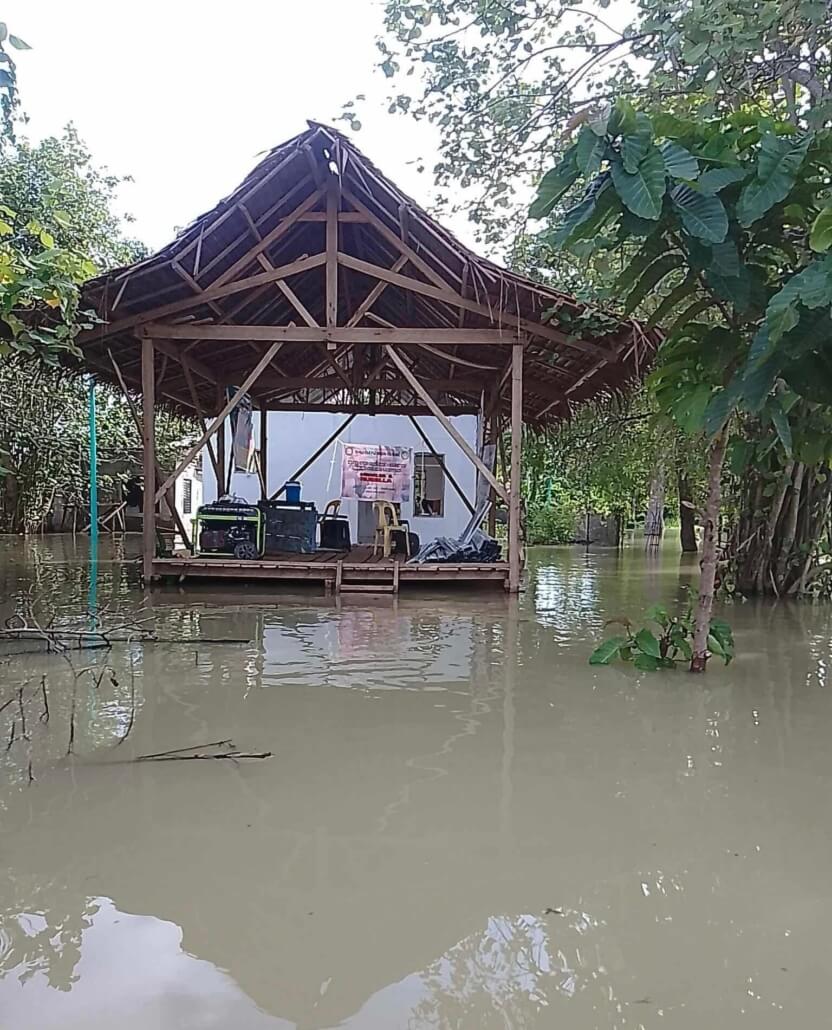
Razell, 33, and their family friend Kyle, 14, live in Barangay Cabadiangan, Compostela, Cebu with their families. When Typhoon Tino (Kalmaegi) struck their community, they never imagined that the nearby watercourse would overflow so quickly, washing away homes in the community, destroying most of their belongings, and jeopardizing lives.

The 3rd of November, 2025 is a night they will remember for the rest of their lives. Razell and Kyle recall their experiences of that night, and how they struggled to save themselves and the people they care about. Through their stories, Razell and Kyle offer two perspectives on the same life-threatening event, capturing fear, resilience, and survival in the face of unimaginable danger.

Razell’s fight to keep her family alive

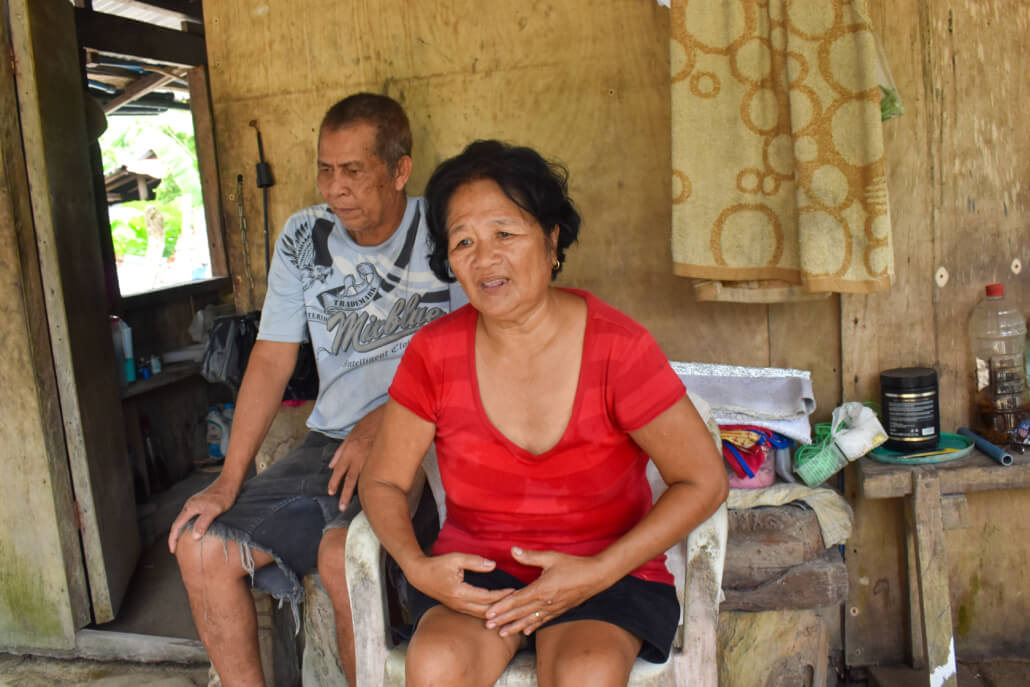
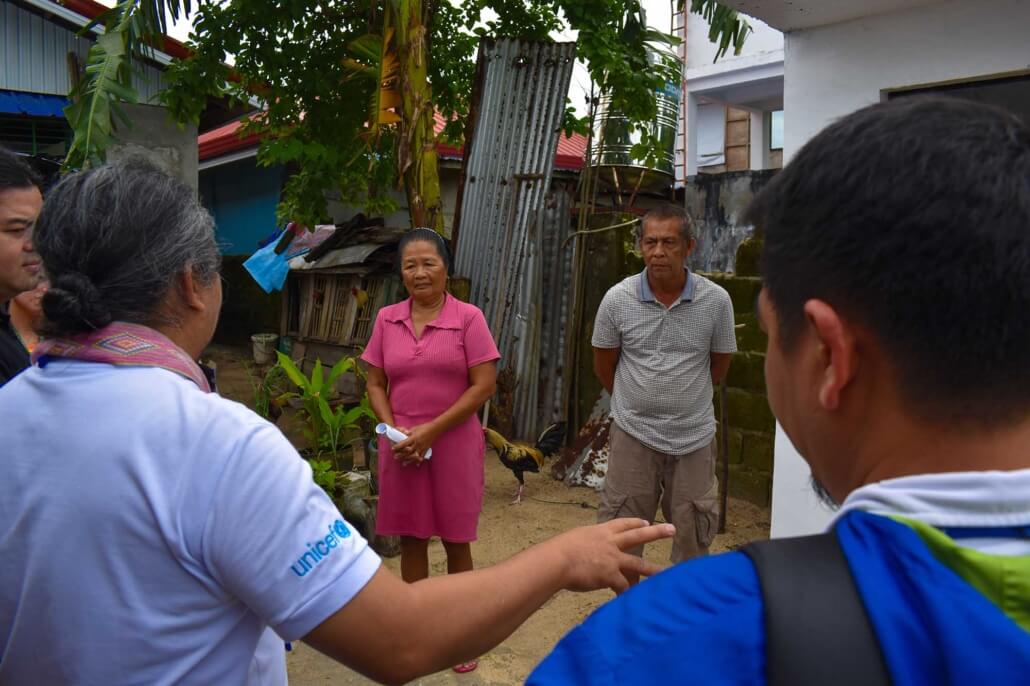
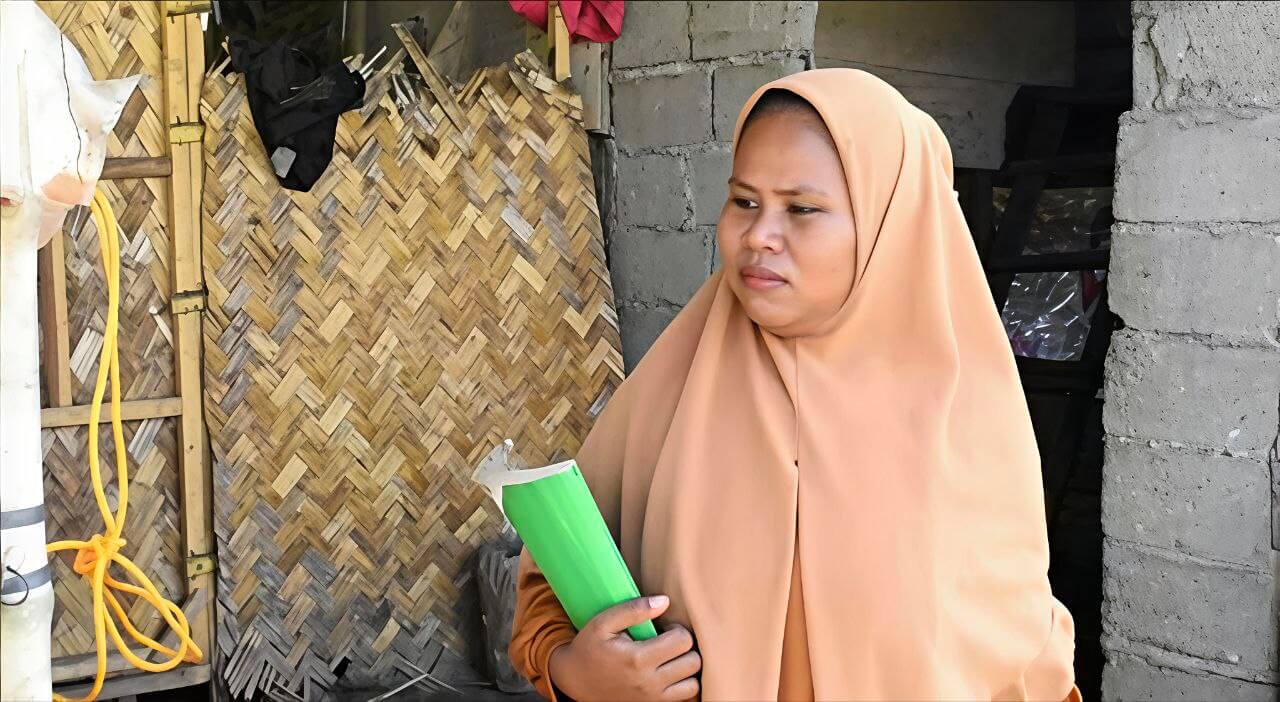
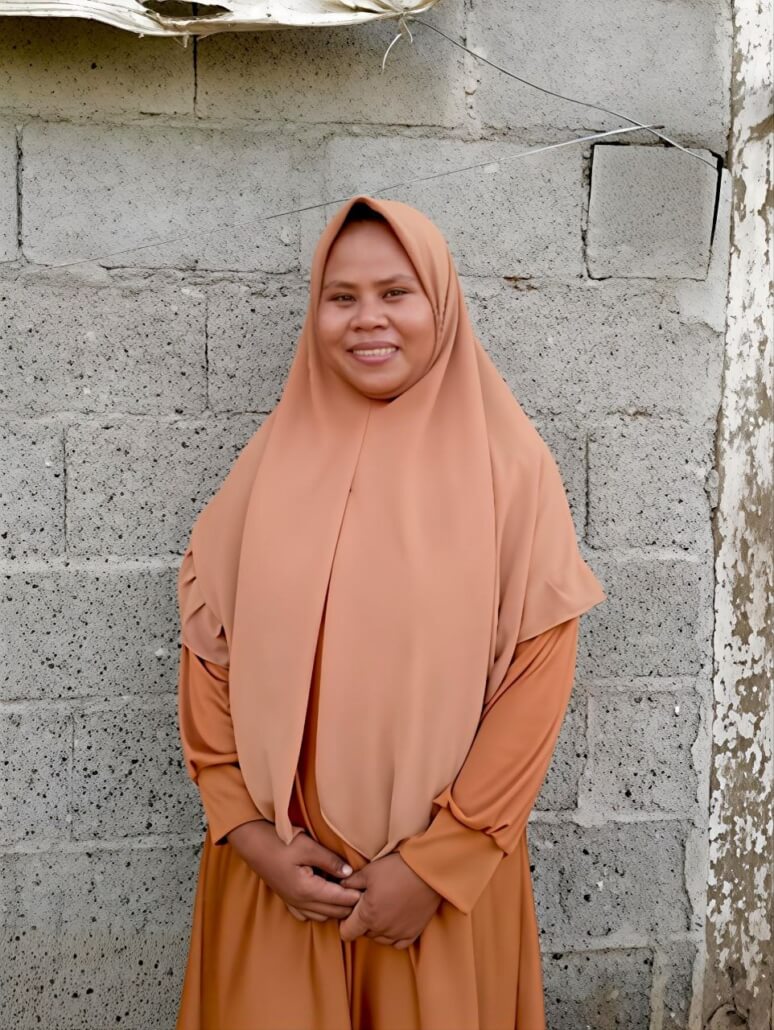
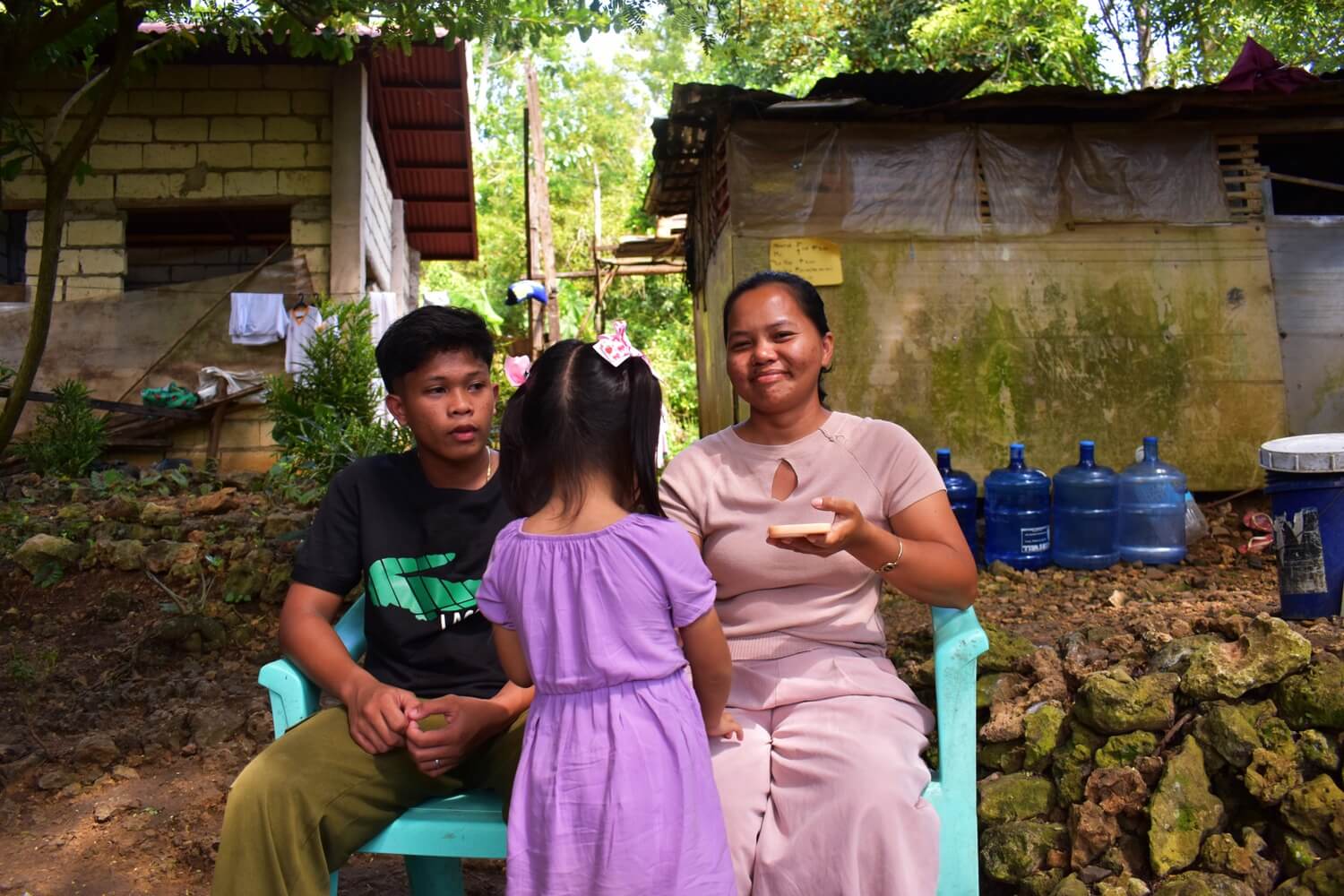
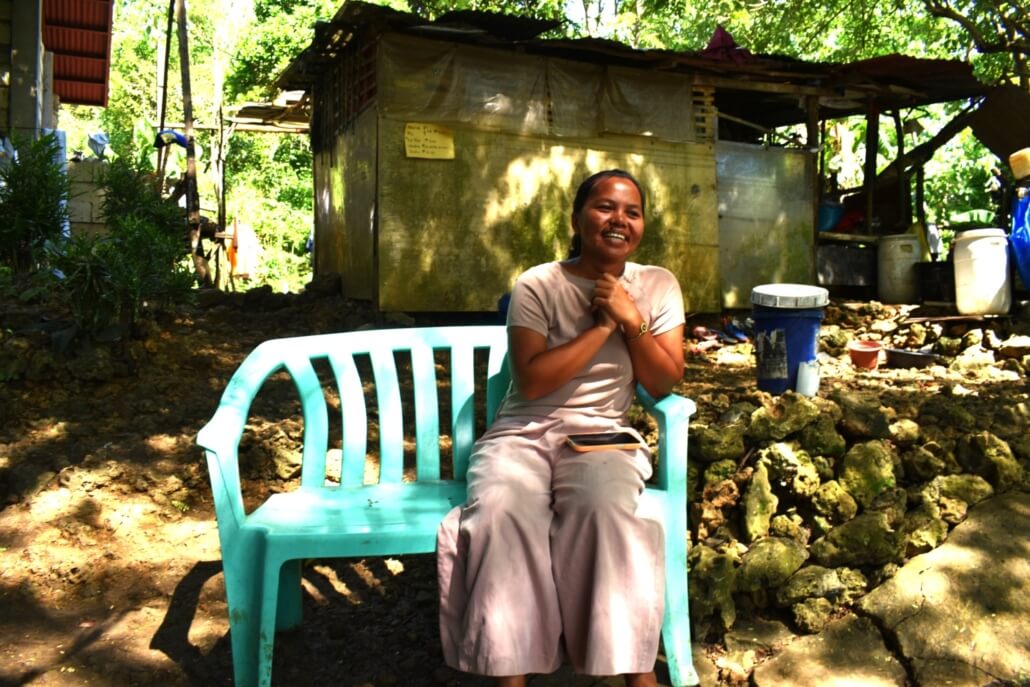
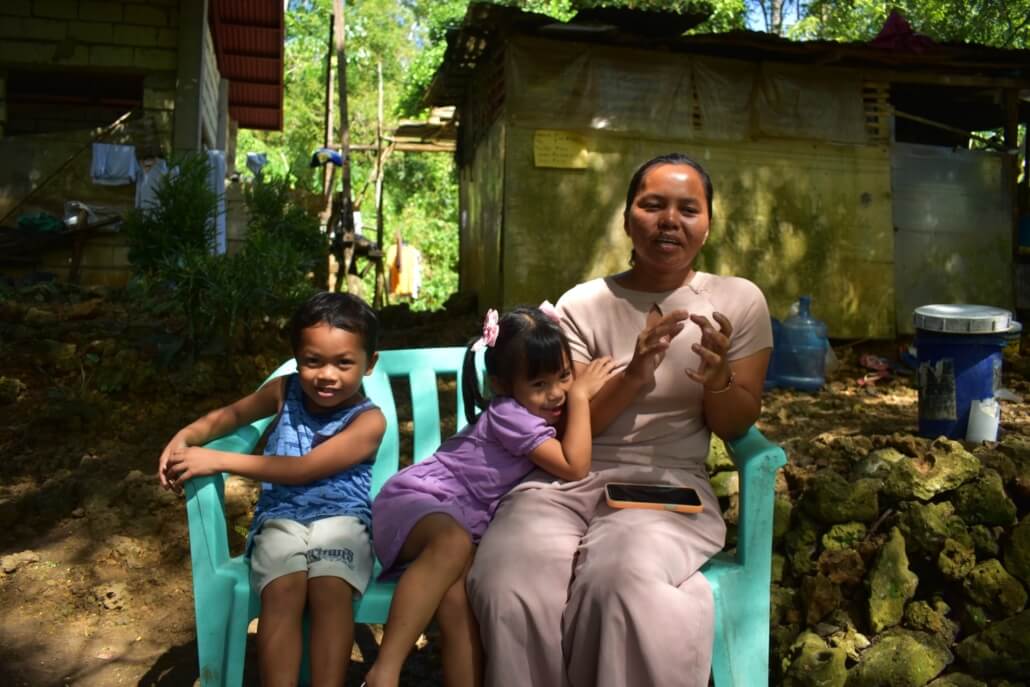
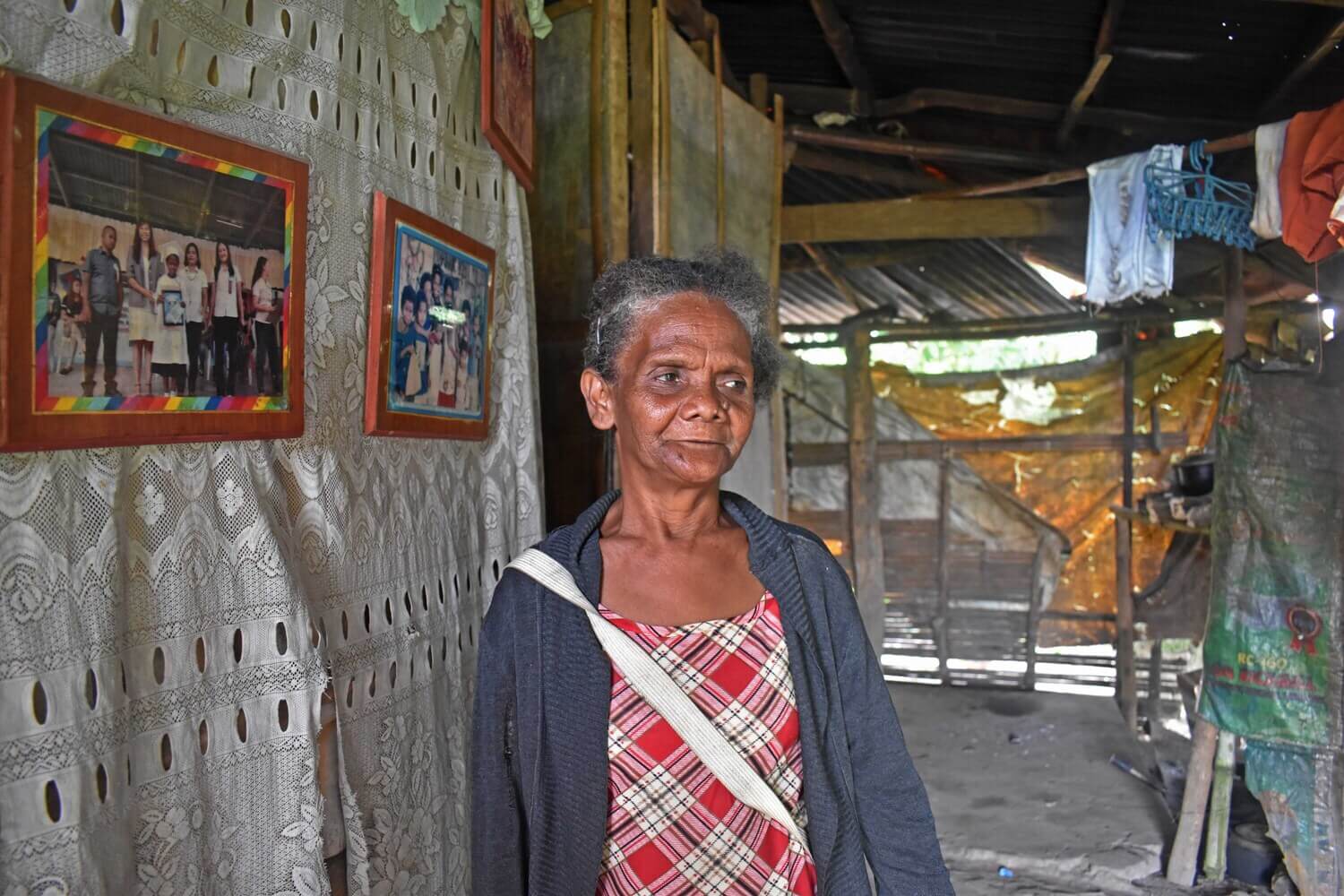
In photo: Razell shares her story with Action Against Hunger staff from the night Typhoon Tino (Kalmaegi) struck her community. Photo by Martina Vercoli for Action Against Hunger.

COMPOSTELA, CEBU – Razell, 33, lives in Barangay Cabadiangan with her two daughters. In the height of Typhoon Tino’s storm surge, her youngest daughter, Scarlett, was quickly swept away by the floodwaters while trying to reach a shelter located in an elevated area of their community. Razell managed to take refuge on a neighbor’s roof. From there, she watched in fear as Kyle, a 14-year-old family friend, bravely risked his own life to save her daughter.

Razell lives with her two daughters in their home in the municipality of Compostela, Cebu. The family usually manages on their own, as Razell’s husband works as a seafarer and spends most of the year away from home, sending money to support the family. Alongside caring for her household, Razell works remotely as a virtual assistant and earns additional income by baking cakes on commission. When Typhoon Tino struck, her husband was working outside Cebu and was not there when the disaster occurred.

In the early hours of the morning, Razell was alone with her daughters when their lives were suddenly put at risk by the tragedy that was about to happen.

The night Typhoon Tino struck

It was around 2 in the morning on the 4th of November 2025 when Typhoon Tino started tearing through their community, Razell recalls. She and her daughters were asleep when strong winds and heavy rain woke them suddenly. “My eldest daughter began crying and shaking in fear, calling out for her father,” Razell recalls. The family was unable to go back to sleep as the storm intensified.

When floodwater began seeping into their home, they tried to lift their belongings onto cabinets and drawers, hoping the water would not rise any higher. But the nearby river quickly overflowed, and the water continued to climb at an alarming pace.

Realizing the danger was becoming real, Razell decided to evacuate immediately. She took her daughters and rushed to the nearby house of her sister, Roxane, hoping it would be safer. They reached Roxane’s house before help arrived, but the floodwaters followed them faster than expected. Within two hours, the water surged even higher, swallowing the house and turning the surrounding area into a powerful, fast-moving current.

As conditions worsened, Kyle, a 14-year-old family friend who lived in a higher part of the community, arrived with Razell’s cousin to help evacuate those trapped in the house. Kyle immediately stepped in to help everyone get out. He first assisted Razell’s eldest daughter and Roxane, helping them move toward an uphill area where the water was less dangerous.

Scarlett, Razell’s younger daughter, was still inside Roxane’s house with her mother, waiting for her turn to be brought to safety. Seeing how dangerous the situation had become, Razell insisted that her cousin and Kyle focus entirely on getting Scarlett out first, even if it meant leaving her behind.

As Kyle and the cousin attempted to bring Scarlett to the safer area, a powerful surge of floodwater struck without warning. In a matter of seconds, they were violently separated. Razell was no longer with them when it happened. She later saw her cousin clinging to a coconut tree, fighting to save his own life, while Kyle and Scarlett were swept away by the rushing water and disappeared into the darkness.

“At that moment, I didn’t care about the house or my belongings, even though many pivotal things were in there,” Razell shares. “My life and my daughters’ lives were more important.”

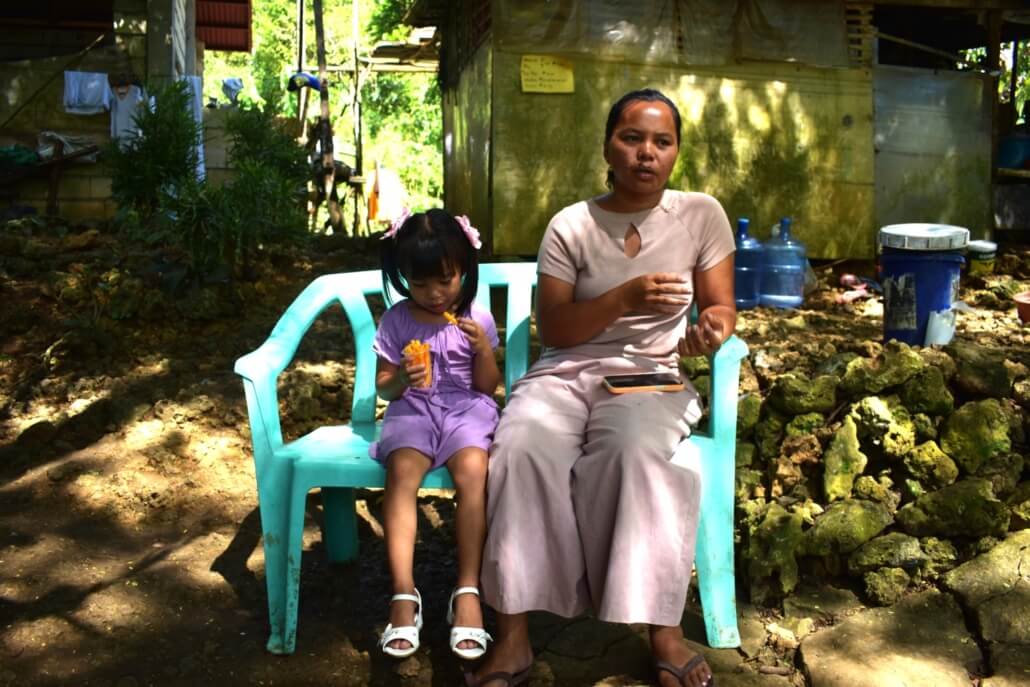
In photo: Razell and her daughter Scarlett share their stories with Action Against Hunger staff from the night Typhoon Tino (Kalmaegi) struck their community. Photo by Martina Vercoli for Action Against Hunger.

By around 5 a.m., Razell managed to climb onto the roof of a neighboring house. From there, she witnessed people desperately clinging to coconut trees as floodwaters raged below. “At first, I thought it was strange,” she says. “I asked myself, are people going to get coconuts now? Then I realized they were clinging to survive. I was shocked.”

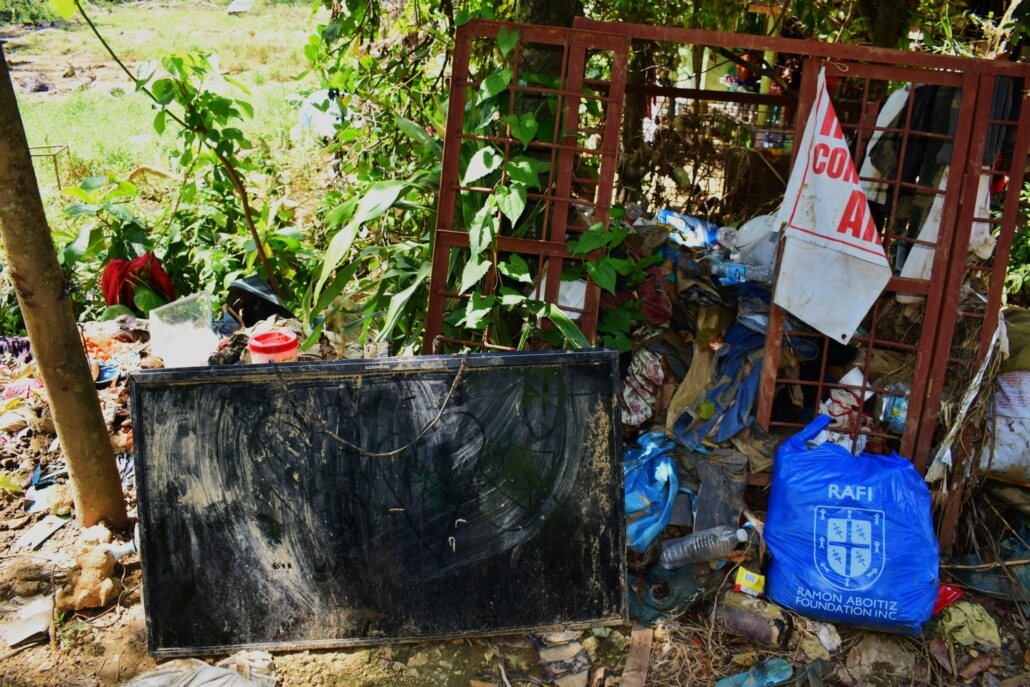
n photo: personal belongings soaked in mud next to Razell’s sister’s house in the aftermath of Typhoon Tino (Kalmaegi). Photo by Martina Vercoli for Action Against Hunger.

In the darkness, she caught sight of Kyle and Scarlett again, struggling in the water. “When I opened my eyes, I saw Kyle and Scarlett, and they were sinking,” she recalls. Believing she was witnessing their final moments, Razell prayed relentlessly. “I thought they were dead. I thought they were gone.”

The wind continued to strengthen, bamboo trees were uprooted, and debris crashed into houses. Standing on the roof, Razell feared it might collapse beneath her. Between 6 and 9 a.m., the floodwaters slowly began to recede. The wind weakened, but the cold was unbearable. “I kept praying out loud even though I had no voice,” she says.

When she saw residents moving around with ropes to rescue survivors, hope returned. “I thought, someone made it alive,” Razell recalls. “I prayed that the survivor would be my daughter.”

When she finally learned that Scarlett had survived, she could hardly believe it. After being swept away, Scarlett had been lifted onto a pomelo tree by Kyle, where she stayed until help arrived. “In that moment, I felt the biggest joy a parent could ever feel,” Razell says. “It was truly a miracle.”

During the chaos of that night, Razell also saw her older brother, Rodel, as his house began to collapse. “I saw him fall into the floodwaters and disappear,” she remembers. Thankfully, he managed to climb onto a large tree and survive. After the ordeal, all family members were accounted for.

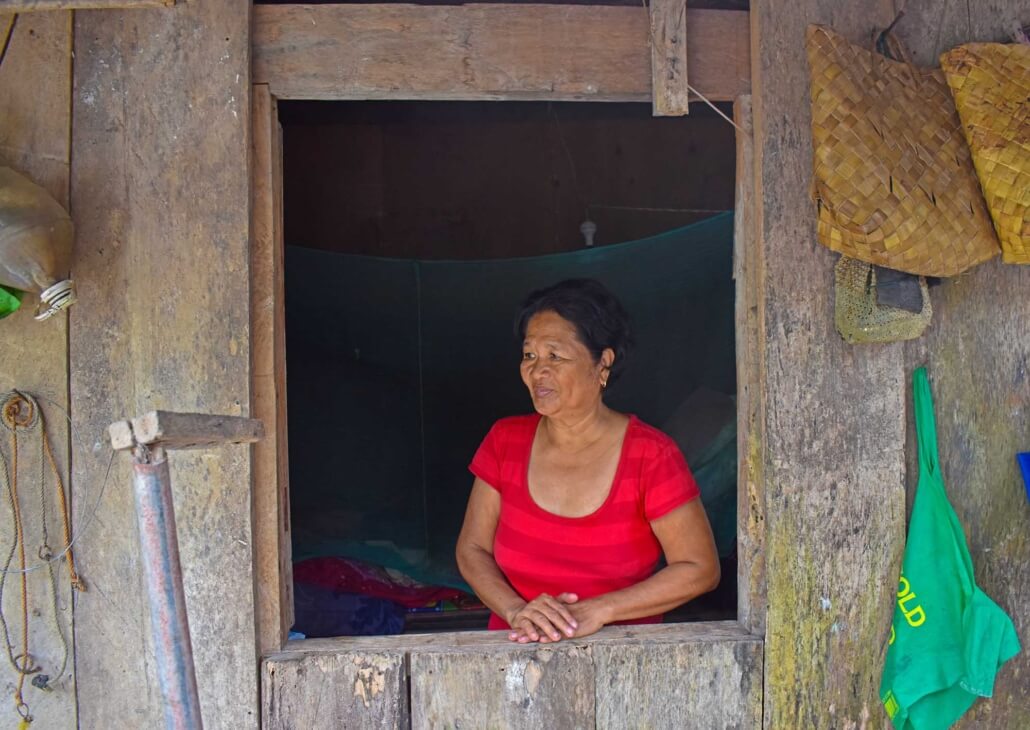
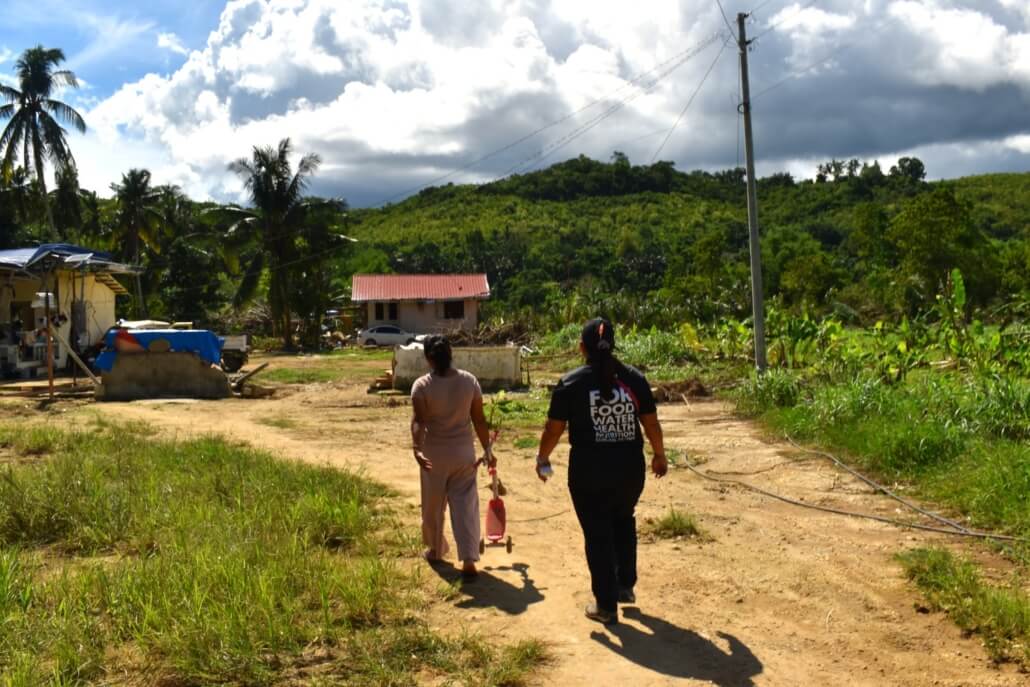
In photo: Action Against Hunger staff walks with Razell towards what now remains of her house destroyed by Typhoon Tino (Kalmaegi) Their old house in Compostela, Cebu, now a pile of debris covered in a blue tarp. Photo by Martina Vercoli for Action Against Hunger.

Life after the storm and the road to recovery

In the days following the disaster, the challenges continued for Razell and her family. From an emotional point of view, the trauma of the event was still present, according to Razell. Scarlett, her youngest daughter, did not speak for several days after what happened.

Their home had been completely washed away; they had no clean and dry clothes. According to Razell, the loss of undergarments, made it especially difficult for the women in the community to manage their menstrual needs: “Since we no longer had any underwear, we had to attach the disposable pads directly to the only dry pair of trousers we had left.” Nevertheless, despite the initial difficulties, she recalls volunteers distributing disposable pads days after Typhoon Tino struck.

“Immediately after the typhoon, we badly needed water and dry clothes. That was the priority for my family… My house was destroyed. Everything I had spent my money on [for income], like my baking tools and my laptop, was gone.”

To seek support, she decided then to go with her daughters to her husband’s family house in Compostela, and they were provided with dry clothes and safe water. “Immediately after the typhoon, we badly needed water and dry clothes. That was the priority for my family.”

“My house was destroyed. Everything I had spent my money on, like my baking tools and my laptop, was gone,” she said, expressing particular sadness over the loss of these belongings since before the typhoon, which were a means to gain income.

With financial help from friends and family, she managed to have her laptop repaired, a crucial tool for her work. “Today, one month after the typhoon, is my first day working again after what has happened.”

With the cash assistance received from Action Against Hunger, funded by the Swedish International Development Cooperation Agency (SIDA), Razell was able to buy groceries, spices, fruits, meat, and replace lost essential items such as shoes, clothes, and underwear. “We were able to buy something nutritious and get a varied diet instead of instant noodles, which had started to irritate our mouths,” she says. She shared everything she bought with her entire family, even though for weeks, she admits: “We struggled with appetite loss due to the trauma of what we had endured.”

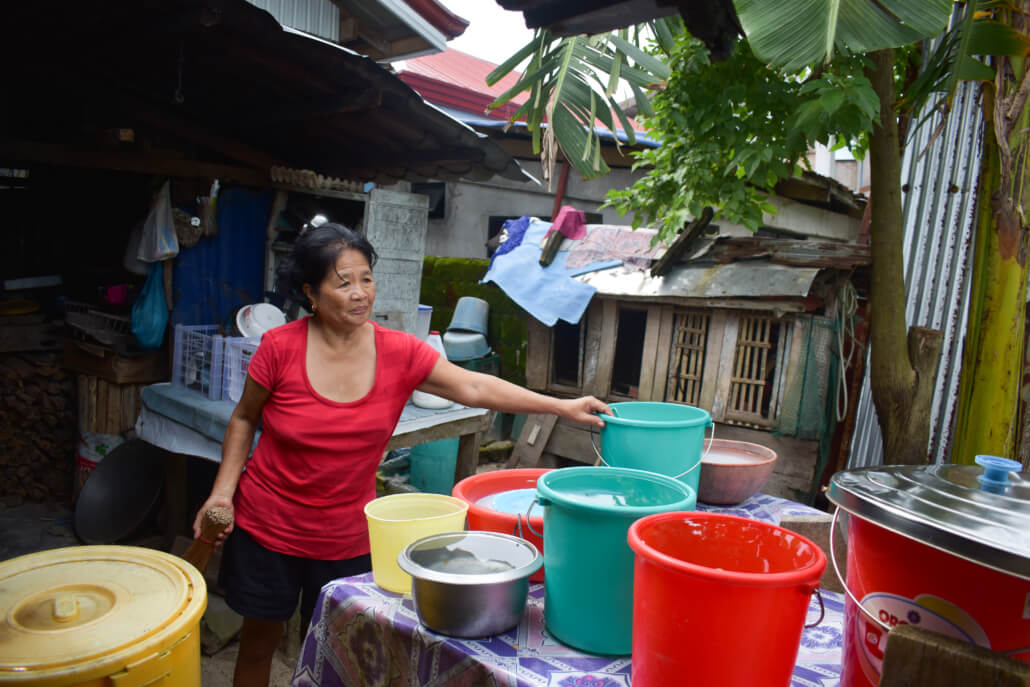
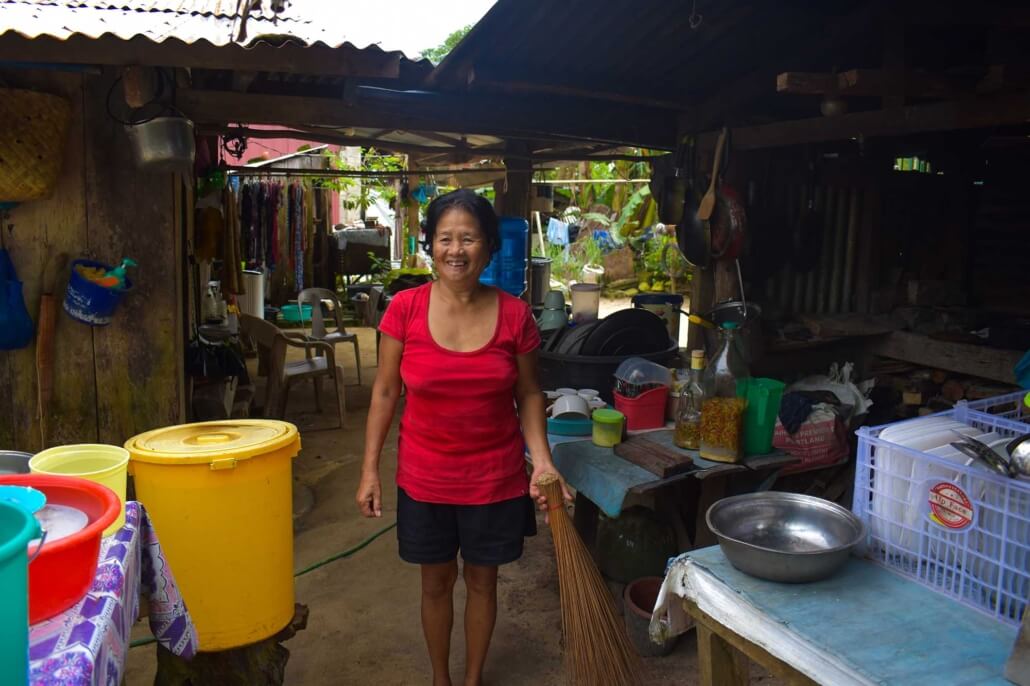
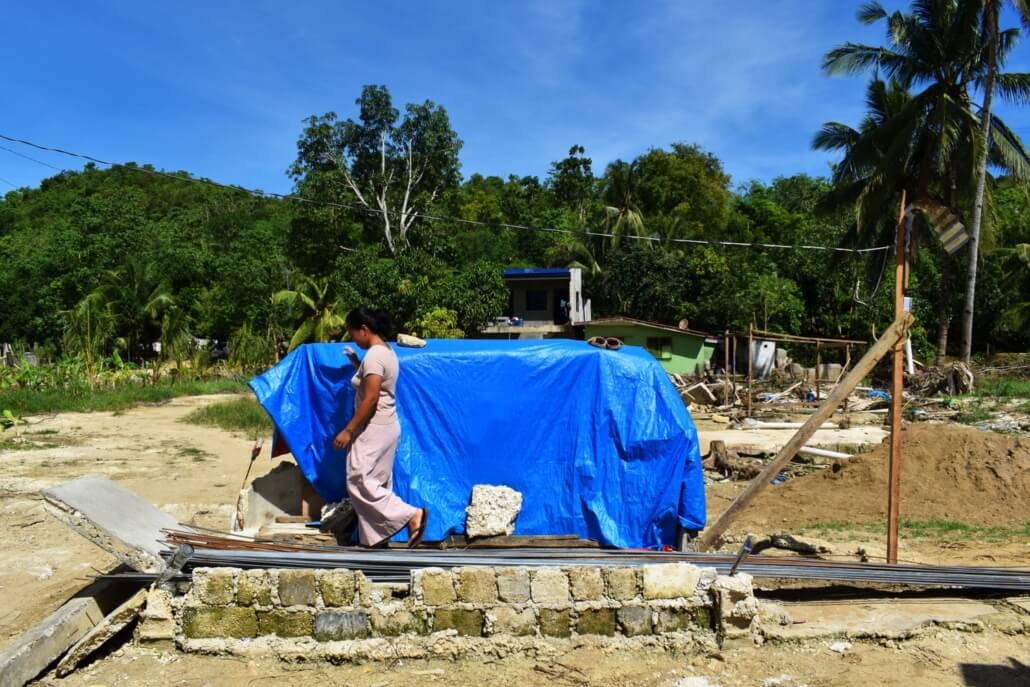
In photo: Razell walks into what remains of her house destroyed by Typhoon Tino (Kalmaegi) in Barangay Cabadiangan, Compostela, Cebu. Photo by Martina Vercoli for Action Against Hunger.

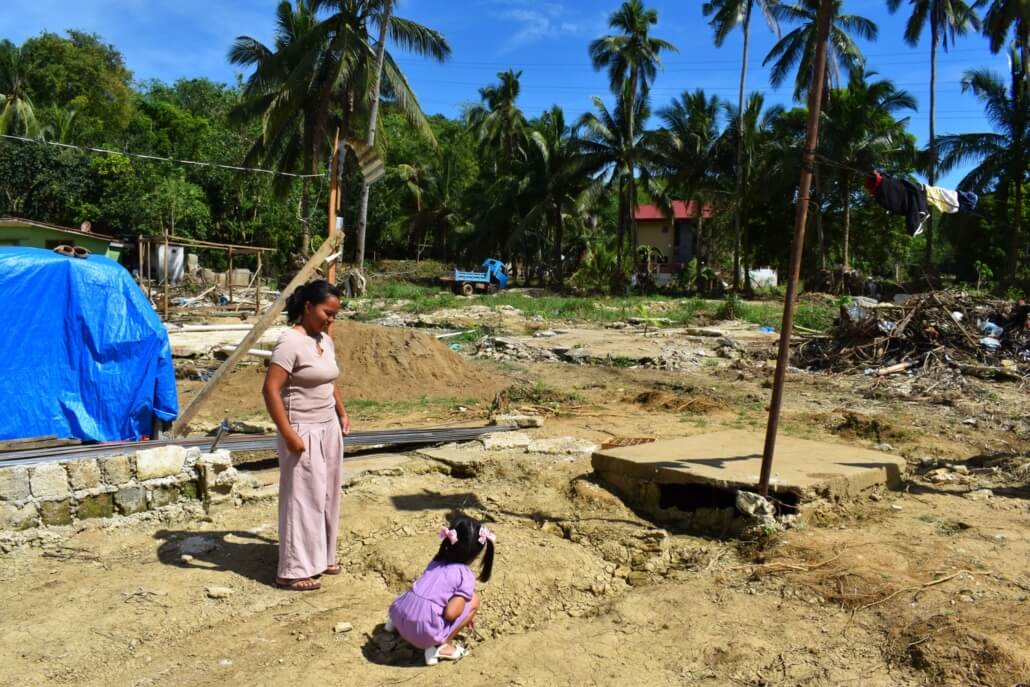
In photo: Razell and her daughter Scarlett beside their home comfort room destroyed by Typhoon Tino (Kalmaegi) in Barangay Cabadiangan, Compostela, Cebu. Photo by Martina Vercoli for Action Against Hunger.

With the support received from friends and organizations such as Action Against Hunger, Razell was able to recover from what she and her family had to endure that night.

“I am aware that without this support, my family’s recovery would have been slower and more difficult.”

In photo: Razell and her daughters share their stories with Action Against Hunger staff from the night Typhoon Tino (Kalmaegi) struck their community. Photo by Martina Vercoli for Action Against Hunger.

Looking ahead, Razell hopes to rebuild her home and return to a sense of normalcy. Currently, she and her daughter’s are staying with her sister, Roxanne. She plans to purchase materials to reconstruct their house and continue providing nutritious food for her daughters as they slowly heal from the devastation caused by Typhoon Tino.


A young life saves another: Kyle’s story of courage

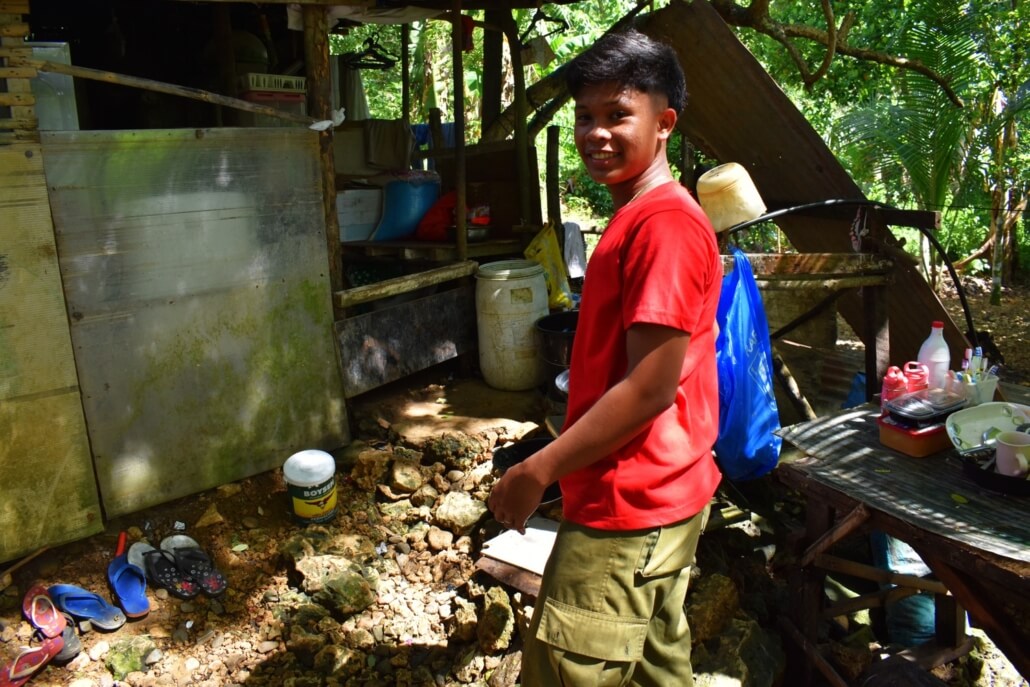
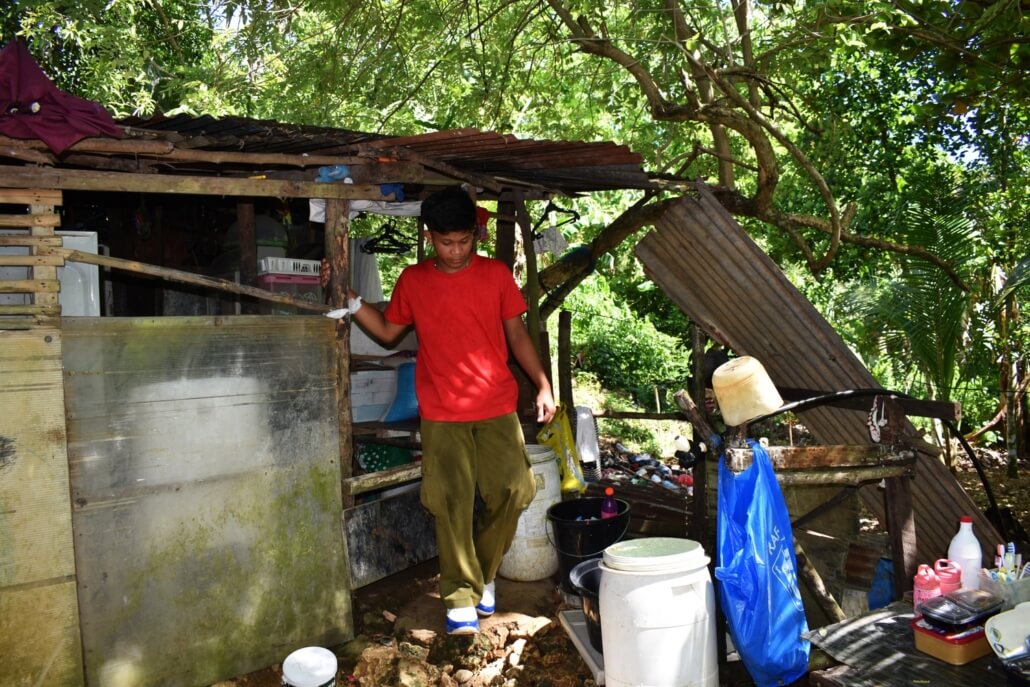
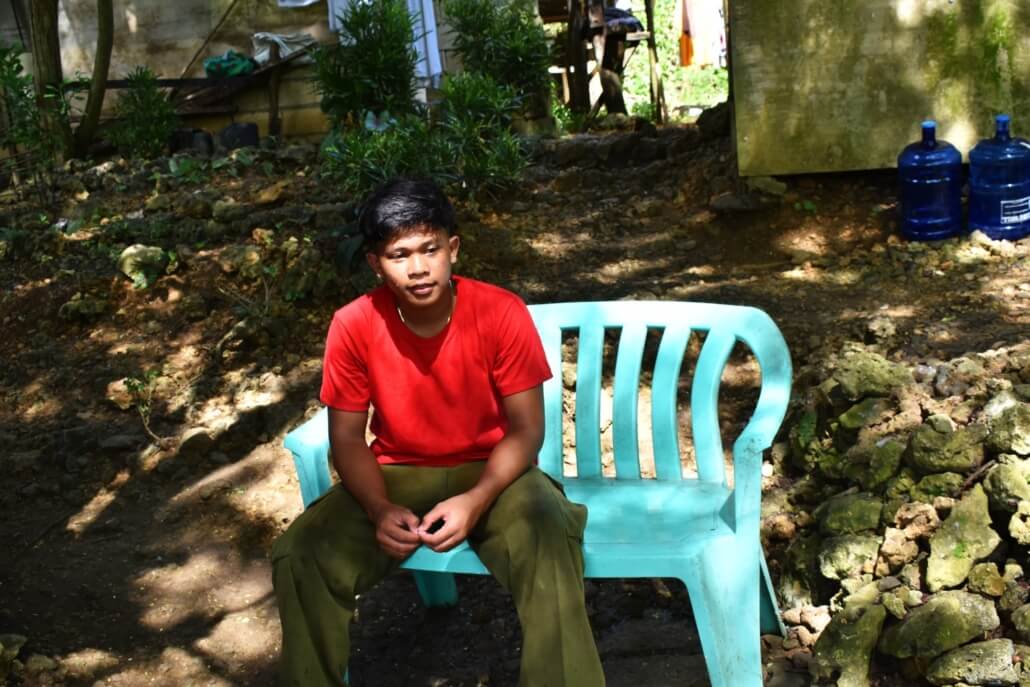
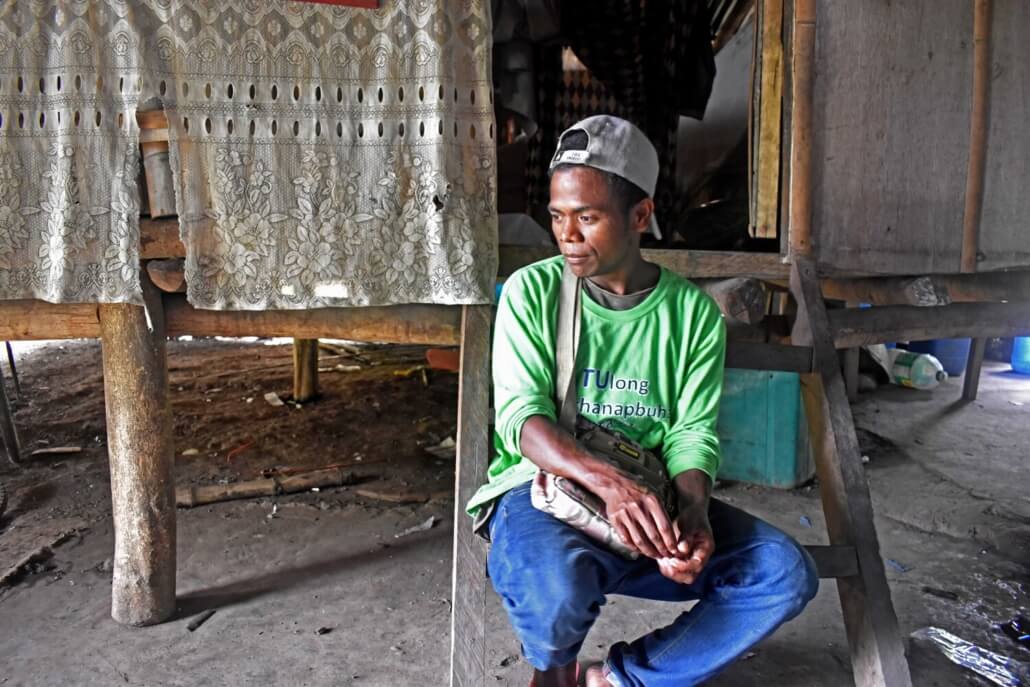
In photo: Kyle in front of his house in Barangay Cabadiangan, Compostela, Cebu. Photo by Martina Vercoli for Action Against Hunger.

Kyle, a 14-year-old Grade 8 student, lives with his family of nine in the elevated part of Barangay Cabadiangan, Compostela, Cebu. His family has long shared a close bond with Razell’s family. On the night Typhoon Tino struck, Kyle was in a relatively safe area, away from the rising floodwaters. Even so, he made the conscious decision to go back down to help others, choosing to put their safety above his own.

Kyle’s household is composed of nine members, including six sisters and his parents. His father works in construction on an on-call basis to support the family, facing several challenges in providing a stable monthly income, while his mother takes care of the home. They live in a house situated in an elevated part of their community. Normally, his daily life as a 14-year-old grade 8 student is quite simple. He spends most of his time at school, where he serves as a class representative, and playing basketball with his friends, his favorite sport.

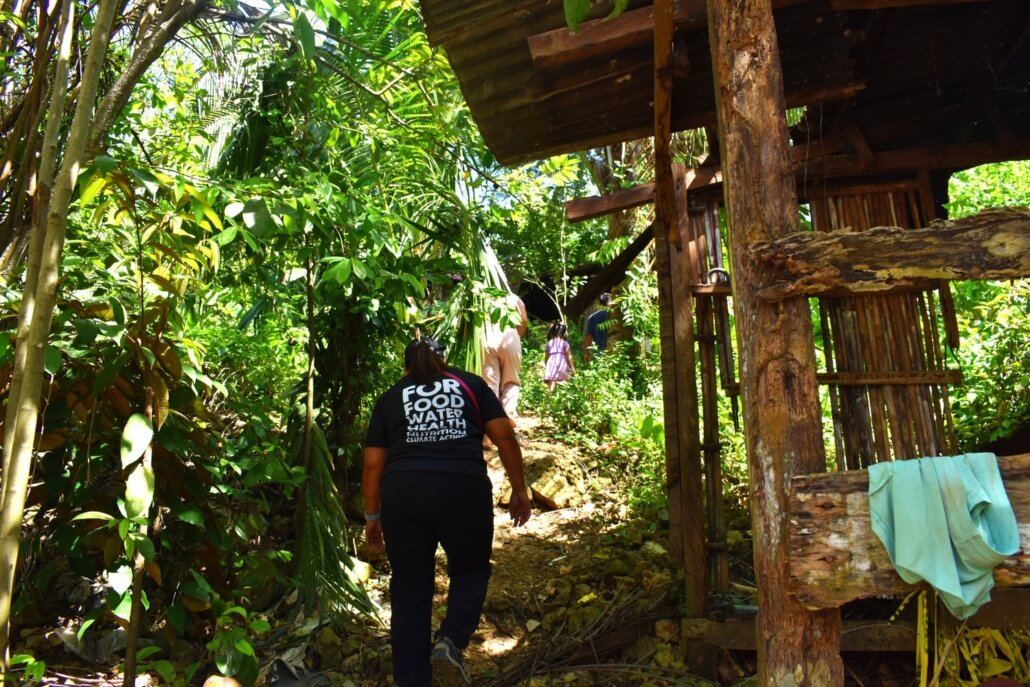
In photo: The uphill path to the Kyle family house in Barangay Cabadiangan, Compostela, Cebu. Photo by Martina Vercoli for Action Against Hunger.

When the floodwaters began to rise that night, Kyle’s first instinct was to check on his own family. They live in the uphill part of the barangay, and after making sure they were safe, Kyle headed back downhill. He wanted to check on their motorcycle, but when he reached it, he saw it was already floating in the floodwater.

Realizing how serious the situation had become, Kyle went straight to the nearby house of Roxane, Razell’s sister, where several family members had gathered. The water was rising fast. Without hesitation, Kyle began helping people evacuate. He assisted Roxane and Razell’s eldest daughter through the floodwaters and brought them to higher ground near his home.

After escorting them to safety, Kyle went back again. The water was already at neck level, and the ground was slippery and muddy. He saw Razell’s cousin struggling to move with Scarlett, Razell’s younger daughter.

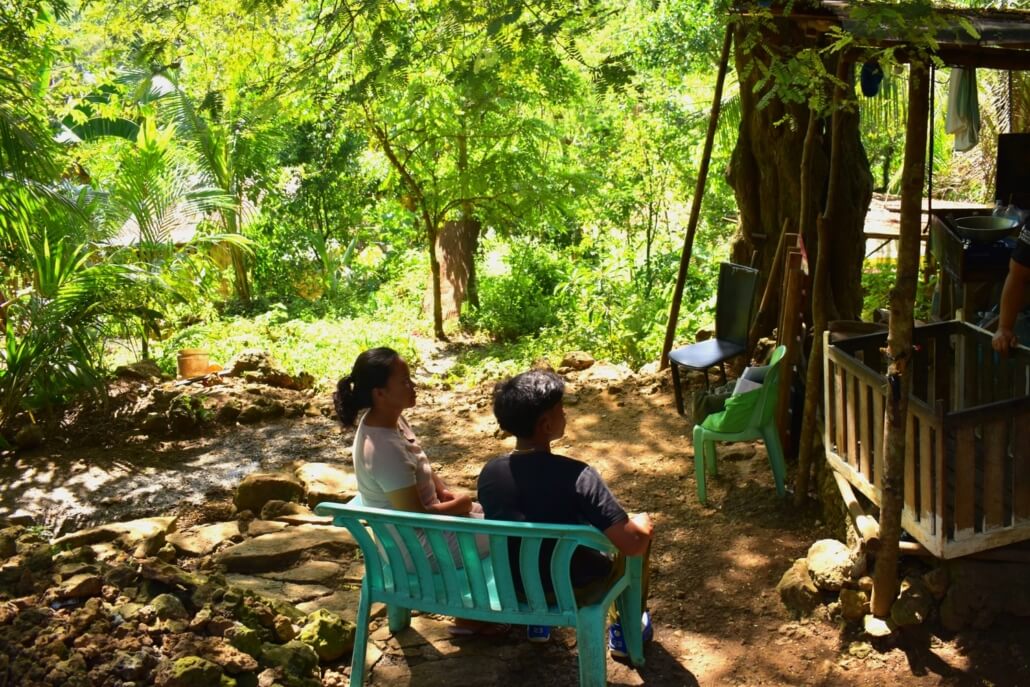
In photo: Razell and Kyle share their stories with Action Against Hunger staff about the night Typhoon Tino (Kalmaegi) struck their community. The discussion takes place near Kyle’s uphill house, where he evacuated the people, he managed to save. Photo by Martina Vercoli for Action Against Hunger.

Conditions were extremely dangerous, but Kyle did not turn back.

While they were struggling to move uphill because of the slippery and muddy ground, a strong surge of water struck them and violently separated them from the rest of the group. Scarlett was quickly swept away by the strong current.

“He truly risked his own life. He never left Scarlett alone. I thought my daughter was already gone, but he saved her life.” – Razell

Kyle did not hesitate. He immediately swam after her and managed to reach her in the rushing water. For a moment, they climbed onto a damaged piggery structure, but it collapsed and was carried away, pulling them back under. “It was very hard to stay afloat because the water current was so strong,” Kyle recalls.

Still holding Scarlett tightly, Kyle reached a coconut tree and clung to it as the floodwaters continued to surge. In his mind, there was only one thought: “I will secure Scarlett’s life even if I will die.”

Kyle then lifted Scarlett onto a nearby pomelo tree to keep her safe. Afraid the branches would break if they both climbed at once, he stayed below at first, holding onto a floating tree trunk. Eventually, he found support and climbed up beside her. They remained there together as the water slowly began to subside. “I remember the water being very cold,” Kyle mentioned. “With our clothes soaked, we were freezing.”

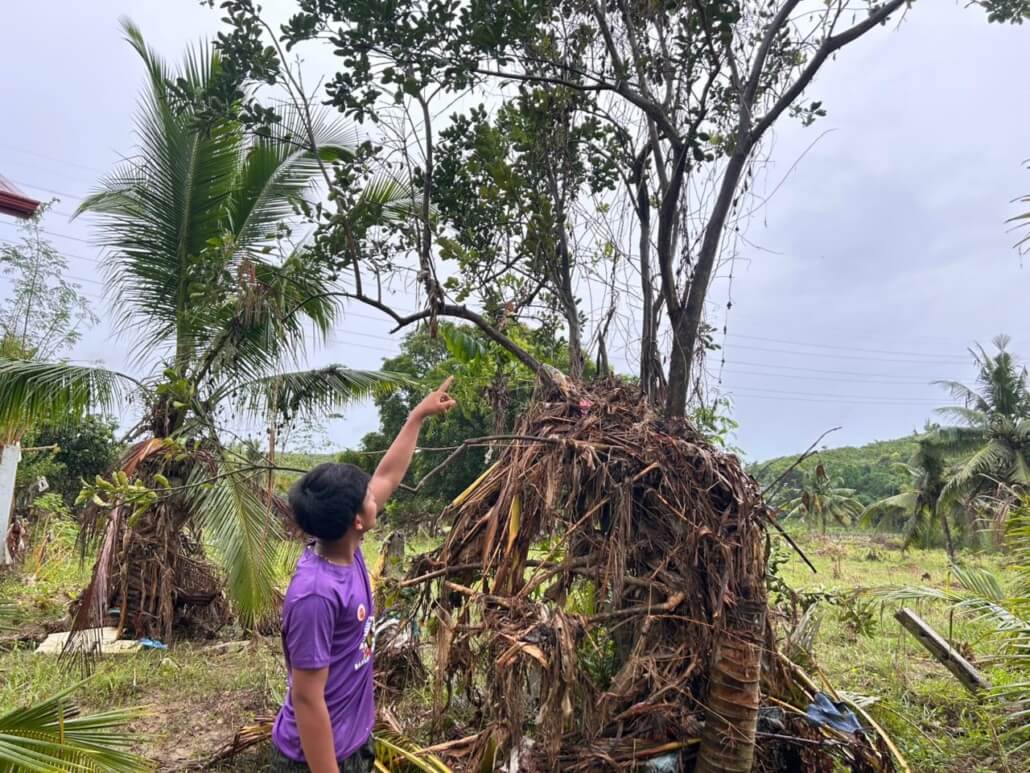
In photo: Kyle points to the pomelo tree he climbed and lifted Scarlett onto to save her life when Typhoon Tino struck their community in Barangay Cabadiangan, Compostela, Cebu. Photo by Pive Flor Tabique for Action Against Hunger.

When the floodwaters finally receded, their families and neighbors searched for a rope and were able to rescue them.

Later, Razell described Kyle as a real-life hero. “I can’t imagine burying my own daughter,” she said. “He truly risked his own life. He never left Scarlett alone. I thought my daughter was already gone, but he saved her life.”

Challenges and recovery after Typhoon Tino

More than a month later, Kyle shares that he still experiences trauma from heavy rain and remains constantly afraid that the same terrifying night could happen again. At such a young age, it was the first time he had ever experienced anything like that, let alone saved lives.

Kyle returned to school two weeks after the typhoon. Among his classmates, he was the only one who experienced such extreme flooding, as most had pre-emptively evacuated. His family had not evacuated ahead of the typhoon, believing they were safe because their house was in an uphill area and expecting only strong winds.

In photo: Kyle in front of his house in Barangay Cabadiangan, Compostela, Cebu. Photo by Martina Vercoli for Action Against Hunger.

In the aftermath, volunteers distributed food to affected families, and neighbors shared what little they had. The solidarity within the community helped them survive the difficult days that followed.

“I would be happy to do any job that allows me to save people’s lives during emergencies.” – Kyle

Despite this, Kyle’s family continues to face challenges since their house has no proper bathroom, and the roof was badly damaged by the typhoon’s strong winds.

To assist in their recovery, Kyle’s family received cash assistance from Action Against Hunger, funded by the Swedish International Development Cooperation Agency (SIDA). They plan to use the support to repair their roof, buy nutritious food such as meat and fruits, and replace essential items, including clothes and shoes lost during the disaster.

Looking ahead, Kyle hopes to move beyond the trauma and return to what he loves most: going to school and playing basketball. “I would like to become a professional basketball player on the Philippine national team,” he says. “That is my dream. Or I would be happy to do any job that allows me to save people’s lives during emergencies.”

Despite the fear and trauma left by that night, Kyle continues to move forward with quiet determination. Supported by his family, his community, and the assistance they received after the typhoon, he is slowly reclaiming a sense of normalcy.

In photo: Kyle shares his experience during the night he and others almost lost their lives to Typhoon Tino. Photo by Martina Vercoli for Action Against Hunger.

What happened during Typhoon Tino will always be part of his story, but it does not define his future. For him, the path ahead is one of healing, learning, and holding on to the same courage that led him to protect another life when it mattered most.


Written and Photos by: Martina Vercoli
Edited by: Joyce Sandajan
Contributor: Pive Flor Tabique

Storms, Scarcity, Strength: A Family’s Story from an IP Community in Pampanga

In the Aeta community of Sitio Banaba, survival has always meant carrying heavy loads up steep slopes, gathering food from the mountains, and stretching every peso to buy rice at triple its price in town. But everything worsened after the series of storms in July 2025, when Pampanga declared a state of calamity due to widespread flooding and blocked roads.

“When the rains didn’t stop, everything flooded,” shares 70-year-old Ebyang Canduli. “The roads turned into mud. Trees fell. A small landslide had blocked the road going to the town proper. There were rocks and debris, and it the dirt road became very muddy. We couldn’t go down to town at all.”

The successive impacts of Tropical Cyclones Bising, Crising, Dante, and Emong, combined with the intensified southwest monsoon, affected hundreds of barangays and submerged low-lying lying communities. For remote sitios like Banaba—already isolated by uphill terrain and unpaved roads—the blockages meant no food, no access to the market, and no income for days.

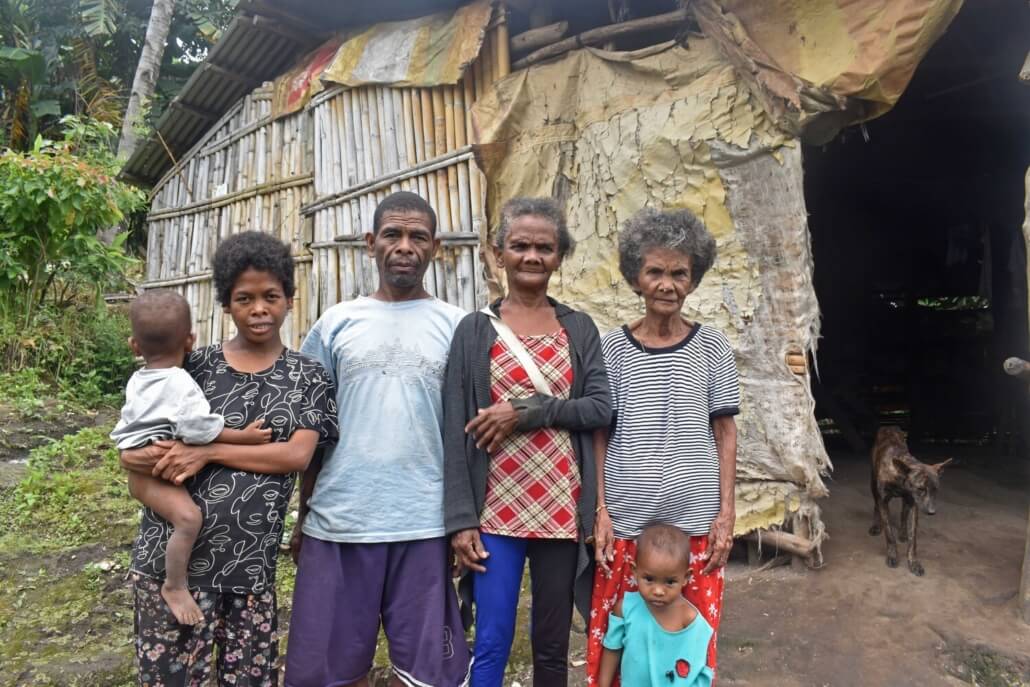
The Canduli family lives in one household composed of Ebyang; her long-time partner Ide (50); her mother Sylvia (80); her youngest daughter Batic (22), and Batic’s partner and one year-old child. Ebyang’s son Bernabe (27) lives nearby with his wife and their two small children.

In photo: Ebyang and her family stand outside their home in Sitio Banaba, Barangay Sapang Uwak in Porac, Pampanga. (Photo by Joyce Sandajan for Action Against Hunger)

During Typhoon Emong, Ebyang and her family sought refuge in the silong, the small two- to three-foot open space beneath their raised house on stilts. The winds were so strong that they feared the entire structure would be blown away, and that cramped area felt like the safest place they could stay. They remained there overnight until the storm finally weakened. When they emerged, they found their home, made mostly of wood, bamboo, and other light materials, partially damaged, with their entire kitchen almost gone.

In photo: Bernard sits on the ladder leading up to his parents’ house. Behind him is the small crawl space where his mother, sister, niece and nephew hid during the typhoon. (Photo by Joyce Sandajan for Action Against Hunger)

For Ebyang, the damage left by Emong was not just another repair to face but a reminder of how exposed their family remains each time a disaster strikes. The storm brought back memories of previous hardships, shaping the story of how they came to live where they are now.

Ebyang’s family was originally from Sitio Batis in Sapang Uwak but were relocated years ago when the land was sold and later developed. “Life became harder in Sitio Banaba,” Ebyang recalls. “There was no cement, no road. My father would carry banana hearts just to feed us. Sometimes, we didn’t eat for days,” said Bernabe.

In photo: Ebyang and her family stand inside their home in Sitio Banaba, Barangay Sapang Uwak in Porac, Pampanga. (Photo by Joyce Sandajan for Action Against Hunger)

The family has survived many crises—from the eruption of Mount Pinatubo in 1991, which forced them to evacuate to Nueva Ecija for three years, to regular typhoons that destroy their crops and worsen hunger. But July 2025 felt different—the storms completely cut them off from everyone.

Work that begins before sunrise

Even before the storms, food scarcity was a part of daily life for Ebyang and her family.

“Rice here is very expensive—300 pesos for just a few scoops,” she explains. Health workers rarely reach their sitio, and children’s check-ups are irregular, making access to basic care a constant challenge.

The family’s main source of income comes from selling what they grow, such as avocados, when they are ready to harvest. Sometimes, Bernabe and his father take on labor jobs planting or doing other work on the land of non-IP families in the community. From this, they would earn around 300 pesos a day, which is less than five euros, if work is available. This, however, was not regular employment, and they would only go when someone called on them to work.

Their closest thing to steady work is harvesting puso ng saging or banana hearts. “Our regular work is collecting banana hearts, but it is very difficult because the plants grow far up in the mountains, near Mount Pinatubo,” Ebyang explains. The trek can take up to five hours through overgrown trails, where snakes are a constant threat. “Sometimes it takes us the whole day to fill a sack, and we skip meals just to have enough time to gather them.”

“After the storms, the trail going there was too slippery, but we still went—because the children needed to eat,” Ebyang adds. Even after a full day of walking, searching, and carrying heavy sacks, the family earns only 200 to 400 pesos (three to six euros), that is if they are able to sell them. Buyers sometimes do not even come, as motorcycles struggle to navigate the rocky, steep, and muddy terrain of barangay Sapang Uwak, specifically, since Sitio Banaba is further up the barangay.

Many days, the family survives on taro, sweet potatoes, or bananas. Breakfast is often skipped, and meat or fish is a rare luxury. When they run out of food entirely, they borrow rice from neighbors. When others run out, they lend whatever little they have in return, an unspoken system of mutual survival that keeps the community going.

Their second-hand motorcycle, which Bernabe saved for three years to buy, is their lifeline. Repairs are frequent and costly, but it allows them to reach town whenever they manage to earn even a little money from selling harvested crops. During good months, their avocado trees can bring in up to 5,000 pesos, or around 73 euros, but this only happens once a year. Most days, earnings barely cover food.

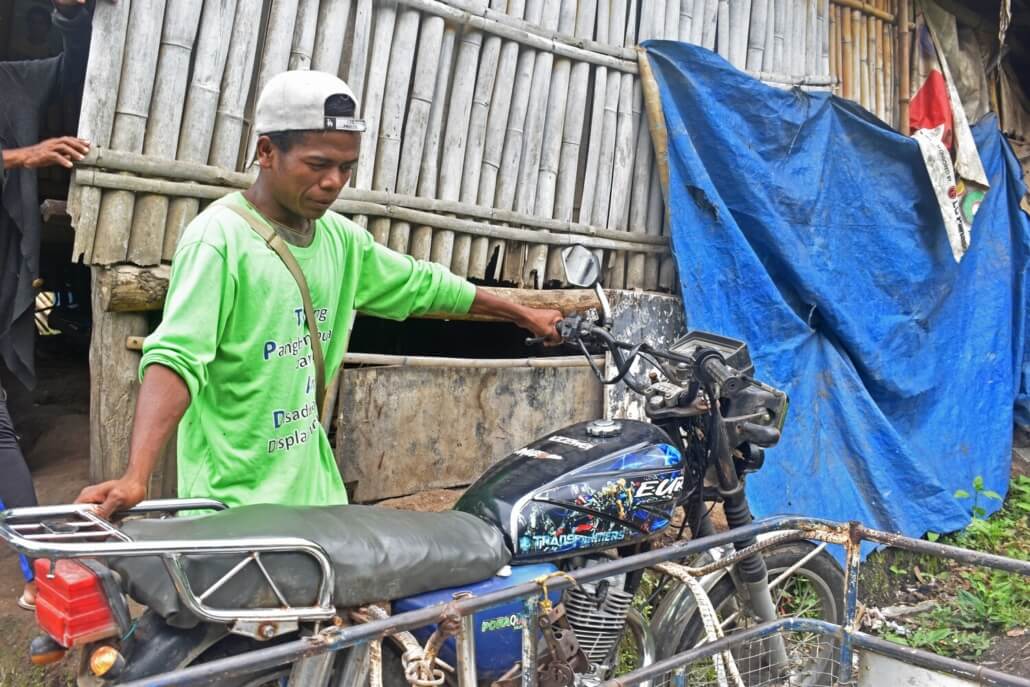
In photo: Bernard, Ebyang’s son, with his motorcycle which he spent three years saving up for. Despite the maintenance costs that they have invested in it, they put high value on this motorcycle as it serves as their main transportation to go to and from the barangay. (Photo by Joyce Sandajan for Action Against Hunger.

“We want to save for our house,” Bernabe says. “Our bamboo and wood posts rot every few years because of the storms. I dream of having even half of it cemented so we don’t have to rebuild again and again.”

With food on the table, they can focus more on their future

When ACCESS, through Action Against Hunger, reached Sitio Banaba as part of the emergency response funded by the European Civil Protection and Humanitarian Aid (ECHO), it was the much-needed assistance the community received after the July calamities, according to Ebyang and her son, Bernabe.

In photo: Ebyang and her family stand outside their home in Sitio Banaba, Barangay Sapang Uwak in Porac, Pampanga. (Photo by Joyce Sandajan for Action Against Hunger)

“That’s why we are thankful,” says Ebyang. “They reached us even if our sitio is very far. It means a lot to be remembered.”

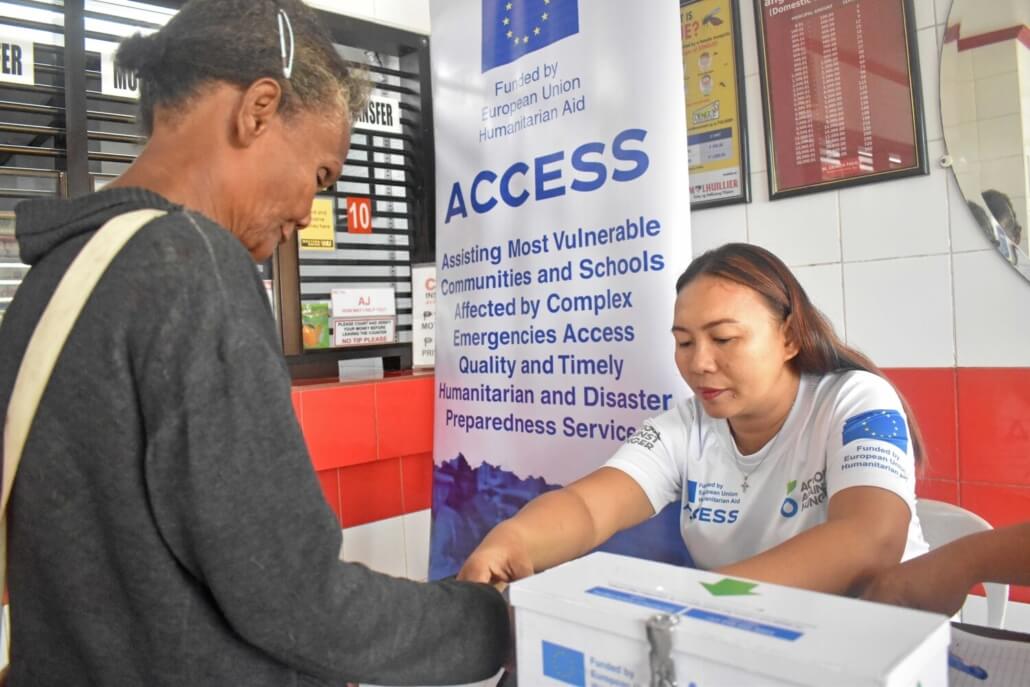
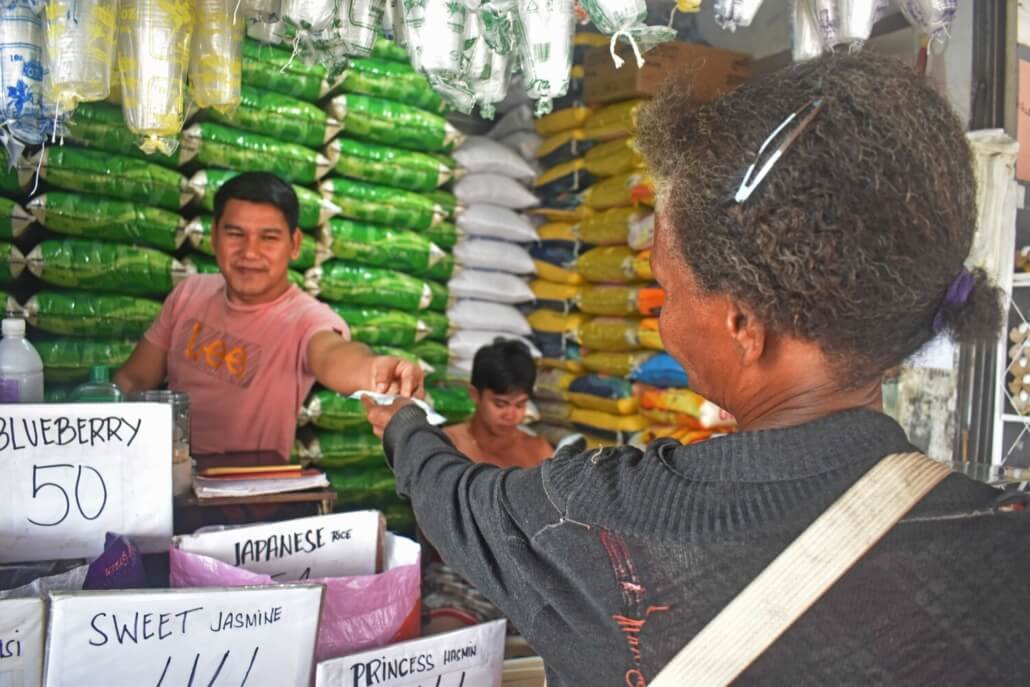
On the morning of the payout, Ebyang, Bernabe, and Silvia arrived early at the financial service provider. After receiving the cash assistance, they went straight to the nearby market to buy food supplies. With the support, the family was able to purchase vegetables, meat, eggs, sugar, coffee, and half a sack of rice.

Ebyang did not spend the entire amount in one trip. She expects the food to last nearly three weeks and plans to return to the market when it runs out. At every store, she carefully kept the receipts. One vendor even remarked that it was the first time they had seen Ebyang and her family buy so many food supplies.

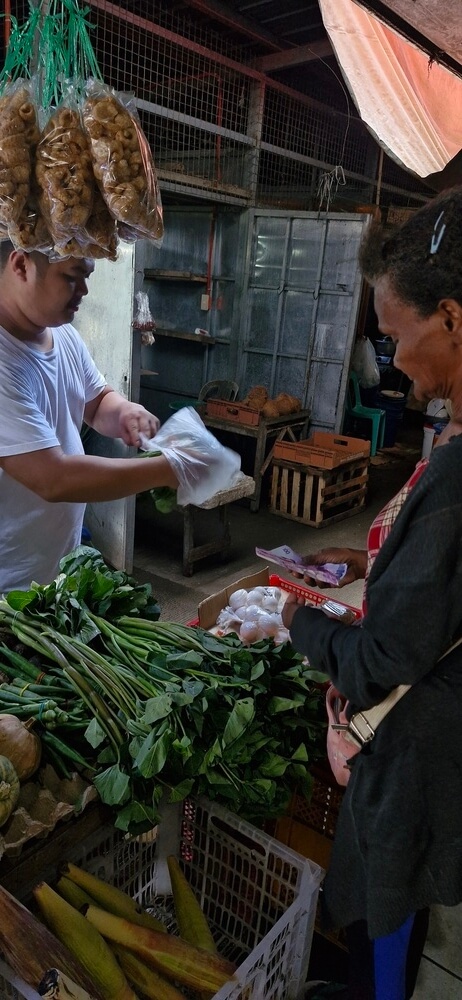
In photo: Ebyang buys rice in the nearby market after receiving the cash assistance form ACCESS. (Photo by Joyce Sandajan for Action Against Hunger)

“This is the first time in so long that we’ve been able to buy this much food,” Bernabe says. “Now, whatever we earn, we can save for house repairs or for the children’s needs.”

With food no longer their daily worry, the family can plan for the future—whether it is fixing their home, saving for school expenses, or preparing for the next storm season.

For the Candulis and their neighbors, the ACCESS assistance meant having the essentials they needed to get through a difficult period after months of isolation and limited resources.

ABOUT THE RESPONSE

The ACCESS Emergency Response provided urgent support to communities affected by the successive impacts of Tropical Cyclones Crising, Dante, Emong, and the intensified southwest monsoon in July 2025. Across Bataan, Pampanga, and Occidental Mindoro, the response delivered water, sanitation, and hygiene support; multi-purpose cash assistance; and protection services. It prioritized the most vulnerable families, especially Indigenous Peoples in remote and underserved areas.

ACCESS—Assisting the Most Vulnerable Communities and Schools Affected by Complex Emergencies in Accessing Quality and Timely Humanitarian and Disaster Preparedness Services—is a multi-year and multi-organization humanitarian initiative implemented by ACCORD, Action Against Hunger, CARE Philippines, Humanity & Inclusion Philippines, Oxfam Pilipinas, People’s Disaster Risk Reduction Network, Plan International Pilipinas, and Save the Children Philippines.

Lighting the way for health: A midwife’s journey to bring safer health services to mothers and children in Mapayag

DATU ANGGAL MIDTIMBANG, MAGUINDANAO DEL SUR — In Barangay Mapayag, where resources have long been scarce, midwife Zei has become a constant presence, ensuring mothers and children receive the care they need.

For more than a decade, Zei, 53, has walked the extra mile—literally and figuratively—for her community. A midwife at the health station in Barangay Mapayag, Zei travels two hours every day from her home in Sultan Kudarat just to open the small facility that caters to more than 3,700 residents.

In photo: Before assessing a child’s nutritional status, the Zei carefully gathers essential details such as medical history, appetite, and overall health condition.
Photo by Moner Dipatuan for Action Against Hunger

Her commitment to her work never wavered, yet the conditions she faced each day were far from ideal. For years, the barangay health station in Mapayag struggled without a reliable water supply. Maintaining basic sanitation and hygiene, which is a necessity in any health facility, became a constant uphill battle.

“I buy two big buckets from a water truck every week for fifty pesos. Sometimes, when it rains, we collect water just so we have something for cleaning.” – Zei, Midwife

Zei bore much of the cost herself, spending around fifty pesos a week from her modest salary to buy water from a truck, just to keep the health station clean. She claims, mula pa noong 2013, wala pong sariling tubig ang BHS. Ang ginagawa ko, bumibili ako ng tubig mula sa water truck—dalawang malaking balde, bale fifty pesos iyon bawat linggo. Minsan kapag umuulan, nag-iipon din po kami para may magamit panglinis(Since 2013, the BHS hasn’t had its own water supply. I buy two big buckets from a water truck every week for fifty pesos. Sometimes, when it rains, we collect water just so we have something for cleaning.)

n photo: A child’s weight, height, and MUAC are measured to
monitor nutritional status and check for signs of malnutrition.
Photo by Moner Dipatuan for Action Against Hunger

The strain was not hers alone to carry. Families who came to the health station also shared the burden, especially expectant mothers. Zei shares that kapag may naganganak, pinapadala ko ang husband or kamag-anak nung manganganak ng dalawa hanggang tatlong timba ng tubig para may malinis na magamit (Whenever someone is about to give birth, I would ask the husband or relatives to bring two to three buckets of water so we would have clean water to use.)

“Before, I had to close the BHS as early as 3PM. I worried about the lack of light, the lack of water, and my safety if I stayed longer. So when emergencies happened at night, people went straight to the hospital because the BHS was closed.”

By 2017, another challenge made the situation even more difficult: the health station lost electricity. Without power, the facility was plunged into darkness by late afternoon, forcing Zei to close as early as 3 PM.

The lack of lighting not only limited services but also raised safety concerns. Emergencies that occurred at night went unanswered, leaving families with no option but to travel far to the nearest hospital.

Dati maaga pa lang, mga 3PM, nagko-close na po ako ng BHS. Concern ko talaga yung walang ilaw, walang tubig, iniisip ko rin ang safety ko if mag-stay dito. Kaya pag gabi na may emergencies, diretso na ang mga tao sa hospital kasi sarado ang BHS (Before, I had to close the BHS as early as 3PM. I worried about the lack of light, the lack of water, and my safety if I stayed longer. So when emergencies happened at night, people went straight to the hospital because the BHS was closed,) she added.

Despite these hardships, Zei pressed on—often improvising with outdated or makeshift equipment, and carrying the weight of her community’s needs almost entirely on her own.

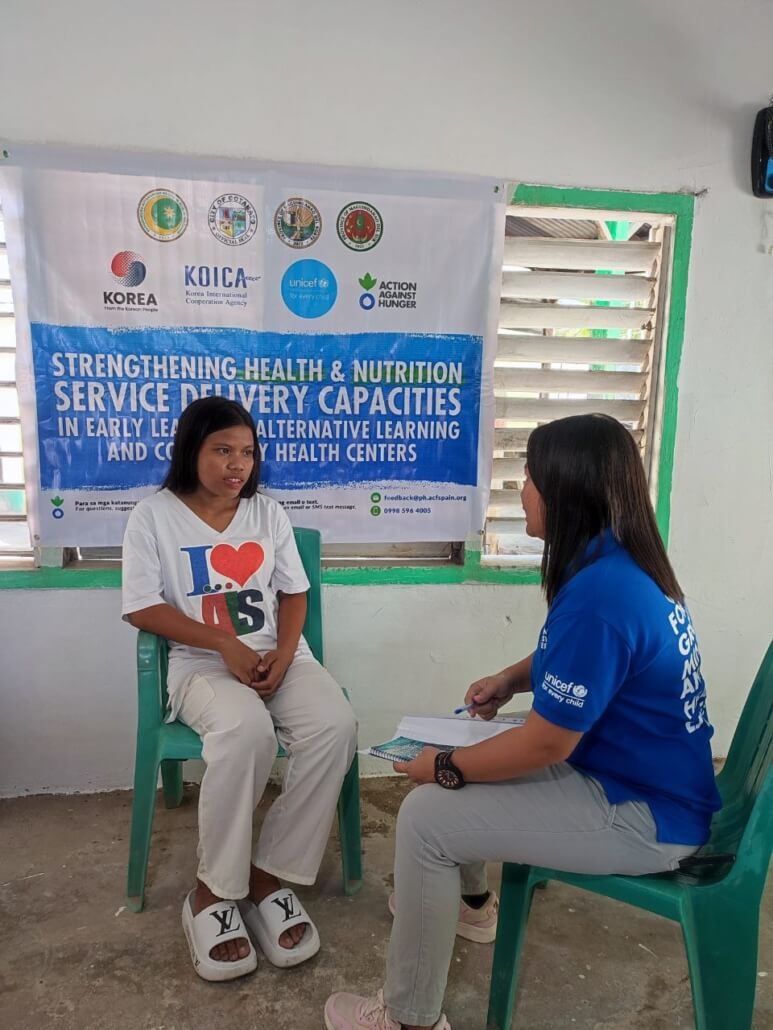
In 2025, UNICEF, together with Action Against Hunger, began formally working with the Ministry of Health in the Bangsamoro Autonomous Region in Muslim Mindanao (BARMM) through the project “Strengthening Health and Nutrition Service Delivery Capacities in Early Learning, Alternative Learning, and Community Health,” supported by funding from the Korea International Cooperation Agency (KOICA).

The project seeks to enhance the capacity of Early Childhood Care and Development facilities to deliver essential health, nutrition, and water, sanitation & hygiene services. Through this initiative, the BHS in Mapayag started experiencing long-awaited improvements in its facilities and services.

“This project by Action Against Hunger and UNICEF has been such a huge help. First of all, we now have water both inside and outside the BHS. I no longer need to buy or fetch it myself.”

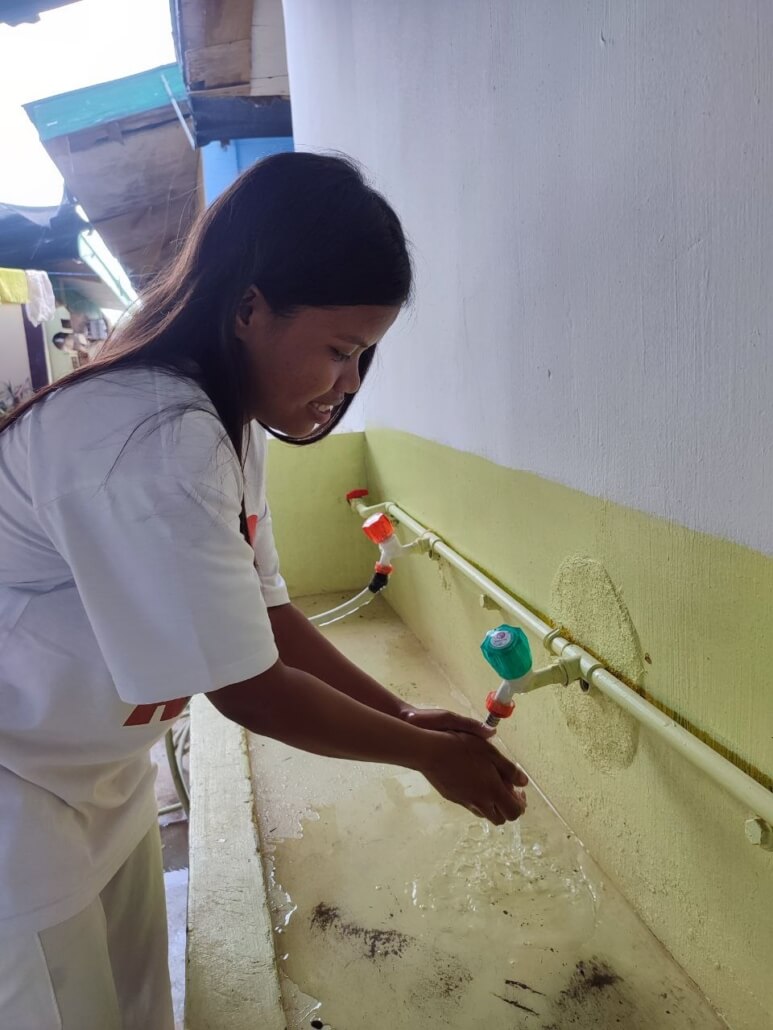
In Mapayag, one of the first major changes was access to water. A rainwater catchment system was installed and connected through piped water to the health station. Handwashing stations were also built—both inside and outside the facility—for the use of staff and patients alike. For the first time in more than a decade, Zei no longer had to buy or fetch water herself.

Families also felt the difference, as they no longer needed to bring buckets during childbirth. “Sa tulong po na ito, I hope na mas marami pa ang mga taong maserbisyuhan, makita nila ang kahalagahan ng kalusugan, lalo na sa mga bata (Because of this support, I truly hope that more people will be served and that they will come to recognize the importance of health, especially for their children,) said Zei.

Another long-awaited change came with the installation of solar power.

The provision of a solar panel system, complete with battery and inverter, meant that the health station could finally function even after dark.

For Zei, this was a turning point—allowing her to stay at the BHS 24 hours a day from Monday to Friday. Emergencies at night could now be attended to within the community, rather than requiring long trips to distant hospitals.

She shares, ngayon, kahit may manganak ng gabi o madaling araw, andito ako. Open po ang BHS (Now, even if someone gives birth late at night or early in the morning, I’m here. The BHS is open.)

“Now, even if someone gives birth late at night or early in the morning, I’m here. The BHS is open [..] Since we were trained under PIMAM, I now know the proper way to check children. Even the barangay health workers and nutrition scholars are more confident now and I have more support.”

The project also addressed small but crucial details that affected daily health practices. Soap and cleaning materials were provided to help maintain hygiene standards. Drainage issues behind the facility, once a source of stagnant water and potential disease, were resolved through a proper soak pit system.

Patients visiting the BHS could now wash their hands easily, helping promote better hygiene behaviors such as frequent handwashing and safe waste disposal.

In photo: The rain water catchment system in the barangay health station of Mapayag. Hygiene advocacy materials were also placed near the handwashing station. Photo by Moner Dipatuan for Action Against Hunger

Equally important were the tools that made Zei and her colleagues’ work more accurate and effective.

For years, they had been using improvised equipment—bathroom scales meant for adults to weigh children, and torn paper charts taped to the wall as makeshift height boards. With new anthropometric tools such as height boards, weighing scales, and MUAC tapes, health workers could now properly monitor children’s growth and detect malnutrition early.

Training and capacity building completed the transformation. Barangay health workers (BHWs) and barangay nutrition scholars (BNS) received guidance that gave them more confidence in assisting Zei.

“Since we were trained under PIMAM, alam ko na po ang proper way ng pag-check sa bata. Kahit ang mga BHW at BNS ngayon, confident na sila. Hindi na ako lahat ang gumagawa gaya ng dati” (Since we were trained under PIMAM, I now know the proper way to check children. Even the barangay health workers and nutrition scholars are more confident now and I have more support,) Zei added.

In photo: Zei administers routine immunizations, conducted every Wednesday at the BHS. Photo by Moner Dipatuan for Action Against Hunger

The results are clear in the numbers: immunization rates in Mapayag rose from 39 in July to 76 percent by August 2025, while the number of consultations nearly doubled within the same period. Mothers who previously resisted bringing their children now come voluntarily.

Zei explains, ngayon din po, ‘yong mga nanay ng mga batang mahirap papuntahin dito sa BHS at magpa immunize ng anak nila, ay pumupunta na po dito sa BHS at hindi na kailangan pilitin at balik-balikan. Siguro dahil narinig nila yung tulong na ginawa ng Action Against hunger at UNICEF, pati ang pagbabago dito sa BHS ay na-engganyo na silang pumunta dito na di na kailangan pilitin katulad dati (These days, even mothers from farther side of the barangay, those we usually struggle to convince, are now coming to the barangay health station to have their children immunized. We no longer need to convince them or follow up repeatedly. I think it’s because they’ve heard about the support provided by Action Against Hunger and UNICEF, and they’ve seen the improvements made to the BHS. The changes have encouraged them to come voluntarily—unlike before, when it was a struggle to get them here.)

Her colleagues in other barangays have also taken notice. Madalas sinasabi nila, blessed daw ako at ang BHS namin kasi kami ang napiling tulungan. Sana matulungan din ang ibang BHS na nangangailangan ng parehong support” (Other midwives often say how blessed I am, that our BHS was chosen to receive support. I hope other health stations in need will also be helped in the same way,) said Zei.

“We no longer need to convince them or follow up repeatedly. I think it’s because they’ve heard about the support provided by Action Against Hunger and UNICEF, and they’ve seen the improvements made to the BHS. The changes have encouraged them to come voluntarily—unlike before, when it was a struggle to get them here.”

For Zei, the transformation of the health station in Mapayag is more than just about infrastructure—it is about dignity, safety, and hope.

Families who once had to endure long travel for care now find reliable support close to home. And for the midwife who has walked this journey for over a decade, the changes have strengthened her resolve to keep serving.


*PIMAM – Philippine Integrated Management of Acute Malnutrition


The “Strengthening Health and Nutrition Service Delivery Capacities in Early Learning, Alternative Learning, and Community Health” project is implemented by Action Against Hunger together with UNICEF, thanks to the funding support of the Korean government through the Korea International Cooperation Agency (KOICA).

Read more

Surviving on aid: Inside a tent home after the Cebu quake

TABUELAN, Cebu – On the night of September 30, 2025, a violent 6.9-magnitude earthquake shook Cebu. Although the epicenter was in Bogo City, nearby towns like San Remigio and Tabuelan also bore the brunt of the tremors. Homes collapsed, walls cracked, and furniture toppled, leaving residents disoriented and terrified. More than 160,000 houses were damaged, and over 7,000 were completely destroyed.

Mercedita Simbajon, 53, awoke to the sound of hollow blocks crashing around her home.

In photo: Mercedita looks at the damages in her old house. (Photo by Joyce Sandajan for Action Against Hunger)

“We were already asleep at that time while one of my children was attending online classes in another room,” she said. “We were sleeping when I suddenly woke up to the sound of hollow blocks falling everywhere. I told my children to get out of the house, and we pushed the table away because it was blocking the door.”

Outside, the danger continued. Mercedita watched in horror as a jackfruit tree swayed precariously, nearly toppling on her husband. “I saw my husband almost get hit by the tree that was about to fall. It was so close,” she said, her voice shaking at the memory.

In photo: Cracks and damages on the remaining walls of Mercedita’s home. (Photo by Joyce Sandajan fro Action Against Hunger)

In photo; Mercedita rummages through a sack of clothes and items that they managed to save from the rubble. (Photo by Joyce Sandajan for Action Against Hunger)

The family sought refuge in an open, flat area nearby, huddling together under the night sky. Her four-year-old grandson trembled uncontrollably, scared of the aftershocks that followed. They stayed there until the early hours of the morning before moving to a sibling’s poultry house nearby. “It started raining in the morning, so we stayed inside the chicken house,” Mercedita said. For three days, this makeshift shelter was their only refuge.

In photo: Mercedita opens what used to be the main door of the house. The wall, although still standing, is visibly cracked and damaged after the earthquake. (Photo by Joyce Sandajan for Action Against Hunger)

During this time, Mercedita’s husband struggled to move around due to shock and trauma, which added to their devastation. “We made a temporary sleeping area for about three days before the tent arrived. They gave it to us because my husband couldn’t walk properly after the quake. He couldn’t sleep either,” she explained.

“Even before the earthquake, life was hard. But this disaster has made everything even more uncertain.”

In photo: Mercedita reads a quote written by one of her children years ago: “Whatsoever ye shall ask in prayer, believe ye shall receive. Just pray.” She says these words have become a source of strength for their family during these difficult times. (Photo by Joyce Sandajan for Action Against Hunger)

Life Before the Earthquake: Struggling to Make Ends Meet

Even before the earthquake, life for Mercedita’s family was a daily balancing act. She works as a utility worker in Barangay Kantubaon, earning 1,700 pesos (around 80 euros) a month. She is the sole provider for her household of eight: her husband, four children, and two young grandchildren. Her four other older children now live separately, some with their own families, occasionally sending support that is irregular and limited.

“Sometimes we borrow money just to get by,” she said. “Even before the earthquake, life was hard. But this disaster has made everything even more uncertain.”

Their home had already suffered damage during Typhoon Yolanda (Haiyan) in 2013, which destroyed the roof. It took nearly a year to recover then. Now, the earthquake has left them with walls cracked and crumbling, and the comfort room completely destroyed. Without a functioning toilet, the family has no choice but to practice open defecation and relieve themselves wherever possible.

Their temporary living conditions are stark. A government-provided tent serves as their home now. The floor is covered with flattened boxes as makeshift mats. A small, temporary kitchen sits outside, made from borrowed chairs and a gas stove. There is no electricity, so nights are dark and quiet, and the family has to rely on daylight to carry out daily chores. Every corner of their compound, from the ruins of the house to the scattered relief items, tells the story of a family trying to survive in the aftermath of disaster.

In photo: Mercedita inside their tent shelter. (Photo by Joyce Sandajan for Action Against Hunger)

Assistance received: Support from ACCESS

Relief came in the form of humanitarian assistance from the EU Civil Protection and Humanitarian Aid-funded ACCESS project. The family received food packs, including rice, munggo, sugar, and other essentials, which would last for about a month according to Mercedita. “This was a big help because if we didn’t receive anything, we would have to find some way to survive. We might even need to borrow money just to buy these things,” Mercedita said.

ACCESS also helped restore water supply in Tabuelan, damaged by the earthquake. For days, families had to fetch water from a deep well, waiting nearly an hour in long lines. With the support of the ACCESS consortium— of which Action Against Hunger is one of the implementing partners—the municipal water systems were repaired, and families received hygiene kits sufficient for more than a month.

In photo: Mercedita prepares food in their makeshift kitchen. She uses water from the the jerrycan provided by ACCESS. (Photo by Joyce Sandajan for Action Against Hunger)

The aid made daily life slightly more manageable, but the reality remained harsh. “We managed to save a few clothes scattered around, and some cooking pots we dug out from under the rubble. We have neighbors who helped us and gave us clothes because we really weren’t able to save much,” she said.

In photo: Mercedita shows all the aid her family had received since the earthquake. For now, she has organized all by category, even putting all canned goods inside the bucket from ACCESS’s hygiene kit. (Photo by Joyce Sandajan for Action Against Hunger)

Through it all, Mercedita is grateful for the support her family and neighbors received. “Thank you very much to ACCESS for helping our community, especially our neighbors who were also affected by the disaster. We are grateful that ACCESS arrived,” she added.

Looking ahead: Hopes and uncertain plans

For now, rebuilding the house remains a distant dream. “We have no plans yet to rebuild the house. We’ll stay in the tent for the meantime. If we had the money, we would really want to build a small house. But until then, we’ll stay here,” Mercedita said.

Daily life in the tent is a constant challenge. Without electricity, the family relies on daylight to cook, clean, and care for the children. Their comfort and privacy are minimal, and simple tasks like bathing or using the toilet require improvisation.

Mercedita’s story paints a vivid picture of what life has become in the aftermath of the earthquake: nights spent in tents, meals rationed carefully, and daily struggles to meet basic needs. It is a story of a family navigating sudden loss, fear, and uncertainty, one day at a time.

“Thank you very much to ACCESS for helping our community, especially our neighbors who were also affected by the disaster. We are grateful that ACCESS arrived.” 


ABOUT THE RESPONSE

The ACCESS Emergency Response provided urgent support to communities affected by the successive impacts of Tropical Cyclones Mirasol (Mitag), Nando (Ragasa), Opong (Bualoi), the enhanced Southwest Monsoon, and the magnitude 6.9 earthquake that struck offshore Cebu on 30 September 2025. Across Bicol, Northern Luzon, BARMM, and northern Cebu, the response delivers water, sanitation, and hygiene support; shelter and settlements support; multi-purpose cash assistance; and protection services.

ACCESS is an EU Civil Protection and Humanitarian Aid-funded project serving the most affected and underserved communities in the Philippines, where chronic armed conflict, natural hazards, recurrent displacement, and intensifying climate-related risks continue to threaten lives and livelihoods. It is implemented by a consortium of 14 local and international organizations: ACCORD, Action Against Hunger Philippines, CARE Philippines, Community Organizers Multiversity (COM), Humanity & Inclusion Philippines, Integrated Mindanaons Association for Natives (IMAN), Kadtabanga Foundation for Peace and Development Advocates, Mindanao Organization for Social and Economic Progress (MOSEP), Oxfam Pilipinas, People’s Disaster Risk Reduction Network (PDRRN), Plan International Pilipinas, Save the Children Philippines, United Youth for Peace and Development (UNYPAD), and United Youth of the Philippines (UnYPhil) Women.

Written by: Joyce Sandajan

Nature-based Solutions Strengthen Climate Resilience in Zamboanga City

ZAMBOANGA CITY ─ Momentum for environmental restoration is rising in Barangay Kasanyangan, where EARTH Champions and community representatives carried out another major mangrove rehabilitation and clean-up effort on November 30, 2025—further strengthening the barangay’s defenses against climate risks. The initiative advances ongoing community-led efforts to restore damaged ecosystems due to the relocated population affected by the Zamboanga Siege back in 2013.

This activity supports Zamboanga City’s Central Mangrove Management Plan, which prioritizes the protection and rehabilitation of coastal areas to enhance climate resilience, enrich biodiversity, and reduce exposure to flooding, storm surges, and tsunamis.

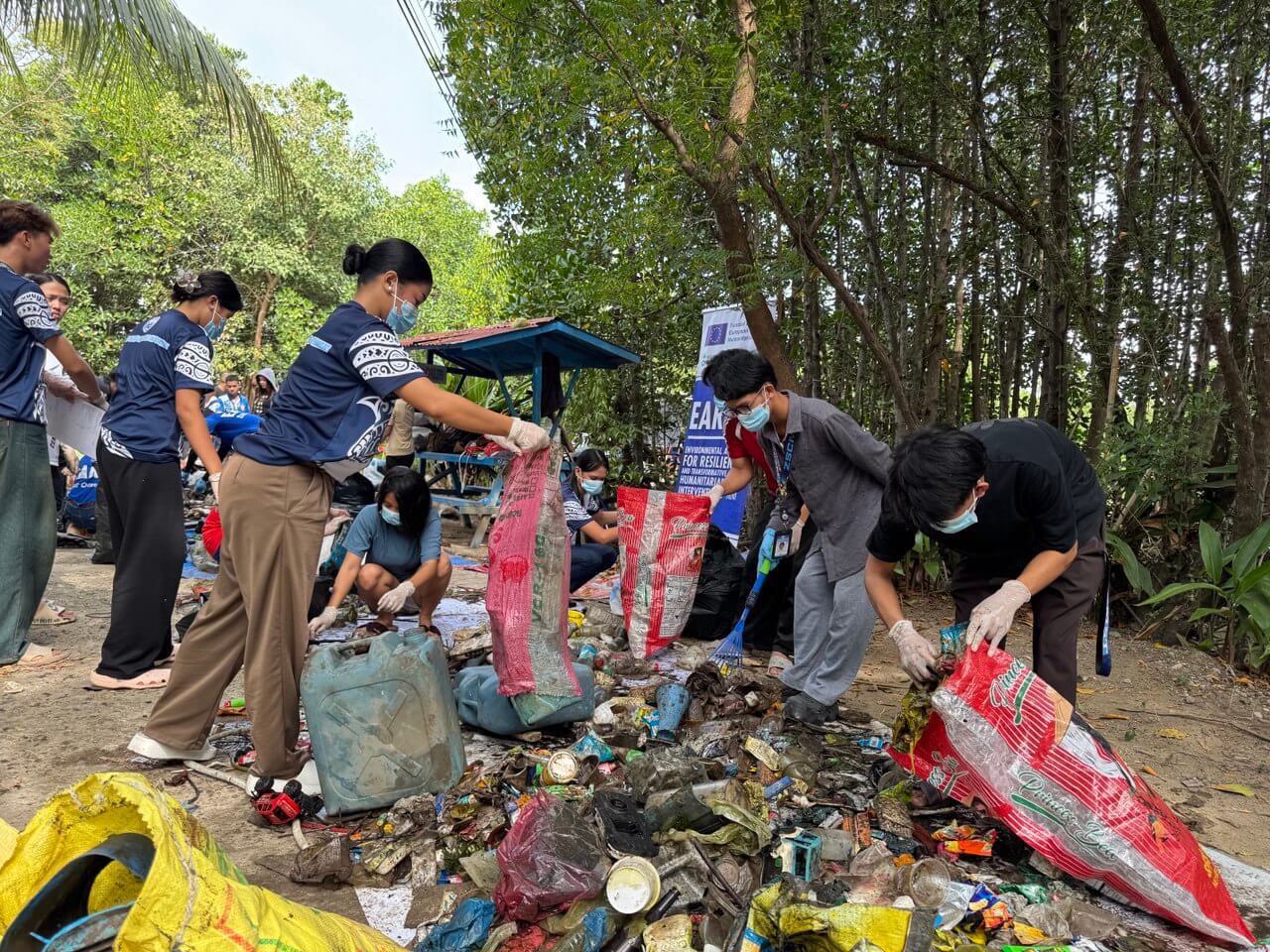
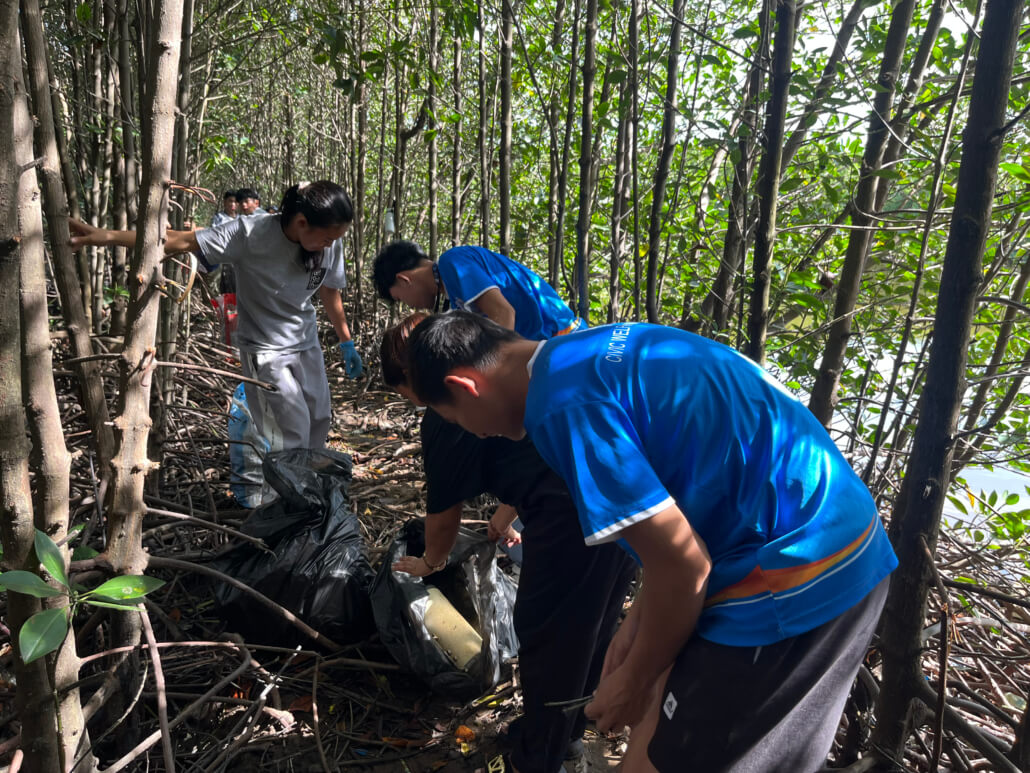
During the event, volunteers planted 1,500 mangrove propagules, helping stabilize the shoreline and improve habitat conditions for marine species.

Kali Halima, Monitoring Officer of Barangay Kasanyangan shared, “each tree we plant and every piece of trash we remove helps build a healthier, more sustainable future.”

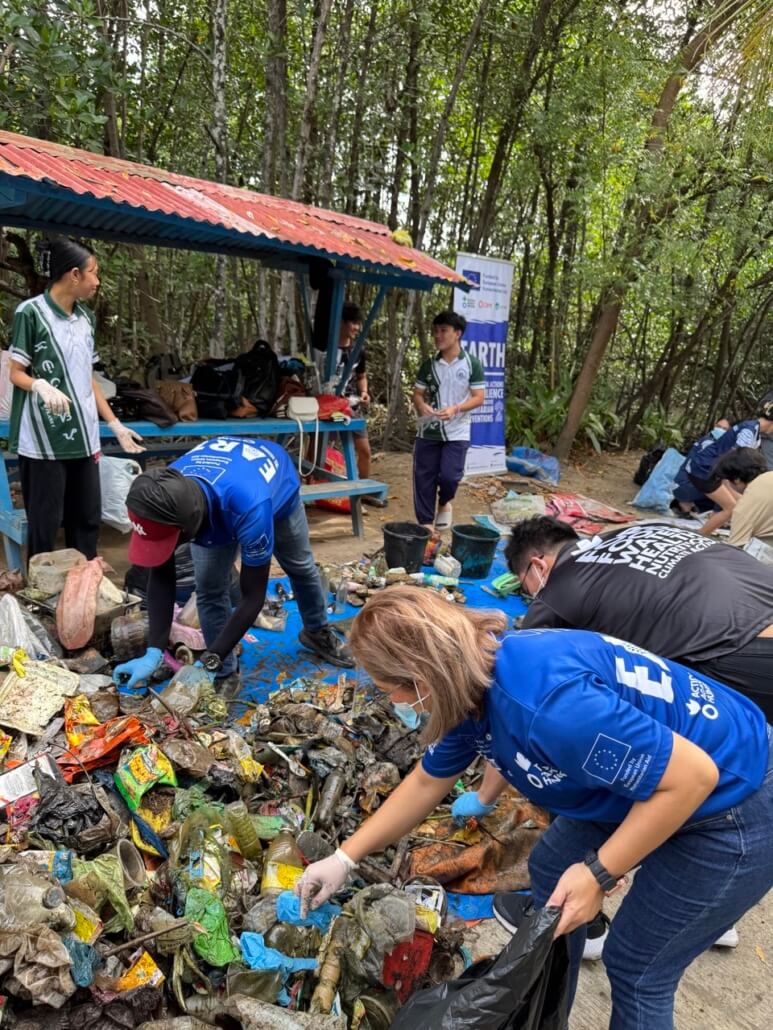
In addition to planting, EARTH Champions collected 15 sacks of non-biodegradable waste—52 kilograms in total—from the mangrove roots and intertidal zone.

In photo: EARTH champions collecting waste during the clean-up drive in Barangay Kasanyangan, last November 30. Photo by Roberto Saballero, Jr.

This clean-up addressed persistent pollution that hinders mangrove growth and disrupts the balance of the coastal ecosystem. The activity demonstrated strong community stewardship and the growing commitment of residents to care for their environment.

“Each tree we plant and every piece of trash we remove helps build a healthier, more sustainable future.”  — Kali Halima

Strengthening waste management through local action

A significant development under the EARTH Project in Zamboanga City is the improved system for waste collection in Kasanyangan and Rio Hondo. Initially, the city’s Office of the City Environment and Natural Resources (OCENR) supported waste collection during clean-up drives, but as city-wide clean-up operations intensified, regular collection at the EARTH project site became difficult to maintain.

Previously, the community relied on a smaller truck for waste collection. Recognizing this gap, the barangay local government unit of Kasanyangan purchased a solid waste dump truck to ensure consistent waste collection and prevent accumulated debris from returning to rehabilitated areas. It took an additional month to mobilize personnel, including a dedicated truck driver and waste collectors.

Volunteer mobilization has likewise grown significantly. Recent clean-up drives have gathered as many as 304 volunteers, including EARTH Champions, barangay officials, community members, and 4Ps beneficiaries. This expanded participation demonstrates how the EARTH Project has strengthened community ownership of waste management and environmental protection—ensuring that rehabilitation gains are not undermined by unmanaged solid waste. “By working together, we can make a meaningful impact one step at a time,” Kali added.

In photo: The EARTH campions take a group photo before the clean=up drive and mangrove planting. Photo by Roberto Saballero, Jr.

What are EARTH Champions?

A central focus of the EARTH Project is empowering community members to lead and sustain environmental initiatives. EARTH Champions are residents organized through the Community Savings Groups (CSGs), either established or supported by the project. While CSGs function as savings and resilience mechanisms, they also serve as platforms for environmental advocacy, enabling members to promote nature-based solutions at the barangay level.

Trained in solid waste management and environmental monitoring, the EARTH Champions are mobilizing their neighbors, supporting restoration activities, and championing responsible environmental practices. Throughout the course of the project, these champions will also be trained on mangrove nursery management and water conservation. Their leadership ensures that the project’s outcomes are community-driven, locally owned, and sustained beyond the project cycle.

Participation in the barangay’s mangrove enrichment and clean-up drive continues to expand. The latest effort saw more than 40 new EARTH Champions, alongside returning volunteers and barangay representatives. This growing engagement reflects the strengthening capacity of residents, who are not only contributing to restoration efforts but are also emerging as advocates for long-term environmental protection in their community.


Why these efforts matter

Beyond the numbers, these efforts are crucial because mangroves serve as natural barriers that protect coastal communities from storm surges, erosion, and flooding—hazards that are becoming more frequent due to climate change. By planting local mangrove species such as Bakauan Babae (Rhizophora mucronata), Bakauan Lalaki (Rhizophora apiculate) and Bangkauan Bato or Bangkaw (Rhizophora stylosa), volunteers are helping restore a vital ecosystem that supports marine biodiversity, and strengthens community livelihoods.

By removing waste and restoring degraded areas, EARTH Champions and community volunteers are not only protecting their coastline but also ensuring that future generations benefit from a more stable, productive, and climate-resilient environment. These activities show how small, consistent actions can collectively rebuild ecosystems that shield and sustain coastal communities.

In photo: EARTH champions plant the mangrove propagules in Barangay Kasanyangan, last November 30. Photo by Roberto Saballero, Jr.

About EARTH

The Environmental Actions for Resilience and Transformative Humanitarian Interventions (EARTH) project is a pilot initiative that integrates environmental safeguarding and restoration strategies into humanitarian action in the cities of Zamboanga and Malabon. Implemented by Action Against Hunger, CARE Philippines, and ACCORD, and funded by the EU Civil Protection and Humanitarian Aid, the two-year, community-led project strengthens urban resilience through people-centered, multisectoral, nature-based solutions.

EARTH promotes a nature-based solution model that integrates mangrove reforestation, solid waste management, water conservation, and sustainable livelihoods—reducing environmental risks while restoring vital ecosystems.


Written by: Joyce Sandajan
Contributors: Roberto Saballero, Jr. and Vanessa Matuguina
Edited by: Philipp Danao

Surviving the Quake: The Sinangote Family’s Story of Survival

SAN REMIGIO, CEBU  ─  On the night of September 30, 2025, Henry and Tessie Sinangote were at their small sari-sari or sundry store by the beach in Purok Sineguelas of Barangay Tambongon when the earth began to shake violently. The magnitude 6.9 earthquake that struck Bogo City changed their lives in a matter of minutes.

“When the earthquake happened, it was around 9:55 p.m., and it lasted for maybe a couple of minutes, but it felt longer. When it stopped, Henry went straight home,” Tessie recalls. Only three of their four children were home as one was working in Cebu City.

“We were calling out to the other children, but they weren’t answering. We felt hopeless. We thought they were gone.” – Tessie Sinangote

Henry and Tessie shared that at the time of the incident, the eldest and the youngest were in the bedroom, while the other was working online in a separate room. When the earthquake hit, the walls of the bedroom collapsed. “My other son, who was awake and working at the time, managed to get out, but the other two children who were sleeping were left buried by the debris,” Tessie says, her voice shaking. “When Henry and I got to the house, we were calling out to the other children, but they weren’t answering. We felt hopeless. We thought they were gone.”

For almost an hour, the family and relatives worked to lift the debris. “Luckily, our nieces and nephews were there to help because we couldn’t move the walls ourselves. I told them to get wood or anything to help lift the heavy cement. We all worked together, and ultimately, we managed to save my two children,” Henry recalls.

A parent’s nightmare

The youngest, thankfully, did not sustain any injuries. However, the eldest child had minor wounds and what they thought was a potential head injury at the time after he had shielded his sibling when the house was collapsing. Their neighbors all helped and brought them to the hospital, but by the time they arrived, patients and health workers had already evacuated outside due to the aftershocks.

Tessie stayed with her eldest at the hospital, but the ordeal did not end there. “We were outside and it started raining. People kept arriving, many were injured, and we even saw the body bags,” she shared. She said she cannot forget the fear she felt when she thought her child could have been among the casualties. “When our children weren’t responding to our screams, we thought they were no longer alive. They could easily have been one of the cases brought in that night. The trauma for a parent seeing that is unimaginable.”

In photo: Sinangote family’s home, now a pile of rubble and debris, after the 6.9 magnitude earthquake on September 30, 2025. Photo courtesy of Tessie Sinangote.

Fleeing to safety: Evacuation and temporary shelter

Meanwhile, Henry and the other two children went to the San Remigio evacuation site, which is now referred to as “tent city” due to the evacuation tents. Because of tsunami alerts, evacuees had to move to higher ground. This meant they had to stay the night in makeshift tents made from tarpaulins. “We barely slept that night. It was wet because of the rain, uncomfortable, and we were constantly worried about aftershocks and a possible tsunami,” Henry remembers.

Afterward, they were moved to one of the evacuation tents and later to a smart house provided by the government. “Until now, we have been staying in the smart house. On weekdays, it’s just five of us; on weekends, when our third child comes home, all six of us share the small space along with our one dog,” Tessie says.

Henry still visits their damaged home occasionally to care for the dogs left behind. “In our purok, almost everything was destroyed—not just our home. Many houses were unsafe to return to, and sinkholes had formed,” Tessie recalls. The landscape of the sitio has been permanently altered, with numerous homes beyond repair and several hazardous sinkholes scattered throughout the area.

“I thought of the birds—they don’t worry about where they’ll get food, but they survive until now. That’s how I think of our situation. I try not to worry too much about our struggles and just take it day by day.”

Life Before Disaster: Livelihood and Daily Life

Before the earthquake, the Sinangotes ran a small sari-sari store near the beach, depending on tourists and beachgoers for income. “Our store would earn well whenever there were a lot of tourists. But we can’t go back because the beach is not allowed to operate due to sinkholes,” Tessie explains.

Their daily income, averaging around 300 pesos (approximately 4.80 euros), was previously enough to cover food and household expenses. Now, with no steady source of livelihood, the family relies on financial support from friends and relatives and sometimes even has to borrow money to get by.

Despite the loss, Tessie reflects on their past with warmth. “Our home lasted 25 years, and all our memories are there. But the earthquake taught us that concrete isn’t always safe. We’ll have to think differently if we rebuild.”

In photo: Tessie stand outside the temporary smart home provided by the government. The smart home is where they will live for at most a year since their home was totally damaged by the magnitude 6.9 earthquake last September 30, 2025. (Photo by Joyce Sandajan for Action Against Hunger)

Essential support: Humanitarian aid from ACCESS

In the aftermath of the quake, the Sinangote family and many others affected received vital support through the ACCESS program, funded by the EU Civil Protection and Humanitarian Aid Operations (ECHO). With homes destroyed and water systems heavily damaged, many families were left without even the most basic necessities.

Within days, Action Against Hunger, as one of the implementing partners of ACCESS, together with the Mindanao Organization for Social and Economic Progress (MOSEP), provided WASH kits to affected households and installed a temporary water tank at the evacuation site. This tank was supplied regularly through water trucking to ensure families could access safe water. The ACCESS team also worked with the Pangi Water Service Cooperative (Pawasco) and local authorities to deliver water trucking services to hard-hit communities whose pipelines and water sources had been disrupted.

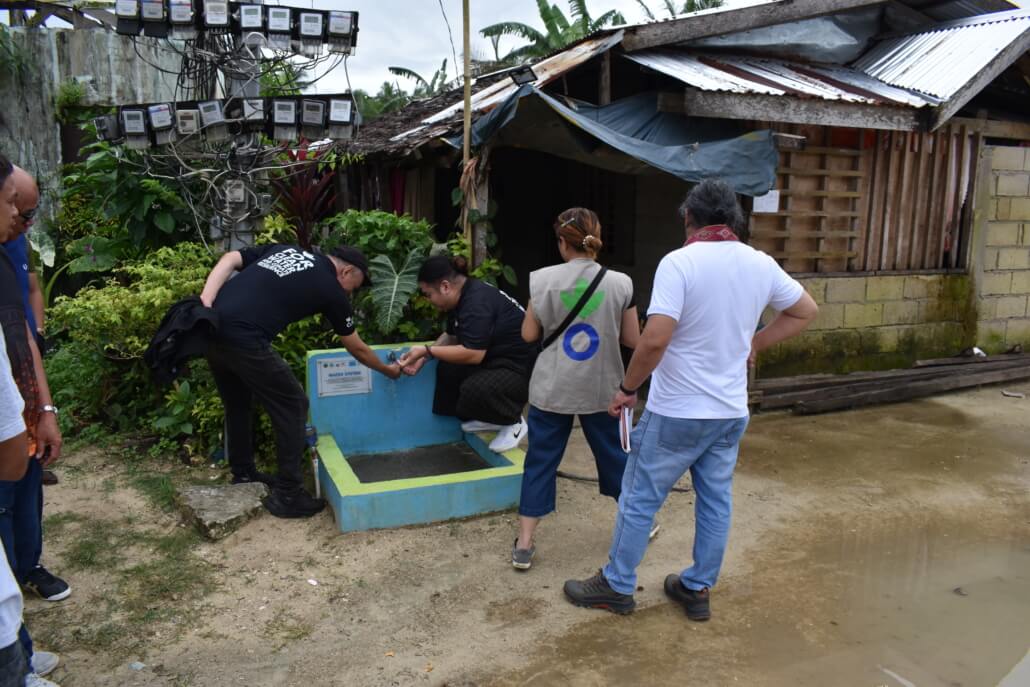
In photo: Henry makes his way to the water tank built by Action Against Hunger as part of the ACCESS emergency response, with funding from the EU Civil Protection and Humanitarian Aid. (Photo by Joyce Sandajan for Action Against Hunger)

Tessie recalls how these early interventions helped them get through the most difficult days. “We received water and hygiene kits from ACCESS, which were very helpful,” she says. “The water tank at the evacuation site was very close to us, so that we could use it easily. The hygiene kits were a huge help because we had nothing at the time. We didn’t even have a bucket, so those items were really a big help.”

Although relief distributions are less frequent now than they were during the first days after the disaster, the family still receives occasional government support, such as food and basic supplies. “For now, we still have relief goods. They help us survive while we figure out the next steps,” Tessie adds.

“We received water and hygiene kits from ACCESS, which were very helpful…the water tank at the evacuation site was very close to us, so that we could use it easily. The hygiene kits were a huge help because we had nothing at the time. We didn’t even have a bucket, so those items were really a big help.”

For camp coordinator Pamila of the evacuation site in San Remigio, the situation of the Sinangotes reflects the experience of many displaced families. She explains that continued humanitarian assistance remains essential. “Many internally displaced persons have similar stories. Organizations like Action Against Hunger and ACCESS partners are vital.”

Facing the Unknown: Life After the Quake

Life after the quake is filled with uncertainty. The smart house is temporary, and relocation plans remain unclear. “Right now, it hasn’t sunk in whether we can stand again after one year. If this is a no-build zone, we’ll have to find another place to build a house,” Tessie says.

Their livelihood cannot restart until the beaches are open and safe again. Relatives have offered financial help, which the family is saving to reopen their sari-sari store.

Despite everything, hope persists. Tessie draws strength from positivity and faith. “I thought of the birds—they don’t worry about where they’ll get food, but they survive until now. That’s how I think of our situation. I try not to worry too much about our struggles and just take it day by day.” She prays for clarity and strength to rebuild. “I hope we can have work. It’s not easy to go back to zero. No house, no belongings. But thankfully, many gave us help, things we could use.”

Henry and Tessie continue to navigate daily life under difficult circumstances. Their story is a stark reminder of the long road to recovery that families face after disasters, where survival often means managing what little is left and making difficult decisions about the future.

In photo: Henry and Tessie stand outside the temporary smart home provided by the government. The smart home is where they will live for at most a year since their home was totally damaged by the magnitude 6.9 earthquake last September 30, 2025. (Photo by Joyce Sandajan for Action Against Hunger)


ABOUT THE RESPONSE

The ACCESS Emergency Response provided urgent support to communities affected by the successive impacts of Tropical Cyclones Mirasol (Mitag), Nando (Ragasa), Opong (Bualoi), the enhanced Southwest Monsoon, and the magnitude 6.9 earthquake that struck offshore Cebu on 30 September 2025. Across Bicol, Northern Luzon, BARMM, and northern Cebu, the response delivers water, sanitation, and hygiene support; shelter and settlements support; multi-purpose cash assistance; and protection services.

ACCESS is a European Cilvil Protection and Humanitarian Aid-funded project serving the most affected and underserved communities in the Philippines, where chronic armed conflict, natural hazards, recurrent displacement, and intensifying climate-related risks continue to threaten lives and livelihoods. It is implemented by a consortium of 14 local and international organizations: ACCORD, Action Against Hunger Philippines, CARE Philippines, Community Organizers Multiversity (COM), Humanity & Inclusion Philippines, Integrated Mindanaons Association for Natives (IMAN), Kadtabanga Foundation for Peace and Development Advocates, Mindanao Organization for Social and Economic Progress (MOSEP), Oxfam Pilipinas, People’s Disaster Risk Reduction Network (PDRRN), Plan International Pilipinas, Save the Children Philippines, United Youth for Peace and Development (UNYPAD), and United Youth of the Philippines – Women (UnYPhil-Women).


Written by: Joyce Sandajan

Returning to the life they knew: Joanna’s story after Typhoon Opong (Bualoi)

PALANAS, MASBATE ─ Joanna Pilapil, 40 years old, grew up in the same barangay where she and her husband, Richie, are now raising their three children. In Barangay Miabas, their humble home kept them safe for years. Now, Joanna and her family find themselves struggling to rebuild the life they had before the devastation left by Typhoon Opong (International name: Bualoi).

In photo: Joanna Pilapil shows Action Against Hunger staff the way to her house in Barangay Miabas, Palanas, Masbate. Photo by Martina Vercoli for Action Against Hunger

When Typhoon Opong hit the municipality of Palanas, in the province of Masbate, in the early hours of September 26, 2025, Joanna’s family had already evacuated to the local high school, which became their barangay’s designated evacuation center. When they returned, a bitter surprise awaited them; their house was severely damaged.

In photo: Joanna talks to Action Against Hunger team member inside her home in Barangay Miabas. Photo by Martina Vercoli for Action Against Hunger. 

“When I saw my house in that state, I just couldn’t believe it. Many things were wet; others were broken,” Joanna recalls. “I couldn’t stop crying.”

“We can’t sleep when it rains; the children can’t rest properly,” she says. “We have to keep removing the water from the tarp.”

The storm left large parts of the roof torn off and weakened the wooden foundation. To keep the rain out, Richie and Joanna covered one section of the roof with tarpaulin. Their youngest child’s school supplies were irreparably ruined and had to be thrown away, which affected her schoolwork for several days.

Before Typhoon Opong, the family could sleep peacefully in their home. But after the storm, everything changed. Even light rain now makes them extremely anxious. “We just sit all together under a thick tarpaulin that covers the sleeping area of our house,” Joanna explains. The rest of the roof leaks badly, so the family gathers under the only dry spot. The tarpaulin catches the rainwater, and when the water starts pooling, they would try to drain it by poking the tarp with a stick so it does not collapse under its weight. “We can’t sleep when it rains; the children can’t rest properly,” she says. “We have to keep removing the water from the tarp.”

In photo: The tarpaulin covering the sleeping area of Joanna Pilapil’s house in Barangay Miabas, Palanas, Masbate. The family put it in place after the typhoon to protect themselves from rainwater leaking into the house. Photo by Martina Vercoli for Action Against Hunger.

Her husband, Richie, works in construction, but his job is unstable. He only earns when there are construction projects in the community, usually around 400 pesos a day, and considers himself lucky if he can work four days a week. Sometimes, he takes jobs in Manila, which is far from home. Joanna also works whenever she can, doing laundry and cleaning houses. These small jobs bring in 1,000 to 2,000 pesos a month when there is work available in the community. Their eldest child, now 19, could not go to college due to financial constraints. After finishing high school, he began working in a bakery to help with the family’s expenses.

“Everyone was affected by the storm,” Joanna explains. “The farmers who used to hire him, their crops are gone.”

After the typhoon, their main source of income was severely affected. Richie found it difficult to get construction jobs. “Everyone was affected by the storm,” Joanna explains. “The farmers who used to hire him, their crops are gone.”

The family’s financial situation worsened when their youngest child’s epilepsy required continuous medical care. Her medicines cost around 5,000 pesos a month, an amount the family can no longer afford. “I can’t even work that much anymore because I have to take proper care of her,” Joanna says, looking sadly through the empty wrappers of her daughter’s medicines. Then, she adds, “this month, I haven’t been able to bring her to her monthly check-up with the doctor. We have no money left. Now, food is our main priority.”

In photo: Joanna Pilapil, a resident of Barangay Miabas, Palanas, Masbate, looks through the empty wrappers of her daughter’s medicines, which she can no longer afford. Photo by Martina Vercoli for Action Against Hunger.

Access to clean water has also become a daily concern. Before the typhoon, the family bought a blue jerry can of mineral water for 35 pesos, enough for a week. Now, they cannot even afford to sustain it. “We get water from a well,” Joanna says, “not knowing whether it is safe or not. It is the only way we have to drink water.”

According to one of the residents, people in the community get their water from a well. After the typhoon, the water turned brown for a week, and there were reported cases of diarrhea and stomach aches. Even now, although the water appears clean, its safety remains in doubt. Residents boil it to make it drinkable, but cases of stomach aches and diarrhea are still being reported.

“Me and my husband prioritize our children’s nutrition,” Joanna says. “We give them food, and then he and I would share what is left.”

Food prices in the market have risen considerably. Despite a price freeze on commodities, nearby stores were selling goods at higher prices due to limited supplies. The family now buys one kilogram of the cheapest fish they can find for 200 pesos and makes it last for two weeks. Sometimes, they must buy on credit from the local store. They currently eat only twice a day instead of three times. Joanna then specifies: “Me and my husband prioritize our children’s nutrition,” Joanna says. “We give them food, and then he and I would share what is left.”

She worries especially about her youngest child, whose condition requires proper nutrition to prevent seizures.

Joanna shares the many responsibilities she manages at home while also working to support her family alongside her husband, and since the typhoon, even more has fallen on her plate. “Sometimes it is very hard for me,” Joanna admits. “I feel like I have a lot of responsibilities: managing household finances, taking care of the children and the house, working outside, and now also looking after some animals. Since the typhoon, it feels like I have even more to handle.”

In photo: Joanna Pilapil stands in front of her damaged house in Barangay Miabas, Palanas, Masbate. Photo by Martina Vercoli for Action Against Hunger.

When Joanna talks about the food kit they received from the European Civil Protection and Humanitarian Aid Operations (ECHO), she bursts into tears. “It is such a big help,” she says. “It is the first time we received this much. The food received is going to last at least two months,” Joanna states. “I will try to make it last as long as possible.”

In photo: Joanna Pilapil, a resident of Barangay Miabas, Baleno, Masbate with the food kit she received from ECHO. Photo by Martina Vercoli for Action Against Hunger.

The assistance will allow her family to redirect the money they would have spent on food toward other priorities, such as their child’s medicines or repairs to their damaged house.

“It is such a big help,” she says. “It is the first time we received this much. The food received is going to last at least two months,” Joanna states. “I will try to make it last as long as possible.”

Even with this help, fear remains. “I am so scared another typhoon will hit our community,” Joanna admits. “Right now, we don’t have livelihoods, we do not have jobs, and we do not have money.”

Still, the aid they received gave Joanna and her family a much-needed sense of relief in a time of powerlessness. “We still haven’t returned to how things were before the typhoon,” she says quietly. “It is very far. Everything was gone when the disaster struck.” Yet, she adds with hope, “the help we received from ECHO will ease our worries. It is the beginning of our recovery. Our children will be able to have proper nutrition again.”


ACCESS (Assisting the Most Vulnerable Communities and Schools Affected by Complex Emergencies in Accessing Quality and Timely Humanitarian and Disaster Preparedness Services) is funded by the EU Humanitarian Aid. ​

This ACCESS Emergency Response provides multi-sectoral support to the most vulnerable indigenous peoples in hard-to-reach communities in Cagayan and Masbate that are affected by the impacts of habagat or southwest monsoon, and tropical cyclones Mirasol, Nando, and Opong; and in Northern Cebu that are affected by the impacts of the magnitude 6.9 Cebu Earthquake. This particular response is jointly implemented by ACCORD, CARE Philippines, Action Against Hunger, Community Organizers Multiversity, Humanity & Inclusion Philippines, Mindanao Organization for Social and Economic Progress (MOSEP), Oxfam Pilipinas, People’s Disaster Risk Reduction Network, Inc., Save the Children Philippines, and the United Youth of the Philippines-Women.


Written by: Martina Vercoli
Edited by: Joyce Sandajan

Washing Away Worries: How a Day Care Worker’s Persistence Helped Bring Water and Hope to a Remote Community

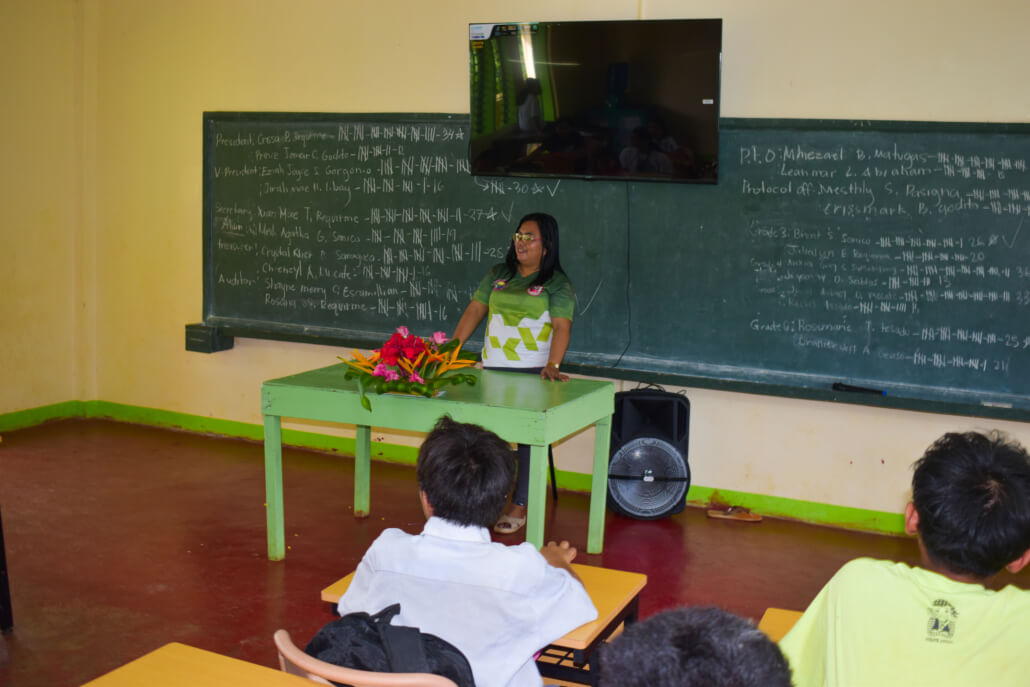
For eight years, Tarhata Watamama has served as the daycare worker in Barangay Mapayag with patience, commitment, and an unshakable belief in every child’s right to learn and grow in a safe and healthy environment. 

DATU ANGGAL MIDTIMBANG, MAGUINDANAO DEL SUR ─ At 40 years old, she currently teaches 32 students daycare learners (12 boys and 20 girls) in a small daycare center where limited resources services and structural gaps pose daily challenges. One of her long-standing struggles had been access to clean water.

“Mula po nung nasira ang aming handwashing [facility], hindi na po nakakapaghugas ng kamay ang mga bata tuwing may klase. Minsan po ang mga magulang ng mga bata ay nag-iigib ng tubig sa mga kapitbahay. (Ever since the handwashing facility broke down, the children could no longer wash their hands during classes. Sometimes, the parents would fetch water from neighbors,)” she explained.

While the barangay local government unit (BLGU) has been supportive in trying to meet the center’s needs, the lack of a functioning water supply system and adequate sanitation and hygiene facilities remained unresolved for a long time. Water had to be fetched from nearby homes and stored for use in washing and cleaning the daycare center, making daily hygiene activities difficult.

“Ever since the handwashing facility broke down, the children could no longer wash their hands during classes. Sometimes, the parents would fetch water from neighbors.” – Tarhata

Hindi talaga kami makapaghugas ng kamay nang maayos. Wala rin kaming mga gamit tulad ng sabon, panlinis, o kahit timba. (We really couldn’t carry out proper handwashing. We didn’t even have basic supplies like soap, cleaning materials, or even pails.”)

With no anthropometric tools of their own, growth monitoring, which is essential for tracking the physical development of young children, was also hampered. Tarhata had to borrow tools such as height boards and weighing scales from the nearby barangay health station (BHS), just to fulfill her responsibilities as an early childhood care and development (ECCD) worker.

But things started to change when the center was selected as one of the beneficiaries of the “Strengthening Health and Nutrition Service Delivery Capacities in Early Learning, Alternative Learning, and Community Health” project.

With funding from the Republic of Korea through the Korea International Cooperation Agency (KOICA), Action Against Hunger and UNICEF Philippines aim to improve access to health, nutrition, water, sanitation, hygiene (WASH), and education services for over 20,000 people in the Bangsamoro Autonomous Region in Muslim Mindanao (BARMM) through this project. With a special focus on young children, pregnant & lactating women, and persons with disabilities, the initiative is strengthening the capacity of 19 health and learning facilities across the region.

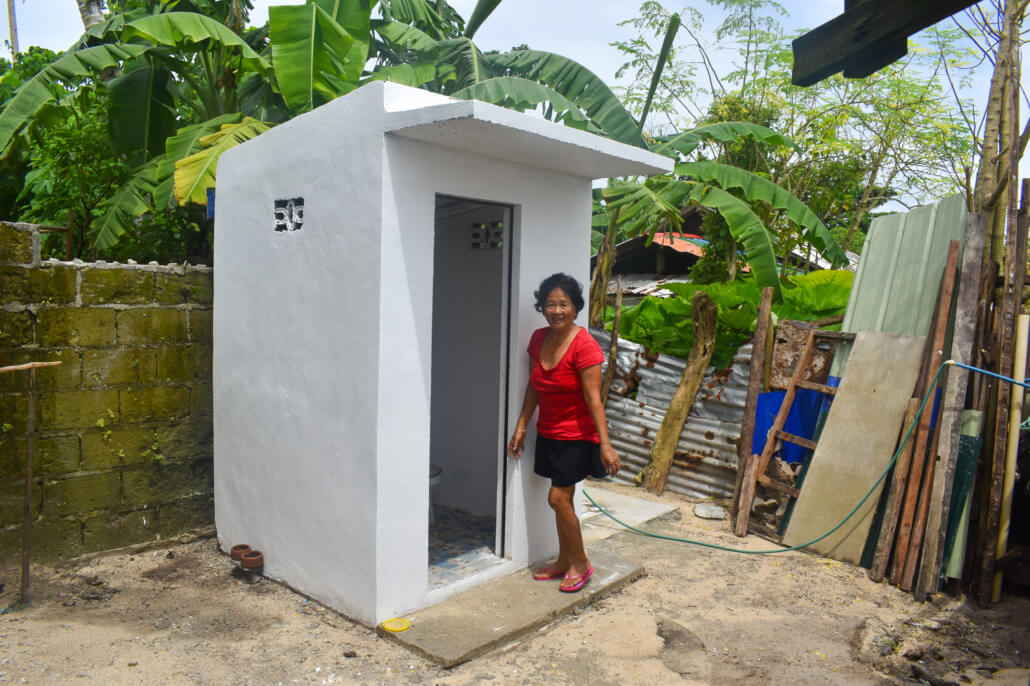
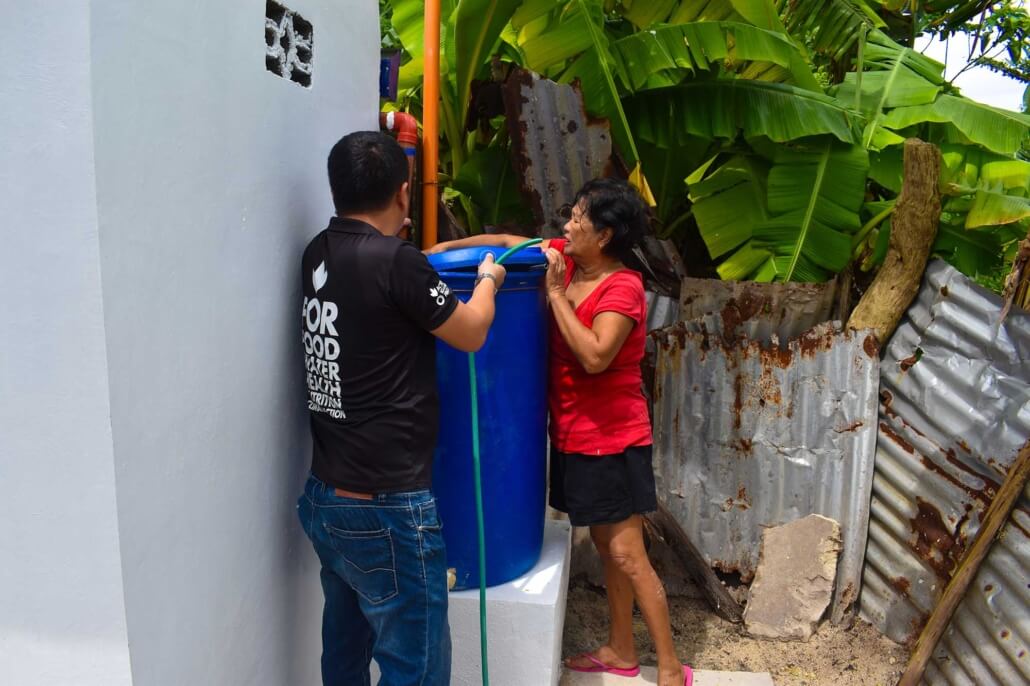
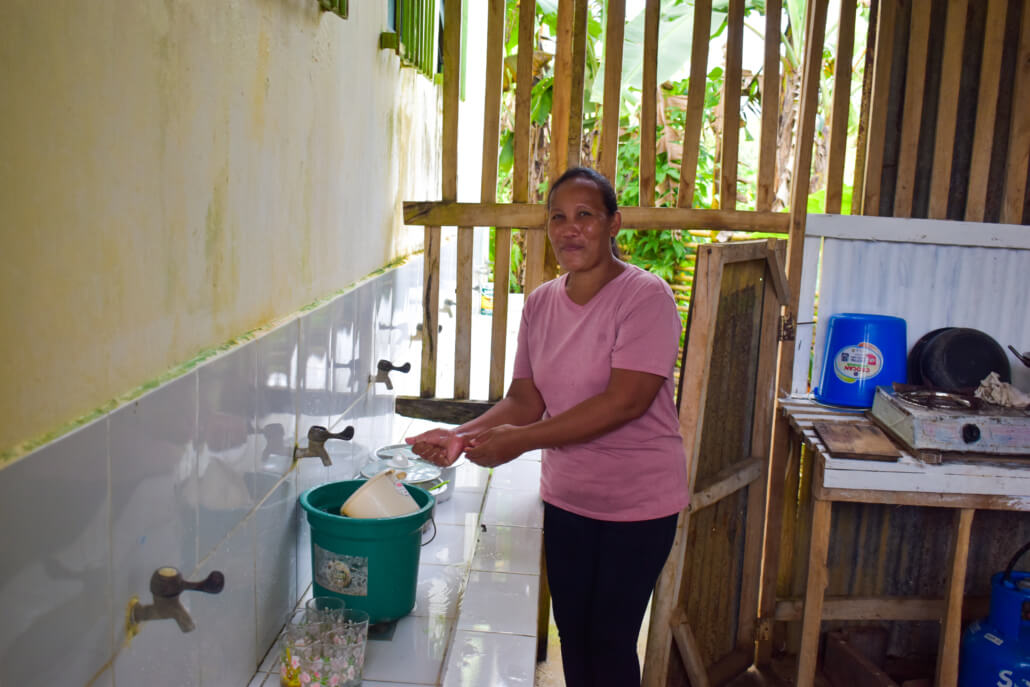
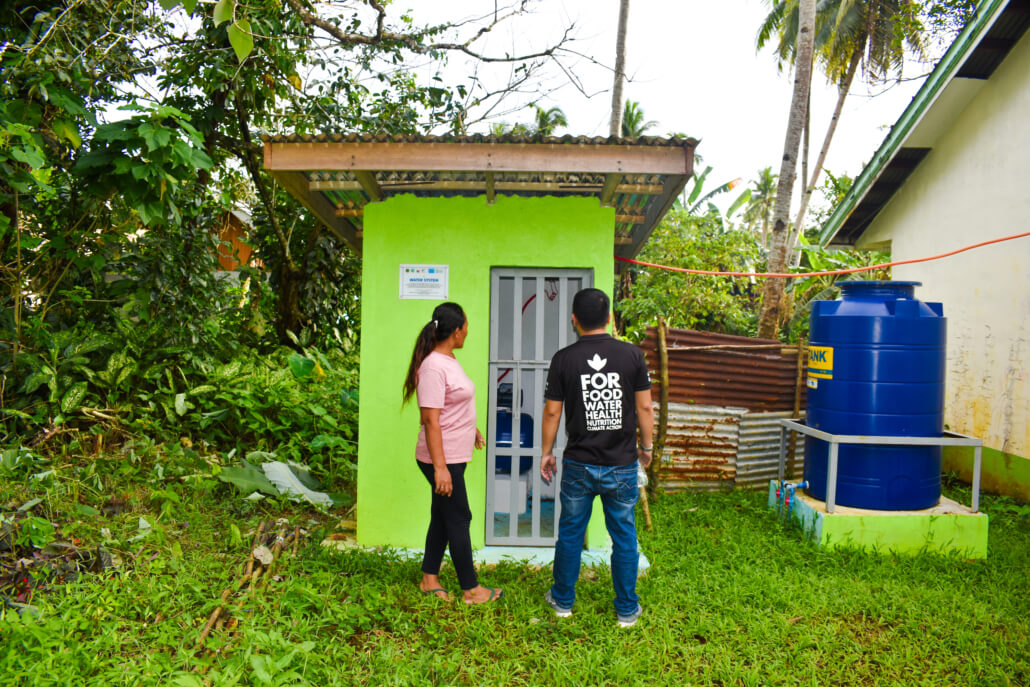
Following a series of consultations with the MSSD and the Municipal Government of Datu Anggal Midtimbang and joint technical assessments by Action Against Hunger and UNICEF, critical WASH and nutrition-related interventions were carried out at the daycare center. These included the repair of the water supply through the installation of a water pump, which was then piped directly to the daycare center’s toilet and a newly constructed handwashing station. A rainwater catchment system was also installed to further enhance water availability. In addition, the handwashing facility was improved, and the daycare center was provided with essential supplies and materials for hygiene, sanitation, and nutrition—including soap, pails, drinking water containers, cleaning materials, and growth monitoring tools such as a height board and weighing scale.

“Napakalaking tulong po talaga itong ginawa po ni UNICEF at Action Against Hungert sa aming daycare center. Ngayon, di na kami mahihirapan. May tubig na po, may hugasan ng kamay. Bago mag-recess pinapahugas ko na ang mga bata (This is such a big help. Thanks to UNICEF and Action Against Hunger, it’s no longer difficult for us. We now have water and a handwashing station. I let the children wash their hands before eating at recess.)” Tarhata shared with a smile.

With access to water restored, Tarhata immediately began integrating proper hygiene practices into daily routines. The children, she noted, were more than willing to embrace the change.

Thanks to UNICEF and Action Against Hunger, it’s no longer difficult for us. We now have water and a handwashing station. I let the children wash their hands before eating at recess. It’s wonderful to see the children enjoying handwashing now that there’s plenty of water, a proper station, and soap. They want to wash their hands all the time.”

“Nakakatuwa nga po dahil sa meron nang maraming tubig, handwashing area, at mga sabon, ang mga bata ay nag-eenjoy at gusto laging maghugas ng kamay, (It’s wonderful to see the children enjoying handwashing now that there’s plenty of water, a proper station, and soap. They want to wash their hands all the time.)” she added.

The impact goes beyond just hygiene. The daycare center also received height boards and weighing scales, allowing Tarhata to carry out growth monitoring on site. Parents no longer need to fetch water every morning. Children no longer need to leave the daycare premises just to wash up, which helps reduce potential risks and disruptions during class time.

“Isa din po sa pinasasalamatan po namin ay yung mga gamit tulad ng timba, lalagyan ng inuming tubig, sabon, at gamit panlinis. Lalo na po ang height board at timbangan. Wala po kaming kakayahan na bumili ng mga ito. May tulong po ang LGU, at suportado naman po ni Kapitan, pero kulang pa rin. Kaya salamat po talaga sa Action Against Hunger at UNICEF, (We’re really thankful for the supplies—pails, drinking water containers, soap, cleaning materials, and especially the height board and weighing scale. We could never afford these. Our LGU and Barangay Captain are supportive, but their resources are limited. That’s why we are truly grateful to Action Against Hunger and UNICEF.)” she emphasized.
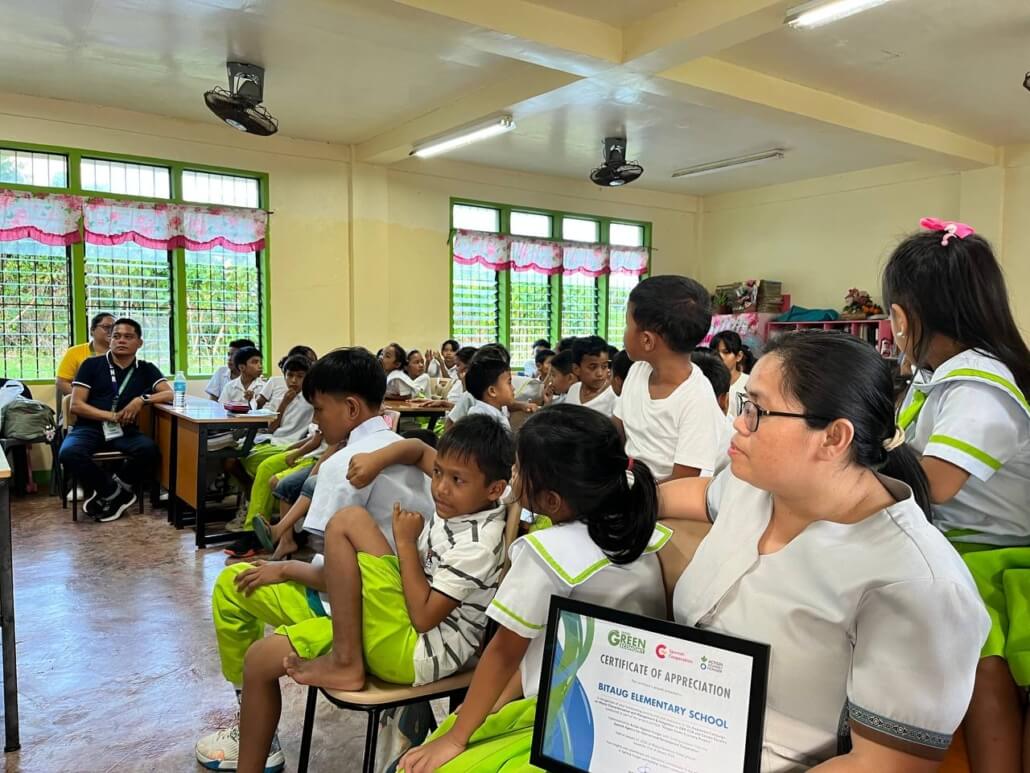
For Tarhata, this is more than an improvement in infrastructure—it is an investment in dignity, safety, and opportunity.

“Sana po itong project ay marami pang matulungan na daycare centers at daycare workers, (I hope this project can reach more daycare centers and workers like me. Many still need help—especially when it comes to having access to water.)” she said hopefully. 

Her story is a powerful example of how the right support, provided at the right time, can uplift not just a center or a worker—but an entire community.


The “Strengthening Health and Nutrition Service Delivery Capacities in Early Learning, Alternative Learning, and Community Health” project is implemented by Action Against Hunger together with UNICEF, thanks to the funding support of the Korean government through the Korea International Cooperation Agency (KOICA).


Written by Joyce Sandajan.
Contributors: Debbie Alaban, Moner Dipatuan
Photos by Noraisa Labing Duton and Norkisa Ayob Musa for Action Against Hunger


Read more