When water runs out: Children’s hygiene at risk after Typhoon Tino
TALISAY CITY, CEBU — Before Typhoon Tino (Kalmaegi) hit their community on November 3, Karylle, 23, and Sharon, 35, together with more than 90 displaced families, sought refuge in the old public market of Barangay Lagtang, Talisay City, Cebu. While this pre-emptive evacuation has kept them safe, they have since been living in tents at the market-turned-evacuation center for a month now after Typhoon Tino destroyed their homes. Now, they are waiting to be relocated to a safer area where they can rebuild their homes.
Karylle and Sharon, both residents of Sitio Tiguib in Barangay Lagtang, have grown close over the years and are practically family. Karylle, a full-time stay-at-home parent, first met Sharon through her partner, who is Sharon’s nephew. Today, their bond is even stronger as both families now share a single tent in the old public market, which has been converted into an evacuation site for displaced households.
For Karylle, this is her first time experiencing displacement. Sharon, on the other hand, has already been displaced three times, especially since her house was destroyed by Typhoon Odette (Rai) back in December 2021.
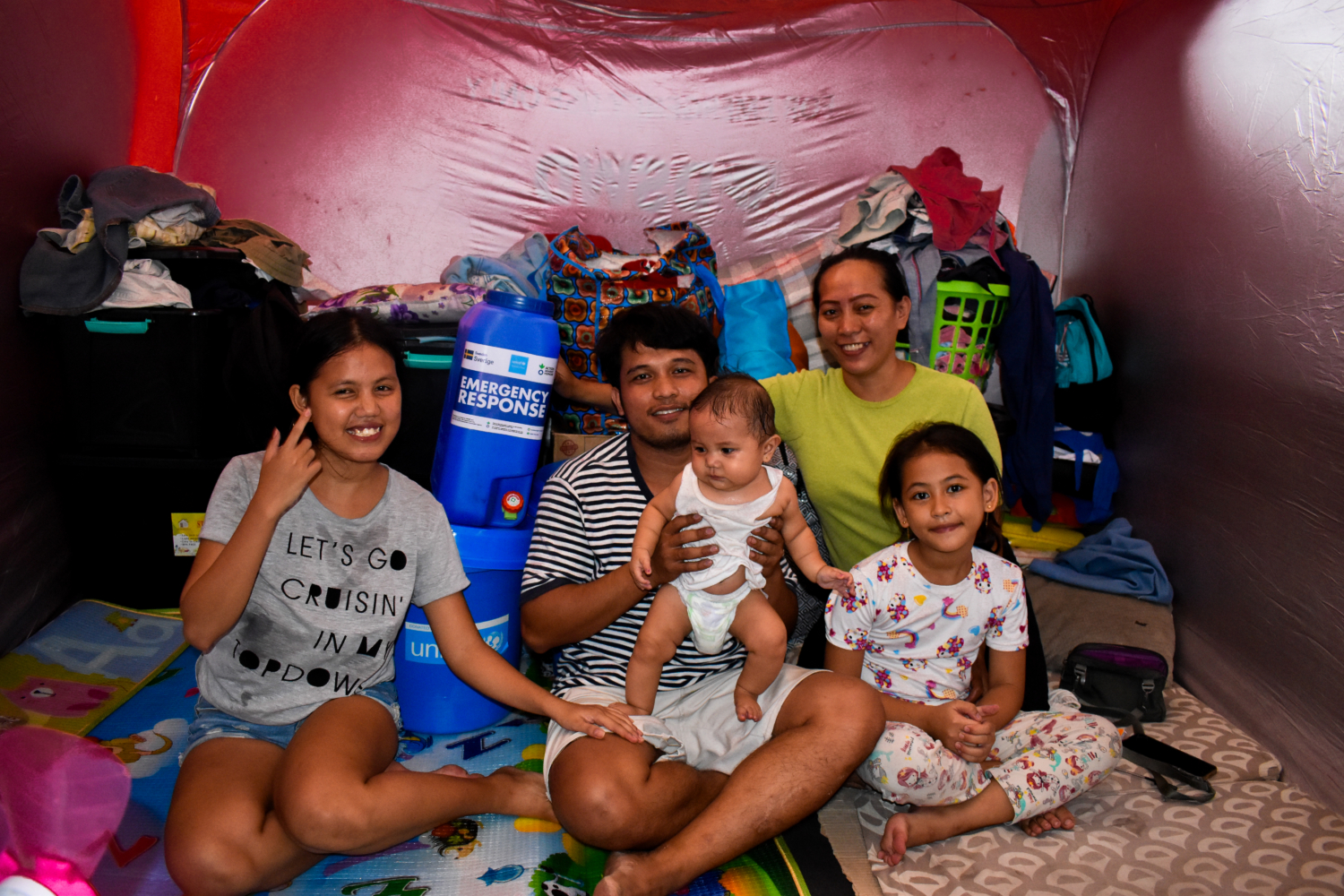
Together, they manage a household of seven, including two children, all sharing one small tent as they navigate the challenges of living in the evacuation center.
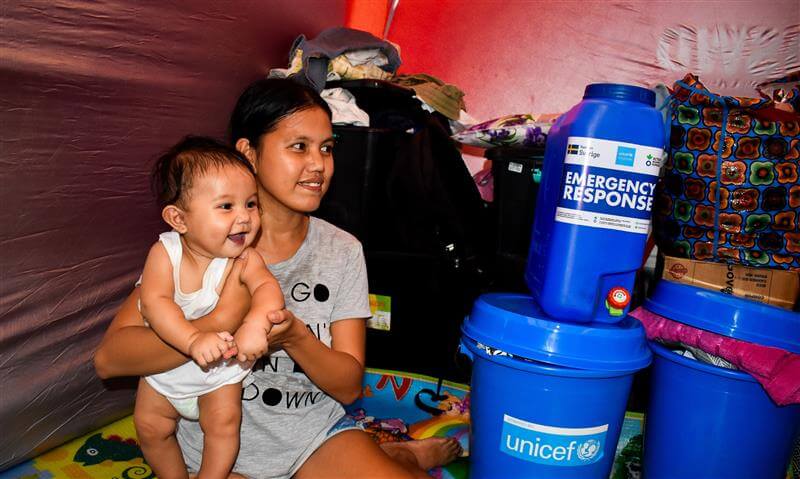
In the photo: Karylle, together with her baby, shares her experience at the evacuation center at the old public market in Barangay Lagtang, Talisay City, Cebu—photo by Martina Vercoli for Action Against Hunger.
Daily life in the evacuation center is extremely challenging. Space is minimal, making it uncomfortable and difficult to move, especially at night when everyone is lying down, and the tent becomes crowded as all family members try to sleep.
During the day, it becomes very hot, while at night it gets cold. Noise from other families, children crying, people talking, and constant movement throughout the night make it almost impossible for anyone to rest.
“The baby cannot sleep well, which keeps everyone awake,” Karylle states. She adds, “For the children, the biggest challenge in the evacuation center is getting proper rest so they can wake up early for school, but the crowded conditions not only in the tent but in the evacuation center make this nearly impossible.”
Providing enough food and clean water has been a constant challenge. In the aftermath of Typhoon Tino, the government and humanitarian organizations provided support, but the scale of the community’s needs far exceeded the scope of initial assistance.
“Here in the evacuation center, I have to wash my baby with wipes when we have no water. I have no choice.” – Karylle
Access to water in the old public market is limited. There is only one faucet for hundreds of people, and the water is not always running. Some days, they go without water entirely. Even taking a shower has become a daily struggle.
“Here in the evacuation center, I have to wash my baby with wipes when we have no water. I have no choice,” explains Karylle, holding her baby.
Regarding water quality, they add, “We do not know whether the water is clean or not. We drink it daily. We have no choice.”
Families often bathe fully clothed in front of others due to the lack of privacy, which makes both Karylle and Sharon feel embarrassed and uncomfortable. “I am very shy, and I do not like people looking at me while I take a shower. But I have no choice,” says Karylle.
With only two bathrooms for hundreds of people, long waits are common, especially during the night.
“We do not know whether the water is clean or not. We drink it daily. We have no choice.”
After Typhoon Tino, the children missed almost three weeks of classes, and they continue to skip school because they rarely have clean clothes to wear. “Washing clothes is almost impossible. The pile of unwashed clothing grows daily, including the children’s school uniforms,” Karylle says, pointing to a pile of clothes in the corner of their tent.
She explains that they often wash clothes at the only faucet in the evacuation center at night to avoid long queues in the morning. However, the uniforms rarely dry by morning, leaving the children with nothing to wear to school.
“When we have our period, often we do not wash ourselves at all. It is impossible when you have no privacy, and you must take a shower with clothes on,”
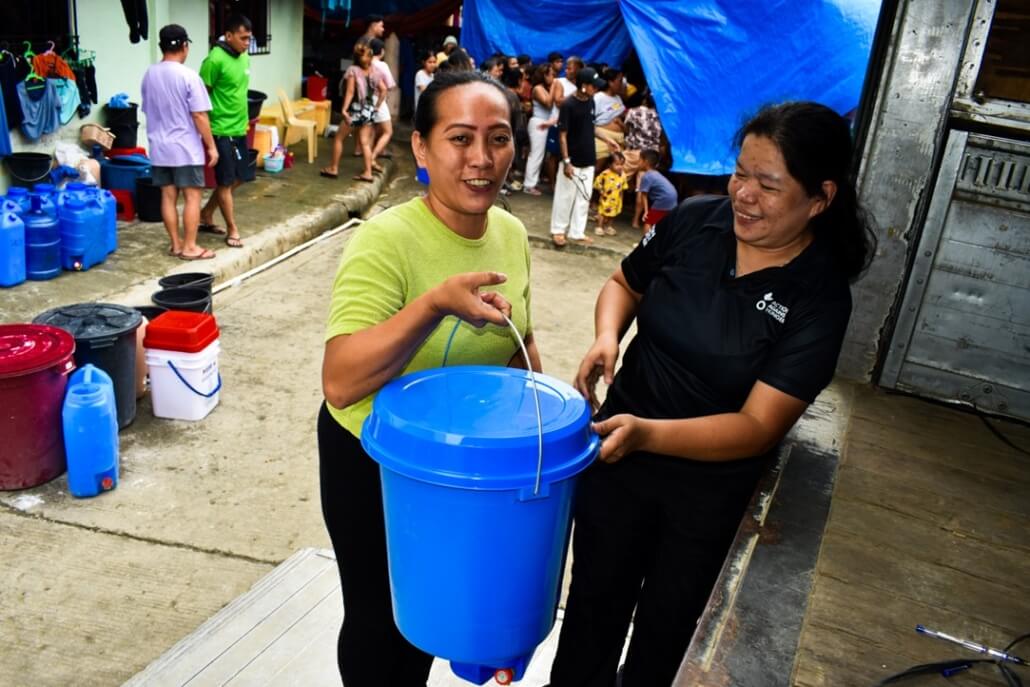
In the photo: Sharon receives water and hygiene kits from UNICEF and Action Against Hunger, with support from the Swedish International Development Cooperation Agency, at the old public market in Barangay Lagtang, Talisay City, Cebu—photo by Martina Vercoli for Action Against Hunger.
Menstruation poses an even bigger challenge for women in the evacuation center. Both explain that maintaining proper hygiene becomes difficult because there is little privacy, leaving them with no safe space to wash or clean themselves. They rely on disposable pads, but without a private area, they often feel uncomfortable. At times, Karylle and Sharon also feel embarrassed because some people make remarks when they notice women are on their period, adding emotional strain to an already stressful situation.
“When we have our period, often we do not wash ourselves at all. It is impossible when you have no privacy, and you must take a shower with clothes on,” states Karylle.
Basic hygiene supplies and access to clean water make an enormous difference for families who have lost their homes and belongings. In moments of crisis, even the simplest items become essential for staying healthy and maintaining dignity. The water and hygiene kits provided by UNICEF and Action Against Hunger, with support from the Swedish International Development Cooperation Agency (SIDA), have been crucial for Karylle’s household and for many other families now living in the old public market after Typhoon Tino.
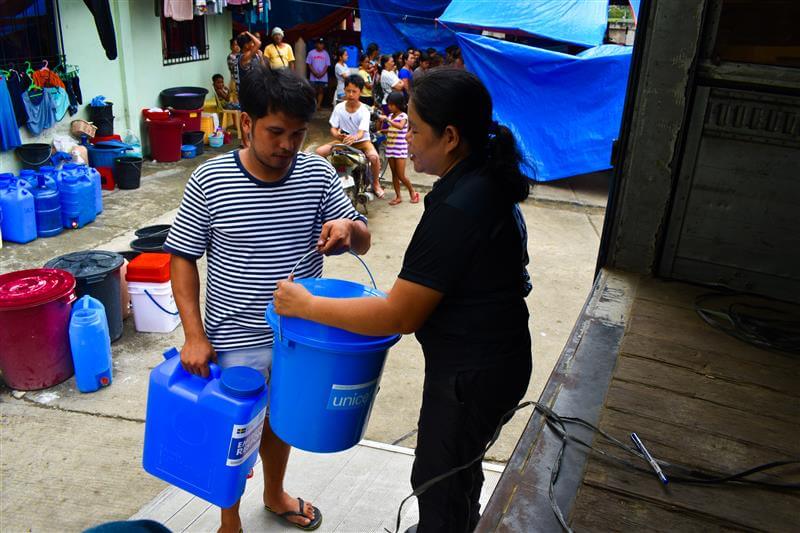
In the photo: Karylle’s partner receives water and hygiene kits from UNICEF and Action Against Hunger, with support from the Swedish International Development Cooperation Agency, at the old public market in Barangay Lagtang, Talisay City, Cebu—photo by Martina Vercoli for Action Against Hunger.
“I cannot mention just one important item in the kits. All the items are important, including the jerrycan,” Karylle shares. She adds that the towels are especially valuable for caring for their baby, since these items are expensive and difficult to afford in the evacuation center. The kit also includes chlorine tablets, which they use to purify water and make it safe for drinking and daily use—another lifeline for families trying to stay healthy in these conditions.
This support aims to help families like Karylle’s maintain better hygiene for themselves and their children, while allowing them to redirect the money they would have spent on hygiene items toward buying food.
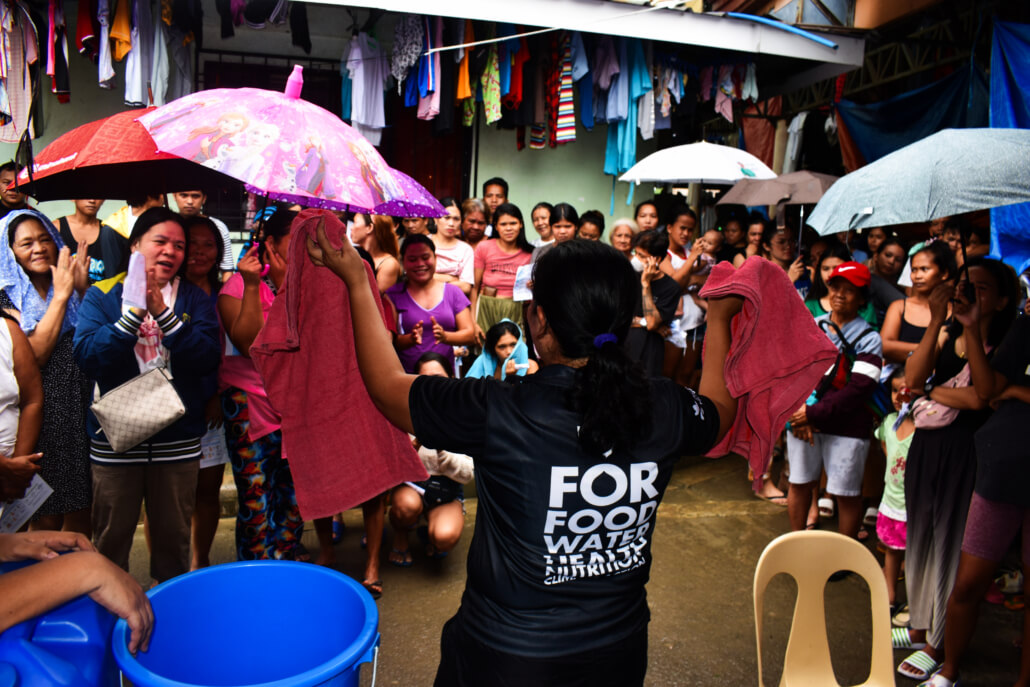
In the photo: Action Against Hunger staff show the hygiene kits’ towels to families about to receive them at the old public market in Barangay Lagtang, Talisay City, Cebu—photo by Martina Vercoli for Action Against Hunger.
To earn a bit of income, Sharon does laundry and washes clothes for others at the evacuation center whenever water is available. Karylle focuses on caring for their baby, while her partner works in construction, although jobs have become irregular and scarce because few people can afford to hire workers at this time. With limited income opportunities, supporting the family has become increasingly complex.
When asked about their critical needs, both agree that housing materials are essential for building proper shelters. Their hope for the future is simple: “My hope for the future is to have my own house.”
Written by Martina Vercoli
Edited by Joyce Sandajan