Water for Equality: A School Where Girls Can Learn with Dignity
March 22 marks World Water Day, a global moment to reflect on the essential role of water in our lives. This year, the theme “Water for Equality” reminds us that the water crisis affects everyone, but not equally. When safe water and sanitation are out of reach, inequalities deepen, and both women and young girls carry the heaviest burden. According to the United Nations, across the world, females spend more time collecting water, face greater health and safety risks, and are more likely to miss out on education and opportunities.
Where water flows, equality grows. And when water is absent, inequality flourishes.
For young female students, these challenges start early. In the Philippines, the World Bank states that 8% of girls have reported skipping classes due to their menstruation and the challenges it entails, including the lack of water and the difficulty of maintaining proper hygiene in schools. In Siargao, water shortages are common for young students, even though the island receives a lot of rain each year. Rapid tourism growth and changing weather patterns continue to put pressure on local water sources.
In the municipality of San Benito on Siargao Island stands Nuevo Campo Elementary School, a small public school serving 60 children from kindergarten to Grade 6. Each day, young learners fill their classrooms with energy and hope. For years, limited access to water affected the daily routines of both students and teachers.
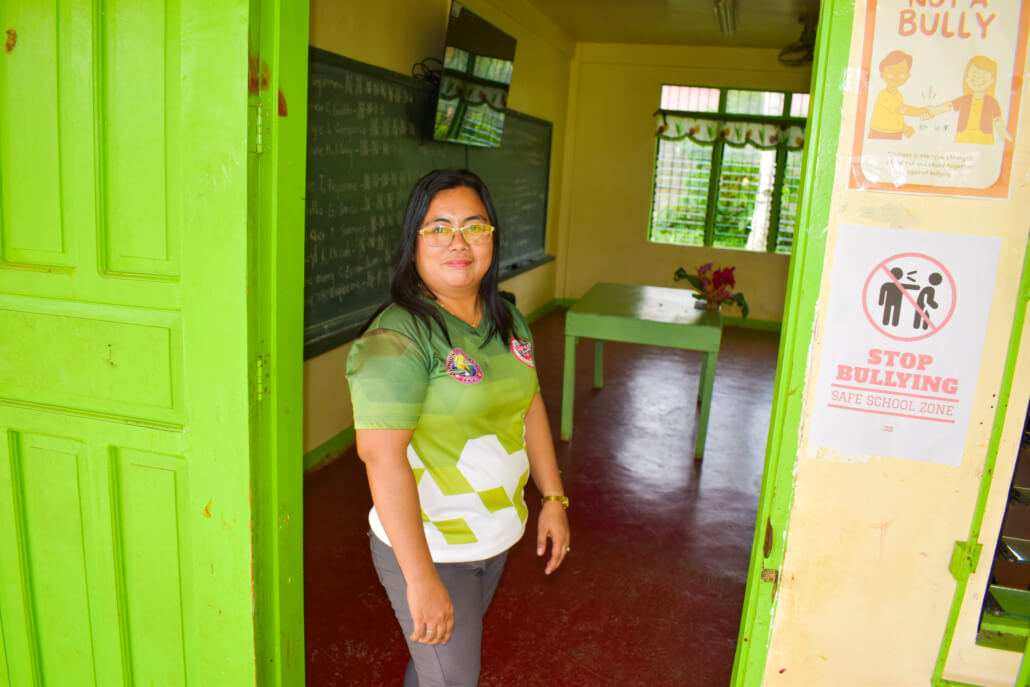
In photo: Teacher Elisavil stands in front of the classroom where she teaches daily at Nuevo Campo Elementary School in the Municipality of San Benito. Photo by Martina Vercoli for Action Against Hunger.
While the lack of water affected all children, it had a particularly different impact on young female students.
“Without water in the restrooms, girls could not wash themselves properly or manage their hygiene with dignity,” says Elisavil, a grade six teacher who has taught for 16 years. According to her, girls faced confusion and discomfort during their first menstruation. Having no water in the restrooms made the situation worse. Some delayed changing their sanitary pads, leading to stains on their clothes, and comments from male classmates often caused embarrassment and shame. In some cases, girls would go home to clean themselves at the expense of valuable learning time.
In the past, Elisavil recalls the frustration of being unable to fully support her students. “Many girls skipped classes to manage their periods at home, missing lessons and opportunities,” she shares.
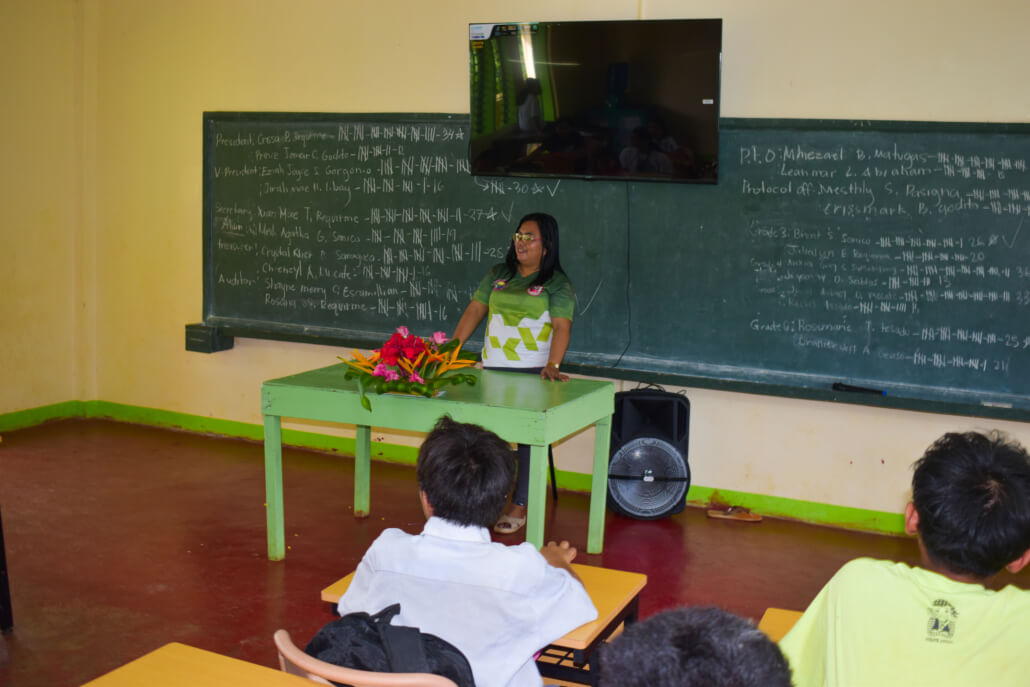
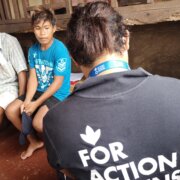
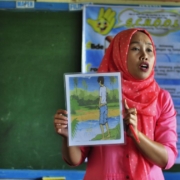
In photo: Elisavil discusses in one of the classes of Nuevo Campo Elementary School in the Municipality of San Benito. Photo by Martina Vercoli for Action Against Hunger.
Today, she actively promotes hygiene and equality in her classroom, guiding proper handwashing and toothbrushing practices, and educating students about responsible water use.
Privacy concerns were also significant. Students sometimes entered bathrooms assigned to the opposite gender to find water, creating uncomfortable situations.
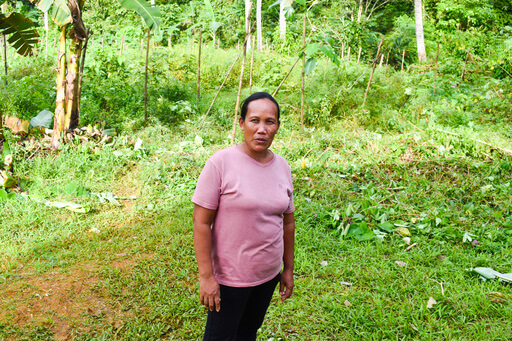
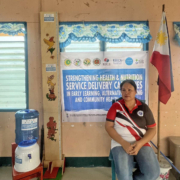
In photo: Jena, President of the Parents-Teachers Association at Nuevo Campo Elementary School in San Benito, Surigao del Norte. Photo by Martina Vercoli for Action Against Hunger.
Jena, 49, a parent and now president of the Parents and Teachers Association, confirmed these struggles. Having grown up in Nuevo Campo and attended the same elementary school, she now voluntarily manages school maintenance, ensures Water, Sanitation, and Hygiene facilities function properly, and oversees the safety and well-being of students. She is, in every sense, the guardian of the school’s water system.
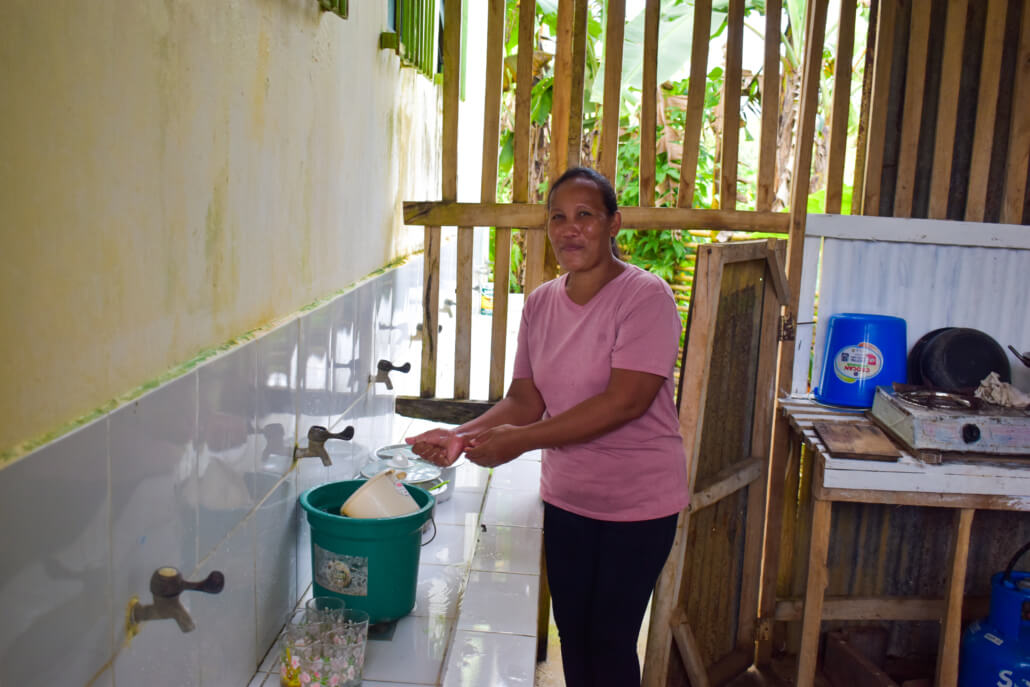
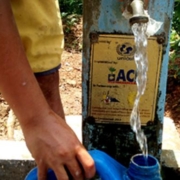
In photo: Jena, President of the Parents-Teachers Association at Nuevo Campo Elementary School in San Benito, Surigao del Norte, washes her hands inside the school kitchen. Photo by Martina Vercoli for Action Against Hunger.
Jena’s day begins early by cleaning the surroundings, checking the water system, and turning on the pump when pressure is low to ensure water reaches all faucets. Before the rehabilitation of the WASH facilities, she would walk back and forth up to five times a day to nearby water sources to ensure students had access, especially girls needing privacy for menstrual hygiene. She also cooks for the students, distributes food, washes dishes, and helps maintain the school garden.
Amid the challenges they faced, figures like Elisavil and Jena, became pillars of support.
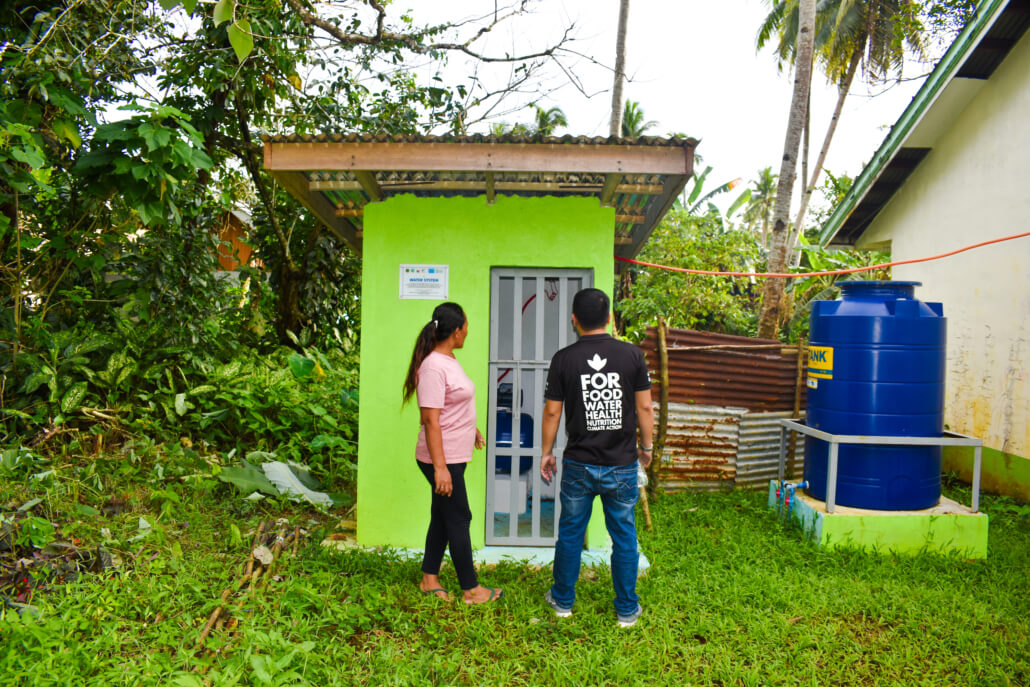
In photo: Jena and Action Against Hunger Engineer, Mark Alain Punzalan, stand in front of the new pump house and elevated water tank at Nuevo Campo Elementary School in San Benito, Surigao del Norte. This was implemented by Action Against Hunger together with UNICEF. Photo by Martina Vercoli for Action Against Hunger.
Through the Typhoon Odette Recovery and Rehabilitation towards Climate Resilience project, implemented by Action Against Hunger and UNICEF, with the funding support of the government of New Zealand through the Ministry of Foreign Affairs and Trade, the school received a pump house and an elevated water tank, ensuring a consistent water supply. Handwashing facilities were also repaired, providing students with safer and more reliable access to water.
Improved water access has made daily routines easier, particularly for young girls. They can manage hygiene more safely and privately, attend classes more comfortably, and focus better on their studies.
For Jena, “water for equality means that reliable access allows young girls to attend school with dignity, confidence, and equal opportunities to learn.” Elisavil echoes this, explaining that water for equality ensures every child has equal access to sanitation facilities, recognizing that the same problem, like lack of water, does not affect all students equally.
When communities put women and girls at the center of water solutions, everyone benefits.
Women like Elisavel and Jena, who support young female students during critical moments, are true water heroes—leaders, caretakers, and advocates for change.
Written by: Martina Vercoli
Editor: Joyce Sandajan