
Teaching for the Community, inspired by the Community: A Teacher’s Commitment in a Flood-Prone Community
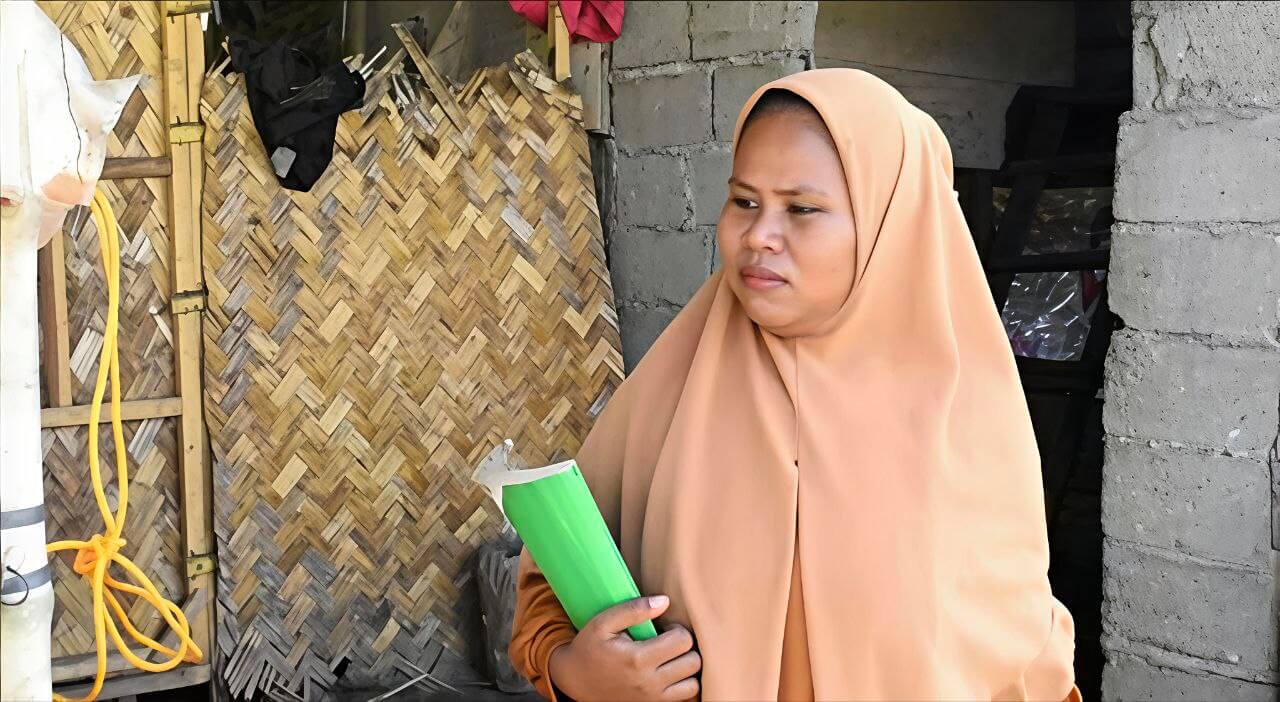
TALITAY, DATU MONTAWAL — At 28, Hasna Alilaya volunteers as a teacher in the same remote barangay where she grew up. She lives a simple life with her husband, Norodin, and their young child, finding comfort and security in their modest home within a small, close-knit community. Flooding caused by Typhoon Nando (internationally named Ragasa) disrupted their daily routines, making it even more difficult for the family that is already struggling to make ends meet, to access supplies and seek support from nearby communities.
When Typhoon Nando affected the province of Bukidnon, many low-lying areas were impacted, including Maguindanao del Sur. Heavy rainfall caused the Pulangi River, which is Bukidnon’s major river system and a primary tributary of the Rio Grande de Mindanao, to overflow, resulting in downstream flooding in Maguindanao del Sur. In the Municipality of Datu Montawal, which consists of 11 barangays, Barangay Talitay was among the most affected. Floodwaters rose above head level, submerging Hasna’s home and destroying household belongings, as well as key materials she used for teaching.
Flooding has become a recurring challenge in Hasna’s community. In some months, flooding can occur up to four times. Over the years, these incidents have intensified, resulting in greater damage to homes and livelihoods and increasing the strain on daily life.
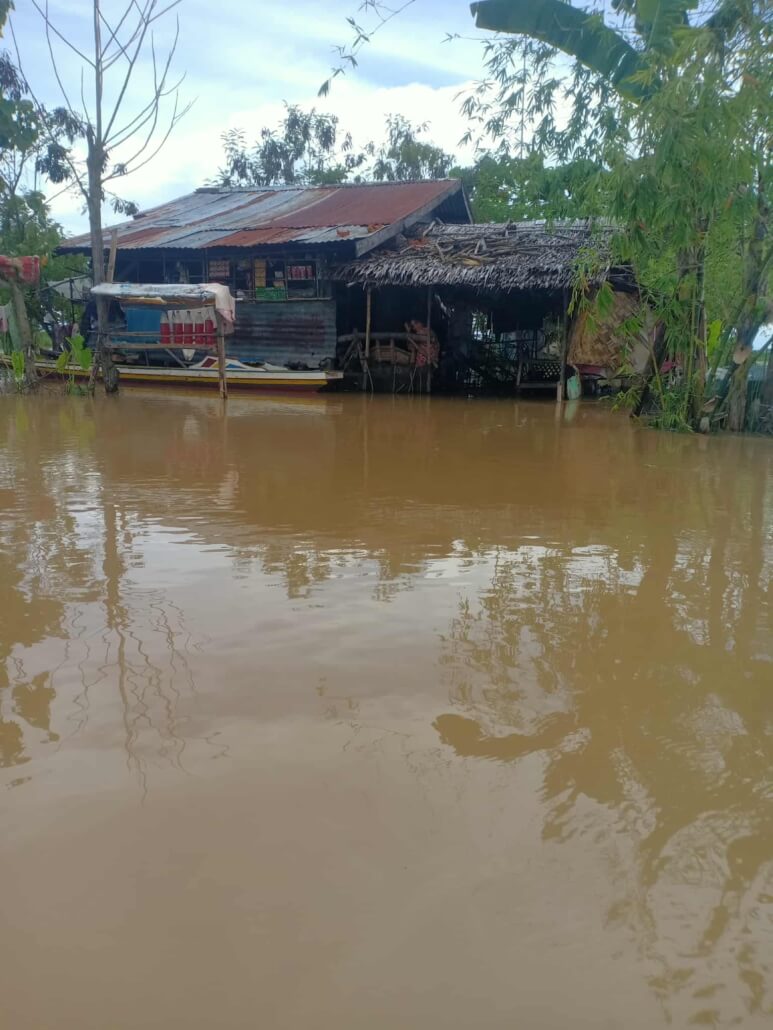
In photos: Flooding experienced by Hasna’s community in Sitio Pibpulangian in Datu Montawal. (Photo courtesy of Integrated Mindanaoans Association for Natives (IMAN)
While Hasna’s community is already used to frequent floods, Typhoon Nando brought an entirely different scale of destruction. Unlike previous floods that were usually confined to certain pockets of the sitio and receded within days, Nando inundated the entire area. Floodwaters remained for almost two weeks, submerging homes, pathways, and sources of livelihood for an extended period. The prolonged flooding left families with little time to recover between rising waters and deepened the damage to already fragile living conditions.
The intensity of the flooding was worsened by the collapse of several riverbanks, which caused the water to spread wider and surge deeper into the community. Houses made of light materials were among the hardest hit, with some structures partially damaged and others completely swept away. For residents, the flood brought by Nando was unlike anything they had previously experienced, leaving visible destruction and long-term consequences for safety and shelter.
The impact was felt by every household in the area. All 635 families, representing 100 percent of the sitio’s population, were affected by Typhoon Nando. While a small number of families with relatives outside the barangay were able to temporarily relocate, most had no alternative shelter and were forced to stay in their homes despite the risks posed by rising waters and unstable structures.
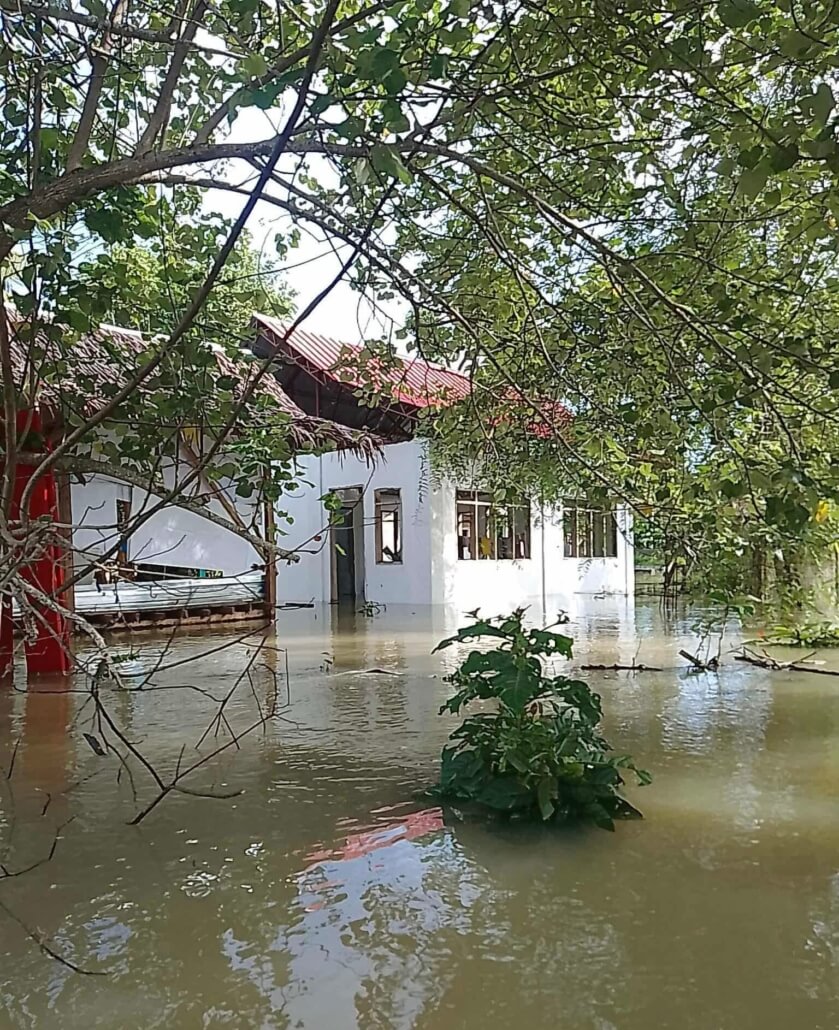
In photo: Flooding experienced by Hasna’s community in Sitio Pibpulangian in Datu Montawal. (Photo courtesy of Integrated Mindanaoans Association for Natives (IMAN)
This took a major toll on Hasna’s household. Hasna’s husband, Norodin, earns a living as a fisherfolk, with daily income typically ranging from 100 to 150 pesos (around 1.5 to 2 euros), and only rarely reaching 300 to 500 pesos (4 to 7 euros). Norodin’s income is highly dependent on weather conditions, making the family particularly vulnerable during flooding. According to him, fishing becomes nearly impossible when water levels rise, further limiting their ability to meet daily needs.
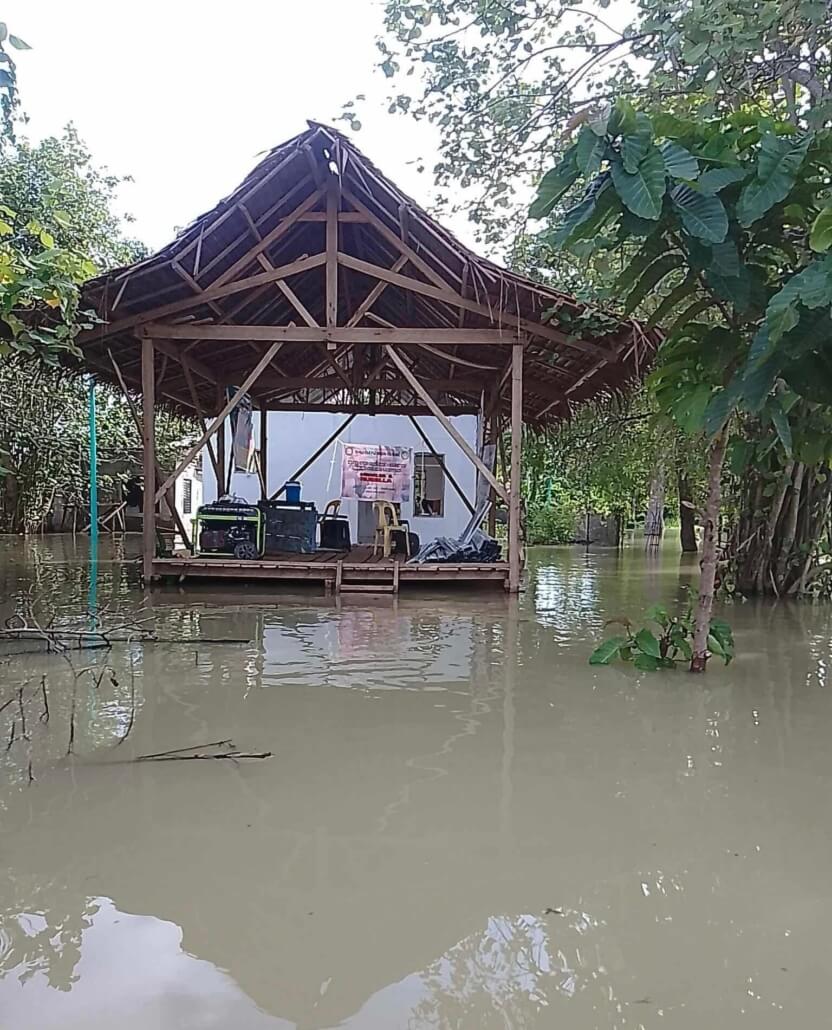
In photo: Flooding experienced by Hasna’s community in Sitio Pibpulangian in Datu Montawal. (Photo courtesy of Integrated Mindanaoans Association for Natives (IMAN)
Aside from this, Hasna’s community is among the most remote areas in the municipality. Sitio Pibpulangian in Barangay Talitay is not an island, but it is encircled by the Pulangi River, leaving boat travel as the only reliable way in and out of the area. Reaching the sitio requires an almost hour-long pump boat ride, with transportation costs ranging from 200 to 300 pesos (a little more than 2–4 euros) one way and 500 to 600 pesos (around 7–8.5 euros) for a round trip. This amount is nearly equivalent to what Hasna’s husband earns in a day.
Because of the family’s limited income, Hasna rarely travels outside the barangay. Instead, she often relies on neighbors or acquaintances who are already going to the market to purchase essential items on her behalf, allowing her to manage daily expenses despite their isolation.
“It is difficult to see the damage to belongings and livelihoods in our community. This situation makes daily life more challenging for many families,” Hasna recalled.
Valuing education amid crisis
Nearly two years ago, Hasna made the decision to become a volunteer teacher, not out of ambition, but out of necessity. In their remote community, she was the only one who was able to finish high school. She could not bear to see children miss out on learning simply because the nearest school was too far and too difficult to reach. What began as a small effort to help soon became a responsibility she chose to carry every day.
Each morning, Hasna teaches around 60 learners from Grades 1 to 5. She handles multiple grade levels at once, moving between lessons and age groups in a single day. Classes are held in a small makeshift annex school, where space is limited, and resources are scarce. Some children sit on borrowed chairs, while others hold classes inside the mosque when the classroom can no longer accommodate everyone. Despite the heat, the crowding, and the lack of materials, the children continue to come. For many of them, Hasna is their only access to education.
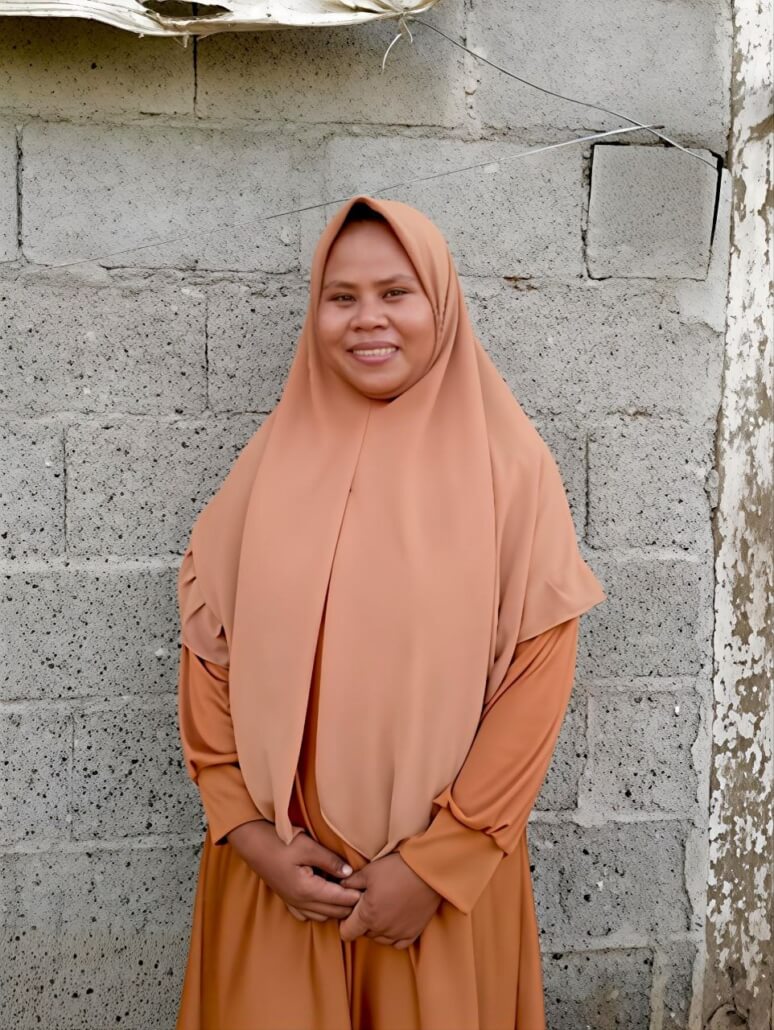
In photo: Hasna is a volunteer teacher at the Lower Bagoinged Elementary School Extension and has been serving for more than two years. Aside from her teaching duties, she also sells goods in various stores to help support her family’s daily needs.
Photo by: Datoal Mangadad- Integrated Mindanaons Association for Natives (IMAN) Inc.
The alternative is a journey that few young learners can manage. Reaching the nearest main school requires an hour-long pump boat ride and nearly two hours on foot. During the rainy season and periods of flooding, the journey becomes unsafe or impossible. This reality is why Hasna continues to teach in the sitio. What matters is keeping education within reach for children who would otherwise be left behind.
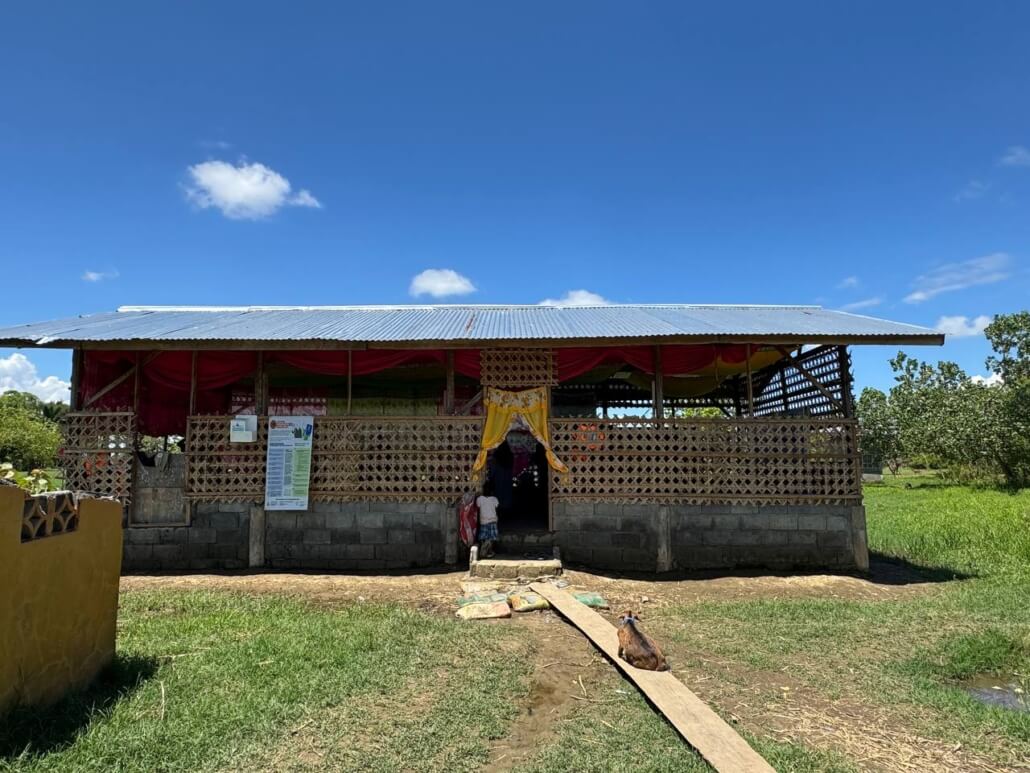
In photo: Lower Bagoenged Elementary School- Annex.
This is the annex school where Hasna Alilaya teaches as a volunteer teacher.
Photo by: Hadjara Umpong- Integrated Mindanaons Association for Natives (IMAN) Inc.
Unfortunately, teaching in Sitio Pibpulangian comes with constant challenges. Some learners miss classes because they do not have basic school supplies. Others arrive at school hungry, unable to focus on lessons. During harvest season, many children are absent for days at a time as they help their families in the fields.
Security concerns have also shaped daily life. The community lies at the far edge of Barangay Talitay, close to Sitio Tukananes in Barangay Dalgan, where terrorist-related bombings and airstrikes occurred from December 2023 to January 2024. Hasna remembers nights filled with fear, families evacuating in haste, and the uncertainty of not knowing when it would be safe again. Even then, she chose to stay. She chose to teach.
Supporting teachers and learners through ACCESS
In the aftermath of the flooding, support through the ACCESS project, funded by the EU Civil Protection and Humanitarian Aid, helped bridge the gaps Hasna had long been navigating as a volunteer teacher. Through the joint efforts of the Integrated Mindanaoans Association for Natives (IMAN) and Action Against Hunger, all affected households in the community received assistance, including education-focused support for teachers and learners.
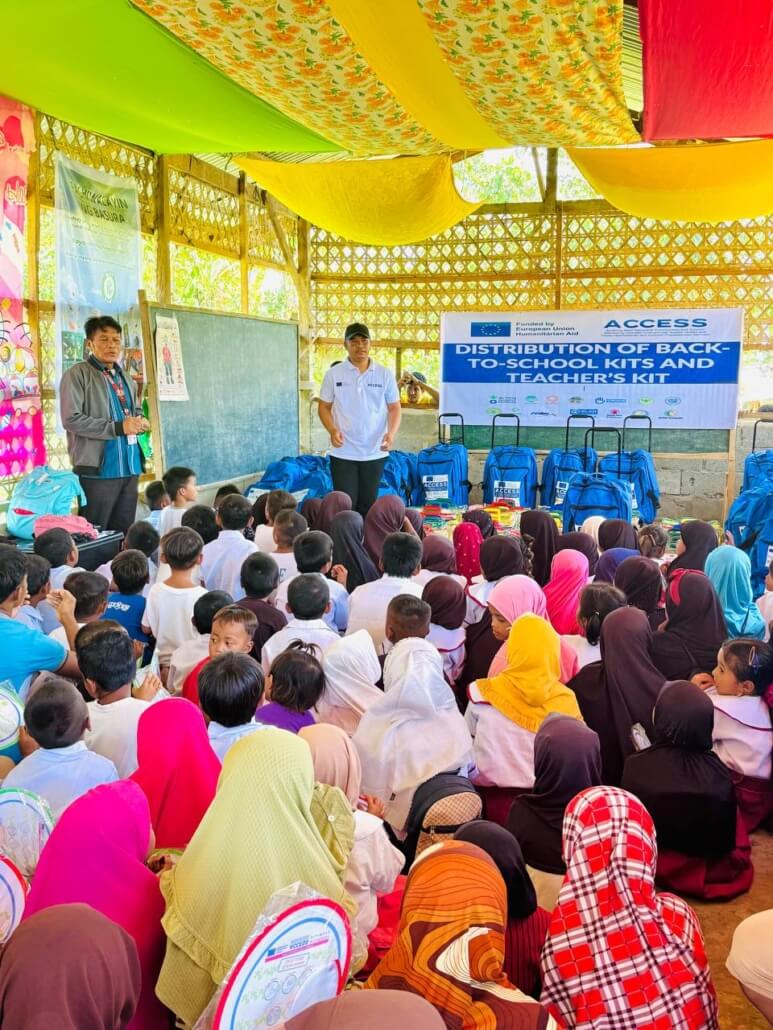
Phot courtesy of Integrated Mindanaons Association for Natives (IMAN)
The Learners’ Kits have also made a visible difference. “With the complete sets of school supplies, the children are more eager to come to class. They are proud to bring their own notebooks and pencils to school. The kits have also helped our parents, who often struggle with daily expenses, and made it easier for the children to stay in class instead of staying home or helping out in the fields,” Hasna shared. In a place where education is fragile and easily disrupted, these simple tools have helped sustain Hasna’s efforts and keep learning alive in the community.
“With the complete sets of school supplies, the children are more eager to come to class. They are proud to bring their own notebooks and pencils to school.”
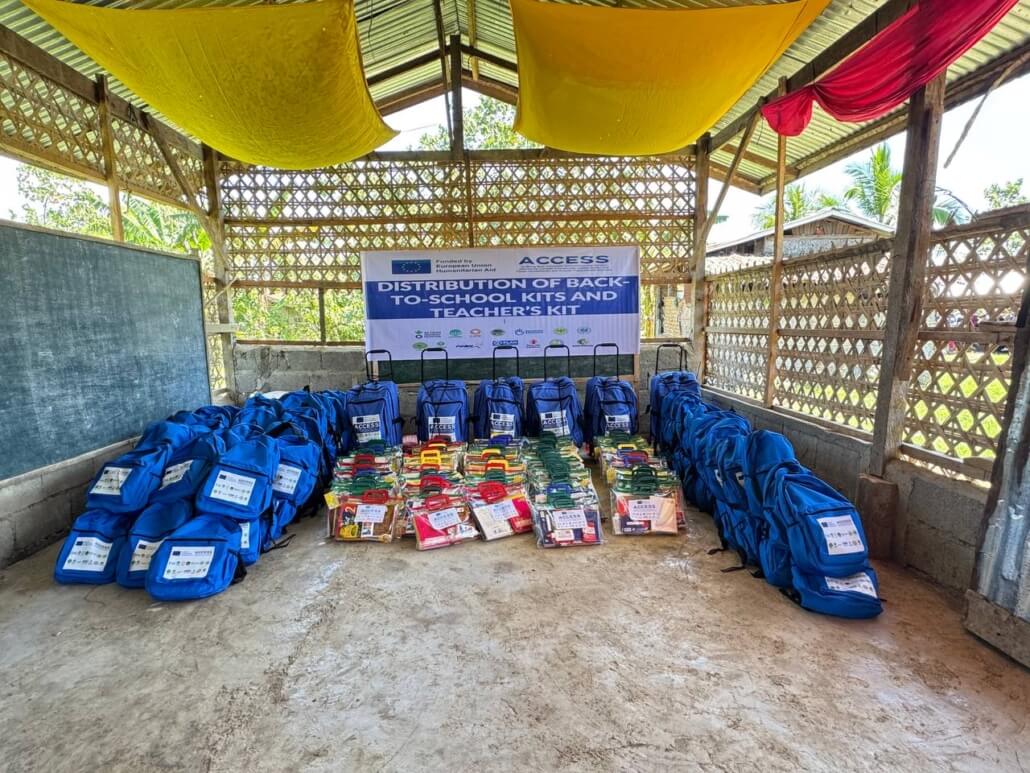
In photo: These are the teachers Kit and Back to School distributed to the Teachers, Volunteer Teacher and Learners.
Photo by: Hadjara Umpong- Integrated Mindanaons Association for Natives (IMAN) Inc.
According to Hasna, receiving a Teacher’s Kit was a meaningful support to her work as a teacher, as it helped strengthen her teaching activities at the annex school. While she also receives learning materials from her mother school, Lower Bagoenged Elementary School, the additional supplies complemented existing resources and allowed her to better respond to the needs of her learners. She expressed her appreciation for the added support, noting how it enhanced her ability to conduct daily lessons.
“I am grateful for the ACCESS project. The support has helped address some of the challenges we previously faced due to the lack of basic teaching materials. With the Teacher’s Kit, we are better equipped to carry out our teaching responsibilities,” Hasna recalled.
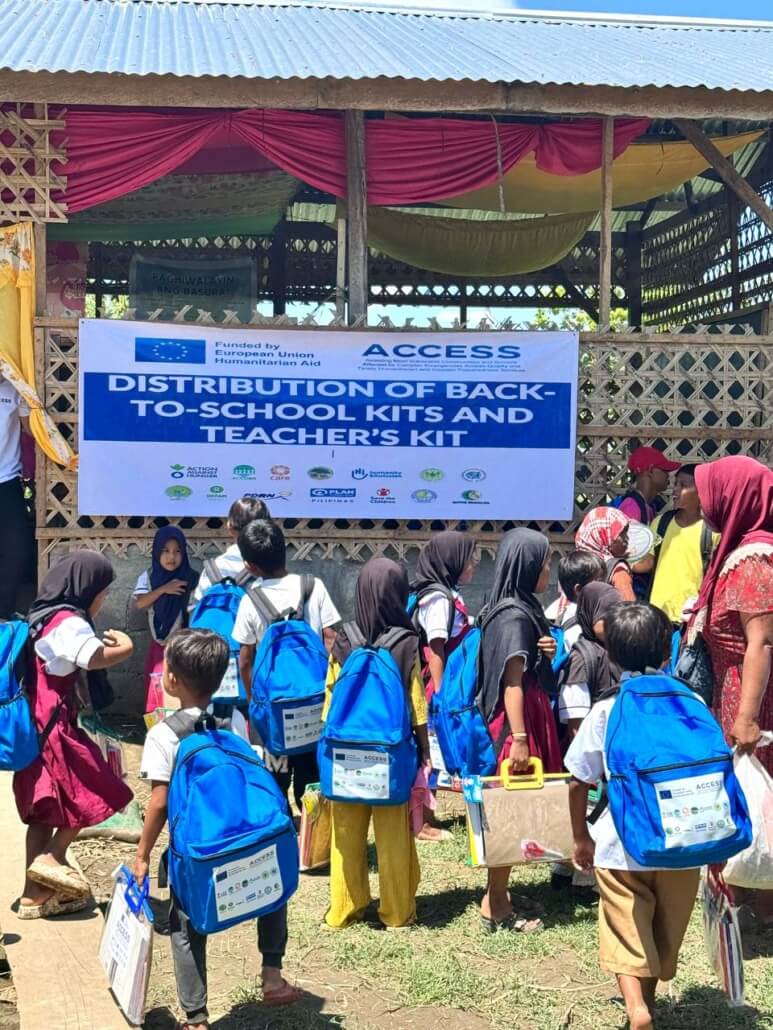
In photo: Students with their Learner’s Kit from ACCESS (Photo courtesy of Integrated Mindanaons Association for Natives (IMAN)
The assistance extended beyond Hasna herself. With access to adequate learning materials, children became more motivated to attend classes, even after repeated disruptions caused by flooding. For a community where education is often the first casualty of crisis, the support helped restore routine, reinforce learning, and sustain hope for both teachers and learners alike.
ACCESS is a European Union Humanitarian Aid-funded project serving the most affected and underserved communities in the Philippines, where chronic armed conflict, natural hazards, recurrent displacement, and intensifying climate-related risks continue to threaten lives and livelihoods. It is implemented by a consortium of 14 local and international organizations: ACCORD, Action Against Hunger Philippines, CARE Philippines, Community Organizers Multiversity (COM), Humanity & Inclusion Philippines, Integrated Mindanaons Association for Natives (IMAN), Kadtabanga Foundation for Peace and Development Advocates, Mindanao Organization for Social and Economic Progress (MOSEP), Oxfam Pilipinas, People’s Disaster Risk Reduction Network (PDRRN), Plan International Pilipinas, Save the Children Philippines, United Youth for Peace and Development (UNYPAD), and United Youth of the Philippines – Women (UnYPhil-Women).
Written by: Hadjara Umpong, Datoal Mangadad | Integrated Mindanaons Association for Natives (IMAN)
Edited by: Joyce Sandajan