Tag Archive for: #UNICEF

OMPONG LEAVES TRAIL OF DEVASTATION

In the morning of September 15, Sinamar’s home in Barangay Camp 3 of Tuba, Benguet was caught in a landslide due to Typhoon Ompong. Sinamar, her husband Dennis, their 6-year-old son and other relatives managed to safely evacuate the area. Unfortunately, they also lost a family member as Dennis’ aunt was initially trapped under the eroded soil that buried her home. Four months after their ordeal, Sinamar and her family were left without a home and had to temporarily reside in the evacuation center located at their Barangay’s elementary school.    “We couldn’t pass through the main road because it was already eroded by then, so we climbed through the mountain despite the landslide. When we got to the hospital, we stayed there for a week because the children were traumatized,” recalled Sinamar.

Fifty-five-year-old Editha had a similar experience as she, her husband Philip, and their 3 youngest children had to leave their home after the typhoon left damages to their area. They, along with several other families, were no longer allowed to return to their home in Barangay Gumatdang, Itogon, Benguet after it was categorized as part of the danger zone. This left them no choice but to rent a house nearby at ₱3,000 per month. Before Ompong, Philip used to have a stable income by working in the mines. Since the mines needed to be closed for safety purposes, for the time being he creates soft reed brooms which Editha sells in the city. Editha also takes laundry and cleaning jobs as added income. “I hope there won’t be another typhoon like Ompong. Right now, I just wish we’ll be able to go back to our old home so that we won’t have to pay monthly rent,” said Editha.
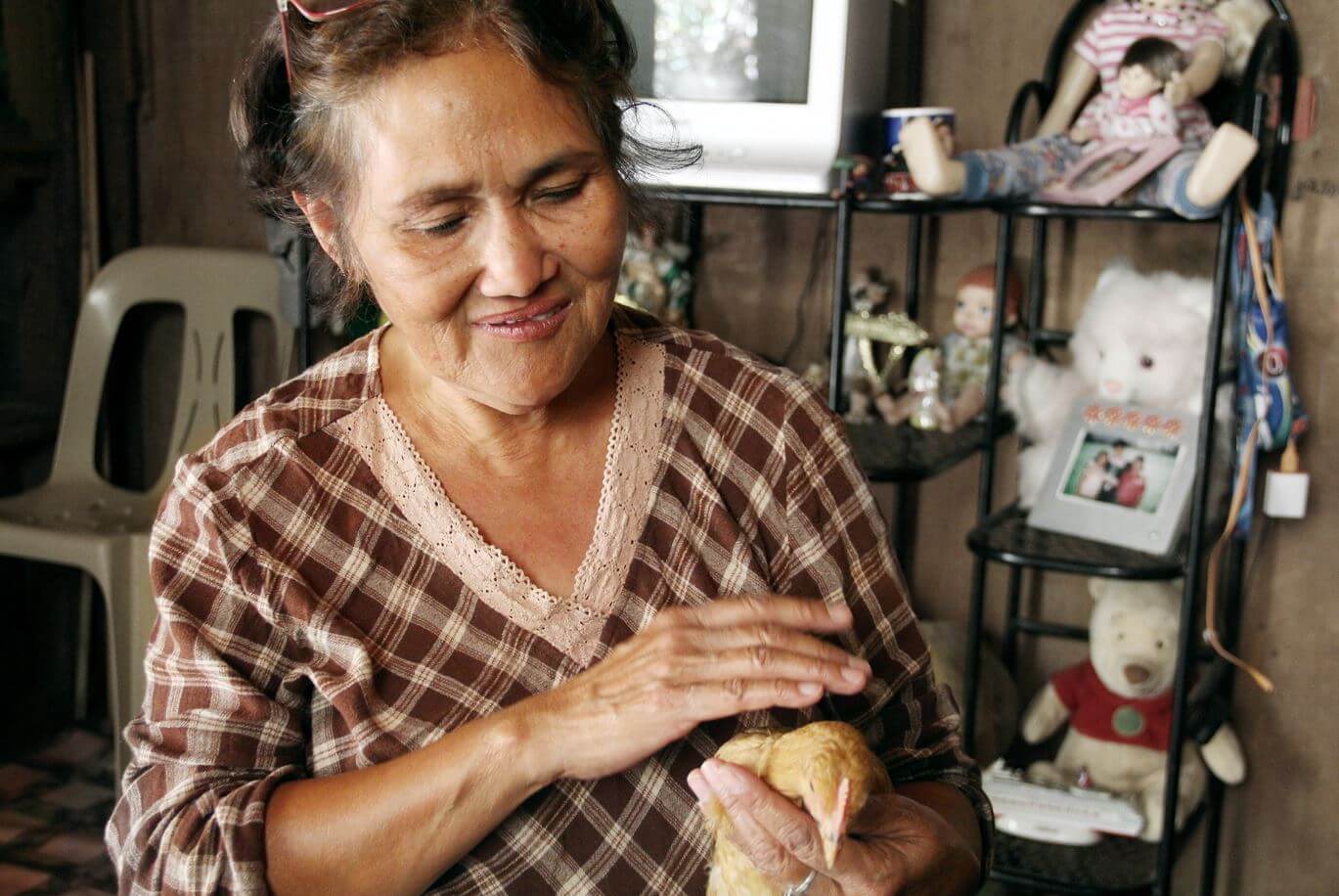
Editha shares her story how they had to evacuate from their home after a landslide occurred in their neighborhood due to Ompong.

Typhoon Ompong, internationally referred to as Mangkhut, made landfall on September 15, 2018 as a category 4 typhoon with sustained wind speeds of over 200 km/h and gusts of up to over 300 km/h.  The large diameter of the typhoon, close to 900 km, affected Regions I, II, III, Cordillera Administrative Region (CAR), IV-A, IV-B and Metro Manila. Damages to infrastructure and agricultural resulted to an estimated 33.9 Billion Pesos – the 4th costliest typhoon in Philippine history.

The families of Sinamar and Editha including more than 2.14 Million individuals were affected by the typhoon. The landslides proved fatal for families in Benguet, with a total of 71 deaths and 50 injuries confirmed by the National Disaster Risk Reduction and Management Council (NDRRMC).

Action Against Hunger’s Mission Emergency Response Team were on the ground immediately after Typhoon Ompong made landfall and assessed the humanitarian needs of the affected communities in Benguet from September 15 to 20 and have since provided necessary interventions thereafter since provided necessary interventions. Sinamar and Editha’s families were some of the beneficiaries that were given hygiene kits and financial aid as part of Action Against Hunger’s water, sanitation and hygiene (WASH) and food security, & livelihood (FSL) projects funded by the Spanish Agency for International Development Cooperation (AECID), European Union – Civil Protection & Humanitarian Aid (ECHO), and the United Nations Children’s Fund (UNICEF). ●
 

KEEPING THE SCHOOL CLEAN

On May 23, 2017, conflict broke out in Marawi City between the Armed Forces of the Philippines and armed fighters from two ISIL-affiliated groups – Abu Sayyaf and the Maute. This led to a 5-month siege that destroyed most of the city’s central commercial district and forced 350,000 people to evacuate their homes. 5% of the evacuees stayed in evacuation centers while 95% choose to stay with relatives and friends in nearby communities.

The host communities where the evacuees stayed were caught unprepared with the massive influx of people. Food, health, water, sanitation and other basic services for the displaced population were severely compromised. Action Against Hunger personnel were on the ground two days after the conflict started to assess the situation and determine the urgent humanitarian needs of the affected population. Emergency Response projects in Food & Nutrition, Water, Sanitation & Hygiene (WASH), Food Security and Livelihoods, and Shelter started on June 1, 2017 and continues to this day.

These are the voices of the people who endured the Siege of Marawi through resilience and determination.


Built in 1965 for the education of children of farming families from the remote areas of Pantao Ragat, the Aloon Elementary School’s problems on water, sanitation and hygiene were as old as the school.

Norphia M. Ombawa, 33, was a student from the school and now teaches there.  She observed that her pupils are experiencing the same situation she had as an elementary student before. There were no water facilities in the campus because the water tank for rainwater storage was already rotting in rust with age.  They were using plastic containers to catch water when it rains. During the dry season, they had to fetch water from a spring which was a distance from their school.

“Our toilet which was made of wood collapsed a few years back so we didn’t have one to use. Our pupils would go under the trees at the back of the school to urinate and sometimes, to defecate”, she said.

With the line of trees just a few meters from their classroom, sometimes the smell of feces would go through their windows and distract their classes. Some of her pupils would also smell bad throughout the day because of being improperly washed. She worried that their exposure to germs would get them sick.

The local government responded to the water concern by connecting the school’s pipes to the water storage facility in the Mosque across the street.  But, the lack of a toilet for the students to use was still a problem and open defecation continued.

This situation became more difficult when several families displaced due to the Marawi Conflict took refuge in their village on May 2017. The number of pupils spiked up with children from the displaced population enrolling at the school.  They went back to having less water, if none at all because the Mosque’s water tank was also shared with the refugees.

So when the Action Against Hunger tracked the displacement of children in the village, they also heard the concerns of the teachers on the school’s lack of toilet and their own water access facilities.

Action Against Hunger’s mobile team was already working in the area answering the needs of the displaced population and got word of the school’s concern. With the funding from the United Nations Children’s Fund and the United Nations Central Emergency Response Fund, the organization built a tap stand for handwashing, tooth brushing and drinking water. A two-door concrete toilet was also constructed within the school grounds.

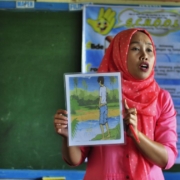
Action Against Hunger personnel held a series of hygiene promotion sessions to the students, teaching them the importance of proper sanitation & hygiene to avoid the spread of diseases.  These sessions also trained them on the proper way to hand wash and brush their teeth. After these sessions, each student was given a hygiene kit that contained soap, shampoo, toothbrush, toothpaste and towels that they could use every day in school and at home.

Norphia integrated the messages and techniques from these sessions in her classes and continues to remind them about the importance of being clean and keeping the surroundings clean as well.

“They became conscious on their hygiene and the cleanliness of the school. Their parents also told me that they brought this practice at home”, she shared.  ●

NORTH COTABATO LEVEL UP IN ZOD

COTABATO CITY– Seven municipalities in the provinces of Maguindanao and North Cotabato are declared as Zero Open Defecation (ZOD) in January 15, 2018.

The municipalities of Arakan, President Roxas, Paglat, South Upi, Upi, General Salipada K. Pendatun, and Datu Abdullah Sangki are declared as ZOD because 100% of the households in each of its barangays now have access to sanitary toilets, clean water and soap for hand washing. All of the barangays in each municipalities contributed to the total of 184 barangays in Maguindanao and North Cotabato earlier declared as open-defecation free.

“The ZOD declaration is one of the greatest achievements we’ve ever had. For us health workers, it is one of the greatest contributions we can offer to decrease communicable diseases, diarrhea cases and other environmental sanitation problems,” said Rebecca Tenorio who serves as a nurse in the Rural Health Unit of South Upi, Maguindanao for 14 years.

The ZOD program is one of the flagship programs of the Department of Health that aims to declare the entire Philippines as ZOD in 2022. Action Against Hunger has been supporting the implementation of the ZOD program since 2012 through the United Nations Children’s Fund (UNICEF)-funded project called Scaling up Sustainable and Resilient Basic Sanitation, Safe Water, and Improved Hygiene Behaviour.

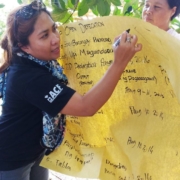
The project aims to deliver clean water and improve practices on Water, Sanitation and Hygiene to households, schools and day care centers that make use of the Community Led Total Sanitation, a participatory strategy that facilitates the community’s desire to stop open defecation. The campaign has been gathering households and using “shock, shame, and disgust” to raise awareness on the negative effects of open defecation, especially among children, and create a demand for hygienic toilet facilities. “Action Against Hunger and UNICEF gave us confidence in advocating our campaign with the knowledge and learning they imparted to us. Truly, we believe we can do it on our own way,” added Tenorio.

As of writing, Action Against Hunger continues stop open defecation in more barangays within Maguindanao and North Cotabato to achieve 100% ZOD. ●