“I was frightened and shocked because that was the first time I experienced such a horrible event.”
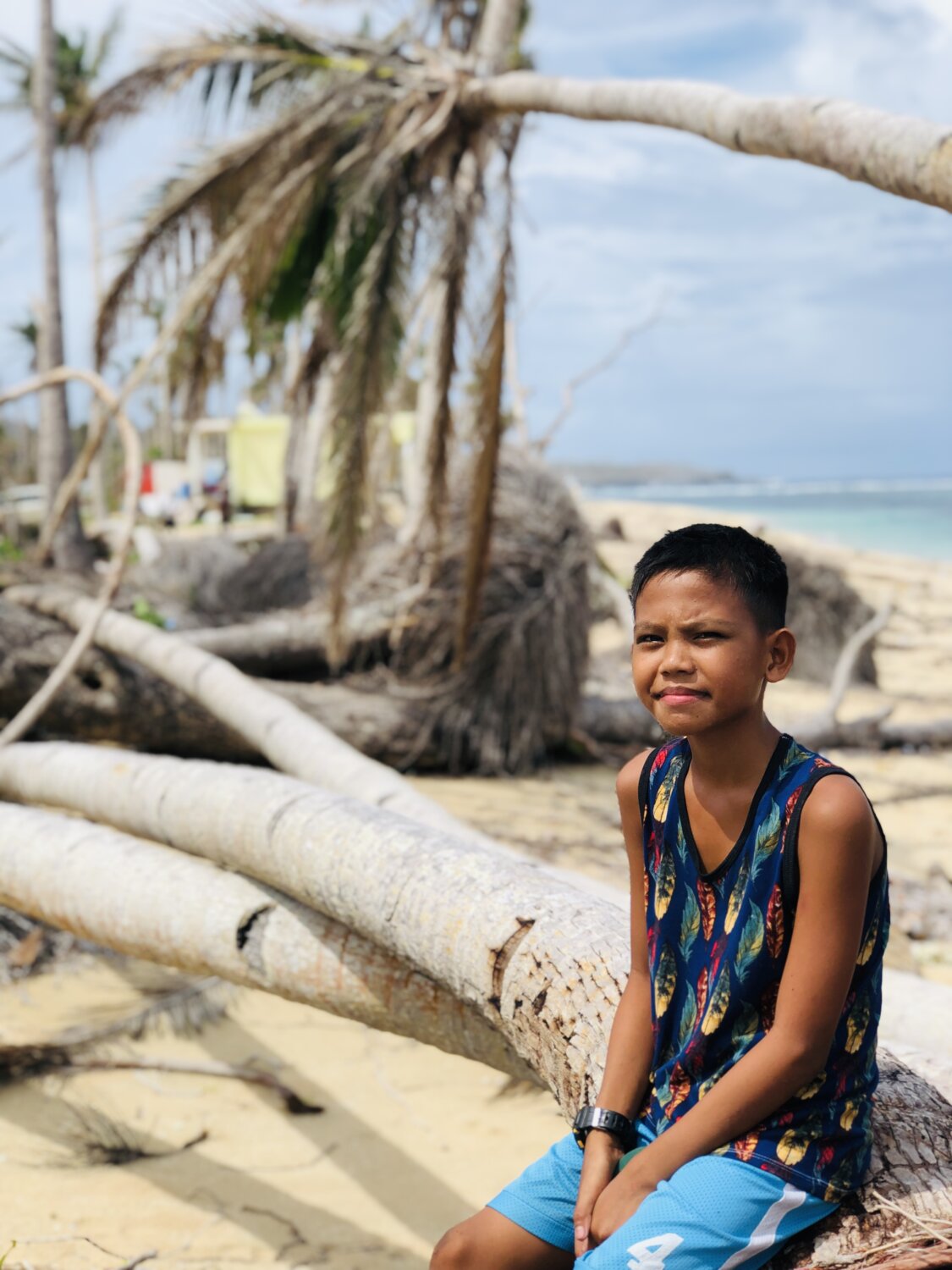
10-year old Lenjie Concha lives with his grandmother, uncle, and aunt in Barangay Baybay, Burgos on the island of Siargao.
His grandmother, a teacher, owns the house where they are living in. His uncle works as a part-time carpenter and provides the main source of income for their household. Lenjie’s uncle also takes care of him while his father is away in Davao for work.
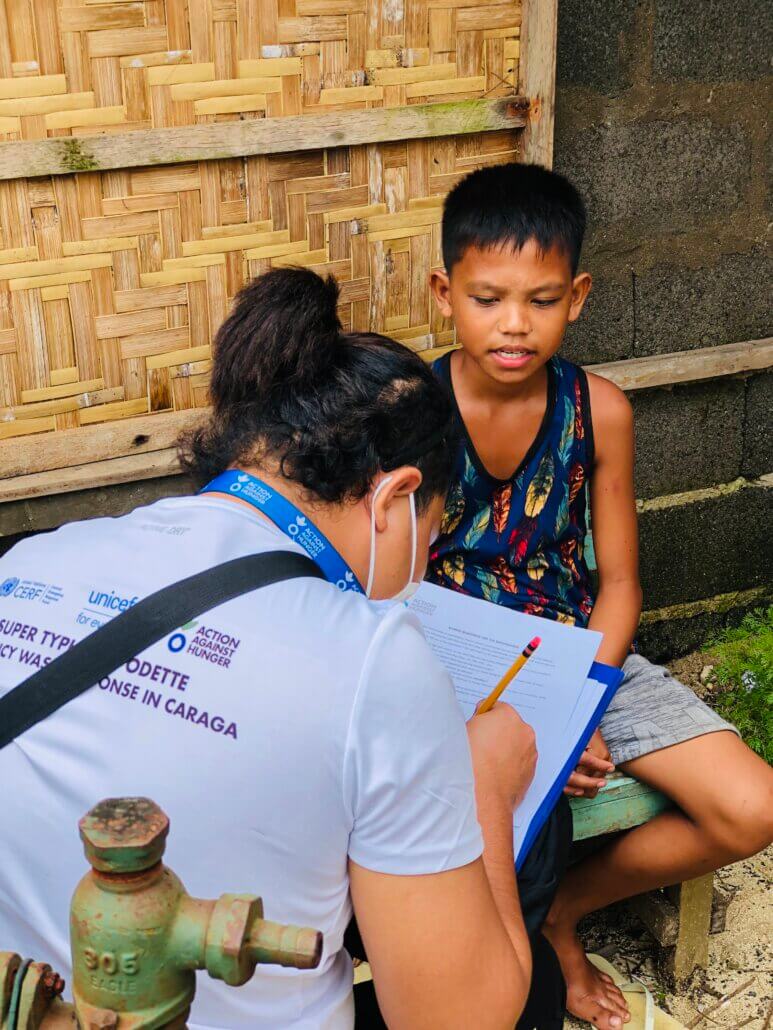
In photo: Lenjie sits outside his home in Barangay Baybay, Burgos, Siargiao Island. (Photo by Benjie Montilla for Action Against Hunger)
On the day that Super Typhoon Odette hit Siargao, though Lenjie was inside their home, he witnessed firsthand how the strong winds destroyed the houses in their neighborhood. “I was frightened and shocked because that was the first time I experienced such a horrible event,” said Lenjie.
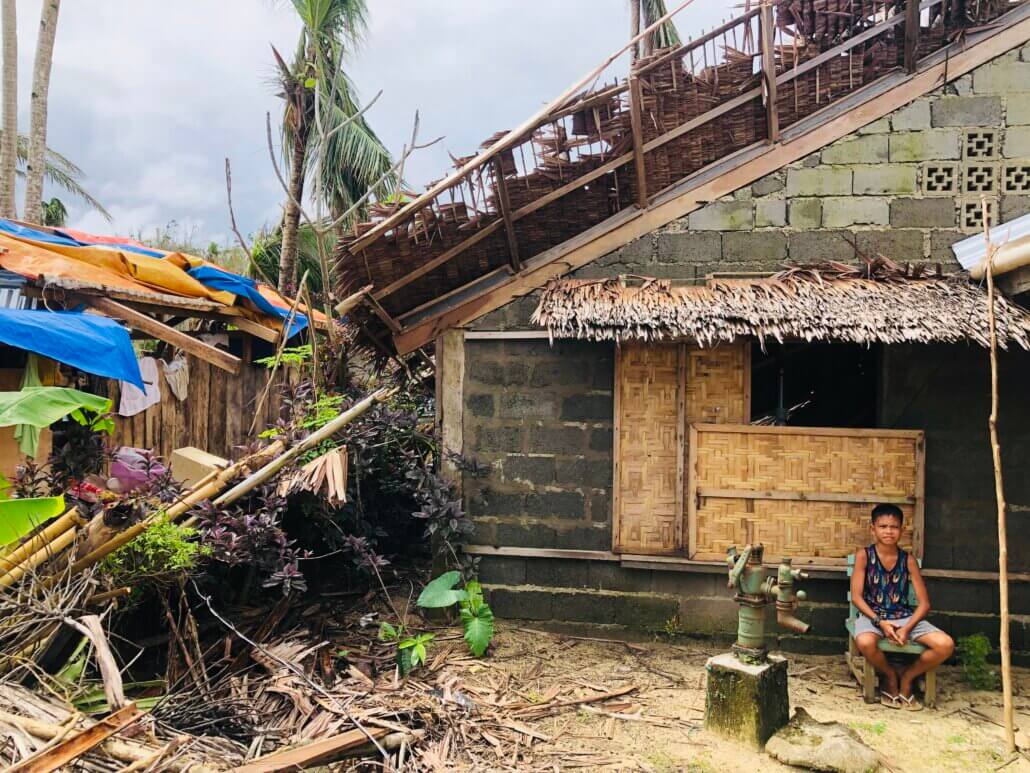
Fortunately, the house that they were staying in was not severely affected.
“After the typhoon, I felt safe, and I was grateful that my whole family is alive,” he added.
Lenjie’s favorite subject in school is Science and he aspires to become a teacher someday, like his grandmother. His hope for the future is to earn a college degree and land a job so that he can support his family and have a good life. On normal days, Lenjie spends his free time playing hide and seek and other games with his friends.
In photo: Action Against Hunger staff interviews Lenjie outside his home. (Photo by Benjie Montilla for Action Against Hunger)
With the support of UNICEF and UN CERF, Lenjie’s family is one of the 221 households in Barangay Baybay that received emergency water, sanitation, and hygiene support last February 4, 2022.
https://actionagainsthunger.ph/wp-content/uploads/2022/02/UNICEF_AAH_2022-02_Lenjie-Concha_Baybay-Siargao_photo-by-B-1-scaled.jpg25601920Adminhttps://actionagainsthunger.ph/wp-content/uploads/2020/04/logo_text_orig.pngAdmin2022-02-18 03:20:432024-09-11 14:31:48Stories from the Field: Lenjie Concha
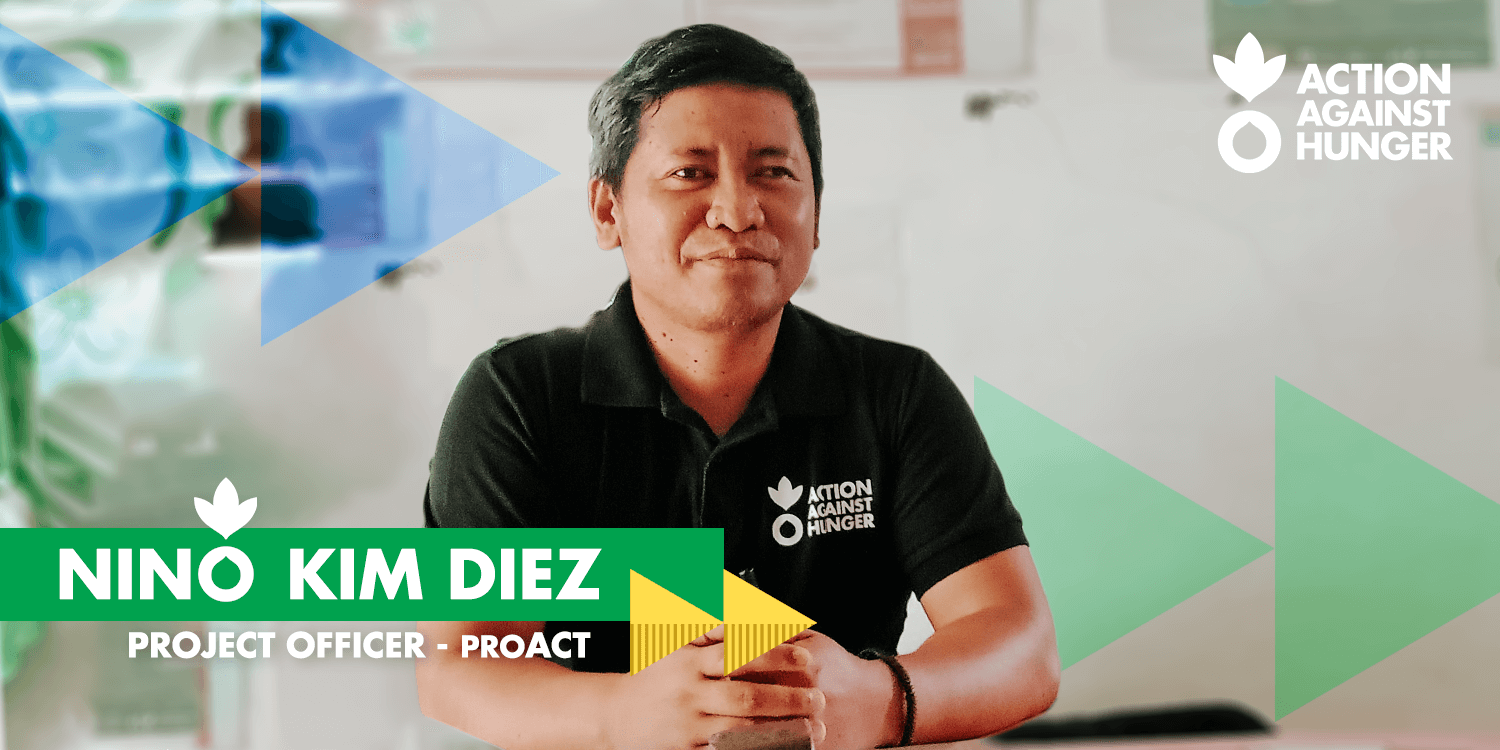
In celebration of World Humanitarian Day 2021, meet Nino Kim R. Diez, ProACT’s Project Officer and one of our Real Life Heroes! Get to know Kim and find out how he takes action against climate change:
What is your role and/or key responsibilities in Action Against Hunger?
I take the lead in implementing the ProACT Project in the province of Surigao del Sur. The aim of the project is to improve vulnerable communities’ resilience to disasters and climate change.
How long have you been working as a humanitarian worker?
I have been working as a humanitarian worker for 13 years.
What motivates you to become a humanitarian worker?
My motivation comes from my personal experiences and struggles in the past. I have seen that vulnerable sectors often do not have enough representation, especially us who are differently-abled. Most of the local governments before do not have concrete programs that specifically cater to these sectors. I want to be able to fill that gap in my own way.
Photo courtesy of Nino Kim Diez
Why are you making this sacrifice?
I am a teacher by profession, but I have chosen to be in the development work because as I see it, it is not only the children who need attention but also other vulnerable groups such as women, PWD’s, Senior Citizens, and Indigenous People.
What have been the challenges to your work?
Being away from my family is a big challenge for me. Sometimes I cry when I realize that, while I am serving the underserved communities, my family is longing for my presence as well. One other challenge is the different political and cultural environments that I encounter in my work almost every day.
What motivates you to keep doing your work even with these challenges?
Despite these challenges, I continue doing the work because I have a mission to fulfill for myself, especially for the people who are unfortunate in life. It is both the love and understanding of my family that fuel me to continue humanitarian work.
What are you most proud of?
I am very proud to become an instrument in the development of communities, especially the people who have been hit by disasters. I have become part of their successful journey toward building a better life and achieving their dreams.
What climate change impact have you seen with your own eyes?
The effects of climate change are inevitable. Through the years, I have seen the sea level rise and changes in seasonal patterns. These, coupled with the increased frequency of typhoons, have greatly impacted the communities I work in.
How do you help in combating climate change?
I always encourage my team to plan and combine our trips when doing fieldwork. I also try to go paperless, be it in the office or in the field, as much as possible. Moreover, I encourage the community, especially farmers, to use low-cost technologies and environmentally-friendly agricultural techniques. Lastly, I participate in the political process of formulating plans to address climate change.
https://actionagainsthunger.ph/wp-content/uploads/2021/08/Website-Thumbnail.png750936Adminhttps://actionagainsthunger.ph/wp-content/uploads/2020/04/logo_text_orig.pngAdmin2021-08-20 11:44:362024-09-11 14:31:52World Humanitarian Day 2021 – Nino Kim Diez
Sixty-seven-year-old Carlos Tesorero had one word in mind when asked how he felt when he saw what was left of his home – painful. Carlos, or “Tatay Carlos” as they called him, had a house along the shore of Barangay Guinsaanan in the Municipality of Baras, Catanduanes.
On the morning of November 2, 2020, a day after Typhoon Rolly made landfall, he, along with the other families living near the sea, returned and saw that the typhoon’s strong winds and heavy rains had completely destroyed their houses. “After the storm had passed, at around eight in the morning we went back to check our houses, and everything was gone… It was painful,” said Tatay Carlos. Hollow blocks, scraps of wood, metal, and scattered belongings were all that was left of their homes.
“After the storm had passed, at around eight in the morning we went back to check our houses and everything was gone… It was painful.”
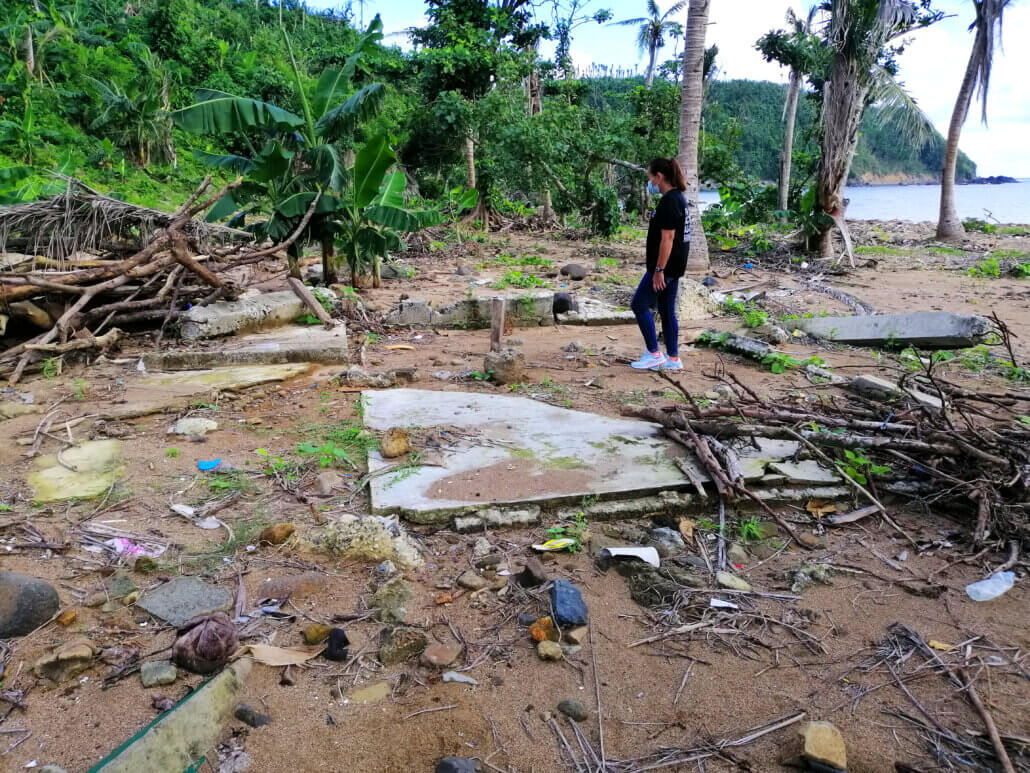
In photo: Action Against Hunger staff visit the wreckage of houses in Barangay Guinsaanan where the houses of Carlos Tesorero and his neighbors once stood. It is now categorized as a ‘no-build zone’.
The residents of Barangay Guinsaanan were no strangers to such weather conditions, especially for those residing along the shore. In fact, in less than two weeks, the province had experienced the impacts of three typhoons – from Quinta to Rolly to Ulysses. Amongst the three, it was Super Typhoon Rolly that greatly affected their homes and livelihoods.
Tatay Carlos worked as a tour guide since 2015. He would accompany tourists to Binurong Point, one of the top tourist destinations in the province and about an hour’s hike from his barangay. Back then, he would get two visitors in a normal week, earning him 200 to 300 pesos. During summers, there would be more tourists and he would get twice the amount of visitors. This all changed when the lockdown was implemented due to the COVID-19 pandemic. “We were okay before. But when the pandemic happened, it was hard because I had absolutely no income,” Tatay Carlos shares.
Tatay Carlos and his fellow tour guides looked for alternative sources of income. He went on to extract and sell dried coconut meat taro leaves, papayas, or other crops, earning just enough to get by. Unfortunately, most of the crops and coconut trees were damaged after the consecutive typhoons. He then started to collect dried wood and would sell them for firewood. He would earn enough to buy his food for the day. Tatay Carlos said he tried to apply for manual labor jobs like construction but was unsuccessful. “No one was accepting me because I was old, unlike the others,” he lamented. “I guess this is how it is when you get older, it’s more difficult to get a job.”
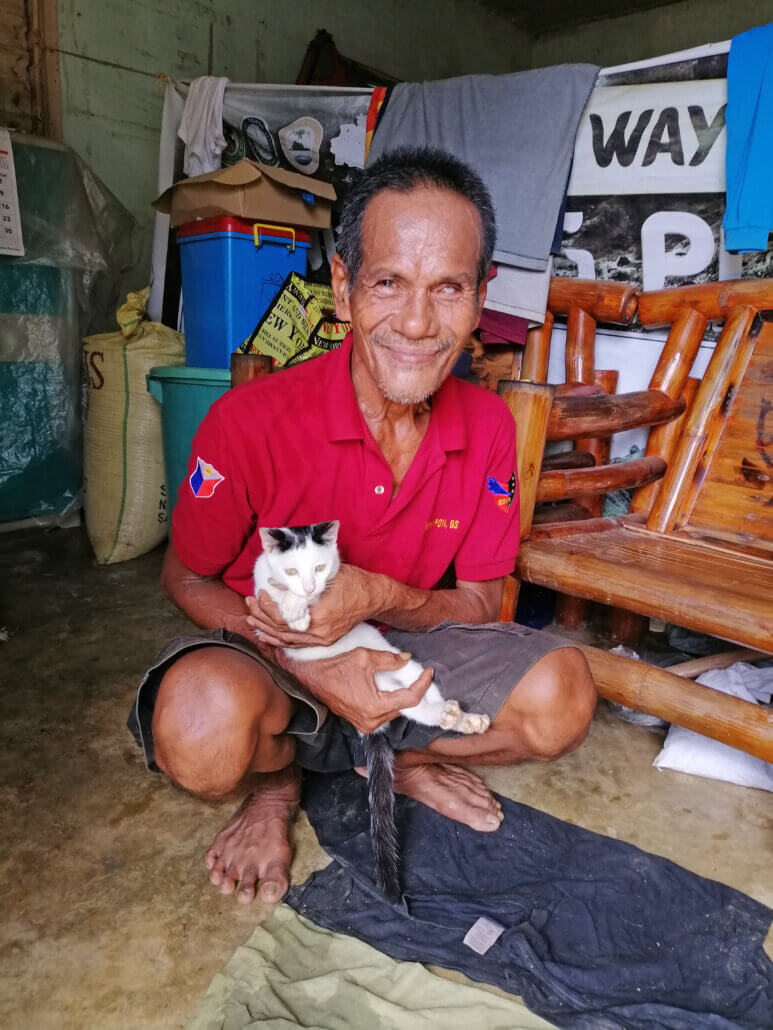
In photo: Tatay Carlos happily smiles with his cat named ‘Jasper’ who is his current companion inside his temporary home.
In photo: Tatay Carlos happily smiles with his pet inside his temporary home.
After the typhoons, the sea level had risen significantly, making the land where his home once stood into a no-build zone. Like the other families who lived there, Tatay Carlos now has to start from scratch. Fortunately, he was allowed to reside in a small building that was previously used as a barangay hall for the meantime.
With all that he has been through, what saddens Tatay Carlos is going through these ordeals alone. His wife, daughter, and grandchild visited a relative in Bulacan last year, but because of travel restrictions and financial constraints, they have not been able to return to Catanduanes since then. “If there was no pandemic, they would want to go back here,” he said. He tries to keep in contact with them regularly, but their conversations are often limited due to weak cellular phone reception.
Despite living alone, he continues to be in good spirits by regularly talking to his neighbors. Tatay Carlos also enjoys the company of a white kitten which he keeps as a pet. He spends his day going to the sea to catch fish for his own consumption since these are usually too small to sell. Some days, he checks if there are any crops to be harvested and sold. Tatay Carlos’ daily food is augmented by relief packs from various organizations. Mineral water is sold in the barangay, but since he has no income, he would get drinking water from the deep well.
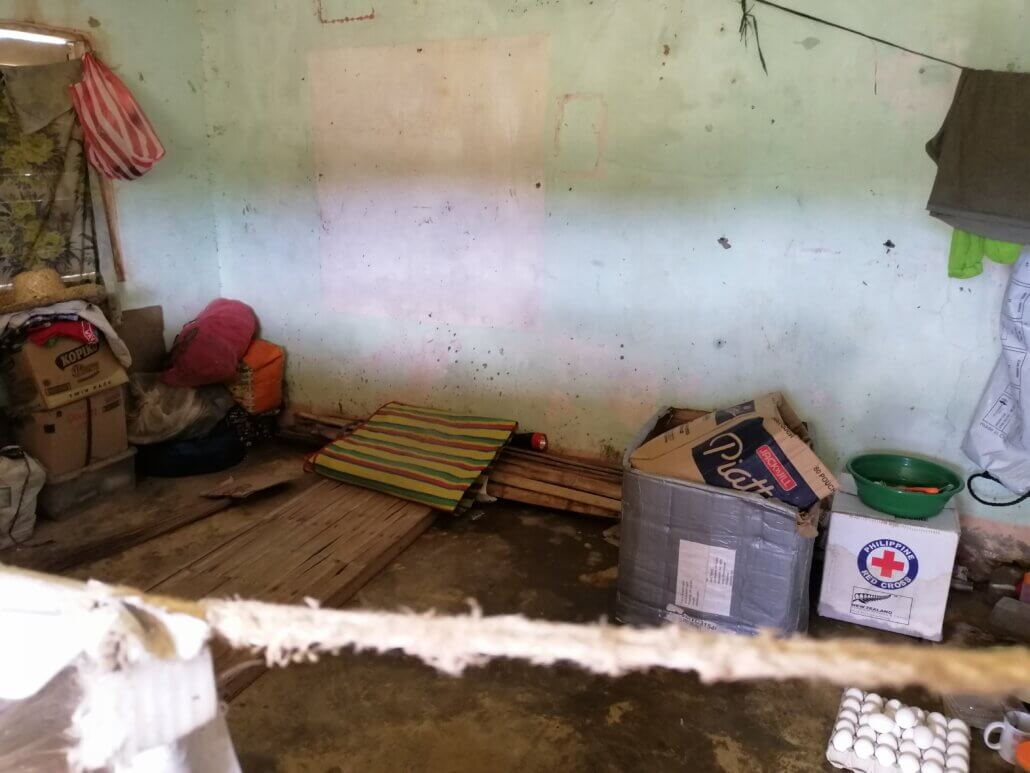
In photo: Inside Tatay Carlos’ temporary home, his beddings on one side and the relief goods he received on the other.
Tatay Carlos works hard each day in order to provide for himself and perhaps earn extra income to save. “What we really need is money,” he says with a weak laugh. “We received noodles and canned goods as relief, so food is all set. We got some soap too, but those ran out quickly. I have to admit, sometimes I loan items from the sari-sari store items like cooking oil or laundry soap, and I pay them back once I manage to sell some of the firewood I collect,” he adds further.
He was excited when he found out that he was selected to be a beneficiary for Action Against Hunger’s multipurpose cash assistance (MPCA). On January 27, Tatay Carlos was one of the 60 beneficiaries from Barangay Guinsaanan who received cash assistance amounting to 5,200 pesos. The MPCA was conducted as part of Action Against Hunger’s Emergency Assistance to Typhoon Affected Communities in Catanduanes and Albay, which is co-implemented by CARE Philippines. The project is made possible through the funding of the United States Agency for International Development’s Bureau for Humanitarian Assistance (USAID-BHA). The project is expected to reach a total of 14,500 people through MPCA alone. The goal of the program is to enable the most vulnerable households affected by Typhoon Rolly to meet immediate food and basic humanitarian needs.
“My number one dream is to have a house of our own again,”
With the assistance he received, Tatay Carlos remains hopeful and positive. “My number one dream is to have a house of my own again,” he shares. The makeshift house he is currently residing in is being sold at 30,000 pesos and he hopes to earn and save enough money so he can buy the lot someday. He also adds that one of his priorities as well as to have his daughter graduate as this was his dream for himself when he was younger. “Even though she now has a child of her own, I want my daughter to finish her studies,” he says.
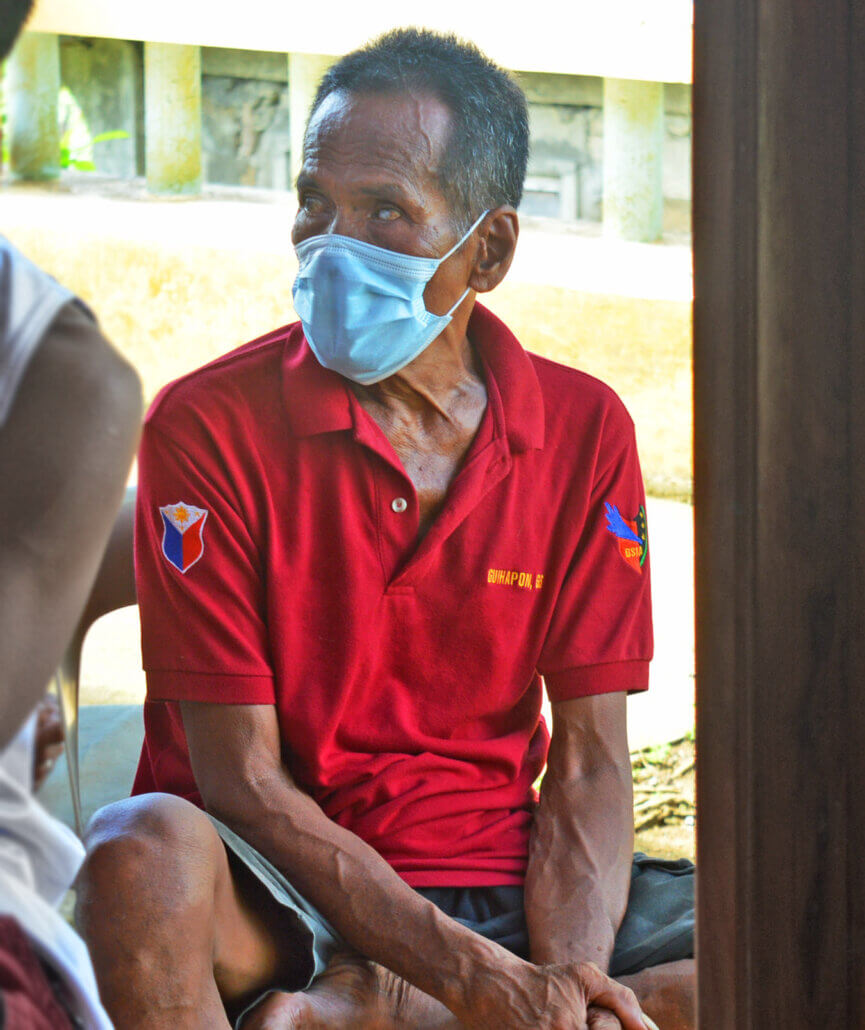
In photo: Tatay Carlos at the Multipurpose Cash Assistance (MPCA) payout orientation at Barangay Guinsaanan, Baras. (Photo by Joyce Sandajan for Action Against Hunger)
Despite losing both his home and livelihood, Tatay Carlos smiles as he shares the many ways he tries to make ends meet on a daily basis. Knowing he has to start from nothing pains him but says he is thankful that there are people who are willing to extend kindness through various forms. He may have been through a lot the past year, but his family and the support from his community keep him going.
https://actionagainsthunger.ph/wp-content/uploads/2021/02/PH_B2AK_2021Jan25_Joyce-Sandajan_Guinsaanan_Carlos-Tesorero-5-scaled.jpg19202560Adminhttps://actionagainsthunger.ph/wp-content/uploads/2020/04/logo_text_orig.pngAdmin2021-02-24 13:29:522024-09-11 14:31:59Story from the Field: Making Ends Meet
“Mother, why are we different from other kids?” asks 6-year old John Rey to his mother, Janisa. John Rey and his two older brothers Christian and Gary Jr., have not been able to walk and run like other children because of a bone condition that started when each of them turned six years old.
Janisa looks at John Rey and finds it difficult to answer his question. Even the doctors that they consulted could not determine the reason why her sons’ bones in their lower bodies were shrinking. All the doctors could recommend was to conduct more medical examinations to determine the cause of the boys’ conditions and how to treat it.
The eldest, Gary Jr. who is now 13 years old, has trouble sitting down and usually spends days lying on the sleeping mat. The father, Gary Sr., earns just enough to get by their daily needs as an on-call carpenter. Janisa stays at home and takes care of the children. As much as they want to have their sons treated, they have limited financial capabilities to do so.
To make matters worse, their community in Balabag, Kidapawan was affected by the series of earthquakes that struck Mindanao during the last quarter of 2019. The disaster affected more than 300,000 people, almost half of them displaced, including Gary Sr. and Janisa’s family.
Despite their struggles, the Lopez family continues to move forward especially after our Earthquake Response Protection Team, together with the Integrated Provincial Health Office – IPHO and the City Social Welfare and Development Office (CSWDO), referred and assisted the Lopez brothers to Kidapawan City Public Hospital and other private hospitals in the area for more extensive check-ups and medical examinations. John Rey, Christian, and Gary Jr. each received wheelchairs courtesy of the IPHO, and the CSWD provided financial assistance for their family. Action Against Hunger continues to monitor the condition of the three children.
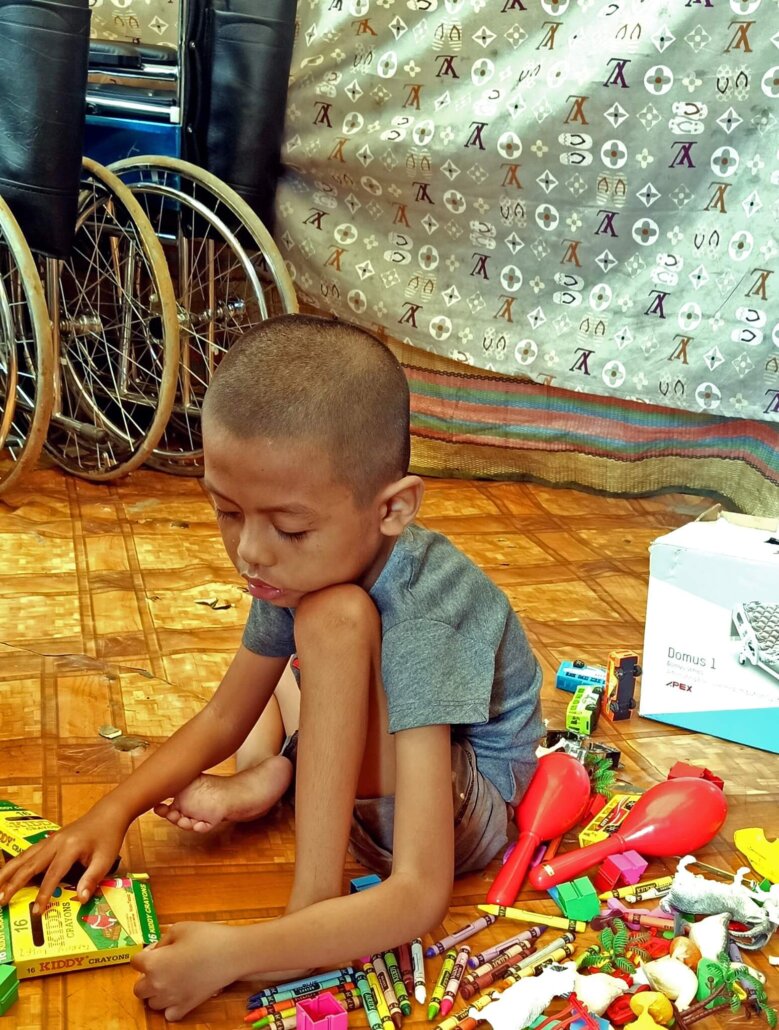
Prior to the referral, the Lopezes also received humanitarian support forms of multi-purpose cash transfer, hygiene and shelter kits. Inside their evacuation tent, Janisa watches her two youngest sons play, the eldest brother lies in his back beside them. The boys may not be able to use their legs like other children, but Janisa is hopeful that at least her sons will now be able to walk and run in their own special way with the help of their new wheelchairs.
https://actionagainsthunger.ph/wp-content/uploads/2020/10/rsz_sep_17_p1.jpg344612Adminhttps://actionagainsthunger.ph/wp-content/uploads/2020/04/logo_text_orig.pngAdmin2020-09-17 06:41:422024-09-11 14:32:06Life After The Mindanao Earthquake: Wheels of Hope