Tag Archive for: Siargao

For cleaner and healthier communities: UNICEF and Action Against Hunger train volunteers on hygiene and health

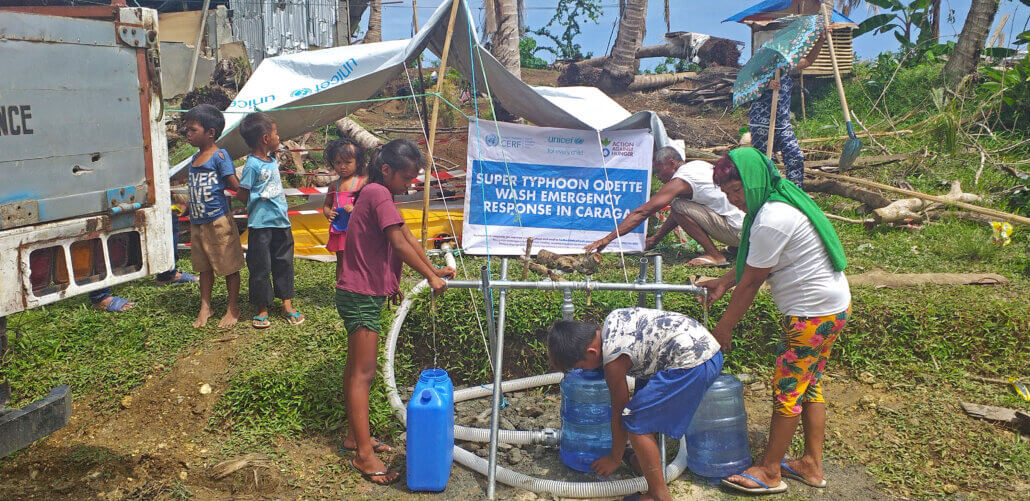
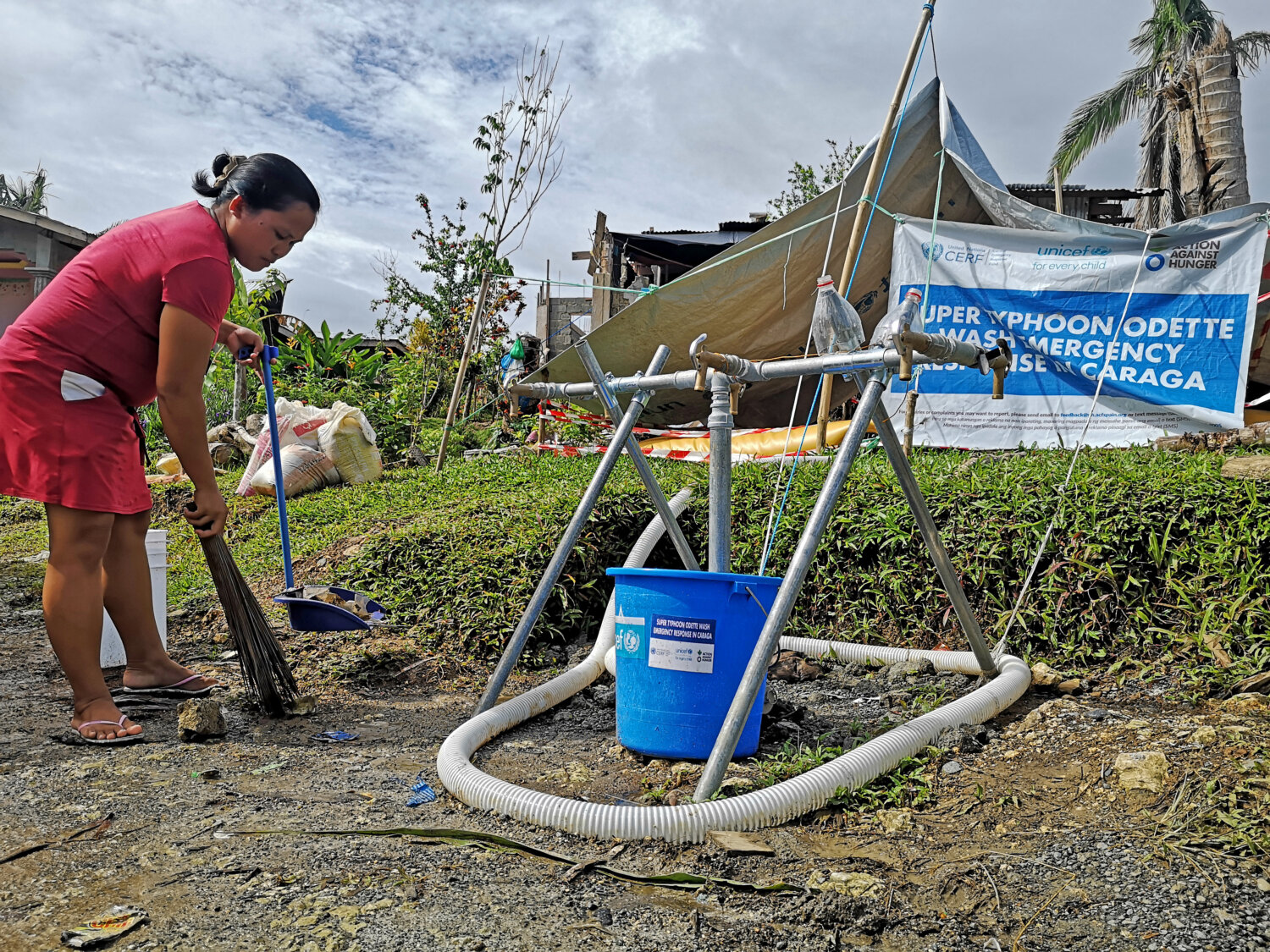
Super Typhoon Odette (internationally named Rai) left thousands of families in Caraga with limited access to clean water and proper  hygiene facilities last December 2021. So much so that open defecation has grown rampant in some communities due to the lack of available latrines.

Together with UNICEF, we have been inspiring and teaching communities the value of good hygiene in keeping children and families healthy during times of calamities.

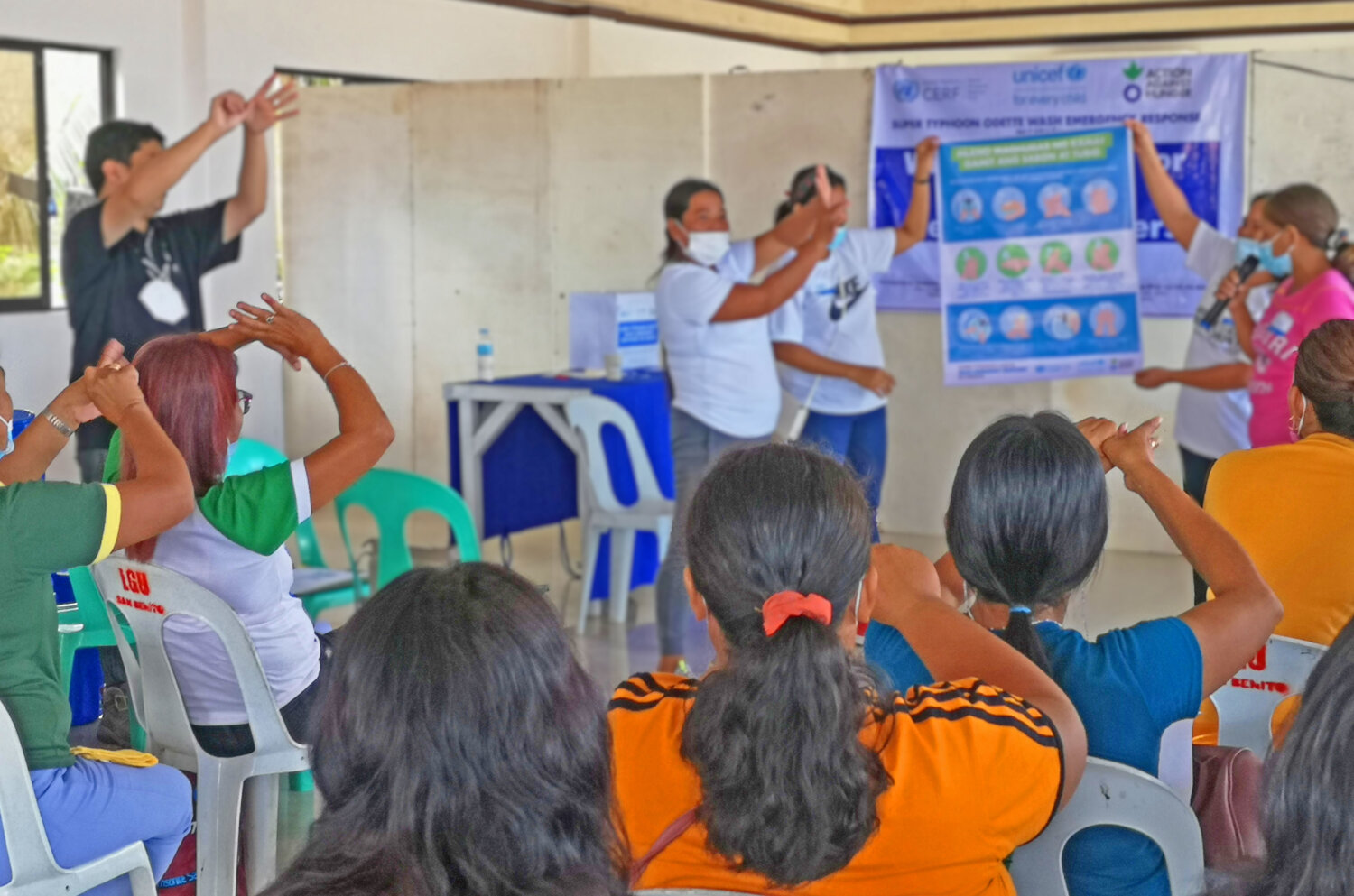
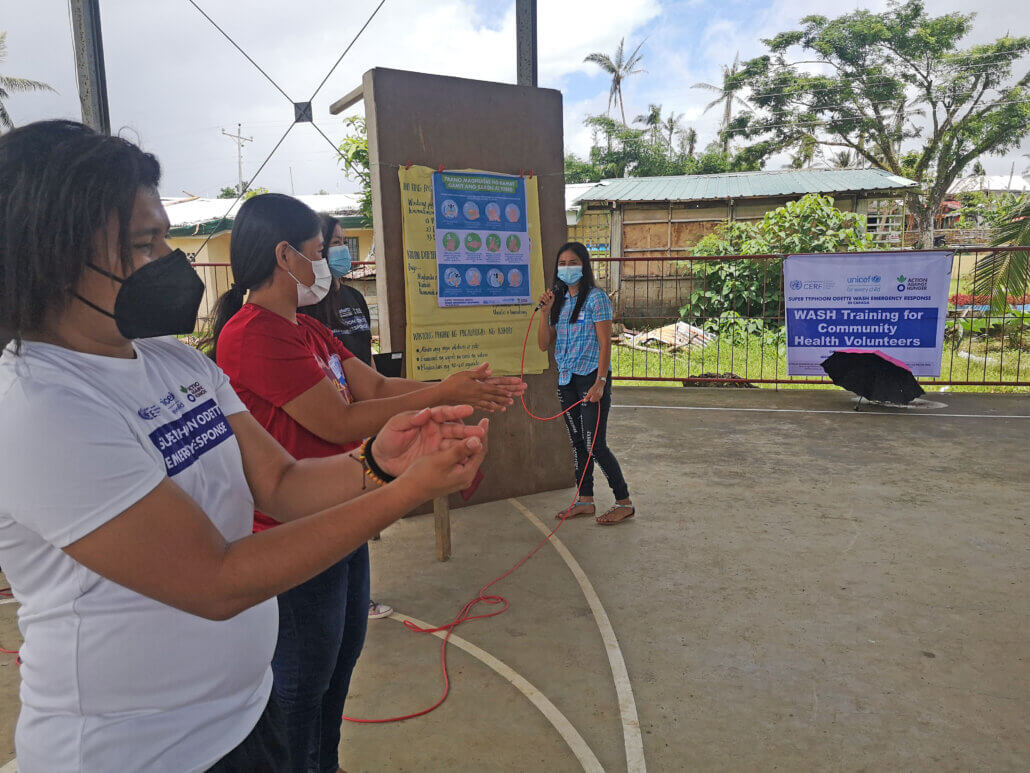
In photo: WASH Project Staff and community health volunteers review the proper handwashing technique through demonstration in the Municipality of Del Carmen. | Photos by Benjie Montilla, Adam Daniel Lacson, Victoria Valderama and Abdul-Alim Talusob for Action Against Hunger (2022 March 18, Surigao del Norte, Philippines)

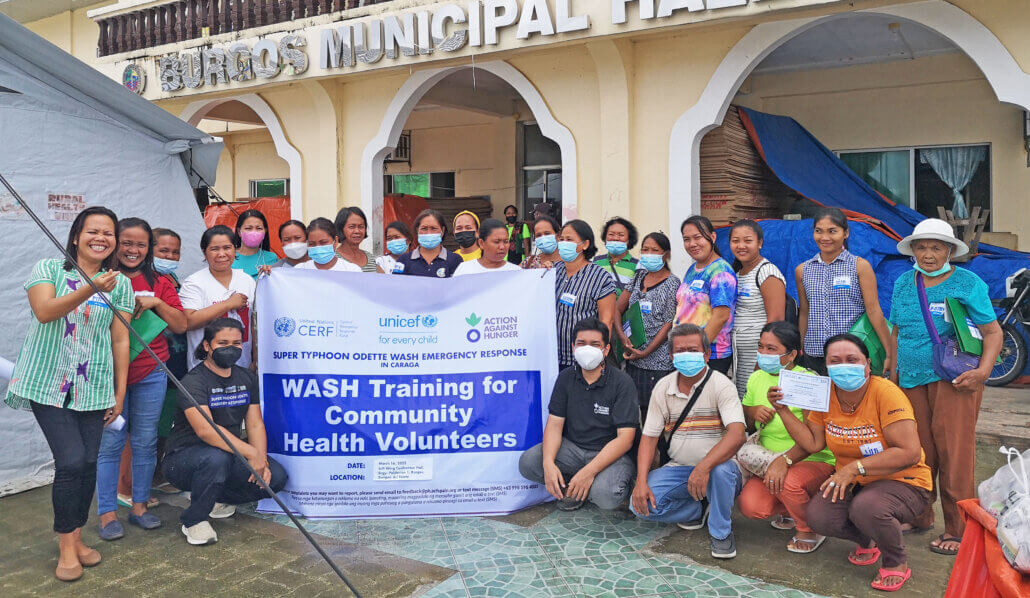
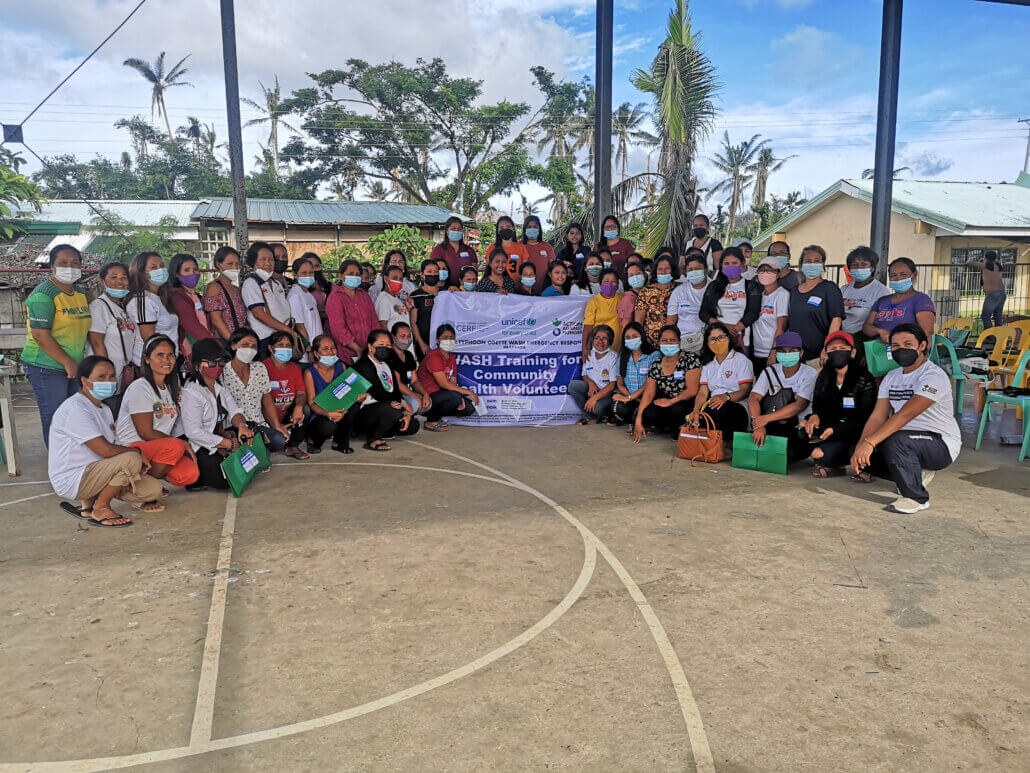
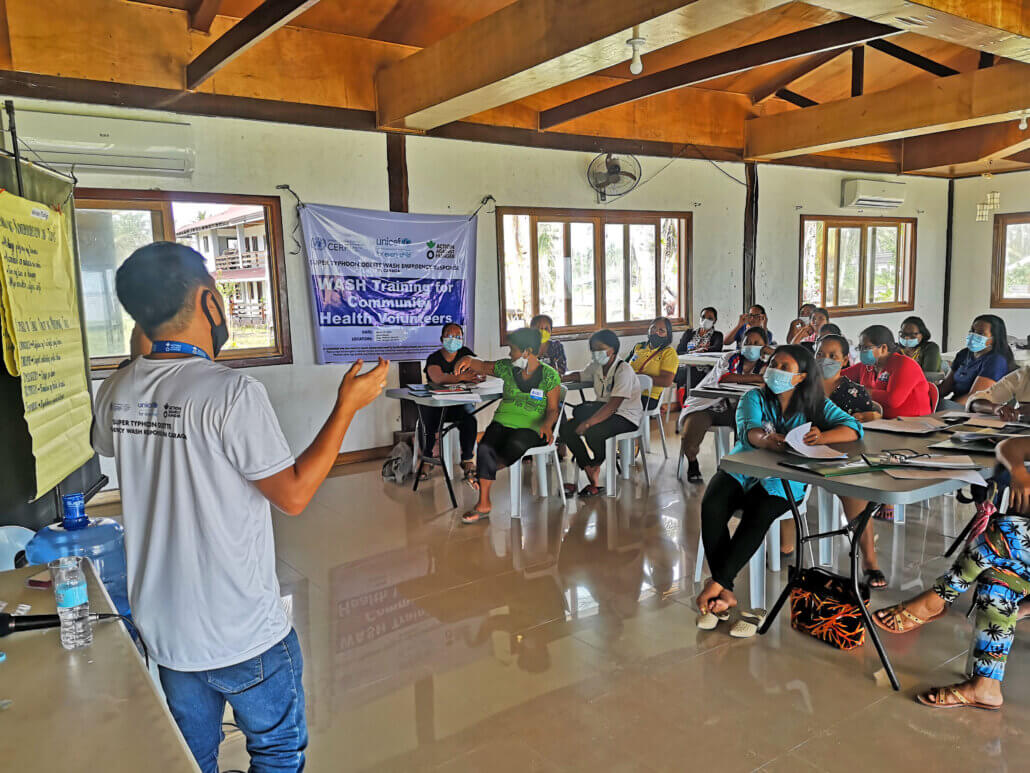
From March 15 to 18, community health volunteers and rural sanitary inspectors from all 32 barangays of the municipalities of General Luna, Burgos, San Benito and Del Carmen in the Siargao Islands took part in the water, sanitation, & hygiene (WASH) training organized by Action Against Hunger through the support of the UNICEF and UN CERF.  

“This re-orientation regarding sanitation can help prevent the spread of diseases since some of the people have been practicing open defecation,” said one of the participants. According to them, it has been a while since they started new activities about educating their neighborhood.

In photo: WASH Engineer explains and demonstrates the water quality testing activities of Action Against Hunger to selected Community Health Volunteers (CHVs) from the Municipality of Gen. Luna. | Photos by Benjie Montilla, Adam Daniel Lacson, Victoria Valderama and Abdul-Alim Talusob for Action Against Hunger (2022 March 15, Surigao del Norte, Philippines)

The participants shared what they know about water contamination and water-borne diseases, all while talking about the importance of sanitation, and common hygiene practices.

Team members of our Super Typhoon Odette WASH Emergency Response proceeded to discuss in more detail the topics concerning water quality testing, community-applicable methods to purify and store water, dangers of fecal-oral transmission, and proper hygiene techniques. Additional discussions on preventing COVID-19 were also conducted. The communities were also given tips on conducting education sessions, and new methods to pique the community members’ interest.

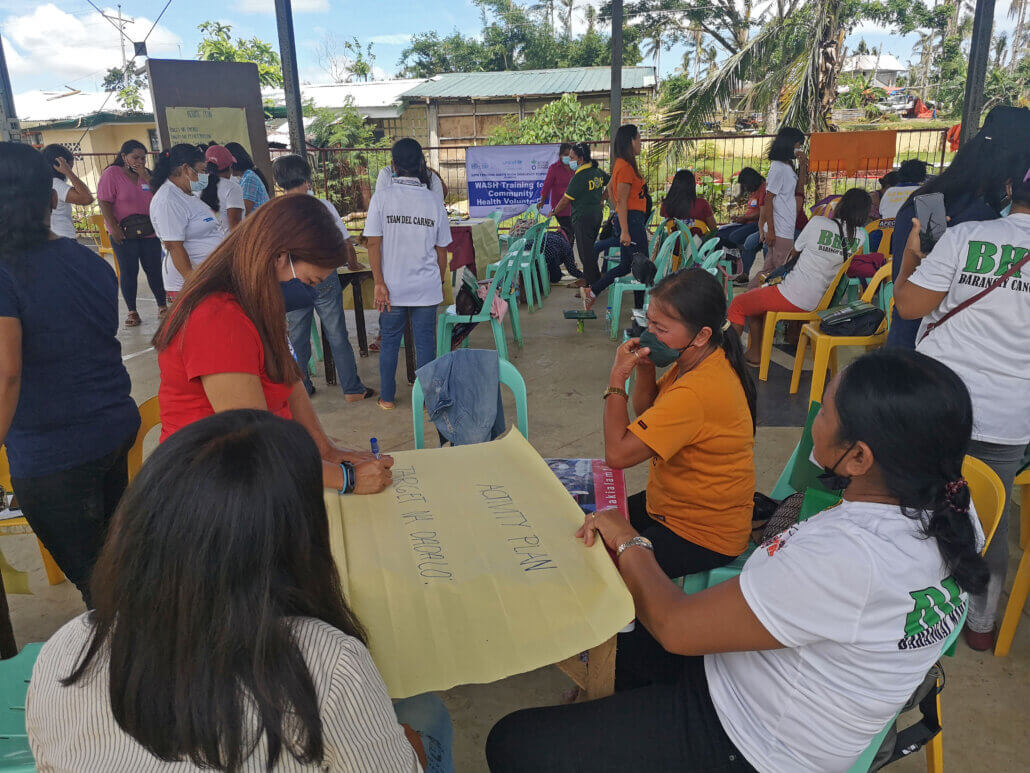
In photo: Training participants planned and presented their Activity Plans regarding WASH education sessions in Mun. of Del Carmen. | Photos by Benjie Montilla, Adam Daniel Lacson, Victoria Velderama and Abdul-Alim Talusob for Action Against Hunger (2022 March 18, Surigao del Norte, Philippines)

Most of the invited barangay participants have identified misconceptions regarding water quality and the use of water purifiers. Others focused on household methods to purify water, even during emergency situations. Initially, their health promotions focused community-led discussions to reduce open defecation, as well as methods to reduce cases of schistosomiasis, better waste management to reduce dengue, and hygiene promotion targeting the youth and lactating mothers.

At the end of the training, each barangay created their own WASH-related activity plan that they could implement and share in their own communities. Each activity contains topics from the discussion, but they were given the leeway to discuss topics that concern their respective areas.

By building the capacities of our local partners in health and WASH, we are hoping to reach around 3,500 people through the education activities of the health volunteers in General Luna alone.

Photos by Benjie Montilla, Adam Daniel Lacson, Victoria Valderama and Abdul-Alim Talusob for Action Against Hunger

The Super Typhoon WASH Emergency Response in CARAGA is implemented by Action Against Hunger with funding from the United Nations Central Emergency Response Fund (UN CERF) and United Nations Children’s Fund (UNICEF).


Written by Queen Harley Musico, Abdul-Alim Talusob, Adam Daniel Lacson | Edited by Joyce Anne Sandajan

Read more
Stories from the Field: Jun Gemparo

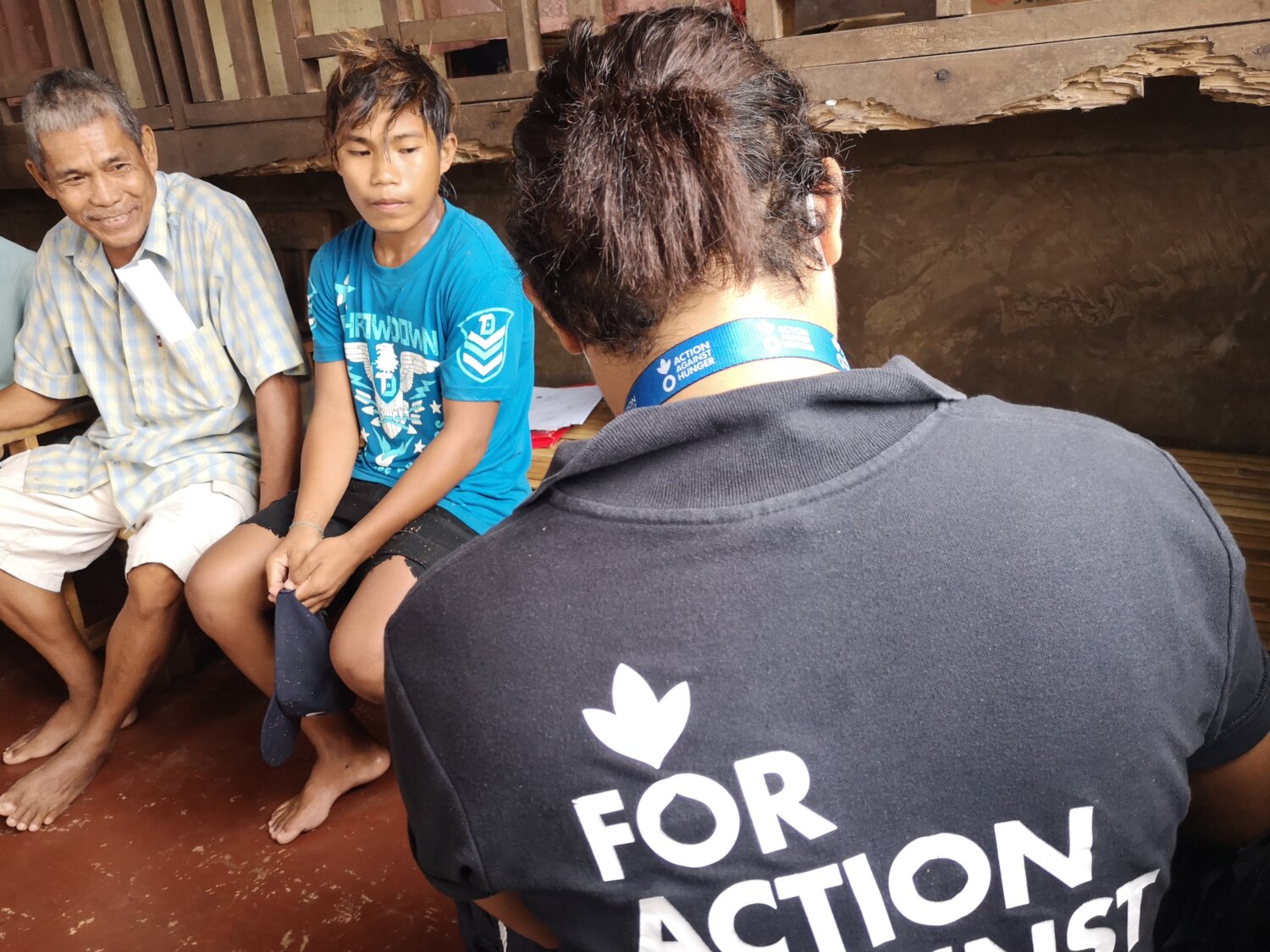
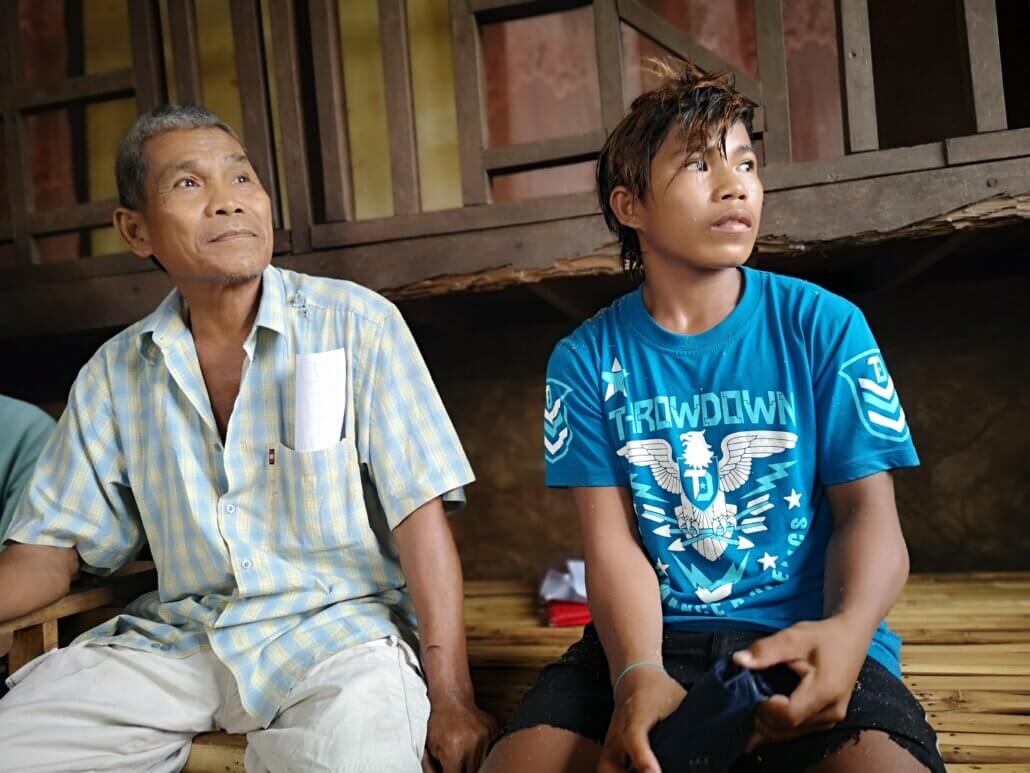
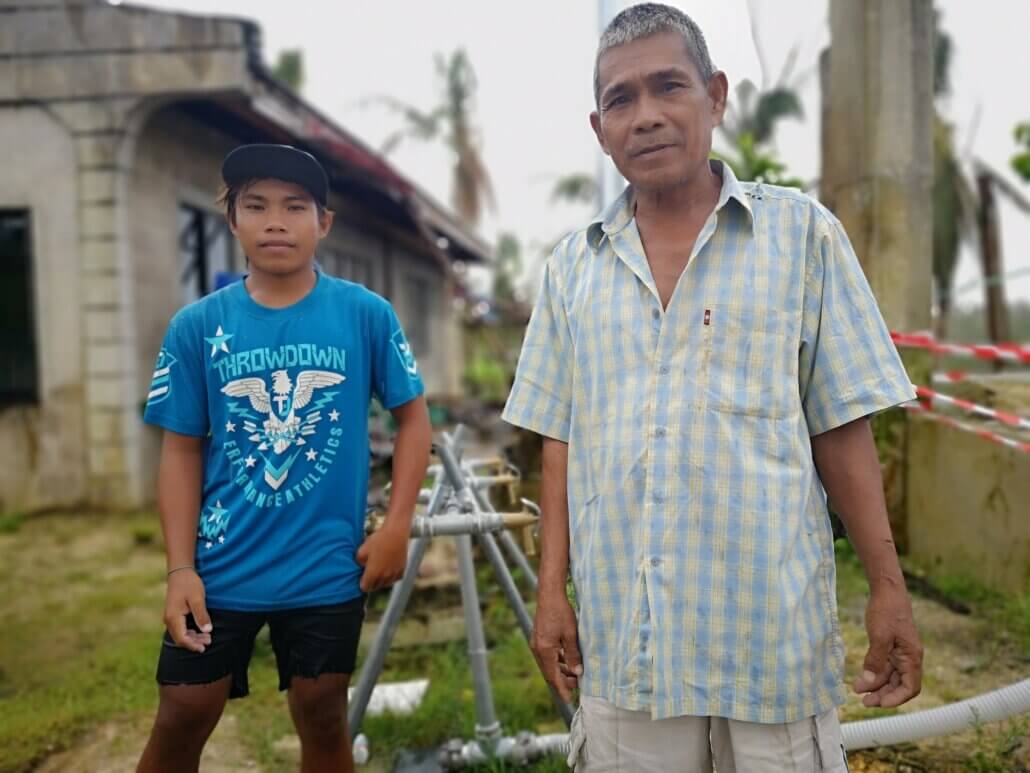
SURIGAO DEL NORTE — Reynaldo Gemparo, Jr. or ‘Jun’ as he’s known by everyone, dropped out of school after finishing the third grade at 13 years old. Since then, he’s been helping his father earn extra income for both of them. Jun is the youngest son of his namesake, 69-year-old Reynaldo Gemparo, Sr. Together, they live in Barangay Magsaysay of the Siargao Islands. Jun helps his father in their day-to-day chores especially if it involves lifting heavy items.

rpt

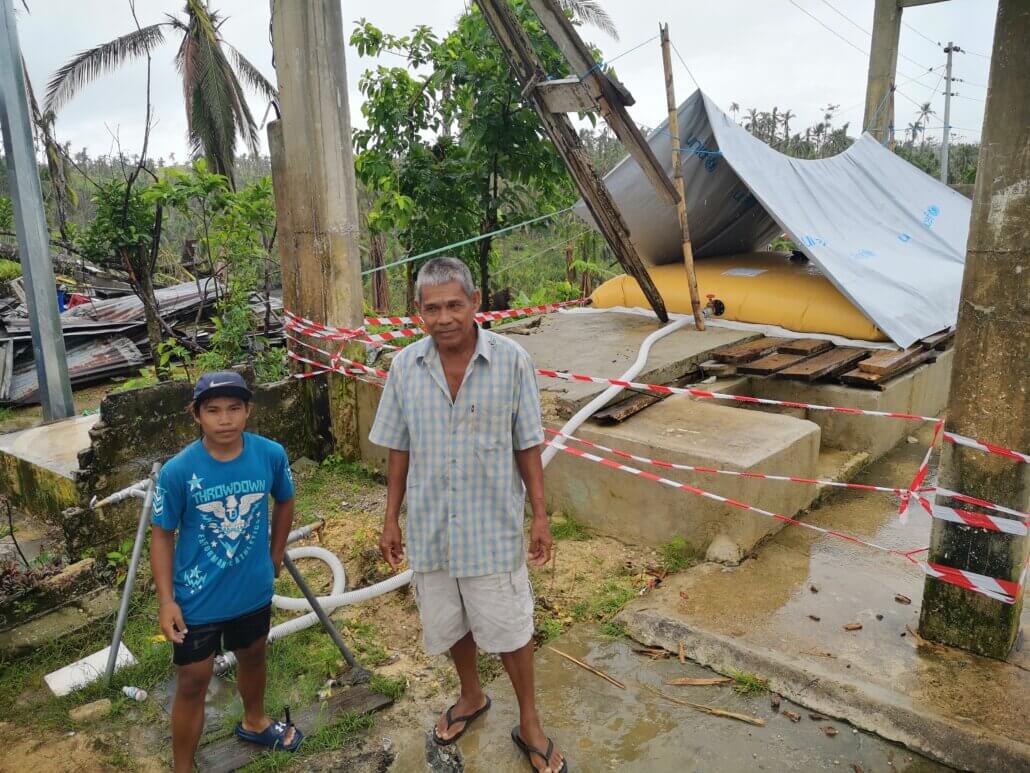
When our team first met him, he had just refilled a water container from the newly installed water bladders in their barangay. Siargao was severely affected by Super Typhoon Odette (internationally named Rai) after making landfall in the Philippines last December 16, 2021.

Before the landfall, the Gemparos had evacuated to their neighbor’s house but the strong winds nearly wiped out that home too. Eight of them were packed in the comfort room as the storm wrecked the roof and all parts of the house. In the middle of that chaos, Jun said he saw fear in the eyes of those around him, including his father. They felt helpless as the wind raged above their heads. After that ordeal, the father and son soon realized that their home and livelihood had succumbed to the typhoon. Despite the devastation, Jun is thankful that they survived unscathed, and the fear quickly subsided.

The harsh typhoon had not only damaged several water pipes but also polluted their deep-well water source. After the storm, access to potable water became a problem. The water from the community’s deep well started tasting bad. It wasn’t until our water, sanitation, & hygiene (WASH) engineers tested the source and eventually confirmed that the water was indeed contaminated and unsafe for consumption.

To get clean water for drinking and cooking, the residents of Barangay Magsaysay use either boiled rainwater or opt to buy filtered water sold at 50 pesos per gallon. However, with summer around the corner, they know they would have to resort to buying water instead—an additional expense to their daily necessities. When two new water bladders were installed in their community, the Gemparo’s and the rest of the residents now had less to worry about.

Through the support of the United Nations Children’s Fund (UNICEF) and United Nations Central Emergency Fund (UN CERF), potable water was easily made available through the Super Typhoon Odette Emergency WASH Response implemented by Action Against Hunger Philippines in Caraga. After refilling the water container, Jun made his way back to their relative’s house where he and Reynaldo Sr. are now temporarily residing while they gradually work their way back to their normal life.

To help support their small family, Jun participates in crab fishing which then became their main source of income. Prior to Typhoon Odette, Jun would usually earn 200 pesos a day from catching crabs. On good days, he sometimes earned up to 1,000 pesos from tourists. After losing their boat to the typhoon, the father and son are left with no source of income. Nowadays, they rely on donations, financial support from relatives, and their remaining savings.

At his age, Jun already knows how to step up and be the head of the household. When asked about his dreams, his eyes lit up as he quietly replied, “makabalik sa eskwela” (to go back to school). He went on to add that he wants to learn another skill so he can have a good job in the future.


The Super Typhoon WASH Emergency Response in CARAGA is implemented by Action Against Hunger with funding from the United Nations Central Emergency Response Fund (UN CERF) and United Nations Children’s Fund (UNICEF).
Read more

Stories from the Field: Reyn Ambag

“I want to be an electrician someday so that if a power outage would happen because of a typhoon, I would be able to help in restoring it.”

Burgos, Siargao — 12-year old Reyn Ambag is a grade 7 student residing in Barangay Baybay, Burgos in the island of Siargao. He goes to school in San Isidro National High School which is located in the Municipality of San Isidro.

With Values Education as his favorite subject in school, Reyn has a knack for helping others. After observing the delays in restoring the electricity in their community, he now wants to pursue a related job in the future. “I want to be an electrician someday so that if a power outage would happen because of a typhoon, I would be able to help in restoring it,” said Reyn.

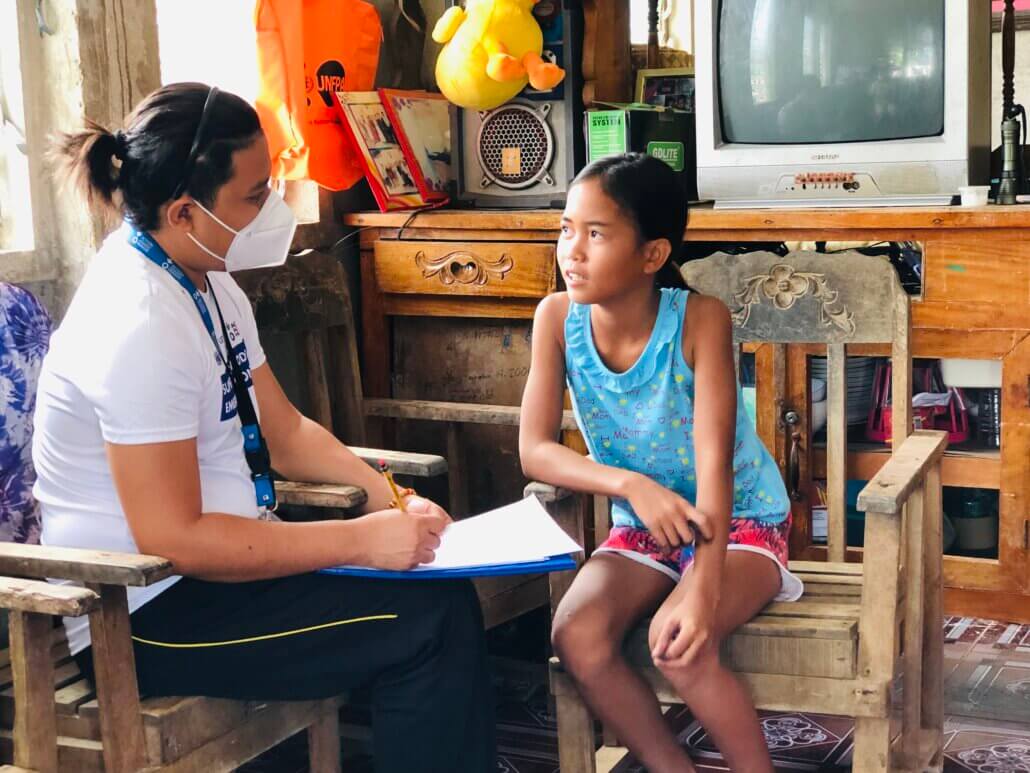
In photo: Action Against Hunger staff interviews Reyn in his home. (Photo by Benjie Montilla for Action Against Hunger)

As Reyn is particularly skilled in doing somersaults, a normal day for him is playing with his cousin on the beach while practicing simple acrobatics.

Reyn is raised by his mother who is a single parent. Aside from his mother, his cousin has also been living with them to help out in the absence of Reyn’s father. Reyn’s mother provides for all three of them. She is able to support their daily needs and Reyn’s schooling with the income she gets from their small retail (sari-sari) store.

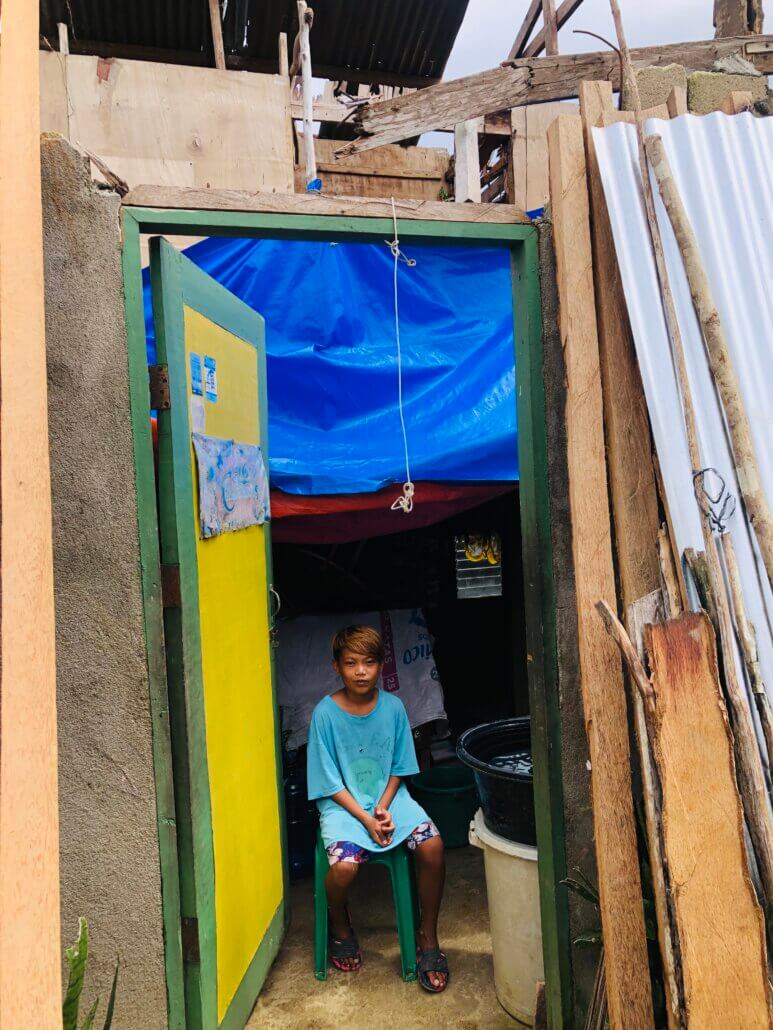
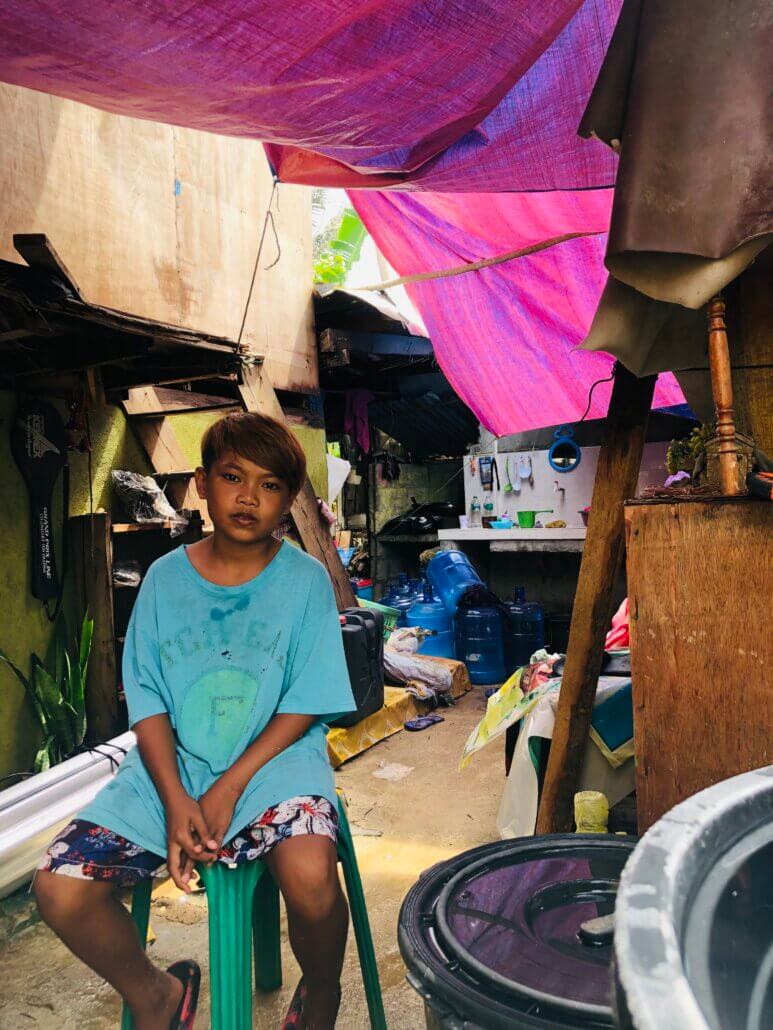
In photo: Reyn sitting inside their damaged house. (Photo by Benjie Montilla for Action Against Hunger)

In the wake of Typhoon Odette’s impact, their family stayed inside the comfort room of the school where they evacuated to. There, he had witnessed through the window how the strong winds of the typhoon had ravaged their area. They stayed there until the storm subsided and it was safe for them to go out. Upon returning to their home, they were devastated to find that their house was damaged due to the fallen coconut trees.

In photo: Reyn sitting inside their damaged house. Above him is a temporary tarpaulin cover to serve as their roof while they have yet to repair the damage. (Photo by Benjie Montilla for Action Against Hunger)

With the support of UNICEF and UN CERF, Reyn’s family is one of the 221 households in Barangay Baybay that received emergency water, sanitation, and hygiene support last February 4, 2022.

The Super Typhoon WASH Emergency Response in CARAGA is implemented by Action Against Hunger with funding from the United Nations Central Emergency Response Fund (UN CERF) and United Nations Children’s Fund (UNICEF).


Written by Abdul-Alim Talusob & Benjie Montilla | Edited by Joyce Anne Sandajan  Read more
Stories from the Field: Hacel Mae Escobido

“I’m grateful that my family and I were safe.”

Burgos, Siargao — Before Super Typhoon Odette made landfall in Siargao, Hacel Mae Escobido and her family had already evacuated to the nearby school in their area. With the typhoon’s destructive strong winds, it was fortunate enough that the room where they stayed was the only room left undamaged by Typhoon Odette.

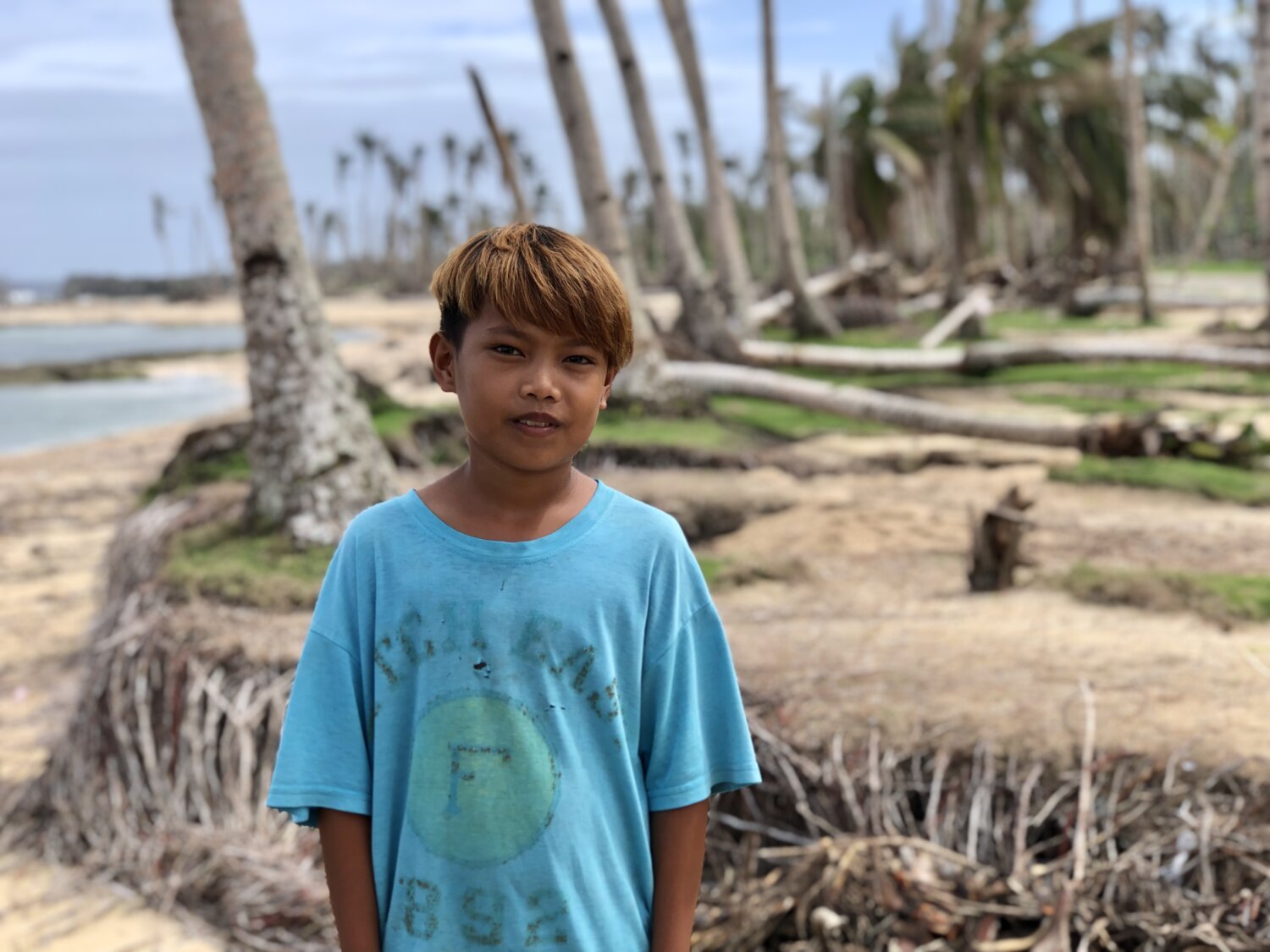
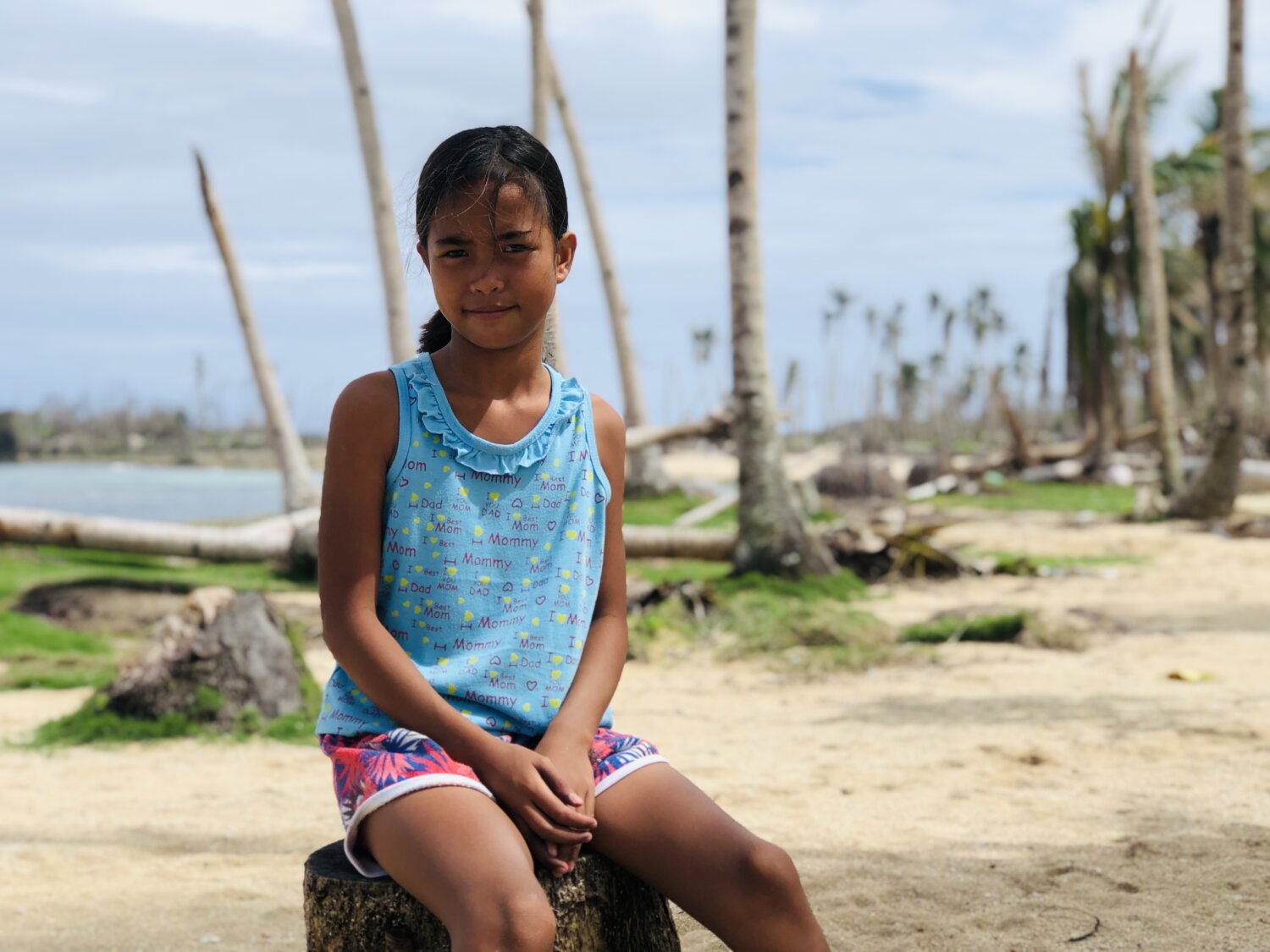
In photo: Hacelmae sits along the shore of Baybay, Burgos in Siargao. (Photo by Benjie Montilla for Action Against Hunger)

“I’m grateful that my family and I were safe,” she shares after recalling the ordeal they went through.

Hacel Mae was only 3 months old when she was taken in by her adoptive parents who are also distant relatives of her birth parents. Her adoptive father works as a carpenter, while her adoptive mother takes care of their home.

At 11 years old, Hacel Mae is already enrolled as a junior high school student. “I want to become a police officer to serve and protect my community,” she shares. When she is not in school, she normally spends her day helping at the rice farm.

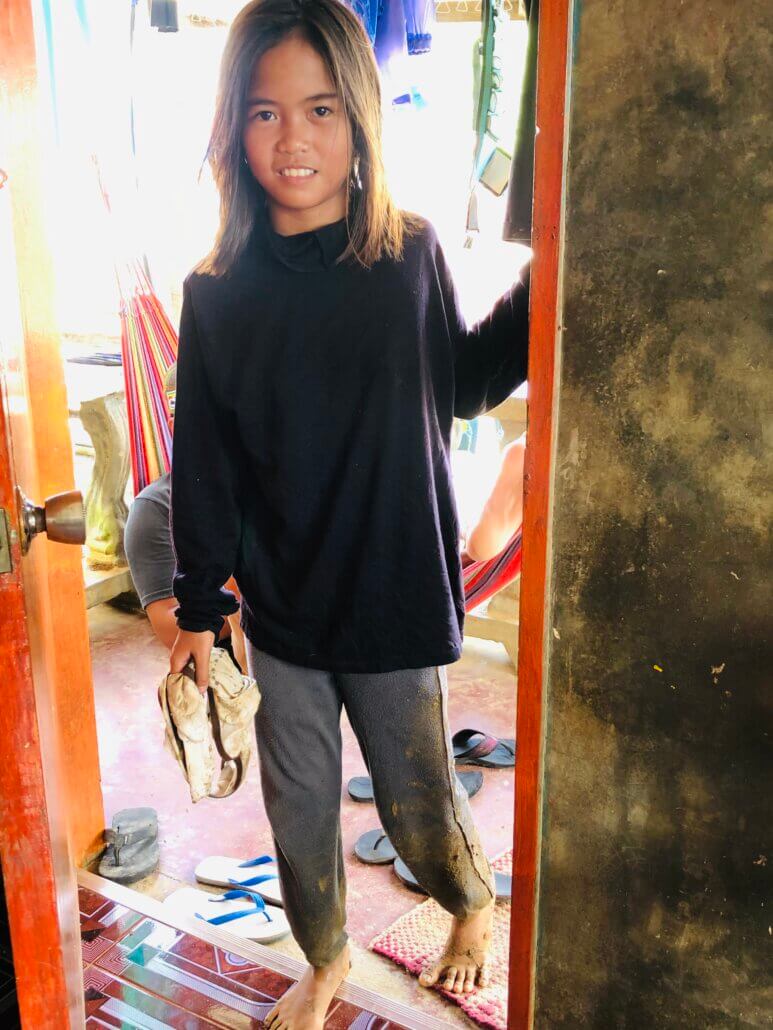
In photo: Hacel Mae arrives at her home after spending the morning helping out at the rice farm. (Photo by Benjie Montilla for Action Against Hunger)

With the support of UNICEF and UN CERF, Hacel Mae’s family is one of the 221 households in Barangay Baybay that received emergency water, sanitation, and hygiene support last February 4, 2022.

The Super Typhoon WASH Emergency Response in CARAGA is implemented by Action Against Hunger with funding from the United Nations Central Emergency Response Fund (UN CERF) and United Nations Children’s Fund (UNICEF).


Written by Abdul-Alim Talusob & Benjie Montilla | Edited by Joyce Anne Sandajan  Read more
Stories from the Field: Lenjie Concha

“I was frightened and shocked because that was the first time I experienced such a horrible event.”

10-year old Lenjie Concha lives with his grandmother, uncle, and aunt in Barangay Baybay, Burgos on the island of Siargao.

His grandmother, a teacher, owns the house where they are living in. His uncle works as a part-time carpenter and provides the main source of income for their household. Lenjie’s uncle also takes care of him while his father is away in Davao for work.

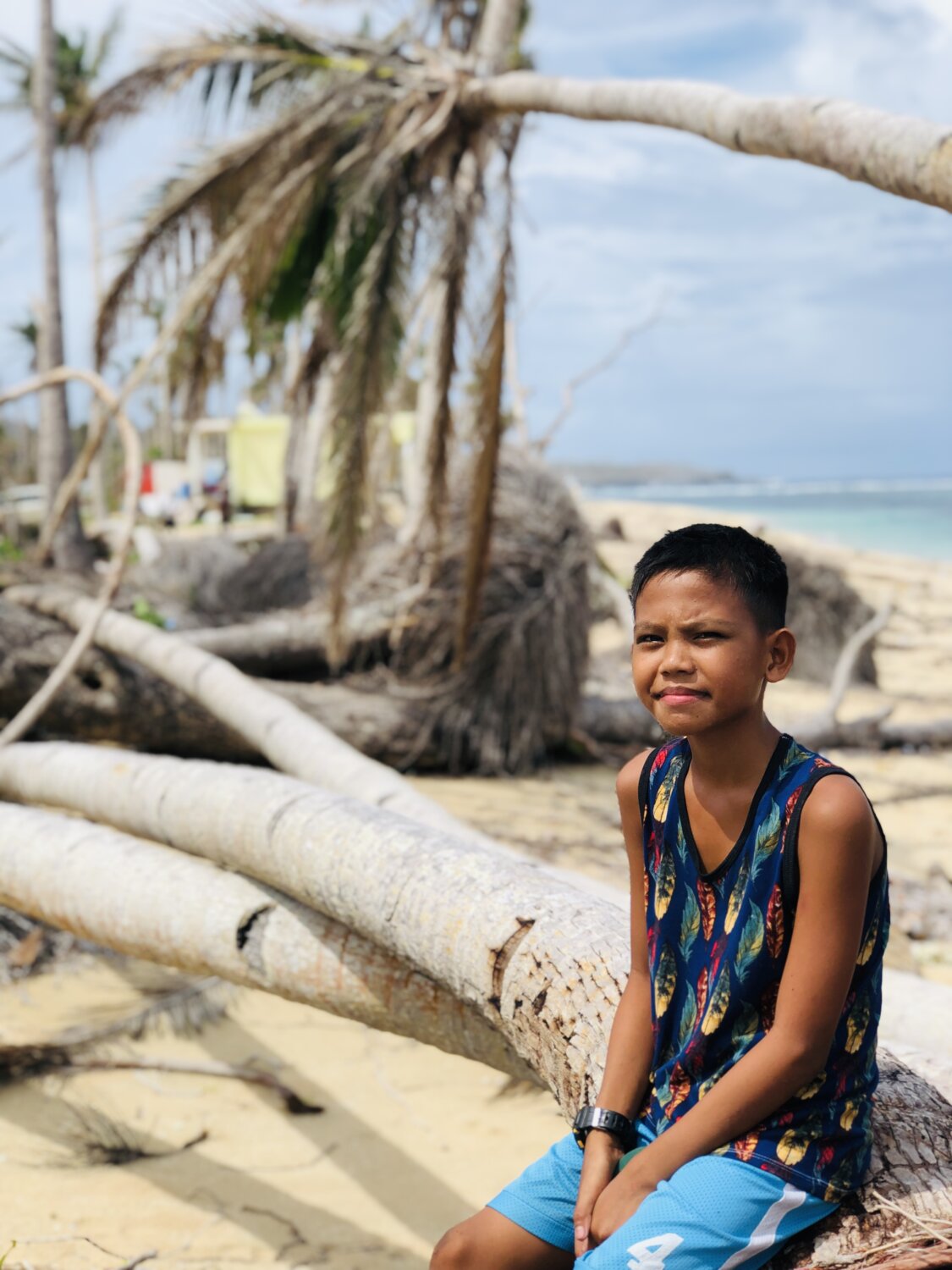
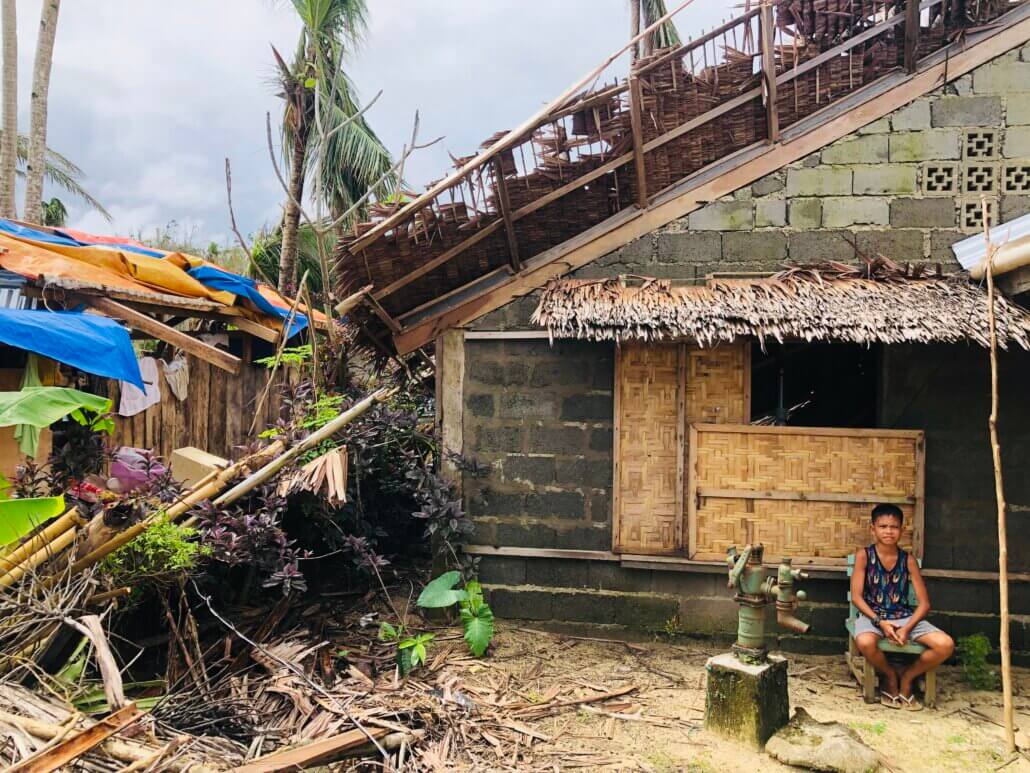
Boy sitting outside his house; house is a combination of concrete, wood and bamboo. The roof is partially damaged

In photo: Lenjie sits outside his home in Barangay Baybay, Burgos, Siargiao Island. (Photo by Benjie Montilla for Action Against Hunger)

On the day that Super Typhoon Odette hit Siargao, though Lenjie was inside their home, he witnessed firsthand how the strong winds destroyed the houses in their neighborhood. “I was frightened and shocked because that was the first time I experienced such a horrible event,” said Lenjie.

Fortunately, the house that they were staying in was not severely affected.

“After the typhoon, I felt safe, and I was grateful that my whole family is alive,” he added.

Lenjie’s favorite subject in school is Science and he aspires to become a teacher someday, like his grandmother. His hope for the future is to earn a college degree and land a job so that he can support his family and have a good life. On normal days, Lenjie spends his free time playing hide and seek and other games with his friends.

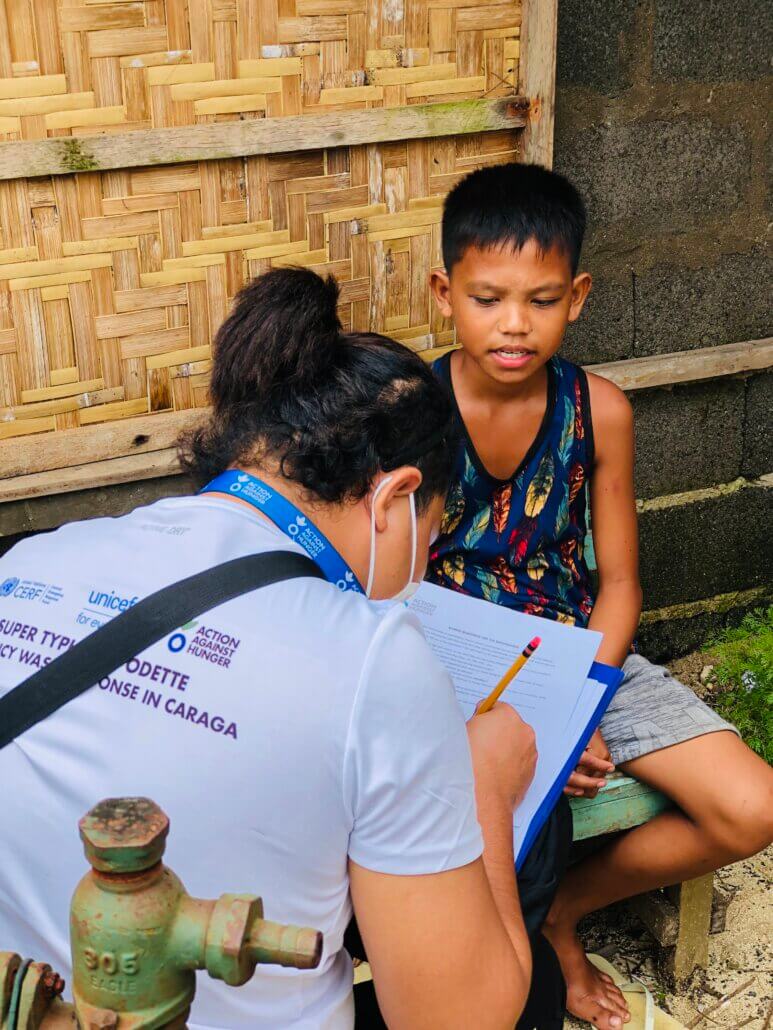
Action Against Hunger staff interviews Lenjie

In photo: Action Against Hunger staff interviews Lenjie outside his home. (Photo by Benjie Montilla for Action Against Hunger)

With the support of UNICEF and UN CERF, Lenjie’s family is one of the 221 households in Barangay Baybay that received emergency water, sanitation, and hygiene support last February 4, 2022.

Our Super Typhoon WASH Emergency Response in CARAGA is made possible with funding from the United Nations Central Emergency Response Fund (UN CERF) and United Nations Children’s Fund (UNICEF).


Written by Abdul-Alim Talusob & Benjie Montilla | Edited by Joyce Anne Sandajan  Read more