Give to Gain: A Woman’s Commitment to Multiplying Impact
On Women’s Day, we highlight, through Wendie’s story, the power of reciprocity among women working to empower individuals toward change. When societies invest in women, opportunities expand, systems strengthen, and everyone benefits. Giving is not a loss when working with communities, but rather an intentional and powerful multiplication of impact.
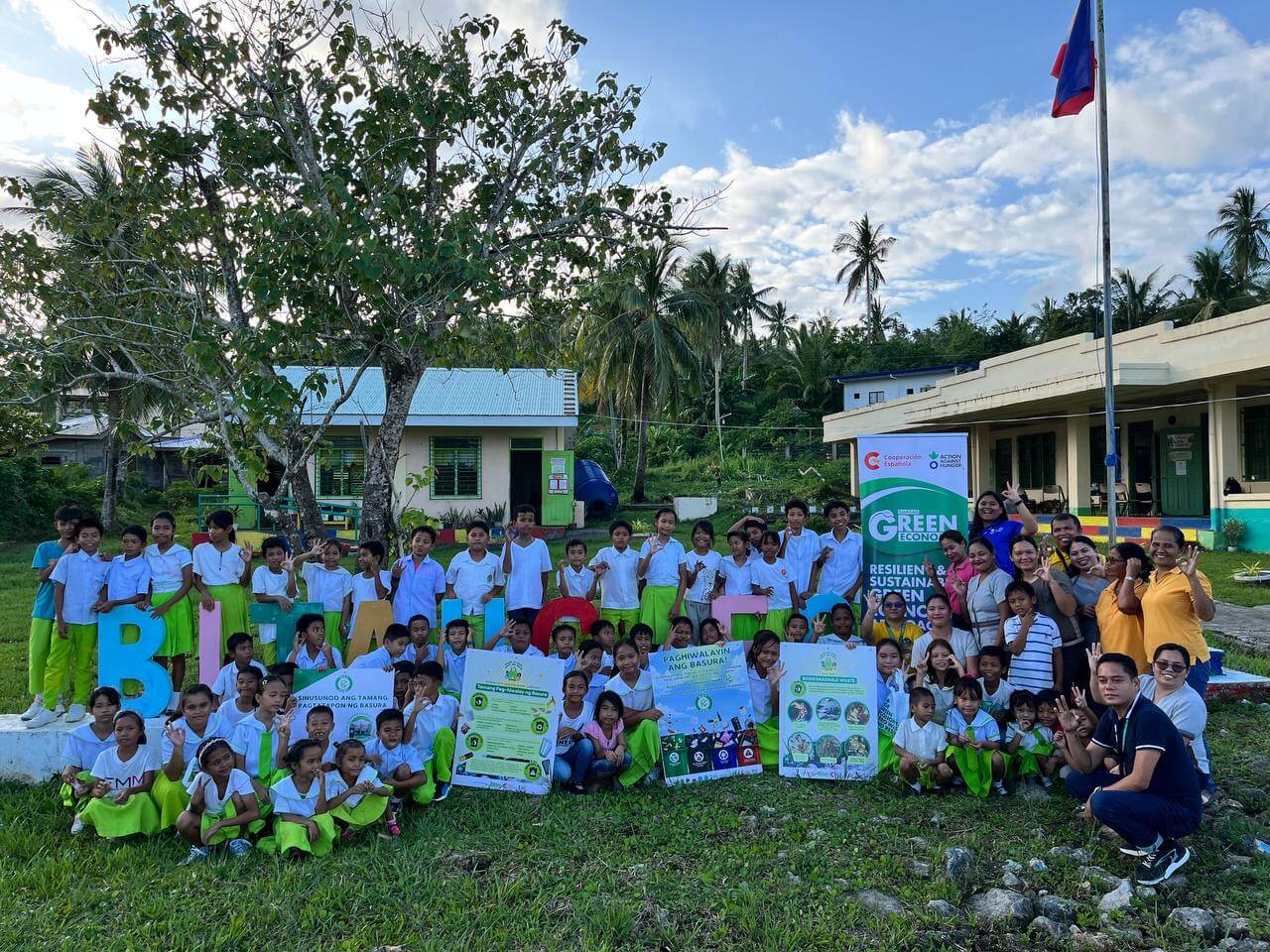
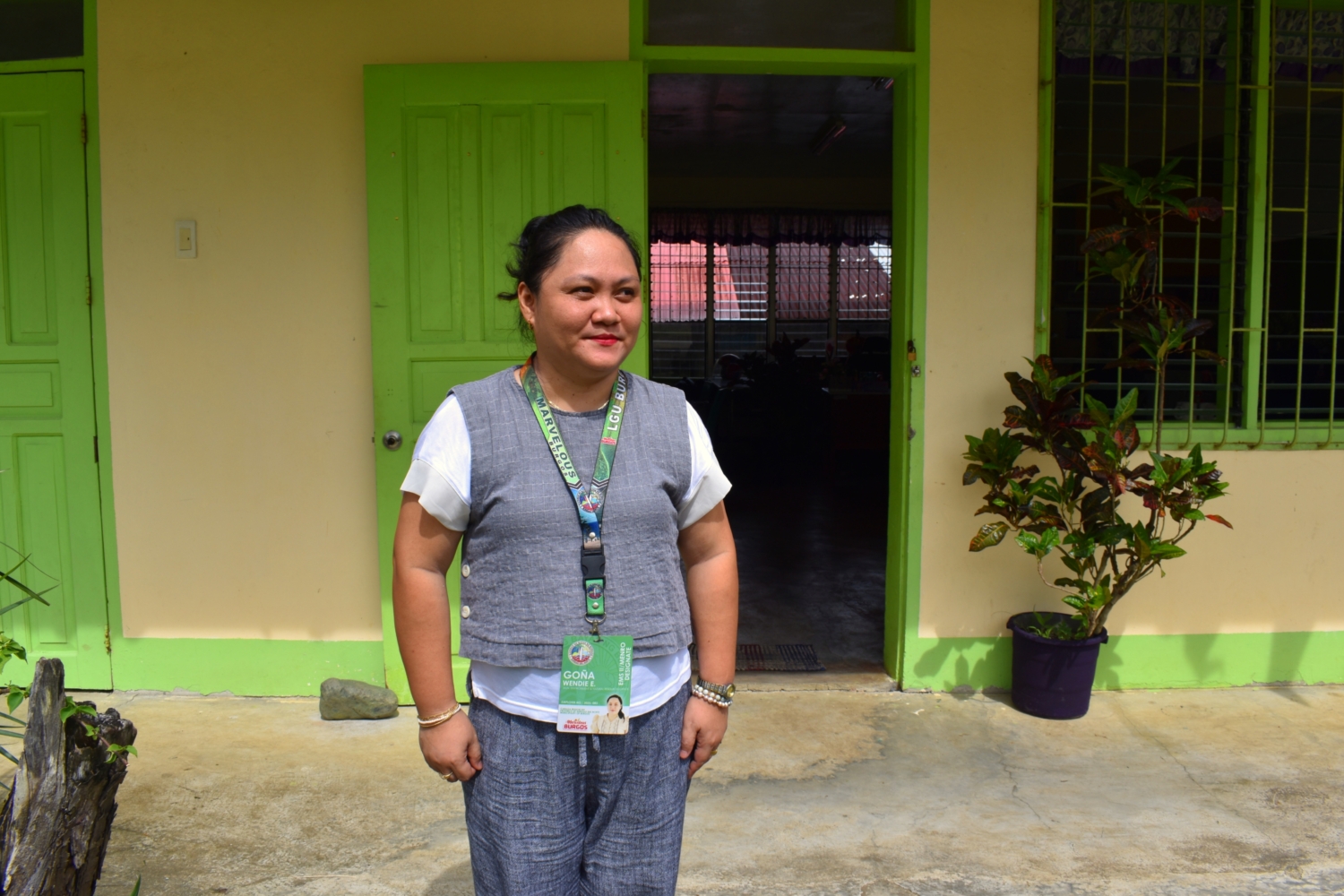
BURGOS, SURIGAO DEL NORTE – Wendie Goña, 38, is a dedicated champion of community-driven environmental protection in her municipality. Working as the Municipal Environmental Officer in Burgos, Wendie has provided crucial support to Action Against Hunger initiatives in Siargao, such as the Siargao Green Economy Project, funded by the Spanish Agency for International Development Cooperation (AECID) and the Typhoon Odette WASH Recovery and Rehabilitation Towards Climate Resilience Programme together with UNICEF.
Wendie contributes to advancing programs at the local level, that protect forests, coasts, and marine ecosystems while empowering local communities, particularly women, to take an active role in safeguarding their environment.
Raised in Barangay Danawan, a small island community in Surigao City, Wendie experienced firsthand the challenges fishing families face during monsoon months. As the daughter of a teacher and a fisherman, she developed a deep respect for education and the natural environment, which inspired her to pursue a degree in Fisheries at Mindanao State University in Marawi City.
Over the years, she has worked tirelessly to organize self-help groups, lead mangrove rehabilitation projects, improve solid waste management, and implement climate adaptation initiatives.
Now living in Barangay Baybay, Burgos, Wendie works within a fifth-class municipality facing financial and logistical limitations, yet she continues to lead programs that integrate environmental responsibility, community engagement, and sustainable practices.
In this interview, she shares her journey, the lessons she has learned, her vision for empowering people within the community, and what it means to #GivetoGain in her daily life:
What inspired you to work on environmental protection?
I grew up on a small island, Barangay Danawan in Surigao City, as the daughter of a teacher and a fisherfolk. Life was not easy. During the monsoon, when fisherfolks could not go to sea and fishing was our main livelihood, many families struggled.
I soon realized how deeply we depend on the environment and that I had the power to create positive change in my community. From a young age, I knew I could use my voice and knowledge to empower others toward change. I have always been the type of student who speaks up when she realizes that something is not fair.
Many people have never experienced these challenging situations firsthand, so they often do not understand the difficulties involved. But if you are directly impacted, you know exactly what those struggles mean and how they can impact your daily life.
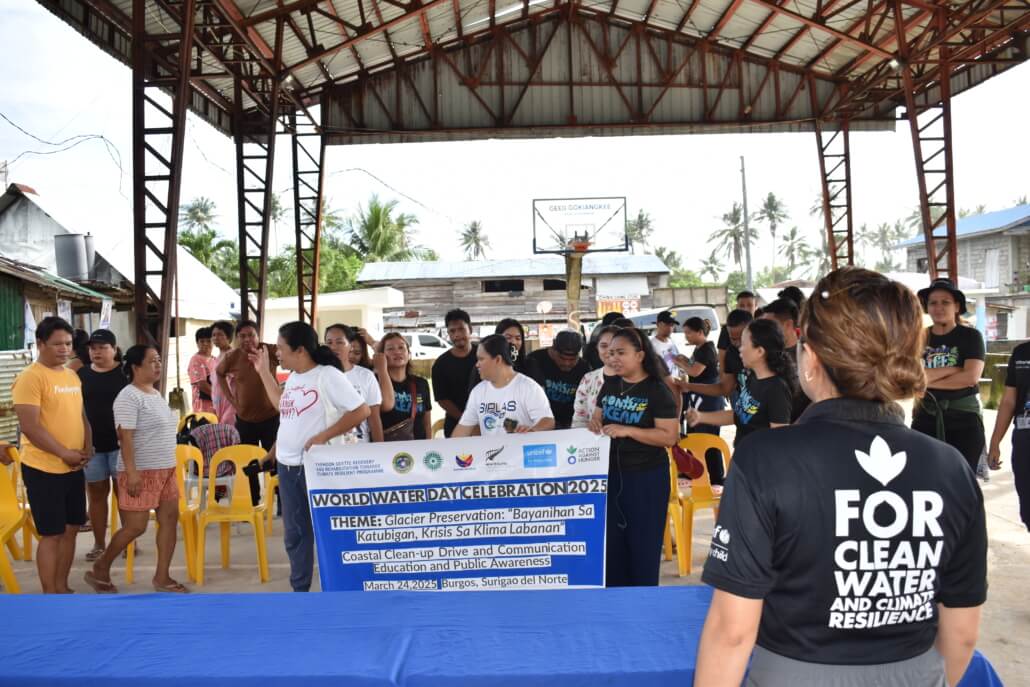
In photo: Wendie participates in the coastal clean-up organized by Action Against Hunger in 2025. Photo by Alexane Simon for Action Against Hunger
What is a typical day at work like for you?
My work involves implementing municipal environmental programs using a ridge-to-reef approach. This means we take care of the whole environment, from the mountains and forests down to the rivers, coast, and sea. What happens in the upland areas affects the water and life downstream.
For example, protecting forests helps prevent soil and dirt from going into rivers, keeping the water clean, and supporting healthy coastal and marine ecosystems.
I focus on forest management, solid waste management, protecting biodiversity, and adapting to and reducing the impacts of climate change.
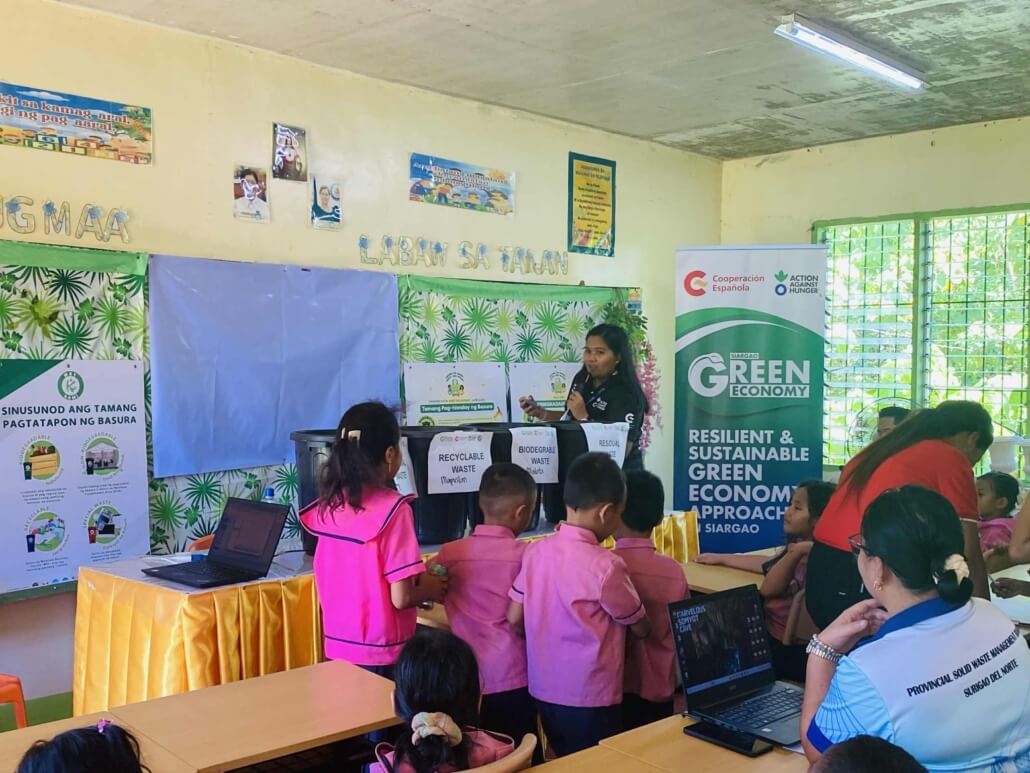
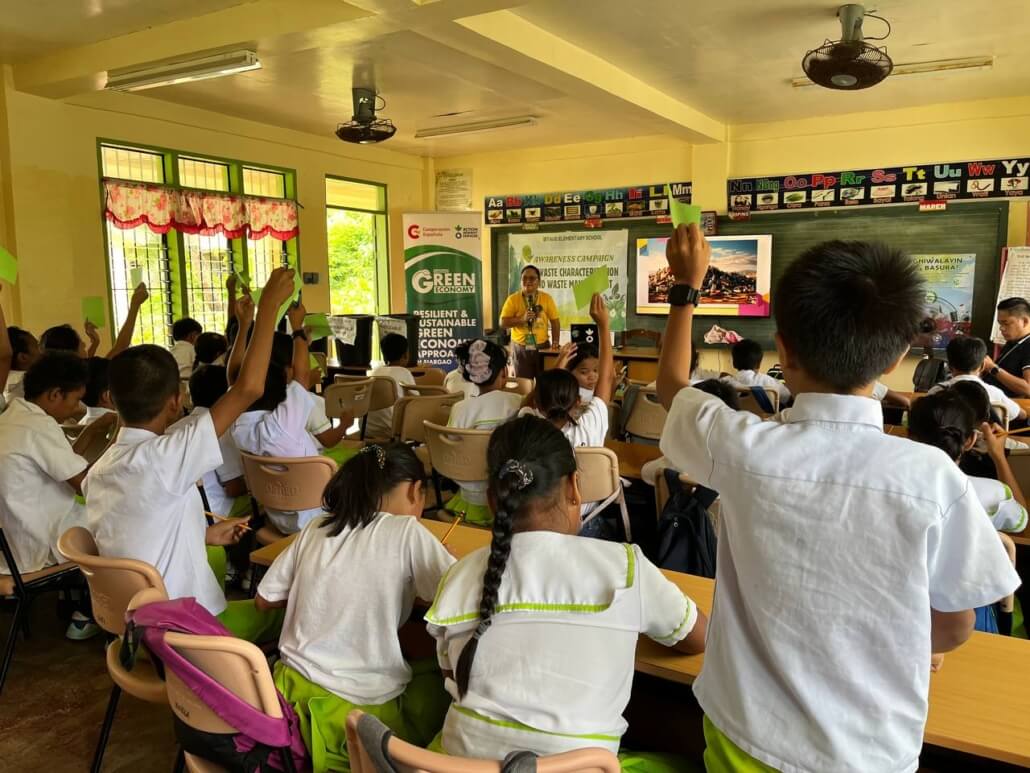
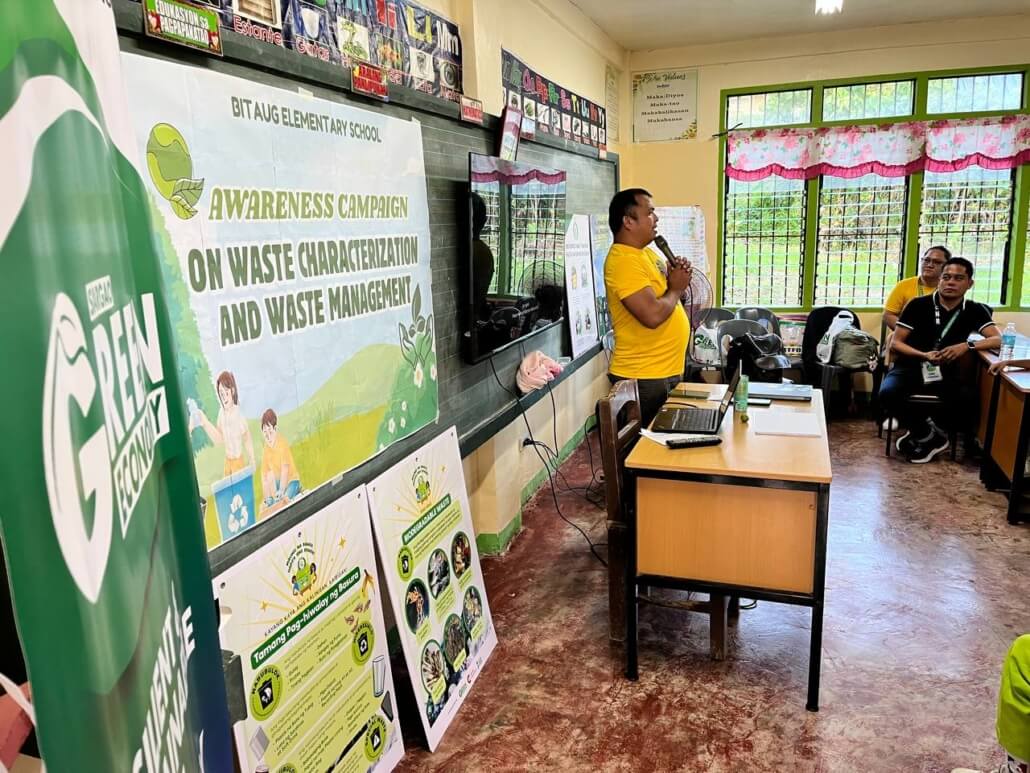
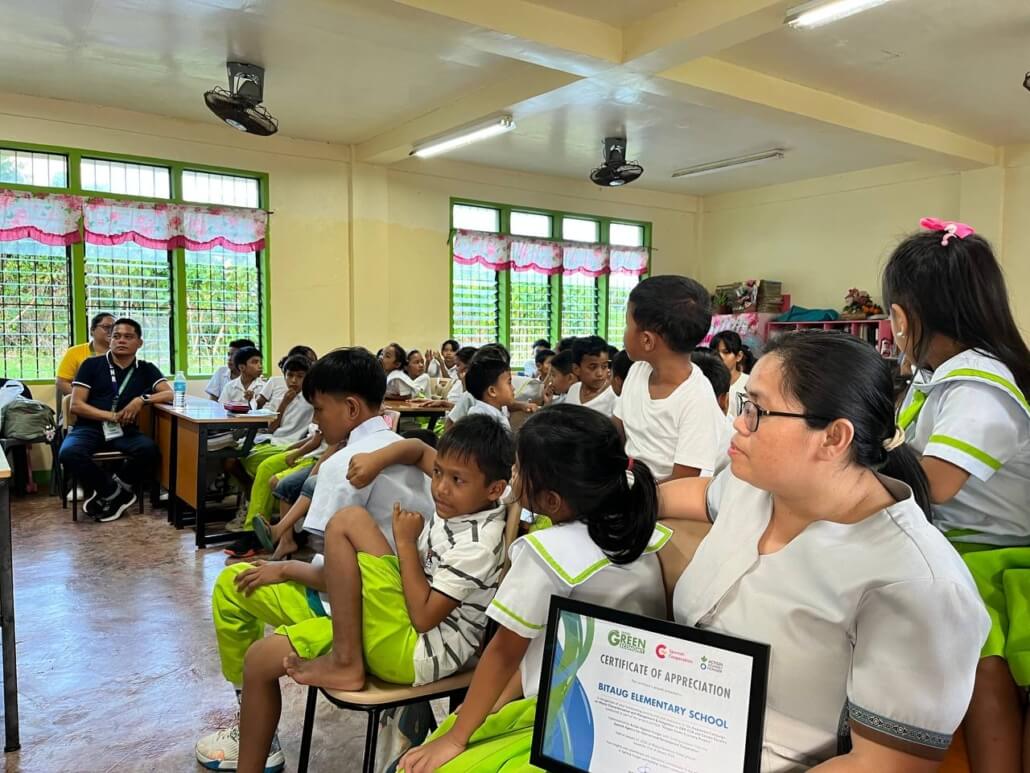
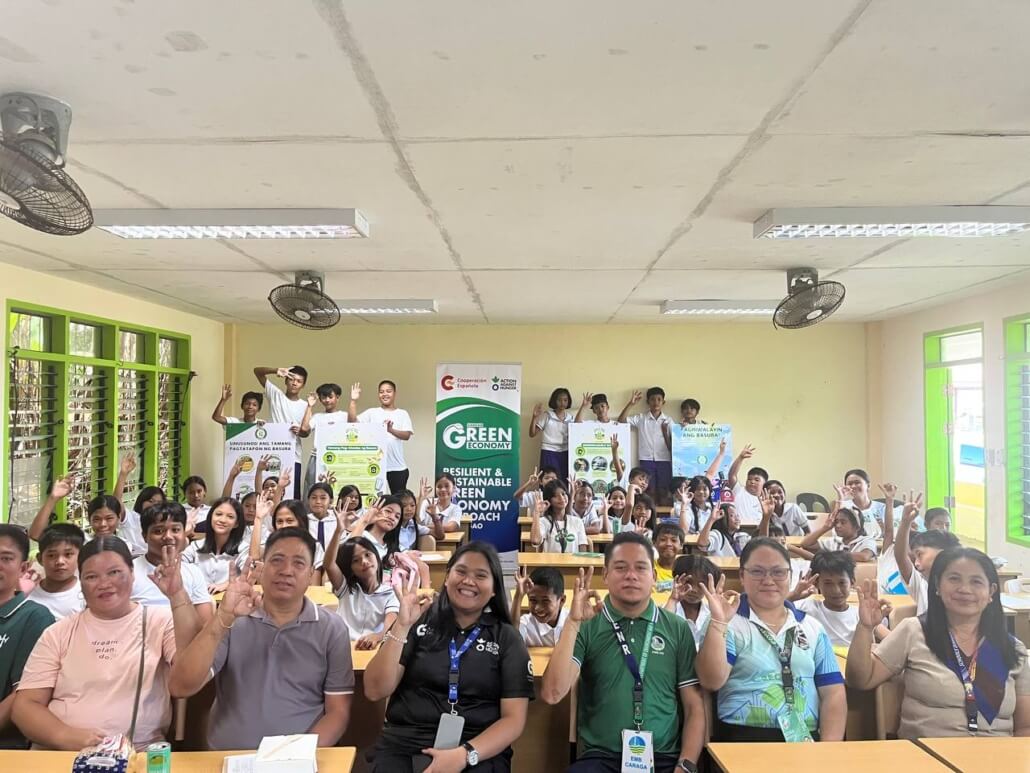
Every day is different and challenging. I am not always in the office; sometimes I join community activities, such as awareness sessions on solid waste management. For example, I recently participated in an awareness campaign at Burgos National School under the Siargao Green Economy Project of Action Against Hunger.
What values do you bring every day on the job?
I am guided by the principles of change, integrity, accountability and empathy. My advocacy extends beyond my job because protecting the environment is a shared responsibility.
I strive daily to create a positive impact across different communities, take responsibility for how my actions affect others, and let the experiences that have shaped me guide me to act with heart, both at work and in everyday life.
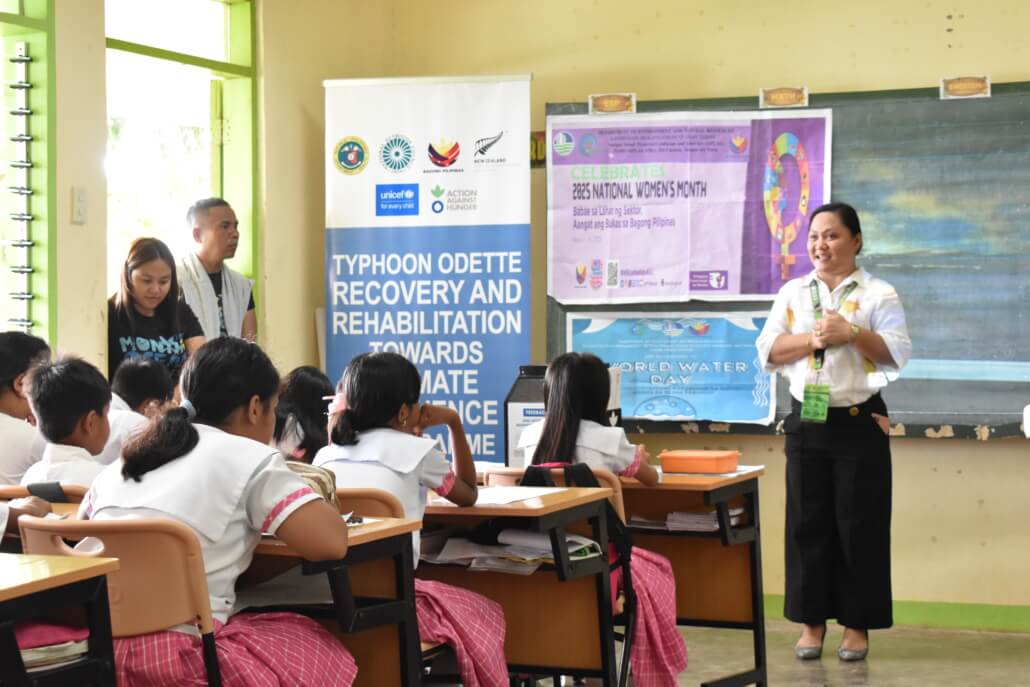
In photo: Wendie during a raising awareness session on environmental practices with students. Photo by Alexane Simon for Action Against Hunger.
Why is empowerment important in environmental work?
Empowerment is essential in environmental work because real, lasting change happens when communities have the knowledge, skills, and confidence to take action for themselves.
What I like most about working with my community is empowering women. Historically, women have had little voice in planning and decision-making, yet they are crucial for analyzing situations, understanding community needs, and providing unique perspectives. Women are natural and great leaders who guide, inspire, and take initiative they provide guidance, perspectives, and can inspire real change in their communities.
I support women in my office and community by sharing knowledge, building networks, and advocating for their representation in local governance. Women’s participation contributes to stronger community efforts, especially in coastal cleanups, showing that when women are empowered, entire communities benefit.
What is something you wish could improve in your community?
One area I wish could improve in my community is solid waste management.
One of the most common issues among locals is improper waste segregation at the household level. To address this, I am proposing to the [local administration] the establishment of a new residual containment area, although this is challenging because the municipality is located within a protected area, so there are legal and environmental restrictions.
Nevertheless, the local administration is highly supportive of solid waste management initiatives.
One major challenge occurs when garbage trucks cannot operate for extended periods due to repairs. When waste is not collected on time, garbage accumulates, and some residents resort to dumping trash along roads. This is also why I promote social behavioral change initiatives, especially among young people or through door-to-door sensitization and actively participate in information and communication campaigns.
For me, the key is to focus on both soft enforcements, such as education and awareness, and hard enforcement, like penalties, to ensure there are no repeat violators. So far, I have seen that this approach works effectively within our community.
What challenges have you faced as a woman in your field, and how did you overcome them?
One challenge I have faced is gender bias. Back in college, many female fisheries students were sidelined from fieldwork because we were considered too fragile. I made it a point that we take part fully, recognizing that equal practical experience was essential for our professional growth.
Luckily, my family has been very supportive throughout my education and career. My father, a fisherfolk, has always been proud of my accomplishments and the challenges I have overcome, and his encouragement has been a constant source of strength for me.
What does “Give to Gain” mean to you in your work?
“Give to gain” clearly reflects my approach to work. When you give your time, knowledge, and effort sincerely to the community, you gain trust, engagement, and lasting impact in return. By mentoring, educating, and empowering others, especially women who are often hesitant to speak up, you help communities develop the capacity to sustain change themselves.
Environmental conservation is a shared responsibility, and embracing a give to gain mindset creates a win-win situation, ensuring growth and benefits for both the community and the programs we implement.
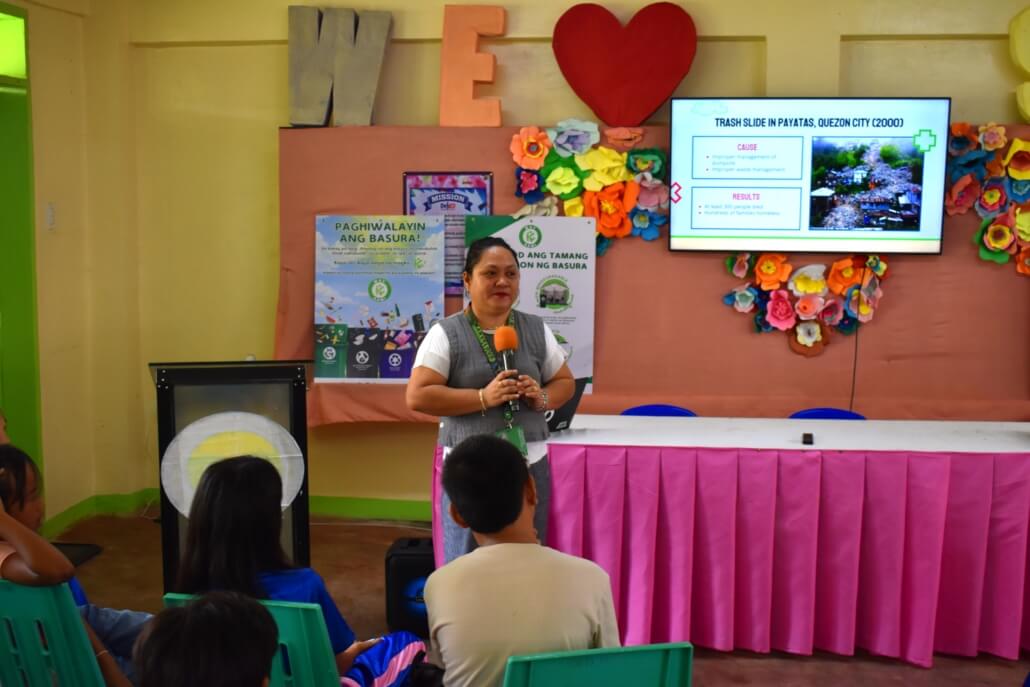
In photo: Wendie during a raising awareness session on waste management with students in Burgos. Photo by Martina Vercoli for Action Against Hunger.
What have you gained personally and professionally by working with the communities?
By working with the communities for many years now, I have gained resilience, patience, and stronger leadership skills. By resilience, I mean the ability to keep going despite challenges, limitations, or difficulties in my work and community projects.
Can you share a specific moment when giving made a difference?
It was not a single moment but an ongoing process. Through advocacy and enforcing local ordinances on solid waste management, we saw people follow the rules more consistently. In the Philippines, many environmental laws exist, but the struggle is in ensuring that we are strongly enforcing them.
Even more inspiring was when communities became proactive and took action on their own, showing that giving guidance truly makes a difference.
I work closely with my team and the community to empower change. For example, seeing women in my team take leadership in enforcing local ordinances or participate actively in cleanups is very heartwarming. It shows that our efforts are influencing the next generation of environmental accountability.
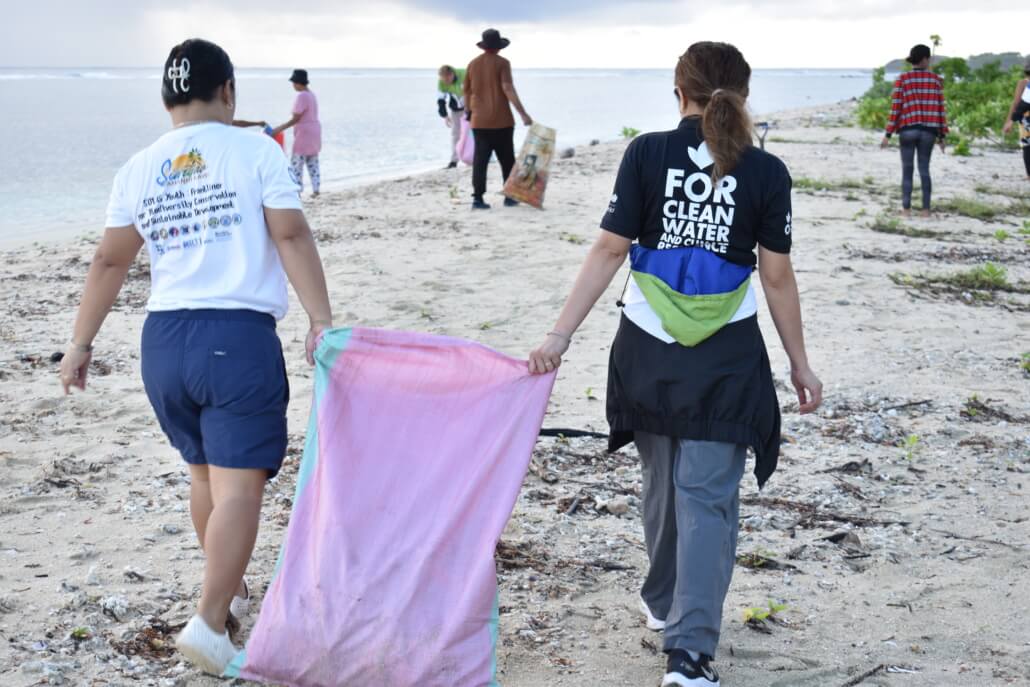
In photo: Wendie (left) and Action Against Hunger staff work together in collecting trash during the World Water Day 2025. Photo by Alexane Simon for Action Against Hunger
What is something a woman or girl has taught you?
Women who have crossed my path have taught me that leadership does not always require formal titles. Even without official recognition, women’s groups at the community level can be highly organized and effective.
In Burgos, they lead cleanups, mobilize neighbors, and sustain environmental initiatives quietly and powerfully.
Wendie’s story reminds us that true impact is not measured by individual accolades but by the ripple effects of giving. By investing her time, knowledge, and energy in her community, especially in empowering women, she multiplies change in ways that endure beyond her daily work.
On this International Women’s Day, her example inspires us to recognize that when women lead, support, and mentor others, the gains extend far beyond themselves, shaping stronger, more resilient communities for everyone.