Tag Archive for: EU Humanitarian Aid

Real Life Heroes – Roger Cabiles

Being a humanitarian worker is more than a career choice. Most of the time, it involves having a shared sentiment that anyone and everyone can help others in many different ways.

Roger Cabiles, our Head of Project and Consortium Manager for the MOVE UP Mindanao project, shares a similar perspective as he talked about the value of paying it forward.

We sat down with Roger and asked him a few questions about his role as a project implementor, team leader, and inspirational real-life hero.


What is your role in Action Against Hunger?

I ensure that the [MOVE UP 4] activities are implemented and managed well in our project areas to ensure a positive impact on the communities and the people we serve. I also lead the coordination between our consortium partners and stakeholders to ensure that we work on the same goals, we complement each other’s strengths and we provide necessary support and assistance when needed.
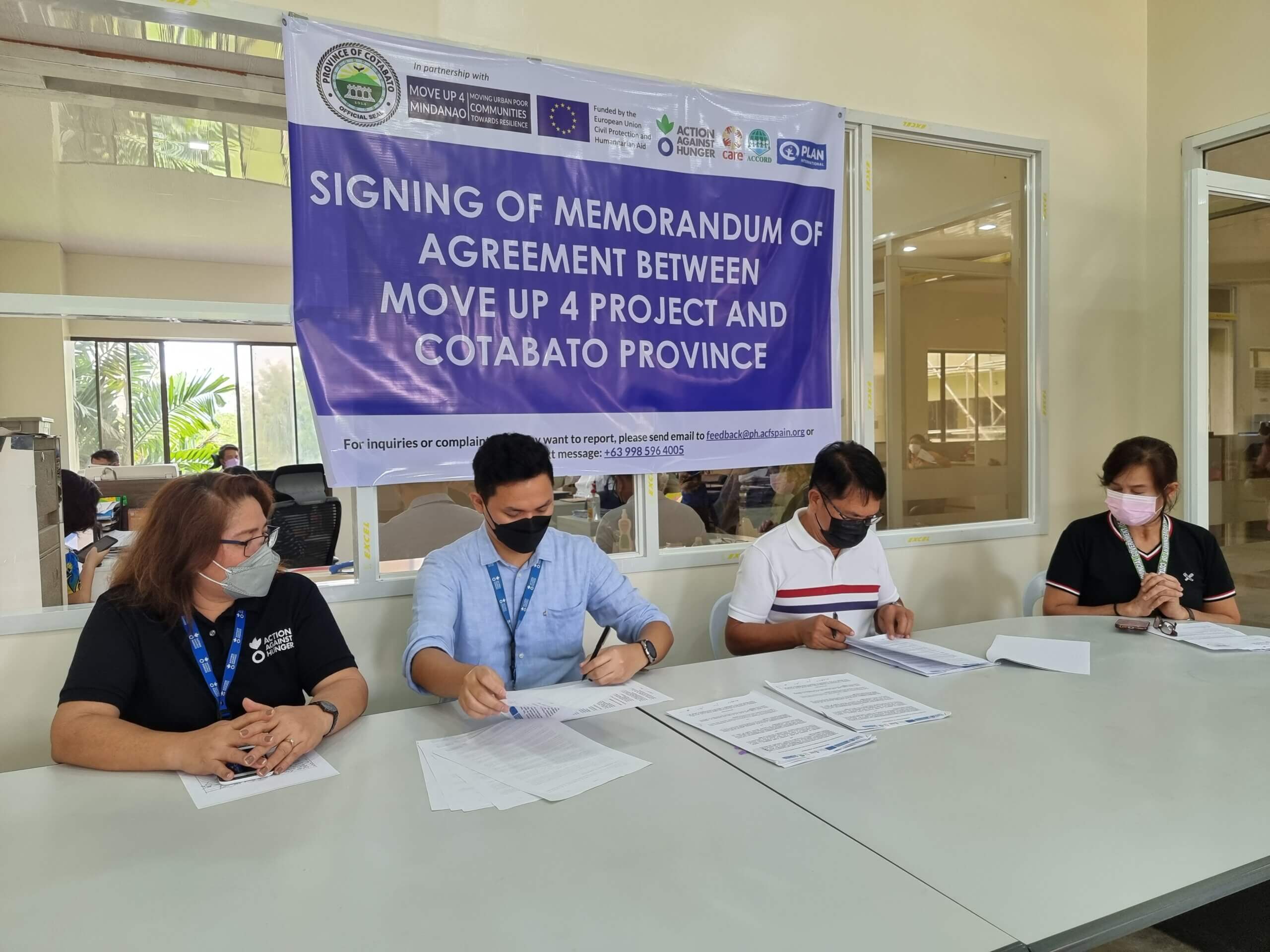
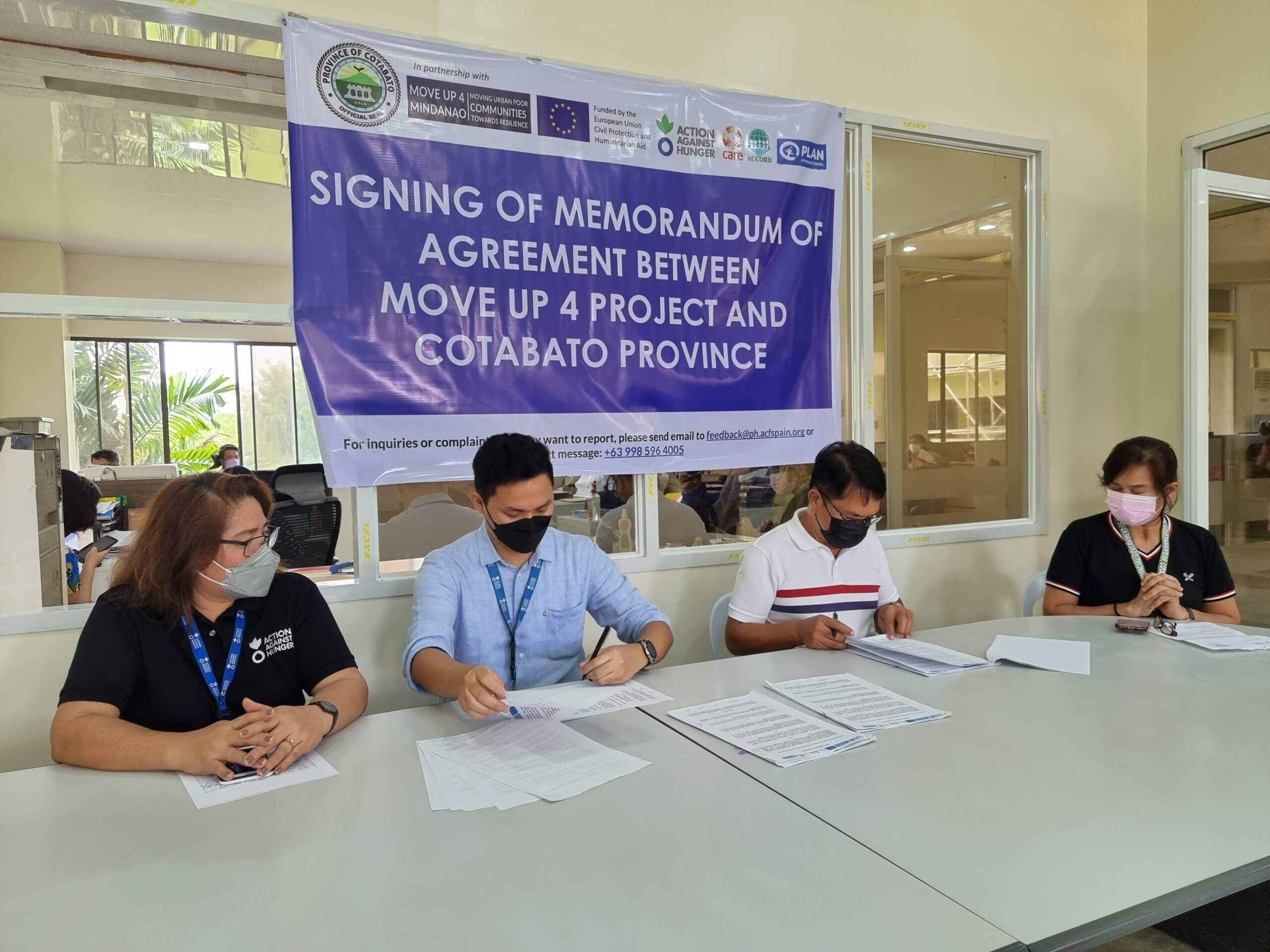
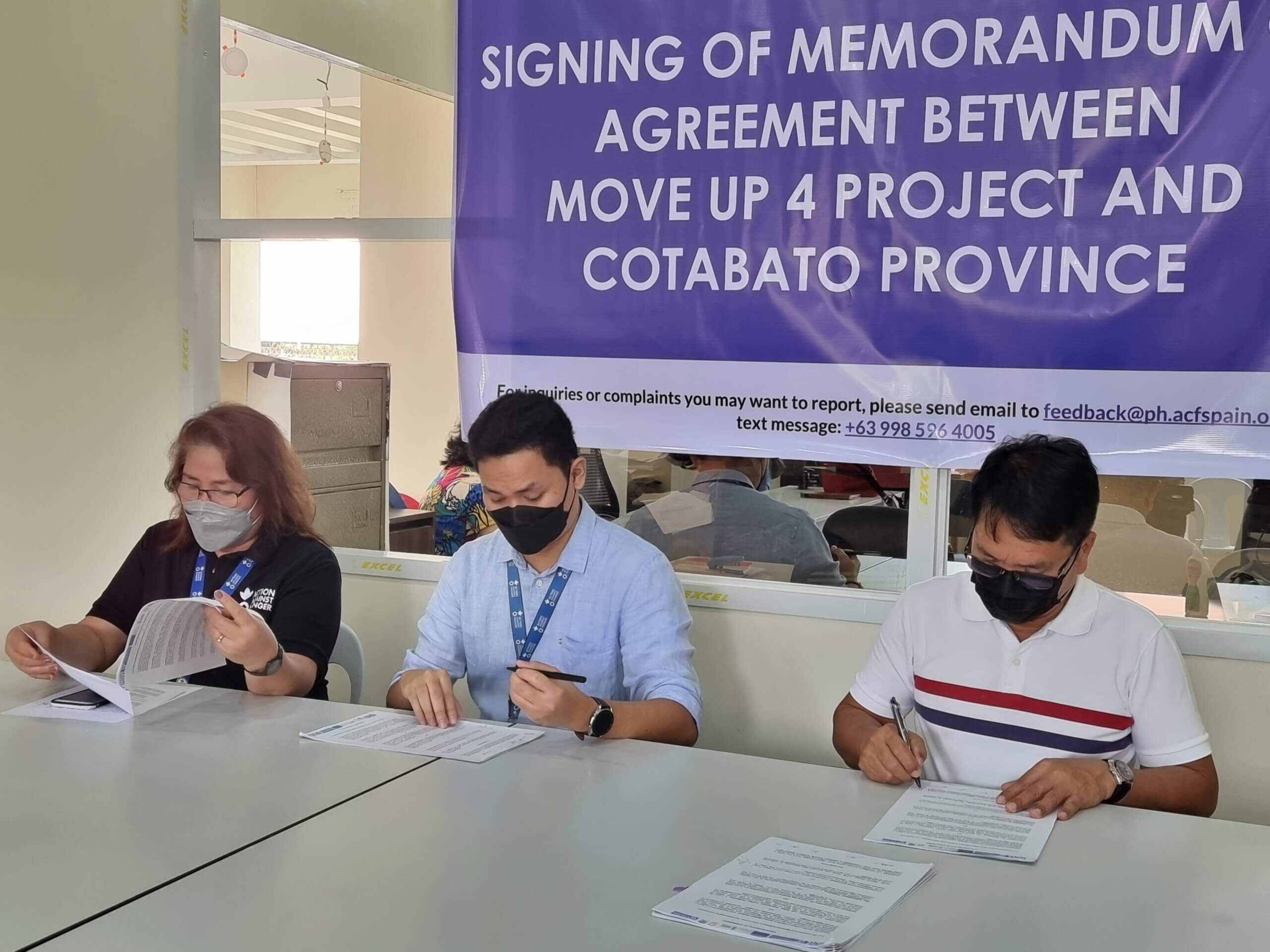
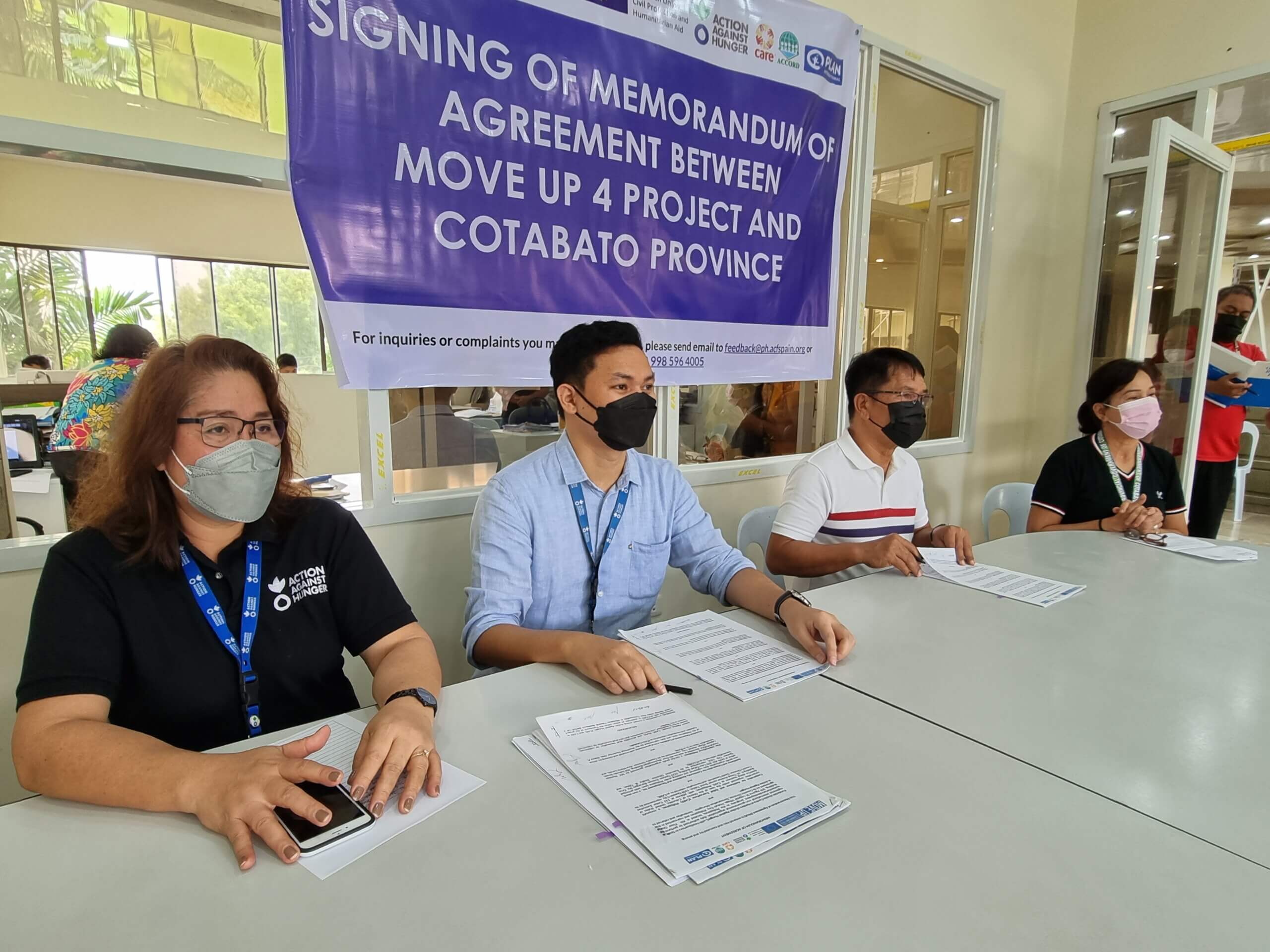
Signing of agreement: Four people seated side by side. The two in the middle are signing papers.

Roger Cabiles (second from the left) represents the MOVE UP 4 consortium as he signs the agreement with the local government of Cotabato Province on July 15, 2021. (Photo by MOVE UP 4 for Action Against Hunger)

How long have you been working as a humanitarian worker?

Almost a decade—from an indigenous peoples’ community in Pampanga to Typhoon Haiyan Response in Tacloban City with DSWD, then to post-conflict rehabilitation in Bangsamoro with FAO UN and now urban resilience with MOVE UP in Mindanao.

What motivated you to become a humanitarian worker?

A belief that everyone deserves a dignified life and a just society.

Why are you making this sacrifice?

I don’t really see it as a sacrifice but a shared responsibility. When someone sees poverty, inequality, and oppression, there should be no second thoughts about taking action. As for me, I know that my strengths are in managing and implementing development projects so I feel that this is my contribution to making the world a better place. Everyone has a stake in this so everyone should do their part, no matter what profession, no matter what work they do.
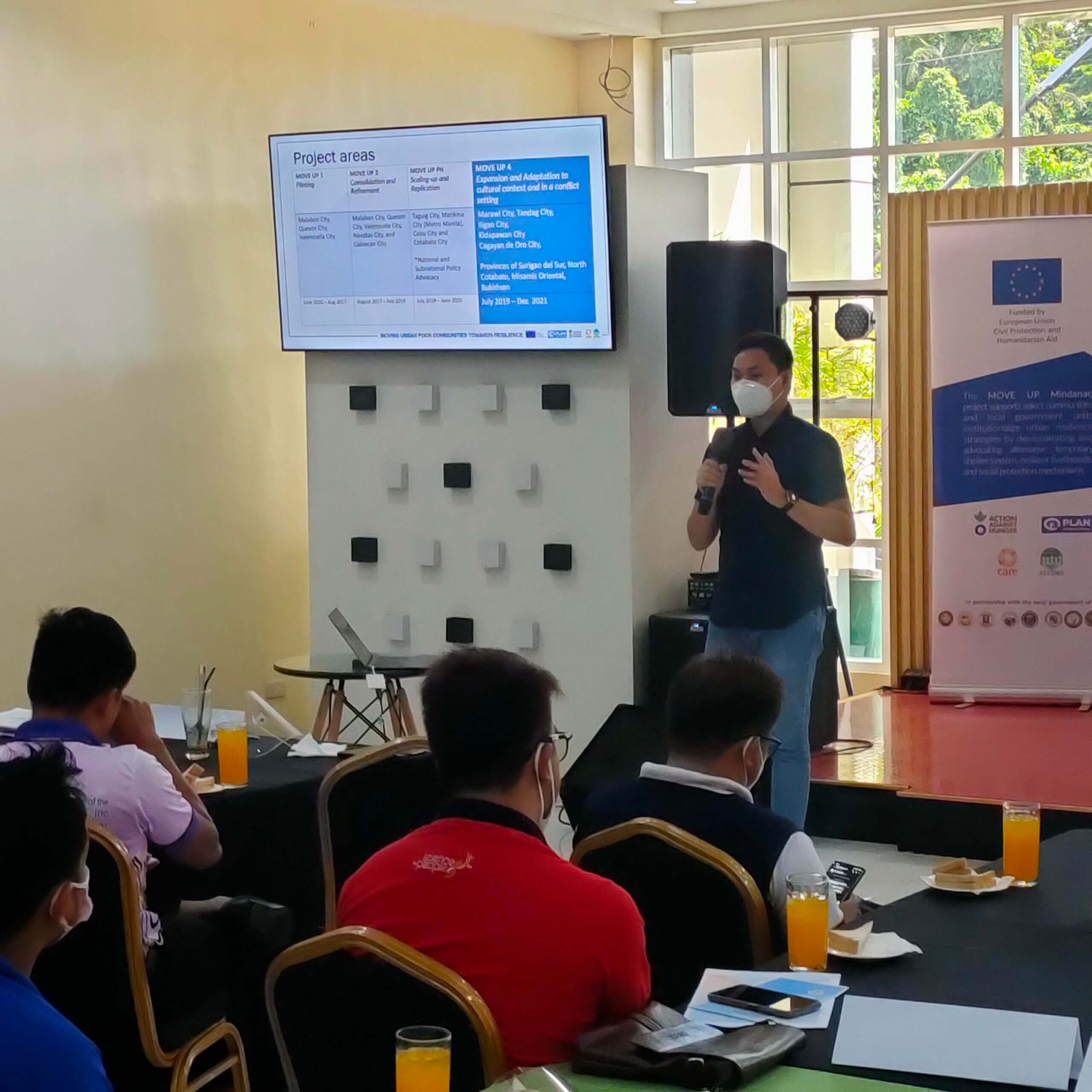
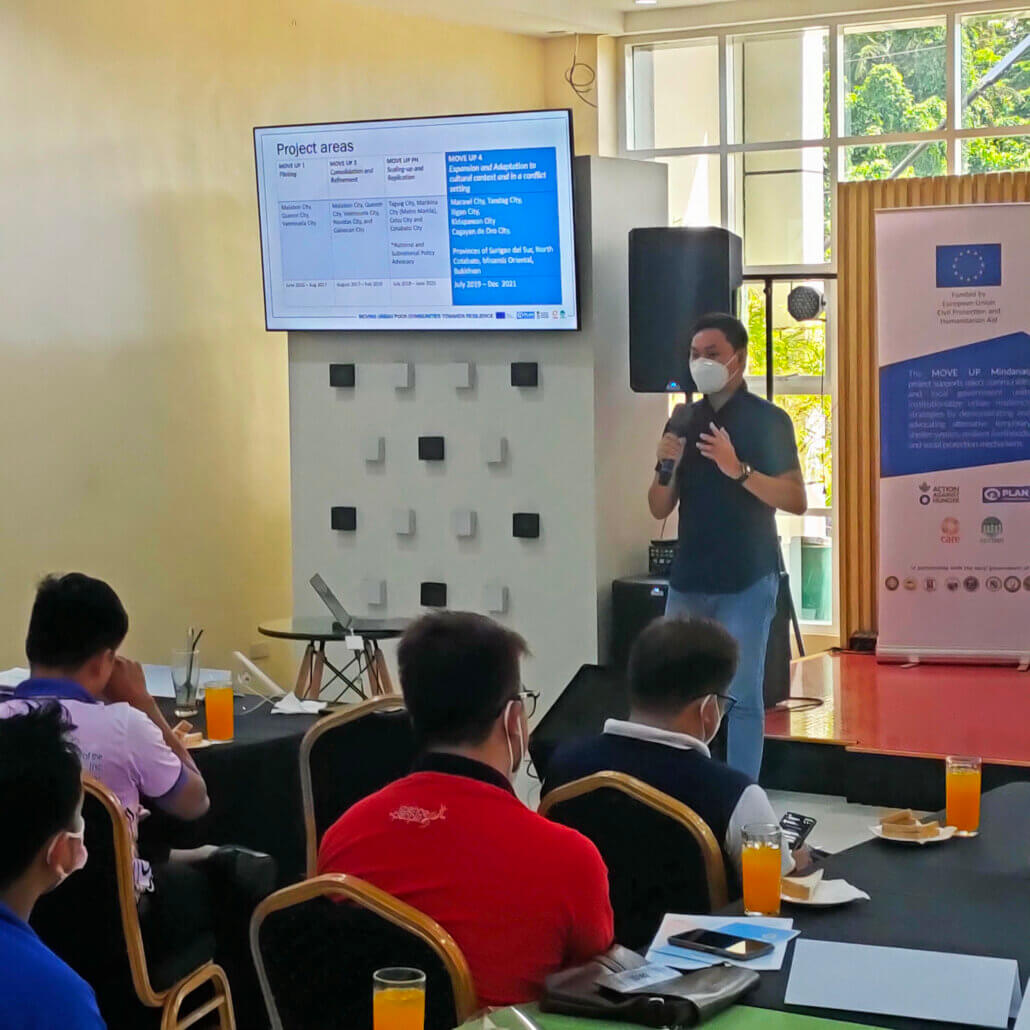
In photo: Roger Cabiles, Jr. shares updates on the MOVE UP 4 projects within intervention areas.

What have been the challenges to your work?

There are times you get overwhelmed with all that’s happening in the world and you feel you can’t do anything about it.

What motivates you to keep doing your work even with these challenges?

It is ironic that this feeling of being overwhelmed is also a motivation and a push for me. There’s a lot of work to be done and one should breathe, relax and get back to work.

When someone sees poverty, inequality, and oppression, there should be no second thoughts about taking action. Everyone has a stake in this so everyone should do their part, no matter what profession, no matter what work they do.” – Roger Cabiles, MOVE UP 4

Photo courtesy of Roger Cabiles

What are you most proud of?

I am proud when I become dispensable to a project. It means I have done my job— mentored my team well and made it more about the communities and less of us and the project. That is the measure of success for a development project—community ownership and sustaining the gains even after the project timeframe. Empowerment and sustainability are things that I am very proud of.

What climate change impact have you witnessed?

Oceans are getting warmer and warmer and typhoons are getting stronger and stronger. I have worked in post-Haiyan rehabilitation and I’ve seen its devastating impact. This will be the new normal.

How are you taking action against climate change?

Being conscious of the impact of your lifestyle and your actions on the environment as well as on vulnerable communities. But more than personal responsibility, demanding more from the private sector and the government on concrete and tangible ways to address climate change and its impact on communities especially the vulnerable ones.
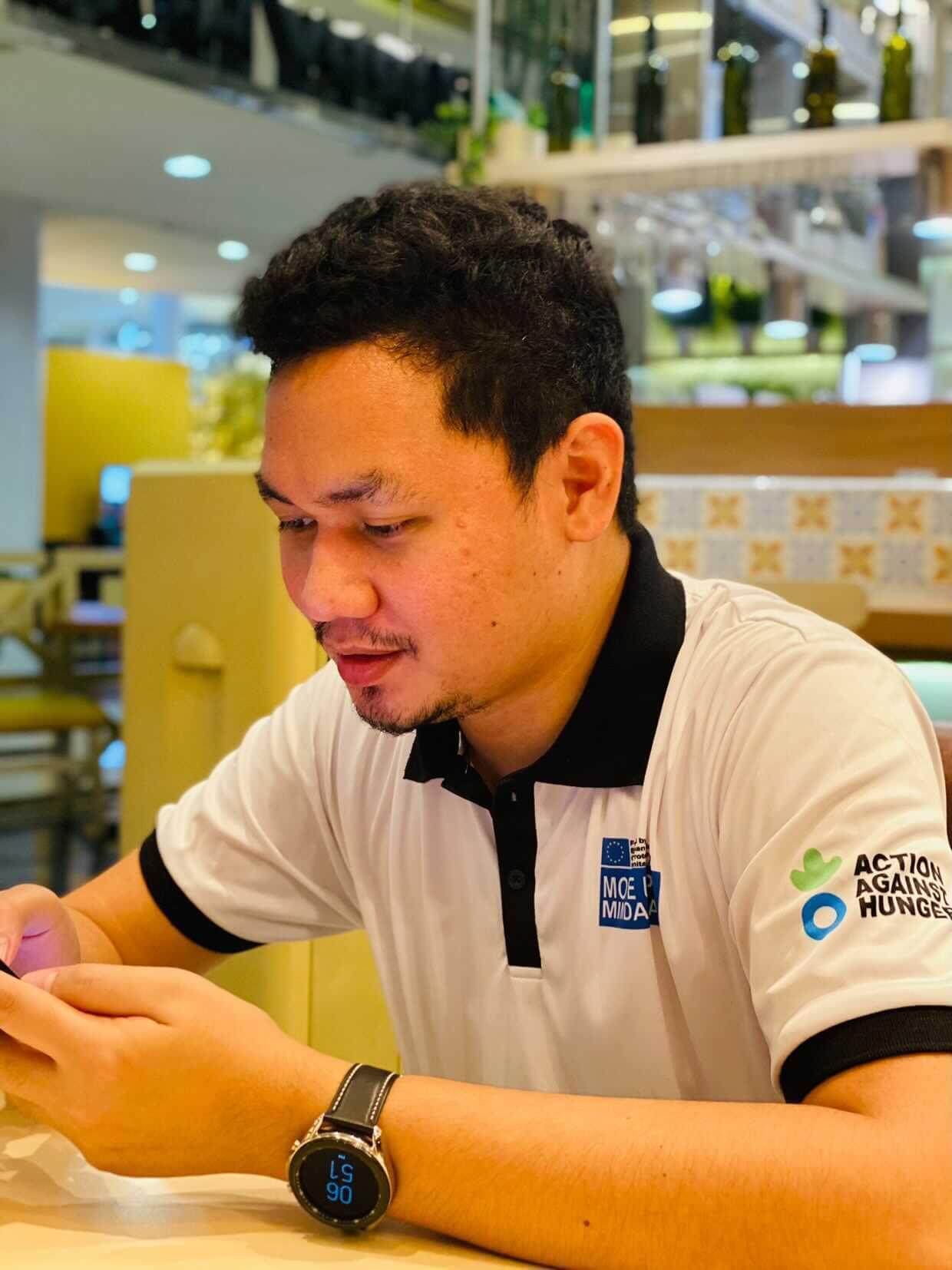
 

Photo courtesy of Roger Cabiles


Moving Urban Poor Communities Toward Resilience (MOVE UP 4) is an urban disaster risk reduction (DRR) project which aims to build resilience among urban poor communities in Mindanao. With funding from the European Union, MOVE UP 4—also known as MOVE UP Mindanao—is implemented by a consortium of partners consisting of Action Against Hunger PhilippinesPlan International PhilippinesCARE Philippines, and their local partner ACCORD Incorporated.
Read more

605 Displaced Families in Mindanao receive cash assistance to counter food insecurity

Photo by Juhaina Ebus for Action Against Hunger

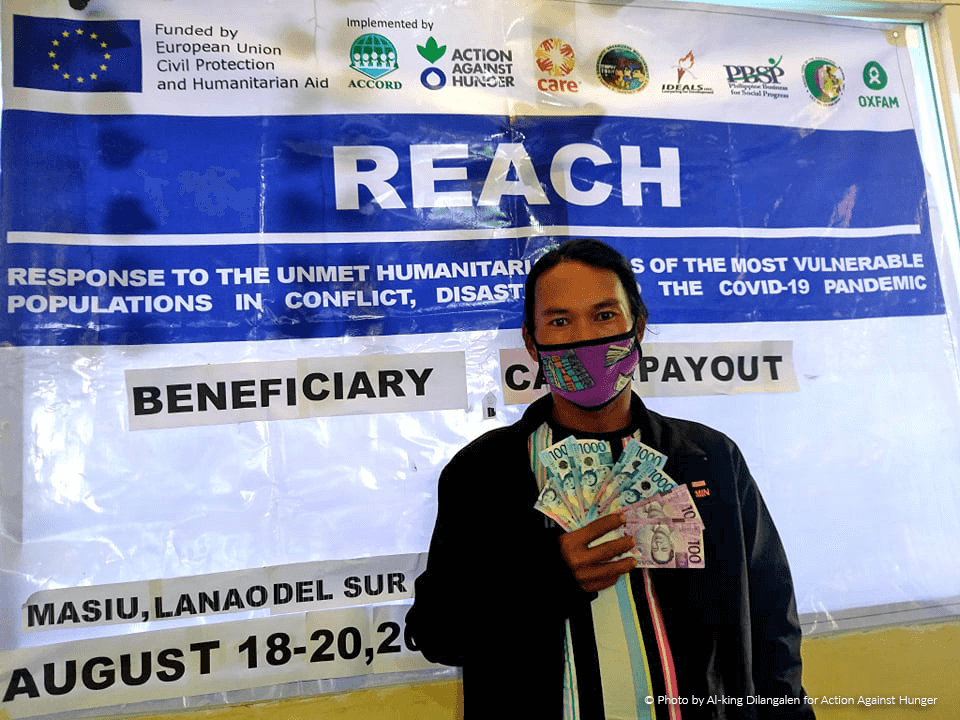
MINDANAO — A total of 605 displaced families in Lanao del Sur and Maguindanao received cash assistance amounting to 5,000 and 3,400 last August 18 to 20, 2021 during our Cash-for-Food payout, an activity under REACH Mindanao’s food security and livelihood (FSL) program.

The cash assistance is intended to support families who are at risk of facing food insecurity due to experienced protracted displacement. Local government units and agencies are already responding to these vulnerable communities, but because there are certain areas that would be deemed more susceptible to conflicts, calamities, and now the COVID-19 pandemic, these additional threats exacerbate the living conditions of internally displaced people. The situation they face can also further limit their financial resources, therefore making it more difficult to provide enough healthy and nutritious food for the entire family.

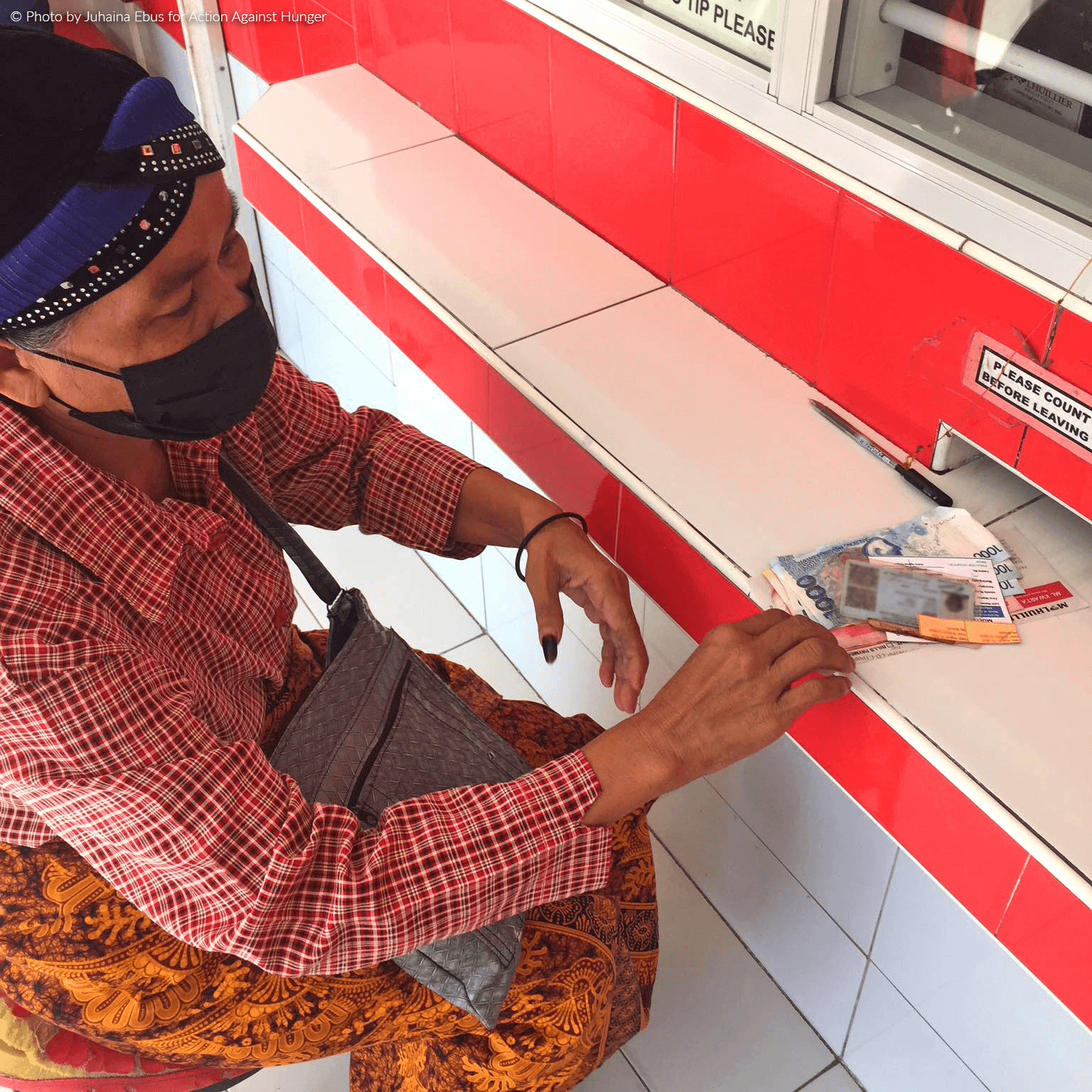
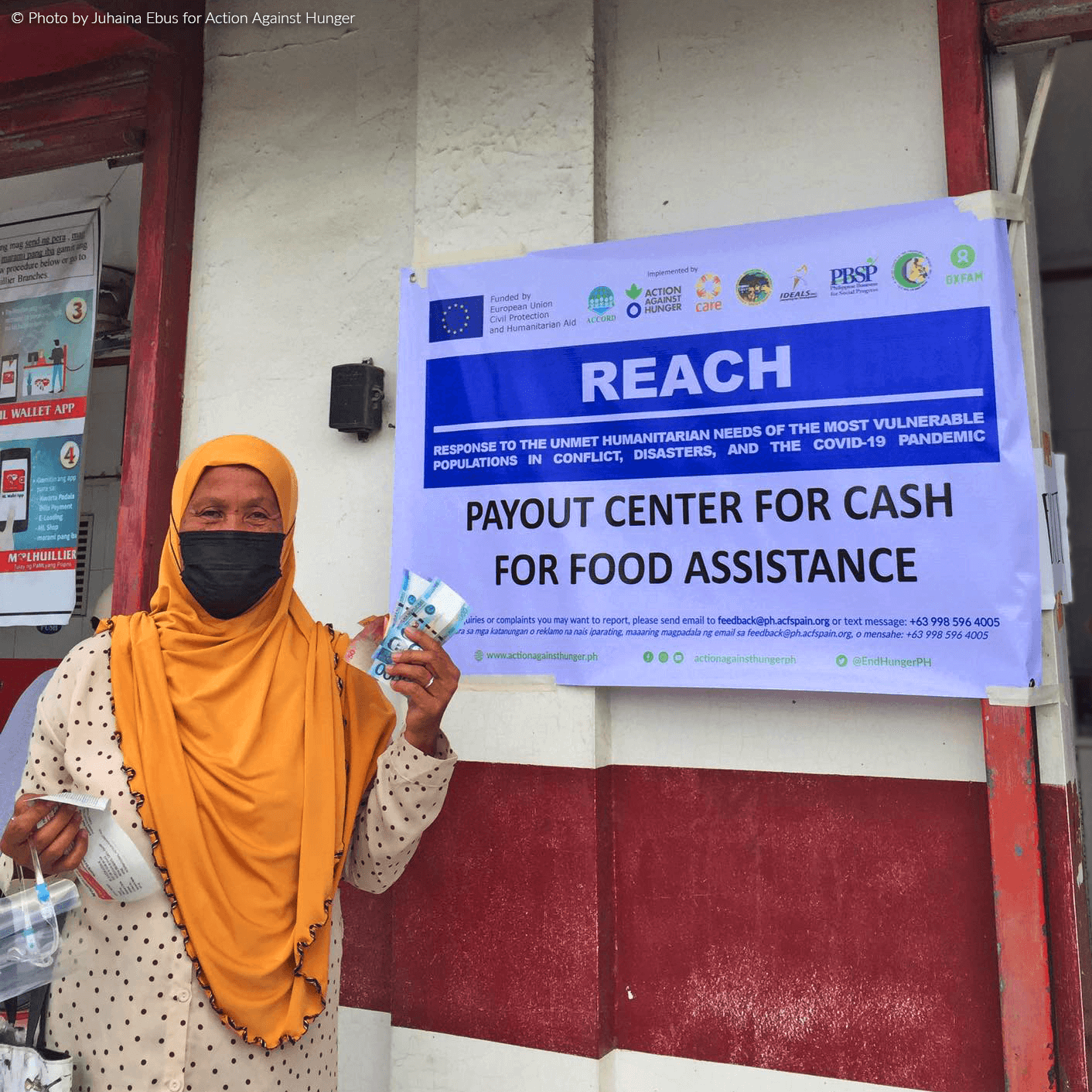
Cash Assistance Payout: Muslim woman holds cash paper bills while standing in front of REACH 2 project banner.

This household head successfully claims the Php5,000 during the cash payout for Datu Piang participating families. (Photo by Juhaina Ebus for Action Against Hunger)

Aside from the mentioned amount, each participating family also received a small allowance to cover the household representative’s travel expenses going to the payout center. Among the initial recipients of the cash support, 375 families were home-based internally displaced persons residing in Masiu, Lanao del Sur while the remaining 230 families resided in flood-affected areas of Datu Piang, Maguindanao. The goal of the cash assistance is to help affected families to meet the minimum food consumption necessary for each member.

IDPs in Masiu are no longer strangers to ongoing conflict and disasters. The Municipality of Datu Piang on the other hand is reportedly considered as a “catch basin” of several rivers coming from neighboring provinces. This makes the area more prone to flooding which can be easily triggered by heavy rainfall.

The payout activity was conducted in coordination with the municipal local governments of Masiu, and Datu Piang. REACH Mindanao will continue to roll out a series of food security & livelihood support programs for specific vulnerable populations in Mindanao.

(Photo by Al-king Dilangalen for Action Against Hunger)

The ‘Response to the Unmet Humanitarian Needs of the Most Vulnerable Populations in Mindanao Affected by Conflict, Disasters, and the COVID-19 Pandemic’ (REACH) Project is funded by the European Union and is implemented by ACCORD IncorporatedAction Against Hunger PhilippinesCARE PhilippinesCommunity Organizers Multiversity, Initiatives for Dialogue and Empowerment through Alternative Legal Services (IDEALS) Inc., Philippine Business for Social Progress (PBSP)United Youth of the Philippines-Women and Oxfam Pilipinas.

Read more

Local Government Academy, MOVE UP Consortium ink partnership agreement to promote disaster resilience

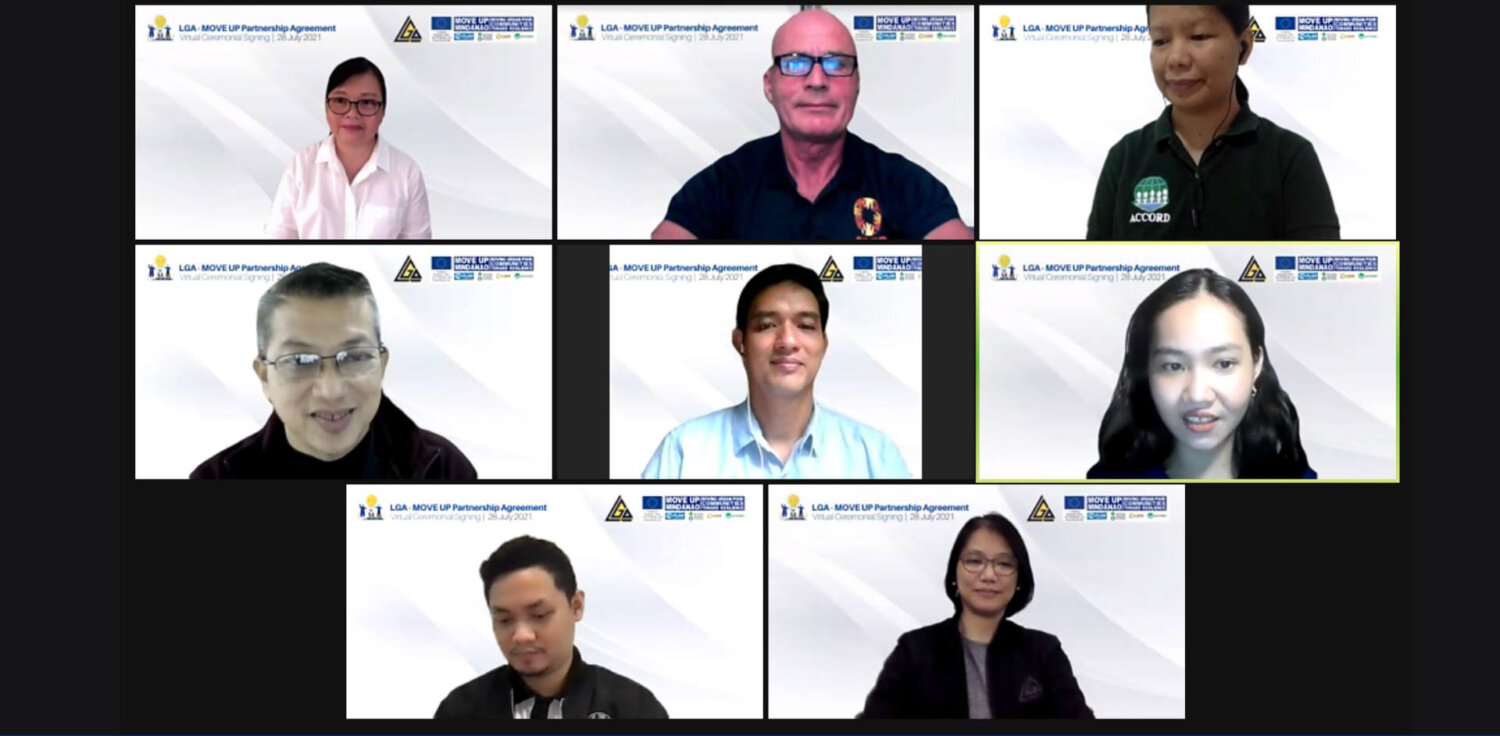
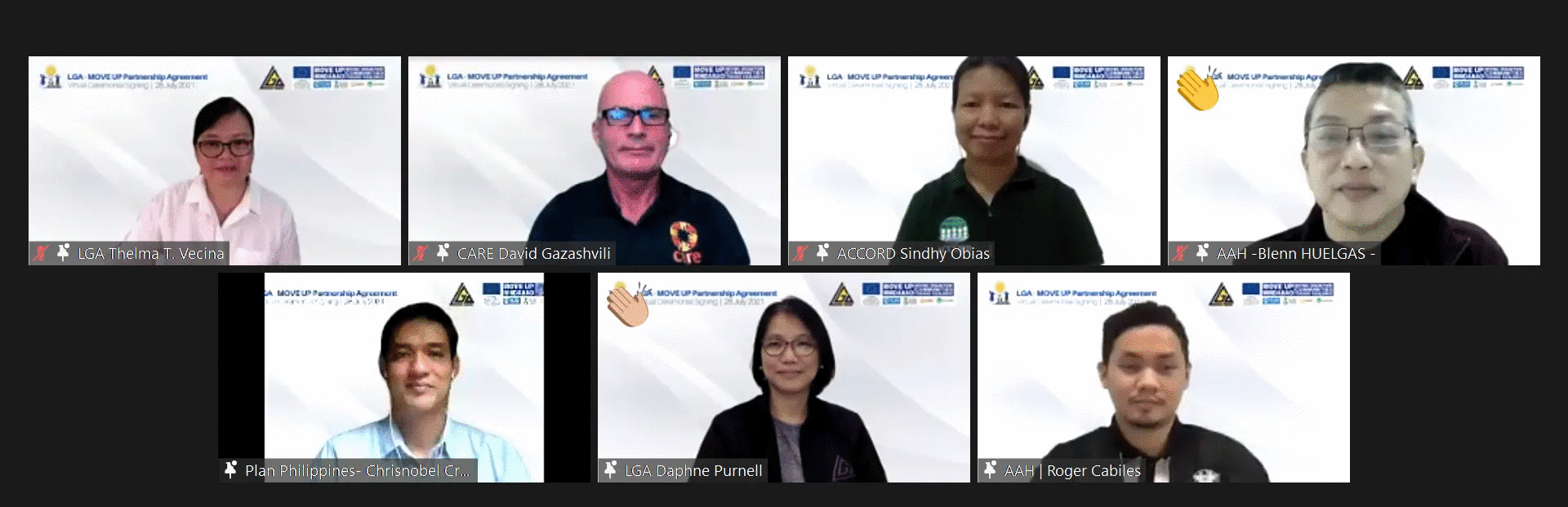
From left to right: Local Government Academy (LGA) Executive Director Thelma Vecina, CARE Philippines Country Director David Gazashvili, ACCORD Inc. Executive Director Sindhy Obias, Action Against Hunger Philippines Disaster Risk Reduction Coordinator Juan Blenn Huelgas (representing Country Director Suresh Murugesu), Plan International Philippines Country Program Manager for Disaster Resilience Chrisnobel Cruz (representing Country Director Annie Locsin), LGA Assistant Director Esmeralda Daphne Purnell, and MOVE UP Project Consortium Manager Roger Cabiles sign the Partnership Agreement today during the virtual ceremonial signing program. (Courtesy of MOVE UP 4 Consortium)

28 July 2021 – The Local Government Academy (LGA) and the Moving Urban Poor Communities Towards Resilience (MOVE UP) Project signed a partnership agreement as part of their commitment to strengthen disaster resilience.

Cooperation between the capacity and development arm of the Department of Interior and Local Government (DILG) and MOVE UP includes the review of various L!STO Operations Manual and conduct of capacity development interventions to local chief executives and other relevant stakeholders involved in disaster risk reduction and management (DRRM) activities.

The MOVE UP project, funded by the European Union, aims to help in institutionalizing urban resilience and disaster preparedness mechanisms for urban poor communities across the Philippines. The project is implemented by a consortium of international non-government organizations led by Action Against Hunger Philippines, with Plan International Philippines, CARE Philippines, and ACCORD.

During the event, LGA Executive Director Thelma Vecina said the ceremonial signing is highly symbolic as it coincides with the celebration of the National Disaster Resilience Month and is aligned with the LGA’s vision to build resilience through local government capacity-building activities.

“Today’s partnership is really significant and symbolic as we celebrate the National Disaster Resilience Month this July. For us in the LGA, this is really a great contribution to our efforts to build resilience of the local governments,” she said.

Furthermore, LGA Executive Director Vecina expressed that the LGA believes that increasing disaster resilience requires collective will and action from and among the communities, the local leaders, and stakeholders. “This is one among our many efforts to translate these commitments into actions. Hopefully, this initiates more cooperation in the future that will strengthen our nation’s resilience towards disaster,” she added.

Meanwhile, Juan Blenn Huelgas, Disaster Risk Reduction Coordinator of Action Against Hunger Philippines underscored the important role played by local government units in our collective effort to reduce the impact of disasters.

“Our local government units are at the forefront of mitigation, prevention, response, and management of these risks and vulnerabilities. It is right that we strengthen their capacities on resilience so that our urban poor population can withstand and manage the impact of natural and human-induced disasters, the very objective of the MOVE UP Consortium,” Huelgas said.

Child-centered organization Plan International Philippines’ Country Program Manager for Disaster Resilience Chrisnobel Cruz, meanwhile, emphasized the effects of disasters on the most vulnerable population, particularly girls and young women.

“Disasters could be detrimental to our effort to protect the rights and welfare of girls and young women. Disasters, and the crisis that comes with it, subject young women to the continual risk of violence, child marriage, and early and unplanned pregnancy, and threaten to roll back gains made in girls’ access to education,” Cruz said.

A strong partnership between the government and the civil society is needed to continuously increase the capacity of LGUs to prepare for and respond to disasters amid the mobility restrictions brought by the COVID-19 pandemic, CARE Philippines Country Director David Gazashvili said.

“As of last year, our webinar series entitled the Resilience Knowledge Exchange Series (RKES) reached 95 academic institutions, 80 CSOs, 83 national or regional government agencies, and 27 private-sector organizations. All of this of course would not be possible without the dedicated and passionate work of our partners and funders in the implementation of various development programs across the country. Therefore, we greatly cherish and foster the partnerships and collaborations with the likes of our consortium members and the DILG-LGA,” he said.

The Partnership Agreement, ACCORD Executive Director Sindhy Obias said, is a collective promise to share expertise to support local government units who are on the frontline in DRRM activities.

“As we sign this partnership agreement today, we view it not just a piece of paper but an expression of our collective commitment to work together towards the common goal of supporting our partners, particularly the local governments who are on the frontline when it comes to dealing with disasters, among many other related concerns on the ground. Being part of the MOVE UP consortium, ACCORD is very excited to work with DILG-LGA and share our experiences in resilience building,” Obias said.

Watch the Virtual Ceremonial Signing

Moving Urban Poor Communities Toward Resilience (MOVE UP 4) is funded by the European Union and implemented by a consortium of partners consisting of Action Against Hunger Philippines, Plan International Philippines, CARE Philippines, and ACCORD Incorporated.

For inquiries or concerns, contact: Claudine Complativo,

Communications and Advocacy Specialist (MOVE UP Project)  | 0906-589-8180

Disclaimer: The views and opinions expressed are those of the author(s) only and do not necessarily reflect those of the European Union, or the consortium members.

Neither the European Union nor any of the consortium members can be held responsible for them.
Read more

MOVE UP 4 Mindanao strengthens support to partner communities this National Disaster Resilience Month

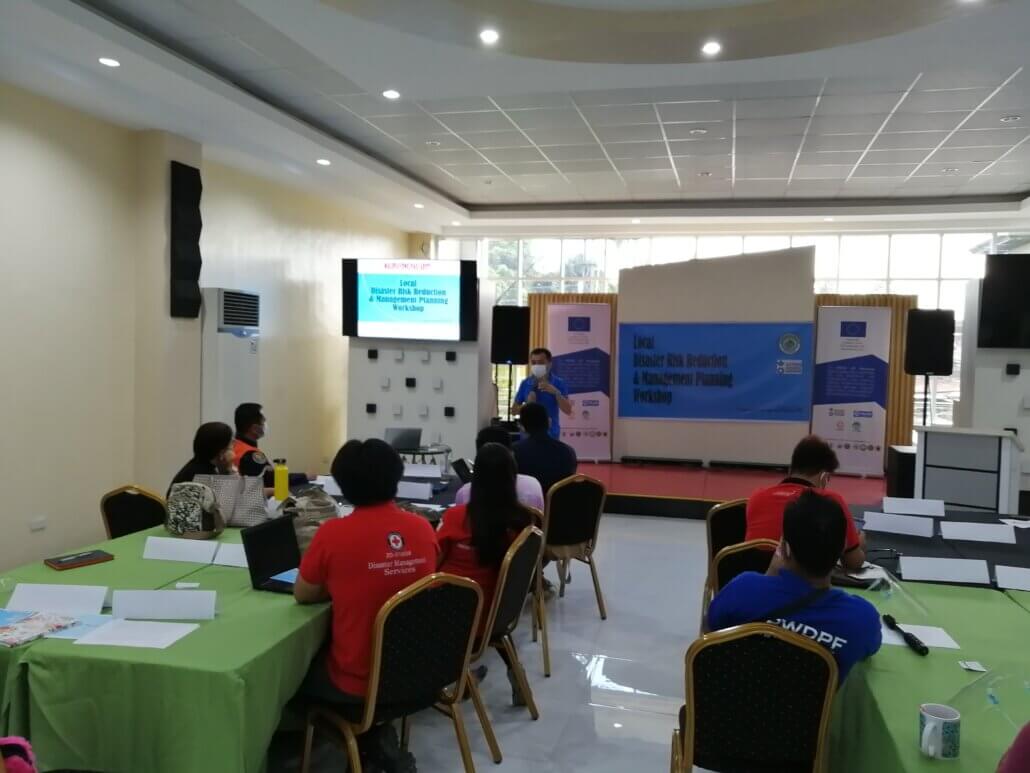
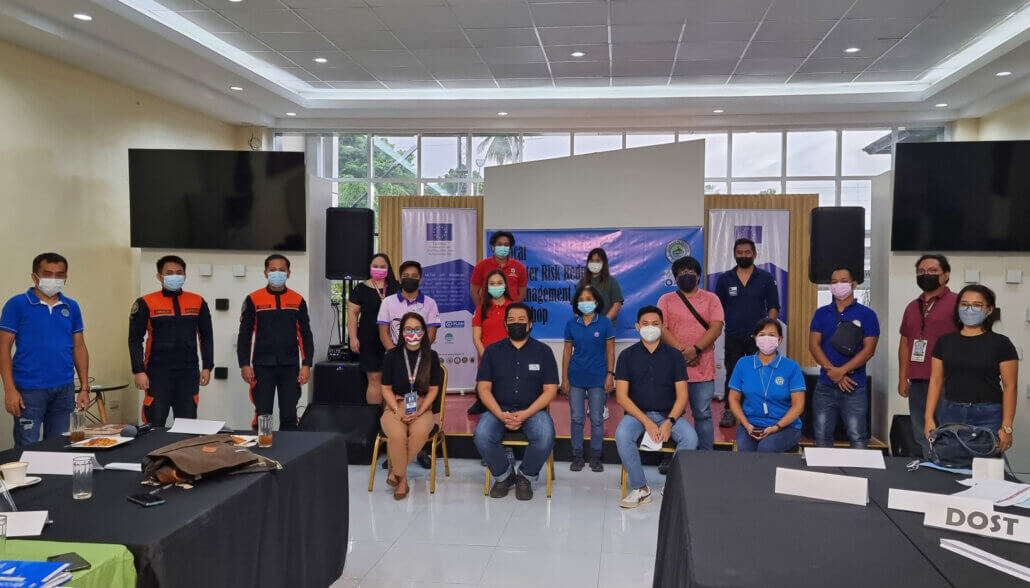
MOVE UP 4 reinforced the partnership with the Provincial Government of Cotabato by providing technical assistance in updating their DRRM plan during the Local Disaster Risk Reduction and Management Planning Workshop held last July 14-15, 2021 at Parkland Suites, Kidapawan City, North Cotabato. The workshop was conducted in line with the 2021 National Disaster Resilience Month’s theme, “Tamang Pamamahala’t Kahandaan, Kaalaman at Pagtutulungan sa Sakuna at Pandemya’y Kalasag ng Bayan.” 
Roger Cabiles, MOVE UP 4 Consortium Manager and Head of Project for Action Against Hunger Philippines, held a discussion on ‘Shock-Responsive Social Protection and Resilient Livelihoods in DRRM Planning.’ Aside from tackling the importance of supporting disaster-resilient livelihoods, the discussion also emphasized the need to have effective, responsive, and inclusive social protection for communities.
Roger Cabiles, Jr. presenting in front of the seated participant with the project area presentation flashed on an overhead television on his right.

In photo: Roger Cabiles, Jr. shares updates on the MOVE UP 4 projects within intervention areas.

The MOVE UP consortium manager also shared updates on various MOVE UP livelihood activities in Kidapawan City. Among the examples were the establishment of Community Savings Groups in addition to providing livelihood assistance to at-risk households, promoting crop insurance, and other risk transfer mechanisms.
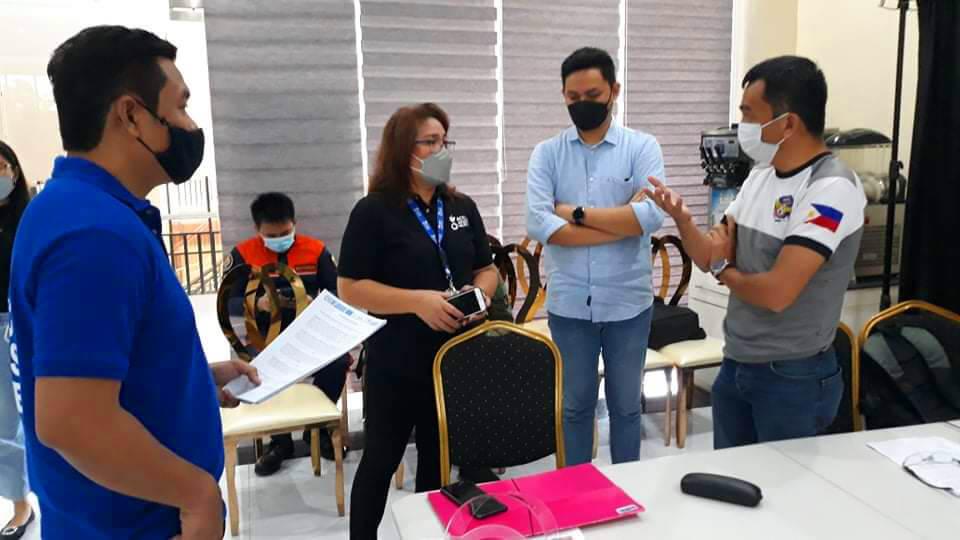
Three representative individuals from Action Against Hunger talk with Cotabato PDRRM Officer, Abril Espadera

In photo (L-R): Lyndon Arbes (Deputy Head of Project for Action Against Hunger), Delilah Chua (Action Against Hunger Head of Iligan Base). Roger Cabiles, Jr. (MOVE UP 4 Consortium Manager & Head of Project for Action Against Hunger), and Abril Espadera (Cotabato Provincial DRRM Officer)

MOVE UP 4 Mindanao continuously supports local government units in building the resilience of our partner communities. It aims to strengthen the disaster preparedness, response, and management capacity of both the national government and local government units (LGU).

Written by: Joyce Sandajan
Disclaimer: The views and opinions expressed are those of the author(s) only and do not necessarily reflect those of the European Union, or the consortium members. Neither the European Union nor any of the consortium members can be held responsible for them.

Read more

Emergency Preparedness Helps Action Against Hunger Team Escape Mt. Apo Landslide

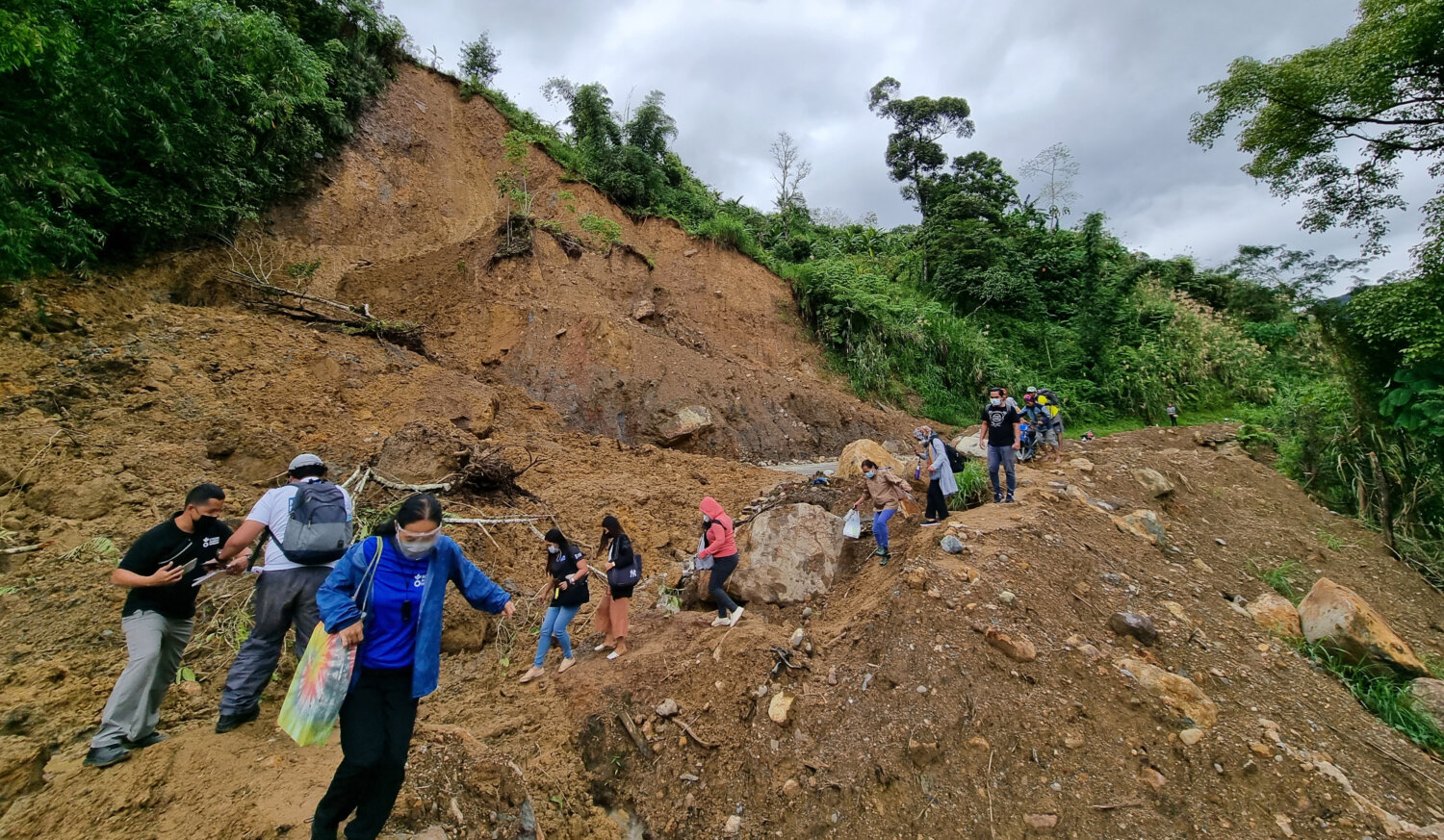
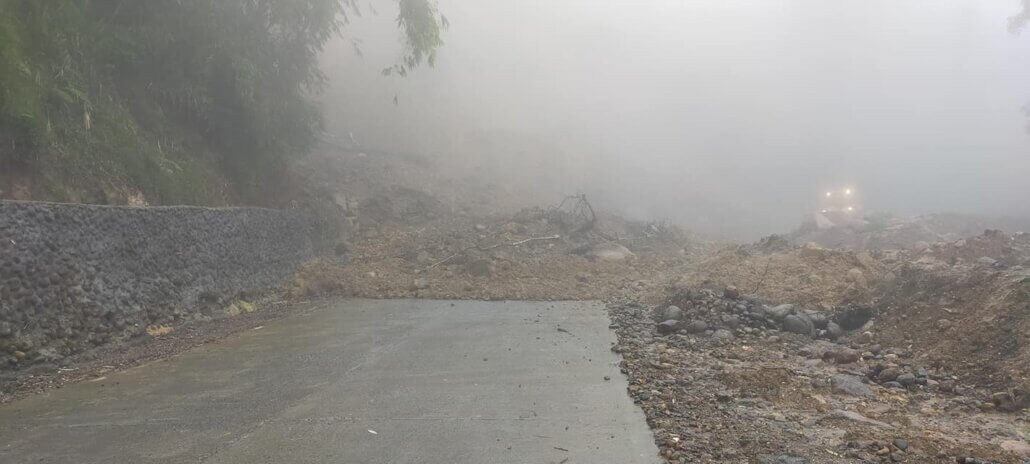
KIDAPAWAN CITY – Twelve (12) Action Against Hunger staff members were left stranded after a landslide had blocked a part of Mt. Apo Highway last July 16, 2021. The incident was reported to have occurred sometime in the morning after a series of heavy rainfall in the area.

No casualties were reported and the staff members managed to safely go over the landslide area before the Kidapawan City Disaster Risk Reduction Management Office (CDRRMO) rescue vehicle arrived and assisted them back to the city proper. The staff members who experienced the ordeal were part of the MOVE UP 4 Project team in Kidapawan and visiting staff from Action Against Hunger Philippines’ Manila Head Office.

The teams were already on their way back in two separate vehicles after conducting field visits in Barangay Illomavis when they reached the roadblock caused by the landslide. Being the first to witness the scene and having no alternate routes going to the city proper, the stranded staff decided to go over the mound of debris by foot.

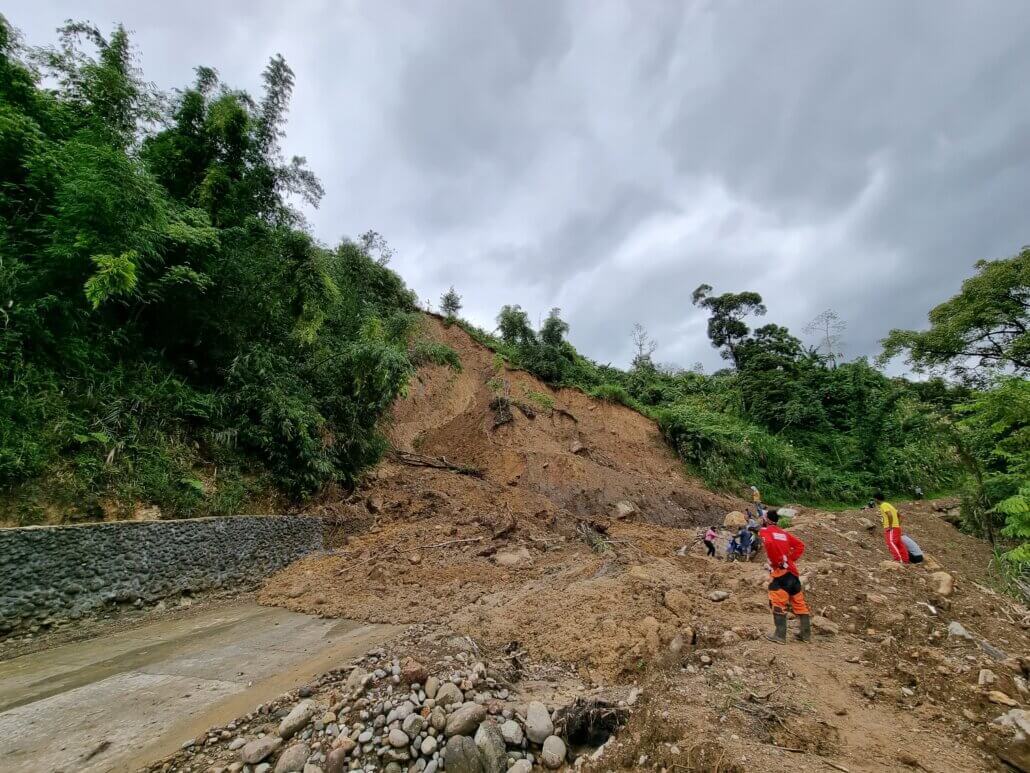
The landslide covered a portion of the road, making it impossible for vehicles to pass throigh.

Photo by Roger Cabiles, Jr. for Action Against Hunger

“[The situation] gave us an opportunity to reflect about humanitarian workers, that we are dispensable,” shared MOVE UP 4 Consortium Manager and Head of Project Roger Cabiles. Despite facing a predicament, the team remained calm and quickly followed emergency protocol. “Being careful is really important as well as assessing risks and hazards and knowing what to do if a disaster happens,” he added. Deputy Head of Project Lyndon Arbes then coordinated with Kidapawan CDRRMO Head Psalmer Bernalte, who facilitated the quick rescue response.

“[The situation] gave us an opportunity to reflect about humanitarian workers, that we are dispensable…Being careful is really important as well as assessing risks and hazards and knowing what to do if a disaster happens,” he added.

Photo courtesy of Kidapawan City Disaster Risk Reduction Management Office

Clearing operations on the highway began immediately thereafter. According to Psalmer Bernalte, soil movements have gradually been covering portions of the highway two months earlier, prompting the city to conduct preventive measures against potential landslides.

For the MOVE UP 4 team, the experience further strengthened their commitment to work with partner LGUs and communities through disaster risk reduction, emergency response, and resilience building.

“These risks and hazards are normal to the communities we serve, and they experience it in their everyday lives… our work in building the resilience of our communities continues,” said Roger Cabiles.

Moving Urban Poor Communities Toward Resilience (MOVE UP 4) is funded by the European Union and implemented by a consortium of partners consisting of Action Against Hunger PhilippinesPlan International PhilippinesCARE Philippines, and ACCORD Incorporated.
 

Related stories:

Philippine News Agency – Int’l NGO workers narrowly escape Mt. Apo landslide
GMA News – 12 NGO employees na naipit sa landslide, nasagip


Written by Joyce Sandajan

Disclaimer: The views and opinions expressed are those of the author(s) only and do not necessarily reflect those of the European Union, or the consortium members. Neither the European Union nor any of the consortium members can be held responsible for them.

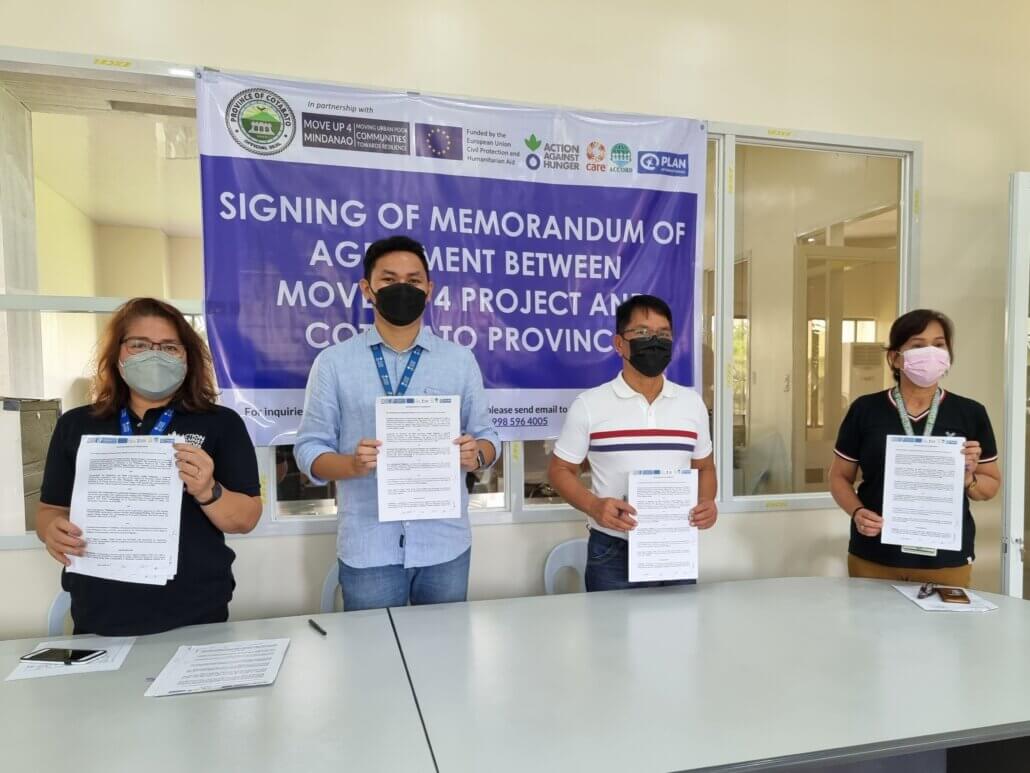
MOVE UP 4 signs agreement with Cotabato Provincial Government

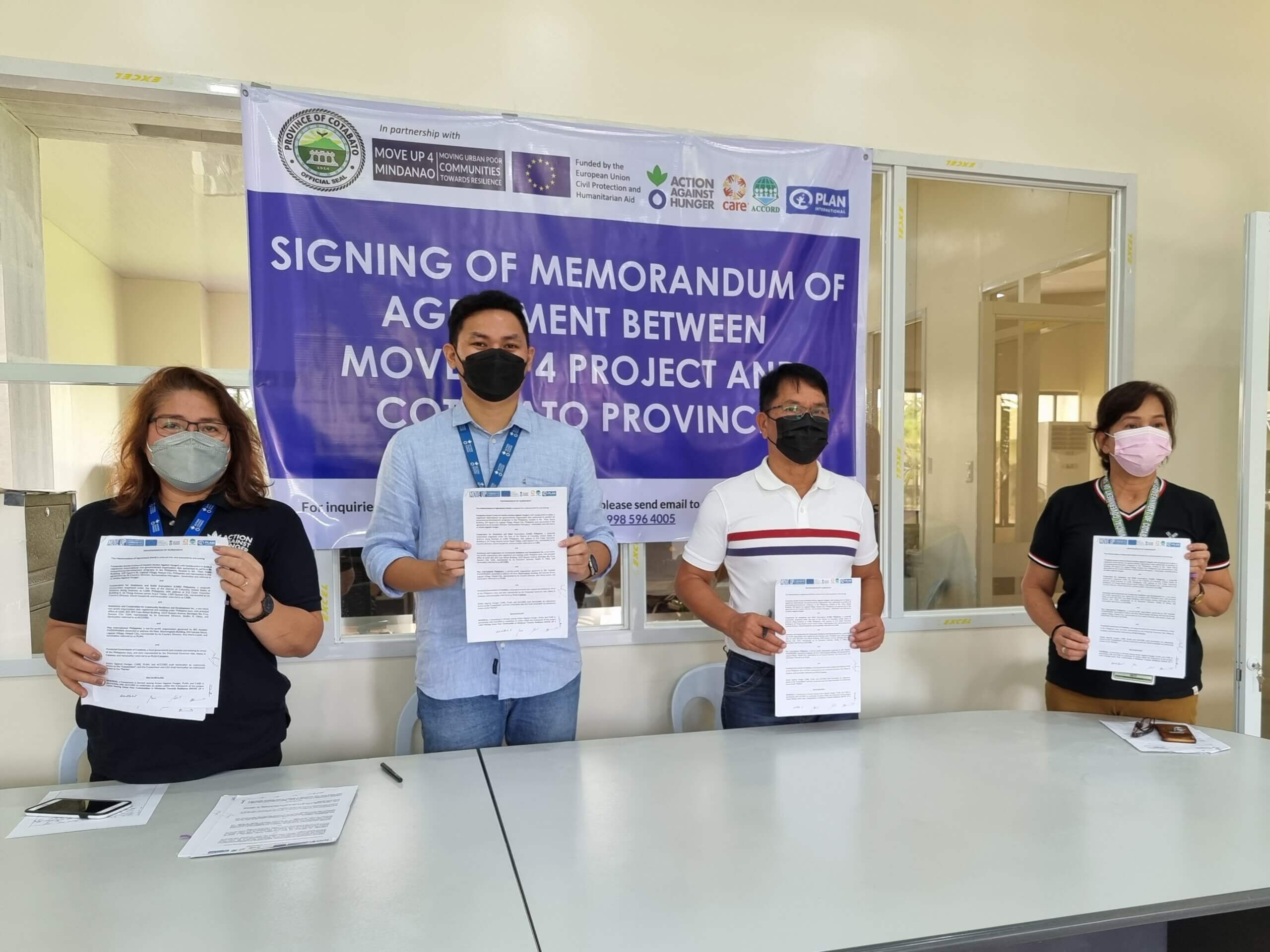
KIDAPAWAN CITY — The MOVE UP 4 Mindanao reached another milestone as the disaster risk reduction (DRR) project signed a memorandum of agreement (MOA) with the Provincial Government of Cotabato last July 15, 2021, at the Provincial Capitol, North Cotabato. Roger Cabiles (Action Against Hunger Head of Project and Consortium Manager of MOVE UP 4) and Efren Piñol (North Cotabato Provincial Administrator) were the main signatories during the ceremony.

In photo (L-R): Delilah Chua (Action Against Hunger Head of Iligan Base). Roger Cabiles, Jr. (MOVE UP 4 Consortium Manager & Head of Project for Action Against Hunger), Efren Piñol (Cotabato Provincial Administrator), and Mercedita Foronda (PDRRMO Head)

The agreement outlines the partnership between the two parties which supports the promotion, adaptation, and replication of MOVE UP 4’s tested urban resilience strategies. Mercedita Foronda (Head of Cotabato Provincial DRRMO), Delilah Chua (Action Against Hunger Head of Cotabato Base), Lyndon Arbes (Action Against Hunger Deputy Head of Project), and Louie Bullanday (Action Against Hunger DRR Supervisor) were also present as witnesses of the ceremonial signing event.
The partnership is a leap towards achieving the project’s goal of building the resilience of urban poor communities by strengthening disaster preparedness, response, and management capacity of the national government and local government units.

Written by Joyce Sandajan   |   Disclaimer: The views and opinions expressed are those of the author(s) only and do not necessarily reflect those of the European Union, or the consortium members. Neither the European Union nor any of the consortium members can be held responsible for them.

MOVE UP 4 launches Webinar on Mainstreaming Social Protection Initiatives at the Local Level

A webinar on ‘Mainstreaming Social Protection Initiatives at the Local Level’ was launched last Thursday, June 24, which was organized by the Moving Urban Poor Communities Toward Resilience (MOVE UP) project in partnership with the Local Government Academy. The webinar was attended by almost 500 local chief executives and local government unit staff from all over the Philippines.
Roger Cabiles, Action Against Hunger Head of Project and MOVE UP 4 Consortium Manager, presented the Urban Resilience Model and Basic Concepts on Shock-Responsive Social Protection while Atty. Melchor Mergal, Municipal Mayor of Salcedo in Eastern Samar, shared the successful implementation of an Anticipatory Action in DRRM project in their municipality.

Written by Joyce Sandajan   |   Disclaimer: The views and opinions expressed are those of the author(s) only and do not necessarily reflect those of the European Union, or the consortium members. Neither the European Union nor any of the consortium members can be held responsible for them.

Read more

Forming A Cash Savings Group (CSG) For Emergencies In Kidapawan City

One of the ways we empower women is through our livelihood programs. Across the communities we work with, we provide them with knowledge and proper tools to enable them to be financially resilient.

These women from Barangay Ilomavis in Kidapawan City are uniting their efforts in forming a cash savings group (CSG) for emergencies. Their barangay was one of the hardly affected barangays during the series of Mindanao Earthquakes back in 2019.

Photo by Louie Bullanday for Action Against Hunger

Following this, our MOVE UP 4 Project introduced these women to the CSG as one of the mechanisms to build financial independence and resilience for their households. Aside from the emergency funds they managed to save, they have also gained more confidence from being able to provide financial stability for their family during emergency situations like disasters or the pandemic.

We celebrate the success of these women and hope to empower more through the work that we do, one community at a time.

Written by Lyndon Arbes, Louie BullandayJoyce Sandajan
Disclaimer: The views and opinions expressed are those of the author(s) only and do not necessarily reflect those of the European Union, or the consortium members. Neither the European Union nor any of the consortium members can be held responsible for them.

Real Life Heroes – Cha Magdadaro

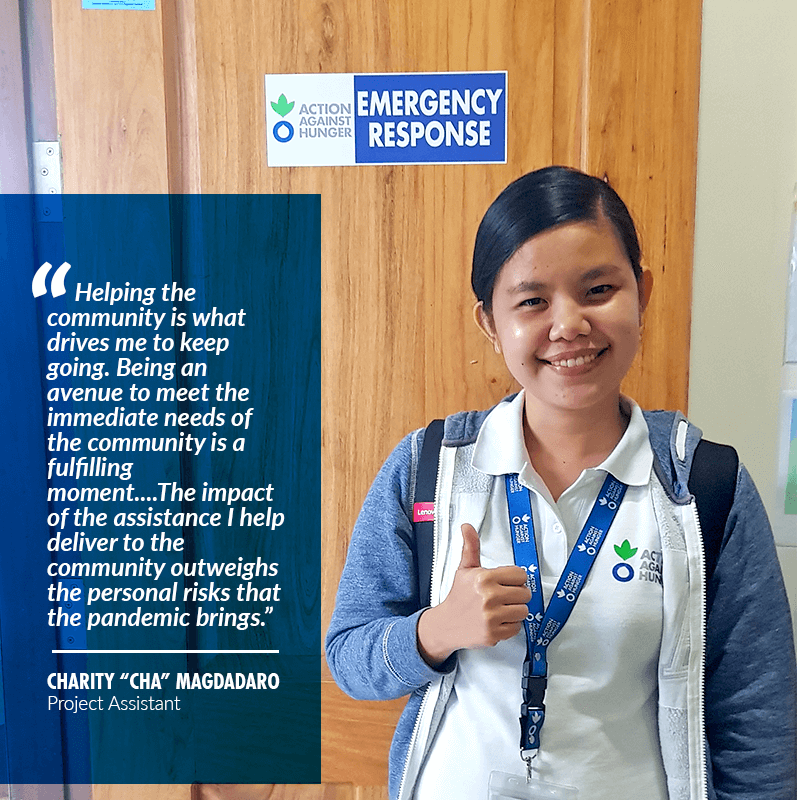
Charity “Cha” Magdadaro, one of our Project Assistants for our Typhoon Ulysses (Vamco) Response in Cagayan shared with us her insights as a humanitarian worker for eight years now. Get to know Cha and find out what makes her one of our Real Life Heroes.


What motivates you to become a humanitarian worker?

I started working as a humanitarian volunteer in 2013. After few involvements, I tried jobs in the industrial field, but my heart always searched for a job that works with the community. Working in this field gives me deeper satisfaction than other jobs. I witnessed a huge need of change that most communities in the Philippines need, and the small, step-by-step impact of humanitarian intervention to communities always makes a big difference.

Being able to witness children learning, mothers accepting new knowledge, and empowering the members of community – these things are priceless.

Why are you making this sacrifice?

With the challenges that the pandemic we are all facing and the calamities that heap up the burden of the vulnerable community, it is not easy to just ignore it. Humanitarian work is needed. Someone needs to do it. Someone needs to be there. I am answering the call.

What have been the challenges to your work because of the COVID-19 pandemic?

Due to budgetary constraints, we could not help all the people needing assistance. We had to be selective and narrow down our beneficiaries to the most vulnerable sector of the population.

Several of our planned activities have also been postponed due to community quarantine initiatives that the LGUs imposed. Within the community, the challenges of involving senior citizens, pregnant and lactating women and other vulnerable members of the community had been tough since they were the ones not allowed to be in social gathering, not even allowed to go out.

But then, beyond the mentioned challenges, the risk of being with a lot of people amid this pandemic is the most weighing burden I have. The heightened sense of protecting myself for the sake of my family, friends and the team is always the priority. With all the tasks I have to accomplish every day, this is a big challenge.

What motivates you to keep doing your work even with these challenges?

Helping the community is what drives me to keep going. Being an avenue to meet the immediate needs of the community is a fulfilling moment. 3 months after Typhoon Goni, some of our beneficiaries still live in tents in evacuation centers. The most common profile of the people we help are families with pregnant and lactating mothers do not earn a living wage and Senior Citizens with chronic ailments. Our interventions help them sustain hope despite the flooding and the pandemic that had caused them to lose so much.

The impact of the assistance I help deliver to the community outweighs the personal risks that the pandemic brings.

What are you most proud of?

I am proud of the team I am with in this emergency response. Despite the pandemic, we are still able to achieve our purpose in the community. There is always that challenge to strike the balance between taking a risk and protecting ourselves. Nonetheless, my team works hard, sacrificing things in life, just to do their job at its best.


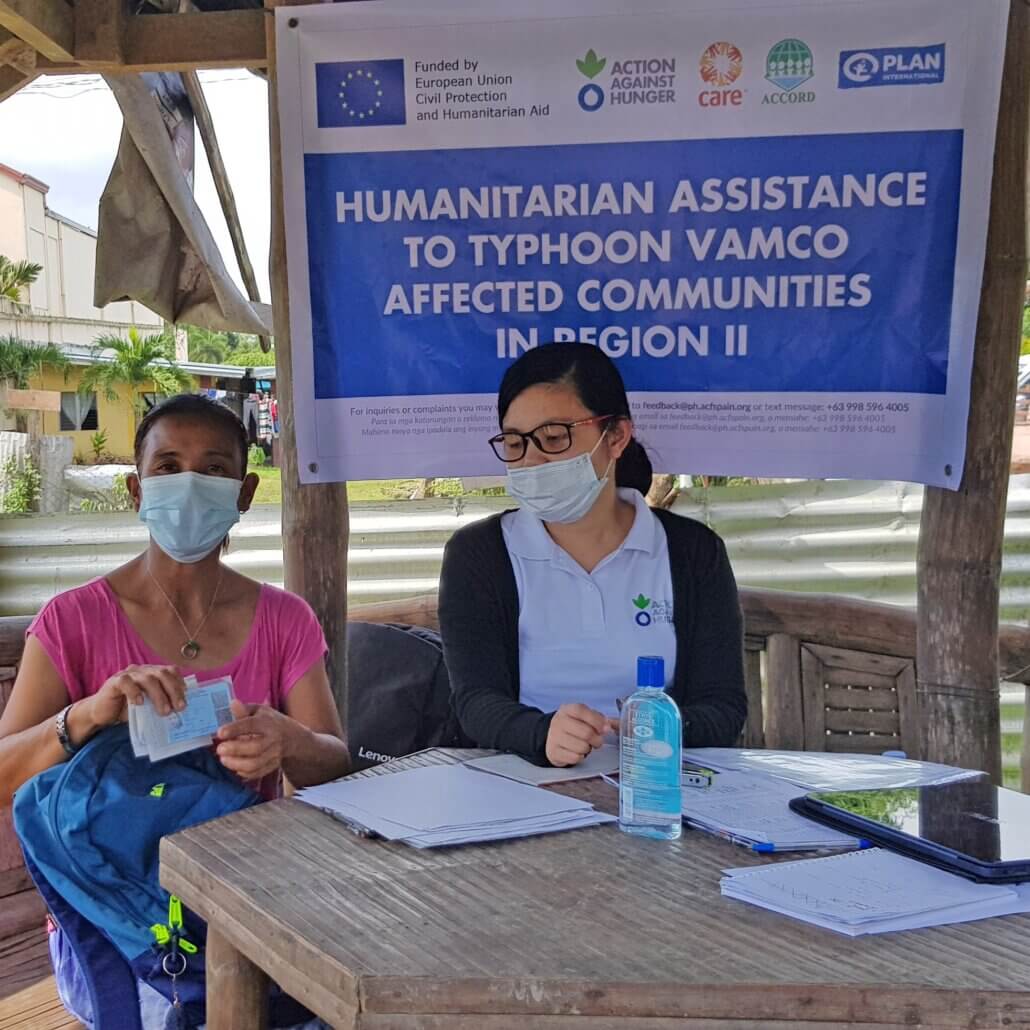
Our Humanitarian Assistance to Typhoon Vamco-affected Communities in Region II, Philippines is funded by the European Union, and implemented by Action Against Hunger Philippines, CARE Philippines, ACCORD Incorporated, and Plan International Philippines

Rising from poverty: Action Against Hunger co-launches investment fair in Kidapawan City

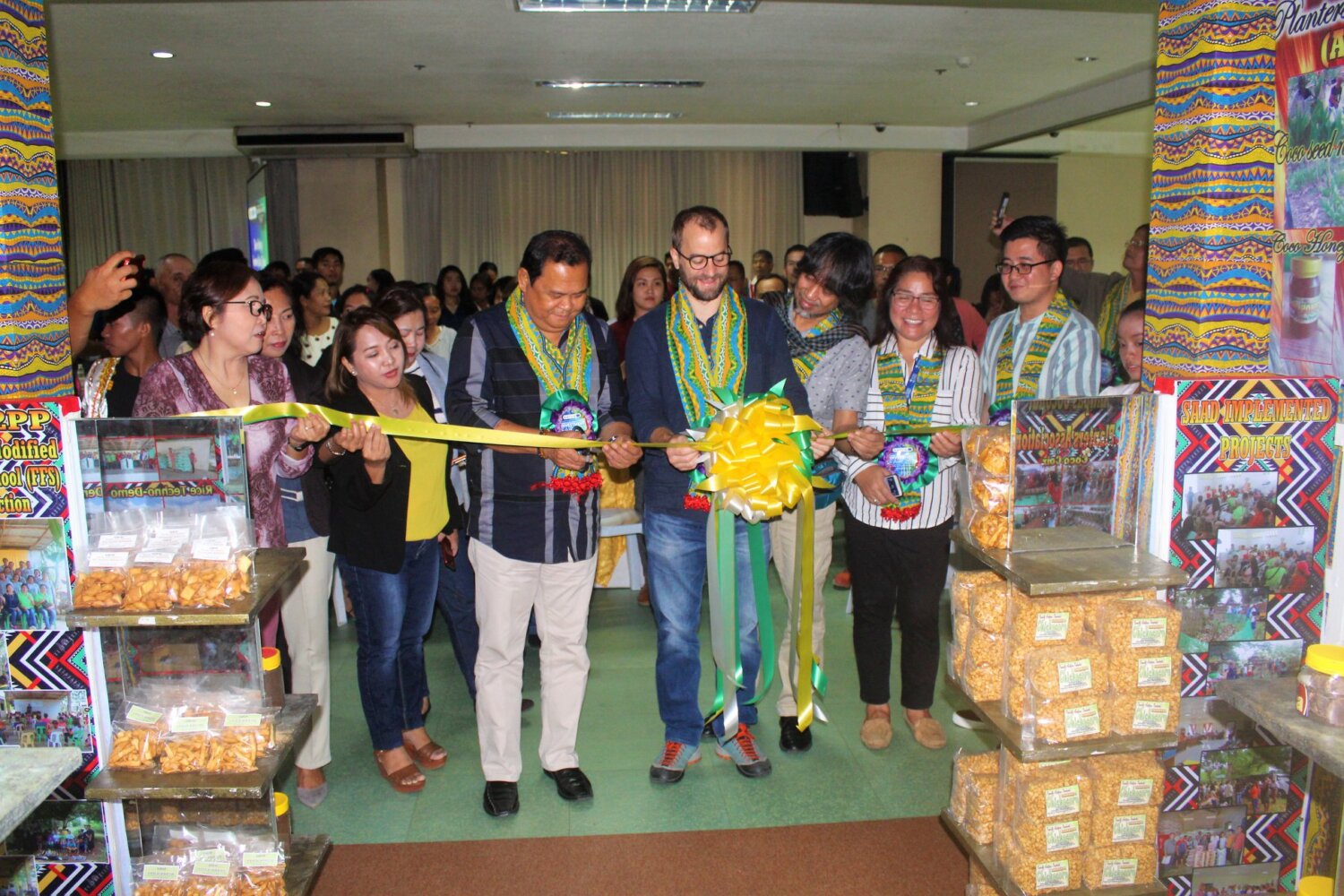
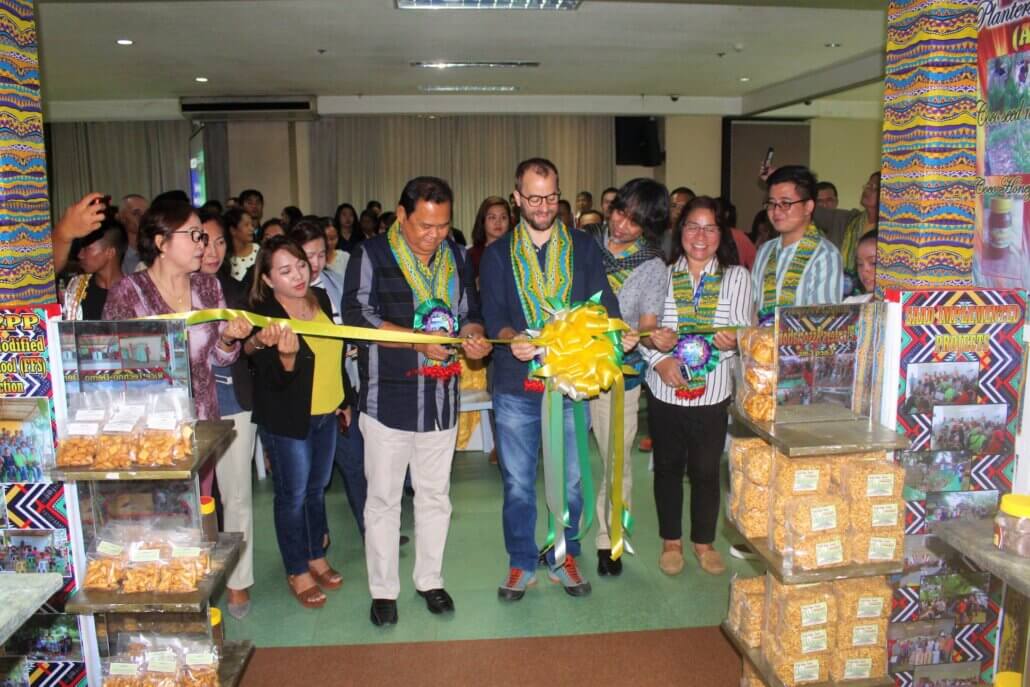
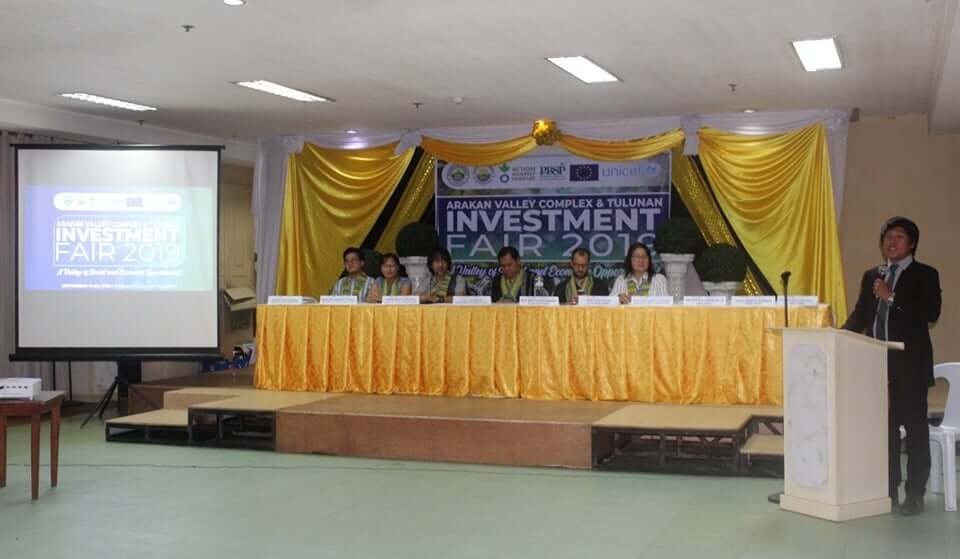
ARAKAN VALLEY — Faced with the challenge of massive poverty, civil society organizations (CSOs) linked with the Arakan Valley Complex Project Management Office (AVC PMO), Action Against Hunger Philippines, and the Provincial Government of Cotabato in conducting a two-day investment fair, dubbed as the “Arakan Valley Complex and Tulunan Investment Fair” on September 19 and 20, 2019 in Kidapawan City.

Poverty incidence in North Cotabato, of which the Arakan Valley Complex and Tulunan are part, was recorded at 25.6 percent of the population, according to the Philippine Statistic Authority 2018 report.

The underlying factor of poverty in the valley is attributed to the low market price of farm produce, according to Van Cadungon, Provincial Administrator of North Cotabato. Cadungon was the keynote speaker during the opening of the investment fair.

“Farm productivity and market support programs are priority strategies that need to be implemented in the valley to address poverty,” Cadungon said.

“The investment fair resulted from a participatory planning done among the six municipalities where key development projects intended to spur economic growth in the Arakan valley were identified,” said Kerwin Jade Mallorca, the AVC PMO administrator. These projects are in the sectors of Good Governance, Agriculture, Environment, Health, Basic Social Services, Economic, Education, and Water-related Services, and Infrastructures.

The AVC Investment Fair is a two-day activity that is meant to attract social investors in the area of agriculture, trade and commerce, basic social services, and utilities into the Arakan Valley and Tulunan. The Fair incorporates project pitching, site tours, gallery display of investment opportunities, conversations, and cultural events that are intended to generate external interest in the opportunities present in the Arakan Valley and link local social entrepreneurs, governments, and people’s organizations with social investors.

“This is a breakthrough initiative because for the first time we are creating a venue for community leaders and social investors can come together and collaborate towards economic and social development,”

“This is a breakthrough initiative because for the first time we are creating a venue for community leaders and social investors can come together and collaborate towards economic and social development,” said Jules L. Benitez, Head of Project of “Reinforcing, Instituting, and Scaling Up Efficient CSO-LGU Interaction towards Enhanced Local Governance (RISE).”

Reinforcing, Instituting, and Scaling Up Efficient CSO-LGU Interaction towards Enhanced Local Governance (RISE) was funded by the European Union and implemented by Action Against Hunger.


Read more