Tag Archive for: emergency response

Stories from the Field: A Father’s Fight

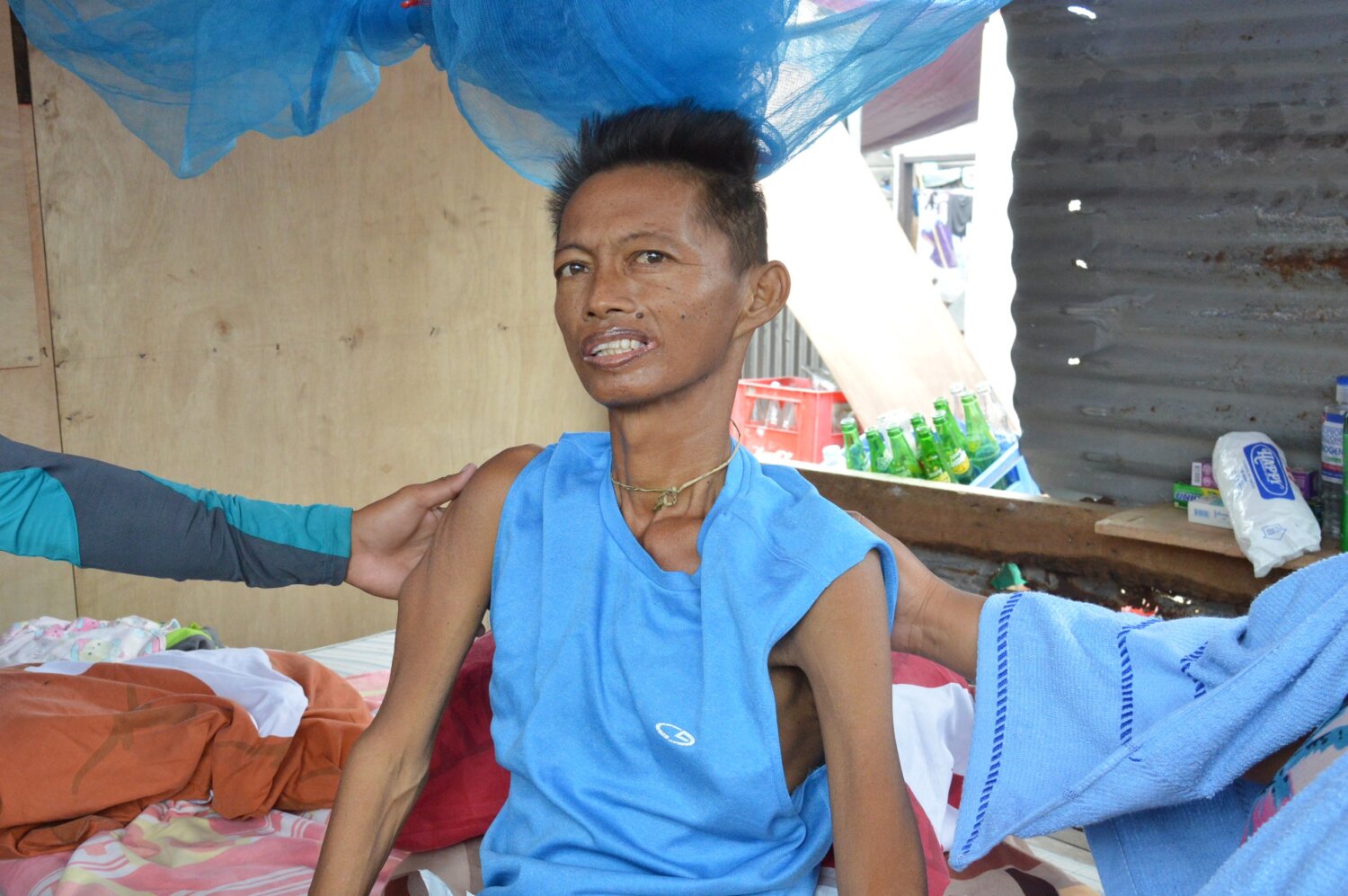
TUBIGON, BOHOL — Dennis Frontera, a 45-year-old father of two teenagers, was diagnosed with Type II Diabetes almost a year ago. Before he was always full of energy, but that changed when his condition eventually led to renal failure. While he has since been receiving medical treatments, Dennis knew he was already due for a check-up.

His last consultation in December 2021 hadn’t been easy. Dennis had to be isolated for a couple of days at the hospital which unfortunately was at the same time that Typhoon Odette was wreaking havoc in his community at Barangay Bilang-bilangan. This experience made him hesitant to go back to the health facility.

When he found out about the medical mission in their barangay organized by Action Against Hunger, he was more than eager to get a consultation. This activity was part of the emergency health interventions of the Typhoon Odette Emergency Response of the REACH Project which is funded by the European Civil Protection and Humanitarian Aid (ECHO).
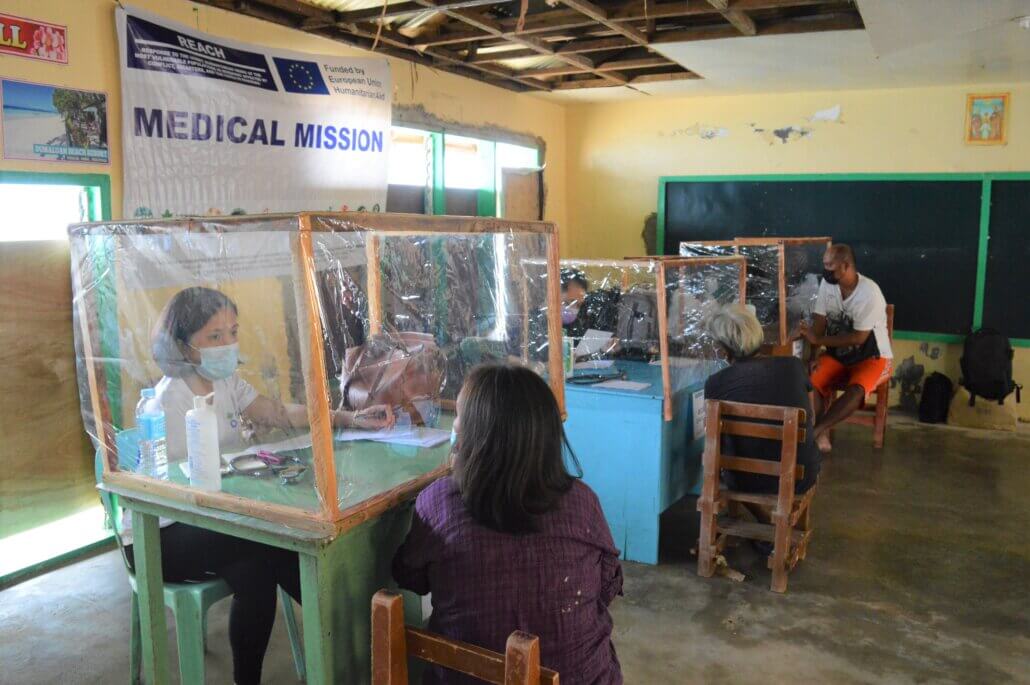
Medical Mission in Barangay Bilang-bilangan for people affected by Typhoon Odette. The activity is organized by Action Against Hunger through the EU-funded REACH Project. (Photo by Roussam Dilig for Action Against Hunger)

Dennis received further assistance through cash support which he can use to cover expenses for medicines and laboratory tests.   

With the support he receives from his family and other organizations like Action Against Hunger, Dennis is hopeful that he will recover sooner than later. For the sake of his wife and children, he is optimistic that he will return to the energetic man that he was before.  

Dennis is one of the 60,625 individuals that are expected to benefit from the Typhoon Odette Emergency Response of REACH.
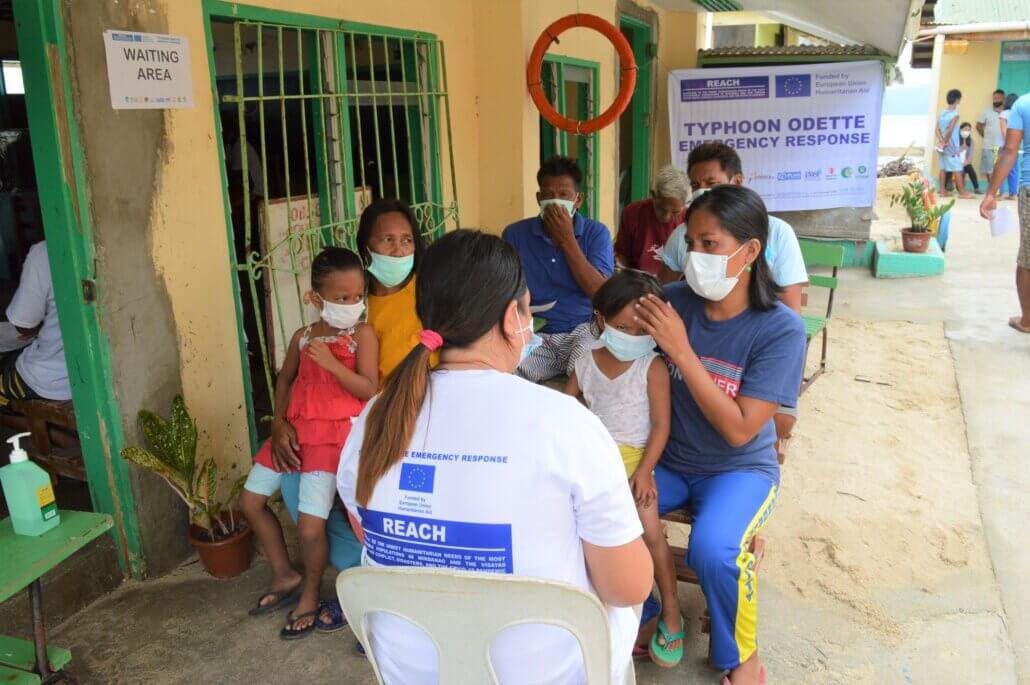
Typhoon-affected residents of Barangay Bilang-bilangan queue for a health consultation during the medical mission organized by Action Against Hunger through the EU-funded REACH Project. (Photo by Roussam Dilig for Action Against Hunger)

The Typhoon Odette Emergency Response of the REACH Project (Response to the Unmet Humanitarian Needs of the Most Vulnerable Populations in Mindanao and the Visayas Affected by Conflict, Disasters, and the COVID-19 Pandemic) is funded by the European Civil Protection and Humanitarian Aid Operations (ECHO) and is implemented by ACCORD IncorporatedAction Against Hunger PhilippinesCARE PhilippinesCommunity Organizers MultiversityInitiatives for Dialogue and Empowerment through Alternative Legal Services (IDEALS) Inc.Plan International PhilippinesPhilippine Business for Social Progress (PBSP)Save the Children PhilippinesUnited Youth of the Philippines-Women and Oxfam Pilipinas.
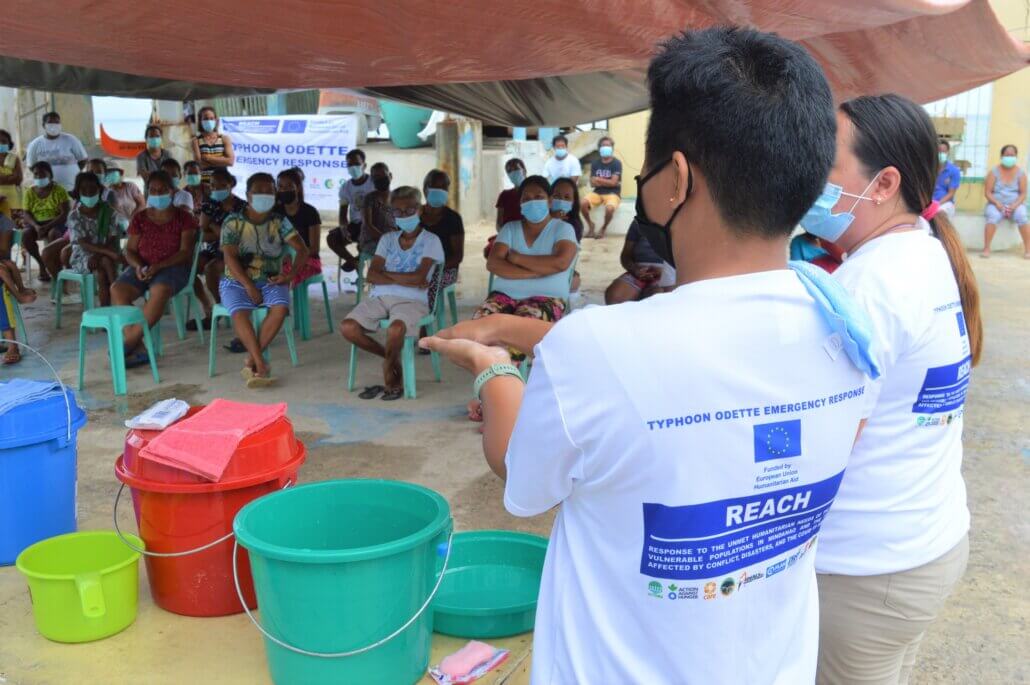
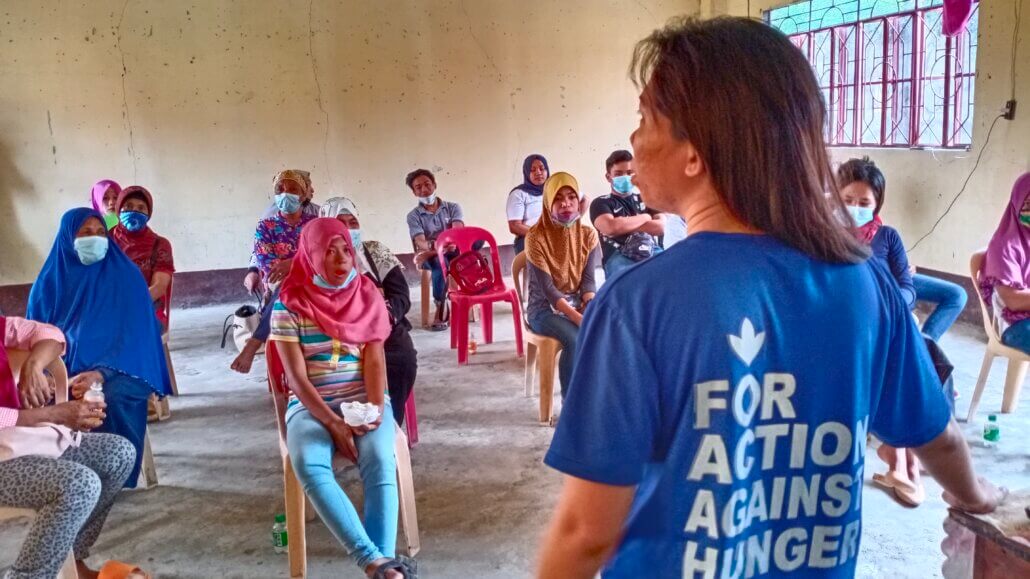
Action Against Hunger staff conduct a hygiene promotion session during the Medical Mission in Barangay Bilang-bilangan last February 18, 2022 (Photo by Roussam Dilig for Action Against Hunger)


Written by Roussam Dilig | Edited by Joyce Sandajan, Dale Divinagracia

Read more

REACH community volunteers gear up in intensifying COVID-19 vaccine awareness in Mindanao

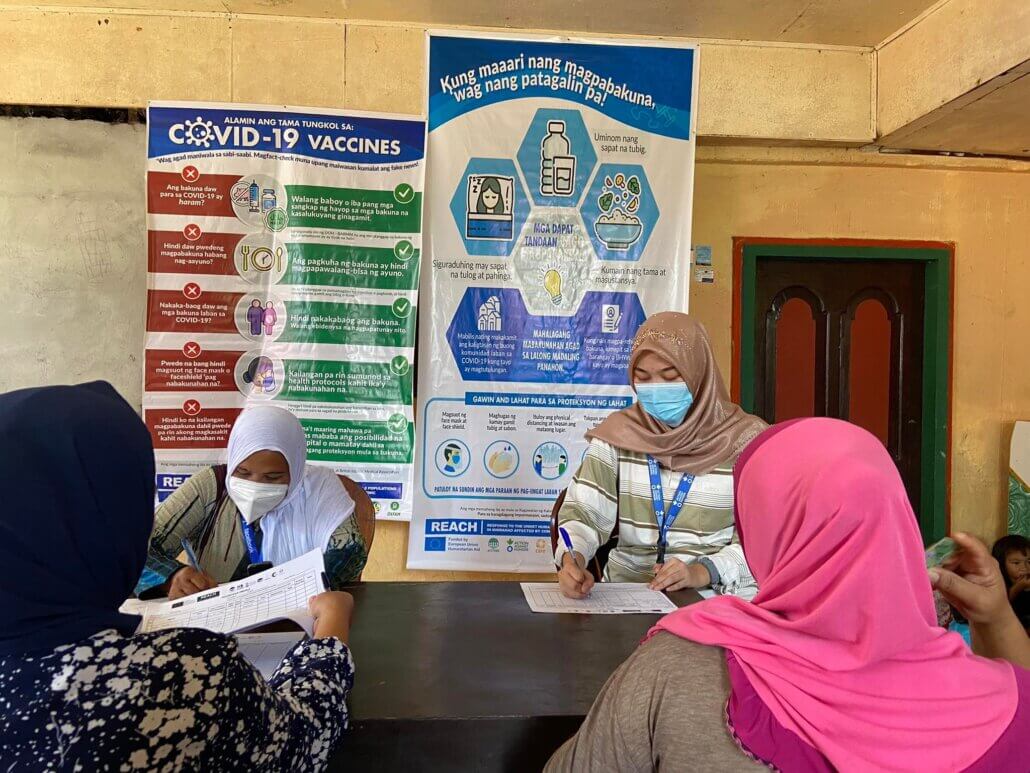
We make sure that COVID-19 vaccines reach those who need them the most. Since last year, our COVID-19 Vaccination Response under the REACH Project has been supporting the local government and health units in Lanao del Sur and Maguindanao so that more people in remote and disaster-affected communities are vaccinated and protected against the coronavirus. 

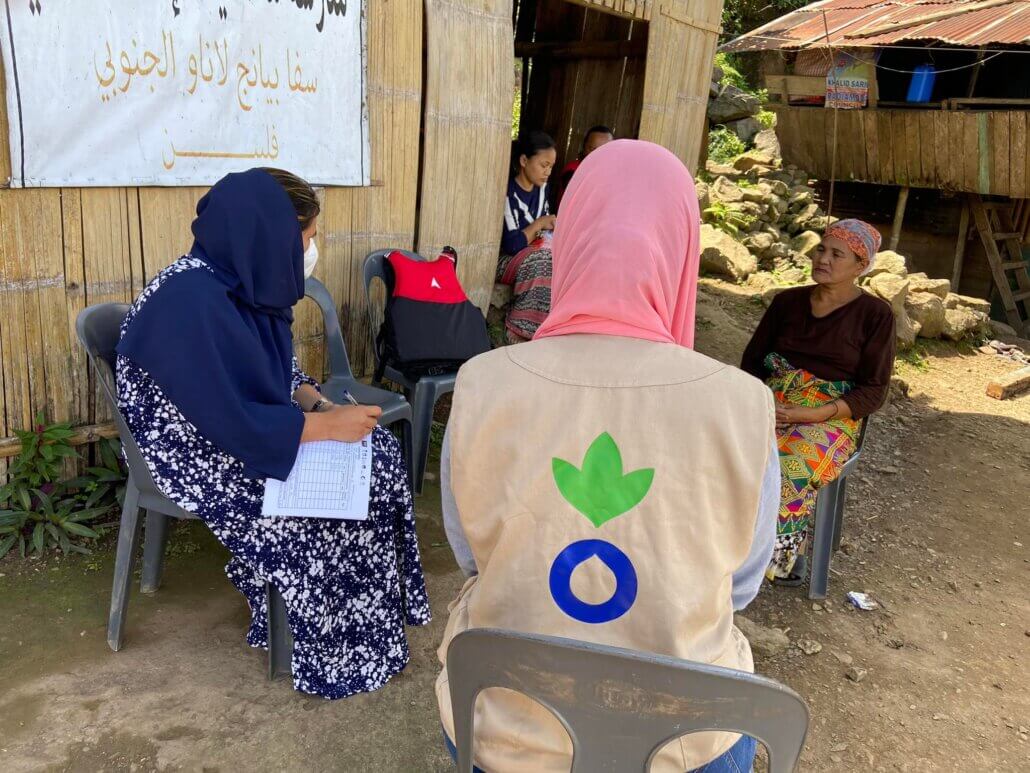
Door-to-door visits in Barangay Sapa, Bayang, Lanao del Sur. (Photo by Veronica Avila for Action Against Hunger)
We are going door-to-door to raise vaccine awareness, traveling by land or by water one community at a time with the support of the European Civil Protection & Humanitarian Aid. Recently, we have mobilized Community Based Information Groups (CBIGs) to support the health workers of our partner rural health units. Together with the CBIGs, we will be intensifying our awareness campaign on COVID-19 vaccination while increasing the pre-registrations of A2 and A3 priority groups. 

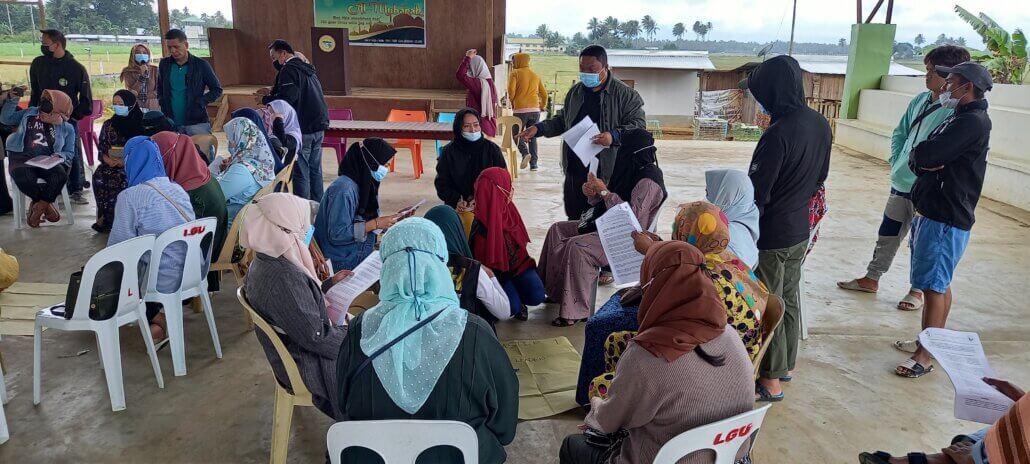
30 community volunteers from the 34 barangays participated in the CBIG Orientation which was held at Barangay Casim Lumbaca-Ingud in the Municipality of Masiu, Lanao del Sur last January 13. Members of the Association of Barangay Chairpersons (ABC) in Masiu were also present. 

In photo: CBIG Orientation with MHO in Masiu. (Photo by Veronica Avila for Action Against Hunger)

CBIGs have very important roles. The CBIGs will be doing household visits and community dialogues to conduct vaccine and other health-related orientations. Their most crucial role is to provide overall assistance to their respective barangay health units and vaccination teams.  

As of January 2022, we have covered 45,376 people through REACH’s COVID-19 Vaccine Response activities. 

The COVID-19 Vaccination Response of REACH (Response to the Unmet Humanitarian Needs of the Most Vulnerable Populations in Mindanao Affected by Conflict, Disasters, and the COVID-19 Pandemic) is funded by the European Civil Protection and Humanitarian Aid Operations (ECHO) and is implemented by ACCORD IncorporatedAction Against Hunger PhilippinesCARE PhilippinesCommunity Organizers MultiversityInitiatives for Dialogue and Empowerment through Alternative Legal Services (IDEALS) Inc.Philippine Business for Social Progress (PBSP), United Youth of the Philippines-Women and Oxfam Pilipinas.


Written by Veronica Avila | Edited by Joyce Sandajan

Flora Cuaton smiles upon receiving the food packs and NFI kits from REACH - Typhoon Odette Emergency Response. On the left side of the photo are the debris from their damaged house. The green house behind her is owned by one of their children, where they now temporarily stay altogether.

Typhoon Odette Aftermath: “We have to start from scratch and right now, we have nothing.”

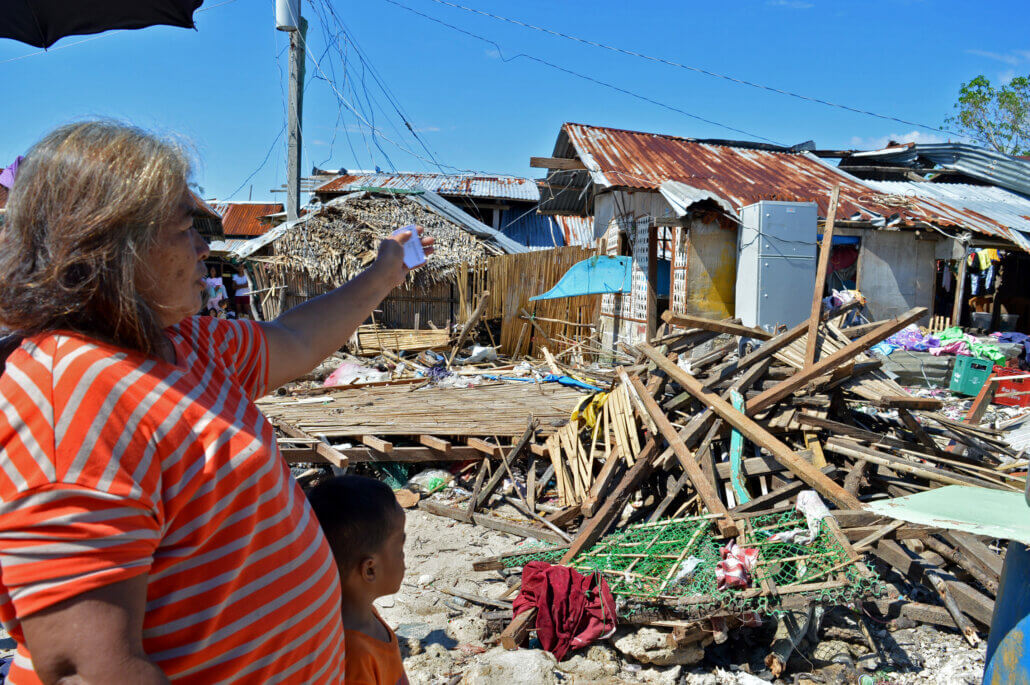
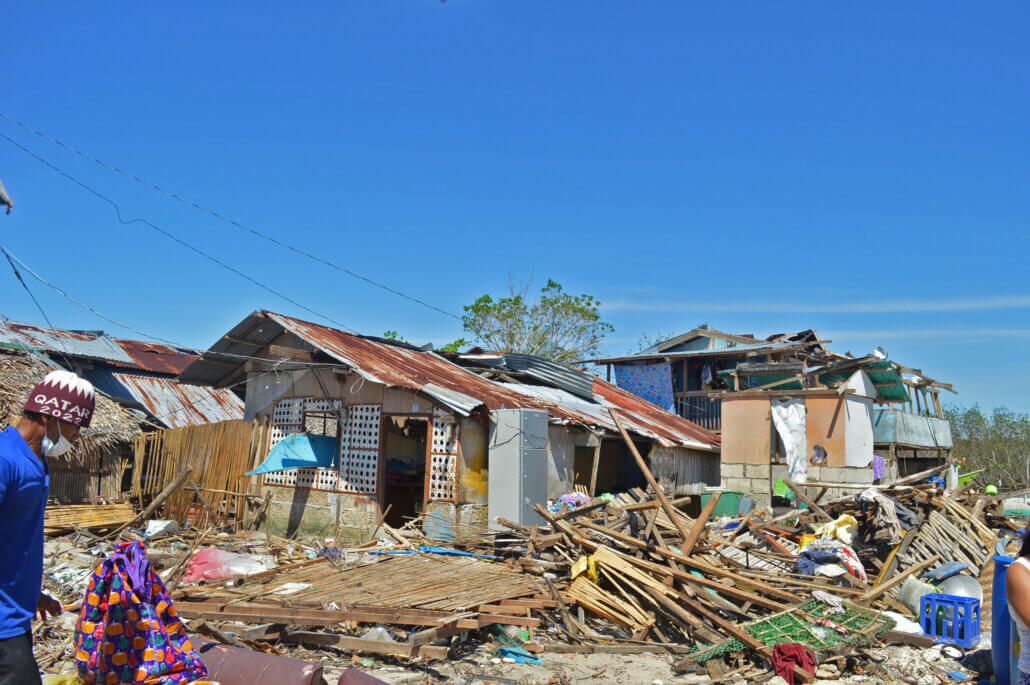
Flora Cuaton, 57, lost their home and livelihood in the distant island barangay of Mantatao, Calape in Bohol province due to Typhoon Odette (internationally named as Typhoon Rai).

“We don’t know how long it will take us to build back all that we lost because we have to start from scratch and right now, we have nothing,” says Flora. She and her husband used to own a small retail (locally called sari-sari) store in front of their house which was situated just by the island’s dock. Their small business was good then but has now been reduced to only broken items and debris.

Flora points to where their previous house and sari-sari store used to stand. | Photo by Joyce Sandajan for Action Against Hunger (Bohol, Philippines)

Before the typhoon, Flora lived with her husband, four grandchildren, and a 35-year old daughter who has a disability. They are now staying with the family of their other child while their house is yet to be repaired. This makes two families—a total of 13 people—living under one small and cramped partially damaged house.

Flora and the rest of her extended family now only rely on relief goods to get by while living in difficult conditions and having no current source of income.

The piles of wood, broken items and other debris are what is left from what was once Flora and her family's house

The piles of wood, broken items, and other debris remain from what was once Flora and her family’s house. | Photo by Joyce Sandajan for Action Against Hunger (Bohol, Philippines)

With the support of the European Union, her family is one of the 227 typhoon-affected households in Mantatao who received food packs including 50 kilograms of rice, and non-food items such as kitchenware and sleeping essentials through the Typhoon Odette Emergency Response.

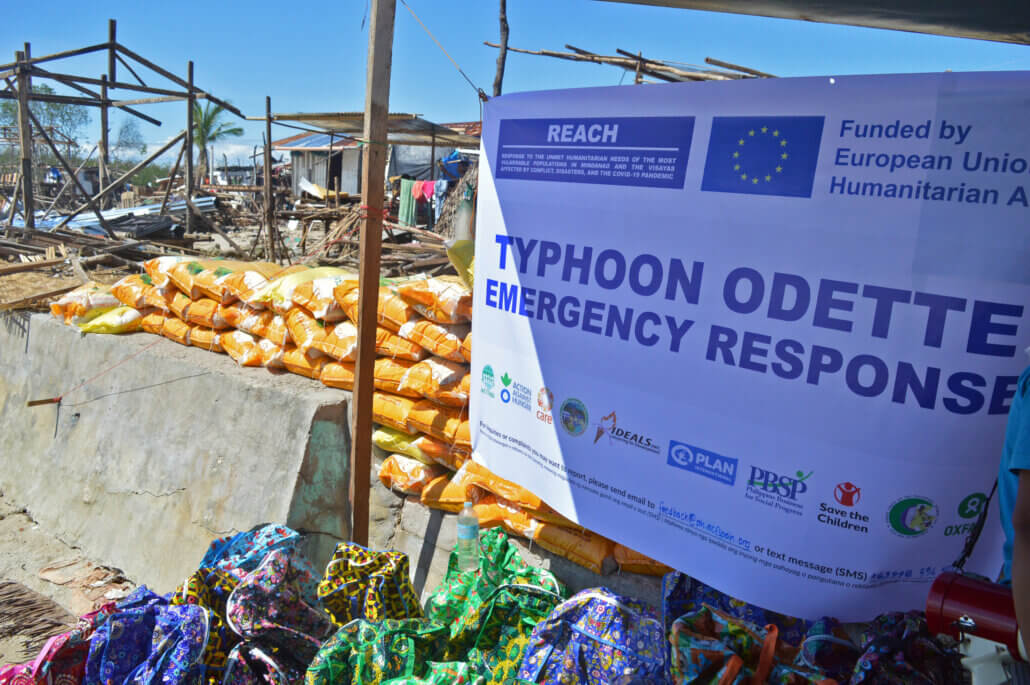
Food packs and NFI kits are lined up along the entrance of the barangay; a REACH Banner hangs and behind it are broken houses.

Food packs with sacks of rice and NFI kits are lined up along the entrance of the barangay which is just by the dock of the island. | Photo by Joyce Sandajan for Action Against Hunger (Bohol, Philippines)

Barangay Mantatao is one of the islands in the Municipality of Calape. It takes a 25 to 30-minute boat ride from the town proper of Calape going to Mantatao island. Aside from being geographically isolated, many houses in Mantatao had been totally damaged by Typhoon Odette leaving many residents in great need of humanitarian support.

The Typhoon Odette Emergency Response of REACH is funded by the European Civil Protection and Humanitarian Aid Operations (ECHO) and is implemented by ACCORD IncorporatedAction Against Hunger PhilippinesCARE PhilippinesCommunity Organizers MultiversityInitiatives for Dialogue and Empowerment through Alternative Legal Services (IDEALS) Inc.Plan International PhilippinesPhilippine Business for Social Progress (PBSP)Save the Children PhilippinesUnited Youth of the Philippines-Women and Oxfam Pilipinas.


Written by Joyce Sandajan

Affected families of Typhoon Odette react to emergency aid received from EU-funded REACH project

“As humanitarian workers, it felt good to see the people’s smiles when they received the sacks of rice, groceries and the kitchen and sleeping kits that were provided,” said Mary Amy Gagalac, the Head of Project of our Typhoon Odette (internationally named Typhoon Rai) Emergency Response in Bohol under the EU-funded REACH Project or the ‘Response to the Unmet Humanitarian Needs of the Most Vulnerable Populations in Mindanao and the Visayas Affected by Conflict, Disasters, and the COVID-19 Pandemic.’

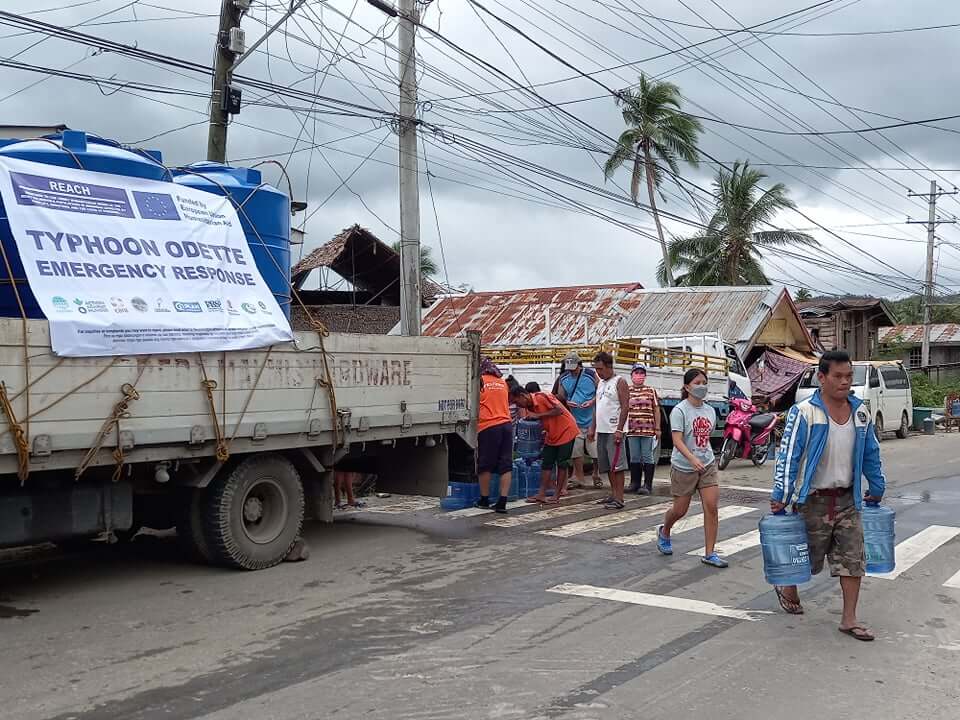
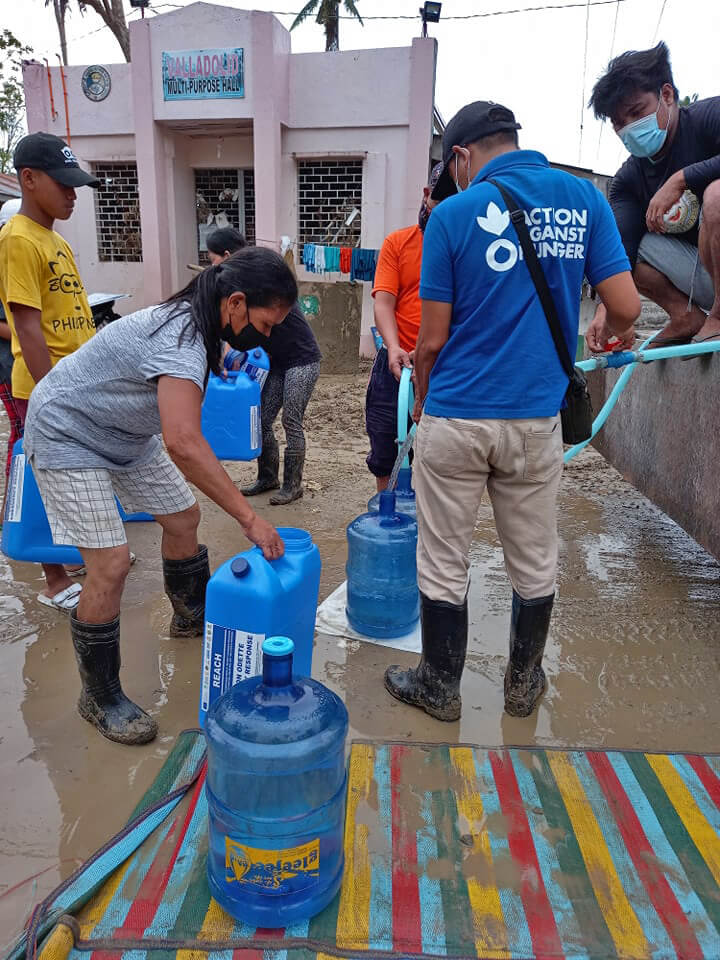
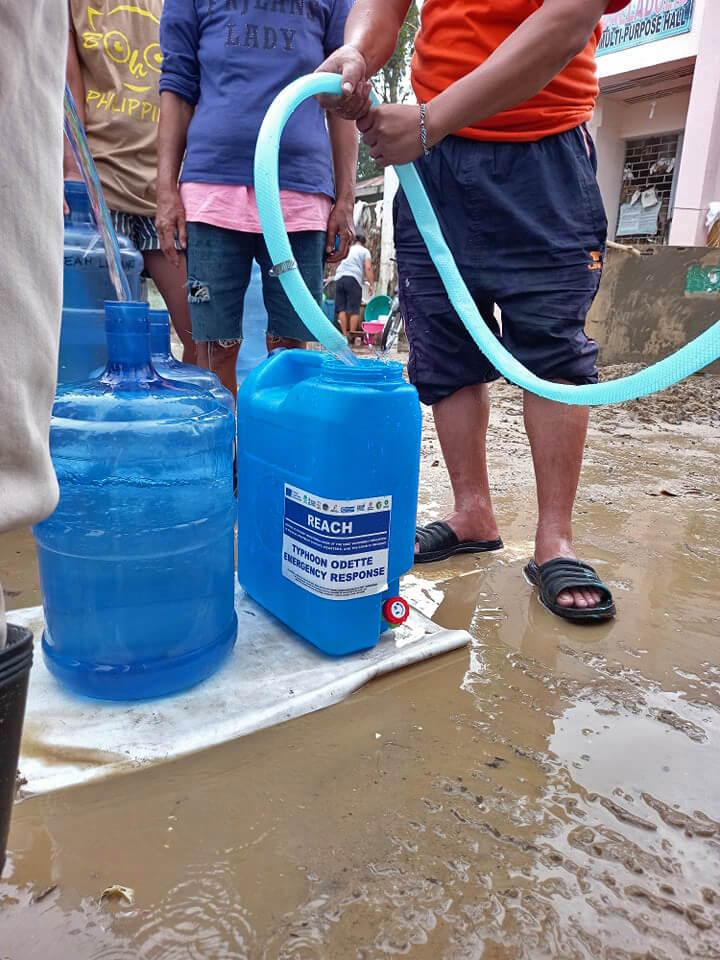
Residents of Barangay Ugpong in Loboc, Bohol line up to refill their containers during one of the water trucking sessions provided by the REACH – Typhoon Odette Emergency Response implemented by Action Against Hunger.

We have been working to identify the needs of typhoon-affected communities in Bohol within days since Odette made landfall on December 16, 2021. Immediate life-saving aid through emergency kits and water trucking services have since been provided by REACH in the municipalities of Loboc, San Miguel, and Calape through the efforts of our teams on the ground.

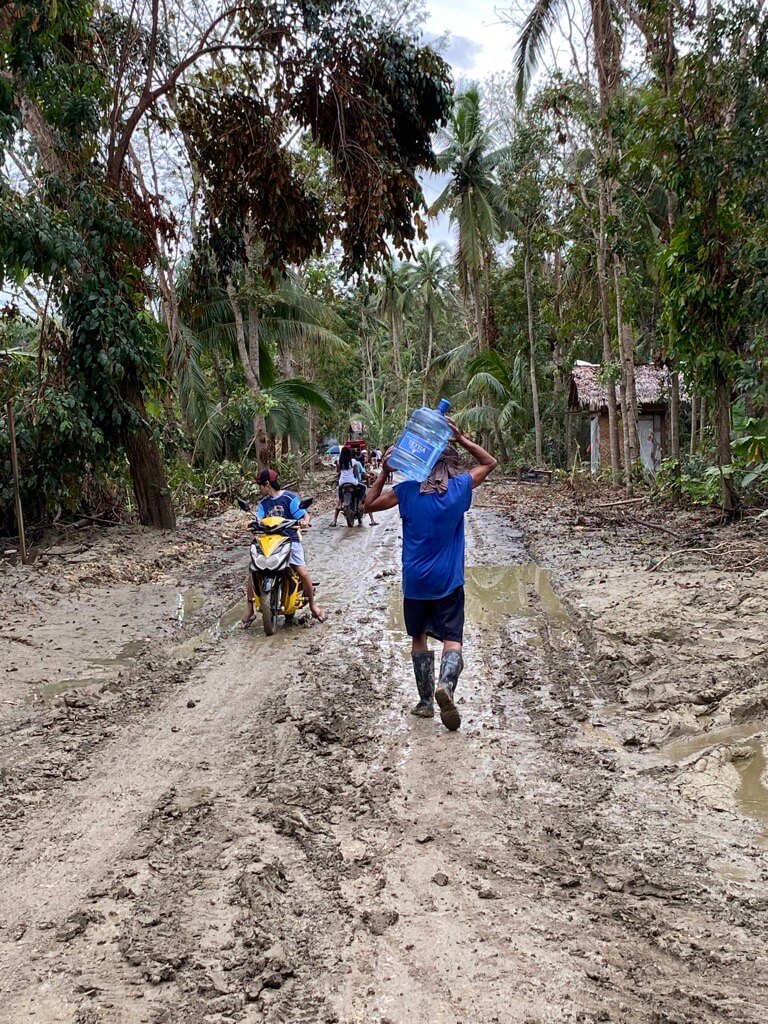
A resident carries a refilled container while walking in a muddy path.

A resident carries a refilled container after the water trucking service in Loboc, Bohol. | Photo by Melinda Buensuceso for Action Against Hunger (Bohol, Philippines)

“They expressed their gratitude to us and to ECHO. One of the recipients from Barangay Ugpong whose house was totally destroyed by the typhoon was in tears upon receiving the relief goods,” Amy shares.

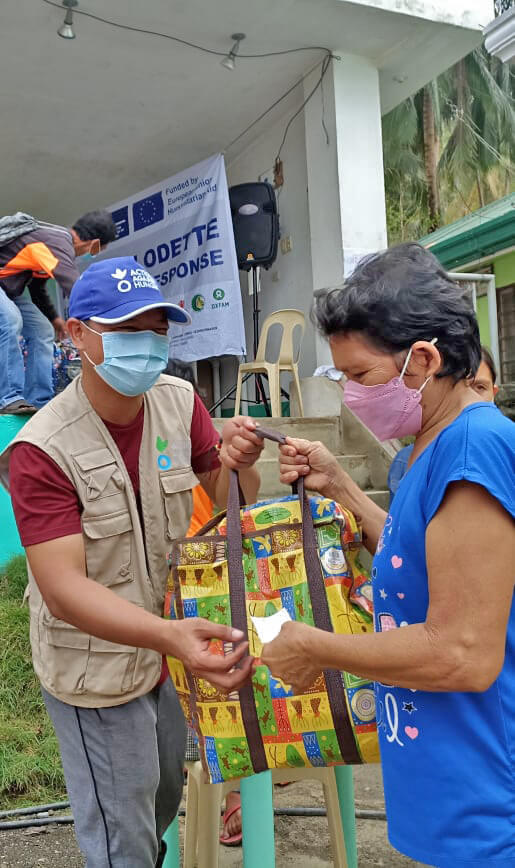
Vince, one of our Project Assistants, hands over a food kit to one of the typhoon-affected households in Barangay Camias, Calape, Bohol.


The Typhoon Odette Emergency Response of REACH is funded by the European Civil Protection and Humanitarian Aid Operations (ECHO) and is implemented by ACCORD IncorporatedAction Against Hunger PhilippinesCARE PhilippinesCommunity Organizers MultiversityInitiatives for Dialogue and Empowerment through Alternative Legal Services (IDEALS) Inc.Plan International PhilippinesPhilippine Business for Social Progress (PBSP)Save the Children PhilippinesUnited Youth of the Philippines-Women and Oxfam Pilipinas.


Written by Joyce Sandajan

Read more

CALL FOR DONATIONS: Help families affected by Typhoon Odette (Rai)

Thousands of families will be greeting the new year without a roof above their heads or food on their tables. Families affected by Typhoon Odette have barely any access to food, potable water, health services, and other basic needs.

People’s living conditions in severely-affected areas worsen as electricity, water supply, and telecommunication lines have yet to be restored. Food supplies are depleting by the day and the weather has been unforgiving, making it more difficult for the many people who lost their livelihoods and homes. Both government and humanitarian agencies have been steadfast in responding to people’s needs, but with the catastrophic impact of the typhoon more support is needed.

Make a donation today and help save lives.


Now, Ca

PRESS RELEASE: USAID Providing Humanitarian Assistance in Response to Devastating Super Typhoon Rai in the Philippines

For Immediate Release | Tuesday, December 21, 2021
Office of Press Relations ([email protected])

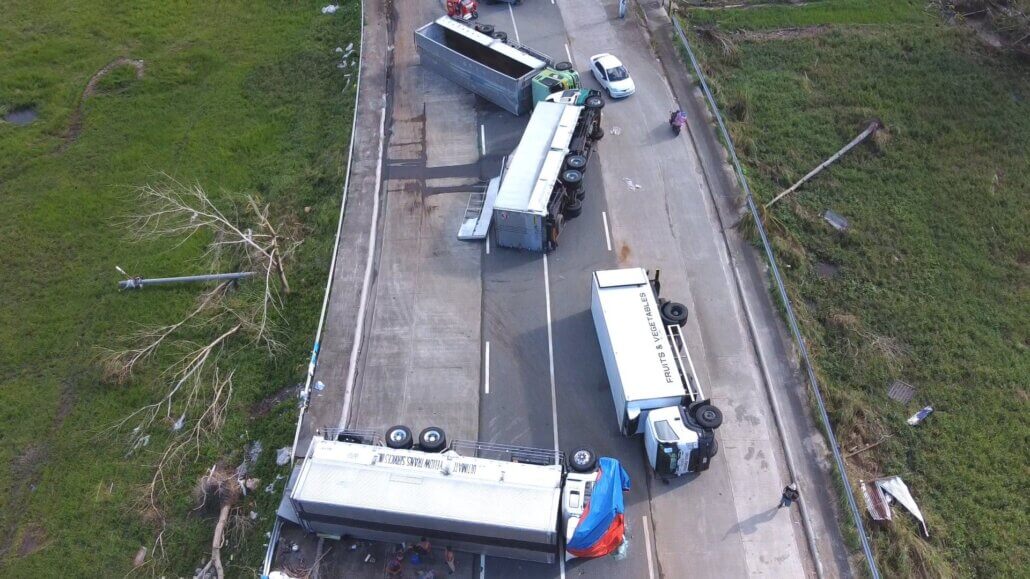
The United States, through the U.S. Agency for International Development (USAID), is providing $200,000 in immediate assistance to support people affected by Super Typhoon Rai in the Philippines. The typhoon–known locally as Typhoon Odette–brought torrential rains, causing widespread flooding, landslides, and damage to homes. Many cities across the Philippines have lost power and some bridges and roads remain impassable. People are seeking shelter in evacuation centers and cannot safely return home yet.

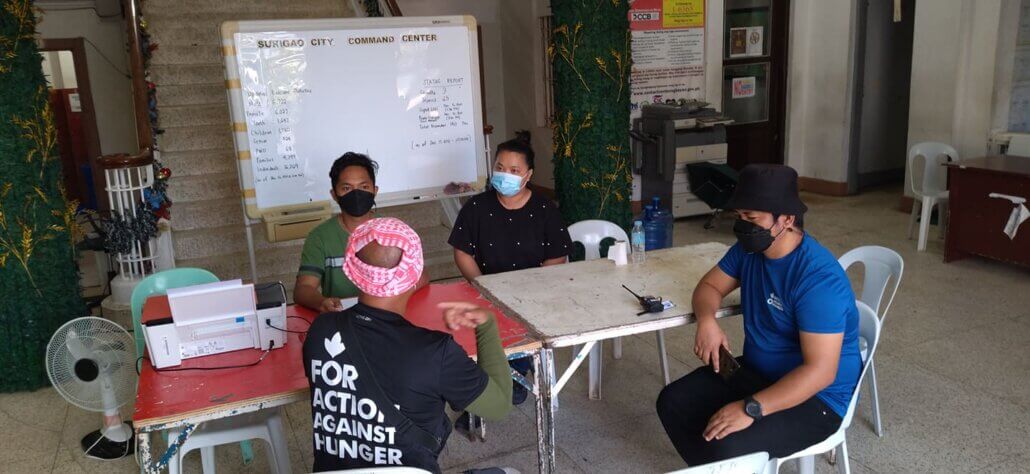
With this assistance, USAID is partnering with Action Against Hunger to provide food, water, hygiene supplies, and other relief items in Surigao del Norte and Dinagat Island in the Caraga region to help people affected by the storm. USAID is also supporting the restoration of water supply services and sanitation facilities, as well as hygiene promotion activities to keep people safe and healthy.

In addition, USAID works year-round to help communities in the Philippines prepare for and be more resilient to natural disasters. Through existing programs, USAID partner, the UN World Food Program, is transporting relief supplies, including enough food provided by the Government of the Philippines to feed tens of thousands of families, and deploying mobile operations vehicles to support emergency telecommunications. USAID partner, the International Organization for Migration, is helping to manage evacuation shelters and provide critical relief supplies, including USAID heavy-duty plastic sheeting to meet critical shelter needs for 4,800 families.

USAID has disaster experts in the Philippines and in the region who are coordinating response efforts with the Government of the Philippines and humanitarian partners. Our thoughts are with the people of the Philippines who have been affected by this disaster.

For the latest updates on U.S. humanitarian assistance in the Philippines, visit: www.usaid.gov/humanitarian-assistance/philippines

Photo by Nino Kim Diez for Action Against Hunger


Read USAID’s official press release here.

Read more

Assessing immediate needs of areas affected by Typhoon Rai (Odette PH)

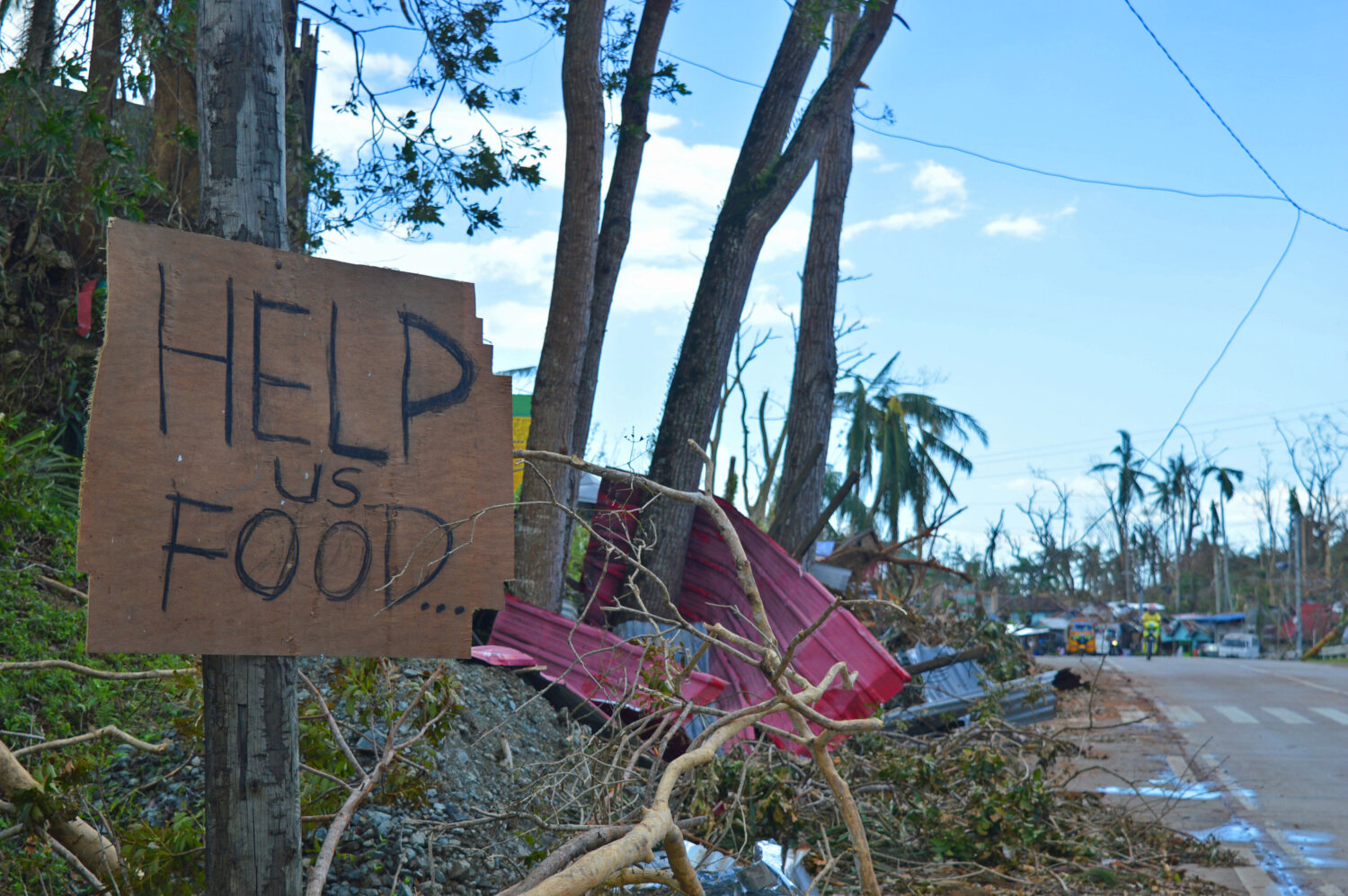
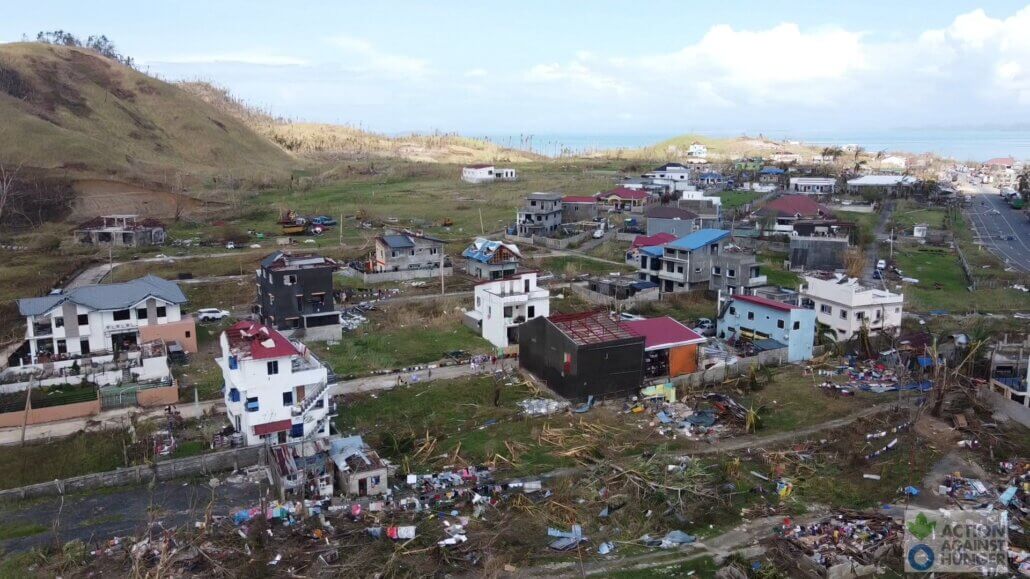
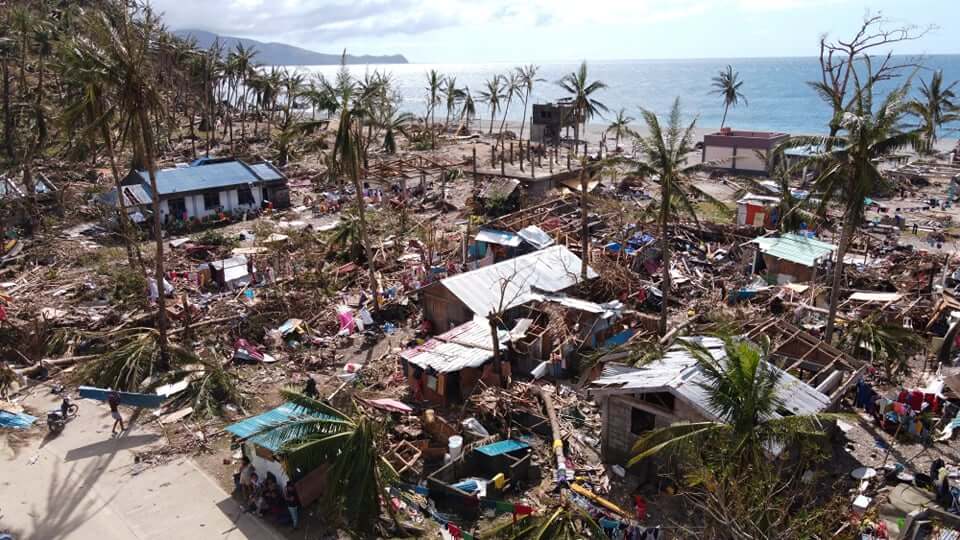
Super Typhoon Odette (Internationally known as Typhoon Rai) has left the southeastern part of the Philippines devastated within hours of its initial landfall in Siargao Island, Surigao del Norte last December 16, 2021.

Photo by Nino Kim Diez for Action Against HungerPhoto by Nino Kim Diez for Action Against Hunger

After making landfall in six different provinces, Typhoon Odette has affected a total of 99,501 families, with 328,847 people currently displaced (based on the December 18 report of the National Disaster Risk Reduction and Management Council). Many areas still have very limited access to basic needs. Communication and power lines are still down in many areas.

Photo by Nino Kim Diez for Action Against Hunger

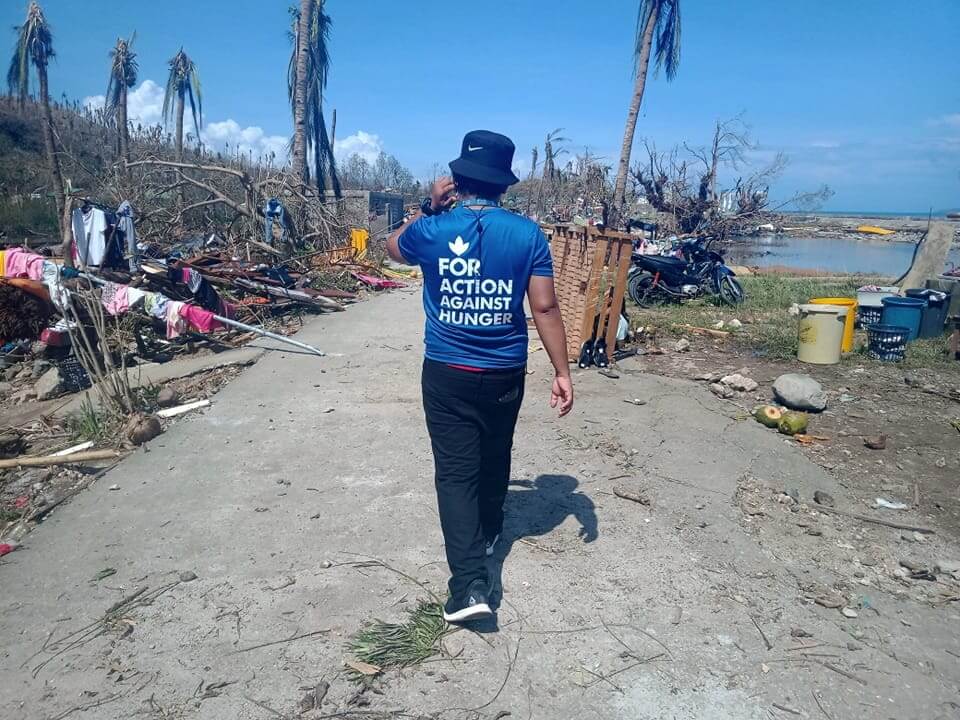
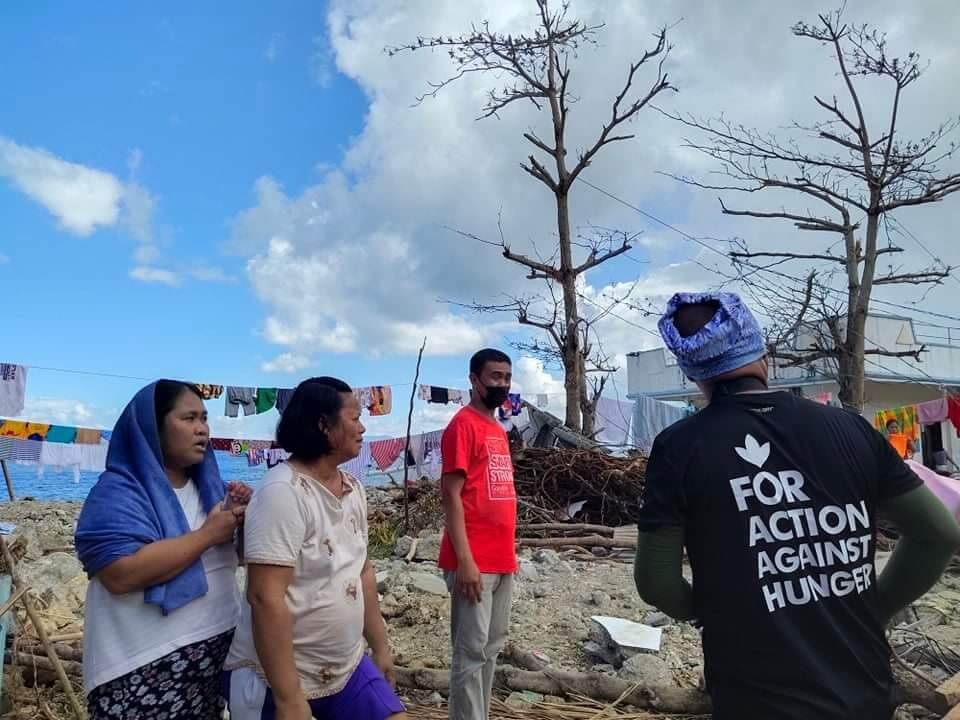
Since December 17, our teams have been on the ground to conduct needs assessments in Agusan del Sur, Surigao del Sur, Surigao del Norte, and another team traveling to Southern Leyte.

Photo by Nino Kim Diez for Action Against Hunger

We are continuously coordinating with government agencies and other organizations in identifying the urgent humanitarian needs of affected communities. As part of our initial emergency response, we are hoping to provide life-saving support for typhoon-affected families by early next week.

We need your help now so that we can provide urgent humanitarian assistance to families whose homes and livelihoods have been destroyed.

Photo by Nino Kim Diez for Action Against Hunger


Help us provide urgent life-saving assistance.

Make a donation today

Read more

MOVE UP 4 activates Rapid Response to assist displaced families following gas spill in Kidapawan

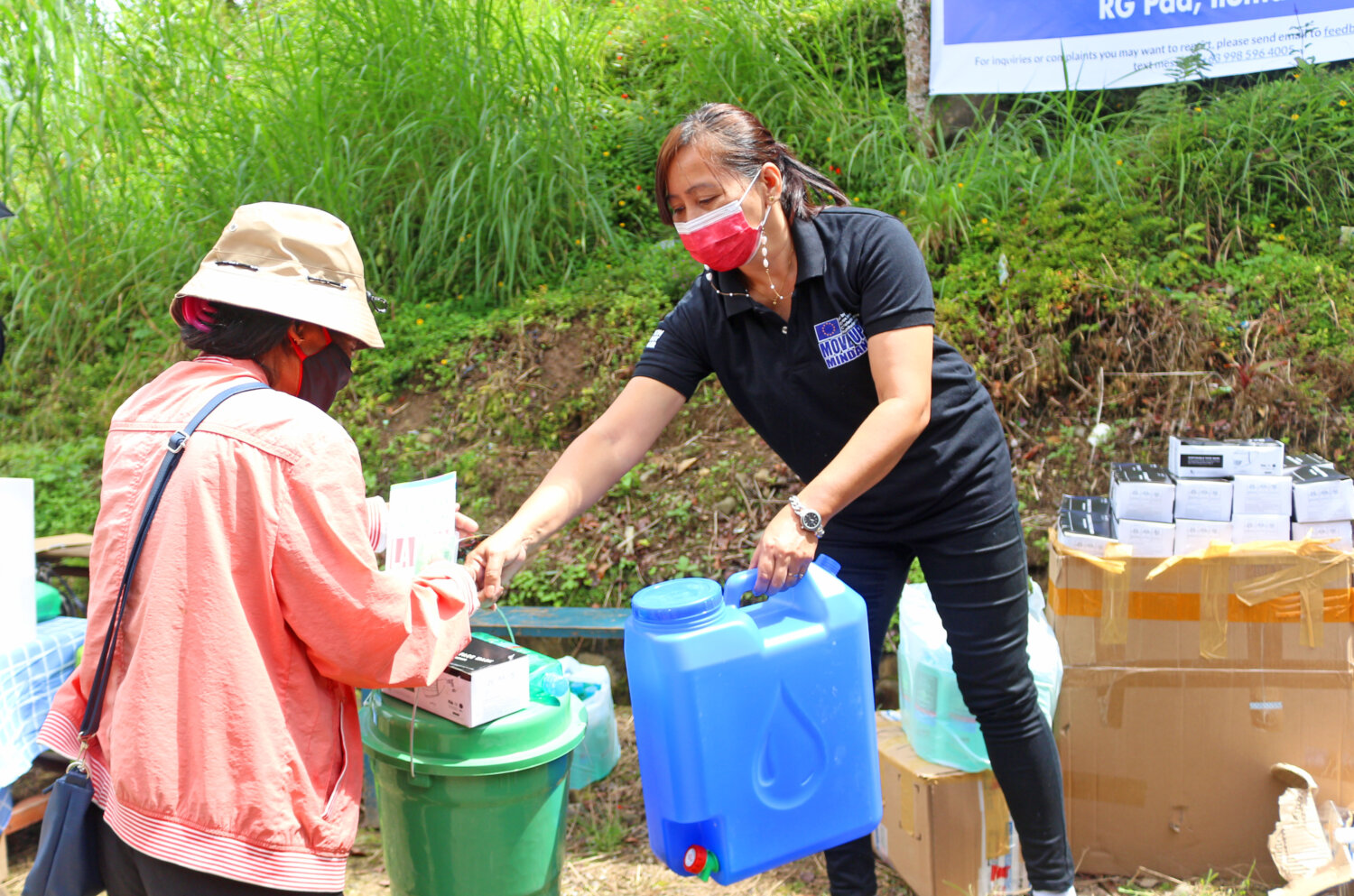
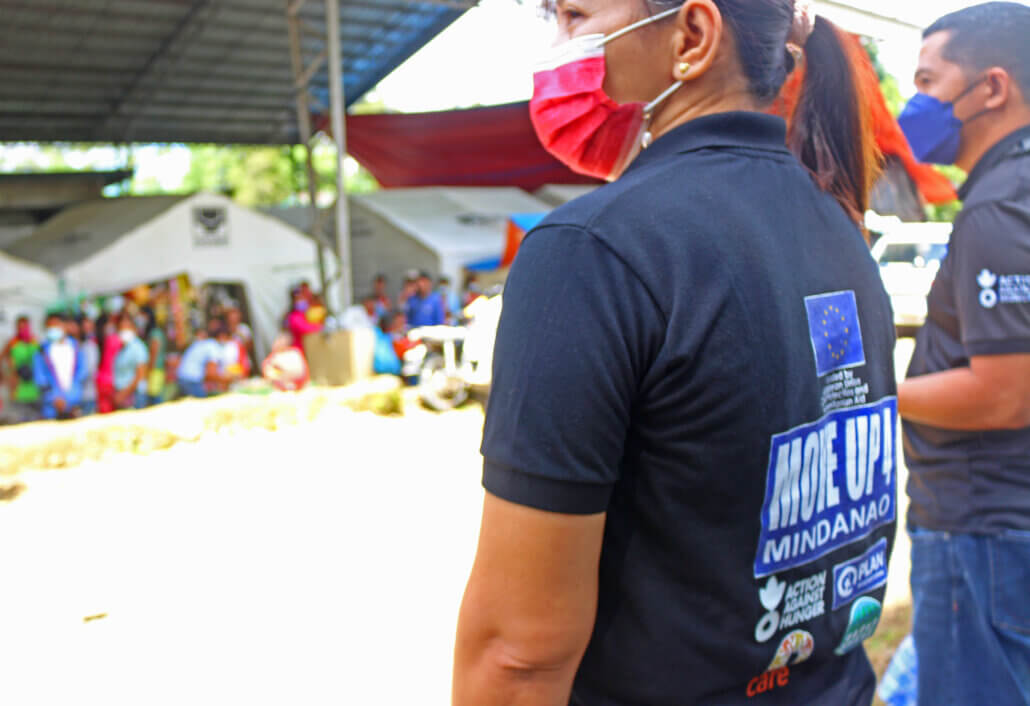
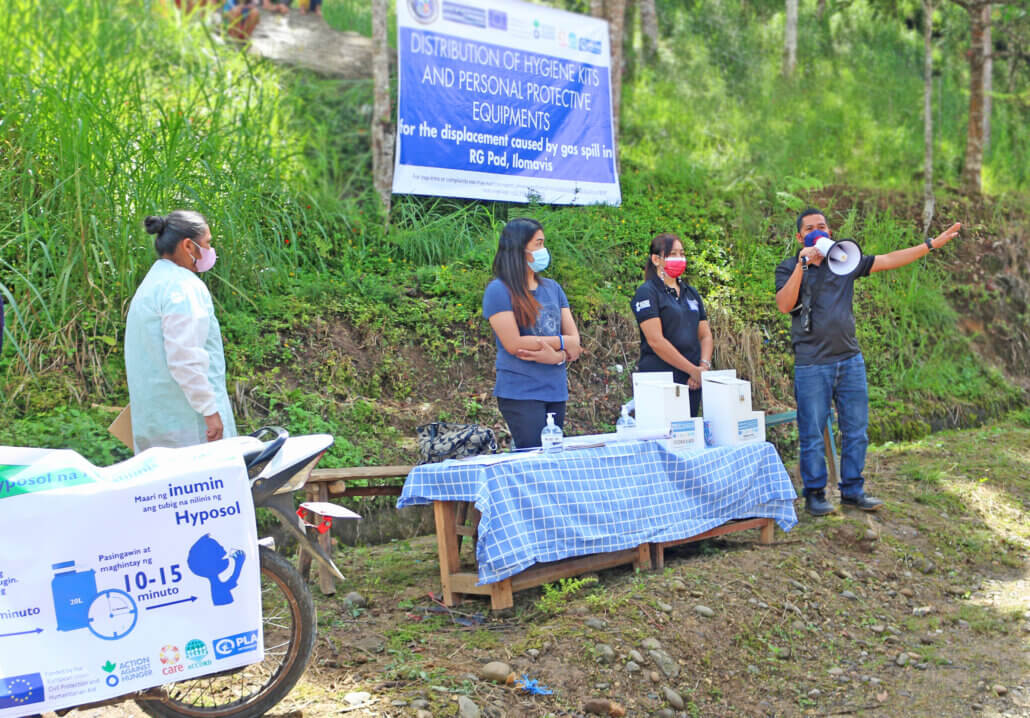
KIDAPAWAN CITY – Ninety-seven displaced families from Barangay Ilomavis were given hygiene kits and basic personal protective equipment (PPE) from the MOVE UP 4 project last October 30, 2021.

In photo: Team members at the Sitio Lake Agko evacuation center. (Photo by Jan Iddo Azucena for Action Against Hunger | Cotabato, Philippines)

Most of these families are temporarily staying in evacuation camps in Sitio Lake Agko after a gas spillage occurred three weeks prior, causing undesirable and potentially hazardous fumes. The incident prompted the residents to leave their homes for health and safety reasons. There is an ongoing investigation as to the cause of the spillage.

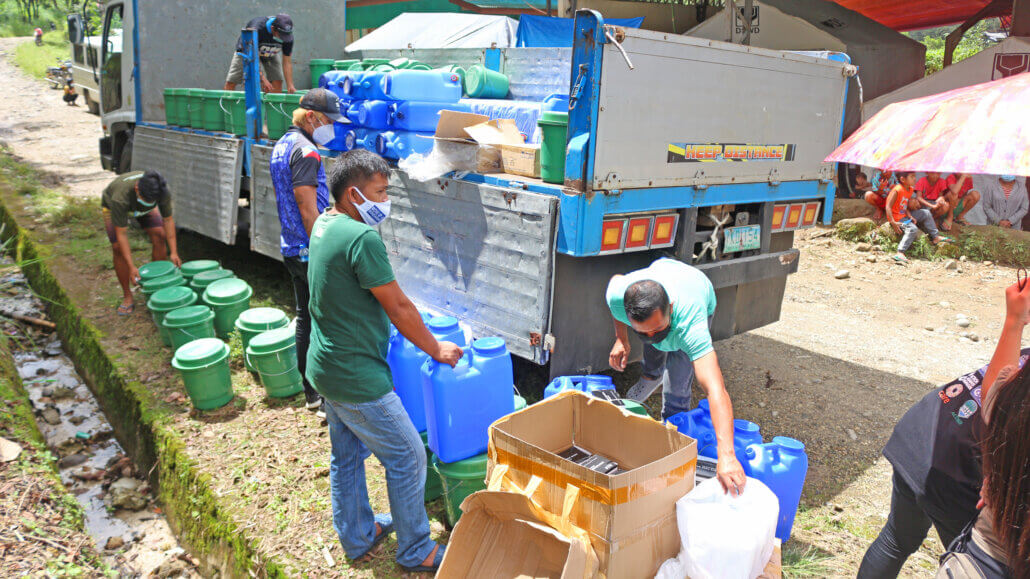
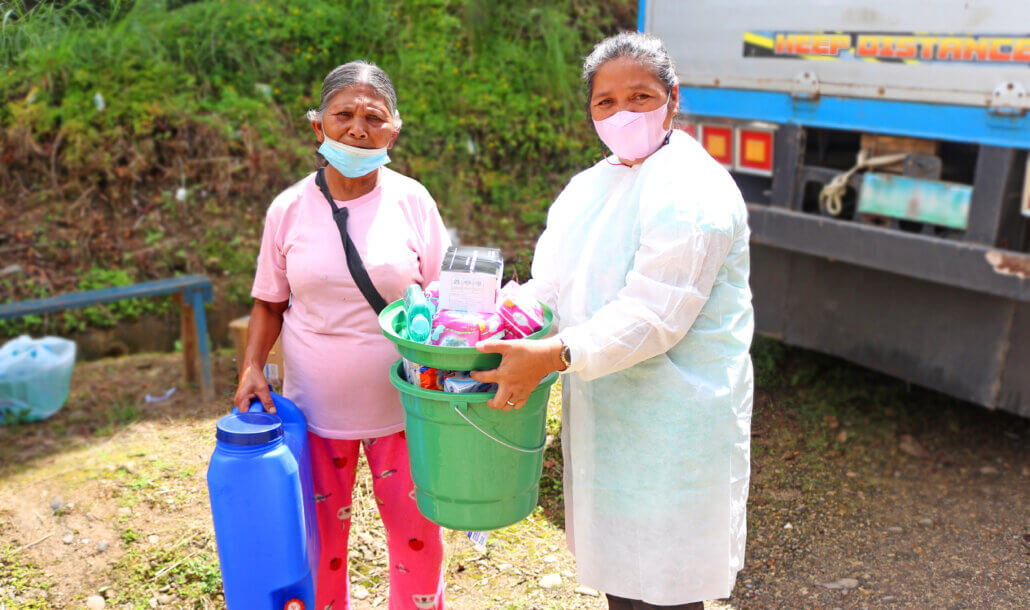
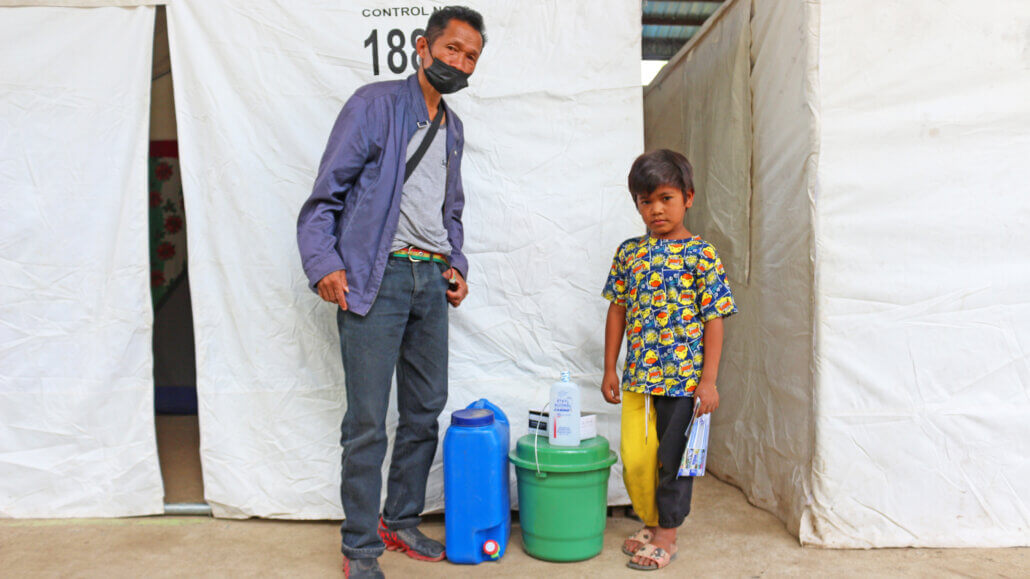
In photo: Hygiene kits are being unloaded from the delivery truck, to be distributed to displaced families in Barangay Ilomavis. (Photo by Jan Iddo Azucena for Action Against Hunger | Cotabato, Philippines)

The drilling operation had produced undesirable and potentially hazardous fumes. The incident prompted the residents to leave their homes for health and safety reasons, particularly for the well-being of children, pregnant individuals, differently-abled persons, and the elderly. Displaced families are expected to stay at the evacuation site until the end of November 2021.

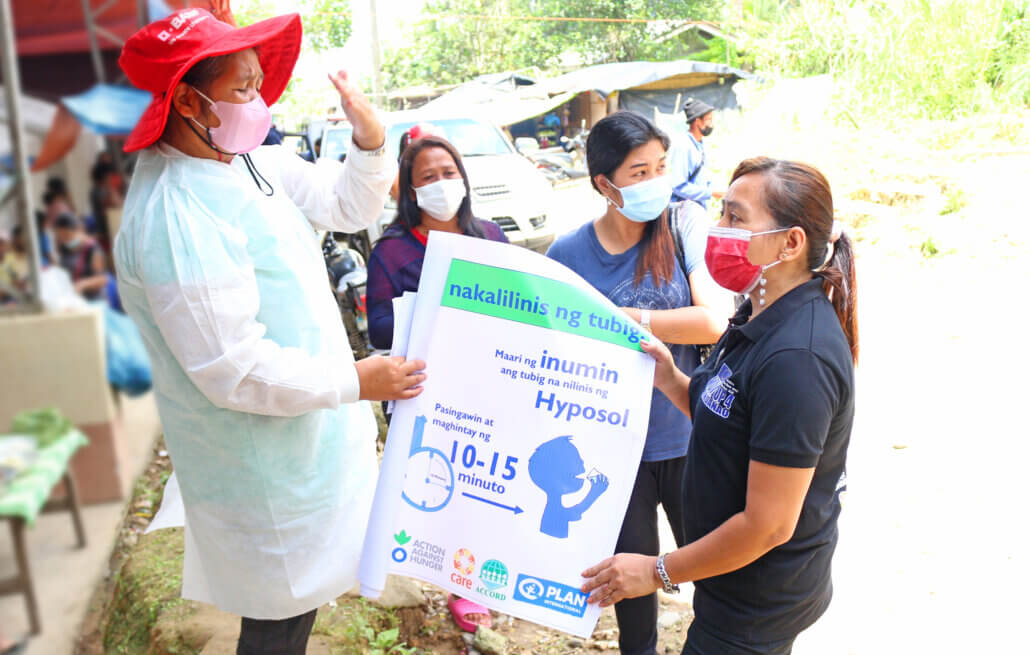
In photo: MOVE UP 4 team conducts a hygiene promotion session during the distribution. (Photo by Jan Iddo Azucena for Action Against Hunger | Cotabato, Philippines)

Photo by Jan Iddo Azucena for Action Against Hunger (Cotabato, Philippines)

The Kidapawan City Social Welfare and Development Office (CSWDO) along with the Energy Development Corporation (EDC) had provided food packs for the displaced families which are expected to last for a week. but will only last for a week. MOVE UP 4 is currently in coordination with the local government of Kidapawan in assessing other potential needs of the affected community.

Photo by Jan Iddo Azucena for Action Against Hunger (Cotabato, Philippines)

This assistance is part of MOVE UP 4’s rapid response mechanism (RRM) activities. The goal of the RRM is to ensure that people who are affected by sudden emergencies—such as conflicts and disasters—have timely access to life-saving humanitarian aid.

Photo by Jan Iddo Azucena for Action Against Hunger (Cotabato, Philippines)

Moving Urban Poor Communities Towards Resilience (MOVE UP) is a consortium project that offers durable solutions in terms of capacitating local governments and communities in mitigating the adverse socio-economic effects of disasters. With funding from the European Union, MOVE UP 4 is implemented by Action Against HungerPlan InternationalCARE Philippines, and ACCORD Incorporated


Written by Louie Bullanday, Roger Cabiles, Jr. | Edited by Joyce Sandajan.
Read more

Promoting inclusive household decision-making to empower rural women

MINDANAO — Women and girls in rural communities have been providing invaluable contributions in development, particularly towards nutrition, food security, and building climate resilience. However, gender and development indicators have consistently shown that rural women and girls are generally more vulnerable to poverty and the impacts of climate change as compared to rural men and women in urban communities.

In 2019, Action Against Hunger Philippines with the guidance of our International Gender Desk conducted a gender analysis within our partner communities at the Bangsamoro Autonomous Region of Muslim Mindanao (BARMM). The results of the analysis showed that roles in Mindanao seem to have changed from traditionally assigned gender roles and responsibilities, with women now being more involved in productive activities. However, this does not seem to have reduced the allotted time women dedicate to reproductive work. With women spending more time on productive tasks, but not less reproductive ones, a significant increase in their overall workload was noted.

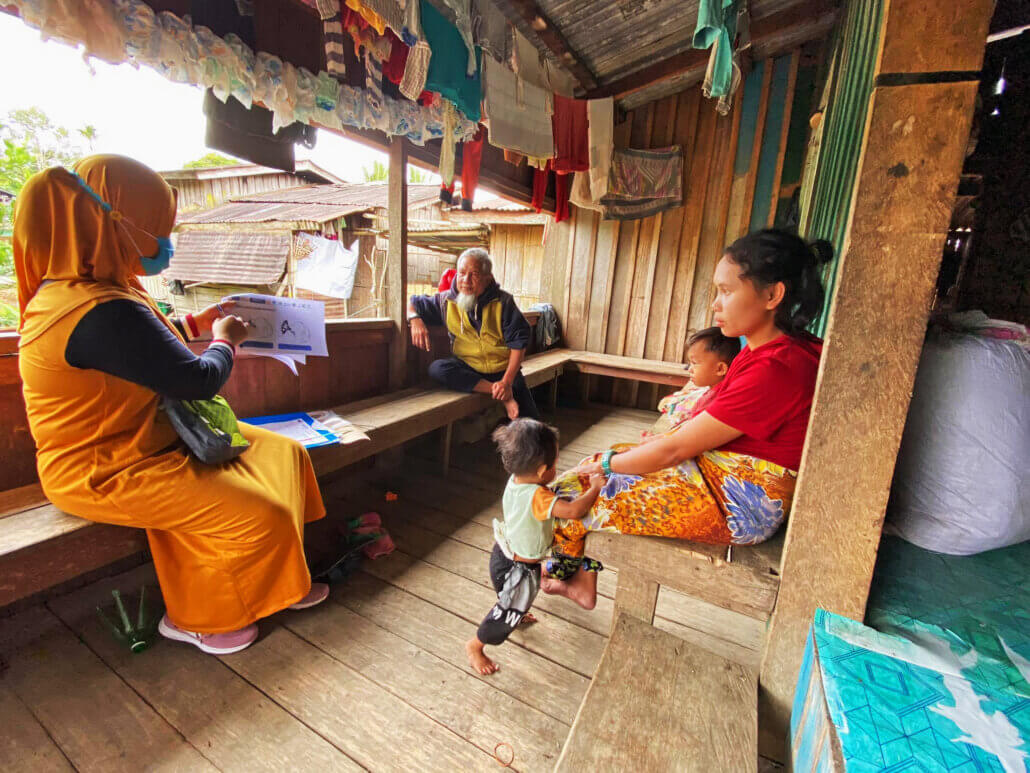
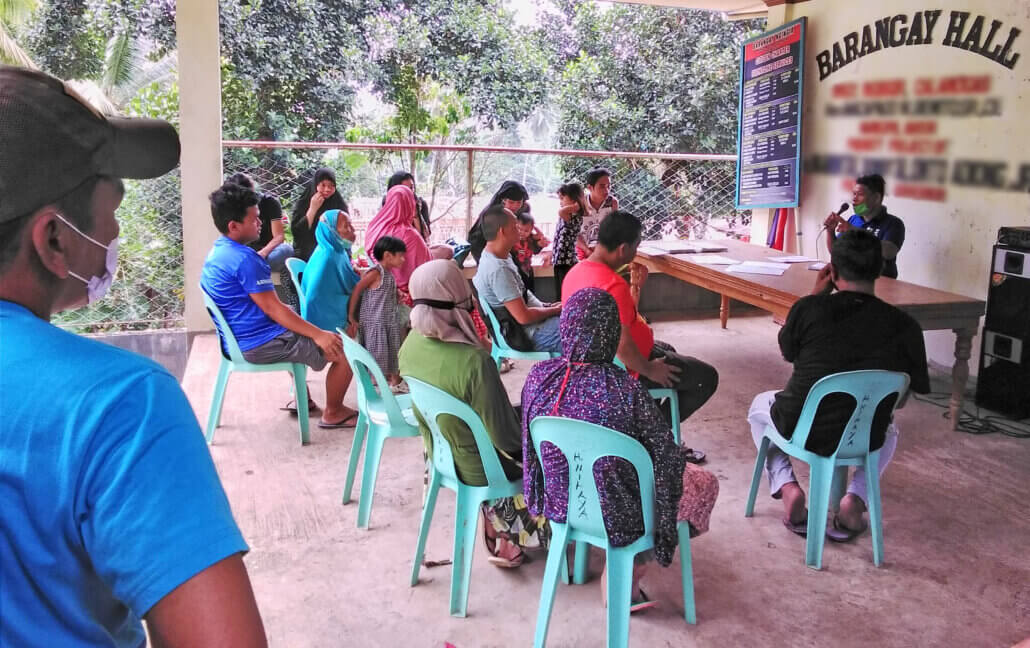
Door-to-door nutrition and hygiene promotion sessions in Lanao Del Sur | Photo by Theresa Cortes for Action Against Hunger (Lanao del Sur, Philippines © 2020)

The gender analysis also noted that although both women and men participate in income-generating activities and decide together on some key issues, key decisions like mobility, heritage, what specific work is assigned to each person, and the use of family land, etc. still fall under the decision of men. Evidently, this is one of the factors barring women’s access to income-generating activities since farming is considered the region’s main source of income. Agricultural labor like tending to the fields is mainly considered as the responsibility of men. Therefore, it comes with no surprise that men also present the highest percentages of agriculture knowledge.

Because of our commitment to mainstream gender equality in all our programs, we are aiming to maximize project outcomes while promoting gender empowerment. To do this, we plan to integrate interventions that are influencing household decision-making into existing food security & livelihoods programming.

HHDM Session in Calanogas facilitated by the project team | Photo by DRR-BHA Project Team for Action Against Hunger (Calanogas, Philippines © 2021)

Household decision-making impacts child health and nutrition in multiple ways. It influences underlying causes of undernutrition: decisions related to household production, household consumption, and caregiving practices. Household decision-making can also lead to improvements in women’s mobility; control of own time and income; men’s trust, confidence, and respect for women; women’s own self-confidence; and the sharing of household chores.

Photo by Rosa May Maitem for Action Against Hunger (Maguindanao, Philippines © 2013)

Using the Household Decision-Making (HHDM) Approach, we aim to shift household behaviors regarding decision-making and distribution of household work by spotlighting the work performed by women at reproductive and productive levels and adding more value to their contributions. The HHDM approach will hopefully encourage family members to contribute equitably—allowing each member to learn, cope, adapt and transform in the face of shocks and stresses and therefore increase household and community resilience in the long run.

“This innovative approach will enhance our FSL strategies making it more inclusive and gender transformative,” – Menchie Lacson

The HHDM approach is based on the household dialogue toolkit developed by Mercy Corps, which we’ve adapted appropriately to the context of Filipino communities, particularly in Mindanao. This was made possible through the support and guidance of Bishnu Bahadur Khatri, a seasoned international expert, and researcher on household dialogue along with human rights, child rights, social inclusion, gender-based violence, climate change, and gender equality among many others.

HHDM Session in Calanogas facilitated by the project team | Photo by DRR-BHA Project Team for Action Against Hunger (Calanogas, Philippines © 2021)

A Household Decision Making Approach Facilitator Guidebook is currently in the works, which we will be piloting through our USAID-funded disaster risk reduction project. In the meantime, the HHDM approach nonetheless has since been implemented following an online ‘training of trainers’ (ToT) on Family and Household Dialogue. The five-day training was facilitated by Bishnu Khatri last from April 8-12, 2021 and was participated by Action Against Hunger staff from the Philippines’ Manila head office, Cotabato field office, and international headquarters.

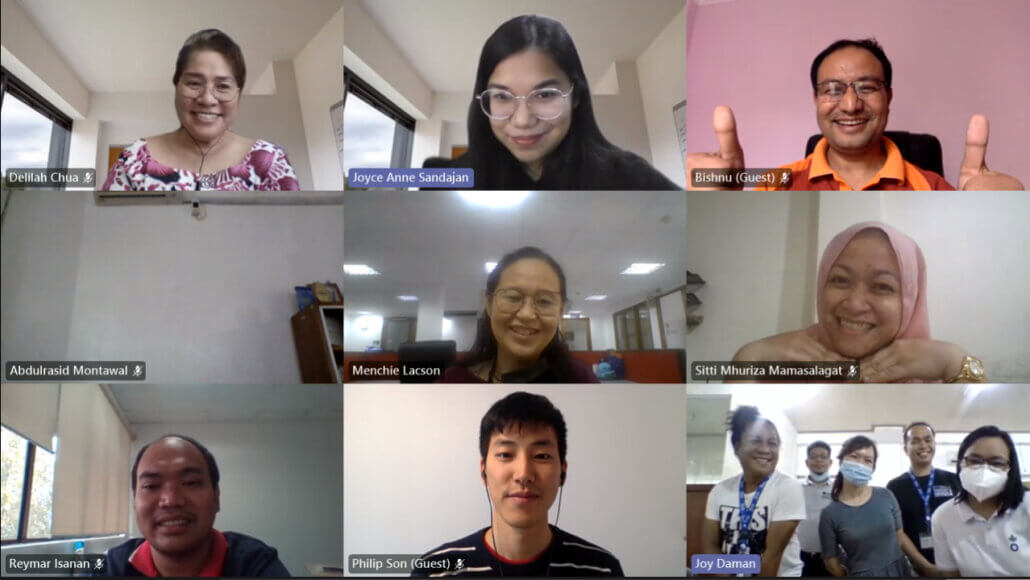
Action Against Hunger staff with Bishnu Khatri (top-right) during the last day of the HHD Training (April 12, 2021)

“This innovative approach will enhance our FSL strategies making it more inclusive and gender transformative, [We’re] grateful for your generosity in sharing your knowledge and expertise on this approach Bishnu,” says Menchie Lacson, the Food Security & Livelihoods (FSL) Coordinator and selected Gender Champion for Action Against Hunger Philippine Mission.

As we push for long-term development, we are hopeful that more women and girls in rural communities will have active involvement in decision-making and community participation through effective and inclusive household dialogues.

‘Strengthening Local Resilience and Building Capacities in Area at High Risk of Natural Hazards in BARMM, Mindanao’ is a disaster risk reduction (DRR) project funded by the United States Agency for International Development’s Bureau for Humanitarian Assistance (USAID-BHA) and implemented by Action Against Hunger.


Written by Joyce Sandajan Read more

Real Life Heroes – Angela Nalaunan

Angela’s involvement with Action Against Hunger started back in 2014 when she became part of our Typhoon Yolanda (Haiyan) Emergency Response in Northern Iloilo. Now, she is a Project Assistant for our USAID-funded disaster risk reduction (DRR) project in BARMM, and a Real-Life Hero!

Get to know Ma. Angela Nalaunan and what sparked her motivations to become a catalyst for change.


What is your role in Action Against Hunger?

As project assistant for the “Strengthening Local Resilience and Building Capacities in Areas at High Risk of Natural Hazards in BARMM, Mindanao” project, my responsibility is coordinating with community partners and leaders, especially with the local government at both barangay and municipal levels. I also facilitate training sessions and provide awareness and information to the community with regards to disaster risk reduction, and resilient livelihood.

How long have you been working as a humanitarian worker?

I’ve been working as a humanitarian for a decade now. I was involved with Action Against Hunger before, from 2014 to 2015, as PhATSS Officer for our Typhoon Yolanda Emergency Response in Northern Iloilo.

What motivated you to become a humanitarian worker?

Being a research student when I was in college, I was exposed to different communities in different situations. After seeing and understanding what they were experiencing, it gave me a sense of purpose— to become a catalyst for change. That’s why I became a humanitarian worker.

Why are you making this sacrifice?

Working with different kinds of people is a challenging job. But being a vessel of hope, sharing one’s expertise, and seeing people with a smile on their faces is one of the most rewarding things in this world.

What have been the challenges to your work?

There are times when work is a bit out of control and things don’t go as planned. But, what is important is that you overcome these obstacles because you want to be a part of something good.

What motivates you to keep doing your work even with these challenges?

Always go back to your purpose, remind yourself why are you are here, and you will just overcome those challenges.

What are you most proud of?

Being a catalyst for change for a lot of people.

What climate change impact have you seen with your own eyes?

Being in a DRR project I have seen and expose to a lot of natural disasters like floods, typhoons, and earthquakes. Seeing this community affected by this calamity is heartbreaking, it took away their property, livelihood, and worst their loved ones, and it is very devastating.

How are you taking action against climate change?

By sharing awareness, facilitating training, and giving information regarding Disaster Risk Reduction and Climate Change Actions that the community could understand.


Strengthening Local Resilience and Building Capacities in Area at High Risk of Natural Hazards in BARMM, Mindanao‘ is a disaster risk reduction (DRR) project funded by the United States Agency for International Development’s Bureau for Humanitarian Assistance (USAID-BHA) and implemented by Action Against Hunger.