Surviving the Quake: The Sinangote Family’s Story of Survival
SAN REMIGIO, CEBU ─ On the night of September 30, 2025, Henry and Tessie Sinangote were at their small sari-sari or sundry store by the beach in Purok Sineguelas of Barangay Tambongon when the earth began to shake violently. The magnitude 6.9 earthquake that struck Bogo City changed their lives in a matter of minutes.
“When the earthquake happened, it was around 9:55 p.m., and it lasted for maybe a couple of minutes, but it felt longer. When it stopped, Henry went straight home,” Tessie recalls. Only three of their four children were home as one was working in Cebu City.
“We were calling out to the other children, but they weren’t answering. We felt hopeless. We thought they were gone.” – Tessie Sinangote
Henry and Tessie shared that at the time of the incident, the eldest and the youngest were in the bedroom, while the other was working online in a separate room. When the earthquake hit, the walls of the bedroom collapsed. “My other son, who was awake and working at the time, managed to get out, but the other two children who were sleeping were left buried by the debris,” Tessie says, her voice shaking. “When Henry and I got to the house, we were calling out to the other children, but they weren’t answering. We felt hopeless. We thought they were gone.”
For almost an hour, the family and relatives worked to lift the debris. “Luckily, our nieces and nephews were there to help because we couldn’t move the walls ourselves. I told them to get wood or anything to help lift the heavy cement. We all worked together, and ultimately, we managed to save my two children,” Henry recalls.
A parent’s nightmare
The youngest, thankfully, did not sustain any injuries. However, the eldest child had minor wounds and what they thought was a potential head injury at the time after he had shielded his sibling when the house was collapsing. Their neighbors all helped and brought them to the hospital, but by the time they arrived, patients and health workers had already evacuated outside due to the aftershocks.
Tessie stayed with her eldest at the hospital, but the ordeal did not end there. “We were outside and it started raining. People kept arriving, many were injured, and we even saw the body bags,” she shared. She said she cannot forget the fear she felt when she thought her child could have been among the casualties. “When our children weren’t responding to our screams, we thought they were no longer alive. They could easily have been one of the cases brought in that night. The trauma for a parent seeing that is unimaginable.”
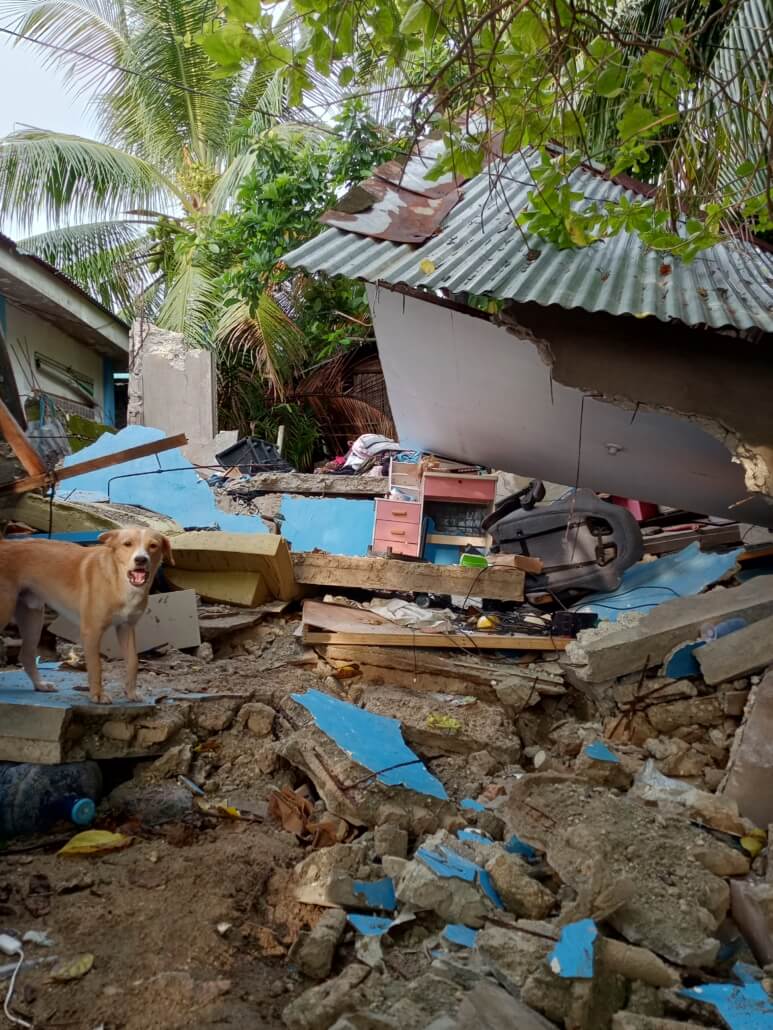
In photo: Sinangote family’s home, now a pile of rubble and debris, after the 6.9 magnitude earthquake on September 30, 2025. Photo courtesy of Tessie Sinangote.
Fleeing to safety: Evacuation and temporary shelter
Meanwhile, Henry and the other two children went to the San Remigio evacuation site, which is now referred to as “tent city” due to the evacuation tents. Because of tsunami alerts, evacuees had to move to higher ground. This meant they had to stay the night in makeshift tents made from tarpaulins. “We barely slept that night. It was wet because of the rain, uncomfortable, and we were constantly worried about aftershocks and a possible tsunami,” Henry remembers.
Afterward, they were moved to one of the evacuation tents and later to a smart house provided by the government. “Until now, we have been staying in the smart house. On weekdays, it’s just five of us; on weekends, when our third child comes home, all six of us share the small space along with our one dog,” Tessie says.
Henry still visits their damaged home occasionally to care for the dogs left behind. “In our purok, almost everything was destroyed—not just our home. Many houses were unsafe to return to, and sinkholes had formed,” Tessie recalls. The landscape of the sitio has been permanently altered, with numerous homes beyond repair and several hazardous sinkholes scattered throughout the area.
“I thought of the birds—they don’t worry about where they’ll get food, but they survive until now. That’s how I think of our situation. I try not to worry too much about our struggles and just take it day by day.”
Life Before Disaster: Livelihood and Daily Life
Before the earthquake, the Sinangotes ran a small sari-sari store near the beach, depending on tourists and beachgoers for income. “Our store would earn well whenever there were a lot of tourists. But we can’t go back because the beach is not allowed to operate due to sinkholes,” Tessie explains.
Their daily income, averaging around 300 pesos (approximately 4.80 euros), was previously enough to cover food and household expenses. Now, with no steady source of livelihood, the family relies on financial support from friends and relatives and sometimes even has to borrow money to get by.
Despite the loss, Tessie reflects on their past with warmth. “Our home lasted 25 years, and all our memories are there. But the earthquake taught us that concrete isn’t always safe. We’ll have to think differently if we rebuild.”
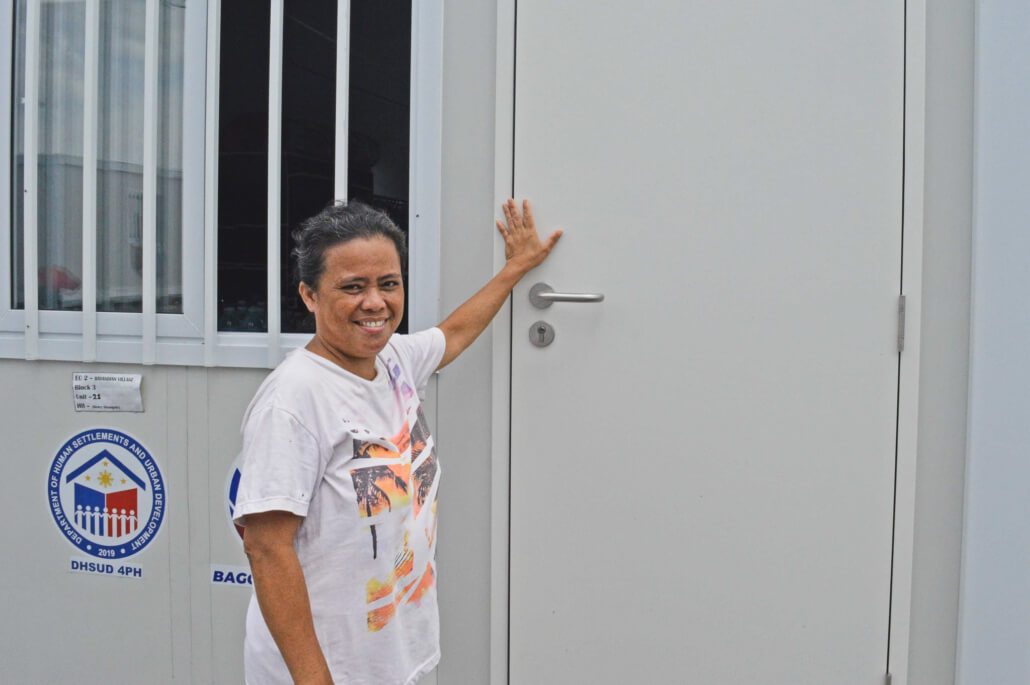
In photo: Tessie stand outside the temporary smart home provided by the government. The smart home is where they will live for at most a year since their home was totally damaged by the magnitude 6.9 earthquake last September 30, 2025. (Photo by Joyce Sandajan for Action Against Hunger)
Essential support: Humanitarian aid from ACCESS
In the aftermath of the quake, the Sinangote family and many others affected received vital support through the ACCESS program, funded by the EU Civil Protection and Humanitarian Aid Operations (ECHO). With homes destroyed and water systems heavily damaged, many families were left without even the most basic necessities.
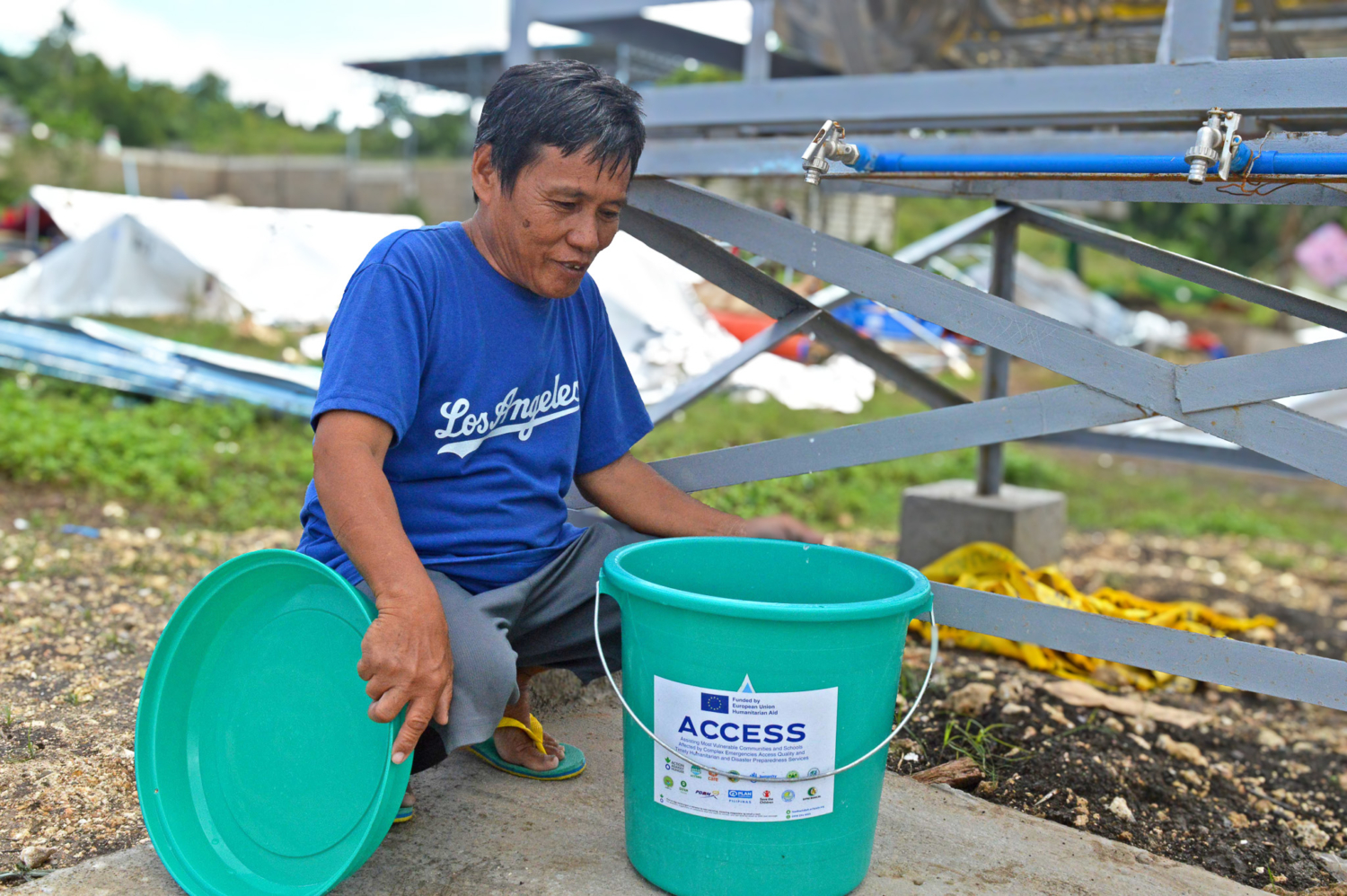
Within days, Action Against Hunger, as one of the implementing partners of ACCESS, together with the Mindanao Organization for Social and Economic Progress (MOSEP), provided WASH kits to affected households and installed a temporary water tank at the evacuation site. This tank was supplied regularly through water trucking to ensure families could access safe water. The ACCESS team also worked with the Pangi Water Service Cooperative (Pawasco) and local authorities to deliver water trucking services to hard-hit communities whose pipelines and water sources had been disrupted.
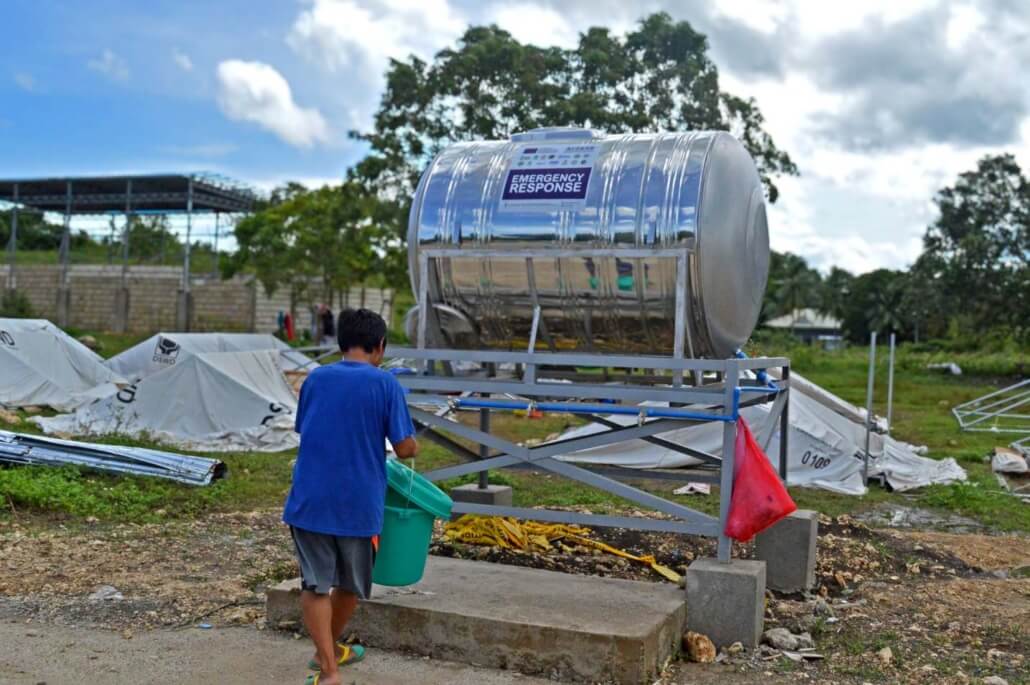
In photo: Henry makes his way to the water tank built by Action Against Hunger as part of the ACCESS emergency response, with funding from the EU Civil Protection and Humanitarian Aid. (Photo by Joyce Sandajan for Action Against Hunger)
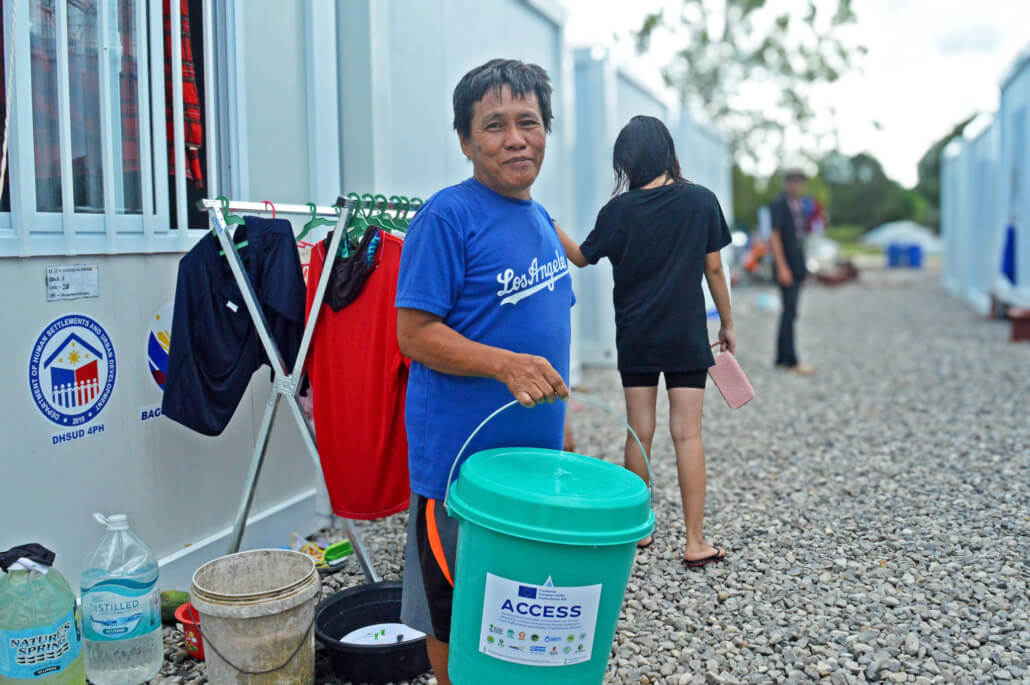
Tessie recalls how these early interventions helped them get through the most difficult days. “We received water and hygiene kits from ACCESS, which were very helpful,” she says. “The water tank at the evacuation site was very close to us, so that we could use it easily. The hygiene kits were a huge help because we had nothing at the time. We didn’t even have a bucket, so those items were really a big help.”
Although relief distributions are less frequent now than they were during the first days after the disaster, the family still receives occasional government support, such as food and basic supplies. “For now, we still have relief goods. They help us survive while we figure out the next steps,” Tessie adds.
“We received water and hygiene kits from ACCESS, which were very helpful…the water tank at the evacuation site was very close to us, so that we could use it easily. The hygiene kits were a huge help because we had nothing at the time. We didn’t even have a bucket, so those items were really a big help.”
For camp coordinator Pamila of the evacuation site in San Remigio, the situation of the Sinangotes reflects the experience of many displaced families. She explains that continued humanitarian assistance remains essential. “Many internally displaced persons have similar stories. Organizations like Action Against Hunger and ACCESS partners are vital.”
Facing the Unknown: Life After the Quake
Life after the quake is filled with uncertainty. The smart house is temporary, and relocation plans remain unclear. “Right now, it hasn’t sunk in whether we can stand again after one year. If this is a no-build zone, we’ll have to find another place to build a house,” Tessie says.
Their livelihood cannot restart until the beaches are open and safe again. Relatives have offered financial help, which the family is saving to reopen their sari-sari store.
Despite everything, hope persists. Tessie draws strength from positivity and faith. “I thought of the birds—they don’t worry about where they’ll get food, but they survive until now. That’s how I think of our situation. I try not to worry too much about our struggles and just take it day by day.” She prays for clarity and strength to rebuild. “I hope we can have work. It’s not easy to go back to zero. No house, no belongings. But thankfully, many gave us help, things we could use.”
Henry and Tessie continue to navigate daily life under difficult circumstances. Their story is a stark reminder of the long road to recovery that families face after disasters, where survival often means managing what little is left and making difficult decisions about the future.
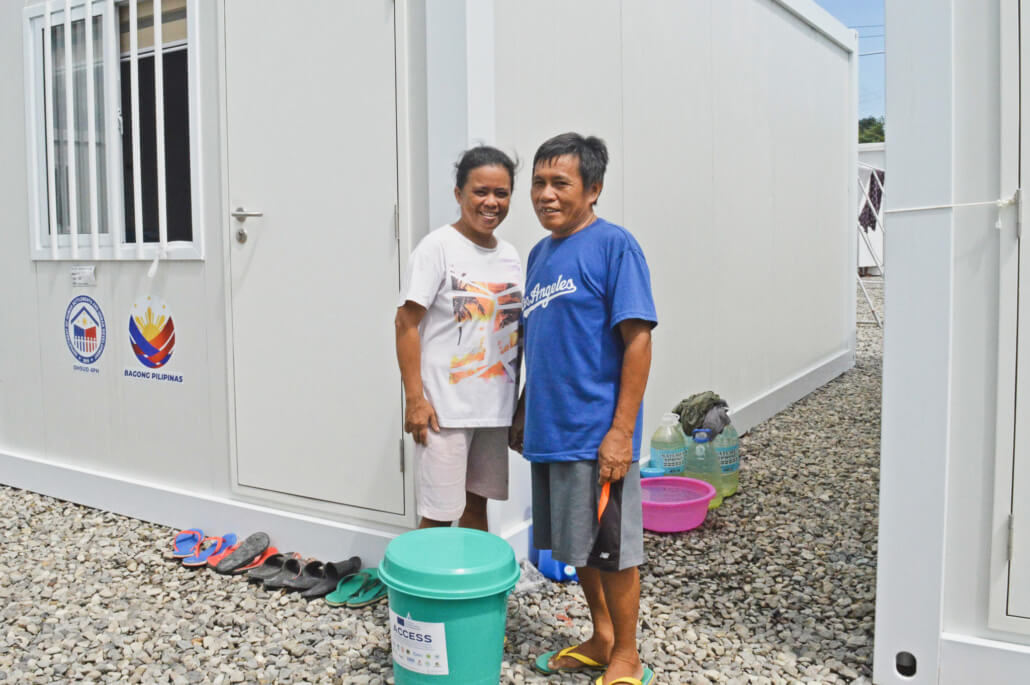
In photo: Henry and Tessie stand outside the temporary smart home provided by the government. The smart home is where they will live for at most a year since their home was totally damaged by the magnitude 6.9 earthquake last September 30, 2025. (Photo by Joyce Sandajan for Action Against Hunger)
ABOUT THE RESPONSE
The ACCESS Emergency Response provided urgent support to communities affected by the successive impacts of Tropical Cyclones Mirasol (Mitag), Nando (Ragasa), Opong (Bualoi), the enhanced Southwest Monsoon, and the magnitude 6.9 earthquake that struck offshore Cebu on 30 September 2025. Across Bicol, Northern Luzon, BARMM, and northern Cebu, the response delivers water, sanitation, and hygiene support; shelter and settlements support; multi-purpose cash assistance; and protection services.
ACCESS is a European Cilvil Protection and Humanitarian Aid-funded project serving the most affected and underserved communities in the Philippines, where chronic armed conflict, natural hazards, recurrent displacement, and intensifying climate-related risks continue to threaten lives and livelihoods. It is implemented by a consortium of 14 local and international organizations: ACCORD, Action Against Hunger Philippines, CARE Philippines, Community Organizers Multiversity (COM), Humanity & Inclusion Philippines, Integrated Mindanaons Association for Natives (IMAN), Kadtabanga Foundation for Peace and Development Advocates, Mindanao Organization for Social and Economic Progress (MOSEP), Oxfam Pilipinas, People’s Disaster Risk Reduction Network (PDRRN), Plan International Pilipinas, Save the Children Philippines, United Youth for Peace and Development (UNYPAD), and United Youth of the Philippines – Women (UnYPhil-Women).
Written by: Joyce Sandajan