Surviving on aid: Inside a tent home after the Cebu quake
TABUELAN, Cebu – On the night of September 30, 2025, a violent 6.9-magnitude earthquake shook Cebu. Although the epicenter was in Bogo City, nearby towns like San Remigio and Tabuelan also bore the brunt of the tremors. Homes collapsed, walls cracked, and furniture toppled, leaving residents disoriented and terrified. More than 160,000 houses were damaged, and over 7,000 were completely destroyed.
Mercedita Simbajon, 53, awoke to the sound of hollow blocks crashing around her home.
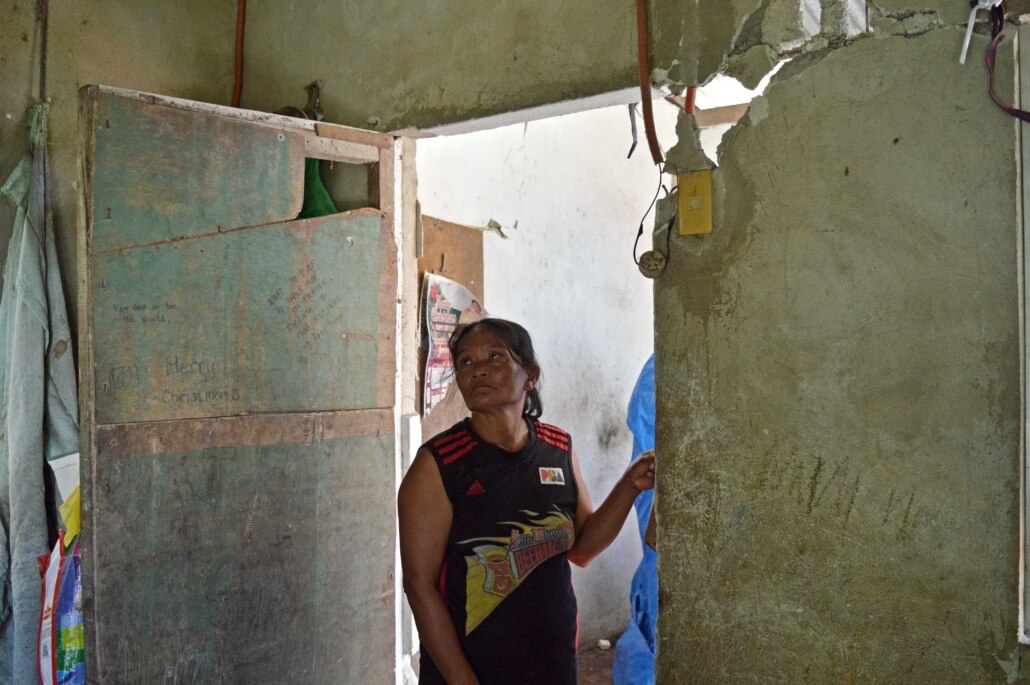
In photo: Mercedita looks at the damages in her old house. (Photo by Joyce Sandajan for Action Against Hunger)
“We were already asleep at that time while one of my children was attending online classes in another room,” she said. “We were sleeping when I suddenly woke up to the sound of hollow blocks falling everywhere. I told my children to get out of the house, and we pushed the table away because it was blocking the door.”
Outside, the danger continued. Mercedita watched in horror as a jackfruit tree swayed precariously, nearly toppling on her husband. “I saw my husband almost get hit by the tree that was about to fall. It was so close,” she said, her voice shaking at the memory.
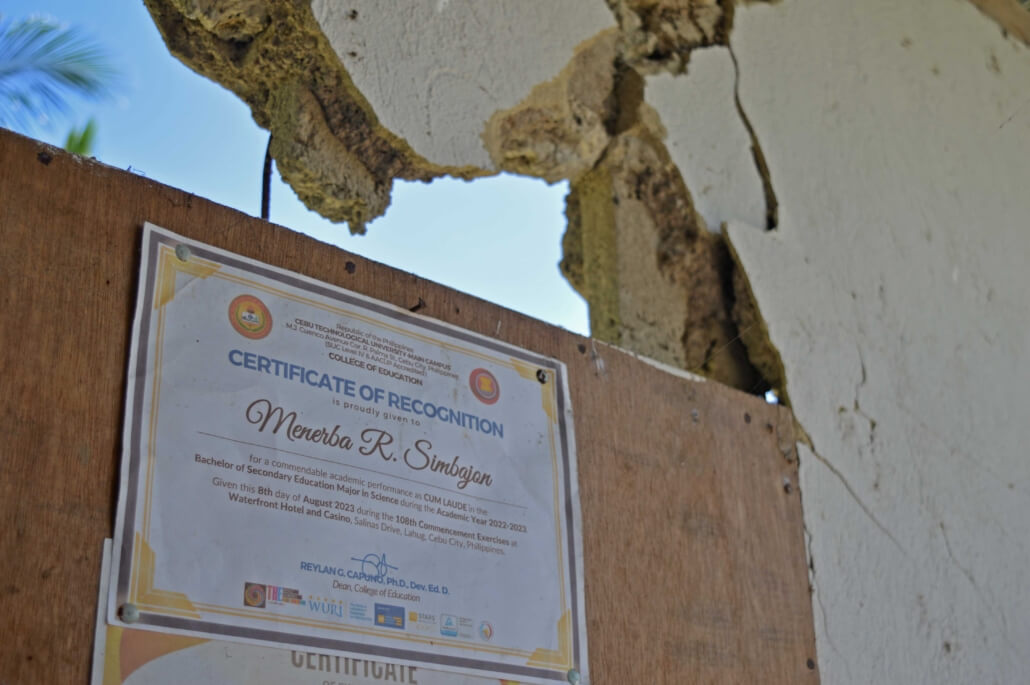
In photo: Cracks and damages on the remaining walls of Mercedita’s home. (Photo by Joyce Sandajan fro Action Against Hunger)
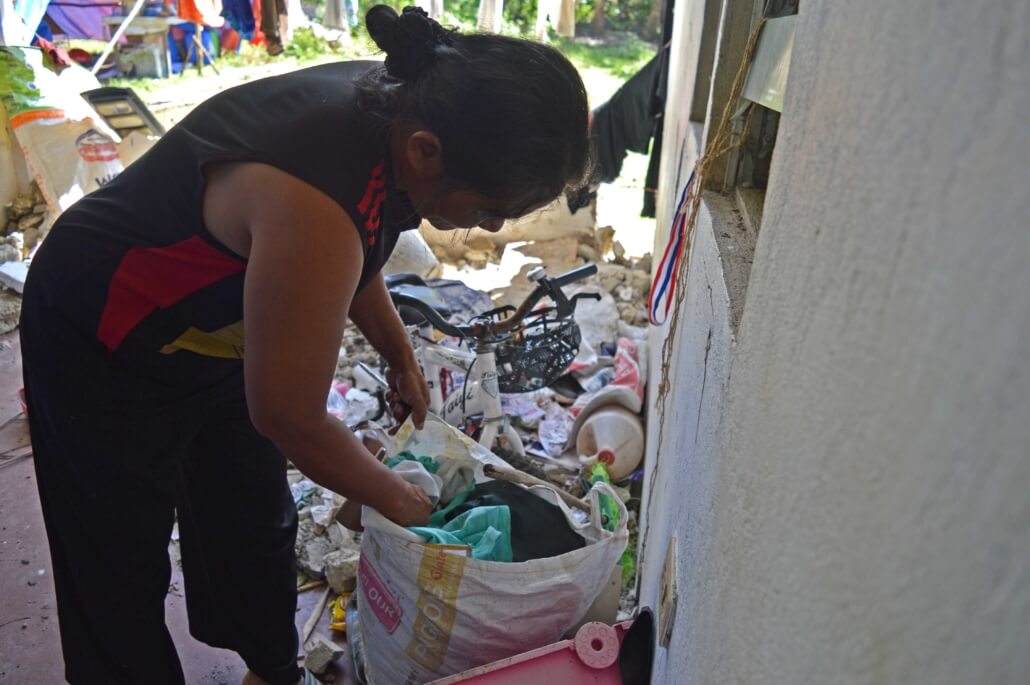
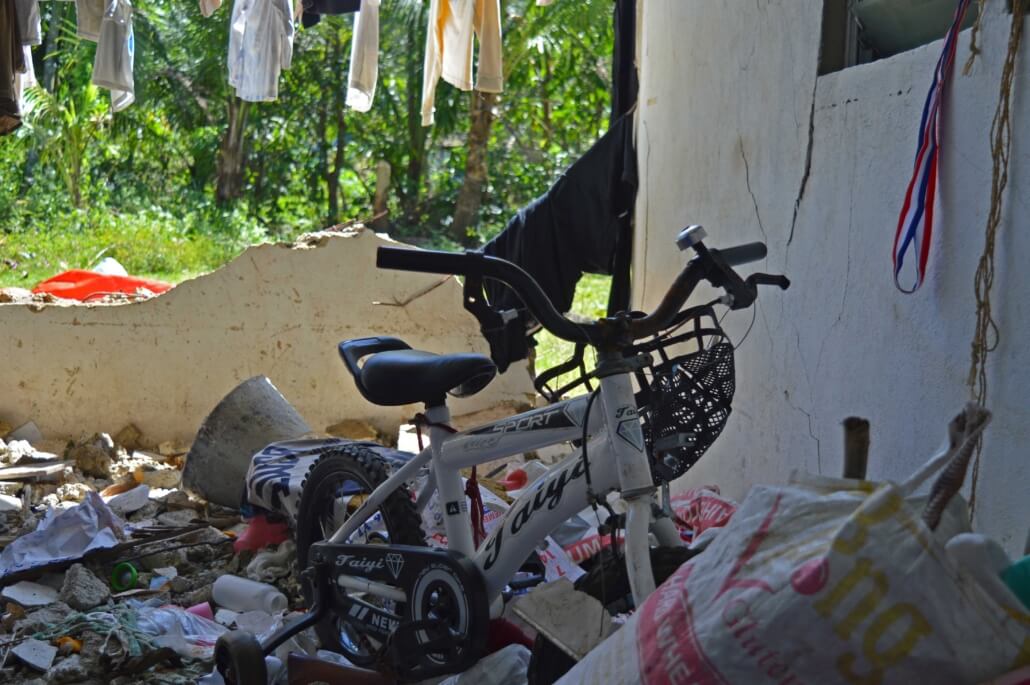
In photo; Mercedita rummages through a sack of clothes and items that they managed to save from the rubble. (Photo by Joyce Sandajan for Action Against Hunger)
The family sought refuge in an open, flat area nearby, huddling together under the night sky. Her four-year-old grandson trembled uncontrollably, scared of the aftershocks that followed. They stayed there until the early hours of the morning before moving to a sibling’s poultry house nearby. “It started raining in the morning, so we stayed inside the chicken house,” Mercedita said. For three days, this makeshift shelter was their only refuge.
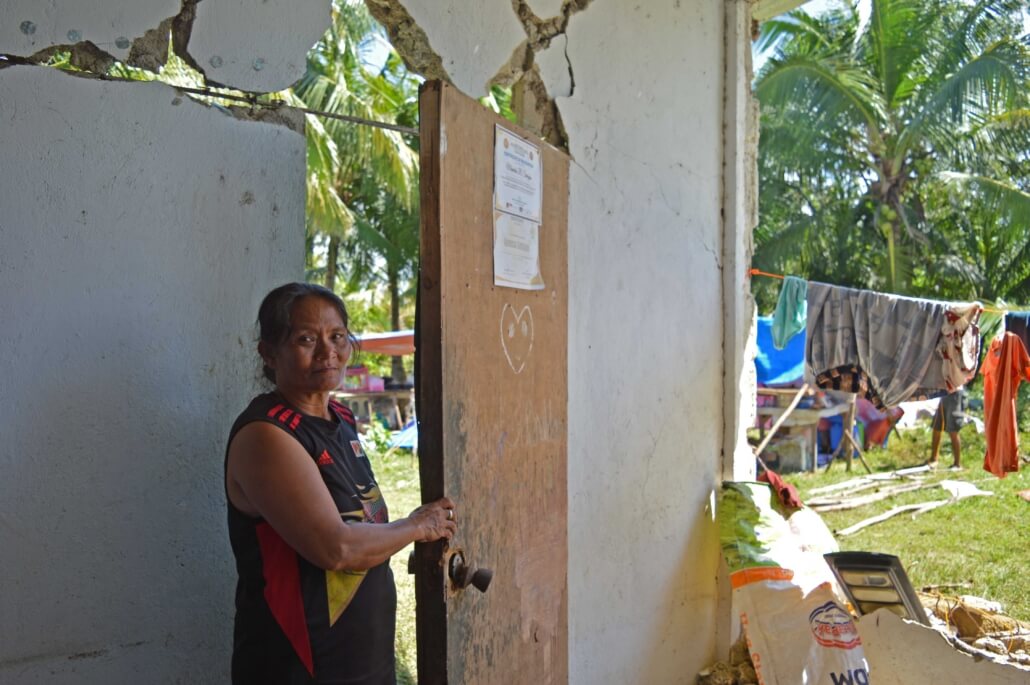
In photo: Mercedita opens what used to be the main door of the house. The wall, although still standing, is visibly cracked and damaged after the earthquake. (Photo by Joyce Sandajan for Action Against Hunger)
During this time, Mercedita’s husband struggled to move around due to shock and trauma, which added to their devastation. “We made a temporary sleeping area for about three days before the tent arrived. They gave it to us because my husband couldn’t walk properly after the quake. He couldn’t sleep either,” she explained.
“Even before the earthquake, life was hard. But this disaster has made everything even more uncertain.”
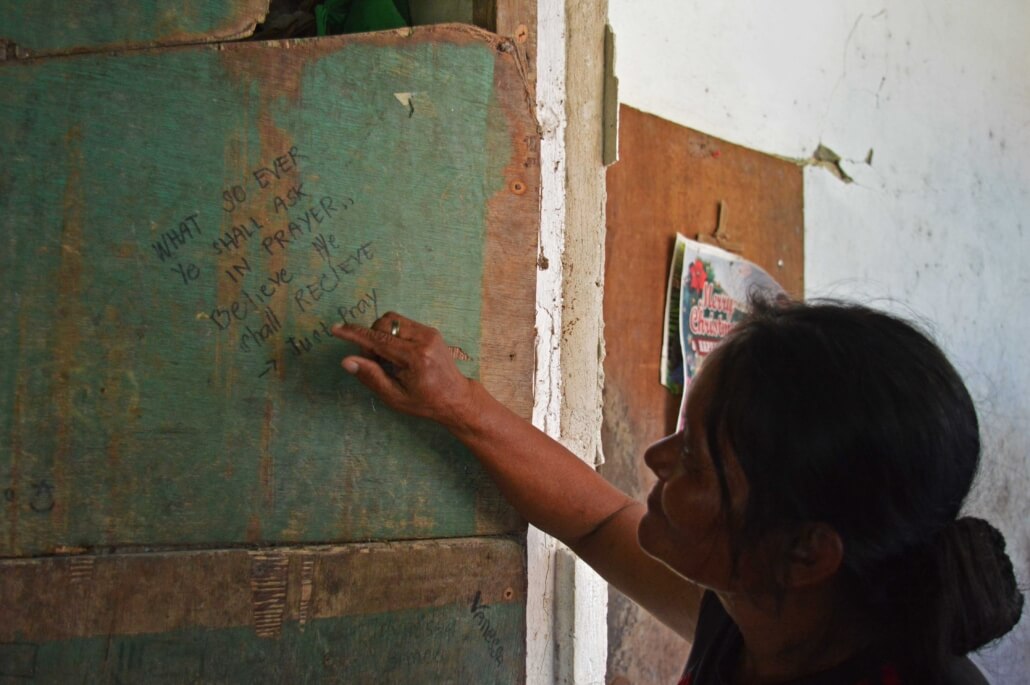
In photo: Mercedita reads a quote written by one of her children years ago: “Whatsoever ye shall ask in prayer, believe ye shall receive. Just pray.” She says these words have become a source of strength for their family during these difficult times. (Photo by Joyce Sandajan for Action Against Hunger)
Life Before the Earthquake: Struggling to Make Ends Meet
Even before the earthquake, life for Mercedita’s family was a daily balancing act. She works as a utility worker in Barangay Kantubaon, earning 1,700 pesos (around 80 euros) a month. She is the sole provider for her household of eight: her husband, four children, and two young grandchildren. Her four other older children now live separately, some with their own families, occasionally sending support that is irregular and limited.
“Sometimes we borrow money just to get by,” she said. “Even before the earthquake, life was hard. But this disaster has made everything even more uncertain.”
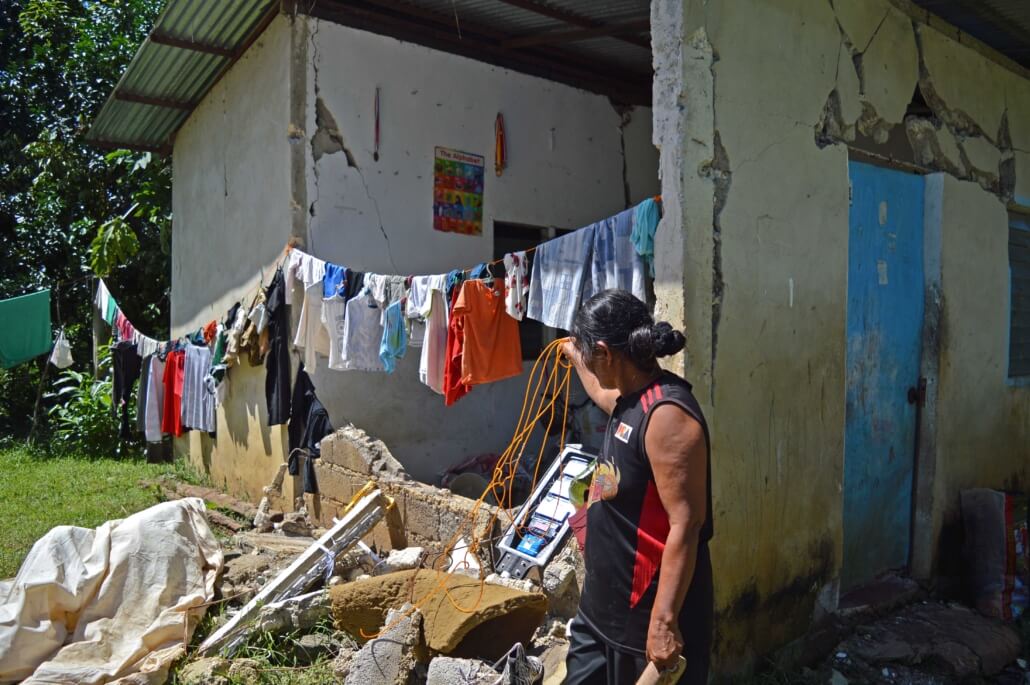
Their home had already suffered damage during Typhoon Yolanda (Haiyan) in 2013, which destroyed the roof. It took nearly a year to recover then. Now, the earthquake has left them with walls cracked and crumbling, and the comfort room completely destroyed. Without a functioning toilet, the family has no choice but to practice open defecation and relieve themselves wherever possible.
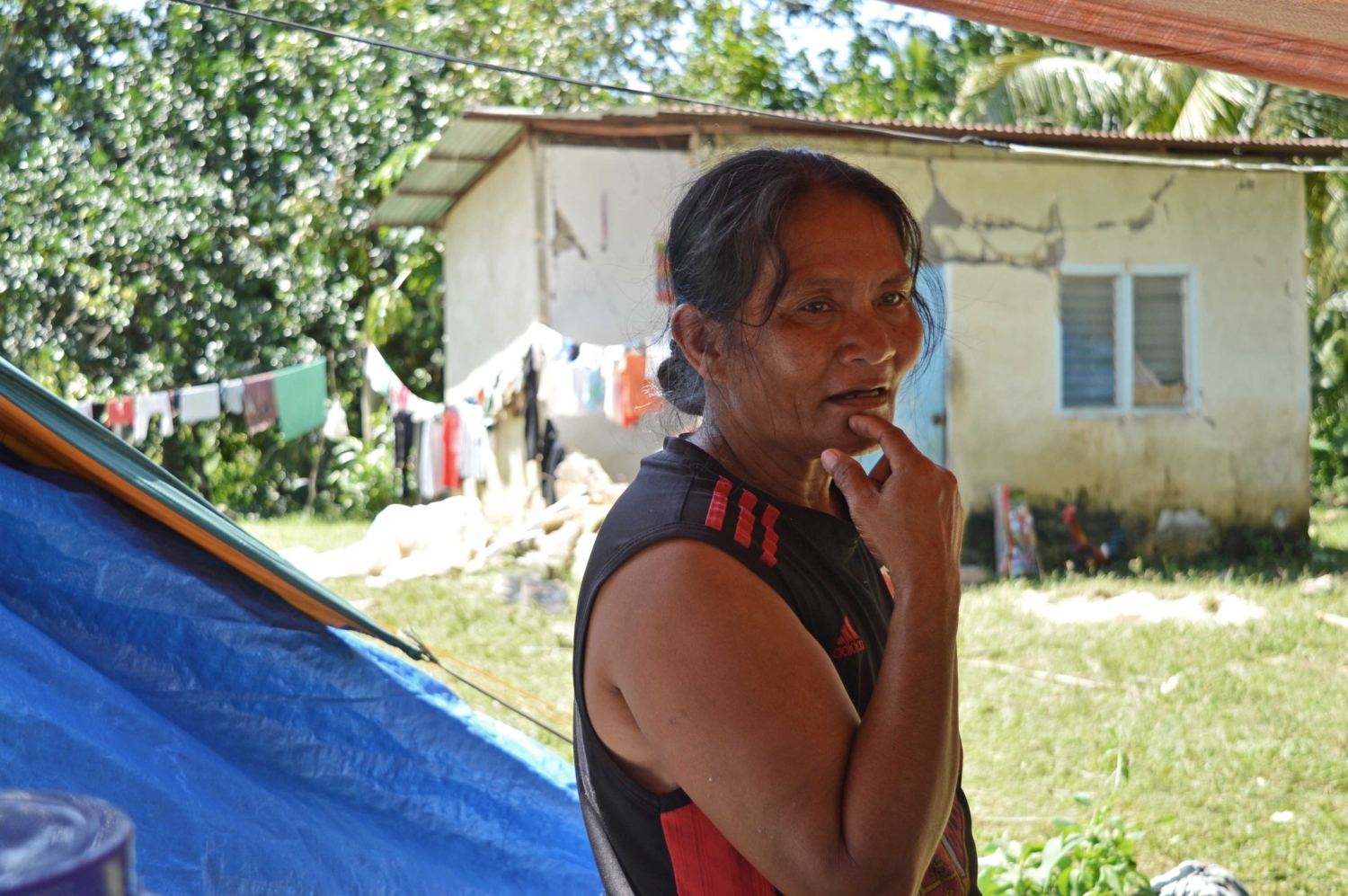
Their temporary living conditions are stark. A government-provided tent serves as their home now. The floor is covered with flattened boxes as makeshift mats. A small, temporary kitchen sits outside, made from borrowed chairs and a gas stove. There is no electricity, so nights are dark and quiet, and the family has to rely on daylight to carry out daily chores. Every corner of their compound, from the ruins of the house to the scattered relief items, tells the story of a family trying to survive in the aftermath of disaster.
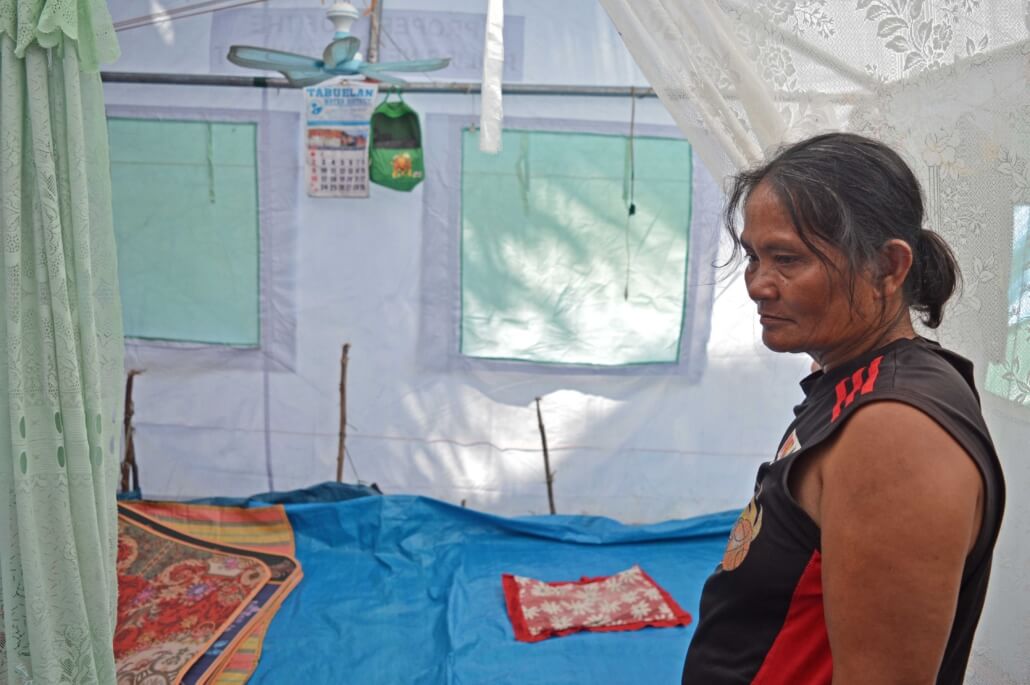
In photo: Mercedita inside their tent shelter. (Photo by Joyce Sandajan for Action Against Hunger)
Assistance received: Support from ACCESS
Relief came in the form of humanitarian assistance from the EU Civil Protection and Humanitarian Aid-funded ACCESS project. The family received food packs, including rice, munggo, sugar, and other essentials, which would last for about a month according to Mercedita. “This was a big help because if we didn’t receive anything, we would have to find some way to survive. We might even need to borrow money just to buy these things,” Mercedita said.
ACCESS also helped restore water supply in Tabuelan, damaged by the earthquake. For days, families had to fetch water from a deep well, waiting nearly an hour in long lines. With the support of the ACCESS consortium— of which Action Against Hunger is one of the implementing partners—the municipal water systems were repaired, and families received hygiene kits sufficient for more than a month.
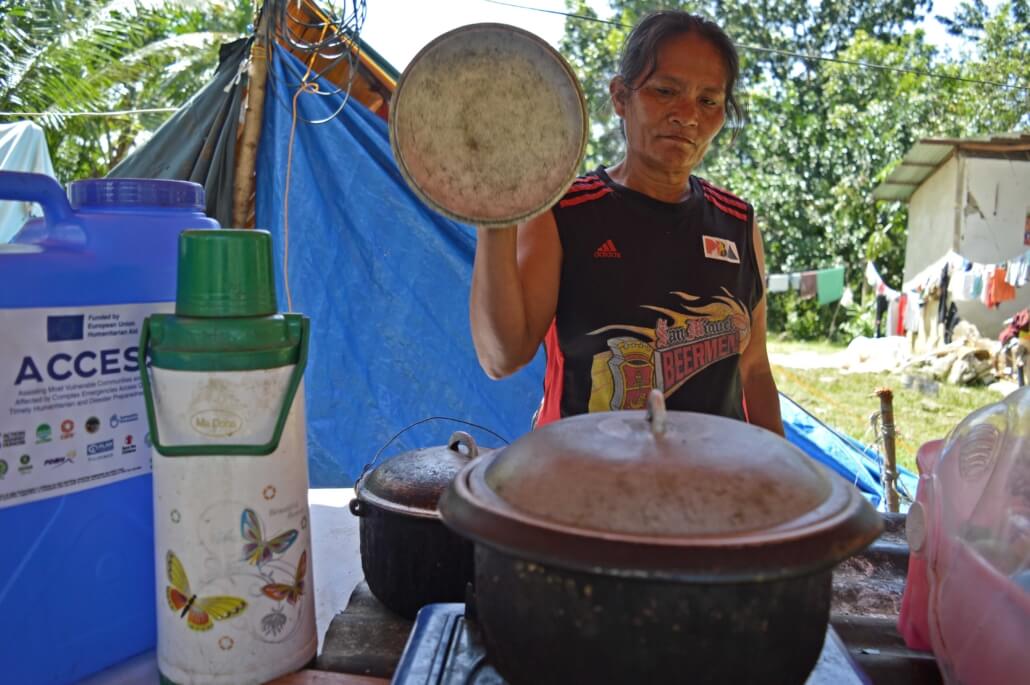
In photo: Mercedita prepares food in their makeshift kitchen. She uses water from the the jerrycan provided by ACCESS. (Photo by Joyce Sandajan for Action Against Hunger)
The aid made daily life slightly more manageable, but the reality remained harsh. “We managed to save a few clothes scattered around, and some cooking pots we dug out from under the rubble. We have neighbors who helped us and gave us clothes because we really weren’t able to save much,” she said.
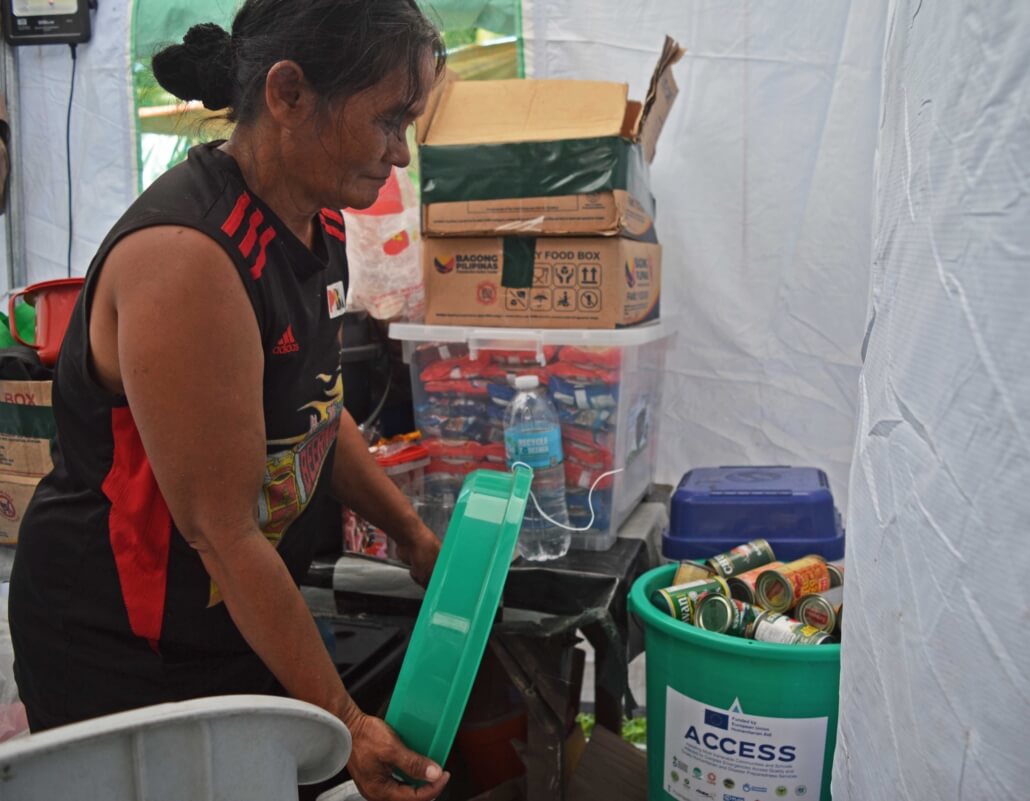
In photo: Mercedita shows all the aid her family had received since the earthquake. For now, she has organized all by category, even putting all canned goods inside the bucket from ACCESS’s hygiene kit. (Photo by Joyce Sandajan for Action Against Hunger)
Through it all, Mercedita is grateful for the support her family and neighbors received. “Thank you very much to ACCESS for helping our community, especially our neighbors who were also affected by the disaster. We are grateful that ACCESS arrived,” she added.
Looking ahead: Hopes and uncertain plans
For now, rebuilding the house remains a distant dream. “We have no plans yet to rebuild the house. We’ll stay in the tent for the meantime. If we had the money, we would really want to build a small house. But until then, we’ll stay here,” Mercedita said.
Daily life in the tent is a constant challenge. Without electricity, the family relies on daylight to cook, clean, and care for the children. Their comfort and privacy are minimal, and simple tasks like bathing or using the toilet require improvisation.
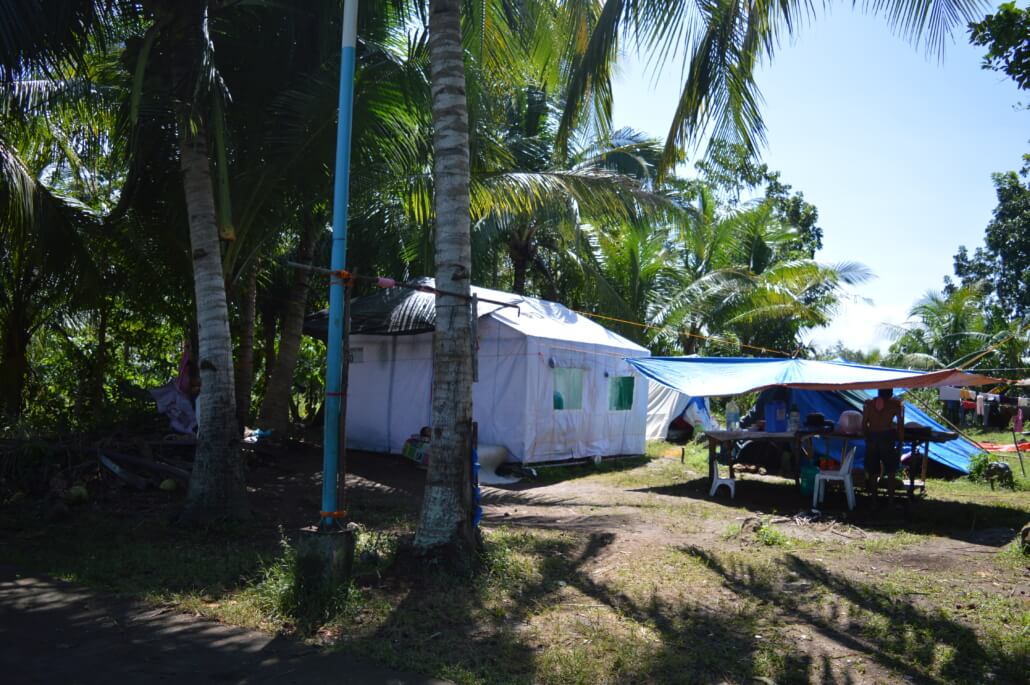
Mercedita’s story paints a vivid picture of what life has become in the aftermath of the earthquake: nights spent in tents, meals rationed carefully, and daily struggles to meet basic needs. It is a story of a family navigating sudden loss, fear, and uncertainty, one day at a time.
“Thank you very much to ACCESS for helping our community, especially our neighbors who were also affected by the disaster. We are grateful that ACCESS arrived.”
ABOUT THE RESPONSE
The ACCESS Emergency Response provided urgent support to communities affected by the successive impacts of Tropical Cyclones Mirasol (Mitag), Nando (Ragasa), Opong (Bualoi), the enhanced Southwest Monsoon, and the magnitude 6.9 earthquake that struck offshore Cebu on 30 September 2025. Across Bicol, Northern Luzon, BARMM, and northern Cebu, the response delivers water, sanitation, and hygiene support; shelter and settlements support; multi-purpose cash assistance; and protection services.
ACCESS is an EU Civil Protection and Humanitarian Aid-funded project serving the most affected and underserved communities in the Philippines, where chronic armed conflict, natural hazards, recurrent displacement, and intensifying climate-related risks continue to threaten lives and livelihoods. It is implemented by a consortium of 14 local and international organizations: ACCORD, Action Against Hunger Philippines, CARE Philippines, Community Organizers Multiversity (COM), Humanity & Inclusion Philippines, Integrated Mindanaons Association for Natives (IMAN), Kadtabanga Foundation for Peace and Development Advocates, Mindanao Organization for Social and Economic Progress (MOSEP), Oxfam Pilipinas, People’s Disaster Risk Reduction Network (PDRRN), Plan International Pilipinas, Save the Children Philippines, United Youth for Peace and Development (UNYPAD), and United Youth of the Philippines (UnYPhil) Women.
Written by: Joyce Sandajan