Storms, Scarcity, Strength: A Family’s Story from an IP Community in Pampanga
In the Aeta community of Sitio Banaba, survival has always meant carrying heavy loads up steep slopes, gathering food from the mountains, and stretching every peso to buy rice at triple its price in town. But everything worsened after the series of storms in July 2025, when Pampanga declared a state of calamity due to widespread flooding and blocked roads.
“When the rains didn’t stop, everything flooded,” shares 70-year-old Ebyang Canduli. “The roads turned into mud. Trees fell. A small landslide had blocked the road going to the town proper. There were rocks and debris, and the dirt road became very muddy. We couldn’t go to the town at all.”
The successive impacts of Tropical Cyclones Bising, Crising, Dante, and Emong, combined with the intensified southwest monsoon, affected hundreds of barangays and submerged low-lying lying communities. For remote sitios like Banaba—already isolated by uphill terrain and unpaved roads—the blockages meant no food, no access to the market, and no income for days.
The Canduli family lives in one household composed of Ebyang; her long-time partner Ide (50); her mother Sylvia (80); her youngest daughter Batic (22), and Batic’s partner and one year-old child. Ebyang’s son Bernabe (27) lives nearby with his wife and their two small children.
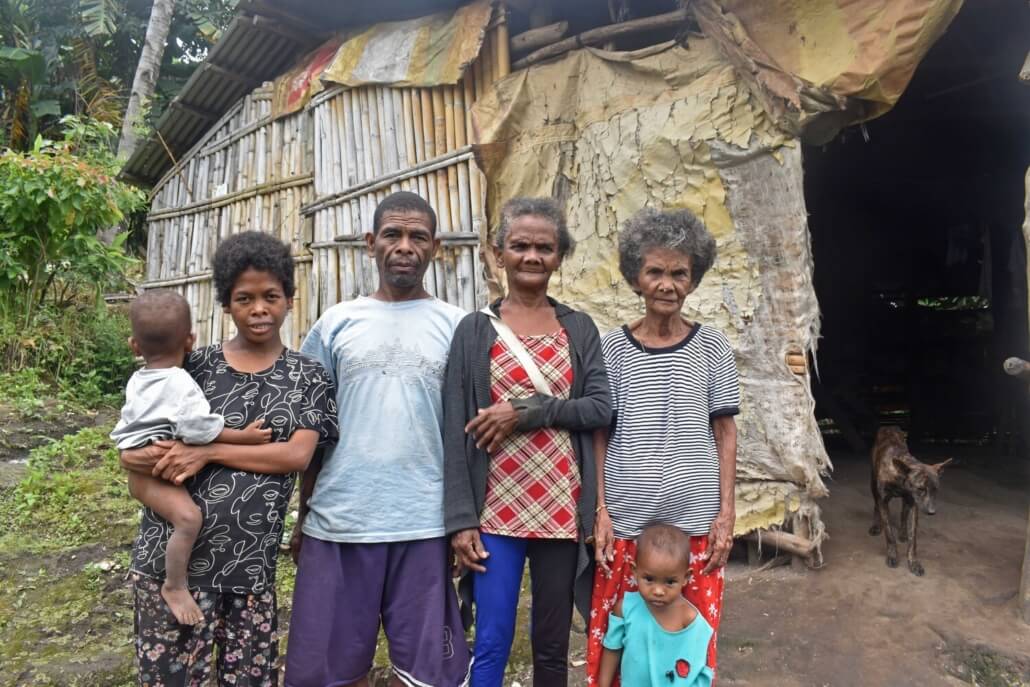
In photo: Ebyang and her family stand outside their home in Sitio Banaba, Barangay Sapang Uwak in Porac, Pampanga. (Photo by Joyce Sandajan for Action Against Hunger)
During Typhoon Emong, Ebyang and her family sought refuge in the silong, the small two- to three-foot open space beneath their raised house on stilts. The winds were so strong that they feared the entire structure would be blown away, and that cramped area felt like the safest place they could stay. They remained there overnight until the storm finally weakened. When they emerged, they found their home, made mostly of wood, bamboo, and other light materials, partially damaged, with their entire kitchen almost gone.
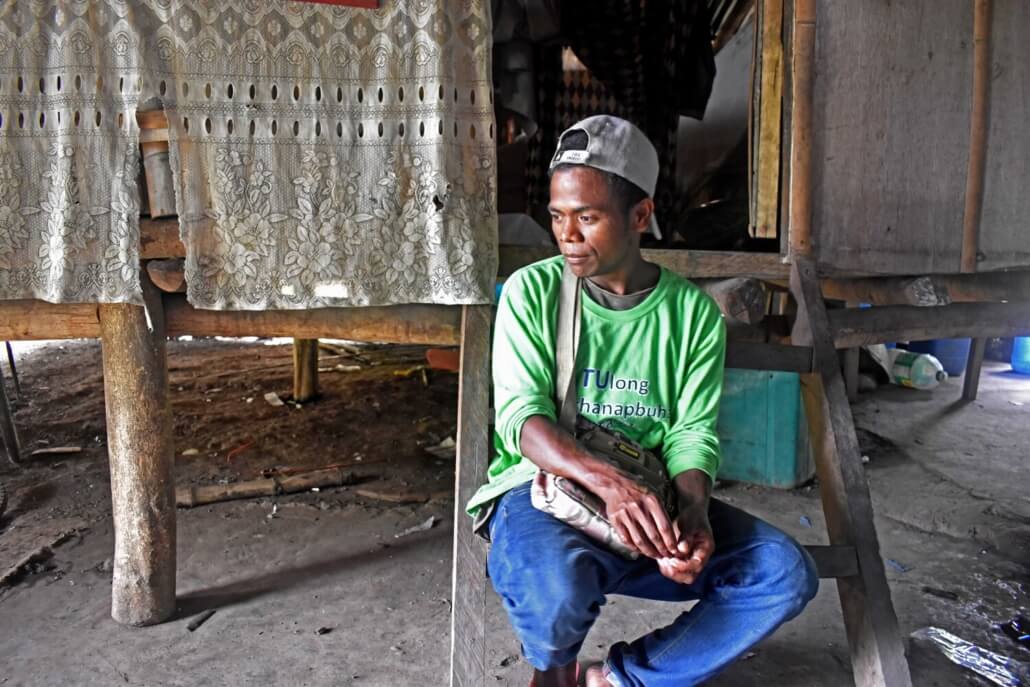
In photo: Bernard sits on the ladder leading up to his parents’ house. Behind him is the small crawl space where his mother, sister, niece and nephew hid during the typhoon. (Photo by Joyce Sandajan for Action Against Hunger)
For Ebyang, the damage left by Emong was not just another repair to face but a reminder of how exposed their family remains each time a disaster strikes. The storm brought back memories of previous hardships, shaping the story of how they came to live where they are now.
Ebyang’s family was originally from Sitio Batis in Sapang Uwak but were relocated years ago when the land was sold and later developed. “Life became harder in Sitio Banaba,” Ebyang recalls. “There was no cement, no road. My father would carry banana hearts just to feed us. Sometimes, we didn’t eat for days,” said Bernabe.
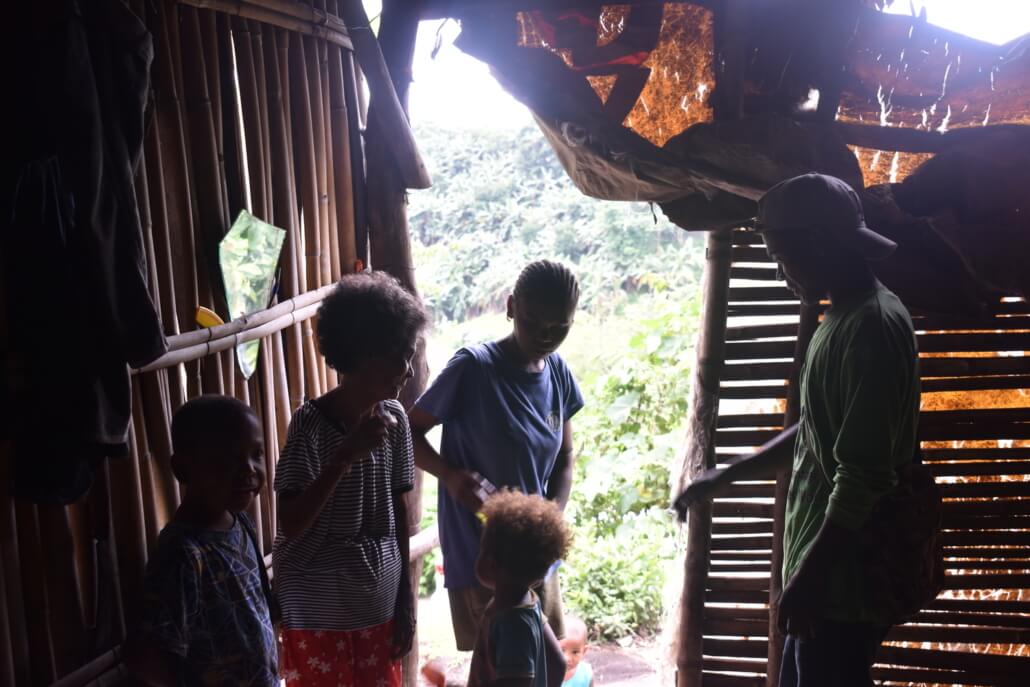
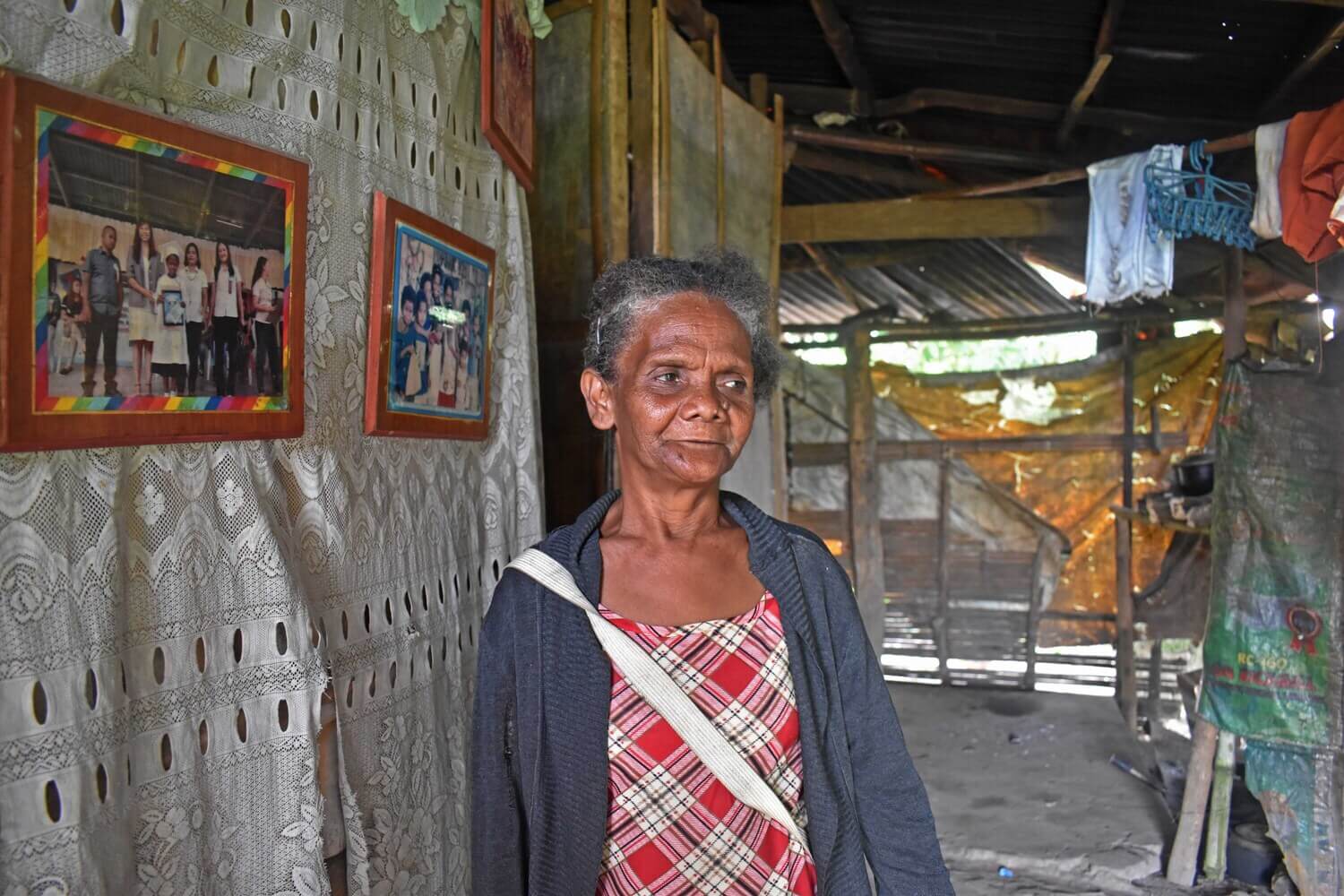
In photo: Ebyang and her family stand inside their home in Sitio Banaba, Barangay Sapang Uwak in Porac, Pampanga. (Photo by Joyce Sandajan for Action Against Hunger)
The family has survived many crises—from the eruption of Mount Pinatubo in 1991, which forced them to evacuate to Nueva Ecija for three years, to regular typhoons that destroy their crops and worsen hunger. But July 2025 felt different—the storms completely cut them off from everyone.
Work that begins before sunrise
Even before the storms, food scarcity was a part of daily life for Ebyang and her family.
“Rice here is very expensive—300 pesos for just a few scoops,” she explains. Health workers rarely reach their sitio, and children’s check-ups are irregular, making access to basic care a constant challenge.
The family’s main source of income comes from selling what they grow, such as avocados, when they are ready to harvest. Sometimes, Bernabe and his father take on labor jobs planting or doing other work on the land of non-IP families in the community. From this, they would earn around 300 pesos a day, which is less than five euros, if work is available. This, however, was not regular employment, and they would only go when someone called on them to work.
Their closest thing to steady work is harvesting puso ng saging or banana hearts. “Our regular work is collecting banana hearts, but it is very difficult because the trees are far up in the mountains, near Mount Pinatubo,” Ebyang explains. The trek can take up to five hours through overgrown trails, where snakes are a constant threat. “Sometimes it takes us the whole day to fill a sack, and we skip meals just to have enough time to gather them.”
“After the storms, the trail going there was too slippery, but we still went—because the children needed to eat,” Ebyang adds. Even after a full day of walking, searching, and carrying heavy sacks, the family earns only 200 to 400 pesos (three to six euros), that is if they are able to sell them. Buyers sometimes do not even come, as motorcycles struggle to navigate the rocky, steep, and muddy terrain of barangay Sapang Uwak, specifically, since Sitio Banaba is further up the barangay.
Many days, the family survives on taro, sweet potatoes, or bananas. Breakfast is often skipped, and meat or fish is a rare luxury. When they run out of food entirely, they borrow rice from neighbors. When others run out, they lend whatever little they have in return, an unspoken system of mutual survival that keeps the community going.
Their second-hand motorcycle, which Bernabe saved for three years to buy, is their lifeline. Repairs are frequent and costly, but it allows them to reach town whenever they manage to earn even a little money from selling harvested crops. During good months, their avocado trees can bring in up to 5,000 pesos, or around 73 euros, but this only happens once a year. Most days, earnings barely cover food.
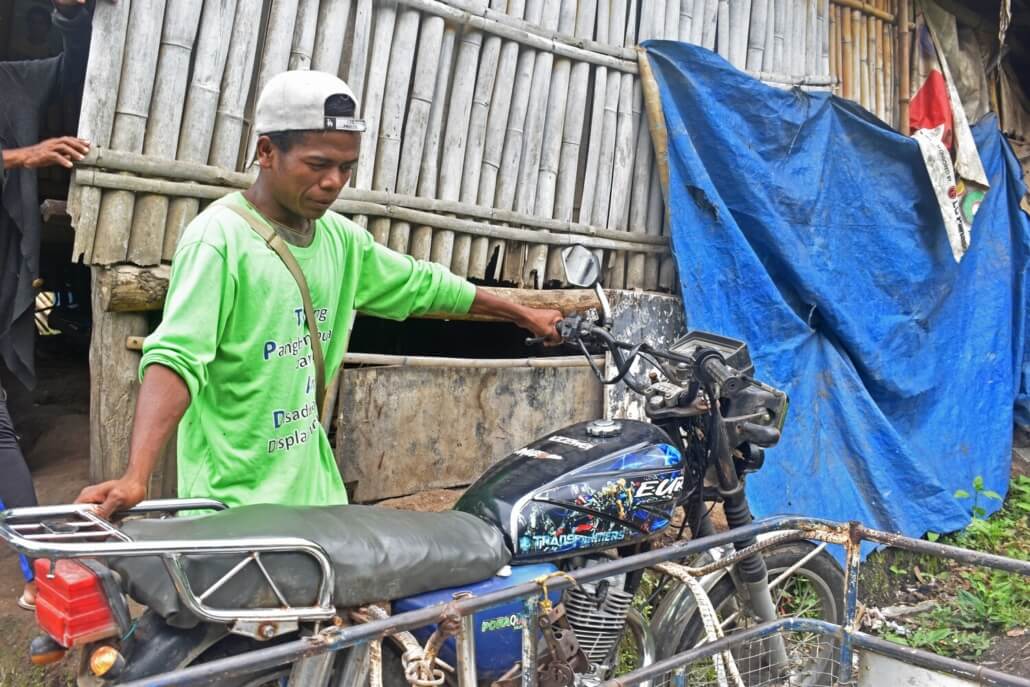
In photo: Bernard, Ebyang’s son, with his motorcycle which he spent three years saving up for. Despite the maintenance costs that they have invested in it, they put high value on this motorcycle as it serves as their main transportation to go to and from the barangay. (Photo by Joyce Sandajan for Action Against Hunger.
“We want to save for our house,” Bernabe says. “Our bamboo and wood posts rot every few years because of the storms. I dream of having even half of it cemented so we don’t have to rebuild again and again.”
With food on the table, they can focus more on their future
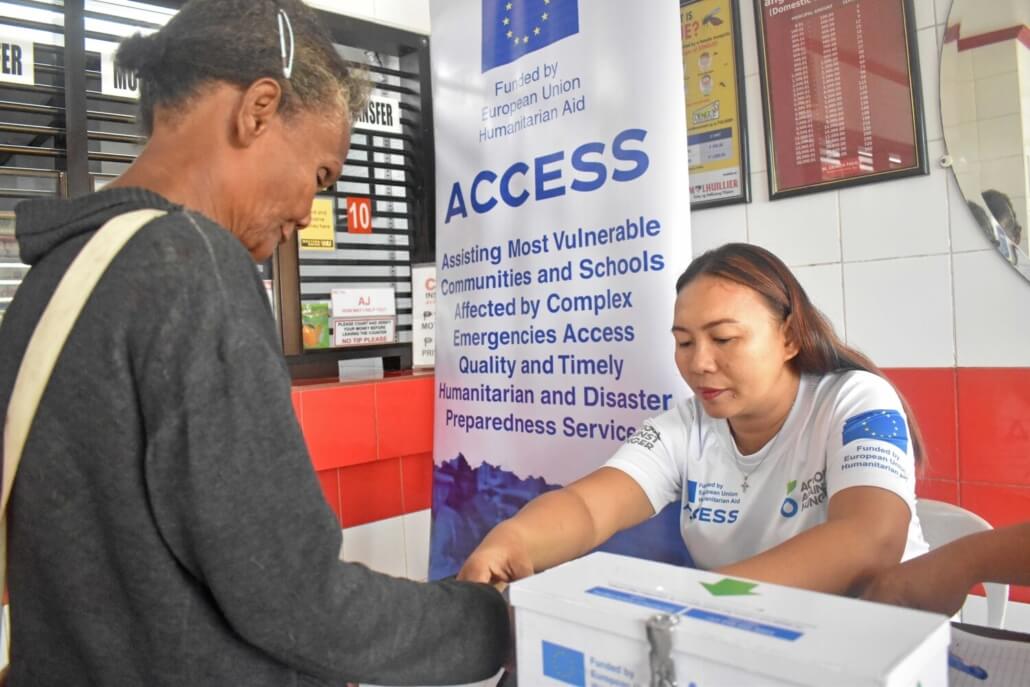
When ACCESS, through Action Against Hunger, reached Sitio Banaba as part of the emergency response funded by the European Civil Protection and Humanitarian Aid (ECHO), it was the much-needed assistance the community received after the July calamities, according to Ebyang and her son, Bernabe.
In photo: Ebyang and her family stand outside their home in Sitio Banaba, Barangay Sapang Uwak in Porac, Pampanga. (Photo by Joyce Sandajan for Action Against Hunger)
“That’s why we are thankful,” says Ebyang. “They reached us even if our sitio is very far. It means a lot to be remembered.”
On the morning of the payout, Ebyang, Bernabe, and Silvia arrived early at the financial service provider. After receiving the cash assistance, they went straight to the nearby market to buy food supplies. With the support, the family was able to purchase vegetables, meat, eggs, sugar, coffee, and half a sack of rice.
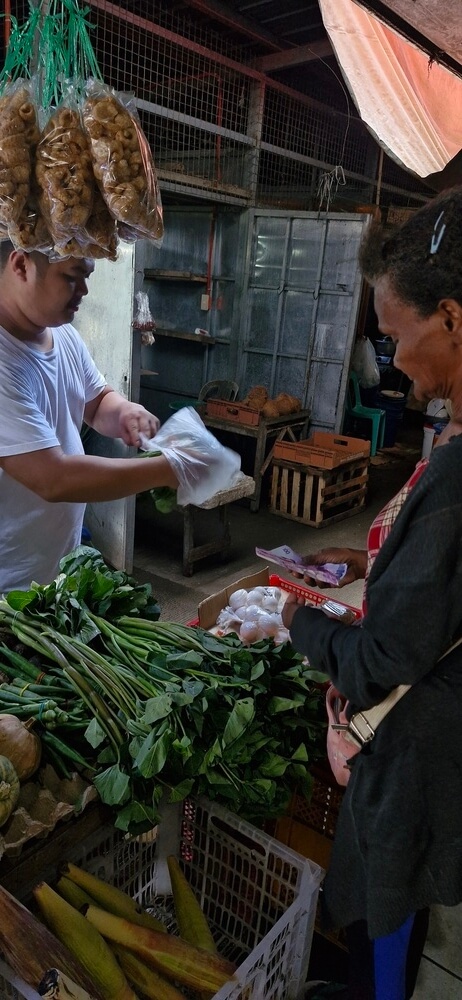
Ebyang did not spend the entire amount in one trip. She expects the food to last nearly three weeks and plans to return to the market when it runs out. At every store, she carefully kept the receipts. One vendor even remarked that it was the first time they had seen Ebyang and her family buy so many food supplies.
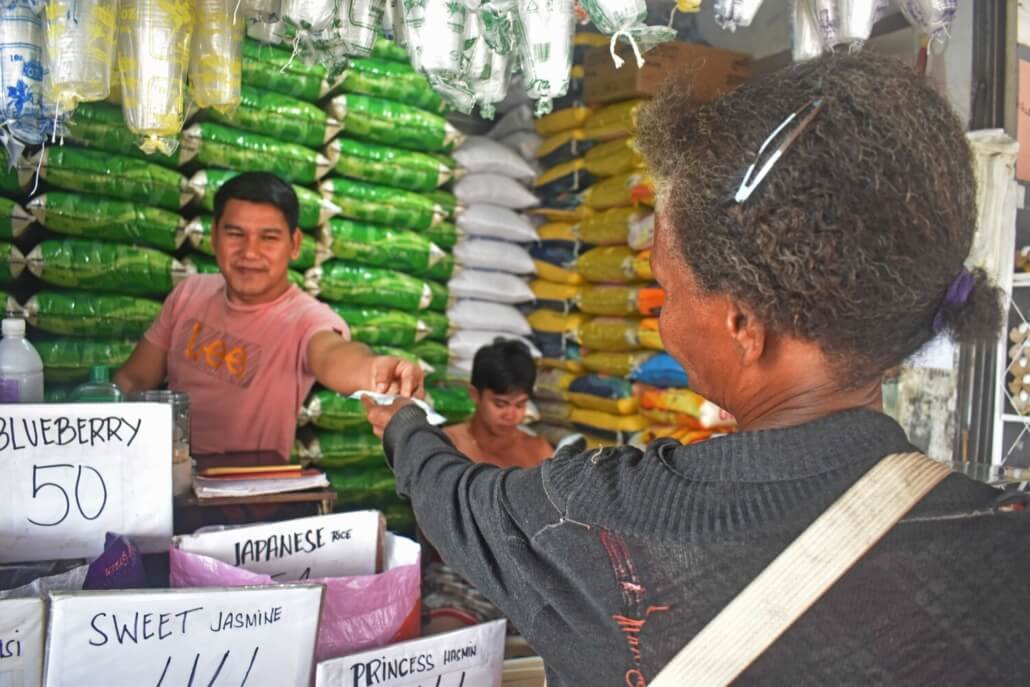
In photo: Ebyang buys rice in the nearby market after receiving the cash assistance form ACCESS. (Photo by Joyce Sandajan for Action Against Hunger)
“This is the first time in so long that we’ve been able to buy this much food,” Bernabe says. “Now, whatever we earn, we can save for house repairs or for the children’s needs.”
With food no longer their daily worry, the family can plan for the future—whether it is fixing their home, saving for school expenses, or preparing for the next storm season.
For the Candulis and their neighbors, the ACCESS assistance meant having the essentials they needed to get through a difficult period after months of isolation and limited resources.
ABOUT THE RESPONSE
The ACCESS Emergency Response provided urgent support to communities affected by the successive impacts of Tropical Cyclones Crising, Dante, Emong, and the intensified southwest monsoon in July 2025. Across Bataan, Pampanga, and Occidental Mindoro, the response delivered water, sanitation, and hygiene support; multi-purpose cash assistance; and protection services. It prioritized the most vulnerable families, especially Indigenous Peoples in remote and underserved areas.
ACCESS—Assisting the Most Vulnerable Communities and Schools Affected by Complex Emergencies in Accessing Quality and Timely Humanitarian and Disaster Preparedness Services—is a multi-year and multi-organization humanitarian initiative implemented by ACCORD, Action Against Hunger, CARE Philippines, Humanity & Inclusion Philippines, Oxfam Pilipinas, People’s Disaster Risk Reduction Network, Plan International Pilipinas, and Save the Children Philippines.