

Padayun sa kinabuhi (Life must go on): A story of recovery after Typhoon Tino
COMPOSTELA, CEBU – When Typhoon Tino (Kalmaegi) hit Barangay Mulao in Compostela, several families lost what was most precious to them, caught in violent flooding they had never expected from what they thought would be just strong winds. Among them was Emily (45), who had experienced what no parent should ever have to endure: losing three of her six children, with one still missing.
Emily lives in Barangay Mulao, Compostela, Cebu, where she cares for her household and her family of eight, including six children. Together with her husband, she helps manage the calamansi fields and a piggery farm near their home, working alongside other farmers.
Having endured powerful storms before, including Yolanda and Odette, she mentions that nothing compares to the flooding that struck her community in the early morning of November 4.
The night prior, she and her husband slept in their home, while some of their children stayed somewhere else. They decided that four of their children were to sleep in a nearby two-story concrete house close to a watercourse for the night, as they initially thought it was safer and more resistant to the storm. The children stayed with 11 other people, including neighbors and calamansi field workers.
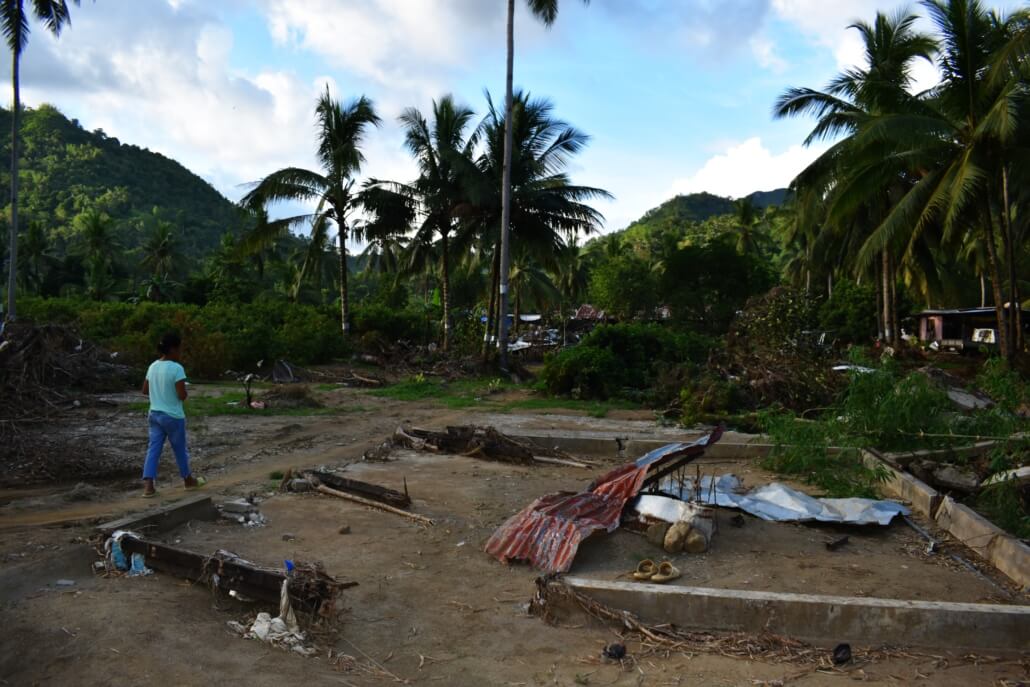
In photo: Emily walks into what remains of the house destroyed by Typhoon Tino (Kalmaegi) in Barangay Mulao, Compostela, Cebu, where four of her children had taken shelter on the night the disaster struck. Photo by Martina Vercoli for Action Against Hunger.
A tragedy unfolding
The morning the Typhoon Tino hit, at around 4:00 a.m., Emily recalls the floodwaters rising rapidly inside their home, reaching her waist in a matter of moments. She saw two of her children in the nearby piggery, desperately trying to save their pigs. The water continued to rise until it reached chest level, and the current grew so strong that she could no longer move.
Worried about her other four children, who were staying in the other house, they desperately tried to reach them. The current, however, was dangerously strong. It forced them to take different paths and roads, but they were still unable to reach the house.
At one point, Emily’s husband even tried to swim toward the house, but the situation was too dangerous; he realized that if he had co
ntinued, he could have lost his life. Together, they decided to wait for the water to subside.
“We recommended our children to stay in that house because we believed it would withstand the storm and provide safety,” adds, Emily.
By around 6:00 a.m., when the water had slightly receded, Emily and her husband managed to leave their home. They immediately went to check the concrete house where their four children were staying, hoping everyone had remained safe through the worst of the storm.
“When we arrived, the entire house was gone. Nothing remained, not even the walls,” states, Emily.
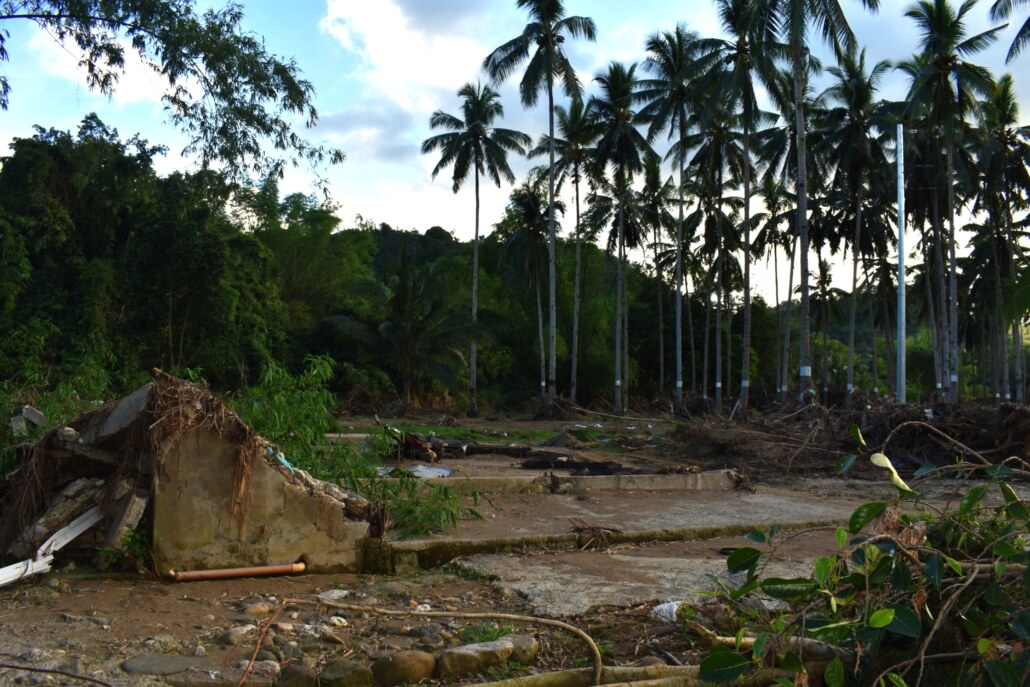
In photo: The house destroyed by Typhoon Tino (Kalmaegi) in Barangay Mulao, Compostela, Cebu, where four of her children had taken shelter on the night the disaster struck. This photo was taken one month after the Typhoon. Photo by Martina Vercoli for Action Against Hunger.
Emily and her husband began walking along the river in search of their missing children and the others who had been inside the house. They walked from their barangay, Mulao, toward Barangay Cabadiangan, following the watercourse path, digging through mud and debris along the way. On the trail, they discovered their 22-year-old daughter, which Emily was able to recognize through her clothing.
“We saw only minor bruises on her body, so we attempted CPR, hoping she might still be alive,” shares, Emily.
That day, they desperately walked until 4 in the afternoon, hoping to find their other missing children alive. Three days later, they found another of their daughters, while their 9-year-old son was found another day later; both unfortunately had also lost their lives.
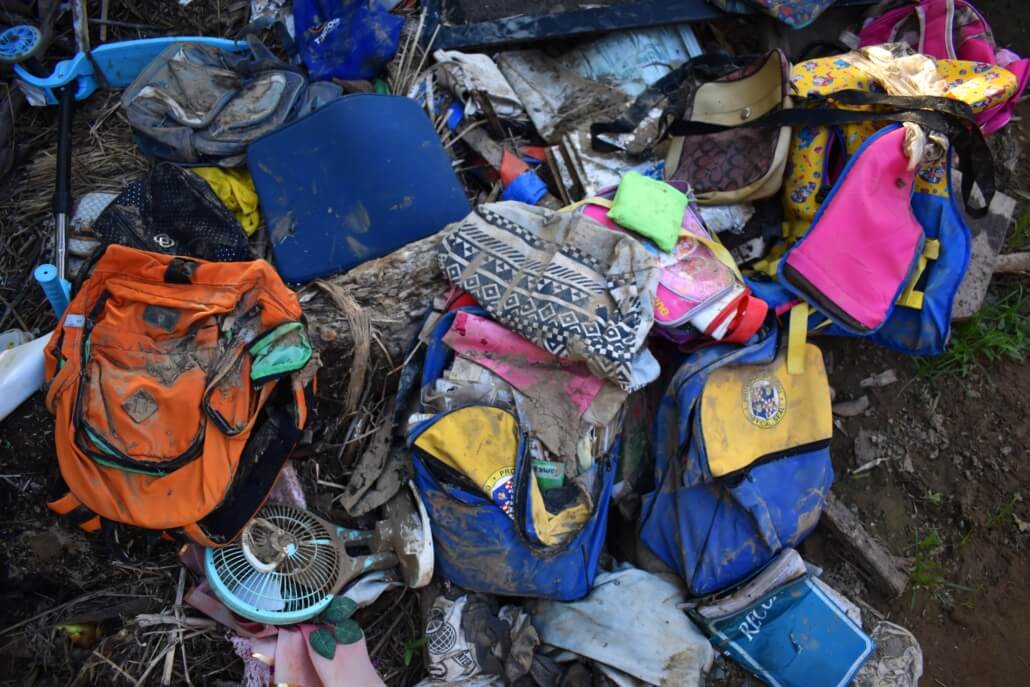
In photo: Remaining items of Emily’s children, outside their family home in Barangay Mulao, Compostela, Cebu. Photo by Martina Vercoli for Action Against Hunger.
Their youngest, 6-year-old Jayde, remains missing to this day, and Emily and her husband continue to search for her.
“I hope someone found Jayde and, not knowing who she is, is taking care of her,” Emily says.
That night, only one person inside the house, which was entirely washed away, survived by clinging to an electrical wire. Others attempted to hold on as well, but collapsing trees and the strong current swept them away.
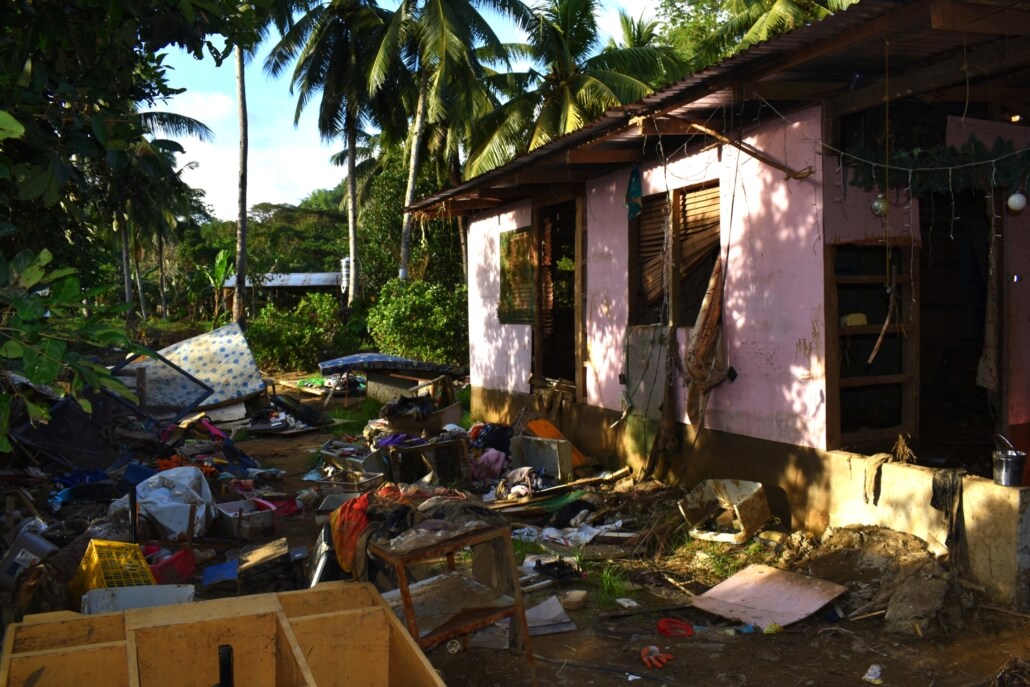
In photo: Emily’s family home after Typhoon Tino (Kalmaegi) in Barangay Mulao, Compostela, Cebu. Photo by Martina Vercoli for Action Against Hunger.
More than a month after Typhoon Tino, they are still unable to return to their home. Mud still coats the floors, and their belongings are damaged and soiled. The emotional pain of facing the house is overwhelming. For now, they have found shelter in the barangay church, waiting for the chance to rebuild their home.
“I can’t even go inside; it’s too painful,” mentions Emily.
They plan to clean the house only so that the workers who help tend the calamansi fields with them can use the space as their shelter.
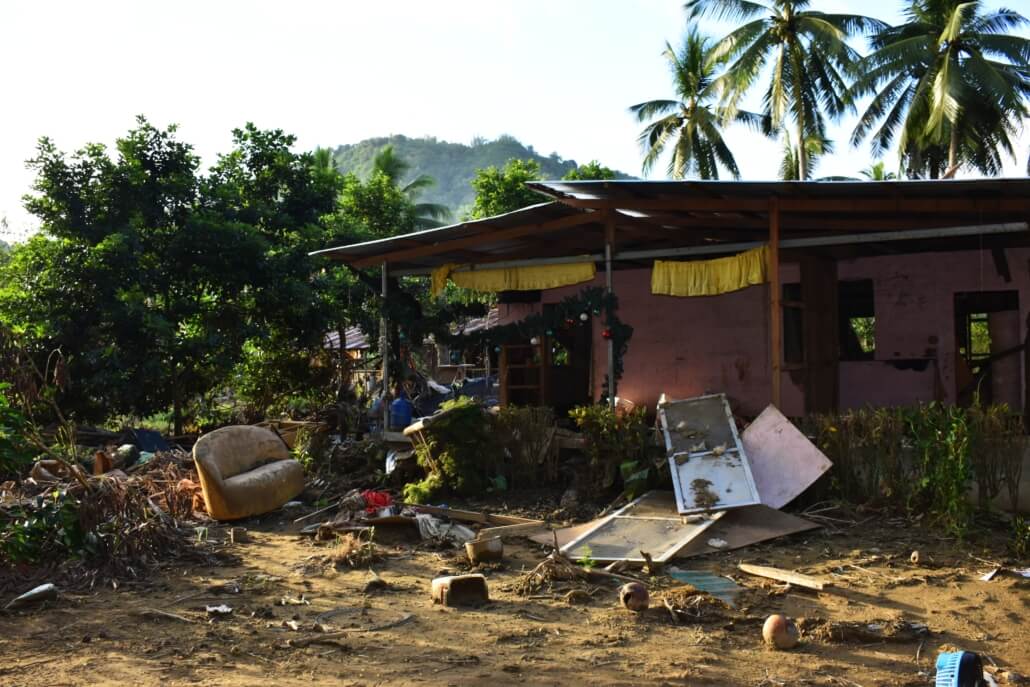
In photo: Emily’s home after typhon Tino (Kalmaegi) in Barangay Mulao, Compostela, Cebu. Photo by Martina Vercoli for Action Against Hunger.
Despite everything she has had to endure together with her husband and their two children who survived the disaster, Emily speaks with quiet strength and determination: “I need to stay strong, I can’t remain trapped in my grief because life must go on, we have to fight, until we can.”
“Padayun sa kinabuhi,” states Emily in Cebuano when asked about how she is coping with their loss, literally meaning “life must go on.”
“We will leave our old house behind and look for a safer place to rebuild our home, while we will keep looking our missing daughter.”
Finding a way forward
In the weeks following Typhoon Tino, Emily and her husband, along with the workers who help them, returned to the calamansi fields, which had been heavily damaged, and to the nearby piggery farm, earning 400 Philippine pesos per day. This work serves as their main source of income and allows them to support their family while gradually moving forward after the disaster they had to endure. This is why, according to Emily, life can’t stop after what happened: “We need to start working again to get back on our feet. That’s why we returned to work almost immediately.”
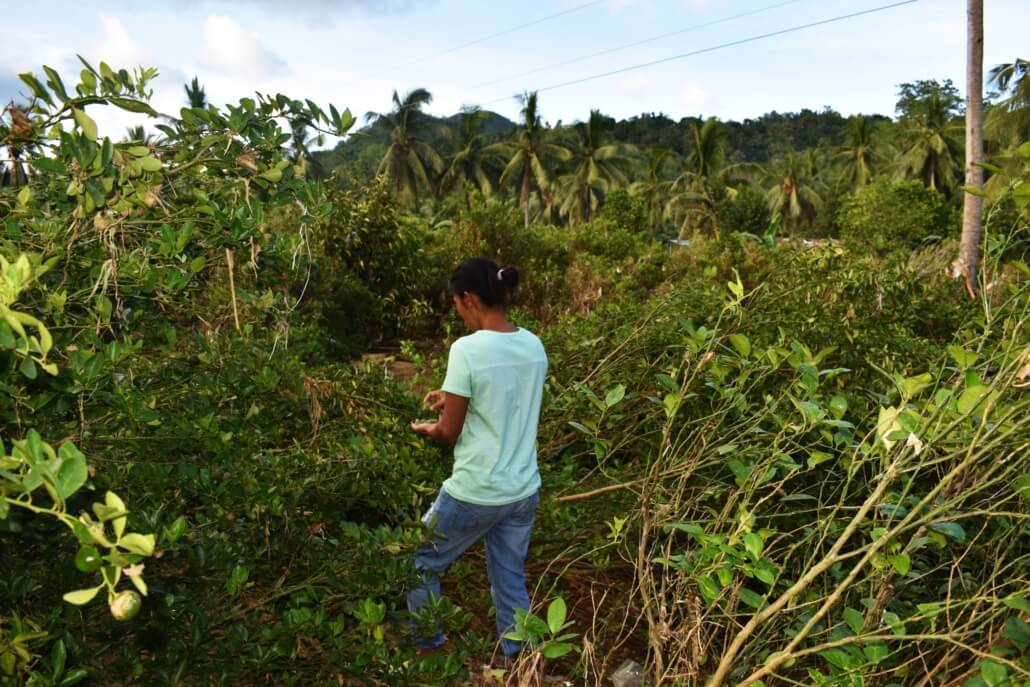
In photo: Emily walking in her damaged calamansi field, near her family home in Barangay Mulao, Compostela, Cebu. Photo by Martina Vercoli for Action Against Hunger.
After that night, providing food, water, and other basic necessities has not been a problem for Emily and her family, thanks to the immediate support of their relatives. In the first few weeks after the tragedy, they were able to meet their essential needs. According to her, the assistance they received initially came mainly in the form of in-kind donations, including clothing, food, and hygiene kits from both the private and public sector.
The local government unit (LGU) later provided additional support, providing equipment to help them construct a temporary shelter. They also helped Emily’s family undergo DNA sampling for their missing six-year-old daughter, an important step that will help simplify their search.
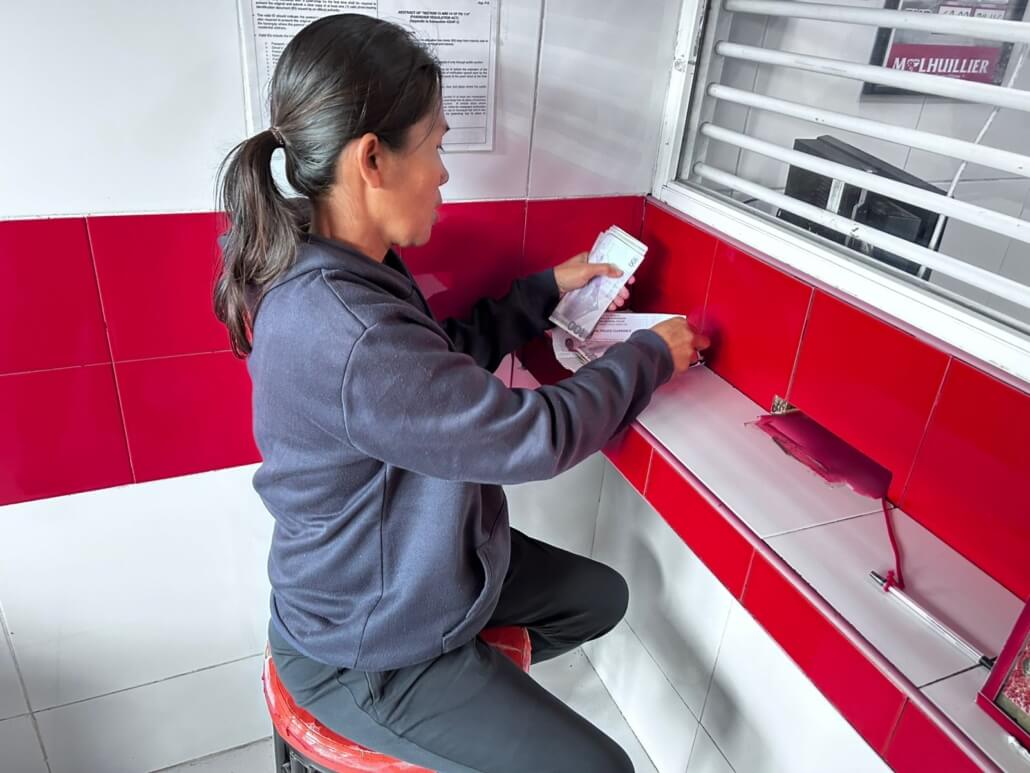
In the photo: Emily receives cash assistance provided by Action Against Hunger, funded by the Swedish International Development Cooperation Agency (SIDA). Photo by Pive Flor Tabique for Action Against Hunger.
With the cash assistance they received from Action Against Hunger’s Typhoon Tino Emergency response with the funding support of the Swedish International Development Cooperation Agency (SIDA), Emily and her husband plan to purchase partial supplies needed to build a new home. This will be located far from the river─the place where they endured so much loss and pain, which is a priority for them.
The aid they receive represents, for Emily and her family, the first step toward a new, difficult beginning. “We will leave our old house behind and look for a safer place to rebuild our home, while we will keep looking for Jayde, our missing daughter.”
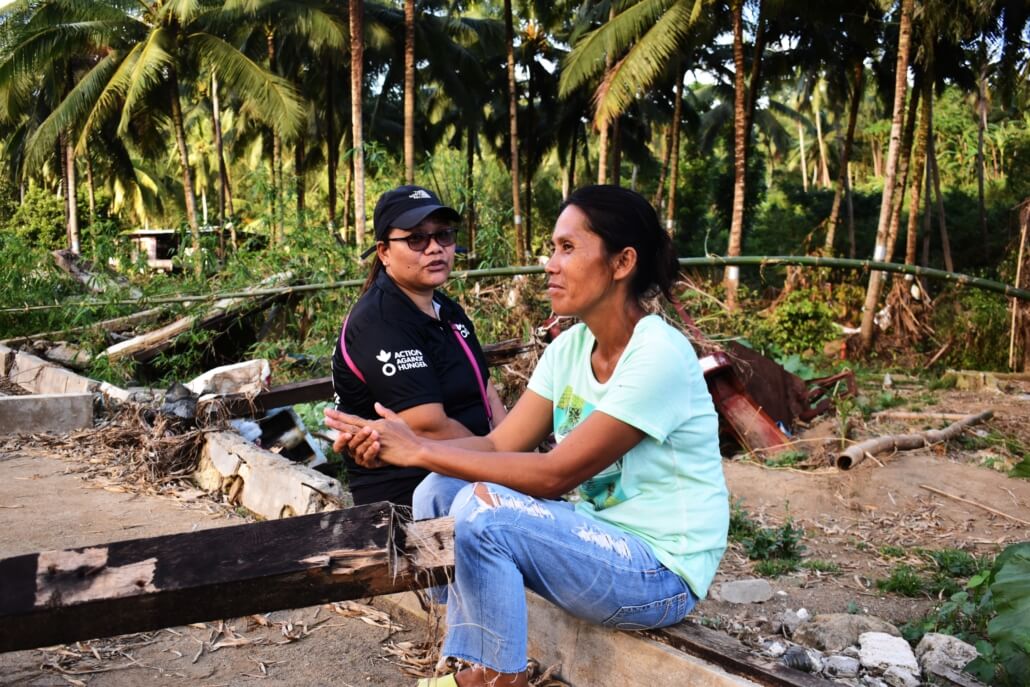
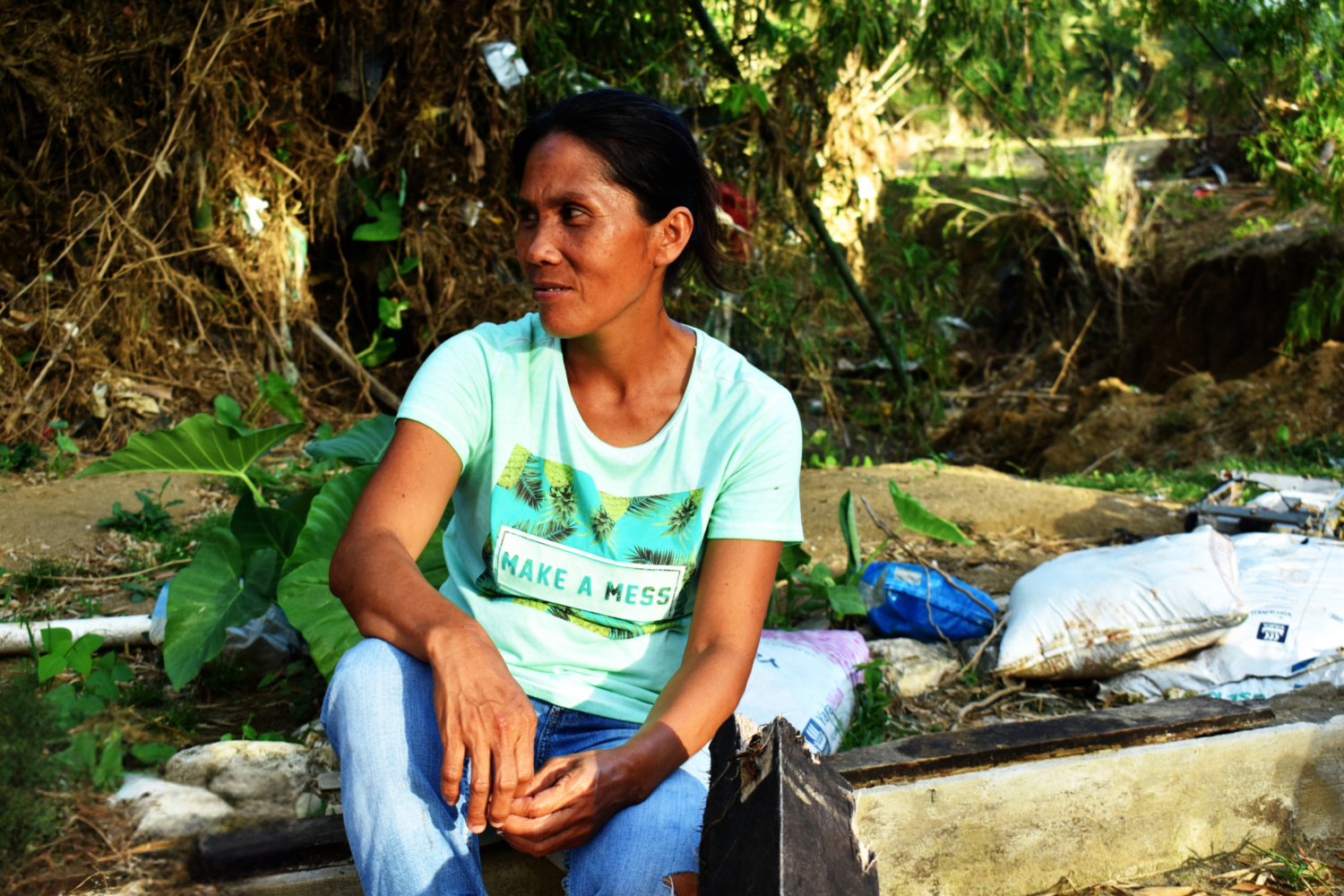
In photo: Emily shares her experience with Action Against Hunger staff from the night Typhoon Tino (Kalmaegi) struck her community. Photo by Martina Vercoli for Action Against Hunger.
Written by: Martina Vercoli
Contributors: Pive Flor Tabique
Edited by: Joyce Sandajan