
Finding space to learn: How a safe and dignified classroom is helping young mothers like Riza stay in school
For Riza Mae Basalan, a 16-year-old Alternative Learning System (ALS) learner at Campo Cuatro Elementary School in Datu Abdullah Sangki, Maguindanao del Sur, growing up in the remote community of Sitio Bisang meant dealing with distance and everyday challenges that made staying in school difficult.
After completing elementary school, she continued studying until Grade 8, but her family’s limited income from farming was barely enough to meet their daily food needs.
With no resources to support her schooling, Riza made the painful decision to stop studying and look for work at a young age.
“I stopped studying after Grade 8 because we could no longer afford the daily expenses of going to school. When I was in a regular school, I needed to bring money for food every day since school lasted the entire day,” she said.
Riza also shared that she had to walk to and from school to save money, but still, her financial situation forced her to stop studying. Despite these challenges, Riza held on to her dream of finishing school.
In June 2025, she enrolled in the ALS Center at her community as a Grade 9 learner, choosing an alternative pathway to continue her education.
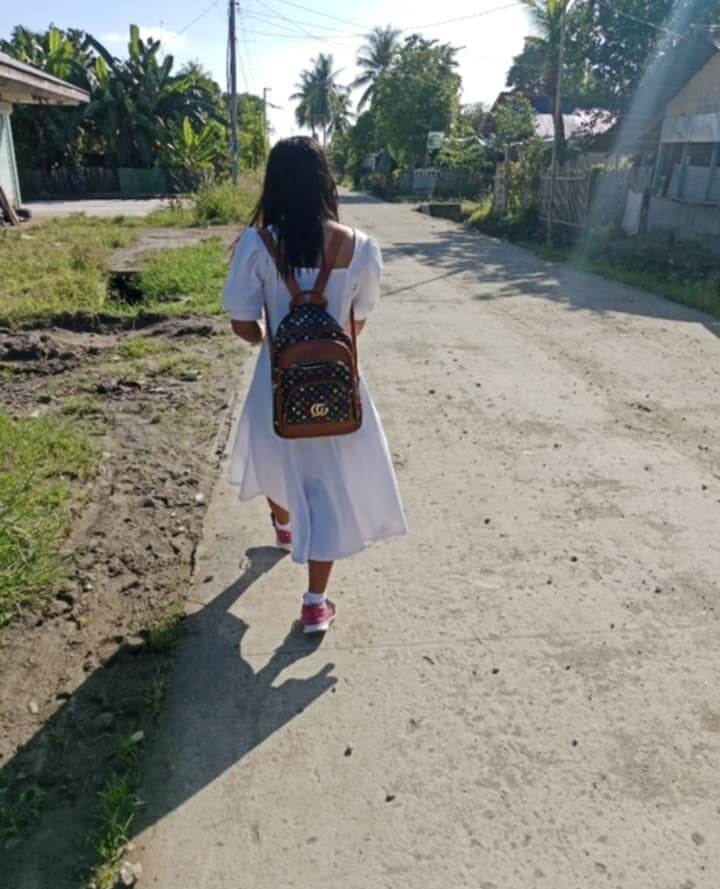
In photo: Riza on her way to school. (Photo courtesy of Riza Basalan)
Getting to class, however, remains a daily challenge. At her young age, Riza is also a single mother to a six-month-old baby.
“Now, my mother takes care of my child back at the farm when I have school so that I can work and attend my classes,” Riza explains.
As a working student and a single parent, Riza needs to balance her time well and make sacrifices.
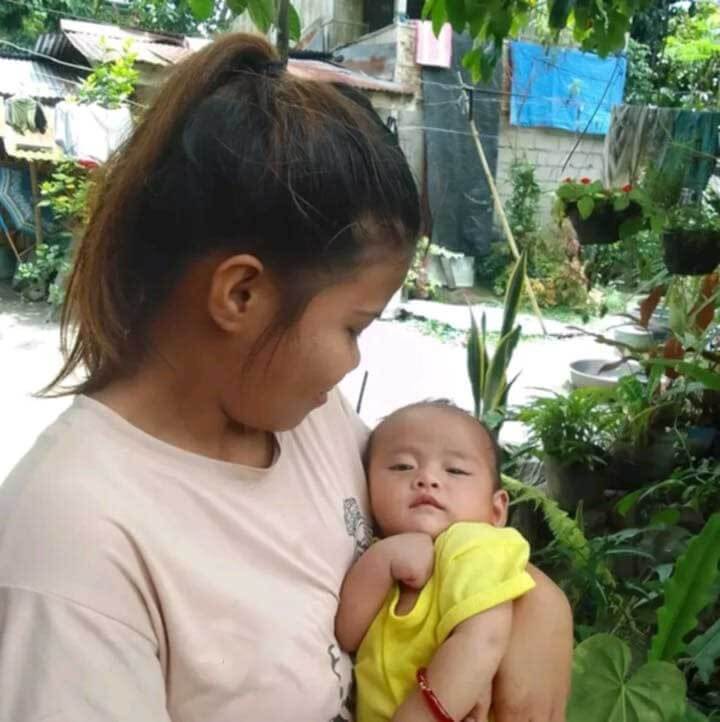
In photo: Riza and her child. (Photo courtesy of Riza Basalan)
During weekdays, she works, and then takes time off from work to attend her half-day classes about three to five times a week. She tries to save every peso she can.
“I prioritize my needs and my baby’s needs,” she shared, explaining why even basic school requirements, such as hygiene items, were often beyond her reach.
When the learning environment became a barrier
Unfortunately, for Riza, returning to school also meant learning in conditions that made studying even more difficult. When Riza began her ALS classes in June, the room had not yet been fully designated as a learning space.
“Before, our ALS center was just a storage room for supplies. When we would have our classes, there were different items piled up at the back sometimes, so the room looked messy and cramped,” Riza shares.
Teacher Ombai Piodena, the ALS Teacher at Campo Cuatro Elementary School noted that the space was only used for its intended purpose after she requested a designated room for ALS students.
“Lessons took place amid piled-up materials, making the space cramped and distracting. During heavy rains, water leaked through holes in the roof, forcing students to crowd into the few dry corners of the room,” she said Teacher Ombai.
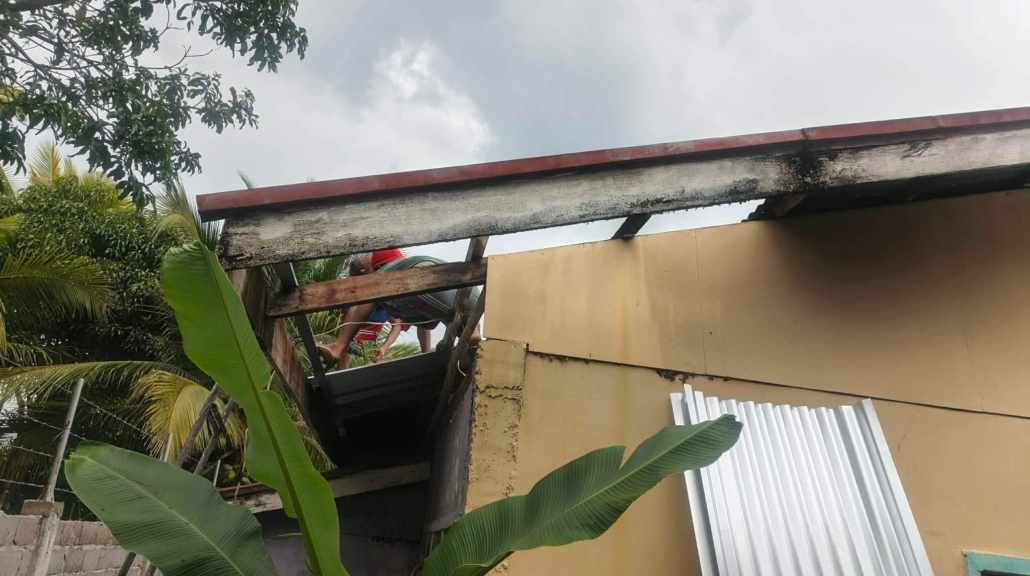
In photo: Damaged roof of the Alternative Learning System Center of Campo Cuatro Elementary School (Photo courtesy of Ombai Piodena)
The situation was especially challenging during hot afternoons, when the heat inside the small, poorly ventilated room made it hard for students to concentrate during lessons
“At noon, my students would often ask, ‘Ma’am, do we still have class this afternoon? It’s so hot, Ma’am.’ They were really uncomfortable because the room was humid and stuffy,” said Teacher Ombai.
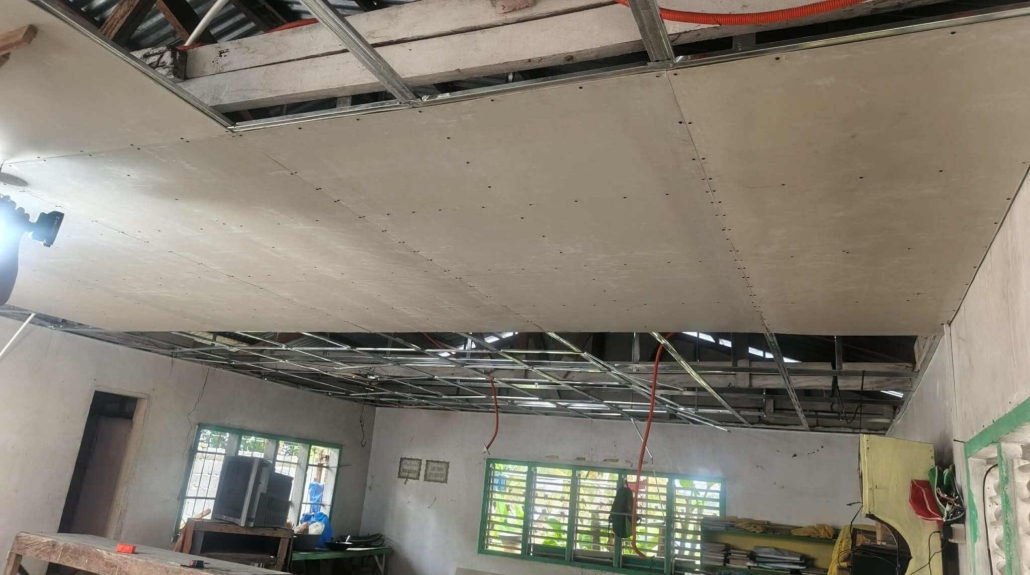
In photo: Damaged roof of the Alternative Learning System Center of Campo Cuatro Elementary School (Photo courtesy of Ombai Piodena)
For many learners, especially those attending afternoon sessions, the physical discomfort added another layer of difficulty to staying focused and engaged in their lessons.
Access to proper sanitation and hygiene remained also a concern, with the toilets near the ALS Center rendered unusable due to structural damage, including gaps in the walls that raised safety concerns among students.
“Ma’am Ombai no longer allows us to use the toilet here before. It was blocked off with a cabinet because there was a hole at the back, and we were afraid snakes might enter. So, whenever we needed to use the toilet, we went to the regular students’ classrooms. The teachers also offered their office, but we felt shy going there, so we just used the toilets in the regular classrooms.” – Riza
Creating a safe, inclusive, and dignified learning space
With the support from UNICEF and with funding support from the Government of the Republic of Korea through the Korea International Cooperation Agency (KOICA), Action Against Hunger implemented the project Strengthening Health, Nutrition, and WASH Service Delivery Capacities in Early Learning, Alternative Learning, and Community Health Centers, which aims to improve access to essential services for more than 20,900 people across the Bangsamoro Autonomous Region in Muslim Mindanao, with a strong focus on children, adolescents, and other vulnerable groups.
At the Campo Cuatro ALS Center, this support is already making a visible difference.
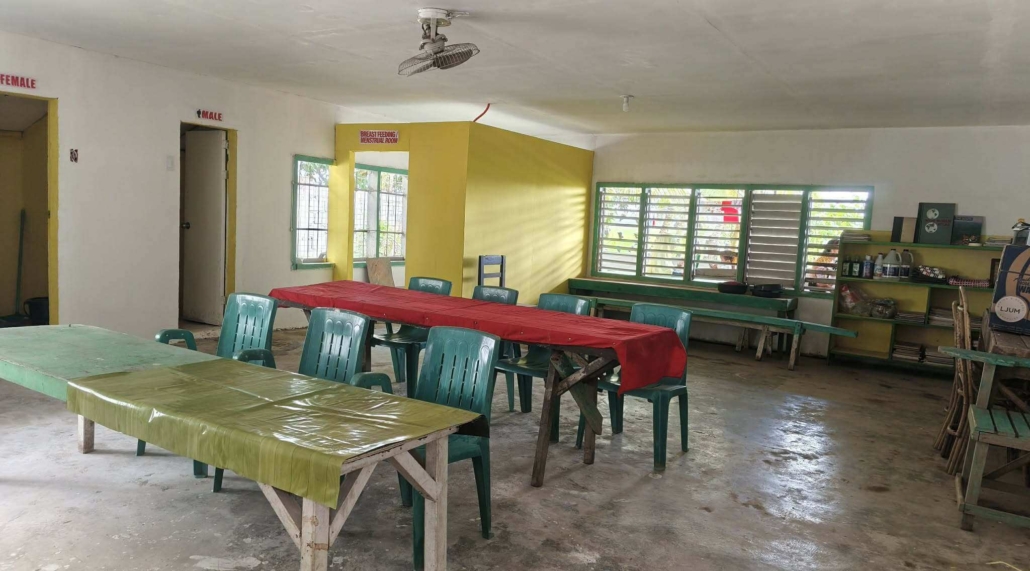
In photos: The Campo Cuatro ALS Center after the repairs done by UNICEF and Action Against Hunger. (Photo courtesy of Ombai Piodena)
Repairs to the classroom roof and ceiling now protect the learning space from flooding, while newly installed lighting and ceiling fans have made the room cooler and more comfortable.
Gender-segregated toilets were rehabilitated and made safe and accessible, with proper lighting, water supply, and cleaning materials. A group handwashing station, waste bins, and hygiene supplies further support daily hygiene practices at the center.
“The classroom also looks better now, it’s clean, with ceiling fans installed. We don’t feel too hot anymore, especially in the afternoons.” – Riza
Menstrual Hygiene Management (MHM) corners were also placed to support the menstrual health needs of learners and to serve as a safe breastfeeding and resting space for young mothers like Riza.“Before, there were times I had to be absent because of the menstrual cramps and because I needed extra napkins. Now, we have a place to rest, and there are supplies available in the classroom, so it’s much easier,” Riza said.
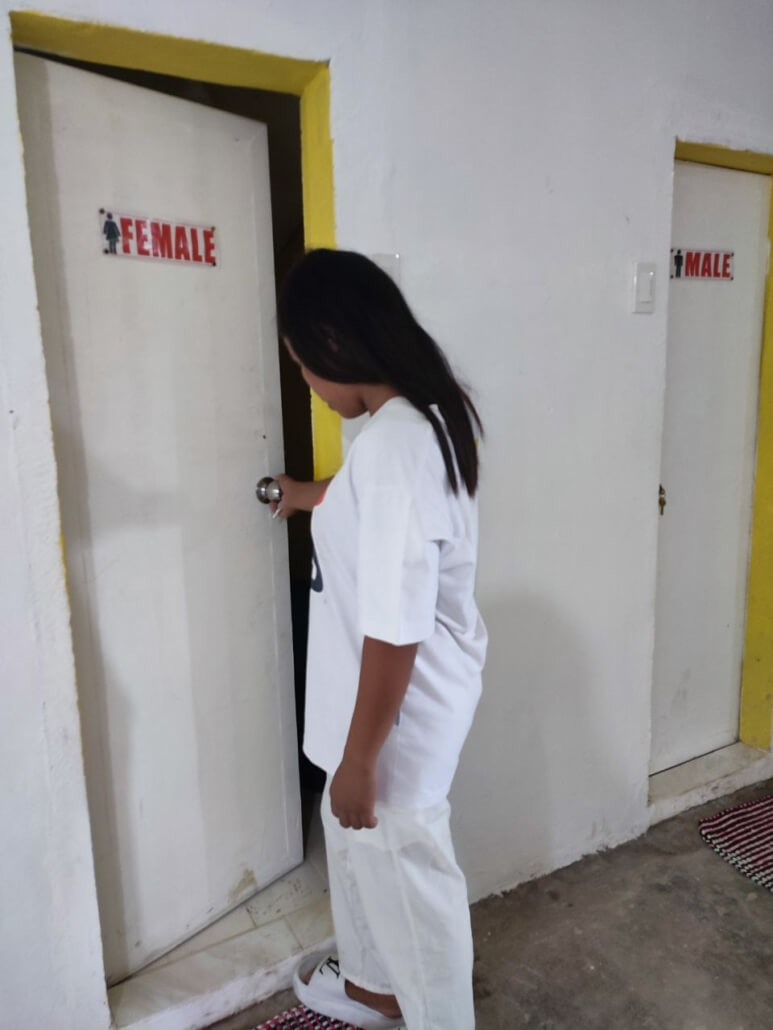
In photo: Riza opens the door to the toilet for females, rehabilitated by the UNICEF and Action Against Hunger. (Photo by Debbie Alaban for Action Against Hunger.
The project also provided hygiene kits, easing the financial burden on learners who could not afford basic hygiene items.
Since the renovations, Teacher Ombai has observed increased attention and focus among learners, particularly during afternoon classes that were previously the most challenging. “The students have been more attentive after the improvements made to the ALS center,” she explained.
Enrollment at the center has since grown, reflecting a growing sense of confidence among learners and families that the ALS Center is a safe and supportive place to learn.
“Now, we even have more enrollees. Before, I only had 22 students, but now there are 35 ALS learners enrolled in the center.” – Teacher Ombai
“With a more conducive and responsive learning environment, I now feel confident inviting more out-of-school youth to enroll in ALS, knowing the center can better accommodate their needs,” said Teacher Ombai.
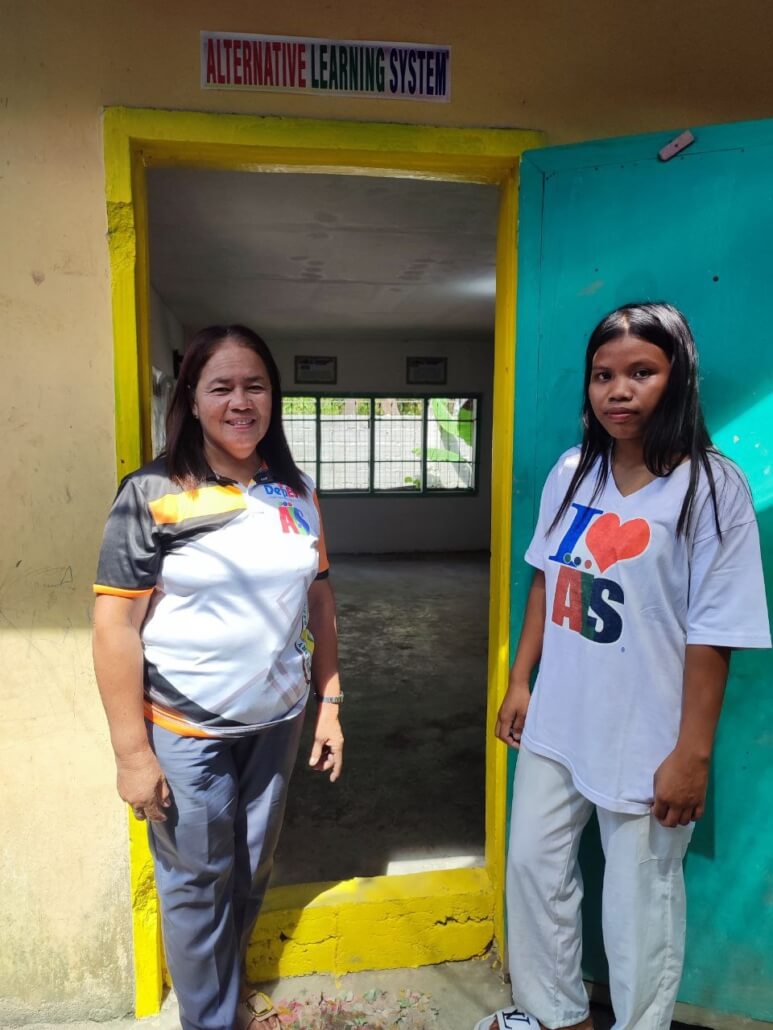
In photo: Teacher Ombai and Riza outside their ALS Center classroom. (Photo by Debbie Alaban for Action Against Hunger.
She also shared that the project has been a significant support for their center.
“Before, I would ask myself when we would ever have a proper ALS room, one that we didn’t just borrow. Then, in July 2025, Action Against Hunger and UNICEF visited, and now we finally have it,” she added
As an ALS educator, Teacher Ombai also expressed her appreciation to the training sessions they’ve participated in through the project, noting that ALS teachers are not often included in capacity-building activities of this kind
“We learned so much, and we felt that we are part of the program, that ALS is not neglected, and that we are included among the priorities,” she shared
As for the learners, Riza also shared how the changes have allowed her to learn more comfortably.
“The classroom looks better now. It’s clean, with ceiling fans installed. We don’t feel too hot anymore, especially in the afternoons,” she explained
She now feels safe and secure using the toilets, which are clean, enclosed, and free of the holes that once caused fear, with separate facilities for males and females.
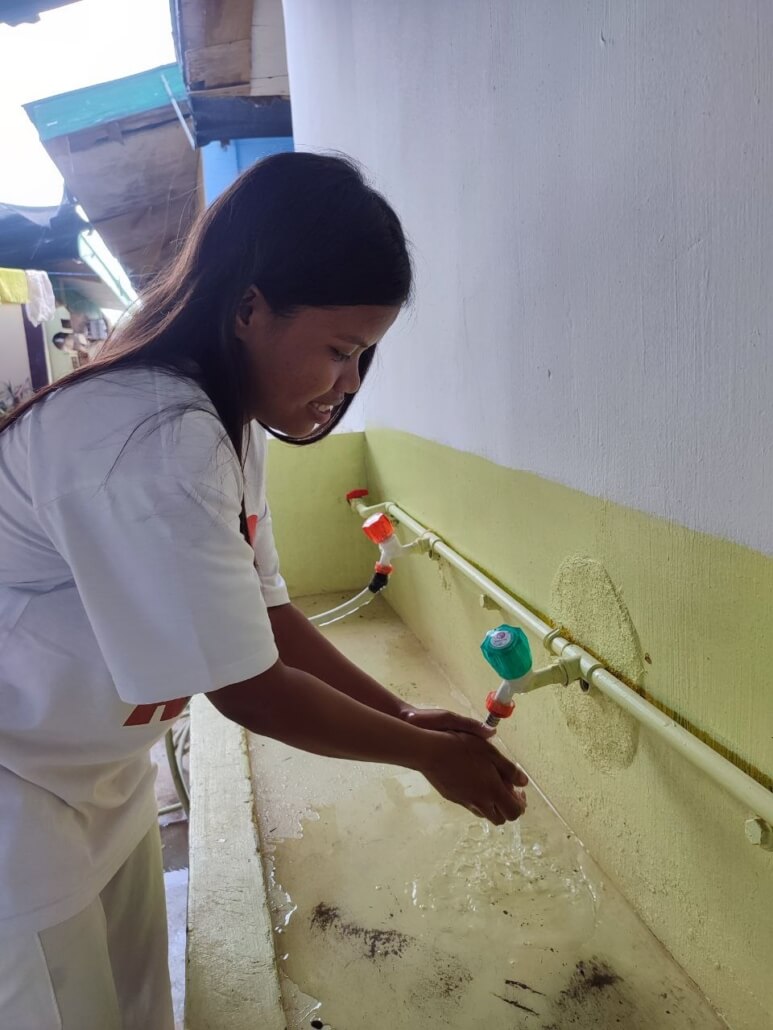
In photo: Riza uses the handwashing station of Campo Cuatro ALS Center. (Photo by Debbie Alaban for Action Against Hunger. )
“The repairs were such a big help. We no longer worry about how to manage when heavy rain comes, and the room gets wet again,” Riza added
Beyond improving the physical condition of the classroom, the changes also affected how learners experienced their day-to-day schooling.
And for Riza, these changes mean more than comfort.
“The area you set up for us to rest is wonderful. If mothers like me bring their children, we can breastfeed and let the baby sleep there while we study,” she said.
Looking ahead, Riza hopes to finish her studies and pass, despite the many struggles she faces.
“Our wish as ALS students is to finish our studies and pass, despite all our struggles. I am also thankful for the help you have given, especially for the improvements made in our ALS center. Now we can truly say that we have a real classroom that is bright, clean, and with our own toilet.”
With continued support from UNICEF and Action Against Hunger, young learners like her are finding not only a place to learn, but the confidence to keep going—one step closer to a better future.
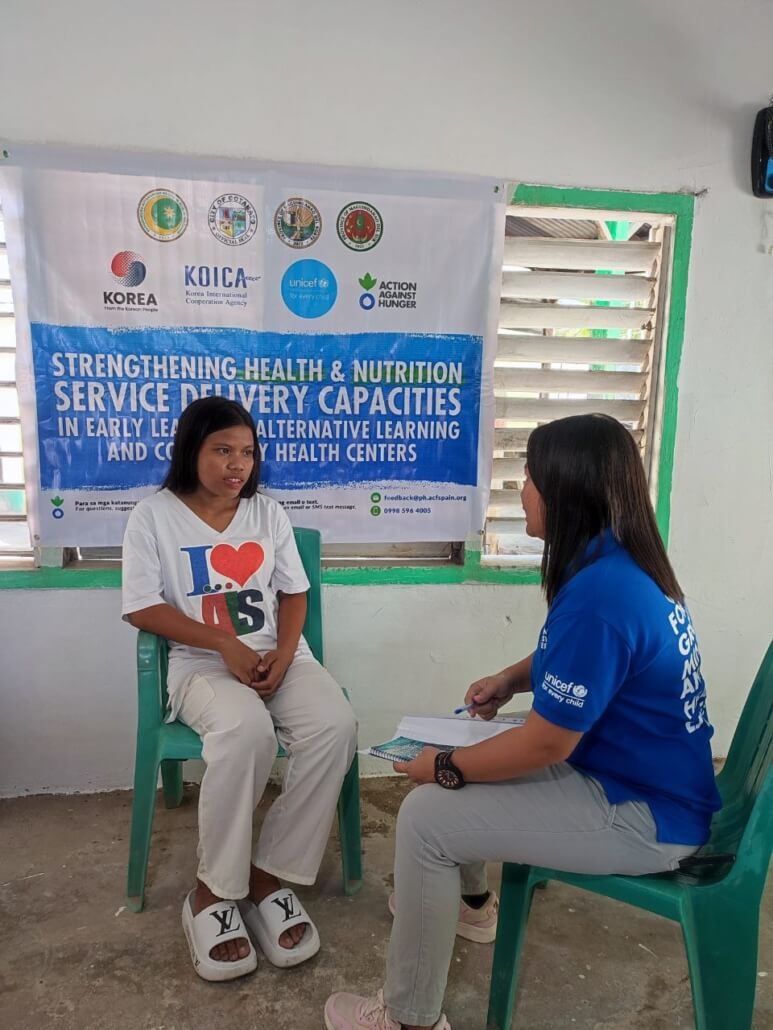
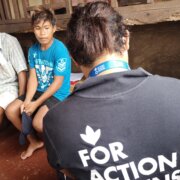
In photo: 16-year old ALS Student, Riza, shares her story with Action Against Hunger team. (Photo by Fahad Miro for Action Against Hunger)
The Strengthening Health and Nutrition Service Delivery Capacities in Early Learning, Alternative Learning, and Community Health project is implemented by Action Against Hunger together with UNICEF, with funding support from the Government of the Republic of Korea through the Korea International Cooperation Agency (KOICA).
Written by: Joyce Sandajan
Edited by: Jezreel Salazar Ines, Reven Bryan Dela Pena
Contributors: Debbie Alaban