Storms, Scarcity, Strength: A Family’s Story from an IP Community in Pampanga

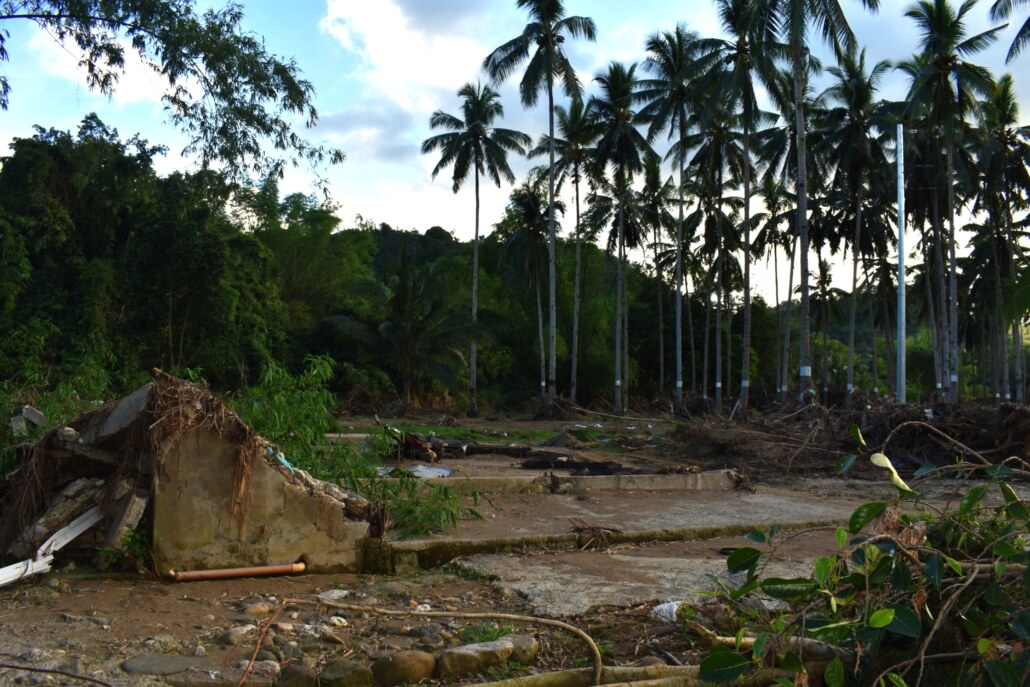
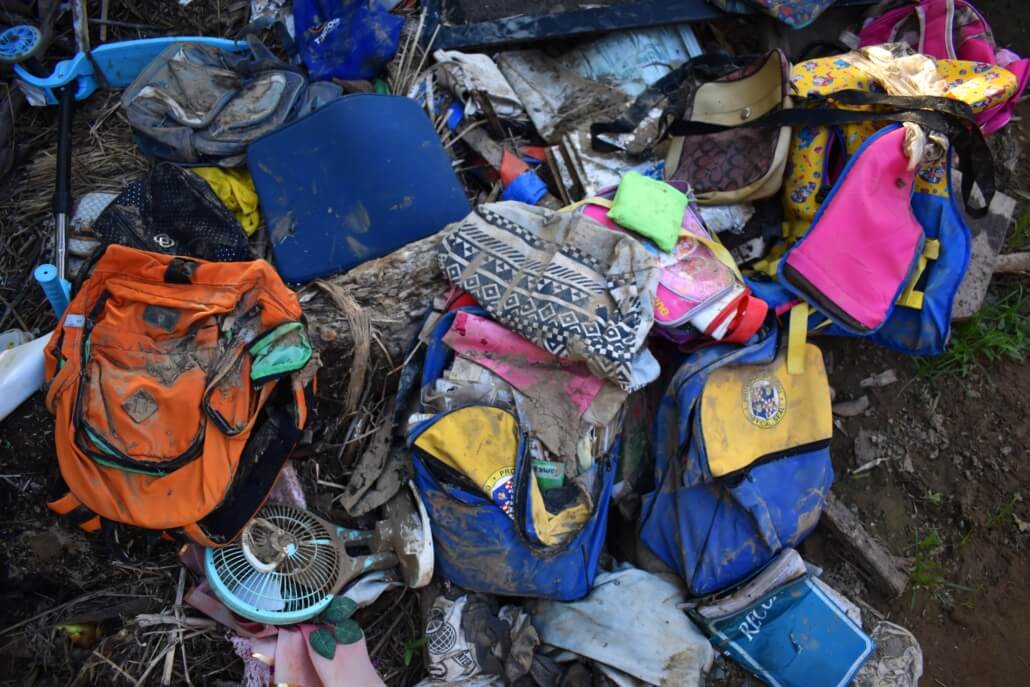
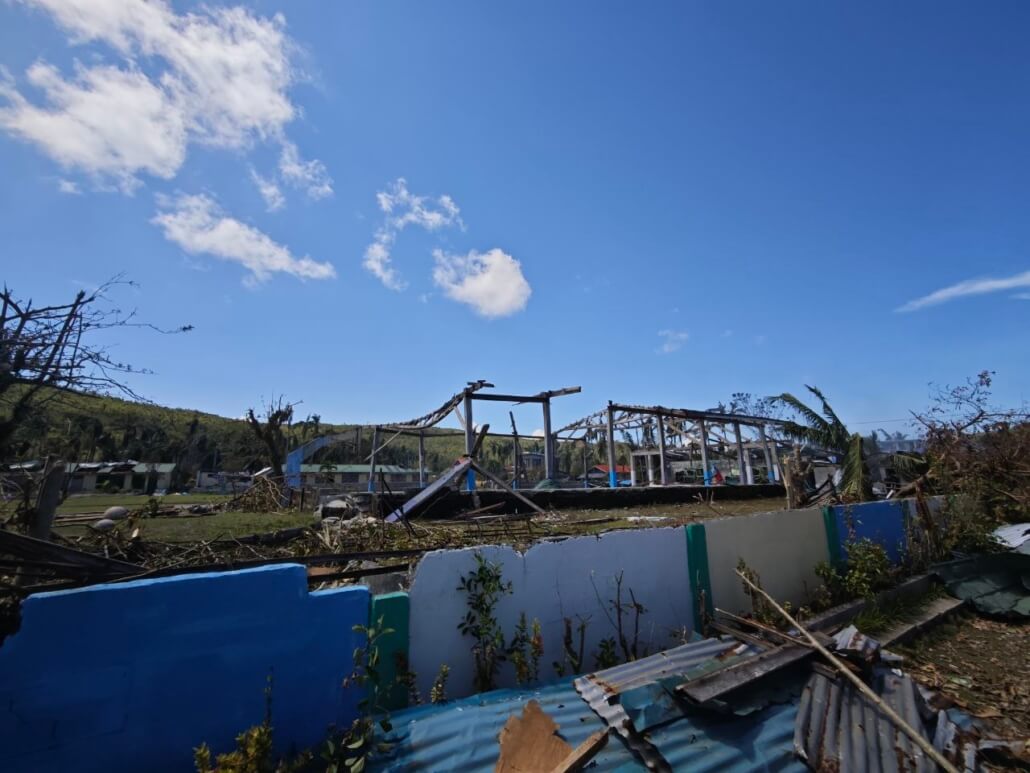
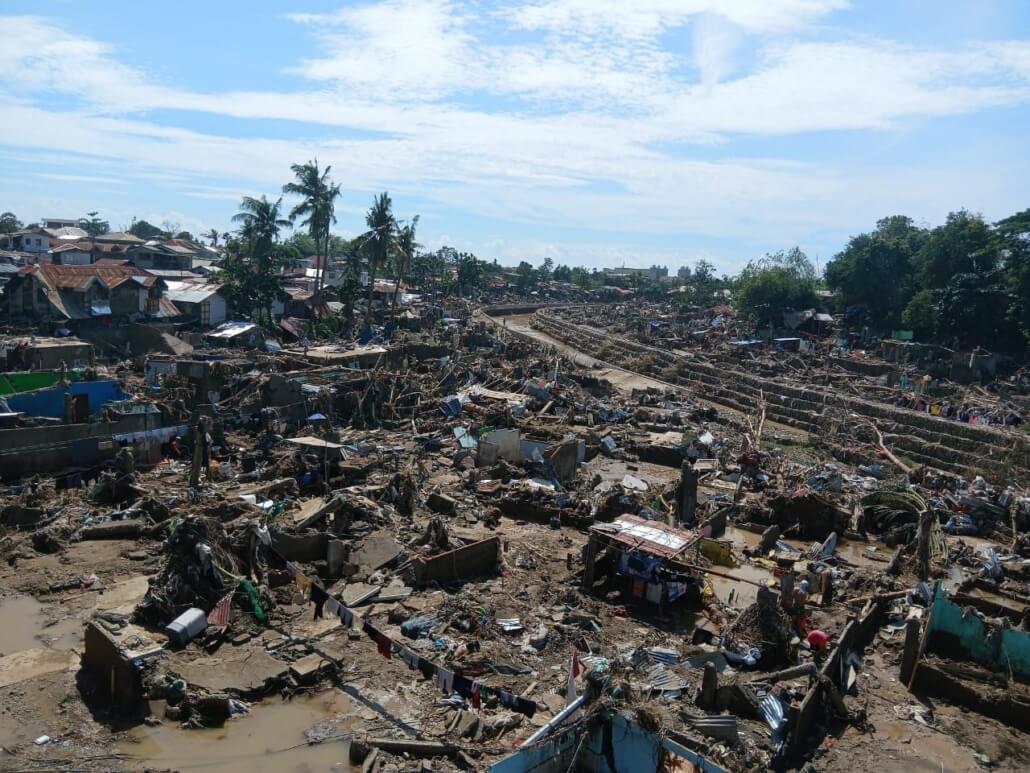
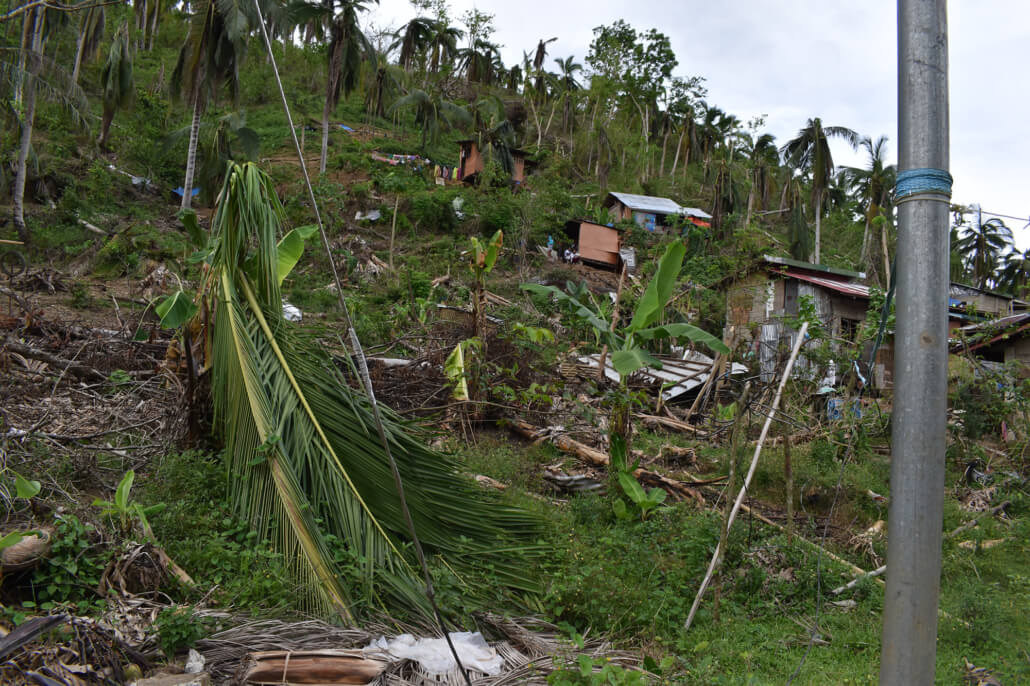
In the Aeta community of Sitio Banaba, survival has always meant carrying heavy loads up steep slopes, gathering food from the mountains, and stretching every peso to buy rice at triple its price in town. But everything worsened after the series of storms in July 2025, when Pampanga declared a state of calamity due to widespread flooding and blocked roads.

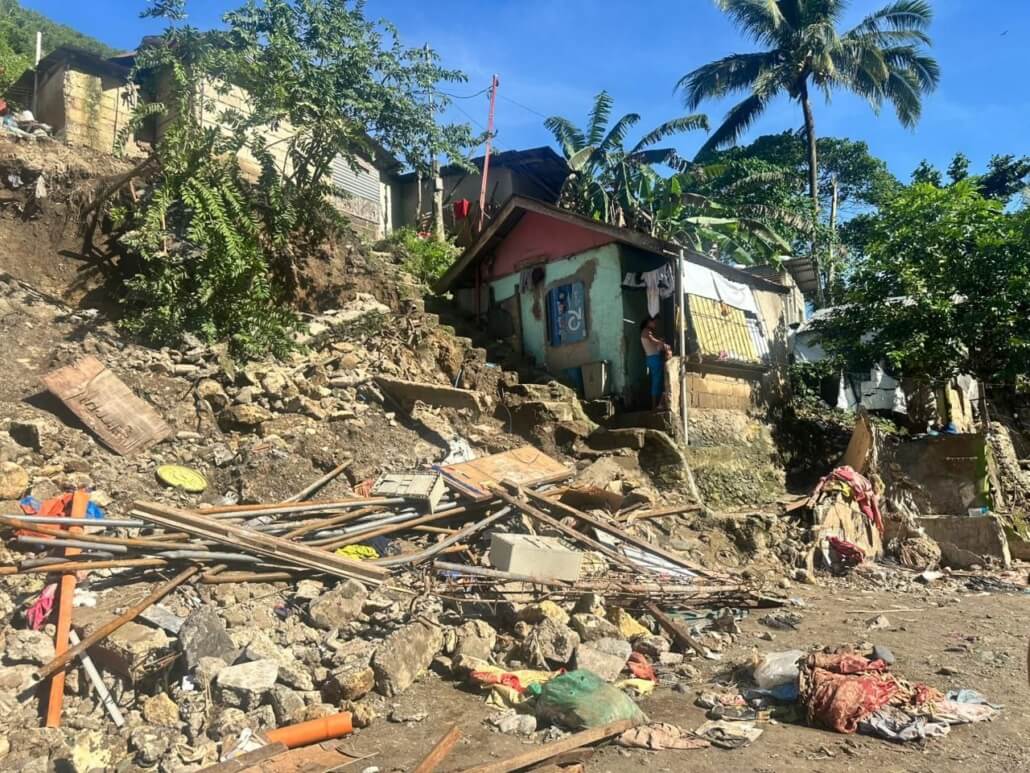
“When the rains didn’t stop, everything flooded,” shares 70-year-old Ebyang Canduli. “The roads turned into mud. Trees fell. A small landslide had blocked the road going to the town proper. There were rocks and debris, and the dirt road became very muddy. We couldn’t go to the town at all.”

The successive impacts of Tropical Cyclones Bising, Crising, Dante, and Emong, combined with the intensified southwest monsoon, affected hundreds of barangays and submerged low-lying lying communities. For remote sitios like Banaba—already isolated by uphill terrain and unpaved roads—the blockages meant no food, no access to the market, and no income for days.

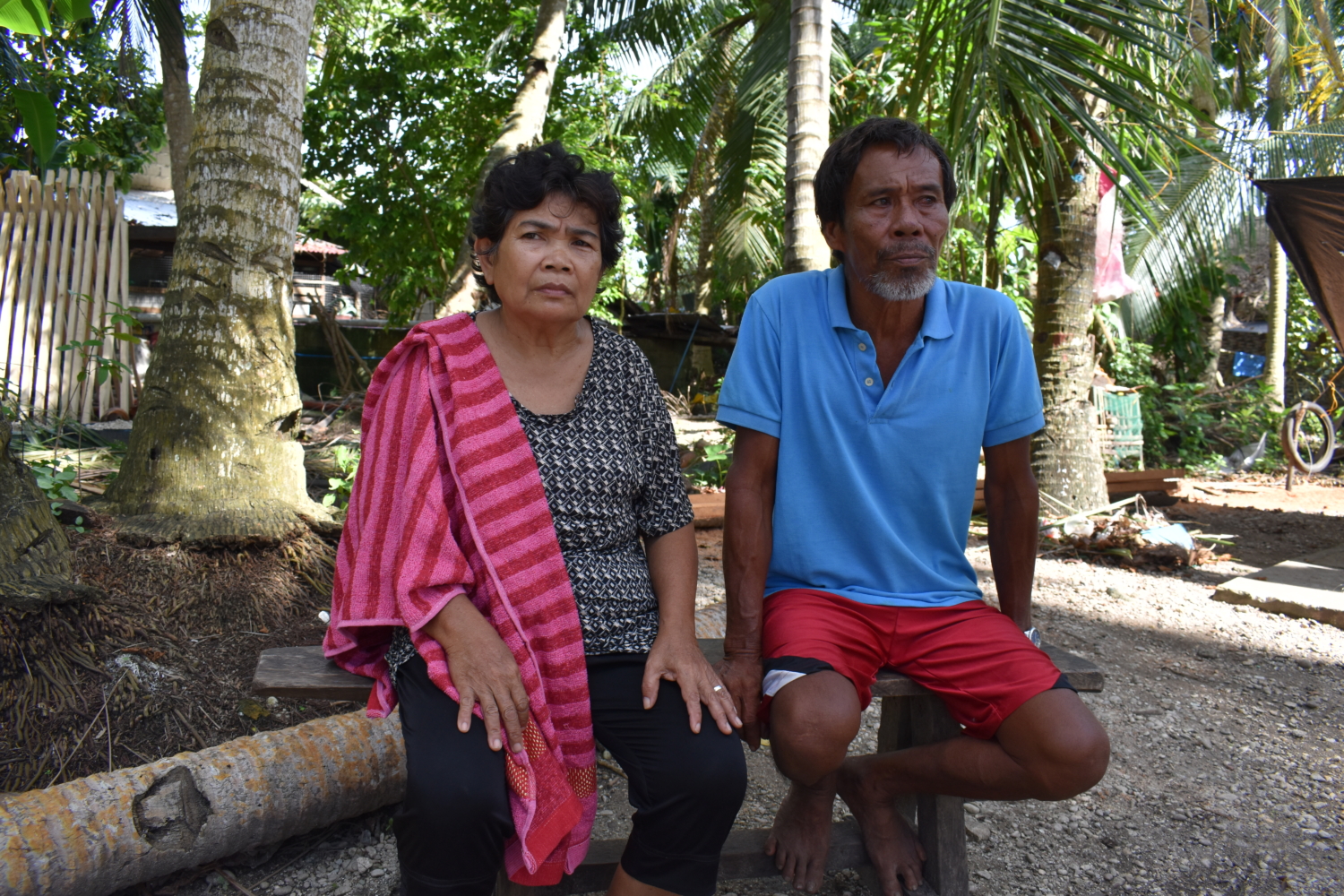
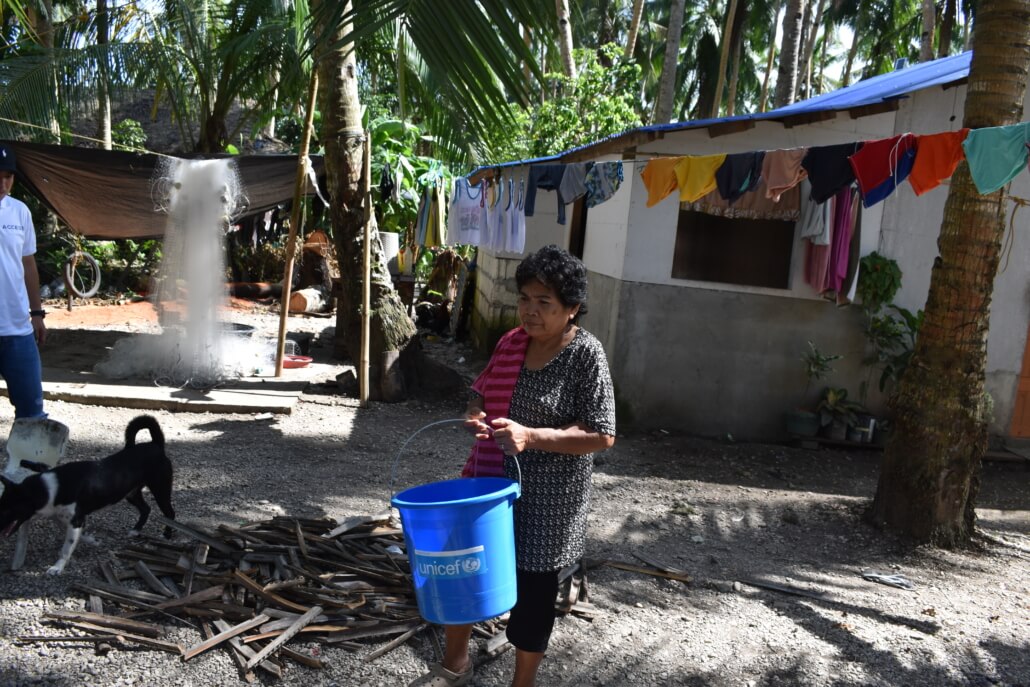
The Canduli family lives in one household composed of Ebyang; her long-time partner Ide (50); her mother Sylvia (80); her youngest daughter Batic (22), and Batic’s partner and one year-old child. Ebyang’s son Bernabe (27) lives nearby with his wife and their two small children.
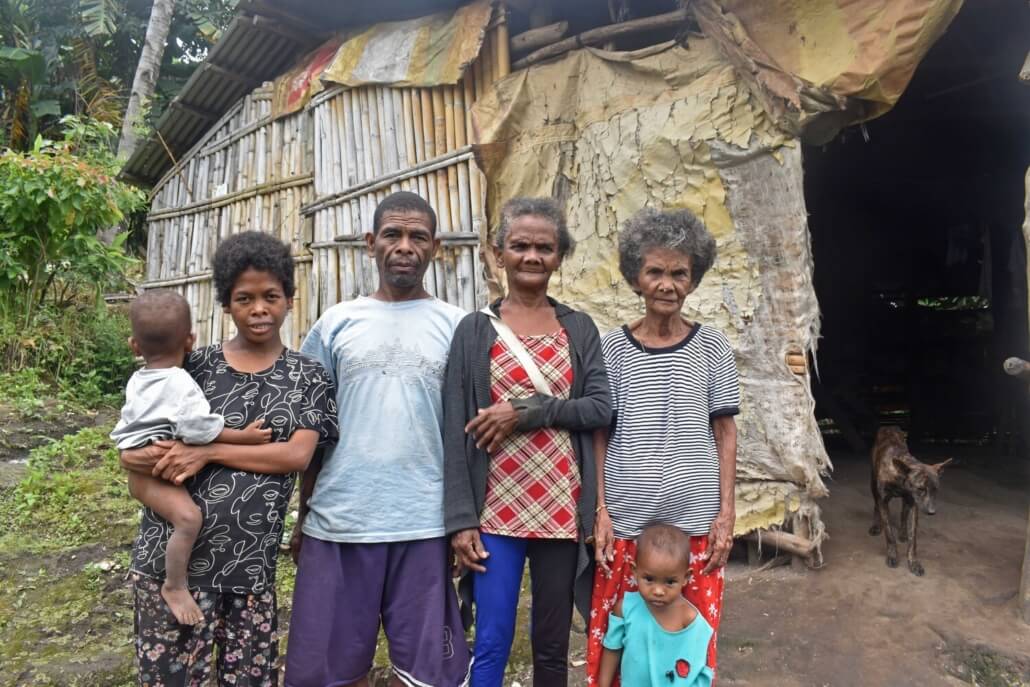
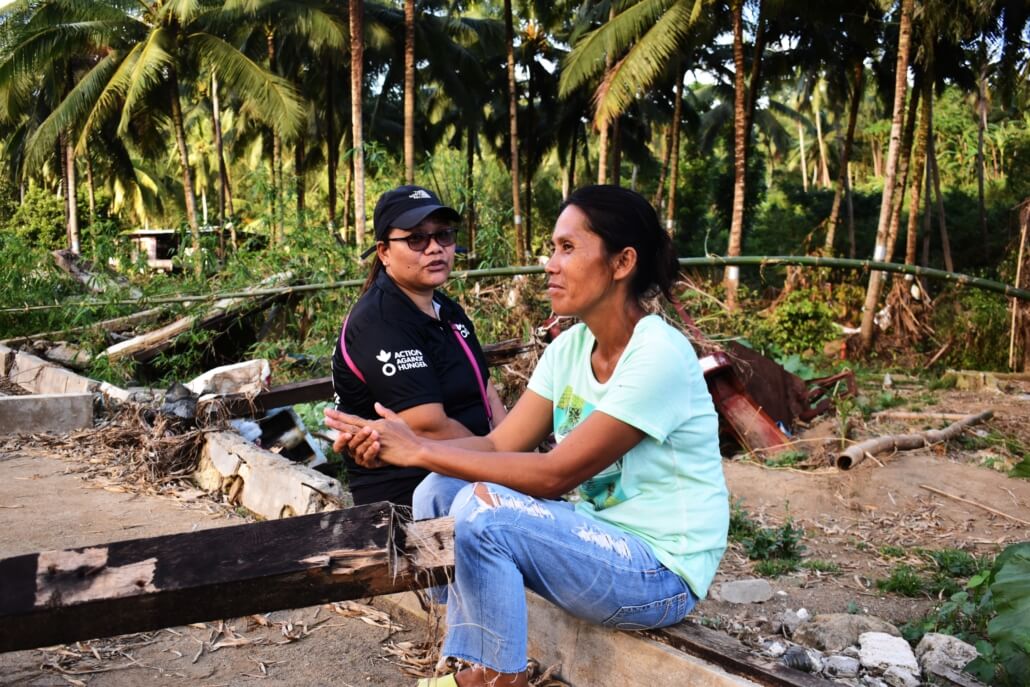
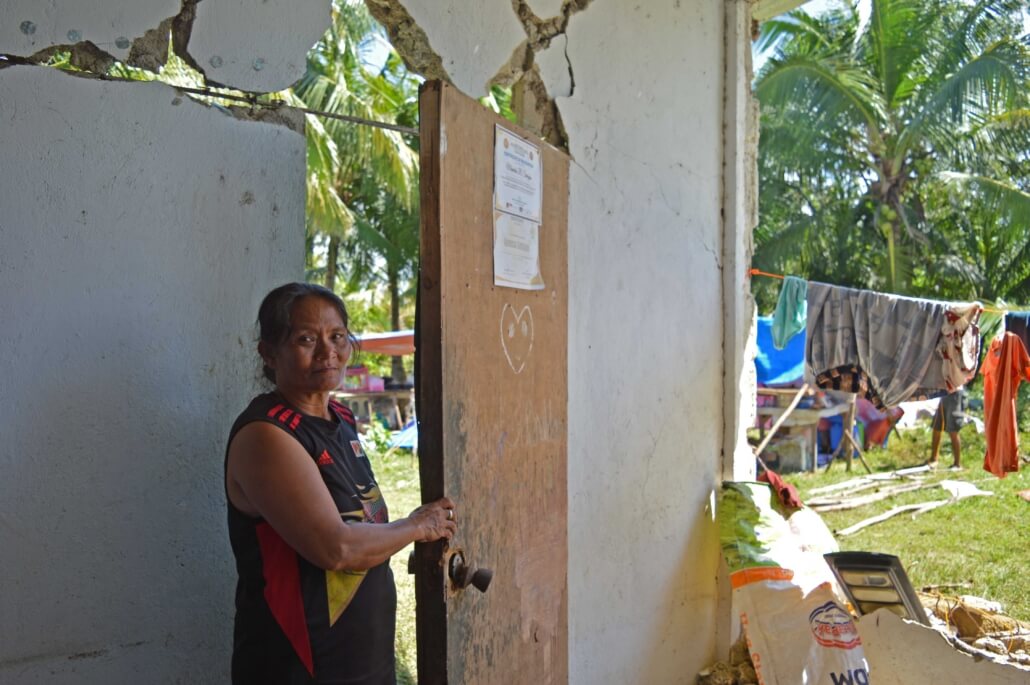
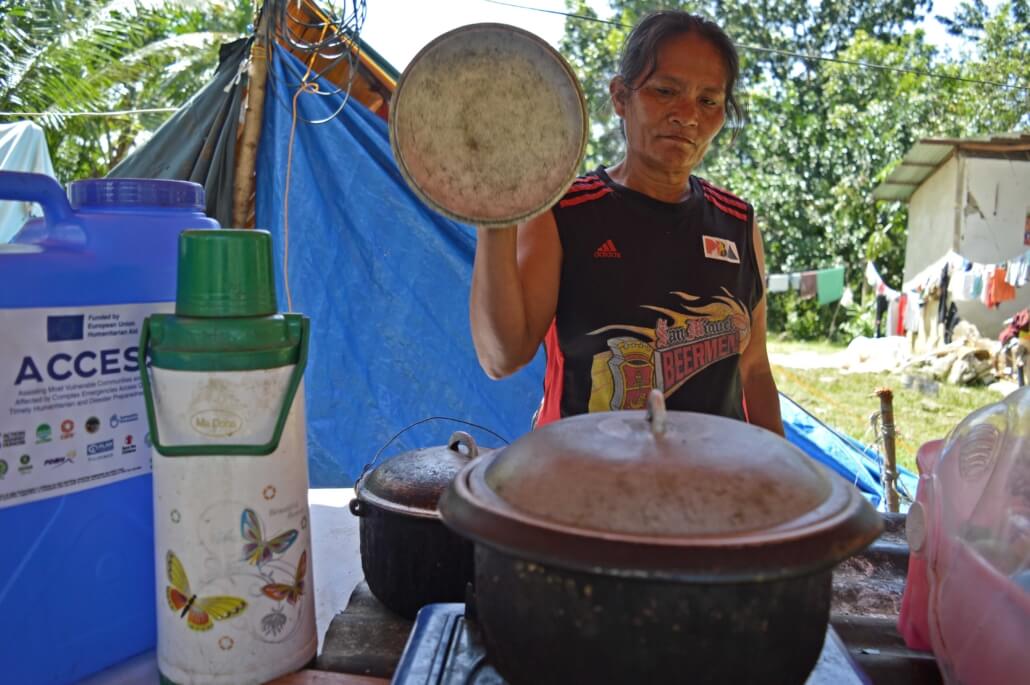
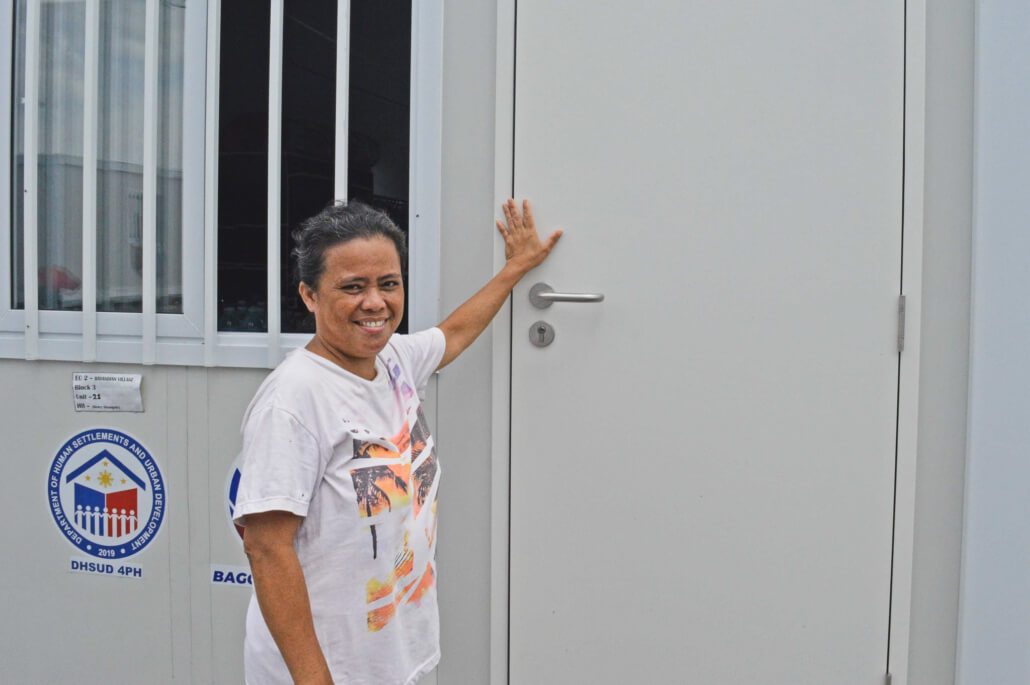
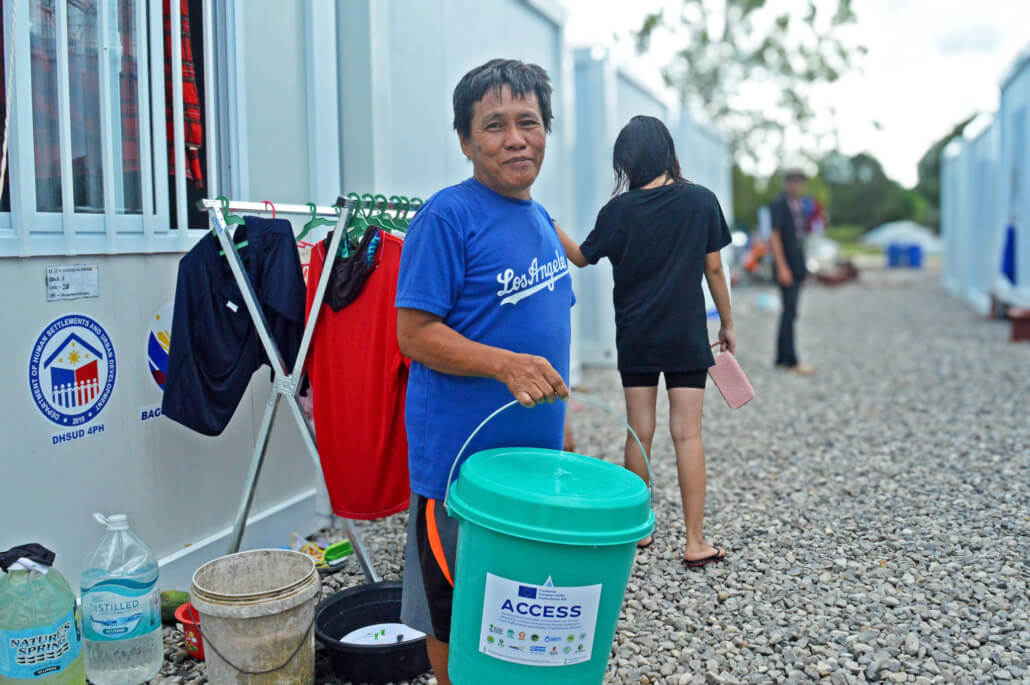
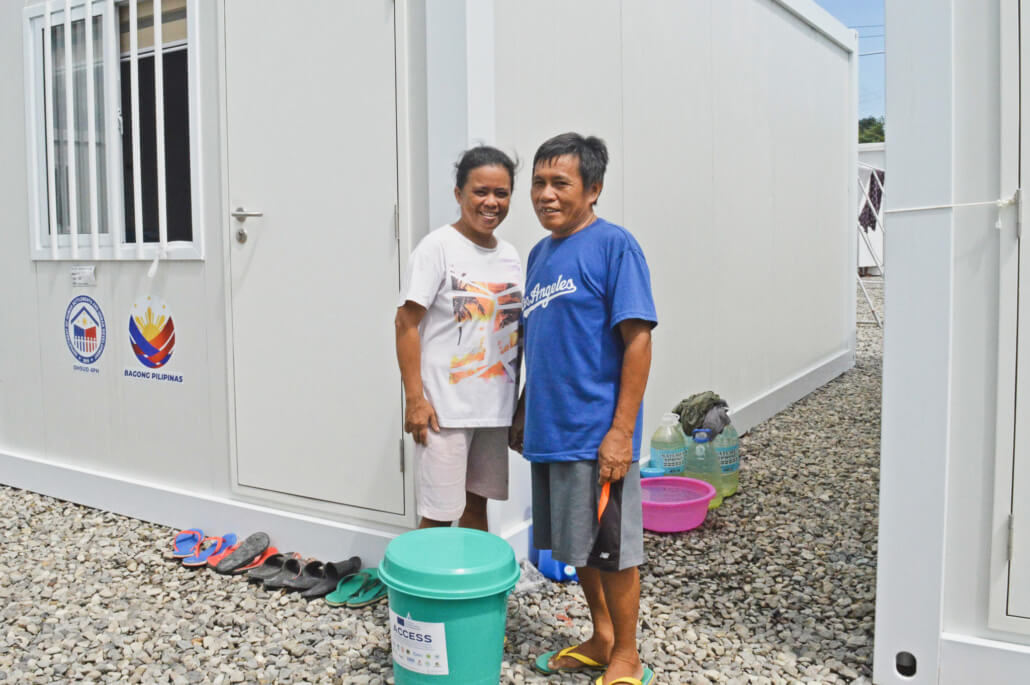
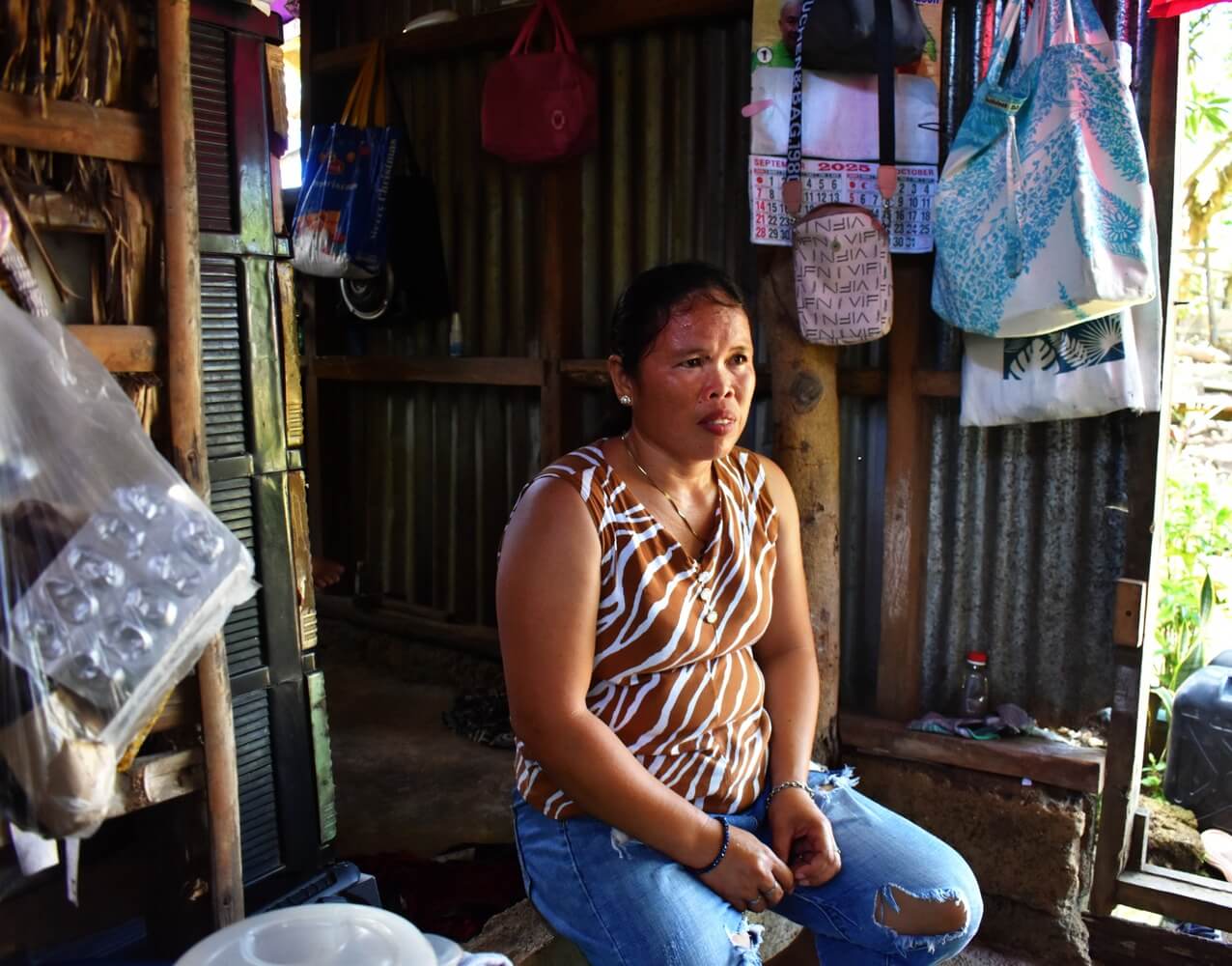
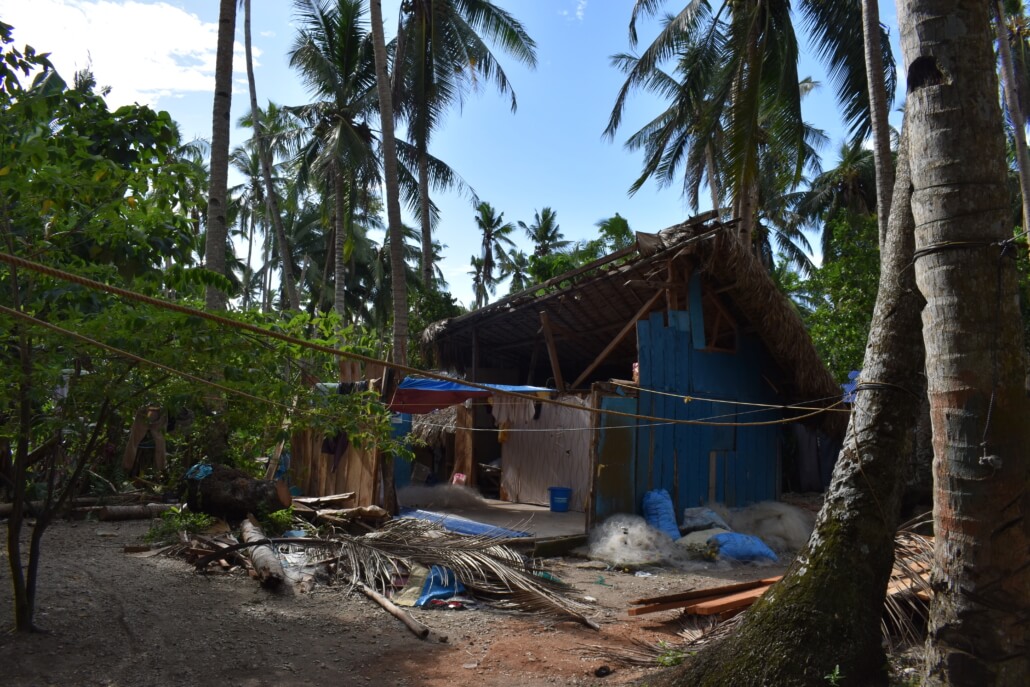
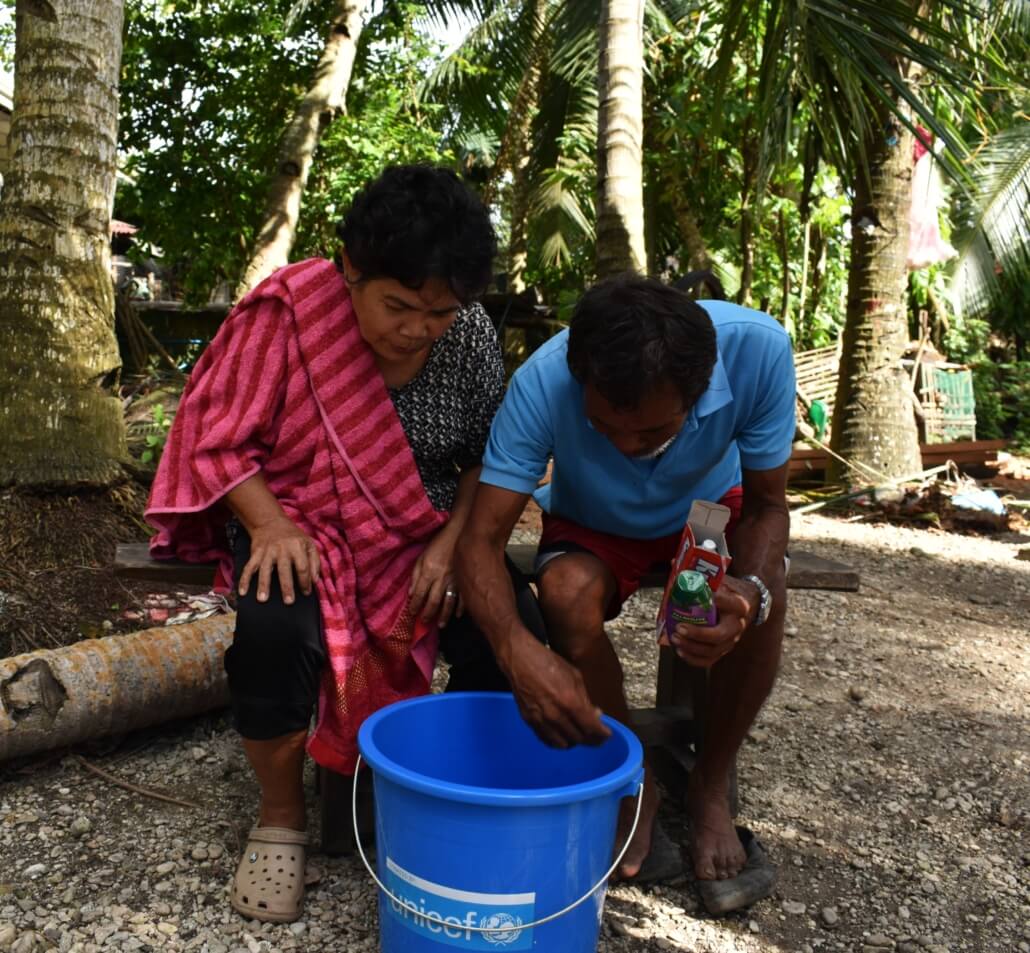
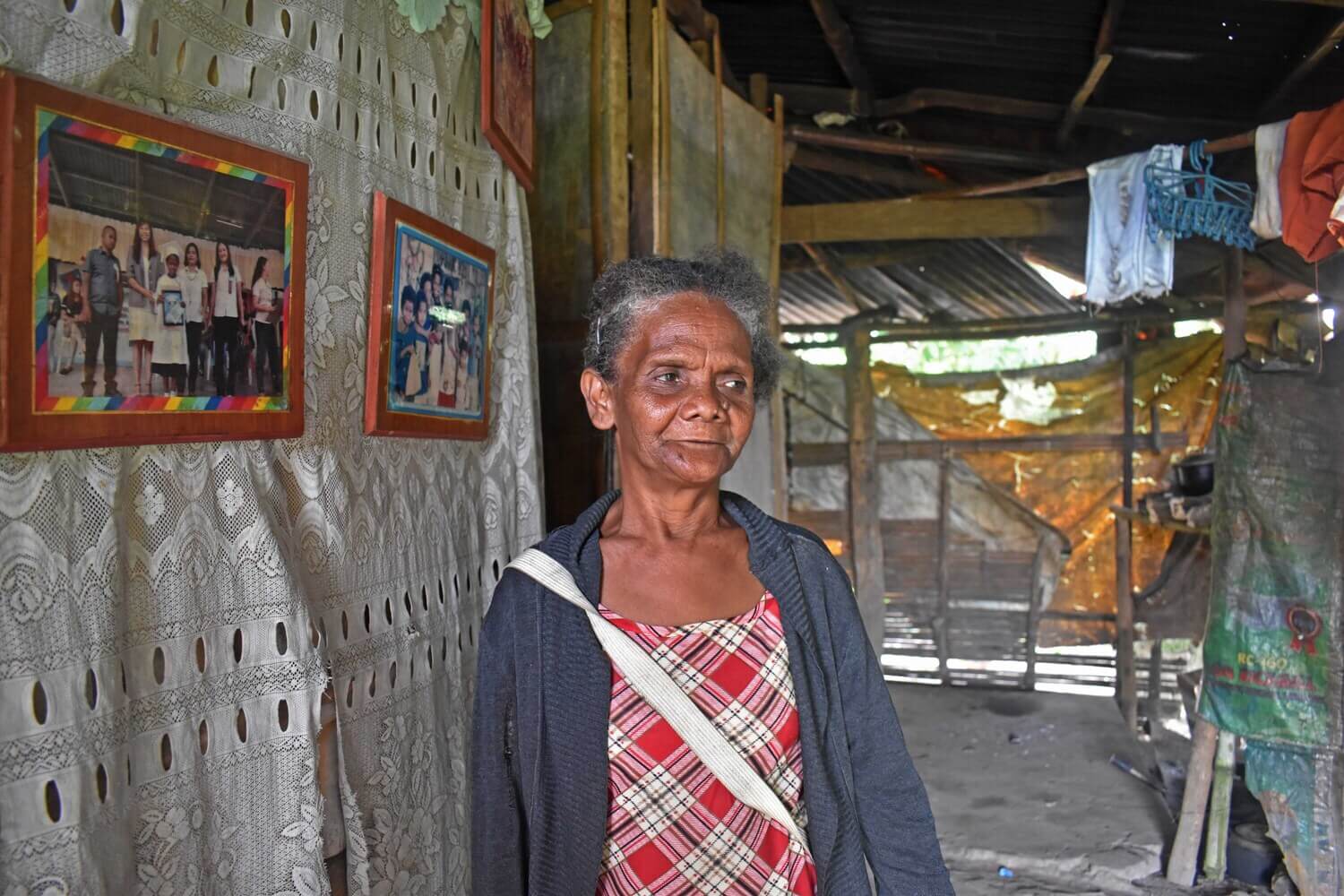
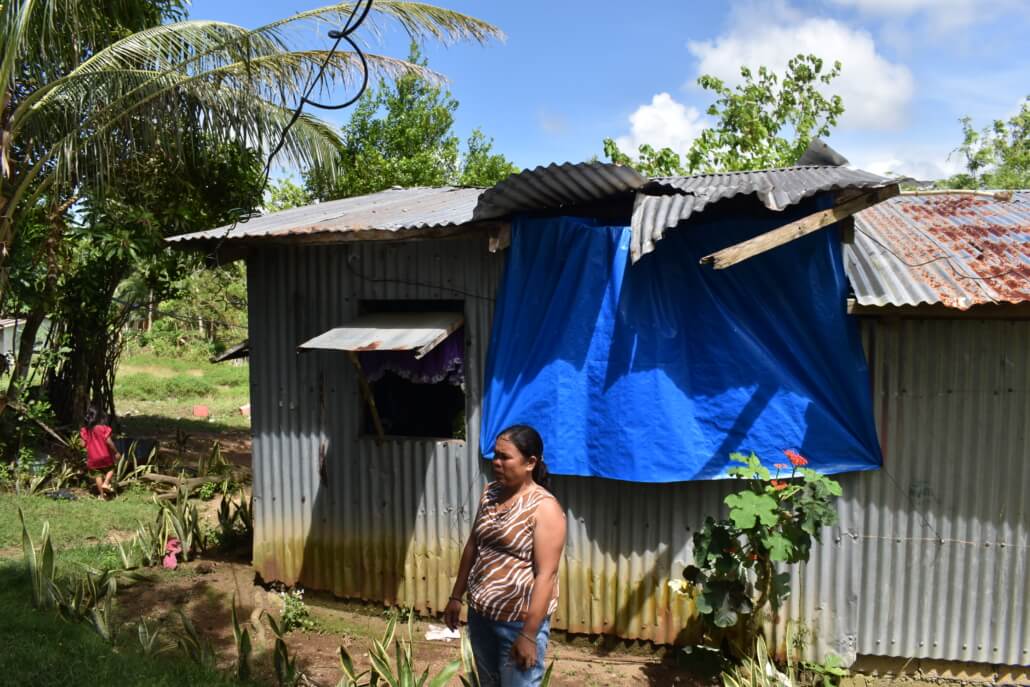
In photo: Ebyang and her family stand outside their home in Sitio Banaba, Barangay Sapang Uwak in Porac, Pampanga. (Photo by Joyce Sandajan for Action Against Hunger)

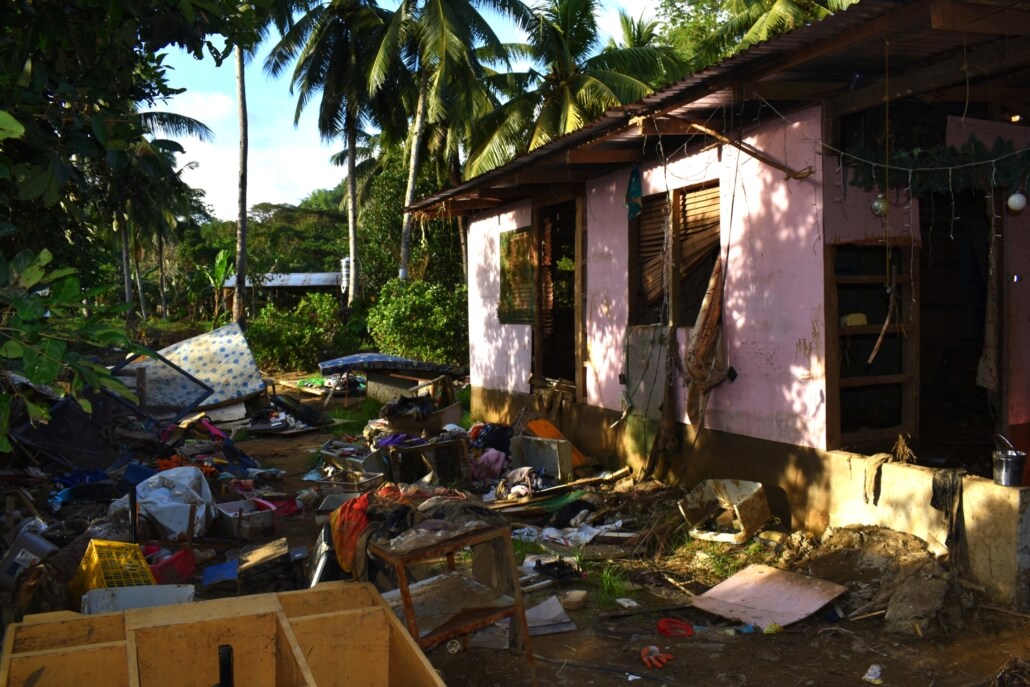
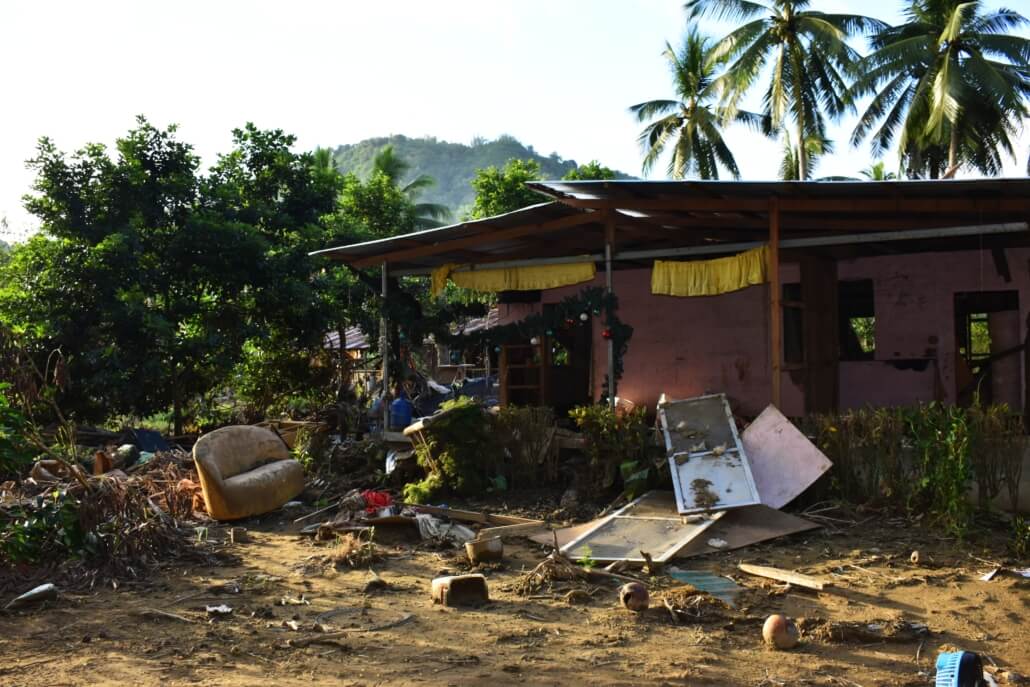
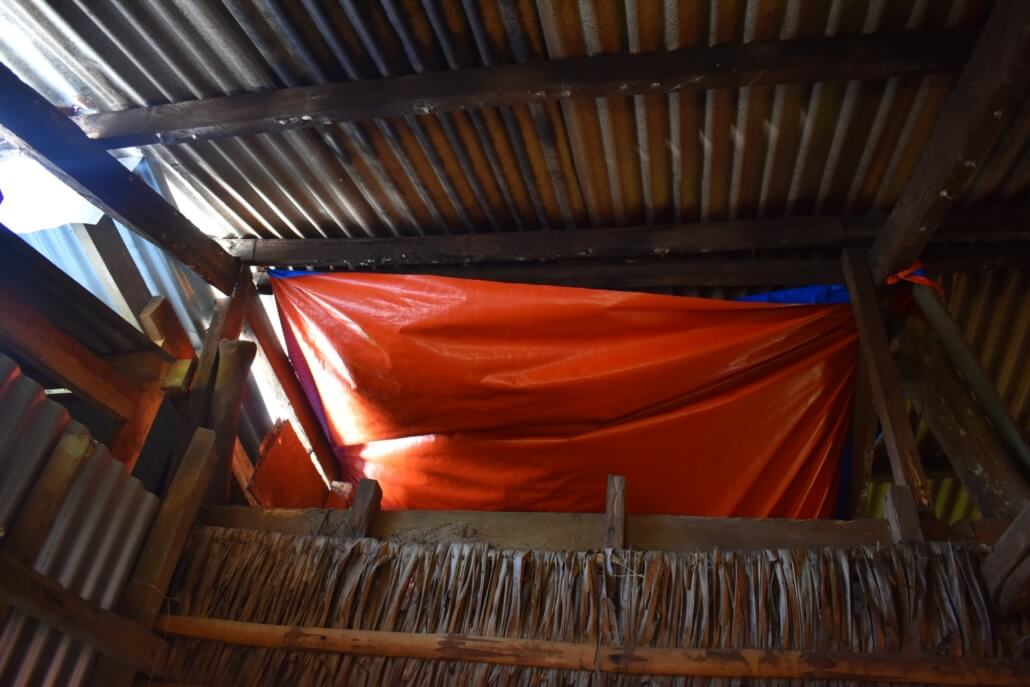
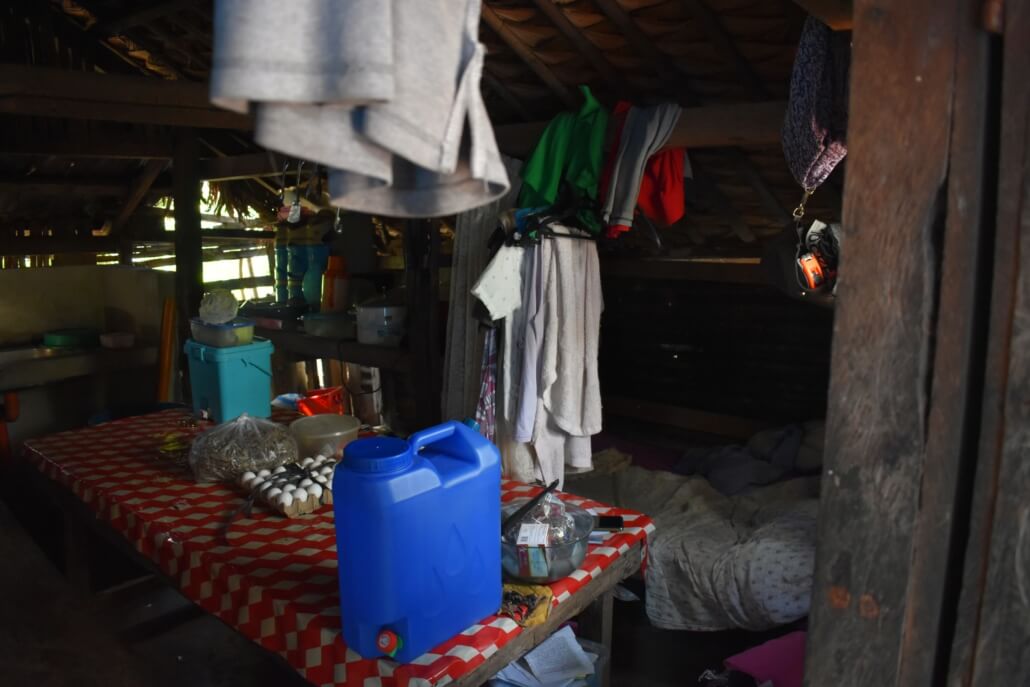
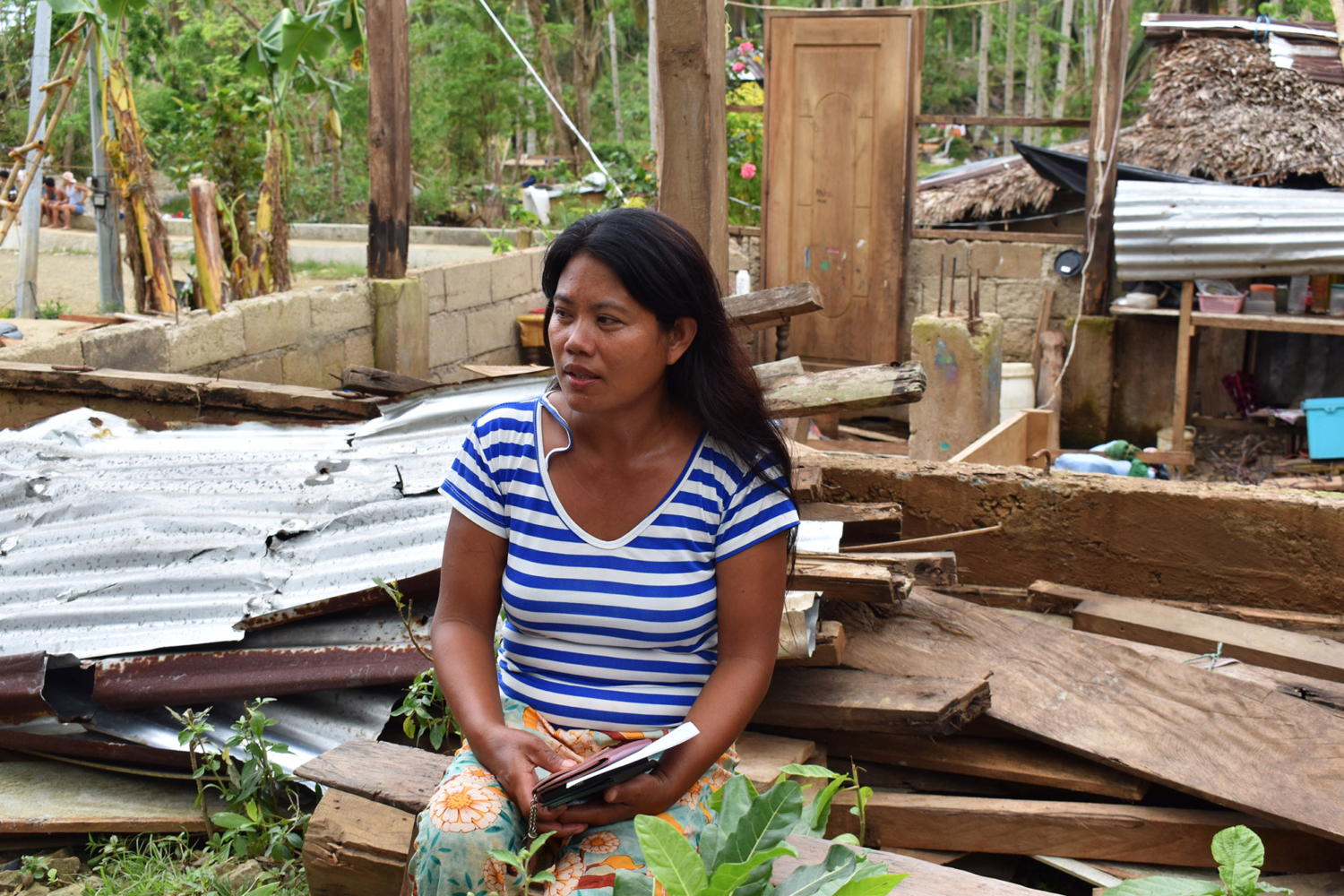
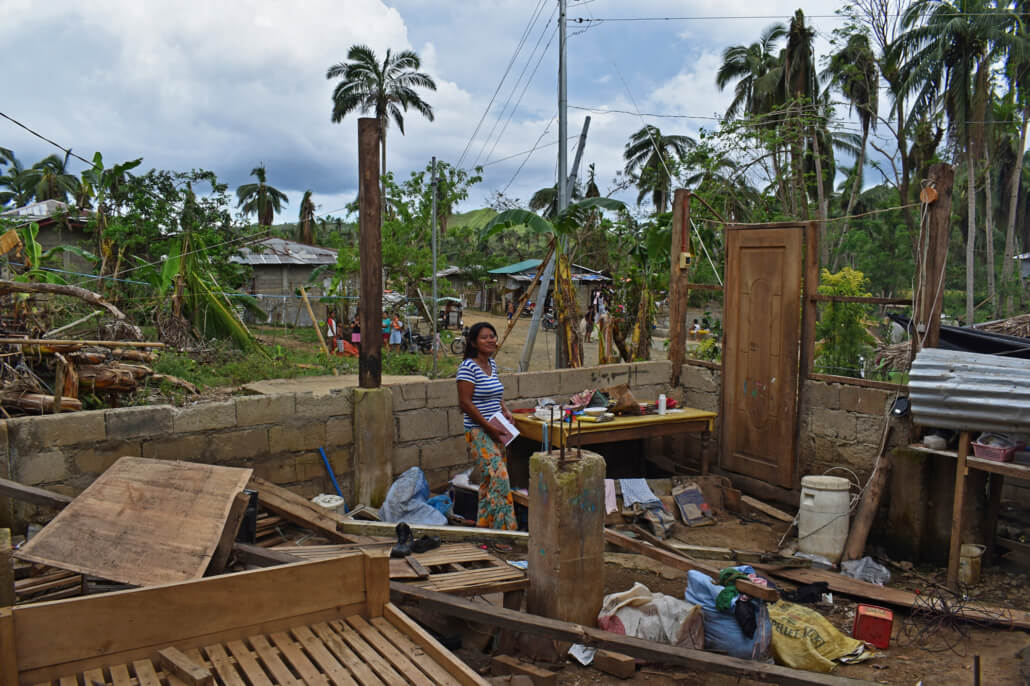
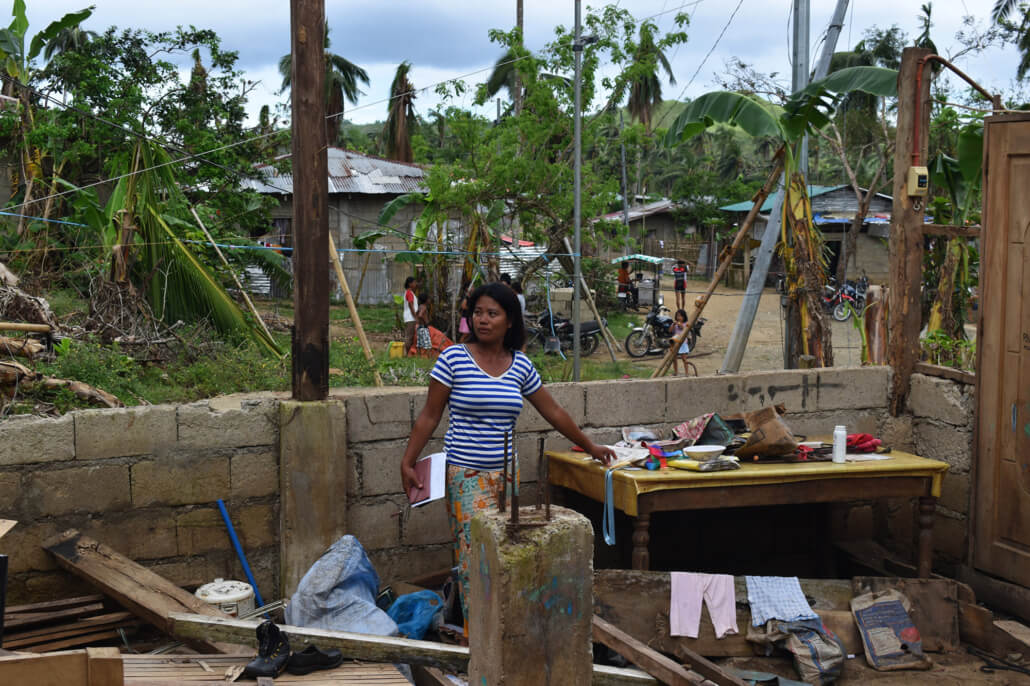
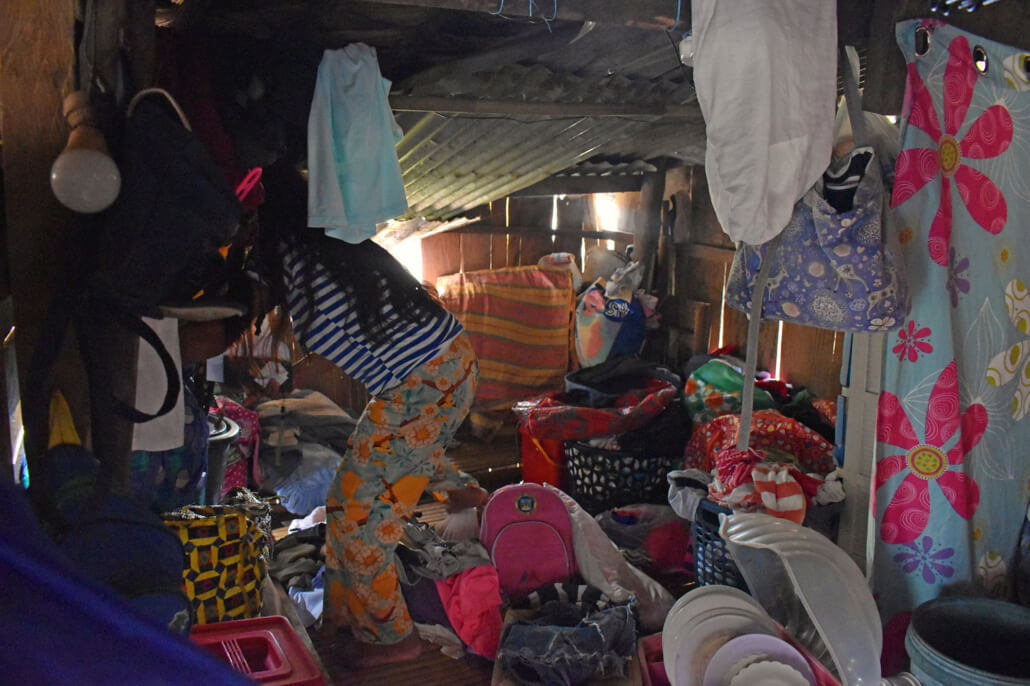
During Typhoon Emong, Ebyang and her family sought refuge in the silong, the small two- to three-foot open space beneath their raised house on stilts. The winds were so strong that they feared the entire structure would be blown away, and that cramped area felt like the safest place they could stay. They remained there overnight until the storm finally weakened. When they emerged, they found their home, made mostly of wood, bamboo, and other light materials, partially damaged, with their entire kitchen almost gone.
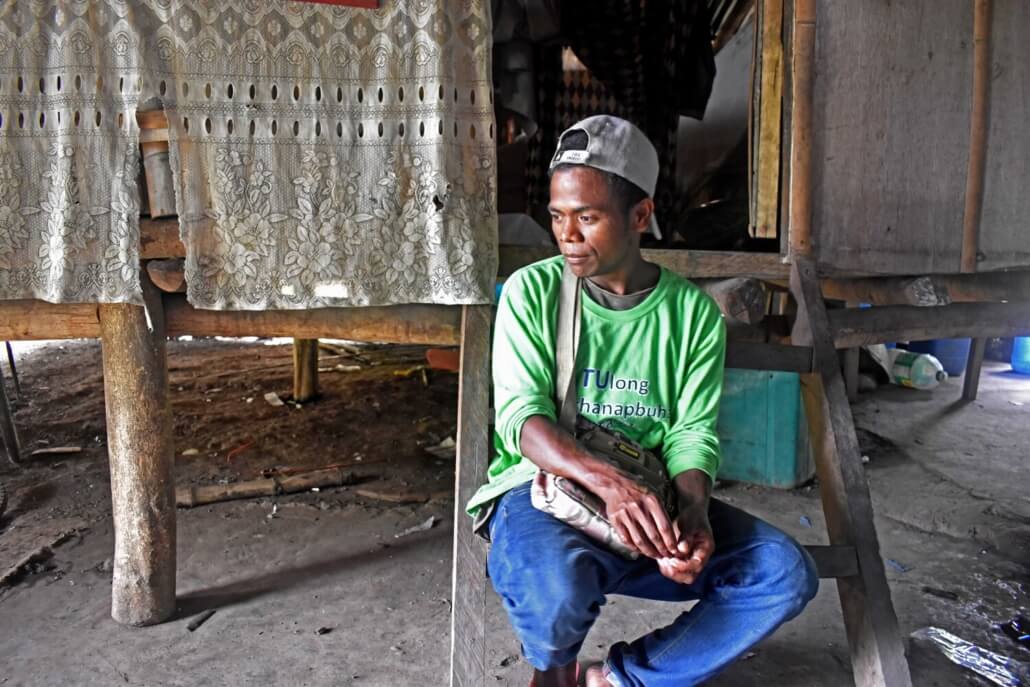
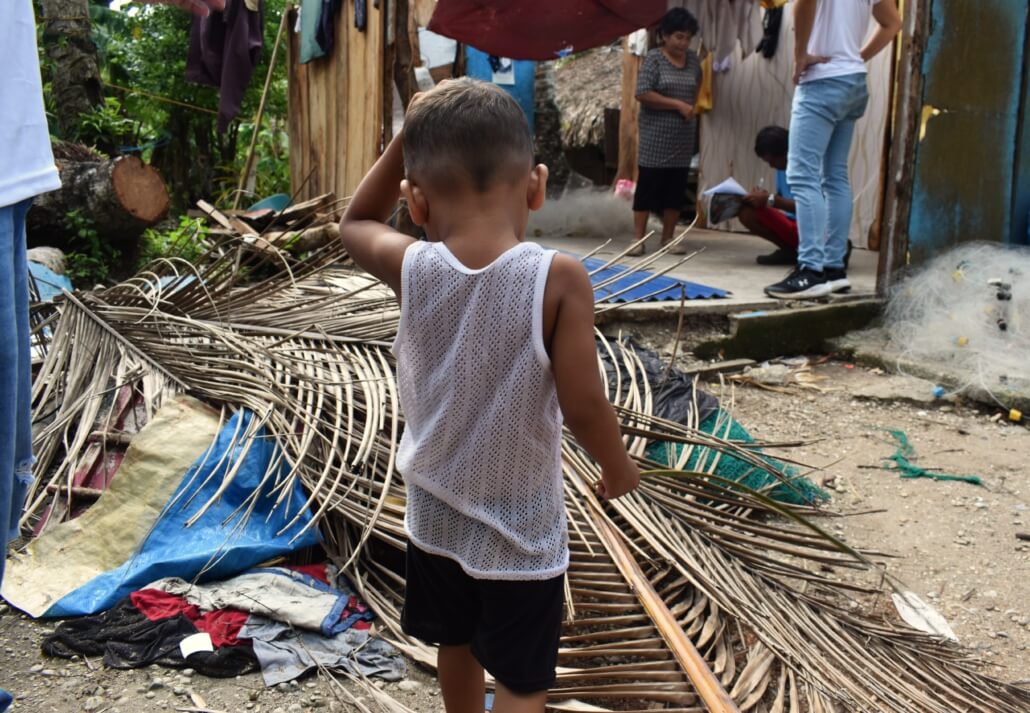
In photo: Bernard sits on the ladder leading up to his parents’ house. Behind him is the small crawl space where his mother, sister, niece and nephew hid during the typhoon. (Photo by Joyce Sandajan for Action Against Hunger)

For Ebyang, the damage left by Emong was not just another repair to face but a reminder of how exposed their family remains each time a disaster strikes. The storm brought back memories of previous hardships, shaping the story of how they came to live where they are now.

Ebyang’s family was originally from Sitio Batis in Sapang Uwak but were relocated years ago when the land was sold and later developed. “Life became harder in Sitio Banaba,” Ebyang recalls. “There was no cement, no road. My father would carry banana hearts just to feed us. Sometimes, we didn’t eat for days,” said Bernabe.
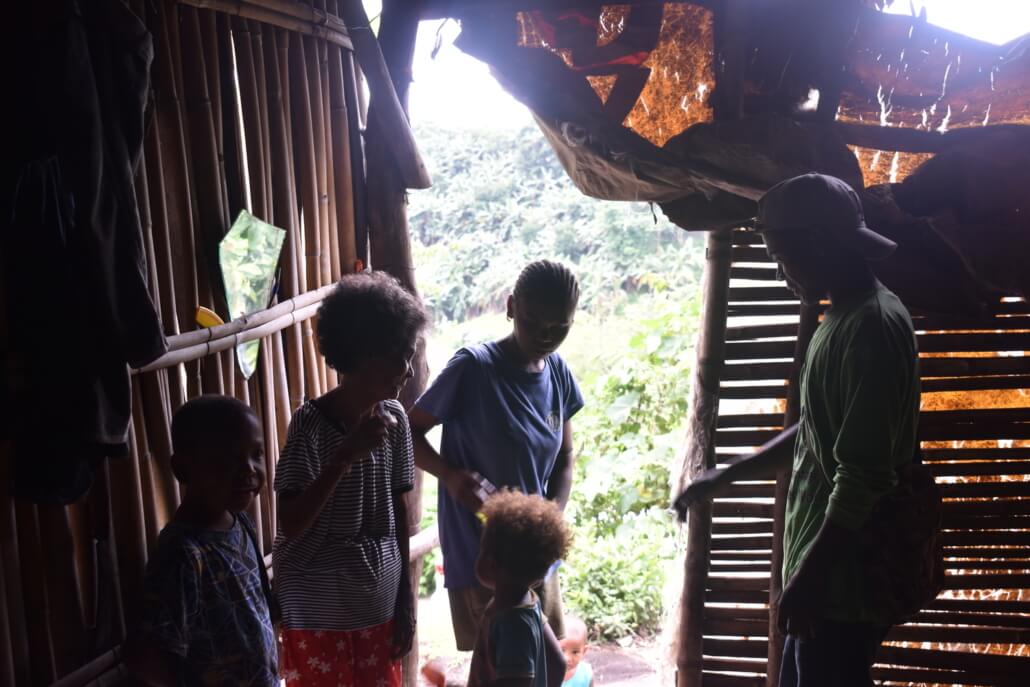
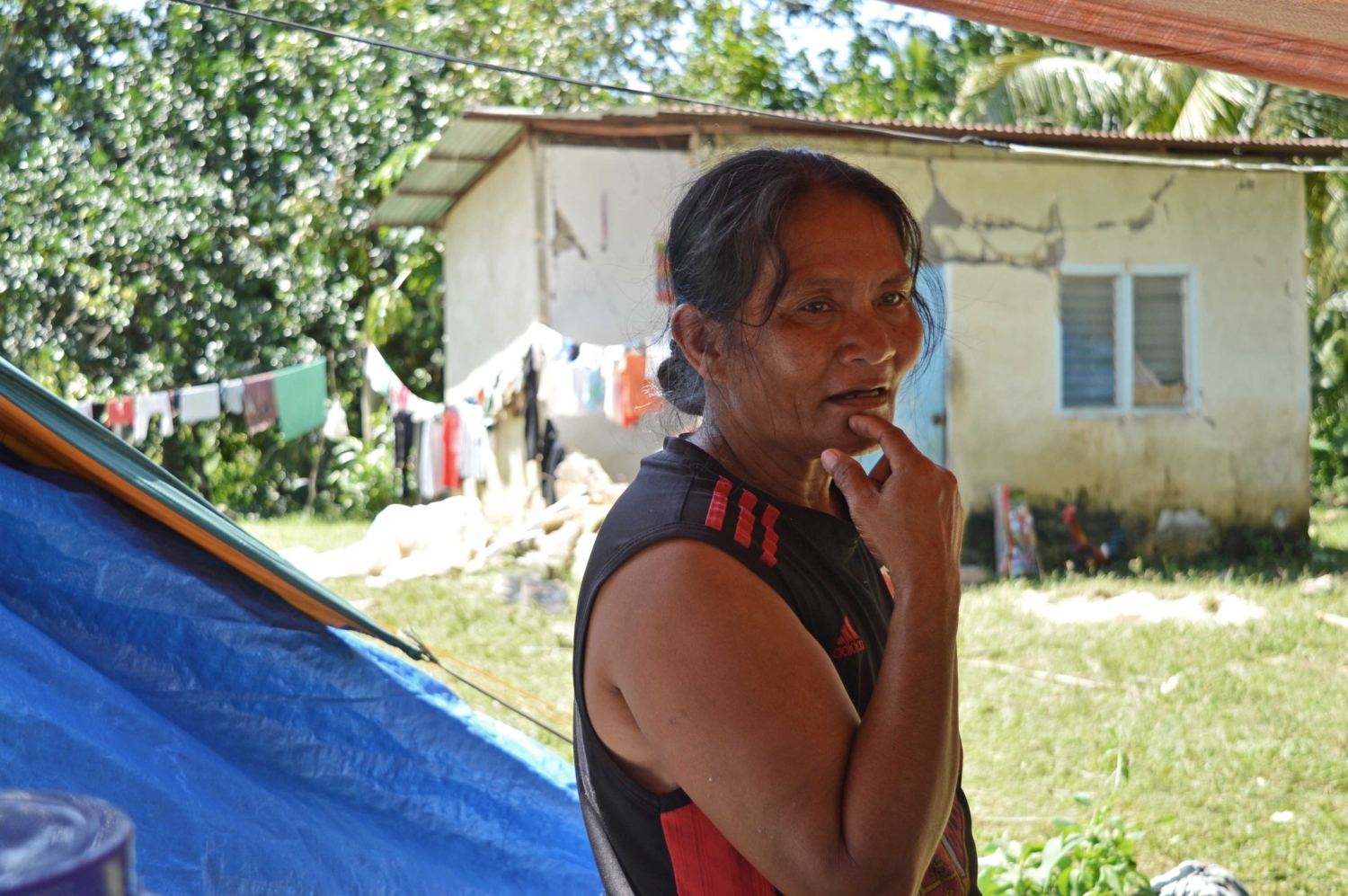
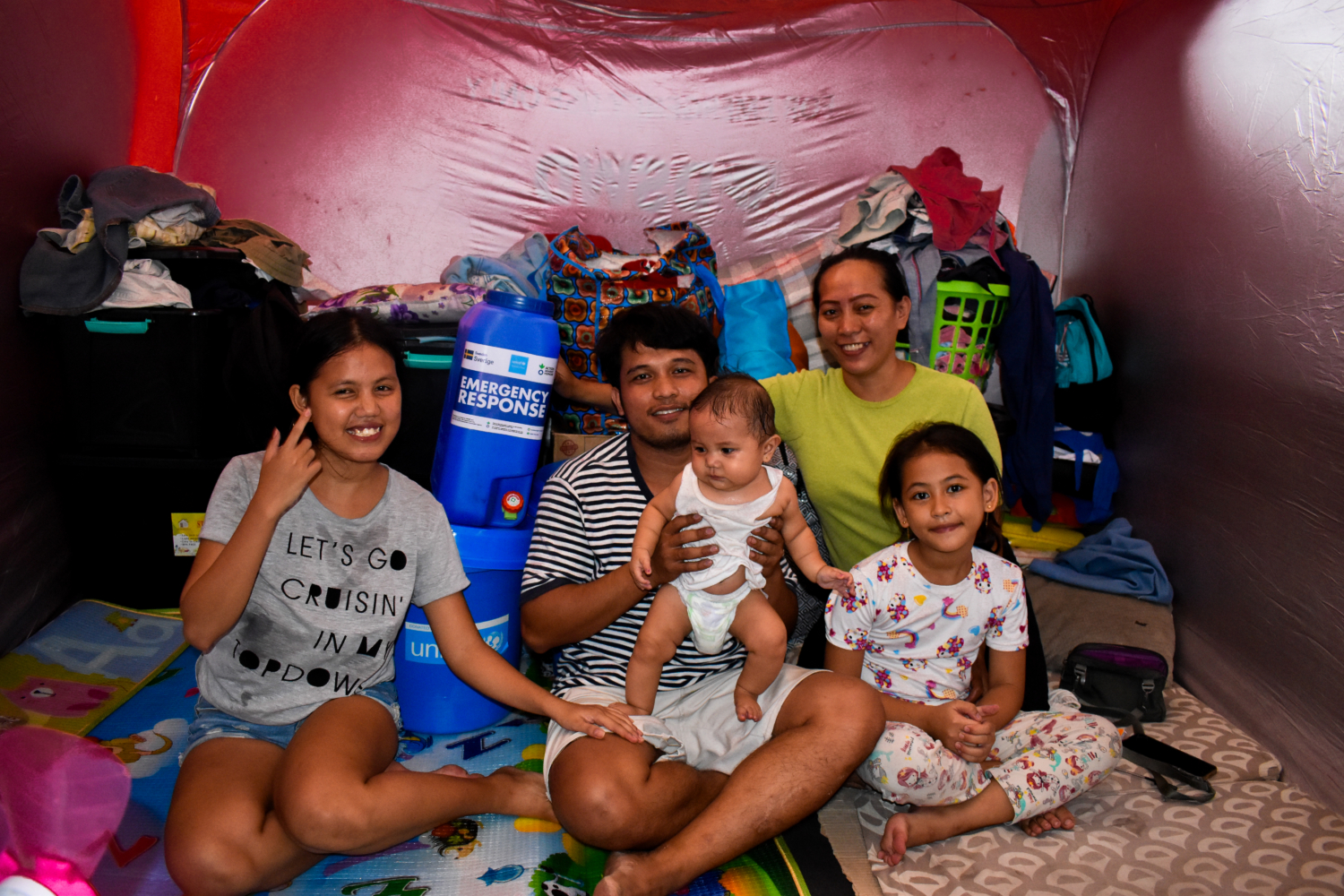
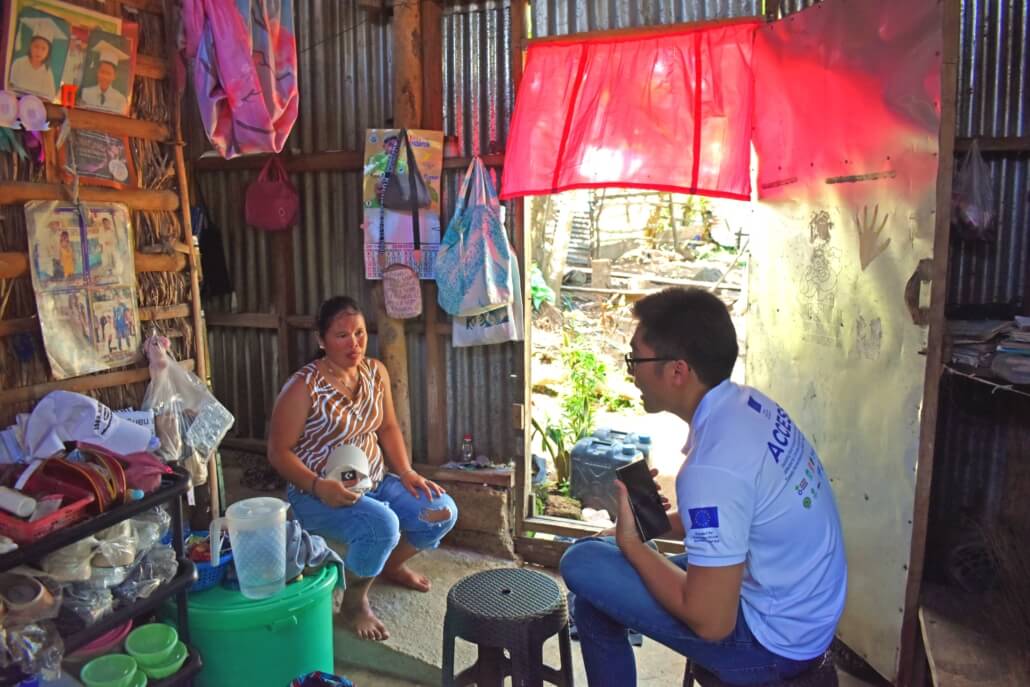
In photo: Ebyang and her family stand inside their home in Sitio Banaba, Barangay Sapang Uwak in Porac, Pampanga. (Photo by Joyce Sandajan for Action Against Hunger)

The family has survived many crises—from the eruption of Mount Pinatubo in 1991, which forced them to evacuate to Nueva Ecija for three years, to regular typhoons that destroy their crops and worsen hunger. But July 2025 felt different—the storms completely cut them off from everyone.

Work that begins before sunrise

Even before the storms, food scarcity was a part of daily life for Ebyang and her family.

“Rice here is very expensive—300 pesos for just a few scoops,” she explains. Health workers rarely reach their sitio, and children’s check-ups are irregular, making access to basic care a constant challenge.

The family’s main source of income comes from selling what they grow, such as avocados, when they are ready to harvest. Sometimes, Bernabe and his father take on labor jobs planting or doing other work on the land of non-IP families in the community. From this, they would earn around 300 pesos a day, which is less than five euros, if work is available. This, however, was not regular employment, and they would only go when someone called on them to work.

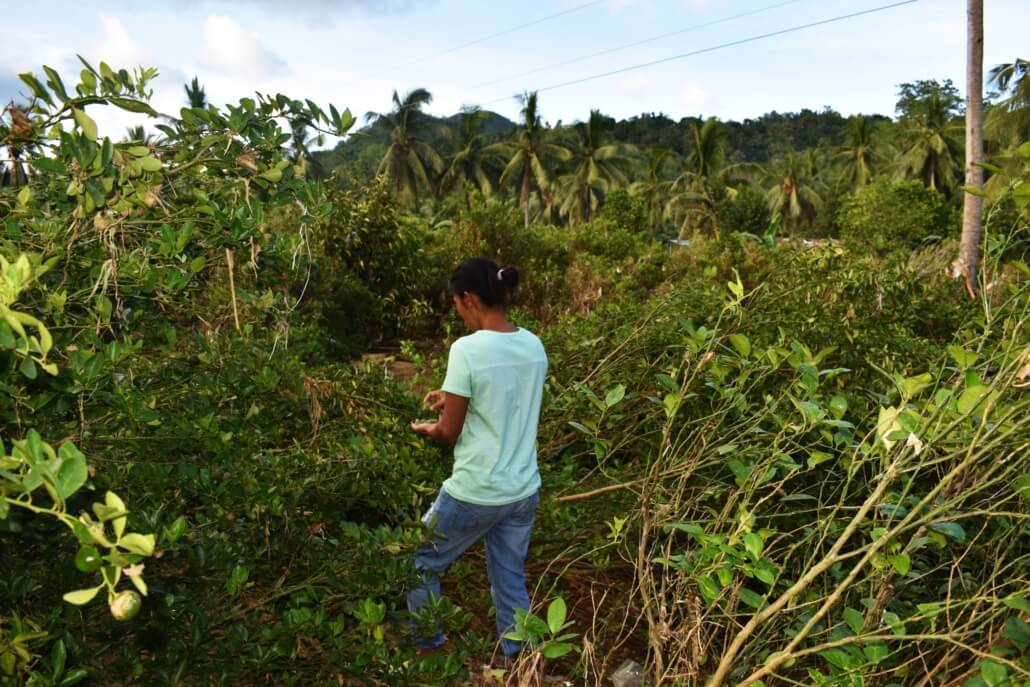
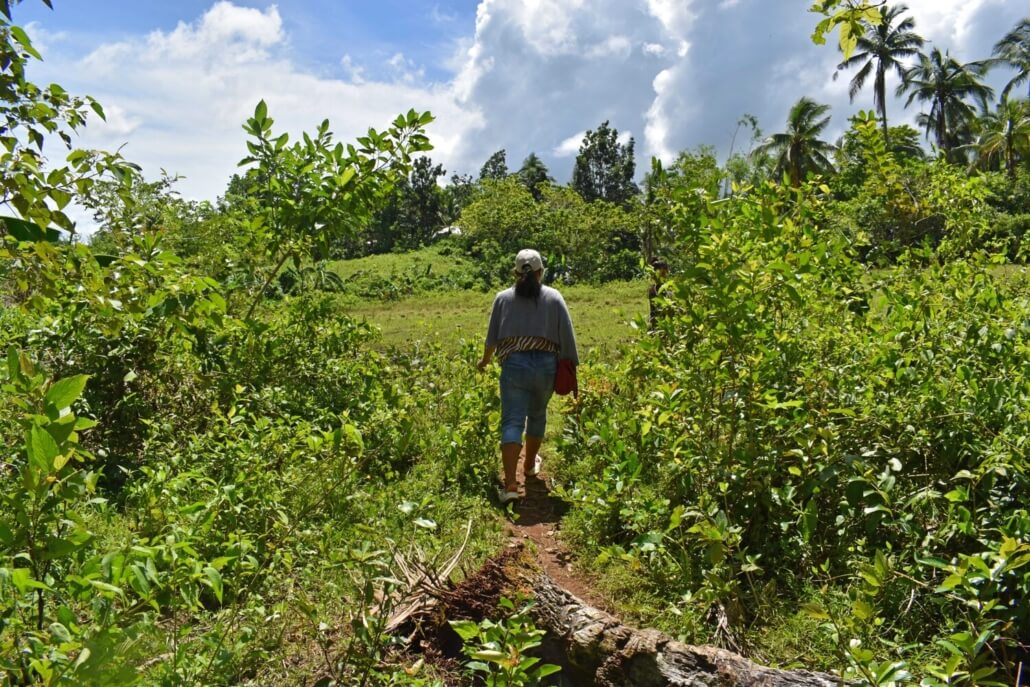
Their closest thing to steady work is harvesting puso ng saging or banana hearts. “Our regular work is collecting banana hearts, but it is very difficult because the trees are far up in the mountains, near Mount Pinatubo,” Ebyang explains. The trek can take up to five hours through overgrown trails, where snakes are a constant threat. “Sometimes it takes us the whole day to fill a sack, and we skip meals just to have enough time to gather them.”

“After the storms, the trail going there was too slippery, but we still went—because the children needed to eat,” Ebyang adds. Even after a full day of walking, searching, and carrying heavy sacks, the family earns only 200 to 400 pesos (three to six euros), that is if they are able to sell them. Buyers sometimes do not even come, as motorcycles struggle to navigate the rocky, steep, and muddy terrain of barangay Sapang Uwak, specifically, since Sitio Banaba is further up the barangay.

Many days, the family survives on taro, sweet potatoes, or bananas. Breakfast is often skipped, and meat or fish is a rare luxury. When they run out of food entirely, they borrow rice from neighbors. When others run out, they lend whatever little they have in return, an unspoken system of mutual survival that keeps the community going.

Their second-hand motorcycle, which Bernabe saved for three years to buy, is their lifeline. Repairs are frequent and costly, but it allows them to reach town whenever they manage to earn even a little money from selling harvested crops. During good months, their avocado trees can bring in up to 5,000 pesos, or around 73 euros, but this only happens once a year. Most days, earnings barely cover food.
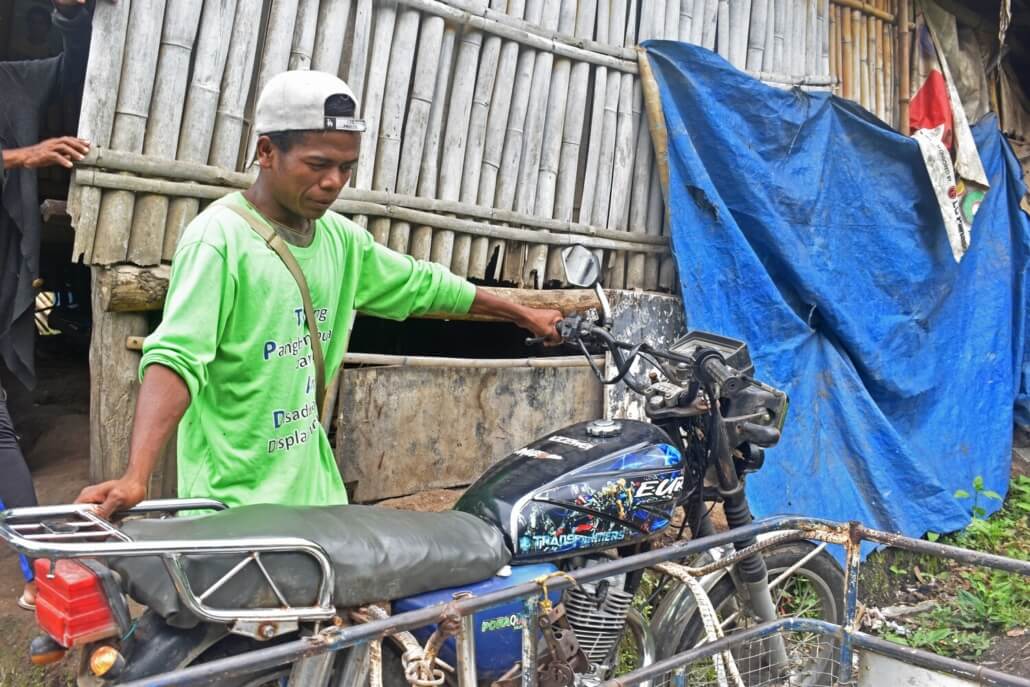
In photo: Bernard, Ebyang’s son, with his motorcycle which he spent three years saving up for. Despite the maintenance costs that they have invested in it, they put high value on this motorcycle as it serves as their main transportation to go to and from the barangay. (Photo by Joyce Sandajan for Action Against Hunger.

“We want to save for our house,” Bernabe says. “Our bamboo and wood posts rot every few years because of the storms. I dream of having even half of it cemented so we don’t have to rebuild again and again.”

With food on the table, they can focus more on their future

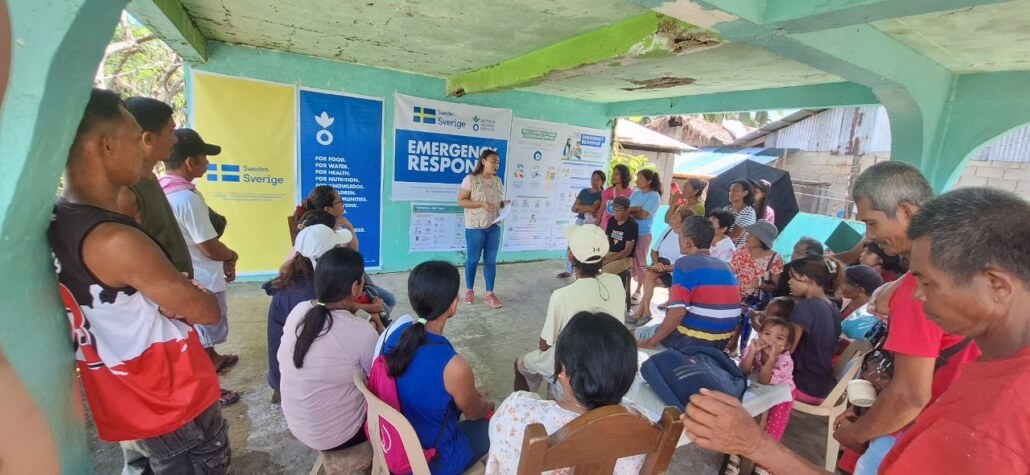
When ACCESS, through Action Against Hunger, reached Sitio Banaba as part of the emergency response funded by the European Civil Protection and Humanitarian Aid (ECHO), it was the much-needed assistance the community received after the July calamities, according to Ebyang and her son, Bernabe.
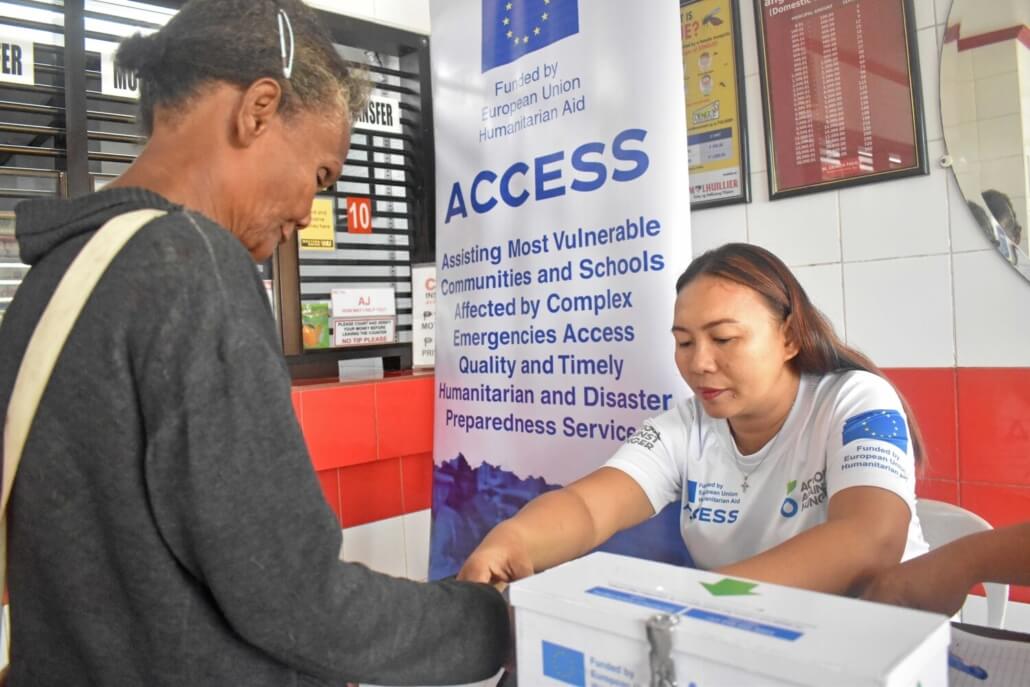
In photo: Ebyang and her family stand outside their home in Sitio Banaba, Barangay Sapang Uwak in Porac, Pampanga. (Photo by Joyce Sandajan for Action Against Hunger)

“That’s why we are thankful,” says Ebyang. “They reached us even if our sitio is very far. It means a lot to be remembered.”

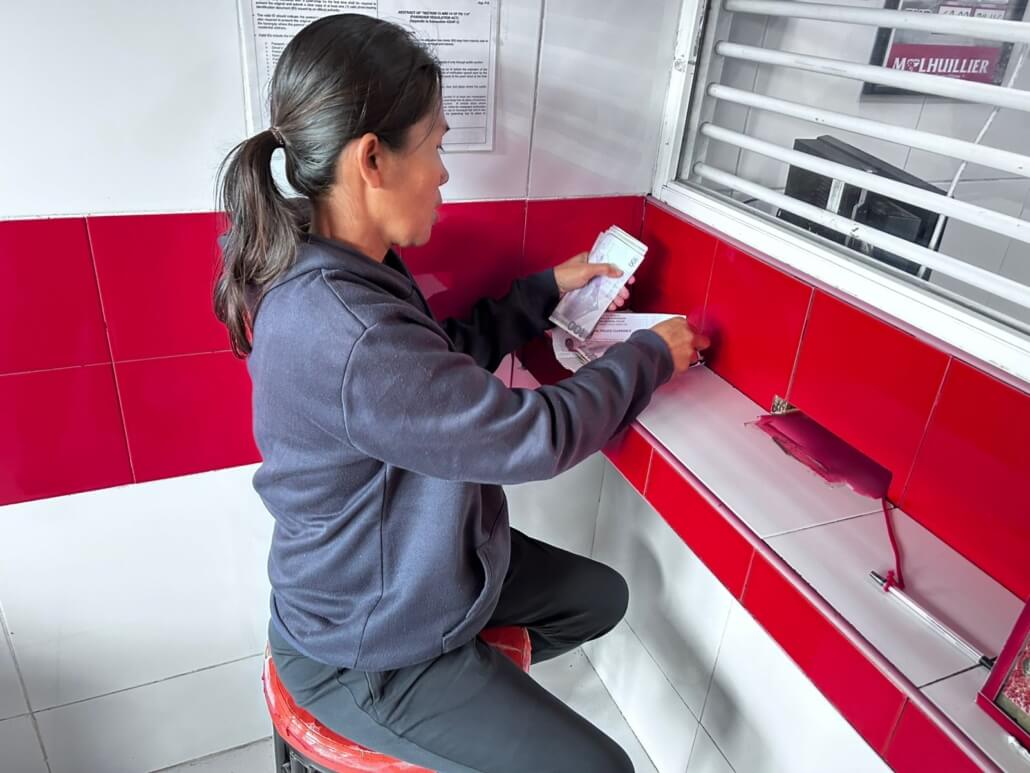
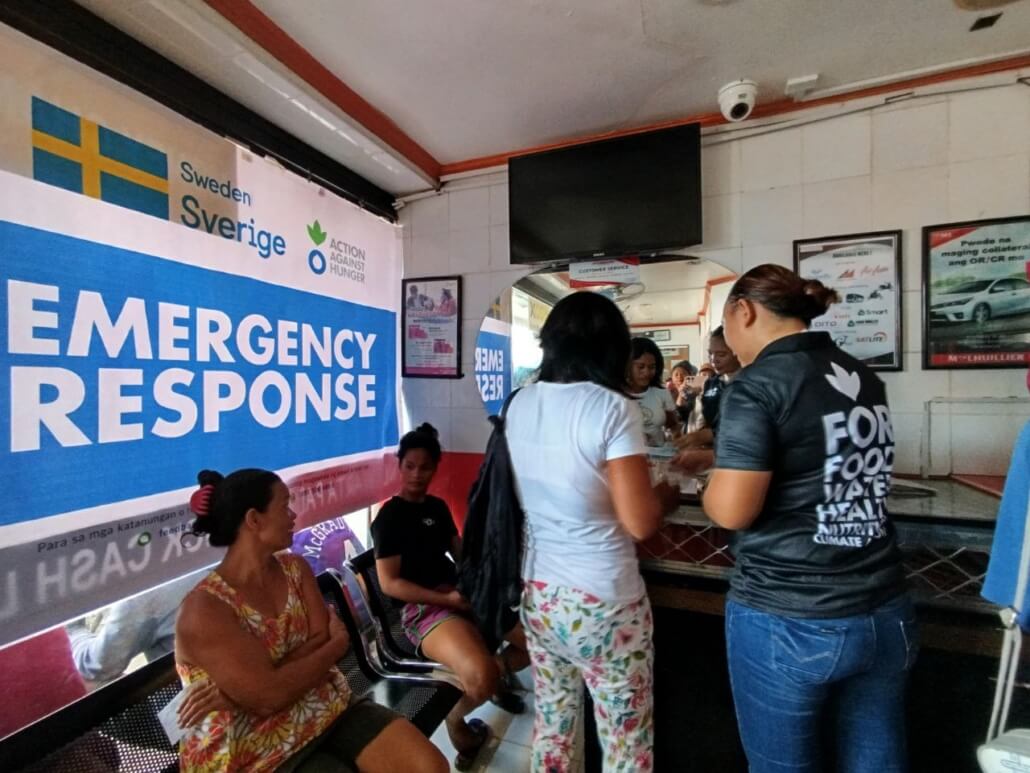
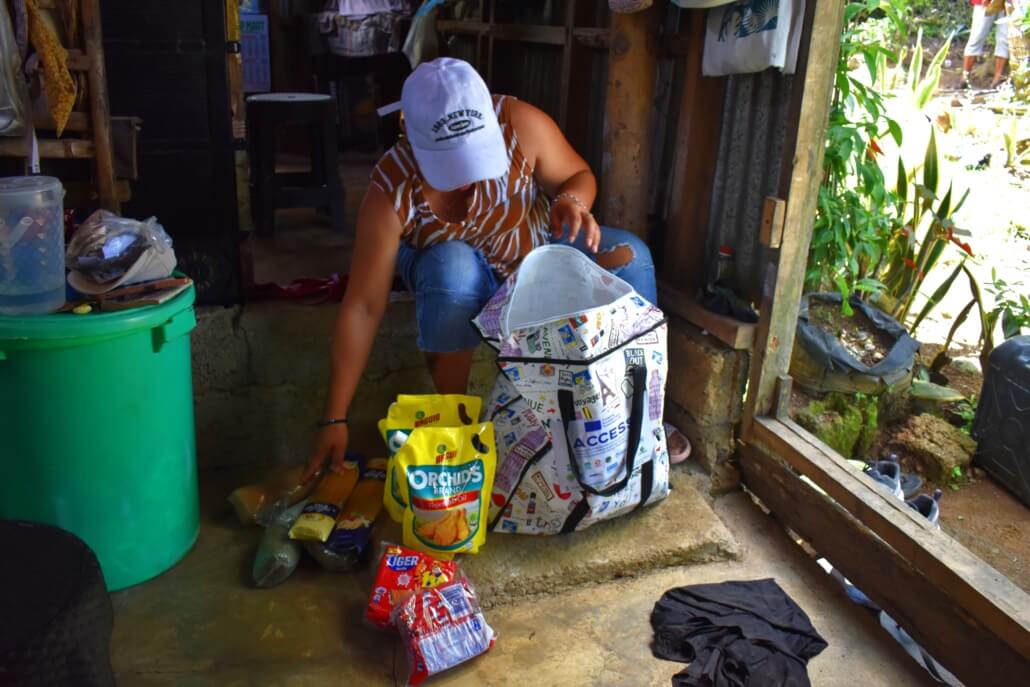
On the morning of the payout, Ebyang, Bernabe, and Silvia arrived early at the financial service provider. After receiving the cash assistance, they went straight to the nearby market to buy food supplies. With the support, the family was able to purchase vegetables, meat, eggs, sugar, coffee, and half a sack of rice.
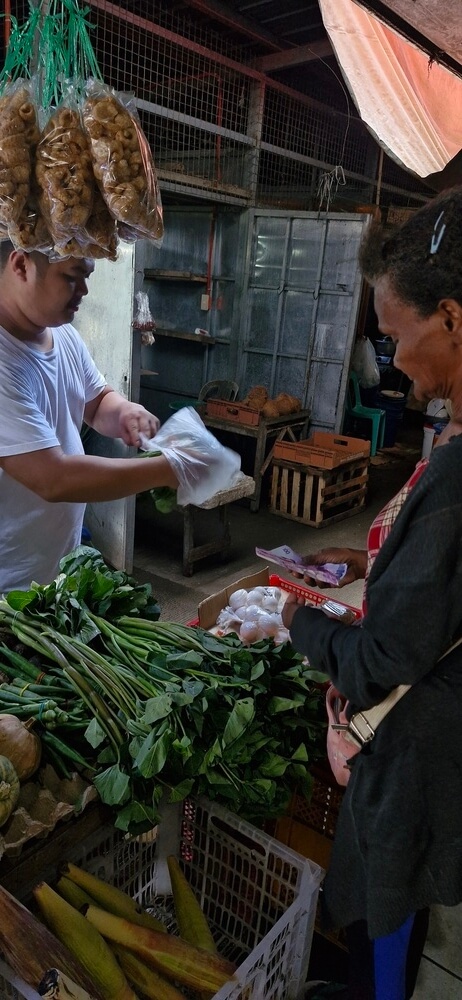
Ebyang did not spend the entire amount in one trip. She expects the food to last nearly three weeks and plans to return to the market when it runs out. At every store, she carefully kept the receipts. One vendor even remarked that it was the first time they had seen Ebyang and her family buy so many food supplies.
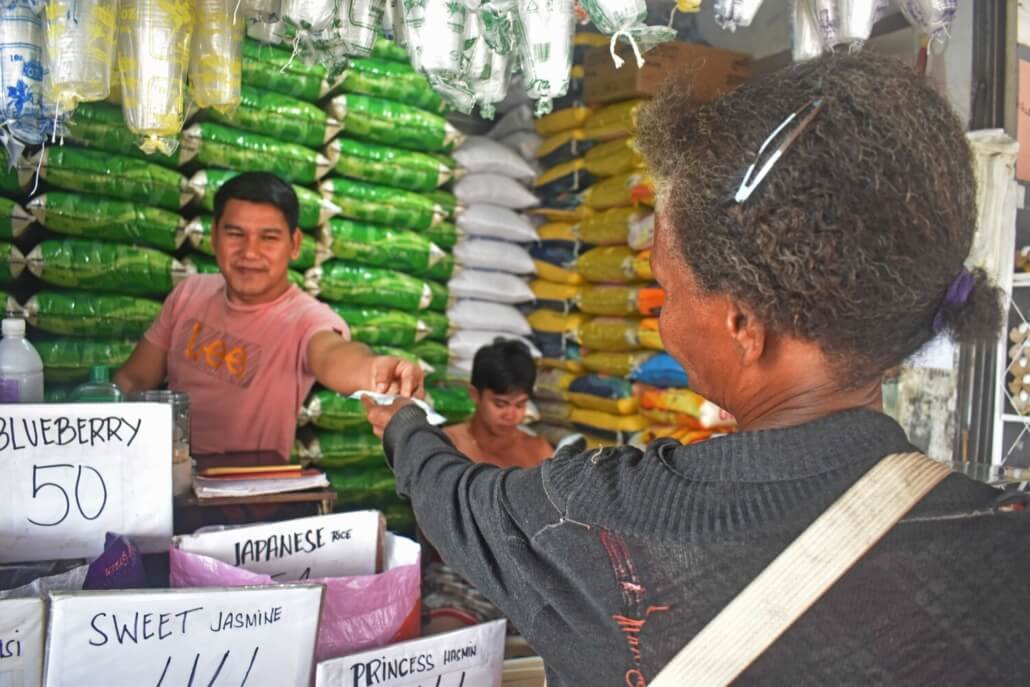
In photo: Ebyang buys rice in the nearby market after receiving the cash assistance form ACCESS. (Photo by Joyce Sandajan for Action Against Hunger)

“This is the first time in so long that we’ve been able to buy this much food,” Bernabe says. “Now, whatever we earn, we can save for house repairs or for the children’s needs.”

With food no longer their daily worry, the family can plan for the future—whether it is fixing their home, saving for school expenses, or preparing for the next storm season.

For the Candulis and their neighbors, the ACCESS assistance meant having the essentials they needed to get through a difficult period after months of isolation and limited resources.

ABOUT THE RESPONSE

The ACCESS Emergency Response provided urgent support to communities affected by the successive impacts of Tropical Cyclones Crising, Dante, Emong, and the intensified southwest monsoon in July 2025. Across Bataan, Pampanga, and Occidental Mindoro, the response delivered water, sanitation, and hygiene support; multi-purpose cash assistance; and protection services. It prioritized the most vulnerable families, especially Indigenous Peoples in remote and underserved areas.

ACCESS—Assisting the Most Vulnerable Communities and Schools Affected by Complex Emergencies in Accessing Quality and Timely Humanitarian and Disaster Preparedness Services—is a multi-year and multi-organization humanitarian initiative implemented by ACCORD, Action Against Hunger, CARE Philippines, Humanity & Inclusion Philippines, Oxfam Pilipinas, People’s Disaster Risk Reduction Network, Plan International Pilipinas, and Save the Children Philippines.
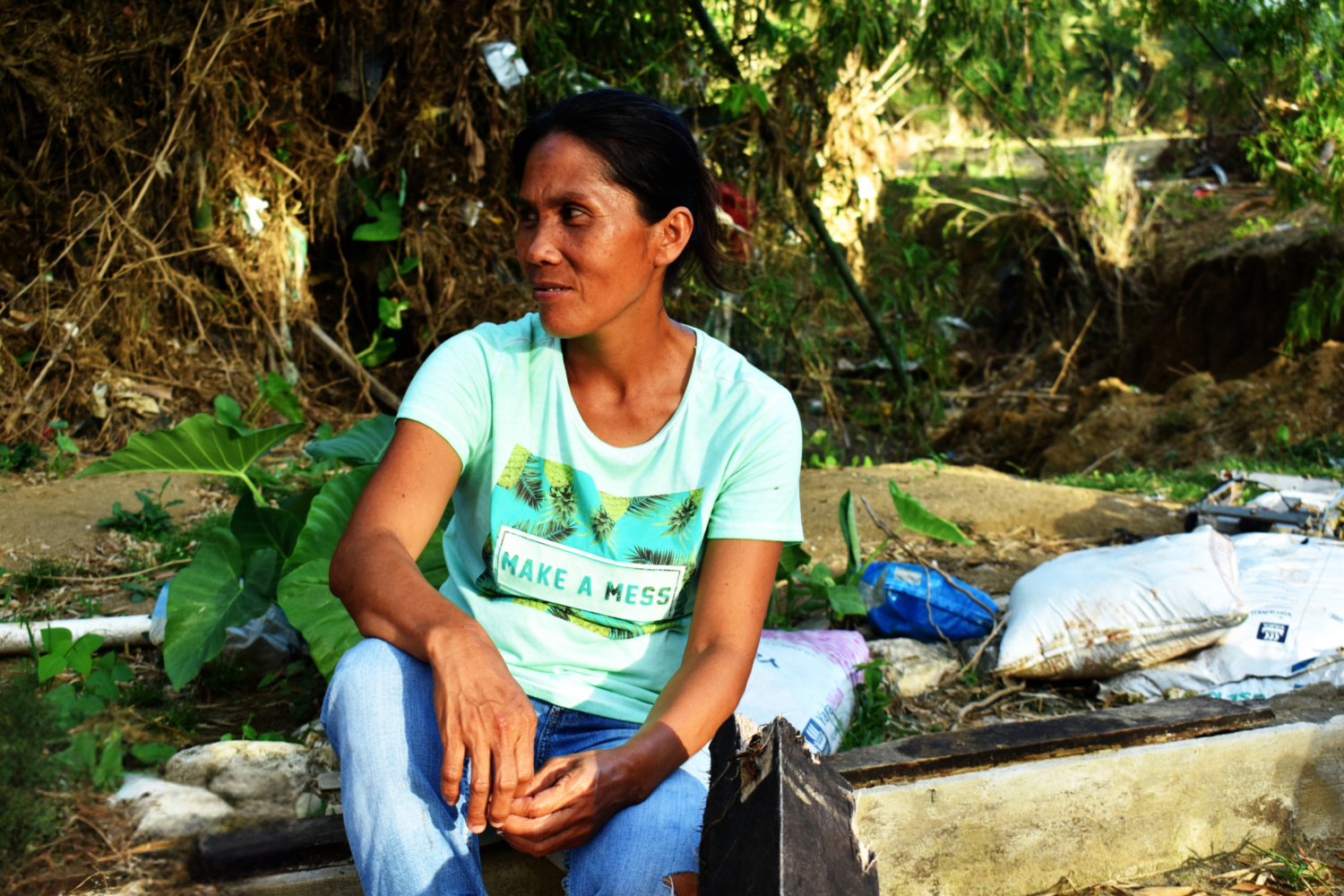
Padayun sa kinabuhi (Life must go on): A story of recovery after Typhoon Tino

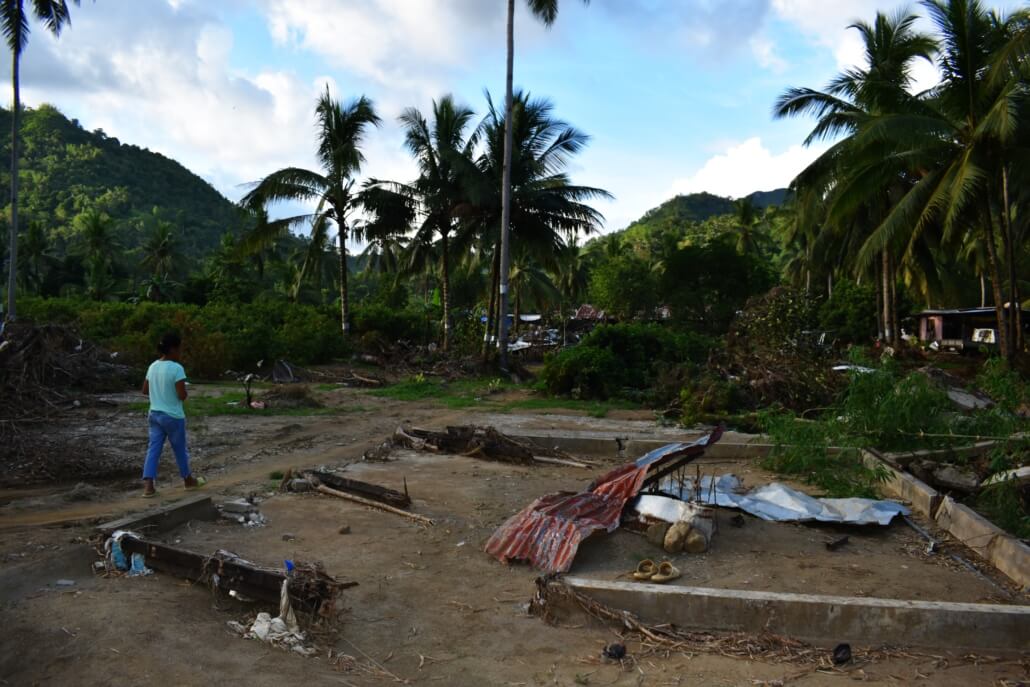
COMPOSTELA, CEBU – When Typhoon Tino (Kalmaegi) hit Barangay Mulao in Compostela, several families lost what was most precious to them, caught in violent flooding they had never expected from what they thought would be just strong winds. Among them was Emily (45), who had experienced what no parent should ever have to endure: losing three of her six children, with one still missing.

Emily lives in Barangay Mulao, Compostela, Cebu, where she cares for her household and her family of eight, including six children. Together with her husband, she helps manage the calamansi fields and a piggery farm near their home, working alongside other farmers.

Having endured powerful storms before, including Yolanda and Odette, she mentions that nothing compares to the flooding that struck her community in the early morning of November 4.

The night prior, she and her husband slept in their home, while some of their children stayed somewhere else. They decided that four of their children were to sleep in a nearby two-story concrete house close to a watercourse for the night, as they initially thought it was safer and more resistant to the storm. The children stayed with 11 other people, including neighbors and calamansi field workers.

In photo: Emily walks into what remains of the house destroyed by Typhoon Tino (Kalmaegi) in Barangay Mulao, Compostela, Cebu, where four of her children had taken shelter on the night the disaster struck. Photo by Martina Vercoli for Action Against Hunger.


A tragedy unfolding

The morning the Typhoon Tino hit, at around 4:00 a.m., Emily recalls the floodwaters rising rapidly inside their home, reaching her waist in a matter of moments. She saw two of her children in the nearby piggery, desperately trying to save their pigs. The water continued to rise until it reached chest level, and the current grew so strong that she could no longer move.

Worried about her other four children, who were staying in the other house, they desperately tried to reach them. The current, however, was dangerously strong. It forced them to take different paths and roads, but they were still unable to reach the house.

At one point, Emily’s husband even tried to swim toward the house, but the situation was too dangerous; he realized that if he had co

ntinued, he could have lost his life. Together, they decided to wait for the water to subside.

“We recommended our children to stay in that house because we believed it would withstand the storm and provide safety,” adds, Emily.

By around 6:00 a.m., when the water had slightly receded, Emily and her husband managed to leave their home. They immediately went to check the concrete house where their four children were staying, hoping everyone had remained safe through the worst of the storm.

“When we arrived, the entire house was gone. Nothing remained, not even the walls,” states, Emily.

In photo: The house destroyed by Typhoon Tino (Kalmaegi) in Barangay Mulao, Compostela, Cebu, where four of her children had taken shelter on the night the disaster struck. This photo was taken one month after the Typhoon. Photo by Martina Vercoli for Action Against Hunger.

Emily and her husband began walking along the river in search of their missing children and the others who had been inside the house. They walked from their barangay, Mulao, toward Barangay Cabadiangan, following the watercourse path, digging through mud and debris along the way. On the trail, they discovered their 22-year-old daughter, which Emily was able to recognize through her clothing.

“We saw only minor bruises on her body, so we attempted CPR, hoping she might still be alive,” shares, Emily.

That day, they desperately walked until 4 in the afternoon, hoping to find their other missing children alive. Three days later, they found another of their daughters, while their 9-year-old son was found another day later; both unfortunately had also lost their lives.

In photo: Remaining items of Emily’s children, outside their family home in Barangay Mulao, Compostela, Cebu. Photo by Martina Vercoli for Action Against Hunger.

Their youngest, 6-year-old Jayde, remains missing to this day, and Emily and her husband continue to search for her.

“I hope someone found Jayde and, not knowing who she is, is taking care of her,” Emily says.

That night, only one person inside the house, which was entirely washed away, survived by clinging to an electrical wire. Others attempted to hold on as well, but collapsing trees and the strong current swept them away.

In photo: Emily’s family home after Typhoon Tino (Kalmaegi) in Barangay Mulao, Compostela, Cebu. Photo by Martina Vercoli for Action Against Hunger.

More than a month after Typhoon Tino, they are still unable to return to their home. Mud still coats the floors, and their belongings are damaged and soiled. The emotional pain of facing the house is overwhelming. For now, they have found shelter in the barangay church, waiting for the chance to rebuild their home.

“I can’t even go inside; it’s too painful,” mentions Emily.

They plan to clean the house only so that the workers who help tend the calamansi fields with them can use the space as their shelter.

In photo: Emily’s home after typhon Tino (Kalmaegi) in Barangay Mulao, Compostela, Cebu. Photo by Martina Vercoli for Action Against Hunger.

Despite everything she has had to endure together with her husband and their two children who survived the disaster, Emily speaks with quiet strength and determination: “I need to stay strong, I can’t remain trapped in my grief because life must go on, we have to fight, until we can.”

Padayun sa kinabuhi,” states Emily in Cebuano when asked about how she is coping with their loss, literally meaning “life must go on.”

“We will leave our old house behind and look for a safer place to rebuild our home, while we will keep looking our missing daughter.”

Finding a way forward

In the weeks following Typhoon Tino, Emily and her husband, along with the workers who help them, returned to the calamansi fields, which had been heavily damaged, and to the nearby piggery farm, earning 400 Philippine pesos per day. This work serves as their main source of income and allows them to support their family while gradually moving forward after the disaster they had to endure. This is why, according to Emily, life can’t stop after what happened: “We need to start working again to get back on our feet. That’s why we returned to work almost immediately.”

In photo: Emily walking in her damaged calamansi field, near her family home in Barangay Mulao, Compostela, Cebu. Photo by Martina Vercoli for Action Against Hunger.

After that night, providing food, water, and other basic necessities has not been a problem for Emily and her family, thanks to the immediate support of their relatives. In the first few weeks after the tragedy, they were able to meet their essential needs. According to her, the assistance they received initially came mainly in the form of in-kind donations, including clothing, food, and hygiene kits from both the private and public sector.

The local government unit (LGU) later provided additional support, providing equipment to help them construct a temporary shelter. They also helped Emily’s family undergo DNA sampling for their missing six-year-old daughter, an important step that will help simplify their search.

In the photo: Emily receives cash assistance provided by Action Against Hunger, funded by the Swedish International Development Cooperation Agency (SIDA). Photo by Pive Flor Tabique for Action Against Hunger.

With the cash assistance they received from Action Against Hunger’s Typhoon Tino Emergency response with the funding support of the Swedish International Development Cooperation Agency (SIDA), Emily and her husband plan to purchase partial supplies needed to build a new home. This will be located far from the river─the place where they endured so much loss and pain, which is a priority for them.

The aid they receive represents, for Emily and her family, the first step toward a new, difficult beginning. “We will leave our old house behind and look for a safer place to rebuild our home, while we will keep looking for Jayde, our missing daughter.”

In photo: Emily shares her experience with Action Against Hunger staff from the night Typhoon Tino (Kalmaegi) struck her community. Photo by Martina Vercoli for Action Against Hunger.


Written by: Martina Vercoli
Contributors: Pive Flor Tabique
Edited by: Joyce Sandajan

Surviving on aid: Inside a tent home after the Cebu quake

TABUELAN, Cebu – On the night of September 30, 2025, a violent 6.9-magnitude earthquake shook Cebu. Although the epicenter was in Bogo City, nearby towns like San Remigio and Tabuelan also bore the brunt of the tremors. Homes collapsed, walls cracked, and furniture toppled, leaving residents disoriented and terrified. More than 160,000 houses were damaged, and over 7,000 were completely destroyed.

Mercedita Simbajon, 53, awoke to the sound of hollow blocks crashing around her home.

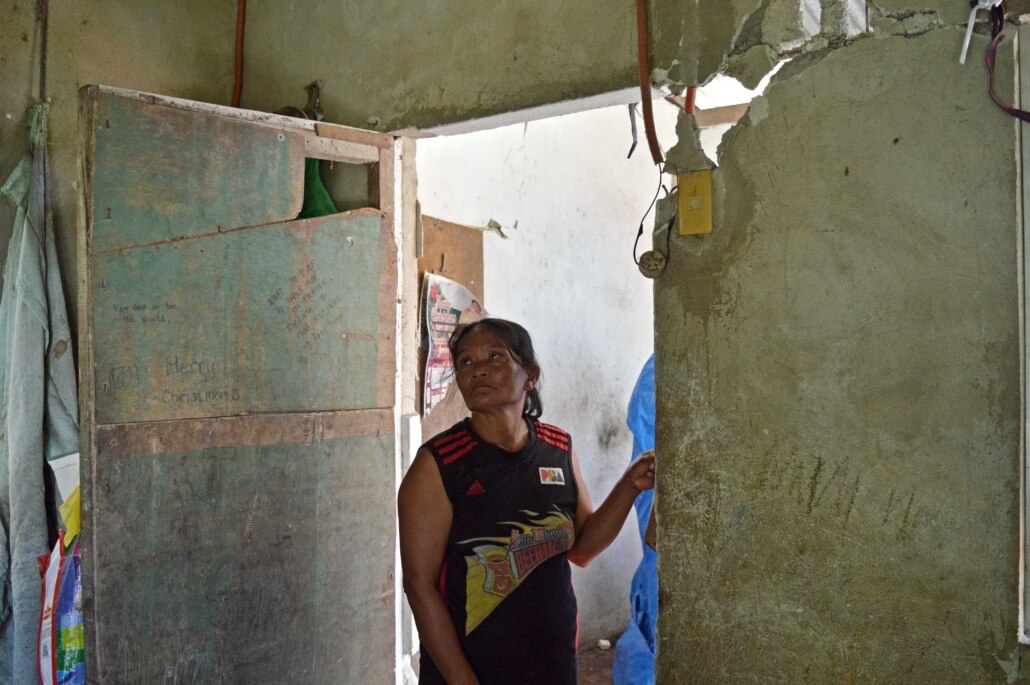
In photo: Mercedita looks at the damages in her old house. (Photo by Joyce Sandajan for Action Against Hunger)

“We were already asleep at that time while one of my children was attending online classes in another room,” she said. “We were sleeping when I suddenly woke up to the sound of hollow blocks falling everywhere. I told my children to get out of the house, and we pushed the table away because it was blocking the door.”

Outside, the danger continued. Mercedita watched in horror as a jackfruit tree swayed precariously, nearly toppling on her husband. “I saw my husband almost get hit by the tree that was about to fall. It was so close,” she said, her voice shaking at the memory.

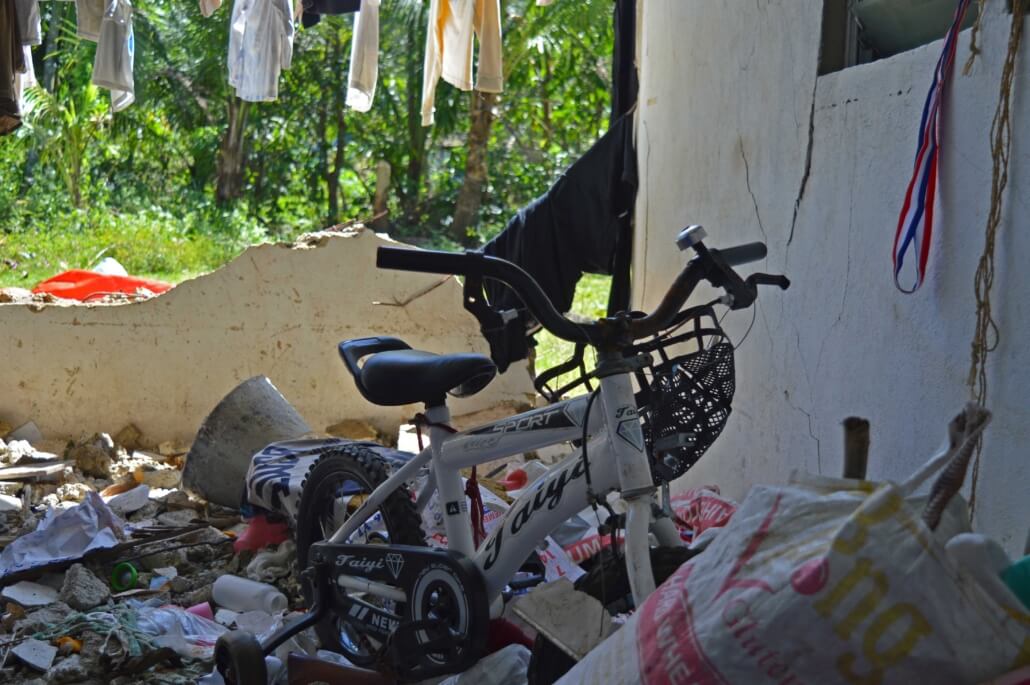
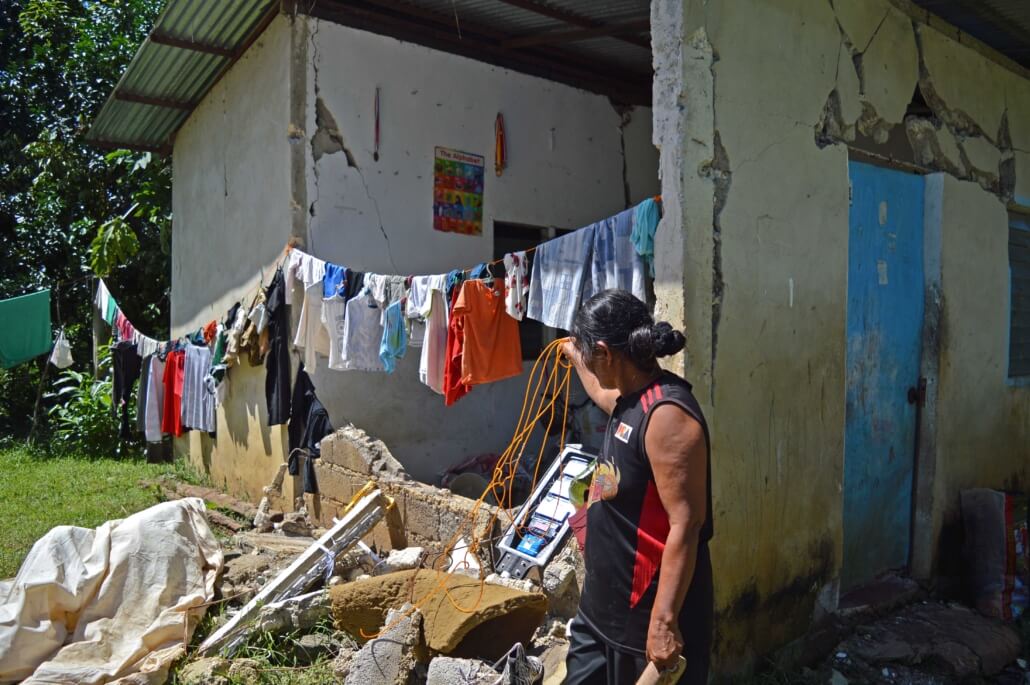
In photo: Cracks and damages on the remaining walls of Mercedita’s home. (Photo by Joyce Sandajan fro Action Against Hunger)

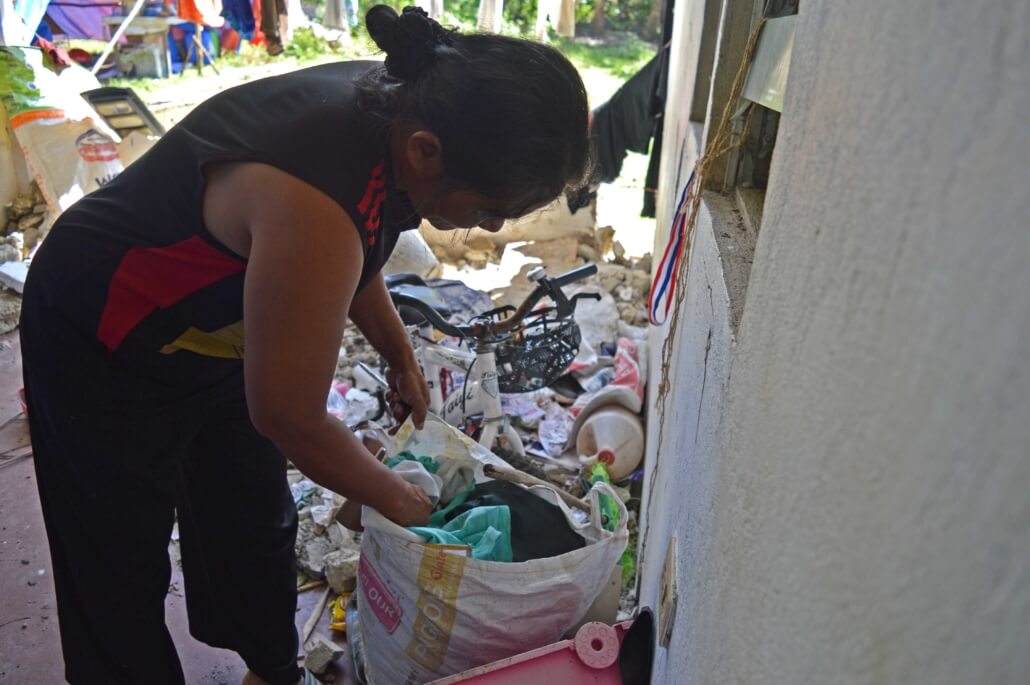
In photo; Mercedita rummages through a sack of clothes and items that they managed to save from the rubble. (Photo by Joyce Sandajan for Action Against Hunger)

The family sought refuge in an open, flat area nearby, huddling together under the night sky. Her four-year-old grandson trembled uncontrollably, scared of the aftershocks that followed. They stayed there until the early hours of the morning before moving to a sibling’s poultry house nearby. “It started raining in the morning, so we stayed inside the chicken house,” Mercedita said. For three days, this makeshift shelter was their only refuge.

In photo: Mercedita opens what used to be the main door of the house. The wall, although still standing, is visibly cracked and damaged after the earthquake. (Photo by Joyce Sandajan for Action Against Hunger)

During this time, Mercedita’s husband struggled to move around due to shock and trauma, which added to their devastation. “We made a temporary sleeping area for about three days before the tent arrived. They gave it to us because my husband couldn’t walk properly after the quake. He couldn’t sleep either,” she explained.

“Even before the earthquake, life was hard. But this disaster has made everything even more uncertain.”

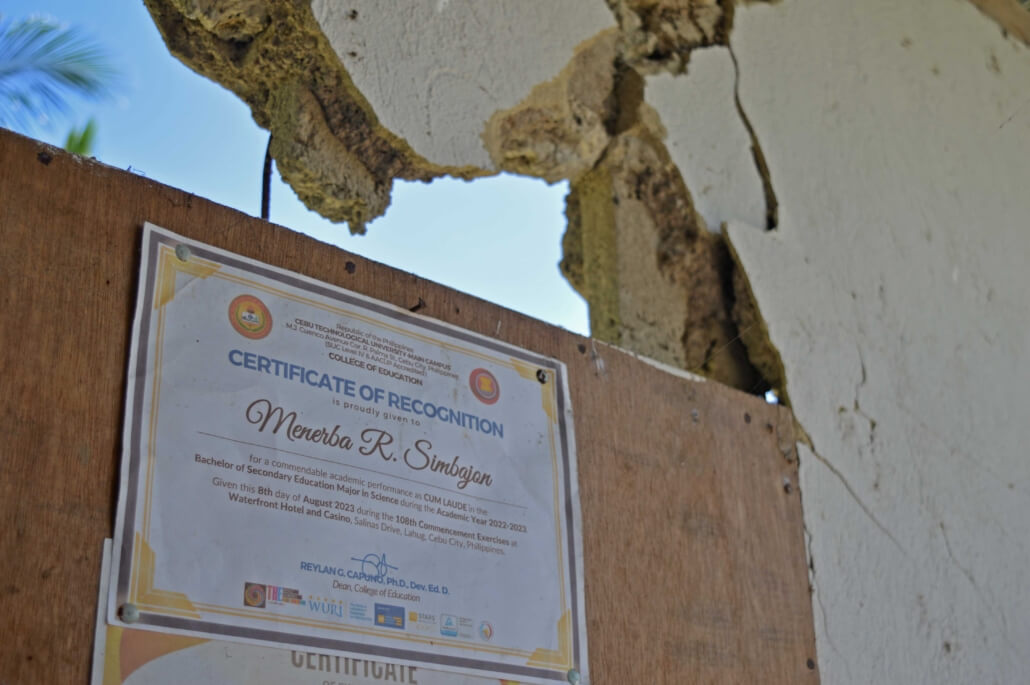
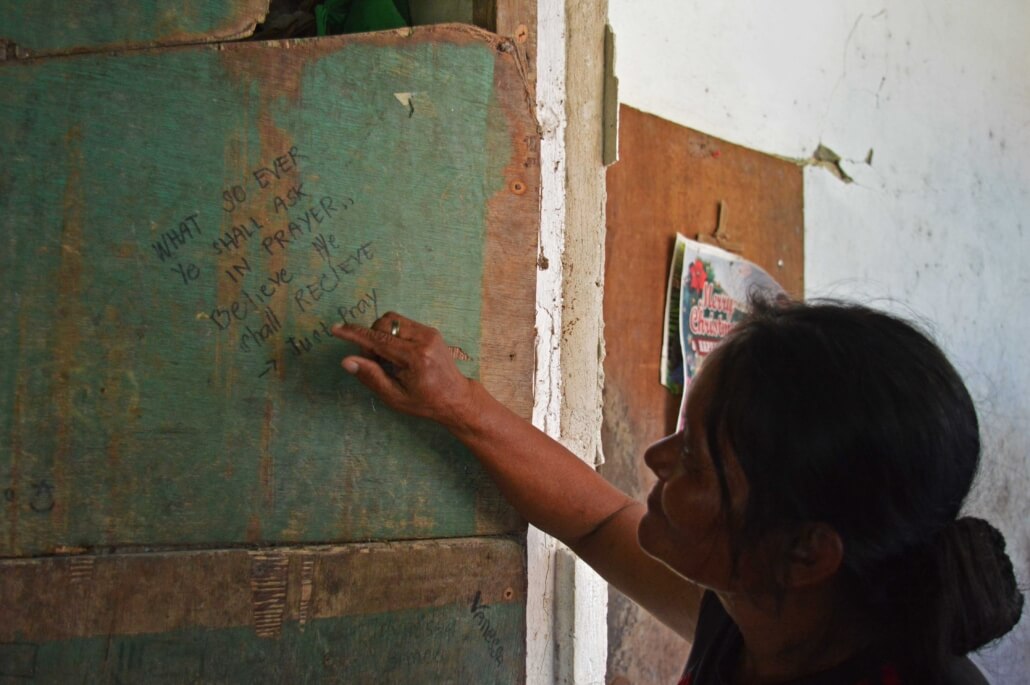
In photo: Mercedita reads a quote written by one of her children years ago: “Whatsoever ye shall ask in prayer, believe ye shall receive. Just pray.” She says these words have become a source of strength for their family during these difficult times. (Photo by Joyce Sandajan for Action Against Hunger)

Life Before the Earthquake: Struggling to Make Ends Meet

Even before the earthquake, life for Mercedita’s family was a daily balancing act. She works as a utility worker in Barangay Kantubaon, earning 1,700 pesos (around 80 euros) a month. She is the sole provider for her household of eight: her husband, four children, and two young grandchildren. Her four other older children now live separately, some with their own families, occasionally sending support that is irregular and limited.

“Sometimes we borrow money just to get by,” she said. “Even before the earthquake, life was hard. But this disaster has made everything even more uncertain.”

Their home had already suffered damage during Typhoon Yolanda (Haiyan) in 2013, which destroyed the roof. It took nearly a year to recover then. Now, the earthquake has left them with walls cracked and crumbling, and the comfort room completely destroyed. Without a functioning toilet, the family has no choice but to practice open defecation and relieve themselves wherever possible.

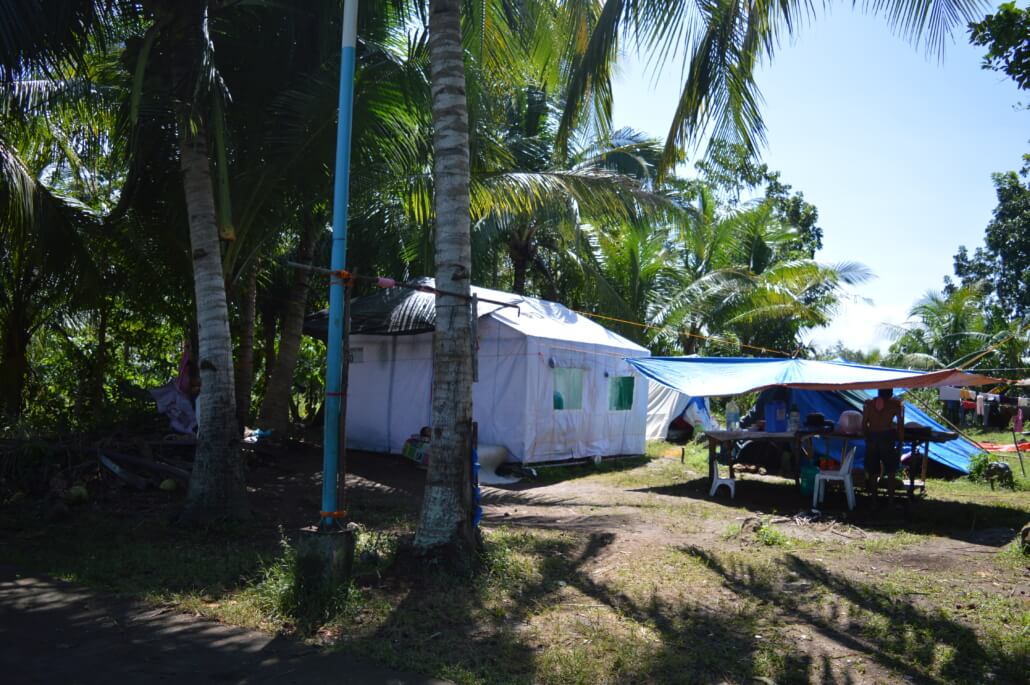
Their temporary living conditions are stark. A government-provided tent serves as their home now. The floor is covered with flattened boxes as makeshift mats. A small, temporary kitchen sits outside, made from borrowed chairs and a gas stove. There is no electricity, so nights are dark and quiet, and the family has to rely on daylight to carry out daily chores. Every corner of their compound, from the ruins of the house to the scattered relief items, tells the story of a family trying to survive in the aftermath of disaster.

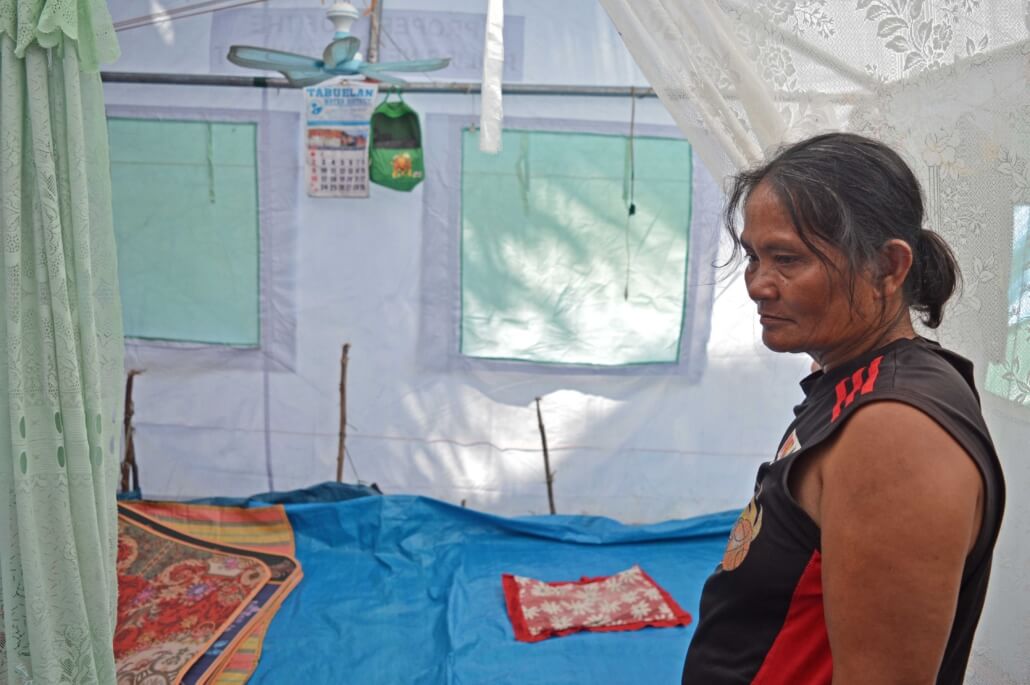
In photo: Mercedita inside their tent shelter. (Photo by Joyce Sandajan for Action Against Hunger)

Assistance received: Support from ACCESS

Relief came in the form of humanitarian assistance from the EU Civil Protection and Humanitarian Aid-funded ACCESS project. The family received food packs, including rice, munggo, sugar, and other essentials, which would last for about a month according to Mercedita. “This was a big help because if we didn’t receive anything, we would have to find some way to survive. We might even need to borrow money just to buy these things,” Mercedita said.

ACCESS also helped restore water supply in Tabuelan, damaged by the earthquake. For days, families had to fetch water from a deep well, waiting nearly an hour in long lines. With the support of the ACCESS consortium— of which Action Against Hunger is one of the implementing partners—the municipal water systems were repaired, and families received hygiene kits sufficient for more than a month.

In photo: Mercedita prepares food in their makeshift kitchen. She uses water from the the jerrycan provided by ACCESS. (Photo by Joyce Sandajan for Action Against Hunger)

The aid made daily life slightly more manageable, but the reality remained harsh. “We managed to save a few clothes scattered around, and some cooking pots we dug out from under the rubble. We have neighbors who helped us and gave us clothes because we really weren’t able to save much,” she said.

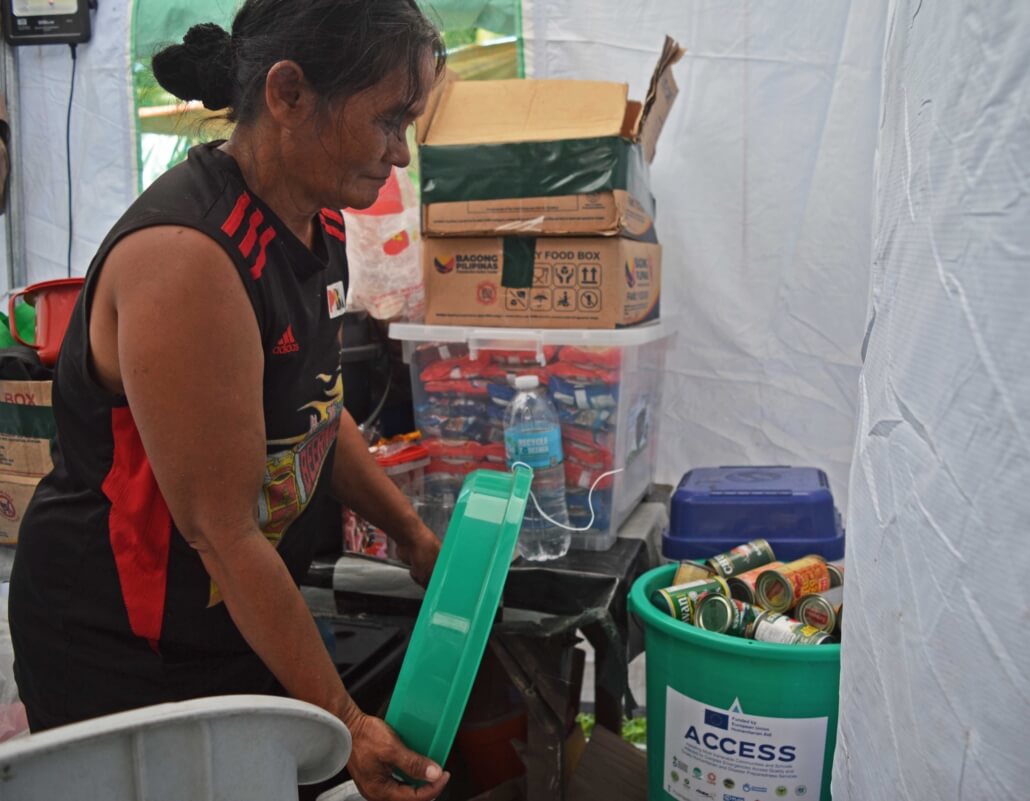
In photo: Mercedita shows all the aid her family had received since the earthquake. For now, she has organized all by category, even putting all canned goods inside the bucket from ACCESS’s hygiene kit. (Photo by Joyce Sandajan for Action Against Hunger)

Through it all, Mercedita is grateful for the support her family and neighbors received. “Thank you very much to ACCESS for helping our community, especially our neighbors who were also affected by the disaster. We are grateful that ACCESS arrived,” she added.

Looking ahead: Hopes and uncertain plans

For now, rebuilding the house remains a distant dream. “We have no plans yet to rebuild the house. We’ll stay in the tent for the meantime. If we had the money, we would really want to build a small house. But until then, we’ll stay here,” Mercedita said.

Daily life in the tent is a constant challenge. Without electricity, the family relies on daylight to cook, clean, and care for the children. Their comfort and privacy are minimal, and simple tasks like bathing or using the toilet require improvisation.

Mercedita’s story paints a vivid picture of what life has become in the aftermath of the earthquake: nights spent in tents, meals rationed carefully, and daily struggles to meet basic needs. It is a story of a family navigating sudden loss, fear, and uncertainty, one day at a time.

“Thank you very much to ACCESS for helping our community, especially our neighbors who were also affected by the disaster. We are grateful that ACCESS arrived.” 


ABOUT THE RESPONSE

The ACCESS Emergency Response provided urgent support to communities affected by the successive impacts of Tropical Cyclones Mirasol (Mitag), Nando (Ragasa), Opong (Bualoi), the enhanced Southwest Monsoon, and the magnitude 6.9 earthquake that struck offshore Cebu on 30 September 2025. Across Bicol, Northern Luzon, BARMM, and northern Cebu, the response delivers water, sanitation, and hygiene support; shelter and settlements support; multi-purpose cash assistance; and protection services.

ACCESS is an EU Civil Protection and Humanitarian Aid-funded project serving the most affected and underserved communities in the Philippines, where chronic armed conflict, natural hazards, recurrent displacement, and intensifying climate-related risks continue to threaten lives and livelihoods. It is implemented by a consortium of 14 local and international organizations: ACCORD, Action Against Hunger Philippines, CARE Philippines, Community Organizers Multiversity (COM), Humanity & Inclusion Philippines, Integrated Mindanaons Association for Natives (IMAN), Kadtabanga Foundation for Peace and Development Advocates, Mindanao Organization for Social and Economic Progress (MOSEP), Oxfam Pilipinas, People’s Disaster Risk Reduction Network (PDRRN), Plan International Pilipinas, Save the Children Philippines, United Youth for Peace and Development (UNYPAD), and United Youth of the Philippines (UnYPhil) Women.

Written by: Joyce Sandajan

When water runs out: Children’s hygiene at risk after Typhoon Tino

TALISAY CITY, CEBU — Before Typhoon Tino (Kalmaegi) hit their community on November 3, Karylle, 23, and Sharon, 35, together with more than 90 displaced families, sought refuge in the old public market of Barangay Lagtang, Talisay City, Cebu. While this pre-emptive evacuation has kept them safe, they have since been living in tents at the market-turned-evacuation center for a month now after Typhoon Tino destroyed their homes. Now, they are waiting to be relocated to a safer area where they can rebuild their homes.

Karylle and Sharon, both residents of Sitio Tiguib in Barangay Lagtang, have grown close over the years and are practically family. Karylle, a full-time stay-at-home parent, first met Sharon through her partner, who is Sharon’s nephew. Today, their bond is even stronger as both families now share a single tent in the old public market, which has been converted into an evacuation site for displaced households.

For Karylle, this is her first time experiencing displacement. Sharon, on the other hand, has already been displaced three times, especially since her house was destroyed by Typhoon Odette (Rai) back in December 2021.

Together, they manage a household of seven, including two children, all sharing one small tent as they navigate the challenges of living in the evacuation center.

In the photo: Karylle, together with her baby, shares her experience at the evacuation center at the old public market in Barangay Lagtang, Talisay City, Cebu—photo by Martina Vercoli for Action Against Hunger.

Daily life in the evacuation center is extremely challenging. Space is minimal, making it uncomfortable and difficult to move, especially at night when everyone is lying down, and the tent becomes crowded as all family members try to sleep.

During the day, it becomes very hot, while at night it gets cold. Noise from other families, children crying, people talking, and constant movement throughout the night make it almost impossible for anyone to rest.

“The baby cannot sleep well, which keeps everyone awake,” Karylle states. She adds, “For the children, the biggest challenge in the evacuation center is getting proper rest so they can wake up early for school, but the crowded conditions not only in the tent but in the evacuation center make this nearly impossible.”

Providing enough food and clean water has been a constant challenge. In the aftermath of Typhoon Tino, the government and humanitarian organizations provided support, but the scale of the community’s needs far exceeded the scope of initial assistance.

“Here in the evacuation center, I have to wash my baby with wipes when we have no water. I have no choice.” – Karylle

Access to water in the old public market is limited. There is only one faucet for hundreds of people, and the water is not always running. Some days, they go without water entirely. Even taking a shower has become a daily struggle.

“Here in the evacuation center, I have to wash my baby with wipes when we have no water. I have no choice,” explains Karylle, holding her baby.

Regarding water quality, they add, “We do not know whether the water is clean or not. We drink it daily. We have no choice.

Families often bathe fully clothed in front of others due to the lack of privacy, which makes both Karylle and Sharon feel embarrassed and uncomfortable. “I am very shy, and I do not like people looking at me while I take a shower. But I have no choice,” says Karylle.

With only two bathrooms for hundreds of people, long waits are common, especially during the night.

“We do not know whether the water is clean or not. We drink it daily. We have no choice.”

After Typhoon Tino, the children missed almost three weeks of classes, and they continue to skip school because they rarely have clean clothes to wear. “Washing clothes is almost impossible. The pile of unwashed clothing grows daily, including the children’s school uniforms,” Karylle says, pointing to a pile of clothes in the corner of their tent.


She explains that they often wash clothes at the only faucet in the evacuation center at night to avoid long queues in the morning. However, the uniforms rarely dry by morning, leaving the children with nothing to wear to school.

“When we have our period, often we do not wash ourselves at all. It is impossible when you have no privacy, and you must take a shower with clothes on,”

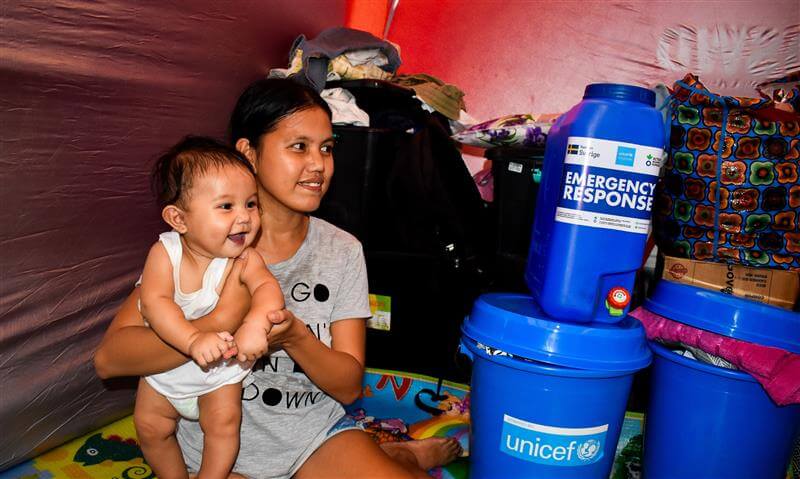
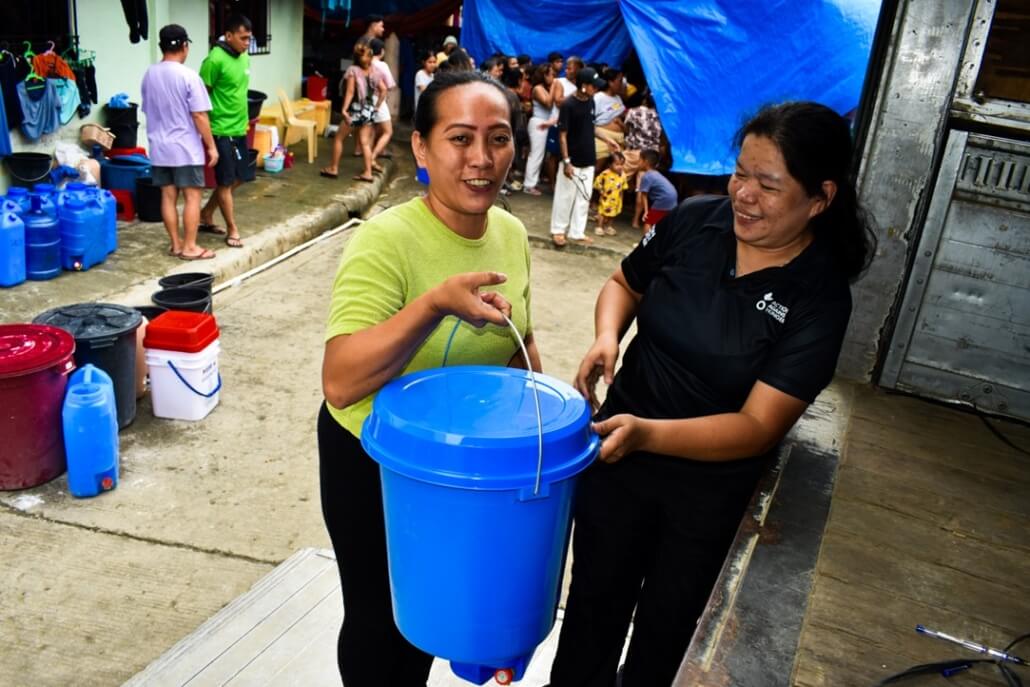
In the photo: Sharon receives water and hygiene kits from UNICEF and Action Against Hunger, with support from the Swedish International Development Cooperation Agency, at the old public market in Barangay Lagtang, Talisay City, Cebu—photo by Martina Vercoli for Action Against Hunger.

Menstruation poses an even bigger challenge for women in the evacuation center. Both explain that maintaining proper hygiene becomes difficult because there is little privacy, leaving them with no safe space to wash or clean themselves. They rely on disposable pads, but without a private area, they often feel uncomfortable. At times, Karylle and Sharon also feel embarrassed because some people make remarks when they notice women are on their period, adding emotional strain to an already stressful situation.

“When we have our period, often we do not wash ourselves at all. It is impossible when you have no privacy, and you must take a shower with clothes on,” states Karylle.

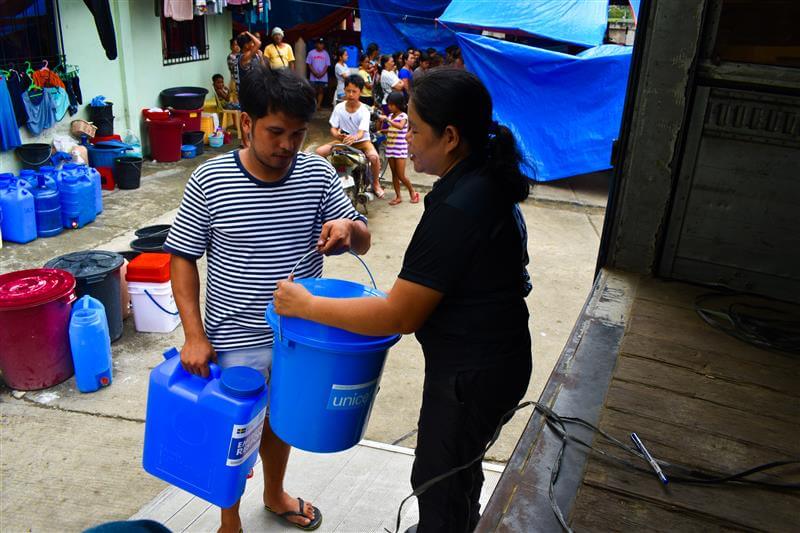
Basic hygiene supplies and access to clean water make an enormous difference for families who have lost their homes and belongings. In moments of crisis, even the simplest items become essential for staying healthy and maintaining dignity. The water and hygiene kits provided by UNICEF and Action Against Hunger, with support from the Swedish International Development Cooperation Agency (SIDA), have been crucial for Karylle’s household and for many other families now living in the old public market after Typhoon Tino.

In the photo: Karylle’s partner receives water and hygiene kits from UNICEF and Action Against Hunger, with support from the Swedish International Development Cooperation Agency, at the old public market in Barangay Lagtang, Talisay City, Cebu—photo by Martina Vercoli for Action Against Hunger.

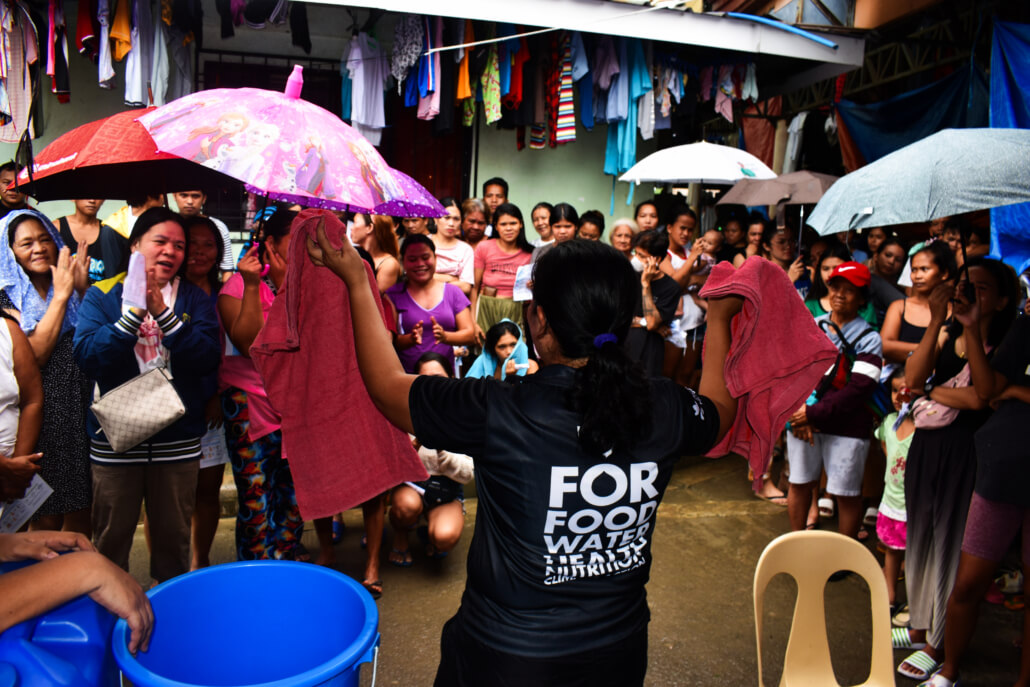
“I cannot mention just one important item in the kits. All the items are important, including the jerrycan,” Karylle shares. She adds that the towels are especially valuable for caring for their baby, since these items are expensive and difficult to afford in the evacuation center. The kit also includes chlorine tablets, which they use to purify water and make it safe for drinking and daily use—another lifeline for families trying to stay healthy in these conditions.

This support aims to help families like Karylle’s maintain better hygiene for themselves and their children, while allowing them to redirect the money they would have spent on hygiene items toward buying food.

In the photo: Action Against Hunger staff show the hygiene kits’ towels to families about to receive them at the old public market in Barangay Lagtang, Talisay City, Cebu—photo by Martina Vercoli for Action Against Hunger.

To earn a bit of income, Sharon does laundry and washes clothes for others at the evacuation center whenever water is available. Karylle focuses on caring for their baby, while her partner works in construction, although jobs have become irregular and scarce because few people can afford to hire workers at this time. With limited income opportunities, supporting the family has become increasingly complex.

When asked about their critical needs, both agree that housing materials are essential for building proper shelters. Their hope for the future is simple: “My hope for the future is to have my own house.”


Written by Martina Vercoli
Edited by Joyce Sandajan

Surviving the Quake: The Sinangote Family’s Story of Survival

SAN REMIGIO, CEBU  ─  On the night of September 30, 2025, Henry and Tessie Sinangote were at their small sari-sari or sundry store by the beach in Purok Sineguelas of Barangay Tambongon when the earth began to shake violently. The magnitude 6.9 earthquake that struck Bogo City changed their lives in a matter of minutes.

“When the earthquake happened, it was around 9:55 p.m., and it lasted for maybe a couple of minutes, but it felt longer. When it stopped, Henry went straight home,” Tessie recalls. Only three of their four children were home as one was working in Cebu City.

“We were calling out to the other children, but they weren’t answering. We felt hopeless. We thought they were gone.” – Tessie Sinangote

Henry and Tessie shared that at the time of the incident, the eldest and the youngest were in the bedroom, while the other was working online in a separate room. When the earthquake hit, the walls of the bedroom collapsed. “My other son, who was awake and working at the time, managed to get out, but the other two children who were sleeping were left buried by the debris,” Tessie says, her voice shaking. “When Henry and I got to the house, we were calling out to the other children, but they weren’t answering. We felt hopeless. We thought they were gone.”

For almost an hour, the family and relatives worked to lift the debris. “Luckily, our nieces and nephews were there to help because we couldn’t move the walls ourselves. I told them to get wood or anything to help lift the heavy cement. We all worked together, and ultimately, we managed to save my two children,” Henry recalls.

A parent’s nightmare

The youngest, thankfully, did not sustain any injuries. However, the eldest child had minor wounds and what they thought was a potential head injury at the time after he had shielded his sibling when the house was collapsing. Their neighbors all helped and brought them to the hospital, but by the time they arrived, patients and health workers had already evacuated outside due to the aftershocks.

Tessie stayed with her eldest at the hospital, but the ordeal did not end there. “We were outside and it started raining. People kept arriving, many were injured, and we even saw the body bags,” she shared. She said she cannot forget the fear she felt when she thought her child could have been among the casualties. “When our children weren’t responding to our screams, we thought they were no longer alive. They could easily have been one of the cases brought in that night. The trauma for a parent seeing that is unimaginable.”

In photo: Sinangote family’s home, now a pile of rubble and debris, after the 6.9 magnitude earthquake on September 30, 2025. Photo courtesy of Tessie Sinangote.

Fleeing to safety: Evacuation and temporary shelter

Meanwhile, Henry and the other two children went to the San Remigio evacuation site, which is now referred to as “tent city” due to the evacuation tents. Because of tsunami alerts, evacuees had to move to higher ground. This meant they had to stay the night in makeshift tents made from tarpaulins. “We barely slept that night. It was wet because of the rain, uncomfortable, and we were constantly worried about aftershocks and a possible tsunami,” Henry remembers.

Afterward, they were moved to one of the evacuation tents and later to a smart house provided by the government. “Until now, we have been staying in the smart house. On weekdays, it’s just five of us; on weekends, when our third child comes home, all six of us share the small space along with our one dog,” Tessie says.

Henry still visits their damaged home occasionally to care for the dogs left behind. “In our purok, almost everything was destroyed—not just our home. Many houses were unsafe to return to, and sinkholes had formed,” Tessie recalls. The landscape of the sitio has been permanently altered, with numerous homes beyond repair and several hazardous sinkholes scattered throughout the area.

“I thought of the birds—they don’t worry about where they’ll get food, but they survive until now. That’s how I think of our situation. I try not to worry too much about our struggles and just take it day by day.”

Life Before Disaster: Livelihood and Daily Life

Before the earthquake, the Sinangotes ran a small sari-sari store near the beach, depending on tourists and beachgoers for income. “Our store would earn well whenever there were a lot of tourists. But we can’t go back because the beach is not allowed to operate due to sinkholes,” Tessie explains.

Their daily income, averaging around 300 pesos (approximately 4.80 euros), was previously enough to cover food and household expenses. Now, with no steady source of livelihood, the family relies on financial support from friends and relatives and sometimes even has to borrow money to get by.

Despite the loss, Tessie reflects on their past with warmth. “Our home lasted 25 years, and all our memories are there. But the earthquake taught us that concrete isn’t always safe. We’ll have to think differently if we rebuild.”

In photo: Tessie stand outside the temporary smart home provided by the government. The smart home is where they will live for at most a year since their home was totally damaged by the magnitude 6.9 earthquake last September 30, 2025. (Photo by Joyce Sandajan for Action Against Hunger)

Essential support: Humanitarian aid from ACCESS

In the aftermath of the quake, the Sinangote family and many others affected received vital support through the ACCESS program, funded by the EU Civil Protection and Humanitarian Aid Operations (ECHO). With homes destroyed and water systems heavily damaged, many families were left without even the most basic necessities.

Within days, Action Against Hunger, as one of the implementing partners of ACCESS, together with the Mindanao Organization for Social and Economic Progress (MOSEP), provided WASH kits to affected households and installed a temporary water tank at the evacuation site. This tank was supplied regularly through water trucking to ensure families could access safe water. The ACCESS team also worked with the Pangi Water Service Cooperative (Pawasco) and local authorities to deliver water trucking services to hard-hit communities whose pipelines and water sources had been disrupted.

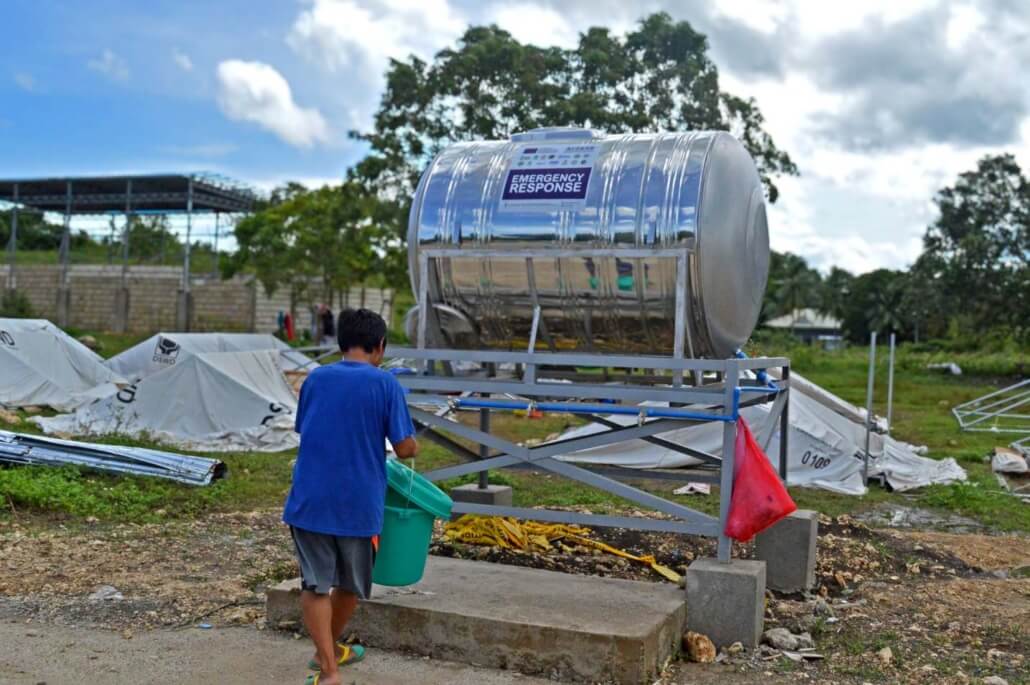
In photo: Henry makes his way to the water tank built by Action Against Hunger as part of the ACCESS emergency response, with funding from the EU Civil Protection and Humanitarian Aid. (Photo by Joyce Sandajan for Action Against Hunger)

Tessie recalls how these early interventions helped them get through the most difficult days. “We received water and hygiene kits from ACCESS, which were very helpful,” she says. “The water tank at the evacuation site was very close to us, so that we could use it easily. The hygiene kits were a huge help because we had nothing at the time. We didn’t even have a bucket, so those items were really a big help.”

Although relief distributions are less frequent now than they were during the first days after the disaster, the family still receives occasional government support, such as food and basic supplies. “For now, we still have relief goods. They help us survive while we figure out the next steps,” Tessie adds.

“We received water and hygiene kits from ACCESS, which were very helpful…the water tank at the evacuation site was very close to us, so that we could use it easily. The hygiene kits were a huge help because we had nothing at the time. We didn’t even have a bucket, so those items were really a big help.”

For camp coordinator Pamila of the evacuation site in San Remigio, the situation of the Sinangotes reflects the experience of many displaced families. She explains that continued humanitarian assistance remains essential. “Many internally displaced persons have similar stories. Organizations like Action Against Hunger and ACCESS partners are vital.”

Facing the Unknown: Life After the Quake

Life after the quake is filled with uncertainty. The smart house is temporary, and relocation plans remain unclear. “Right now, it hasn’t sunk in whether we can stand again after one year. If this is a no-build zone, we’ll have to find another place to build a house,” Tessie says.

Their livelihood cannot restart until the beaches are open and safe again. Relatives have offered financial help, which the family is saving to reopen their sari-sari store.

Despite everything, hope persists. Tessie draws strength from positivity and faith. “I thought of the birds—they don’t worry about where they’ll get food, but they survive until now. That’s how I think of our situation. I try not to worry too much about our struggles and just take it day by day.” She prays for clarity and strength to rebuild. “I hope we can have work. It’s not easy to go back to zero. No house, no belongings. But thankfully, many gave us help, things we could use.”

Henry and Tessie continue to navigate daily life under difficult circumstances. Their story is a stark reminder of the long road to recovery that families face after disasters, where survival often means managing what little is left and making difficult decisions about the future.

In photo: Henry and Tessie stand outside the temporary smart home provided by the government. The smart home is where they will live for at most a year since their home was totally damaged by the magnitude 6.9 earthquake last September 30, 2025. (Photo by Joyce Sandajan for Action Against Hunger)


ABOUT THE RESPONSE

The ACCESS Emergency Response provided urgent support to communities affected by the successive impacts of Tropical Cyclones Mirasol (Mitag), Nando (Ragasa), Opong (Bualoi), the enhanced Southwest Monsoon, and the magnitude 6.9 earthquake that struck offshore Cebu on 30 September 2025. Across Bicol, Northern Luzon, BARMM, and northern Cebu, the response delivers water, sanitation, and hygiene support; shelter and settlements support; multi-purpose cash assistance; and protection services.

ACCESS is a European Cilvil Protection and Humanitarian Aid-funded project serving the most affected and underserved communities in the Philippines, where chronic armed conflict, natural hazards, recurrent displacement, and intensifying climate-related risks continue to threaten lives and livelihoods. It is implemented by a consortium of 14 local and international organizations: ACCORD, Action Against Hunger Philippines, CARE Philippines, Community Organizers Multiversity (COM), Humanity & Inclusion Philippines, Integrated Mindanaons Association for Natives (IMAN), Kadtabanga Foundation for Peace and Development Advocates, Mindanao Organization for Social and Economic Progress (MOSEP), Oxfam Pilipinas, People’s Disaster Risk Reduction Network (PDRRN), Plan International Pilipinas, Save the Children Philippines, United Youth for Peace and Development (UNYPAD), and United Youth of the Philippines – Women (UnYPhil-Women).


Written by: Joyce Sandajan

Returning to the life they knew: Joanna’s story after Typhoon Opong (Bualoi)

PALANAS, MASBATE ─ Joanna Pilapil, 40 years old, grew up in the same barangay where she and her husband, Richie, are now raising their three children. In Barangay Miabas, their humble home kept them safe for years. Now, Joanna and her family find themselves struggling to rebuild the life they had before the devastation left by Typhoon Opong (International name: Bualoi).

In photo: Joanna Pilapil shows Action Against Hunger staff the way to her house in Barangay Miabas, Palanas, Masbate. Photo by Martina Vercoli for Action Against Hunger

When Typhoon Opong hit the municipality of Palanas, in the province of Masbate, in the early hours of September 26, 2025, Joanna’s family had already evacuated to the local high school, which became their barangay’s designated evacuation center. When they returned, a bitter surprise awaited them; their house was severely damaged.

In photo: Joanna talks to Action Against Hunger team member inside her home in Barangay Miabas. Photo by Martina Vercoli for Action Against Hunger. 

“When I saw my house in that state, I just couldn’t believe it. Many things were wet; others were broken,” Joanna recalls. “I couldn’t stop crying.”

“We can’t sleep when it rains; the children can’t rest properly,” she says. “We have to keep removing the water from the tarp.”

The storm left large parts of the roof torn off and weakened the wooden foundation. To keep the rain out, Richie and Joanna covered one section of the roof with tarpaulin. Their youngest child’s school supplies were irreparably ruined and had to be thrown away, which affected her schoolwork for several days.

Before Typhoon Opong, the family could sleep peacefully in their home. But after the storm, everything changed. Even light rain now makes them extremely anxious. “We just sit all together under a thick tarpaulin that covers the sleeping area of our house,” Joanna explains. The rest of the roof leaks badly, so the family gathers under the only dry spot. The tarpaulin catches the rainwater, and when the water starts pooling, they would try to drain it by poking the tarp with a stick so it does not collapse under its weight. “We can’t sleep when it rains; the children can’t rest properly,” she says. “We have to keep removing the water from the tarp.”

In photo: The tarpaulin covering the sleeping area of Joanna Pilapil’s house in Barangay Miabas, Palanas, Masbate. The family put it in place after the typhoon to protect themselves from rainwater leaking into the house. Photo by Martina Vercoli for Action Against Hunger.

Her husband, Richie, works in construction, but his job is unstable. He only earns when there are construction projects in the community, usually around 400 pesos a day, and considers himself lucky if he can work four days a week. Sometimes, he takes jobs in Manila, which is far from home. Joanna also works whenever she can, doing laundry and cleaning houses. These small jobs bring in 1,000 to 2,000 pesos a month when there is work available in the community. Their eldest child, now 19, could not go to college due to financial constraints. After finishing high school, he began working in a bakery to help with the family’s expenses.

“Everyone was affected by the storm,” Joanna explains. “The farmers who used to hire him, their crops are gone.”

After the typhoon, their main source of income was severely affected. Richie found it difficult to get construction jobs. “Everyone was affected by the storm,” Joanna explains. “The farmers who used to hire him, their crops are gone.”

The family’s financial situation worsened when their youngest child’s epilepsy required continuous medical care. Her medicines cost around 5,000 pesos a month, an amount the family can no longer afford. “I can’t even work that much anymore because I have to take proper care of her,” Joanna says, looking sadly through the empty wrappers of her daughter’s medicines. Then, she adds, “this month, I haven’t been able to bring her to her monthly check-up with the doctor. We have no money left. Now, food is our main priority.”

In photo: Joanna Pilapil, a resident of Barangay Miabas, Palanas, Masbate, looks through the empty wrappers of her daughter’s medicines, which she can no longer afford. Photo by Martina Vercoli for Action Against Hunger.

Access to clean water has also become a daily concern. Before the typhoon, the family bought a blue jerry can of mineral water for 35 pesos, enough for a week. Now, they cannot even afford to sustain it. “We get water from a well,” Joanna says, “not knowing whether it is safe or not. It is the only way we have to drink water.”

According to one of the residents, people in the community get their water from a well. After the typhoon, the water turned brown for a week, and there were reported cases of diarrhea and stomach aches. Even now, although the water appears clean, its safety remains in doubt. Residents boil it to make it drinkable, but cases of stomach aches and diarrhea are still being reported.

“Me and my husband prioritize our children’s nutrition,” Joanna says. “We give them food, and then he and I would share what is left.”

Food prices in the market have risen considerably. Despite a price freeze on commodities, nearby stores were selling goods at higher prices due to limited supplies. The family now buys one kilogram of the cheapest fish they can find for 200 pesos and makes it last for two weeks. Sometimes, they must buy on credit from the local store. They currently eat only twice a day instead of three times. Joanna then specifies: “Me and my husband prioritize our children’s nutrition,” Joanna says. “We give them food, and then he and I would share what is left.”

She worries especially about her youngest child, whose condition requires proper nutrition to prevent seizures.

Joanna shares the many responsibilities she manages at home while also working to support her family alongside her husband, and since the typhoon, even more has fallen on her plate. “Sometimes it is very hard for me,” Joanna admits. “I feel like I have a lot of responsibilities: managing household finances, taking care of the children and the house, working outside, and now also looking after some animals. Since the typhoon, it feels like I have even more to handle.”

In photo: Joanna Pilapil stands in front of her damaged house in Barangay Miabas, Palanas, Masbate. Photo by Martina Vercoli for Action Against Hunger.

When Joanna talks about the food kit they received from the European Civil Protection and Humanitarian Aid Operations (ECHO), she bursts into tears. “It is such a big help,” she says. “It is the first time we received this much. The food received is going to last at least two months,” Joanna states. “I will try to make it last as long as possible.”

In photo: Joanna Pilapil, a resident of Barangay Miabas, Baleno, Masbate with the food kit she received from ECHO. Photo by Martina Vercoli for Action Against Hunger.

The assistance will allow her family to redirect the money they would have spent on food toward other priorities, such as their child’s medicines or repairs to their damaged house.

“It is such a big help,” she says. “It is the first time we received this much. The food received is going to last at least two months,” Joanna states. “I will try to make it last as long as possible.”

Even with this help, fear remains. “I am so scared another typhoon will hit our community,” Joanna admits. “Right now, we don’t have livelihoods, we do not have jobs, and we do not have money.”

Still, the aid they received gave Joanna and her family a much-needed sense of relief in a time of powerlessness. “We still haven’t returned to how things were before the typhoon,” she says quietly. “It is very far. Everything was gone when the disaster struck.” Yet, she adds with hope, “the help we received from ECHO will ease our worries. It is the beginning of our recovery. Our children will be able to have proper nutrition again.”


ACCESS (Assisting the Most Vulnerable Communities and Schools Affected by Complex Emergencies in Accessing Quality and Timely Humanitarian and Disaster Preparedness Services) is funded by the EU Humanitarian Aid. ​

This ACCESS Emergency Response provides multi-sectoral support to the most vulnerable indigenous peoples in hard-to-reach communities in Cagayan and Masbate that are affected by the impacts of habagat or southwest monsoon, and tropical cyclones Mirasol, Nando, and Opong; and in Northern Cebu that are affected by the impacts of the magnitude 6.9 Cebu Earthquake. This particular response is jointly implemented by ACCORD, CARE Philippines, Action Against Hunger, Community Organizers Multiversity, Humanity & Inclusion Philippines, Mindanao Organization for Social and Economic Progress (MOSEP), Oxfam Pilipinas, People’s Disaster Risk Reduction Network, Inc., Save the Children Philippines, and the United Youth of the Philippines-Women.


Written by: Martina Vercoli
Edited by: Joyce Sandajan

Philippines in state of national calamity after Typhoon Tino (Kalmaegi) leaves widespread devastation

Barely recovering from a series of calamities in the last month, another disaster, Typhoon Tino (international name: Kalmaegi), caused extensive destruction across several regions in the Philippines. After intensifying into a typhoon on 3 November 2025, Tino moved across the Visayas and Caraga regions before exiting the Philippine Area of Responsibility, leaving widespread displacement and severe damage behind. Typhoon Tino marks as the 20th storm to hit the Philippines this year alone.
More than 2.6 million people, or around 746,000 families, have been affected nationwide, based on government reports as of 7 November 2025. Of these, more than 1.4 million people are reportedly displaced and currently staying in evacuation centers or with relatives. At least 188 people have died, 135 remain missing, and more than 137 have been injured. Authorities caution that these figures may rise as assessments continue, and as access to remote areas improves.

The regions of Western Visayas (Region 6), Central Visayas (Region 7), and Caraga (Region 13) sustained the most severe impacts.

  • In Western Visayas, the provinces of Aklan, Capiz, and Iloilo reported the largest number of displaced families, with Capiz alone accounting for 55,310 families (163,799 individuals). Evacuations were conducted across several municipalities and Roxas City, where significant housing damage is being verified by local authorities.
  • In Central Visayas, Cebu Province, now under a State of Calamity, has recorded 87,504 affected families (271,336 individuals) across 38 municipalities and cities. The province also reported 92 deaths, including 36 in Liloan. Widespread power and water supply interruptions persist, while food and sanitation shortages are worsening conditions in evacuation centers. In some communities, residents have been forced to collect water from natural sources, and the destruction of toilets has increased public health risks.

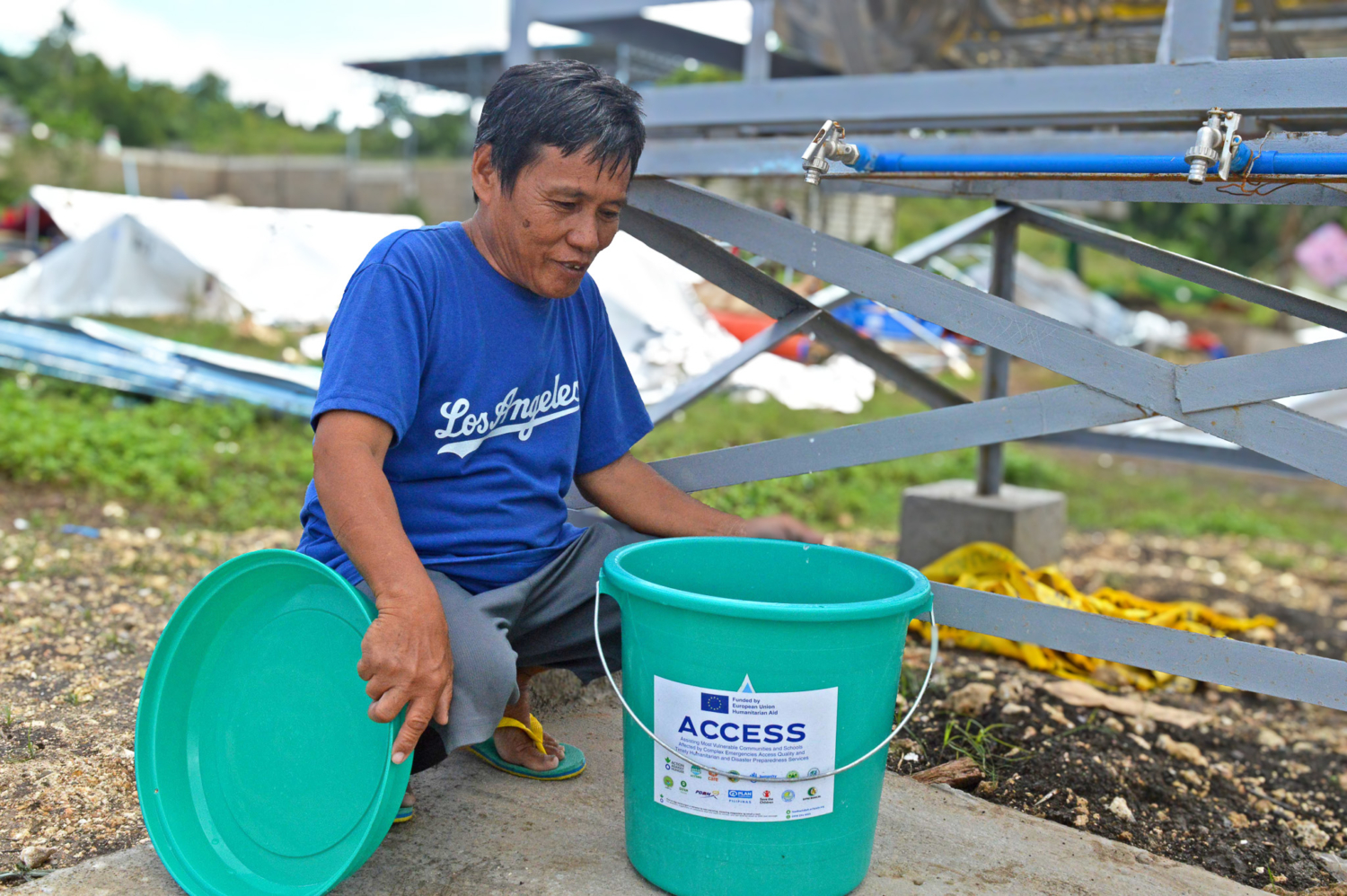
In photos: Emergency Response team assess damages in Barangay Liberty Hibusong Island, Loreto, Province of Dinagat Islands. (Photos by Jaz Dajuya for Action Against Hunger)

  • In Caraga, the Dinagat Islands have also declared a State of Calamity after 11,019 families (32,431 individuals) were displaced, representing about 36% of the province’s population. The typhoon severely damaged infrastructure and disrupted essential utilities, especially in the municipalities of Loreto and Tubajon. Two fatalities were recorded in Loreto due to storm surges. Preliminary reports indicate 4,497 houses were totally destroyed and 2,887 partially damaged, based on initial assessments. Cases of leptospirosis and diarrheal illness have also been reported, particularly in flood-affected areas.

Cebu is still reeling from the magnitude 6.9 earthquake that struck on September 30 and continues to experience aftershocks and tremors in recent weeks. Now, the province faces yet another challenge as one of the areas most affected by Typhoon Tino. Many families whose homes were damaged by the earthquake remain in temporary shelters and tents. The typhoon has further worsened their situation, bringing heavy rains and strong winds that left most of the province without electricity and telecommunications signal for days, with some areas still awaiting restoration. These conditions have heightened the risks and deepened the vulnerability of affected families as they struggle to recover from successive disasters.

In Talisay City, Cebu, Action Against Hunger teams are on the ground assessing the impact of Typhoon Tino. Initial findings indicate that six barangays were among the most affected, with damage to homes, water systems, and health centers. In coordination with the local government, the team is conducting rapid assessments and supporting efforts to assist affected families and restore essential services. (Photo by Vicente Delector Jr. for Action Against Hunger).

“As I move through the affected communities, I’ve seen firsthand how devastating the compounded impacts of the earthquake and Typhoon Tino are—days without water or electricity, homes and livelihoods lost, and families trying to rebuild while already wondering how to prepare for the next disaster. These moments underscore how critical it is to invest in long-term resilience so communities can withstand the escalating effects of a changing climate,” shares Cristina Izquierda Ribas, Nutrition Coordinator, Emergency Team and OIC-Head of Cebu field office for Action Against Hunger Philippines.
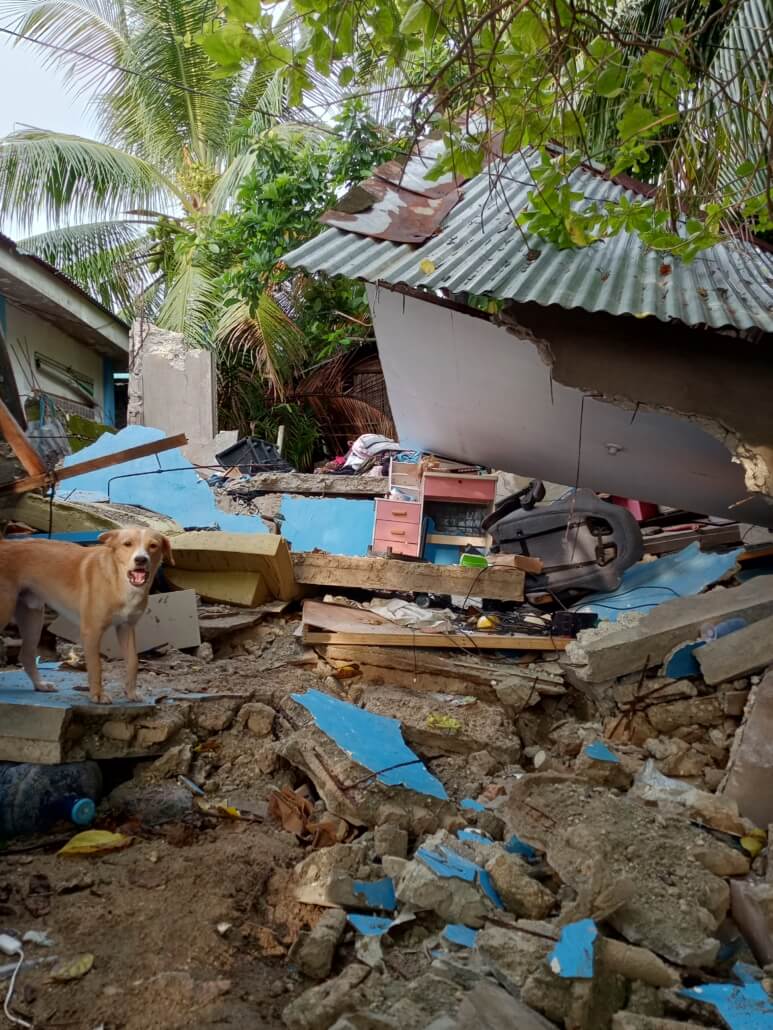
 

In photo: Damages in Talisay Cebu. (Photo by Vicente Delector Jr. for Action Against Hunger).

The humanitarian situation remains critical as hundreds of thousands of families remain displaced. Assessments of damage to homes, roads, bridges, schools, and health facilities are still ongoing, but initial reports indicate moderate to heavy destruction across affected provinces.
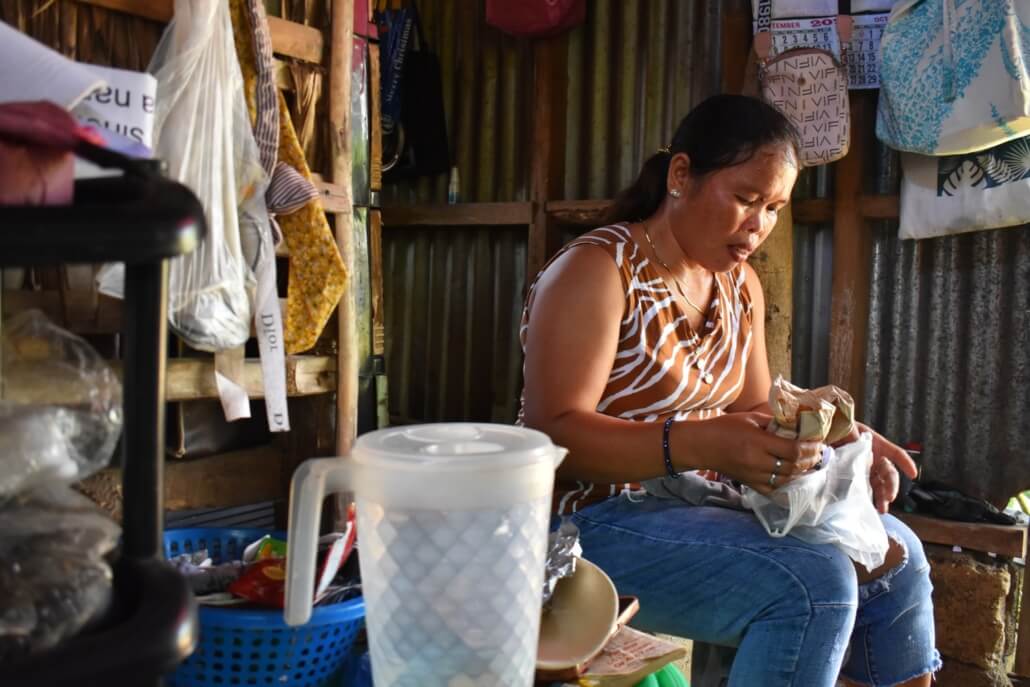
Key immediate needs include:

  • Food assistance and early livelihood support to meet basic needs and prevent negative coping mechanisms.
  • Safe drinking water, hygiene kits, and temporary sanitation facilities to address contamination of water sources and prevent disease outbreaks.
  • Emergency shelter materials such as tarpaulins, tents, blankets, and cooking sets to support families who lost their homes.

Moreover, protection and privacy concerns are also increasing in overcrowded evacuation centers, with women, children, the elderly, and persons with disabilities particularly at risk due to limited space and unsafe conditions.

In response to the widespread devastation, the Philippine Government has declared a State of National Calamity and released 760 million pesos in assistance to affected regions. National agencies, local governments, and humanitarian organizations have mobilized to deliver life-saving aid, restore basic services, and coordinate damage assessments.

While responding to overlapping emergencies such as the earthquakes in Cebu and Davao and the impacts of Typhoons Opong and Tino, the Philippines is now bracing for another potential disaster as Super Typhoon Uwan (international name: Fung-wong) is expected to affect parts of Luzon and Visayas on Monday, November 11.

Action Against Hunger Philippines continues to monitor the evolving situation and coordinate closely with partners, including the Office of Civil Defense (OCD), the Department of Health (DOH), the WASH Cluster, and the EU Civil Protection and Humanitarian Aid-funded ACCESS Consortium. Since November 5, our emergency response teams have been deployed to conduct Rapid Damage and Needs Assessments in Cebu, Surigao del Norte, and the Dinagat Islands to guide the prioritization of emergency relief and early recovery interventions.

Our team continues to monitor the trajectory of Typhoon Uwan alongside ongoing emergency response operations to ensure timely and coordinated action for affected communities.

We are actively engaging with our resource partners to secure additional funding for our Typhoon Tino response, while jumpstarting small-scale initial interventions by pivoting available resources. Our planned response will focus on Cebu and Dinagat Islands, while we continue conducting assessments in coordination with partners and local government units.

Water, Hygiene, and Hope: The Morales Family’s Recovery After Typhoon Opong (Bualoi)

PALANAS, MASBATE — After Typhoon Opong (international name: Bualoi) devastated their home in the municipality of Palanas, Masbate, on the night of September 26, Diolito and Lorna Morales faced unimaginable challenges. With only a small kitchen left as their shelter and the prices of basic goods rising, ensuring that their five-year-old grandchild and family had enough food, water, and hygiene essentials became a daily struggle.

When Typhoon Opong struck their community, Diolito (59) and Lorna Morales (64) thought they had already endured the worst, but this time was different. “The wind was so strong it felt like it was tearing our house apart in the middle of the night,” they recalled. Coconuts and branches fell all around them until a tree finally crashed onto their roof. As water quickly rose to their knees, they fled to their son’s house nearby to seek shelter.

For three long hours, the water kept rising. “All I could think was, if the typhoon doesn’t stop, there won’t be any houses left,” Diolito recalls their experience. When morning came, they sadly realized that their home was destroyed. They stood in front of what was left and cried. “I was sure I was not going to be able to recover,” he said. “My fishing net, I can fix that. But my house? How can I fix it without any income?

In the first days after the typhoon, the family felt lost and powerless. They didn’t know what to do first—whether to repair their house, go fishing, or try to dry what was left of their belongings. Life since then has been a daily struggle, especially for their five-year-old grandchild, who lives with them in their household of seven and had never experienced anything like this before.

In photo: Diolito and Lorna Morales’ kitchen, where they have now been sleeping since their house was destroyed by Typhoon Opong. Photo by Martina Vercoli for Action Against Hunger.

Diolito and Lorna now sleep in their small kitchen, the only part of the main house that survived the typhoon, and which was once a separate structure. The rest of the family stays in their son’s house nearby, as there is not enough space in the kitchen to accommodate everyone.

The family’s income has been heavily affected as well. Diolito now goes out to the sea twice a day to fish, hoping to bring home enough to feed everyone. Before the typhoon, he earned around 20 pesos a day, but now he often earns only 5 or 10 pesos. Lorna, from her side, does her best to care for everyone at home, especially their little grandchild. “The little one feels the hardship too,” mentions Lorna as she looks at him playing in the courtyard. “I always feel like we have to work even harder for him, to give him a better future.” 

Despite a government-mandated price freeze on basic commodities during the state of calamity, some stores in their area still doubled their prices, even for water. The family buys drinking water from a local refilling station and uses tap water for cleaning and cooking. Since the typhoon struck their community, food and other essentials have become increasingly expensive. This is why, when aid arrived, it brought them much-needed relief.

“When we received the hygiene kit, it brought us hope and relief during such a difficult time” states Lorna. Inside, there were soap, shampoo, towels, toothbrushes, blankets, and other essential sanitary and cleaning items. The hygiene supplies they had lost in the storm — items that had been hard to find in nearby stores — were finally within their reach.

For Diolito and Lorna, receiving the kit lifted a huge weight off their shoulders. Knowing that their family’s hygiene needs were covered meant they could redirect what little money they had toward putting food on the table or buying materials to rebuild their home. 

Lorna, wrapped in a blanket from the hygiene kit, shares, “I still haven’t had the time to properly wash all our belongings that were soaked during the typhoon, especially our towels and blankets. I don’t have much time during the day since I have to take care of my family.”

The whole family uses the soap and towels from the kit, but it’s the toothbrushes and towels that mean the most to them. These items have been difficult to find in the community since the typhoon. For their grandchild, these small things brought back a sense of normal life and a feeling of being cared for.

In photo: Diolito and Lorna Morales’ grandchild stands in front of their destroyed home. Photo by Martina Vercoli for Action Against Hunger.

Their little one benefited directly from the shampoo and toothpaste. Lorna said it made her happy to see the child clean and smiling again, despite the despair around them. For a family that lost almost everything, these small things give them back dignity and hope. Even though the kit was meant for their household, they also chose to share some of the items with their son’s family living nearby. “It is the least we can do … to help our family by sharing,” admits Diolito proudly.

In the photo: Lorna Morales walking with the pail they received from the hygiene kit from UNICEF. Photo by Martina Vercoli for Action Against Hunger.

For Diolito and Lorna, the support meant much more than supplies. It meant that their grandchild and their entire family could stay clean, healthy, and safe even after the strongest typhoon they had ever experienced. “It is the first time we received such aid.” They said. It brought hope for the next generation and reminded them that they were not forgotten. 


Written by Martina Vercoli

Starting over after Typhoon Opong (Bualoi): Myra’s story

BALENO, MASBATE — When Typhoon Opong (international name: Bulaoi) struck Barangay Cagara in Baleno, countless families saw their lives turned upside down overnight. Among them was Myra (41), a mother of five, facing the challenge of starting over after losing nearly everything to the typhoon.

Myra is not originally from Baleno. She grew up in Quezon Province and moved to Masbate when she was 20 years old after meeting her husband through mutual friends. Three years later, they were married, and soon after, she became a mother. Over time, she built her life there—raising her children, tending to their home, and dreaming of a future where her family could live comfortably and securely.

Her husband has always been the main provider, earning a living from farming and construction work. It was never easy, but before the storm, it was enough to get by. Then came Typhoon Opong, and everything changed.

At around four in the morning, the wind grew violent. Myra remembers how the roof of their home was torn away almost instantly. “The roof was destroyed right away,” she recalls. “We ran to our neighbor’s house for shelter. We were so scared… we thought no one would help us rebuild our home.” When the storm finally passed, their house was completely destroyed, and all their belongings were soaked.

In photo: Myra walks into what remains of her house, destroyed by Typhoon Opong, in Barangay Cagara, Baleno, Masbate, and points to her soaked and ruined belongings. Photo by Martina Vercoli for Action Against Hunger.

“I want to provide for my children, but I have nothing. I’ve started to accept that when it rains, my things might get wet, because we no longer have a proper roof.” – Myra

Now, the family sleeps together in their small kitchen—the only part of the house that survived. The space is crowded with everything they own, so every night they move their belongings outside to make room for sleeping, always anxious that rain might come and drench everything again.

The typhoon didn’t just take their home; it also took away their livelihood. Her husband lost his income from both farming and construction. “Everyone in the neighborhood was affected,” Myra explains. “No one had money to pay for construction,” she adds sadly. “All the crops ready for harvest were destroyed.”

In photo: Damages in Myra’s community in the aftermath of Typhoon Opong. Photo by Martina Vercoli for Action Against Hunger.

Since then, each day has been a struggle. The family now relies on relief goods to get by. “After the typhoon, there was nothing left for us,” Myra says quietly. “Now, we rely on the relief we receive just to put food on the table.”

Before the storm, they could eat three meals a day. Now, even two are a challenge. The family uses water from a nearby faucet connected to groundwater for drinking, cooking, washing, and bathing—hoping it’s safe enough because they have no other option.

Still, Myra tries to stay strong. When she feels overwhelmed, she turns to her neighbors for comfort. “During hard times, I talk to my neighbors,” she says. “They are going through the same thing, and my children keep me motivated.”

“It’s very hard,” she admits. “I want to provide for my children, but I have nothing. I’ve started to accept that when it rains, my things might get wet, because we no longer have a proper roof.”

In photo: Myra Manlapas walks into her kitchen, which was separated from the main house that now serves as her family’s sleeping area after Typhoon Opong, in Barangay Cagara, Baleno, Masbate. Photo by Martina Vercoli for Action Against Hunger.

When asked if she would consider working, Myra gently shakes her head. “If I could work, I would still choose to take care of my family,” she says. “They need me here.”

Amid all the hardship, humanitarian aid has brought new hope to Myra’s family. Action Against Hunger, with funding from the Swedish International Development Cooperation Agency (SIDA), is providing cash assistance to disaster-affected communities to help families like Myra’s recover. Through this support, they were able to buy essential items and food.

The aid we received from Action Against Hunger and SIDA really helped us…We were able to buy what we needed—basic necessities and food. I’ve never received such help before.”

In photo: Action Against Hunger team conducts beneficiary sensitization and orientations on multi-purposes cash assistance with the community.

“The aid we received from Action Against Hunger and SIDA really helped us,” Myra shares with gratitude. “We were able to buy what we needed—basic necessities and food. I’ve never received such help before.” Part of the assistance will also go toward rebuilding their destroyed house, giving them the chance to start anew.

Even in the face of loss and uncertainty—common to those affected by natural disasters—Myra’s story is one of quiet strength and enduring hope. It shows that with timely assistance, families like hers can begin to rebuild their lives and recover what they have lost.

In photo: Recipients of the cash assistance during the multi-purpose cash assistance payout in Baleno.

According to the latest government data, Typhoon Opong affected over 163,000 families (around 664,000 individuals) across Masbate Province, damaging more than 106,000 houses, including over 21,000 totally destroyed. The hardest-hit municipalities include Masbate City, Aroroy, Cawayan, Mobo, and Baleno.

With support from funding agencies including the Swedish International Development Cooperation Agency (SIDA), Action Against Hunger continues to assist the most affected families in Masbate by providing food and multi-purpose cash assistance, safe water access, hygiene kits, and support for early recovery and livelihood restoration—helping communities rebuild their lives after the devastating impact of Typhoon Opong.


Written by Martina Vercoli.

Action Against Hunger Responds to the Magnitude 6.9 Earthquake in Cebu

CEBU, PHILIPPINES ─ On the night of 30 September 2025, a magnitude 6.9 earthquake struck northern Cebu, its epicenter just outside Bogo City. The tremor, felt at Intensity VII (Destructive) on the PHIVOLCS scale, toppled homes and buildings, cut power and water supplies, and left entire communities in fear as thousands of aftershocks continued to rattle the province.

According to government figures, over 547,394 people (155,094 families) have been affected as of October 6. At least 72 lives were lost and more than 559 injured, with the numbers still expected to rise as search and rescue operations continue. Bogo City, San Remigio, and Medellin were among the hardest hit, accounting for the majority of casualties and damage.

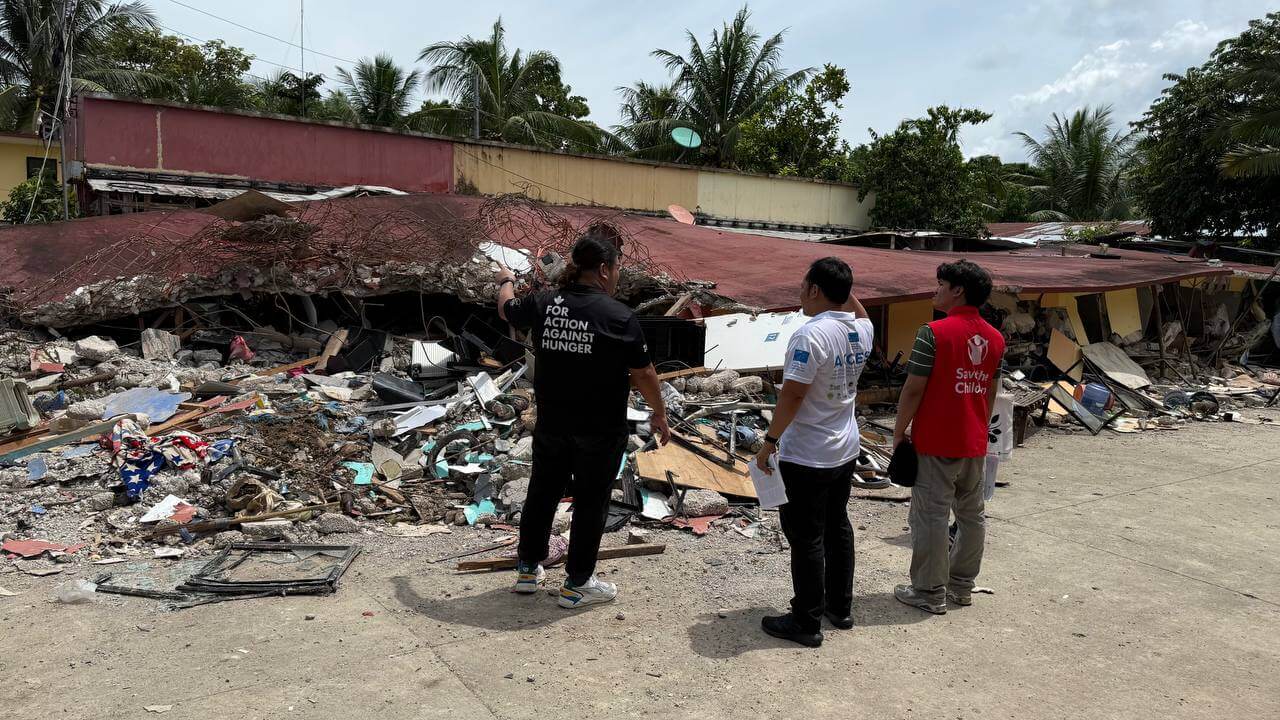
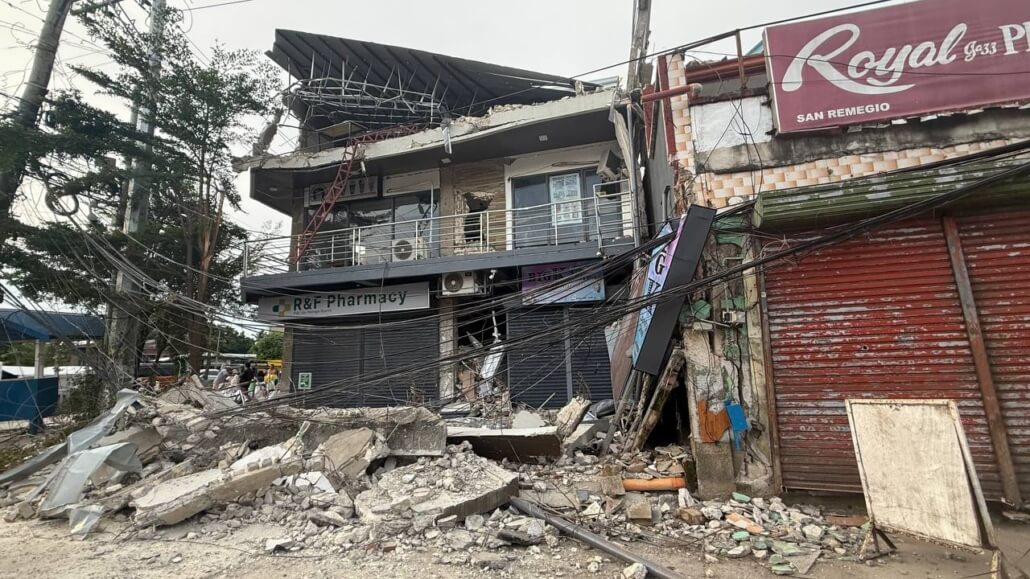
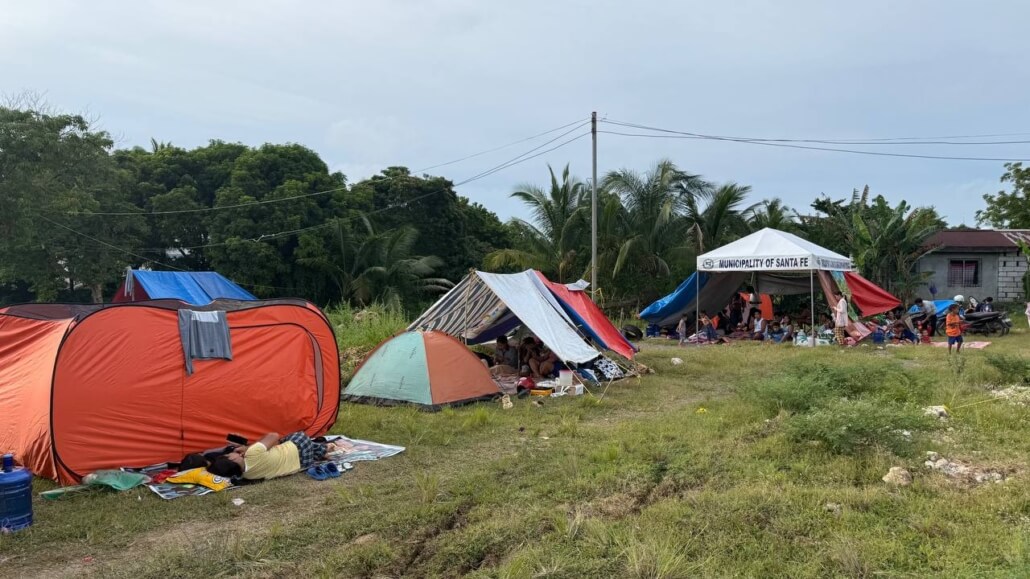
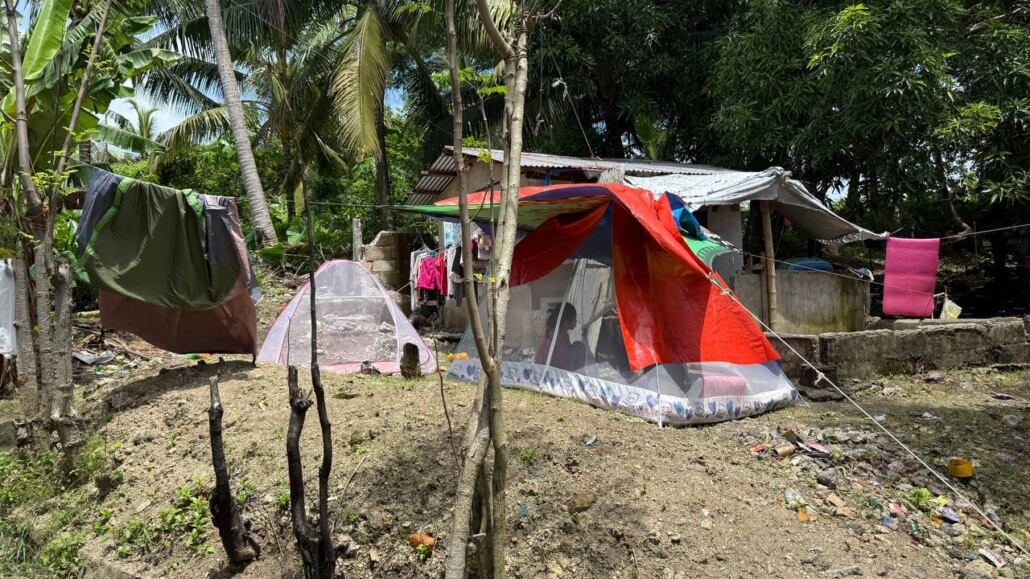
In photos: Current situation in Cebu where displaced families stay in open areas and structural damages were widespread and significant. (Photos by Brian Kae Enriquez for Action Against Hunger

Families have been displaced on a massive scale. Many are now living in makeshift shelters along roadsides, open fields, and school grounds, too afraid to return to their damaged homes. In Bogo City’s Yolanda Village, a relocation site for survivors of Typhoon Yolanda (Haiyan), families who once rebuilt their lives after a past disaster have again been forced to flee.

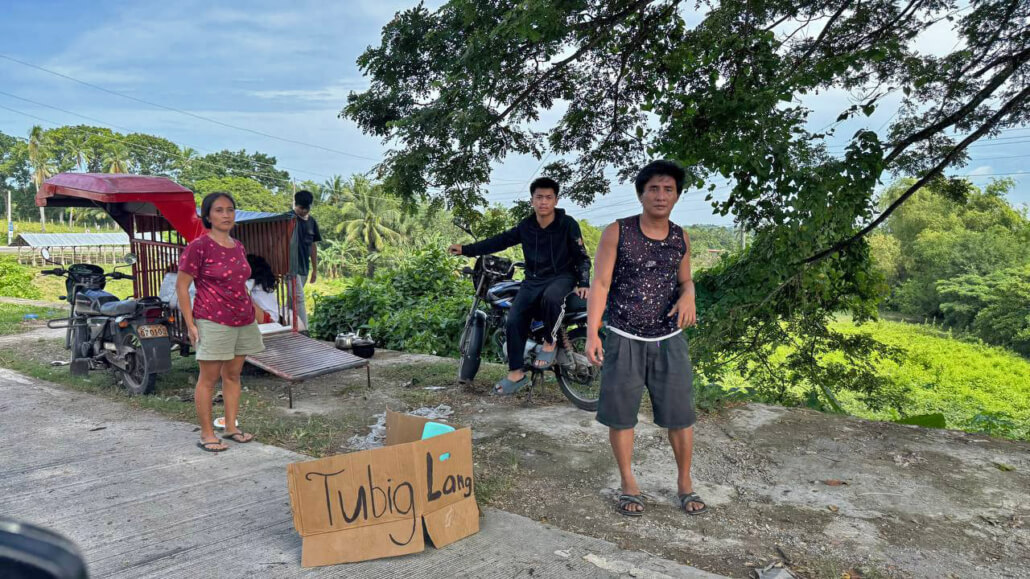
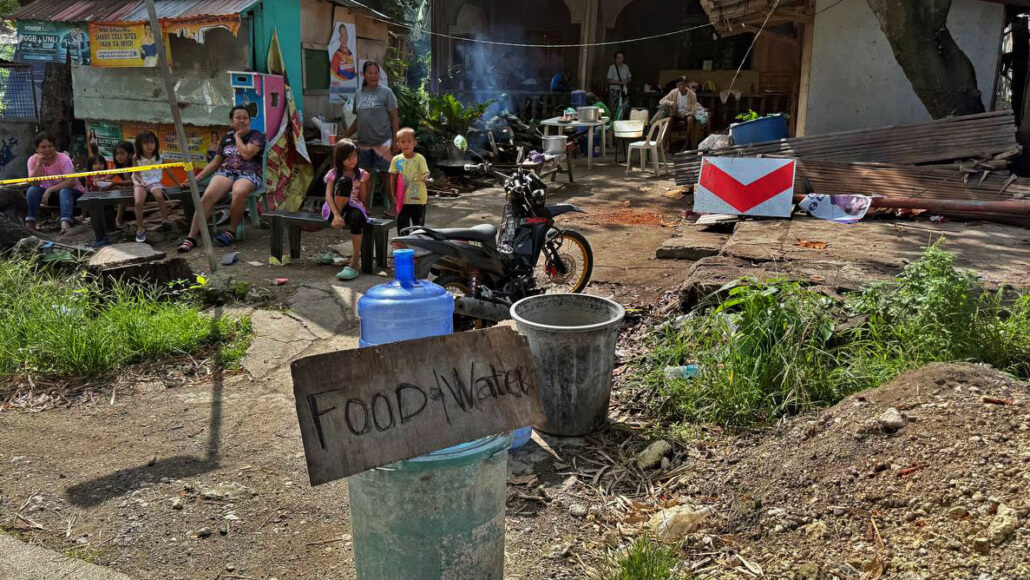
In some towns in the Municipality of Tobogon, desperate families have started putting up signages along the roads pleading for food and water.

In photo: Situation along the road in Municipality of Tabogon, Cebu. People have signages seeking food and water. (Photos by Brian Kae Enriquez for Action Against Hunger)

Essential services are also heavily disrupted. Power outages have left hospitals, water systems, and communication lines down across northern Cebu. Damaged pipelines and collapsed reservoirs cut off access to safe drinking water, forcing families to rely on unsafe sources. Overcrowded evacuation centers lack basic sanitation, raising fears of outbreaks of waterborne diseases.

The psychological toll is equally severe. Survivors, particularly children, women, and the elderly, are showing signs of trauma, stress, and fear. Many refuse to go back inside buildings due to the continuing aftershocks.

Our Ongoing Response

In the immediate aftermath, Action Against Hunger’s Emergency Response Team (MERT) deployed to northern Cebu to conduct rapid assessments and coordinate with local government and humanitarian partners. Together with the ACCESS Consortium with funding support from the European Union through the EU Civil Protection and Humanitarian Aid, and the WASH Cluster, our teams have been working to identify urgent needs and provide life-saving support.

So far, our teams have:

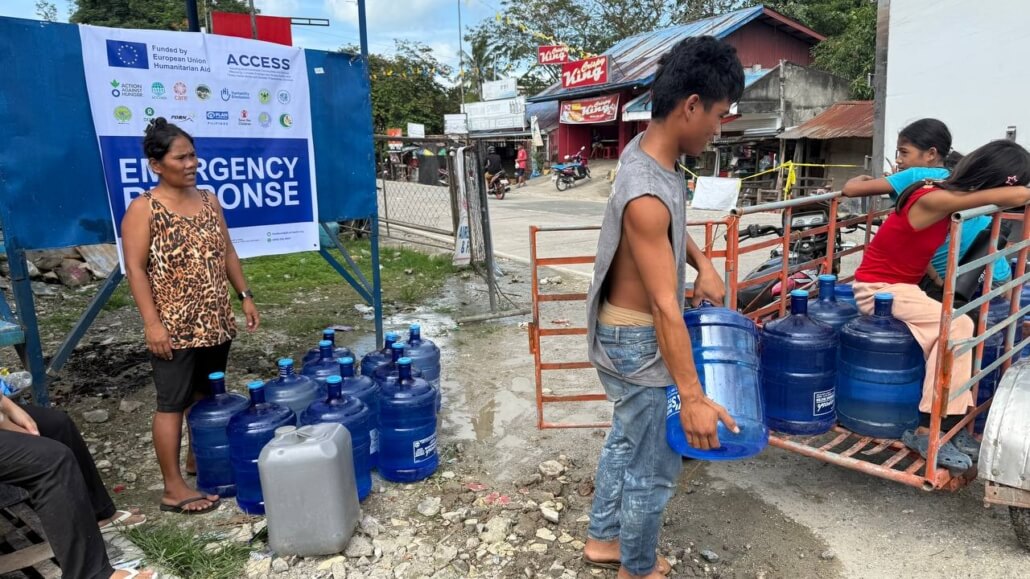
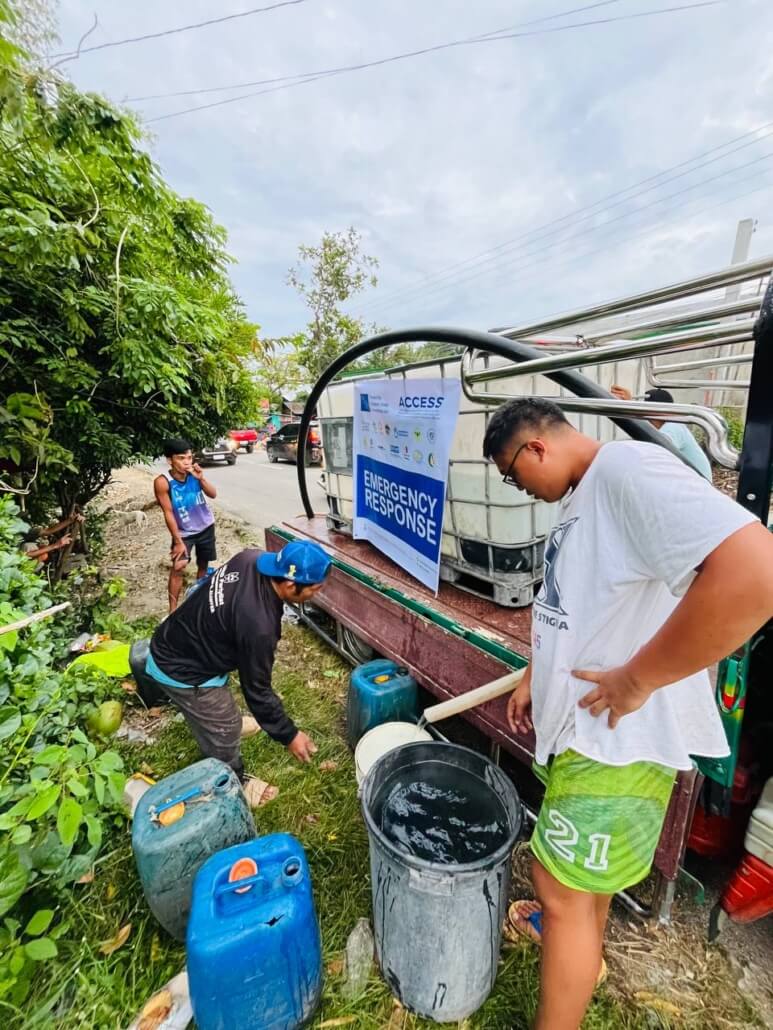
  • Started water distribution in affected communities in Tobogon through trucking, with more resources being mobilized to scale up.
  • Facilitated psychosocial support sessions for displaced families in Bogo City, helping survivors process trauma and regain a sense of safety.
  • Coordinated closely with local government units, government agencies like the Department of Health, and humanitarian actors to ensure that clean water, sanitation, and hygiene (WASH) services are prioritized in evacuation centers and host communities.
  • Prepositioned 700 WASH kits (hygiene and water kits) from Manila and Cotabato, preparing to scale up interventions as soon as additional resources are made available.


In photos: Water rationing in Brgy. Ilihan in Tabogon, Cebu through the ACCESS Consortium. (Photos by Brian Kae Enriquez for Action Against Hunger)


Emerging Needs

The scale of the disaster has left enormous gaps. Immediate needs include:

  • Clean water and sanitation facilities to prevent outbreaks of disease.
  • Emergency shelter materials (tents, tarpaulins, sleeping kits) for families staying outdoors.
  • Food assistance, especially for children, pregnant and lactating women, and people with disabilities.
  • Medical support for overwhelmed hospitals, including medicines, surgical supplies, and mental health care.
  • Psychosocial support for communities coping with fear and repeated displacement.

In photo: Residents of Barangay Samosa, Tabogon are currently staying tents and open spaces after a magnitude 6.9 earthquake struck northern Cebu. Many continue to sleep outdoors due to ongoing aftershocks and the risk of falling debris. Families are staying in informal camps, by the roadside, or with relatives as damage assessments are still ongoing. (Photo by Brian Kae Enriquez for Action Against Hunger)


Standing in Solidarity

Cebu is still reeling from the earthquake, and the situation remains fluid as aftershocks continue to affect communities. Action Against Hunger will continue assessing the needs on the ground and working closely with partners and stakeholders to ensure that urgent priorities are met. With the support of our donors and through the ACCESS Consortium, funded by the EU Civil Protection and Humanitarian Aid, we remain committed to scaling up our response in the coming days—delivering clean water, essential relief, and protection to the most vulnerable families—while helping communities move toward recovery with dignity.