Building a Zero-Waste Future Starts with Awareness, and with Children
SURIGAO DEL NORTE ─ As January closes and Zero Waste Month in the Philippines comes to an end, communities in Siargao Island are reflecting on a simple but important lesson: building a resilient, green economy begins with awareness, and it needs to start early.
In island communities facing increasing climate risks, unmanaged waste affects daily life in tangible ways. It blocks drainage systems, contributes to flooding during heavy rains, threatens public health, and complicates disaster preparedness efforts. These realities explain why the Siargao Green Economy Project places solid waste management at the center of its climate resilience and green economy approach, focusing not only on systems and policies, but also on everyday practices and decision-making at the community level.
Why waste awareness matters for climate resilience
Improving solid waste management is one of the most direct ways communities can reduce environmental and disaster risks. When waste is not properly segregated or disposed of, it often ends up in waterways and low-lying areas, increasing flood risks during typhoons and periods of intense rainfall. For island municipalities like those in Siargao, these impacts are felt more frequently as climate conditions become less predictable.
Addressing these risks requires more than infrastructure. It requires changes in how people understand waste and how they manage it in their homes, schools, and communities.
In support of the national Zero Waste Month theme, “R.A. 9003 at 25: Honoring our Past, Renewing Commitments, Innovating for a Cleaner Tomorrow,” Action Against Hunger, through the Siargao Green Economy Project conducted an awareness campaign on Waste Characterization and Management as part of the project’s behavior change and communication strategy. The campaign incorporated discussions on disaster risk reduction, climate change adaptation, and gender equality, reflecting the project’s integrated approach to resilience and sustainability.
What is R.A. 9003?
Republic Act No. 9003, or the Ecological Solid Waste Management Act of 2000, provides the legal framework for solid waste management in the Philippines. It emphasizes waste reduction at source, segregation, recycling, composting, reuse, and resource recovery, while prohibiting incineration.
The law places responsibility on local government units and encourages participation from communities and the private sector. It also highlights the role of education and public awareness by integrating waste management principles into both formal and non-formal learning settings.
Source: Philippine Environment Partnership Program, Department of Environment and Natural Resources
Inside the Awareness Campaign
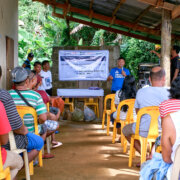
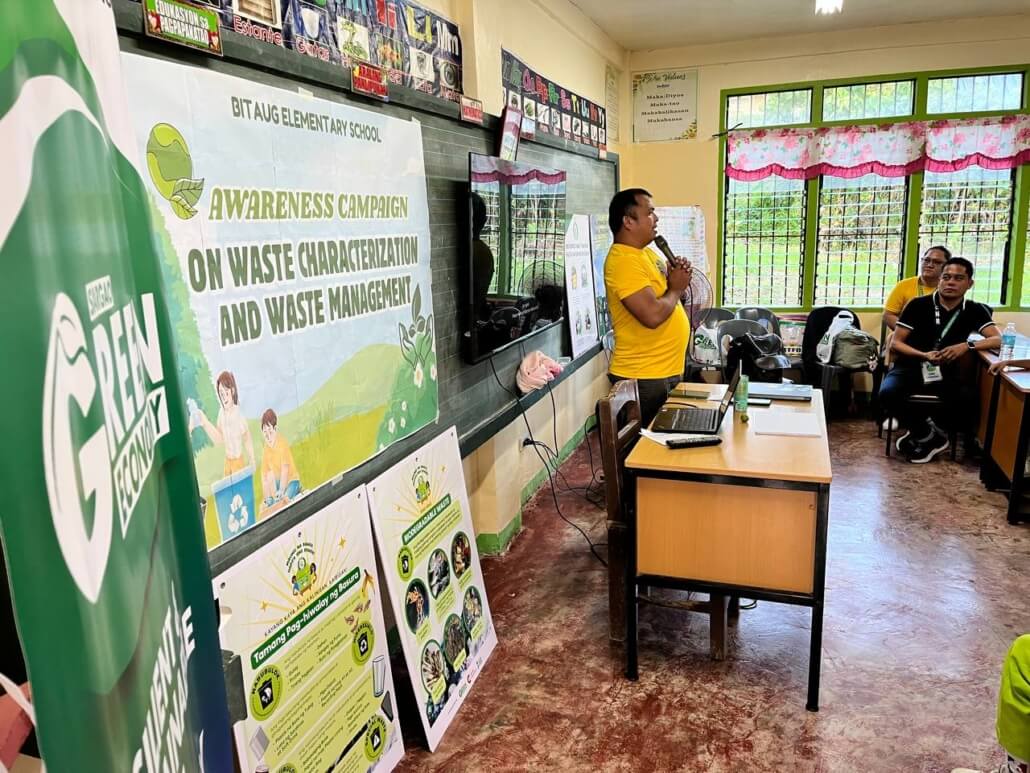
The campaign reached elementary students, teaching and non-teaching staff, and barangay representatives in Barangays Baybay, Matin-ao, San Matero, and Bitaug in Burgos, Surigao del Norte, through activities conducted on January 20 to 21, 2026. The sessions were implemented with support from the Municipal Environment and Natural Resources Office (MENRO) and the Department of Environment and Natural Resources Environmental Management Bureau (DENR-EMB).
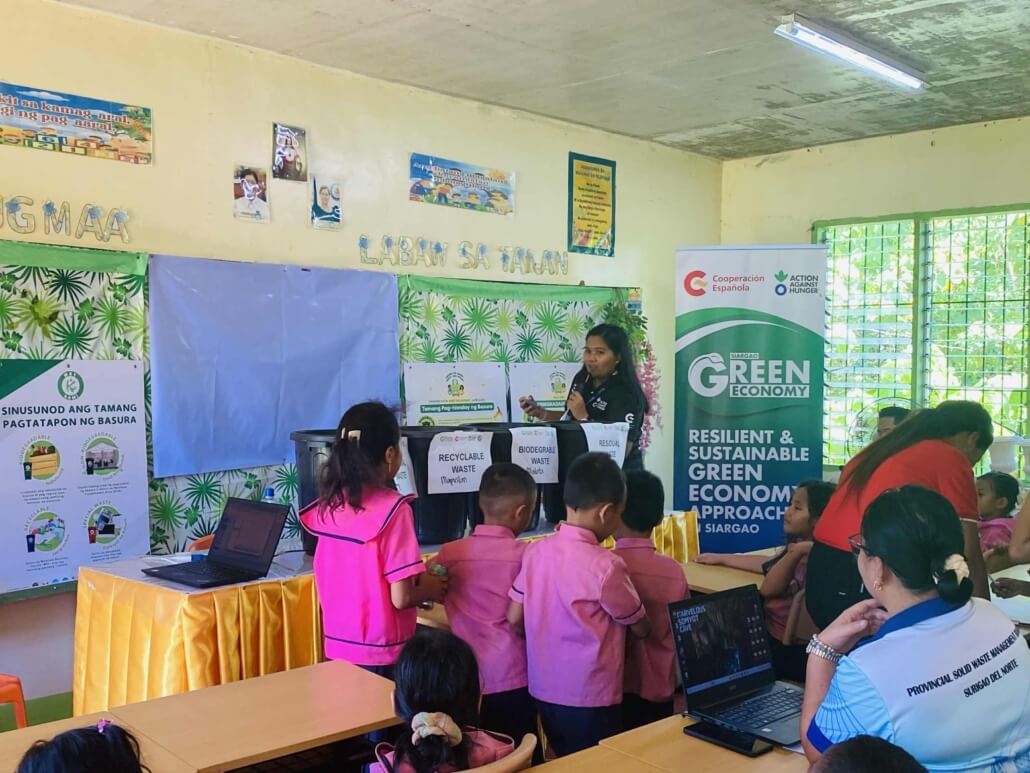
During the sessions, students were introduced to waste characterization and management, the key provisions of Republic Act No. 9003, and the basic principles of the circular economy. Facilitators used examples familiar to the students, such as common household and school waste, to explain how waste can pose risks when unmanaged and how some materials can still have value when properly segregated and reused.
Students participated in pre- and post-test activities, where they identified different types of waste and practiced classifying them into appropriate categories. These exercises surfaced a shared realization among many students: waste is not a single category, and each type carries different environmental, health, and safety implications.
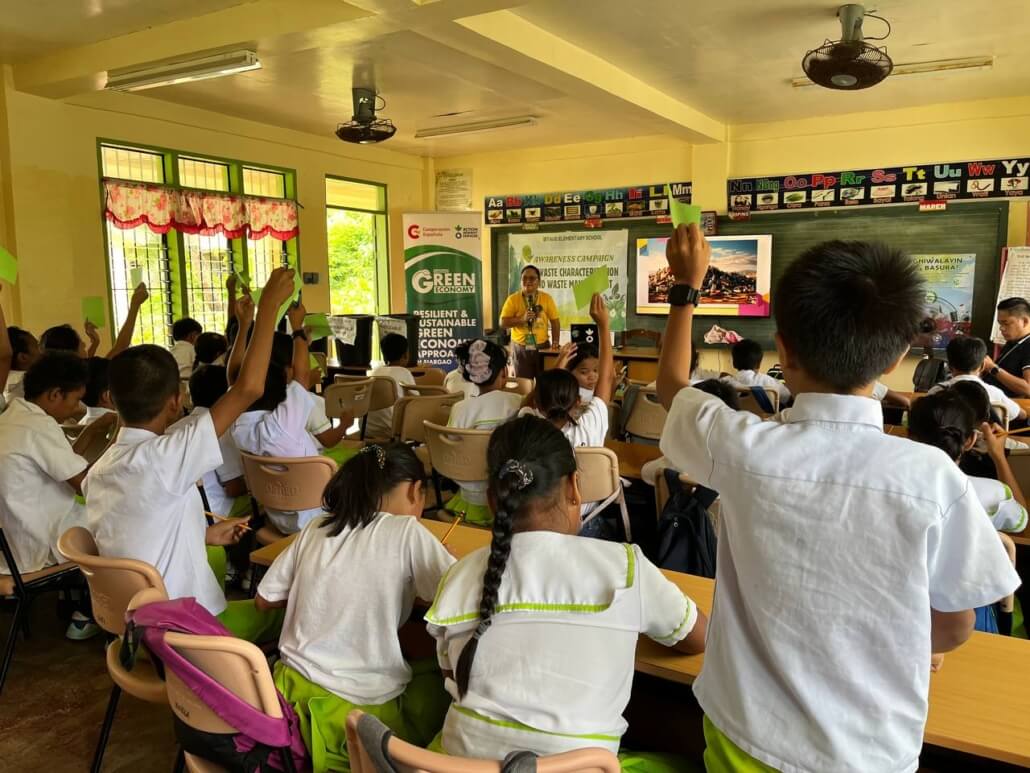
A short quiz followed, during which students shared their answers aloud and discussed them with classmates and facilitators. Questions raised during these exchanges allowed facilitators to clarify concepts related to segregation, disposal, and the links between waste management and disaster risks.
The campaign also included a creative activity, where students produced posters and slogans inspired by the Zero Waste Month 2026 theme. Through drawing and short messages, students expressed how they understood waste reduction and environmental responsibility. Selected outputs will be refined and used in future Information, Education, and Communication materials, extending the reach of the activity beyond the schools.
Why start with children?
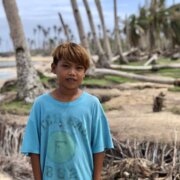
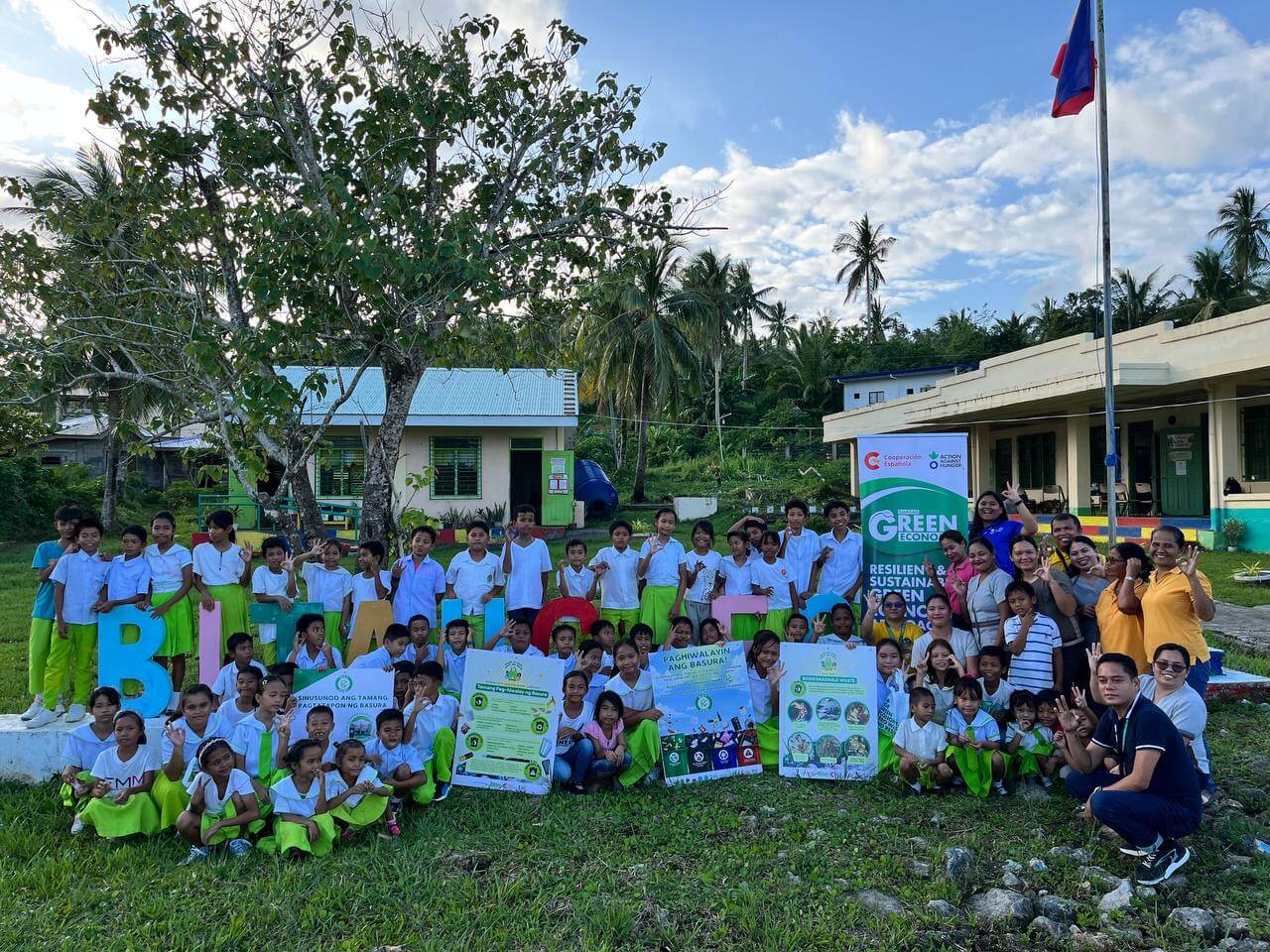
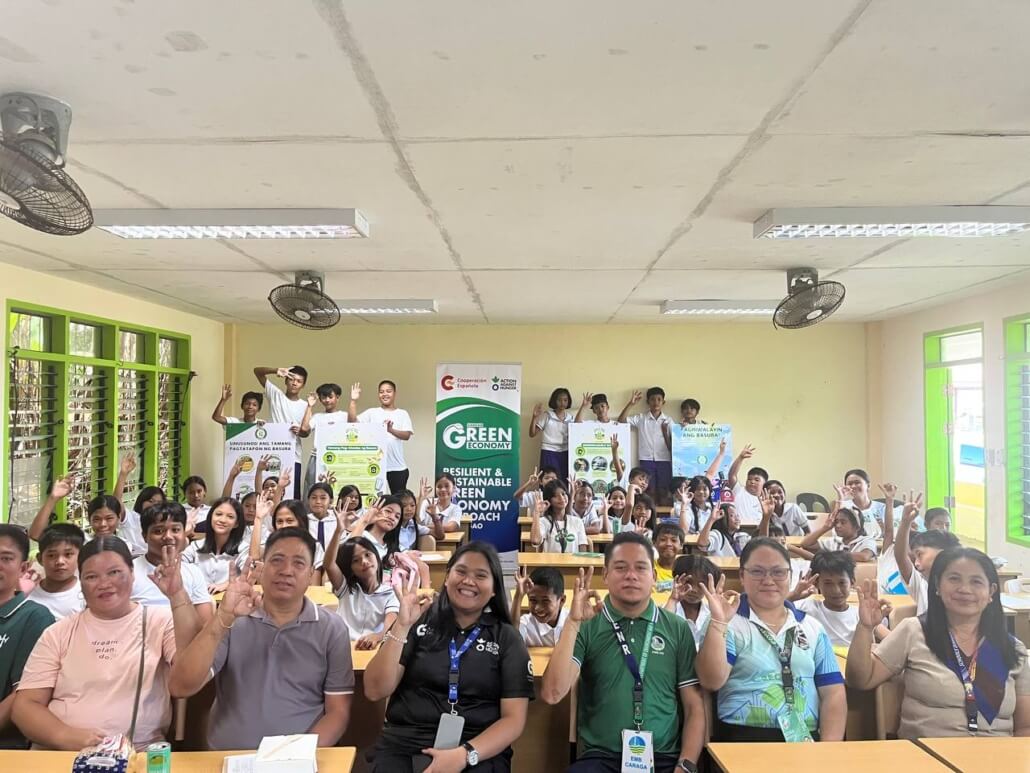
In photo: Florencio Betonio, Jr. of Barangay Bitaug and the students of Bitaug Elementary School. (Photo by Conie Isabel Ann Canto for Action Against Hunger)
Engaging children is a deliberate choice. Schools are spaces where habits and values are formed early. By introducing students to waste classification, segregation, and the links between waste, flooding, and health, the project works toward changes that can influence both school environments and household practices over time.
Teacher Marysol Astorbia, Head Teacher and School-in-Charge of Bitaug Elementary School, shared her perspective on the activity:
“School is not only a place for learning but also a home for discipline and responsibility. Through proper waste management, students learn the value of cleanliness, order, and care for the environment. This is a significant step toward a well-managed school.”
She also noted that revisiting waste management concepts helped reinforce lessons that students may have encountered before, underlining the need for regular and consistent awareness activities.
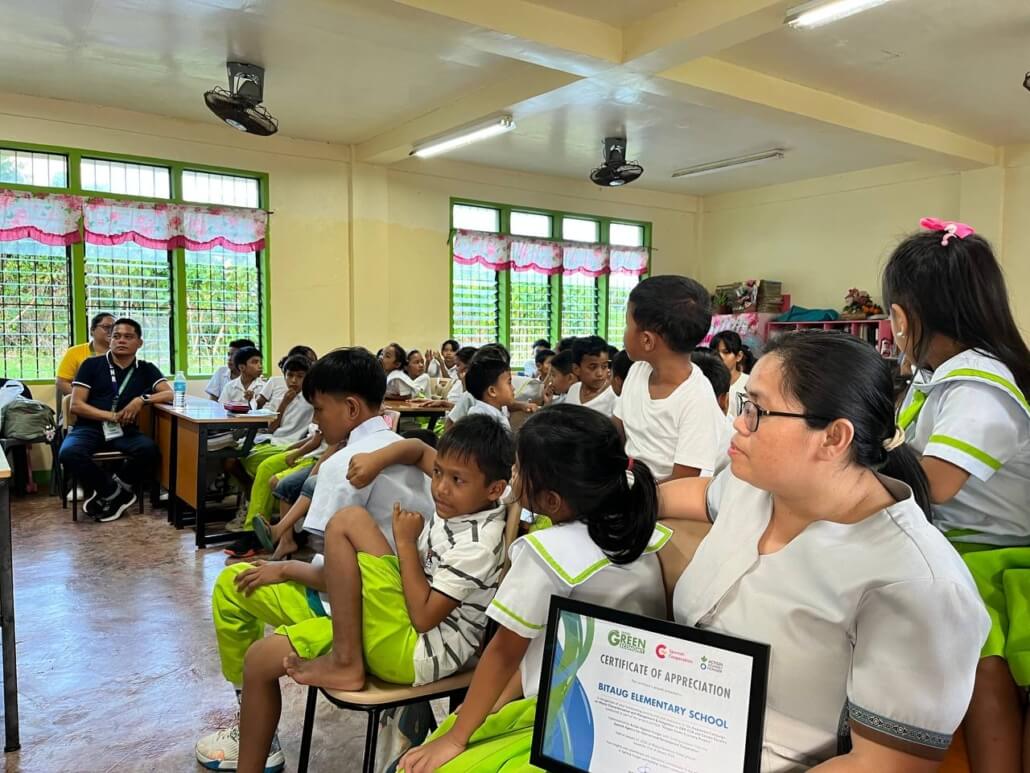
In photos (from left) are Mr. Racky Dryn D. Buenavista, students of Bitaug Elementary School and Ma’am Marysol A. Estorbia, Head Teacher-I/ School-In-Charge (Photo by Conie Ann Isabel Canto)
Did You Know?
- Mismanaged solid waste can increase flood risks by blocking waterways, particularly in coastal and island municipalities. The Philippines generates approximately 35,580 tons of waste daily. According to the Solid Waste Management Status Report (2008–2018), waste generation reached 18.05 million tons in 2020 and is projected to increase to 23.61 million tons by 2025. (Source: Climate Transparency Platform)
- Children often bring waste management practices learned in school back to their households, influencing how families manage waste at home. According to the World Bank, solid waste management systems often succeed or fail because of how people behave, not simply because of the technology in place. Practices such as segregation, recycling, composting, and waste reduction are shaped by people’s knowledge, attitudes, social norms, convenience, and the incentives available to them.
Awareness as a Foundation for Action
The campaign also highlighted the role of local leadership in sustaining waste management efforts. Barangay representatives participated alongside students and school staff, reinforcing the idea that responsibility for waste management extends beyond individual households.
“Awareness is the first step toward positive change,” shared Florencio Betonio, Jr., a representative of Barangay Bitaug. “What we have learned today should not end here. It should guide our actions, influence our decisions, and encourage us to share this knowledge with others.”
This perspective reflects the project’s approach, where awareness informs behavior, behavior supports systems, and functioning systems contribute to community resilience.
Linking waste management to a Green Economy
The Siargao Green Economy Project goes beyond waste reduction alone. It supports the development of circular economy solutions, strengthens local governance, and engages communities, women, and private sector actors in building resource-efficient and climate-resilient local economies.
By integrating gender equality, disaster risk reduction, and climate change considerations into waste awareness activities, the project situates environmental action within everyday community realities.
As Zero Waste Month comes to a close, these efforts continue. Awareness campaigns such as this contribute to stronger waste management practices, safer communities, and a future for Siargao where environmental responsibility is part of daily life, beginning at a young age.
About the Project
The Siargao Green Economy Project is implemented by Action Against Hunger Philippines with funding from the Spanish Agency for International Development Cooperation (AECID).
The project fosters climate resilience and green economies in Siargao Island through inclusive, gender-transformative governance, strengthened solid waste management systems, and circular economy initiatives—supporting communities in building a more sustainable and resilient future.