25 Years of Action Against Hunger in the Philippines: Carrying Hunger Solutions into 2026
As we enter 2026, Action Against Hunger marks 25 years of humanitarian action in the Philippines—a journey shaped by conflict, disasters, climate risks, and the resilience of the communities we serve.
Our work in the country began in 2000, responding to the urgent needs of families displaced by conflict in Central Mindanao. From the outset, Mindanao has been central to our presence and identity, grounding our approach in complex, fragile, and climate-vulnerable contexts.

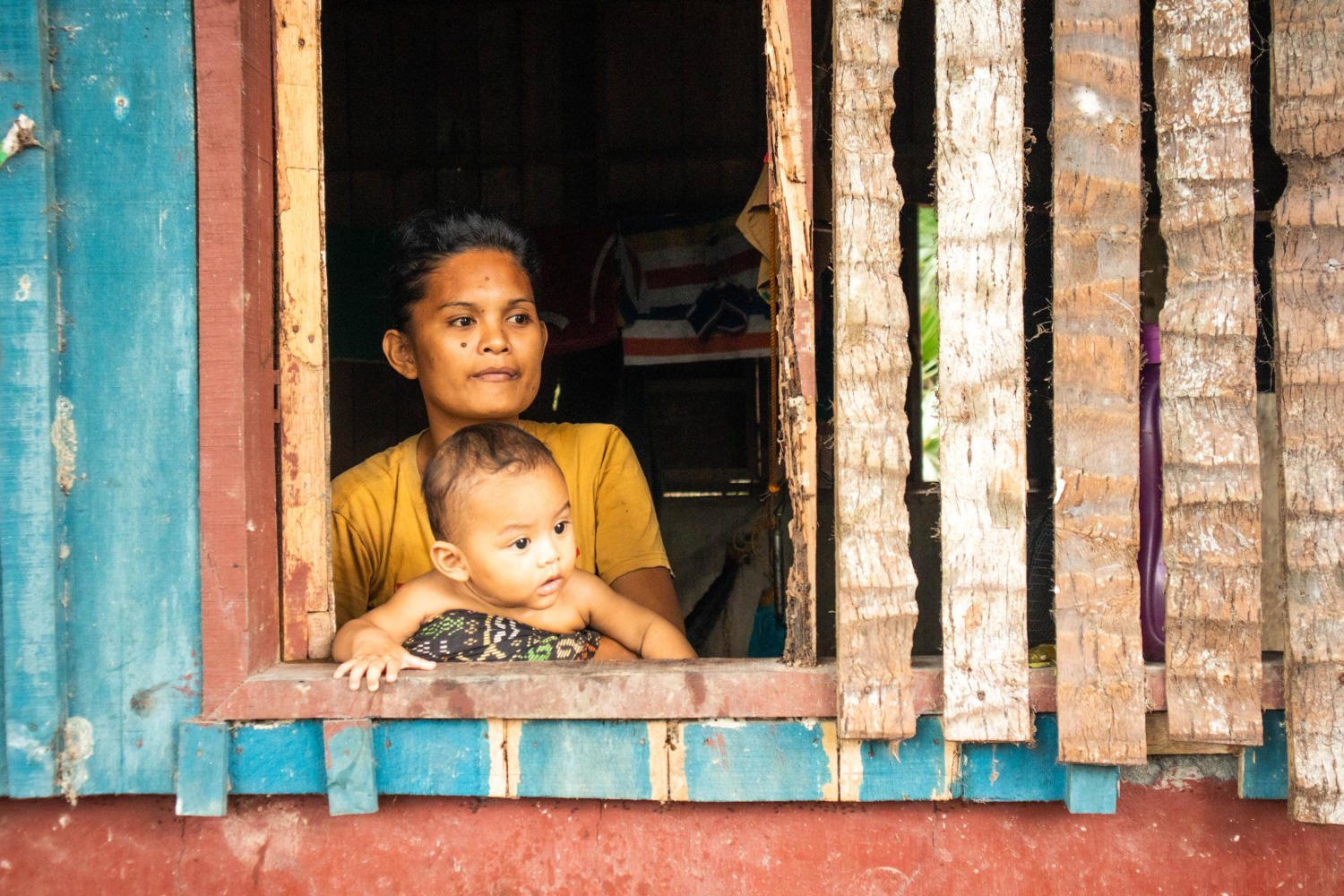
Communities near Rio Grande de Mindanao (Photo by Martin San Diego for Action Against Hunger)
What began as emergency, life-saving assistance has since evolved into an integrated portfolio that combines humanitarian response, resilience building, and systems strengthening across the country. Throughout this journey, our purpose has remained unchanged: to save lives, reduce hunger, and address the root causes of vulnerability.
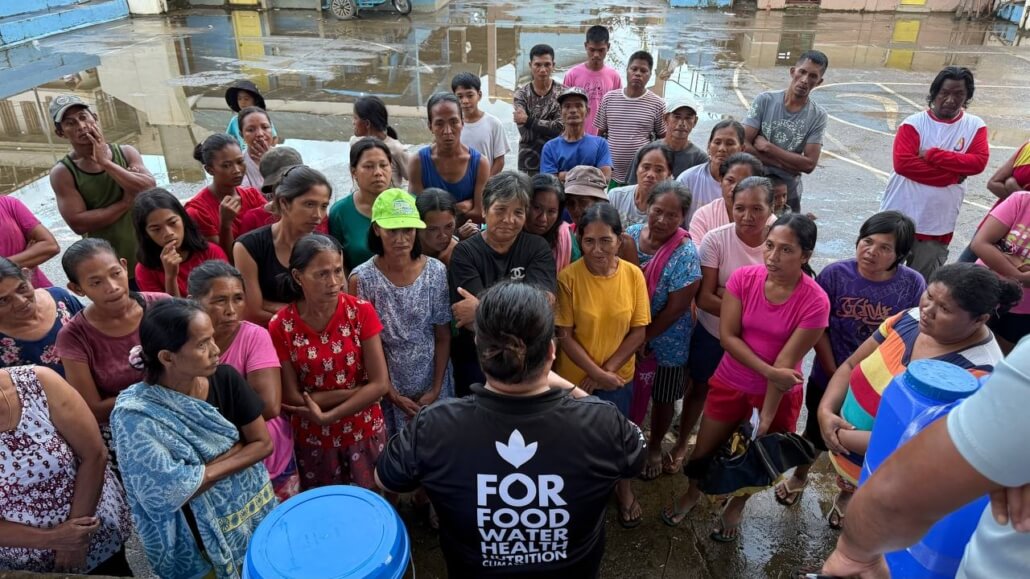
Super typhoon Uwan emergency response in Catanduanes in late 2025.
Adapting to a changing humanitarian landscape
Over the past two and a half decades, the Philippines has faced recurring and increasingly complex crises—from armed conflict and large-scale displacement to devastating typhoons, earthquakes, floods, and public health emergencies. Action Against Hunger has played a critical role in major humanitarian responses, including but not limited to Typhoon Ondoy (Ketsana) in 2009, Typhoon Yolanda (Haiyan) in 2013, the Marawi Crisis in 2017, the COVID-19 pandemic, Typhoon Odette (Rai) in 2021, Typhoon Kristine (Trami) in 2024, earthquakes in Cebu and Davao, and Typhoons Tino (Kalmaegi) and Uwan (Fung-Wong) in 2025.
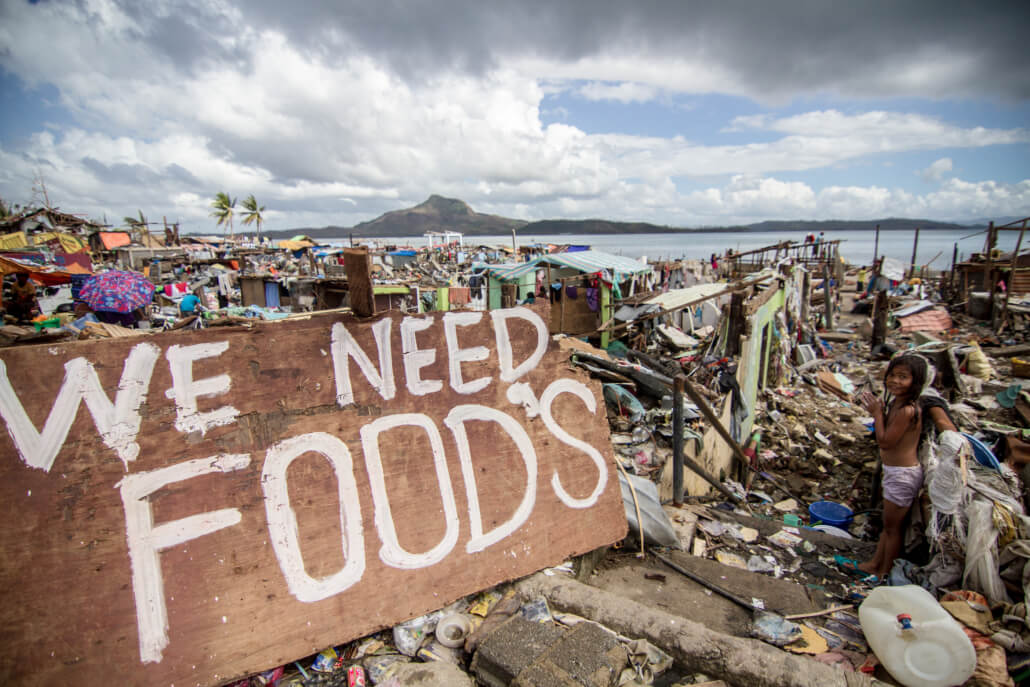
Typhoon Yolanda (Haiyan) emergency response in 2013. Photo by Daniel Burgui
In each of these emergencies, our response adapted to scale and context—delivering timely support in water, sanitation and hygiene, food security, nutrition, health, shelter, and protection. In Mindanao, where conflict and climate shocks often intersect, our sustained presence has enabled rapid response while ensuring continuity of support for communities experiencing repeated displacement and disruption.
As crises became more frequent and protracted, our approach evolved. Beyond immediate response, we expanded into early recovery, disaster risk reduction, and climate change adaptation—recognizing that communities facing repeated shocks need durable, forward-looking solutions alongside emergency aid.
From response to resilience: integrated programming nationwide
Today, Action Against Hunger’s work in the Philippines spans Water, Sanitation and Hygiene (WASH); Food Security and Livelihoods; Health and Nutrition; Disaster Risk Reduction and Climate Change Adaptation; Protection; and Mental Health and Psychosocial Support. In conflict-affected and underserved areas—particularly in the Bangsamoro Autonomous Region in Muslim Mindanao—we place strong emphasis on strengthening health and nutrition systems and improving access to inclusive, quality services.
Gender equality and social inclusion are embedded across all sectors, ensuring that women, indigenous peoples, and marginalized groups are not only reached but actively involved in decision-making, recovery, and leadership within their communities.
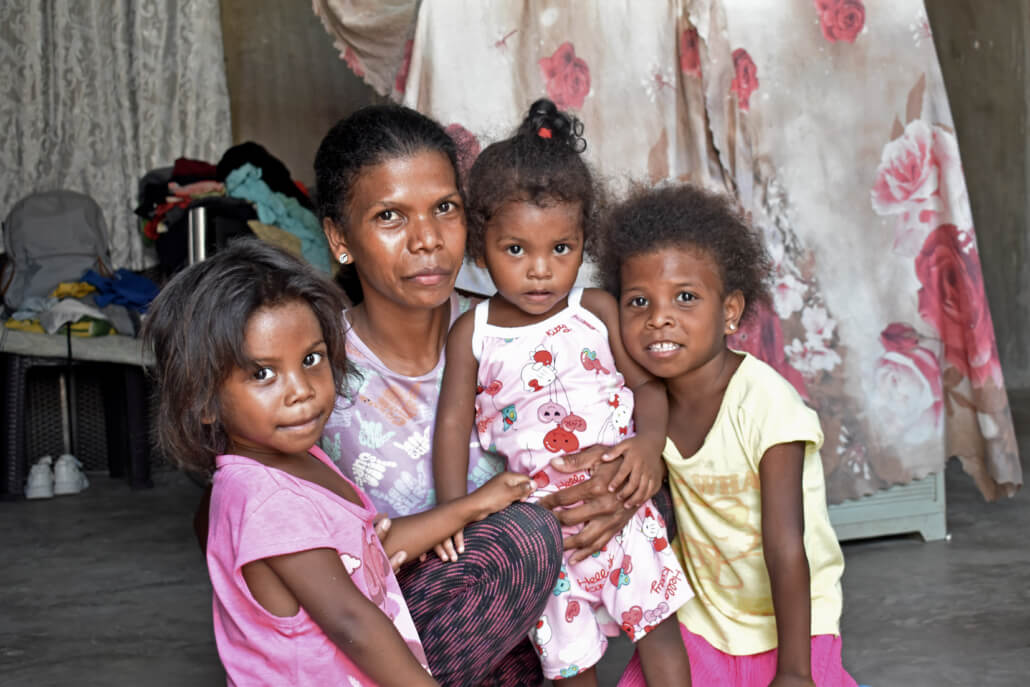
Emergency response in Porac, Pampanga for IP communities that were affected by multiple storms that hit Central Luzon in July 2025. (Photo by Joyce Sandajan for Action Against Hunger)
Reaching nearly one million people in the last five years
Between 2021 and 2025, Action Against Hunger reached more than 980,000 people across the Philippines through multisectoral humanitarian and resilience programming, with some overlap across sectors.
Support during this period focused on:
- Access to safe water, sanitation, and hygiene
- Food security and livelihood recovery
- Disaster risk reduction and preparedness
- Nutrition and health services
- Emergency shelter, protection, and education in emergencies
Thousands of people displaced by disasters received immediate assistance through rapid-response mechanisms that delivered life-saving support within 24 to 72 hours of displacement. These rapid interventions helped families meet urgent needs with dignity while supporting early recovery.
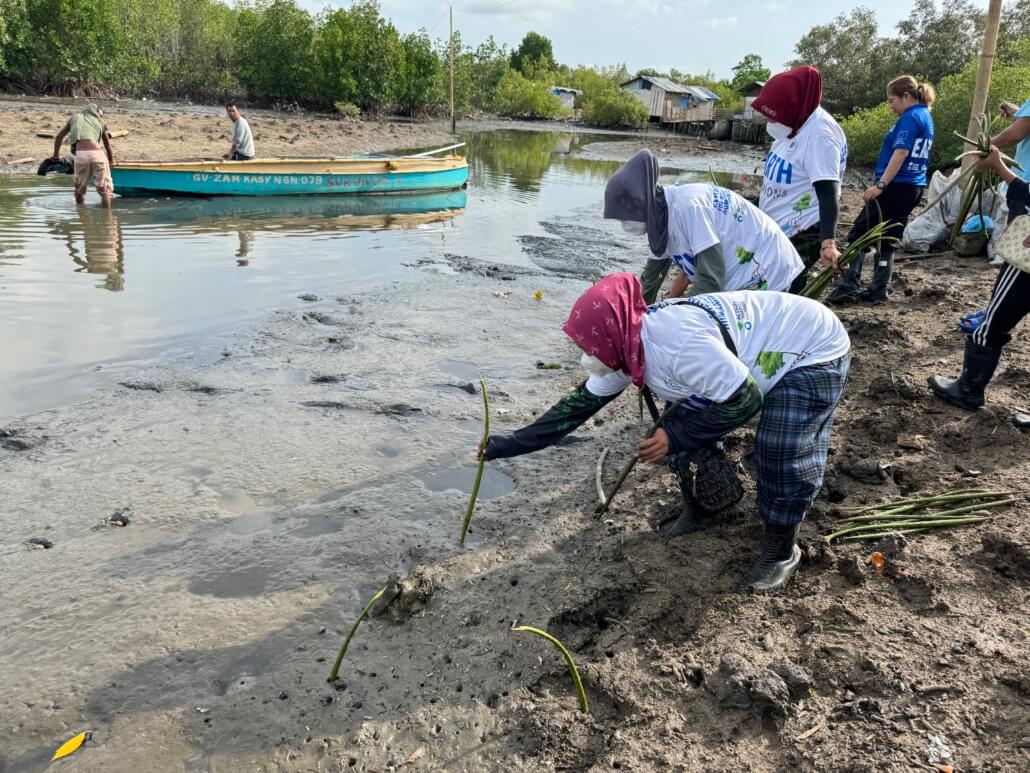
In photo: EARTH champions of Action Against Hunger’s EARTH project plant the mangrove propagules.
At the same time, recent years have marked a clear shift toward resilience-oriented programming. Initiatives such as MOVE UP, Resilient IsLA, iPrepared, EARTH, and the Siargao Green Economy projects reflect this transition—supporting communities in diversifying livelihoods, strengthening preparedness, and reducing disaster risks before crises strike. Through climate field schools, community savings groups, household dialogues, and support to local planning processes, we work with communities and local governments to build capacities that endure beyond project cycles.

Strengthening humanitarian action through partnerships
Beyond direct implementation, Action Against Hunger plays an active role in strengthening humanitarian systems and partnerships—working alongside local, national, regional, and global actors to improve coordination, share expertise, and advance more effective and inclusive responses.
As part of its commitment to advancing innovative and inclusive responses, the organization has been hosting the regional office of the CALP Network in Asia-Pacific for three years now. The CALP Network provides coordination, technical guidance, and policy support to organizations implementing or exploring cash and voucher assistance, helping improve the quality, scale, and effectiveness of cash-based responses across the region.
All of our efforts are reinforced through collaboration with institutional donors—including EU Civil Protection and Humanitarian Aid, USAID’s Bureau for Humanitarian Assistance, the Swedish International Development Cooperation Agency, UNICEF, the World Food Programme, and the Spanish Agency for International Development Cooperation—as well as partnerships with private sector actors such as Adisseo, Grab, Mastercard, and Metrobank. Local partners such as the Integrated Mindanaoans Association for Natives, Mindanao Organization for Social and Economic Progress, Center for Disaster Preparedness, ACCORD Inc., and the Integrated Resource Development for Tri-People, play critical roles in ensuring programs are responsive, contextualized, and community-led.

In photo: Action Against Hunger staff and partners from the Center for Disaster Preparedness conduct a hygiene promotion seesion for the children of the daycare center learning the importance of proper hygiene practices (Photo by Alexane Simon for Action Against Hunger)
2025: responding to compounding crises while strengthening systems
The year 2025 highlighted the compounding nature of humanitarian needs in the Philippines.
Action Against Hunger responded to successive storms in Central Luzon, flooding in BARMM, intense earthquakes in Davao and Cebu, and powerful typhoons affecting communities in Masbate, Catanduanes, Camarines Sur, and other high-risk areas. Across these responses, teams worked closely with local authorities and humanitarian partners to deliver timely assistance while supporting early recovery and preparedness.
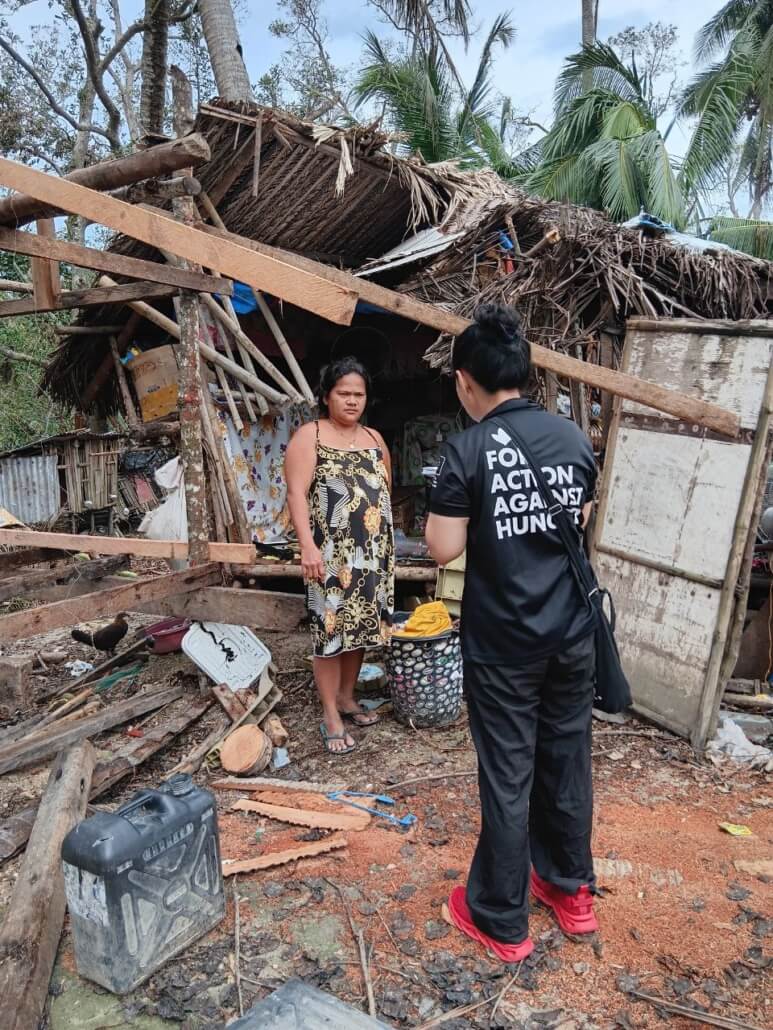
Super typhoon Uwan emergency response in Masbate in September 2025.
Simultaneously, progress continued in strengthening local systems. In the Bangsamoro Autonomous Region in Muslim Mindanao, Action Against Hunger formalized collaboration with regional authorities, including the Ministry of Social Services and Development, to improve coordinated crisis response and longer-term social service delivery. Partnerships with UN agencies, particularly UNICEF, strengthened the capacity of health, early childhood, and community facilities to deliver essential nutrition, health, and WASH services.
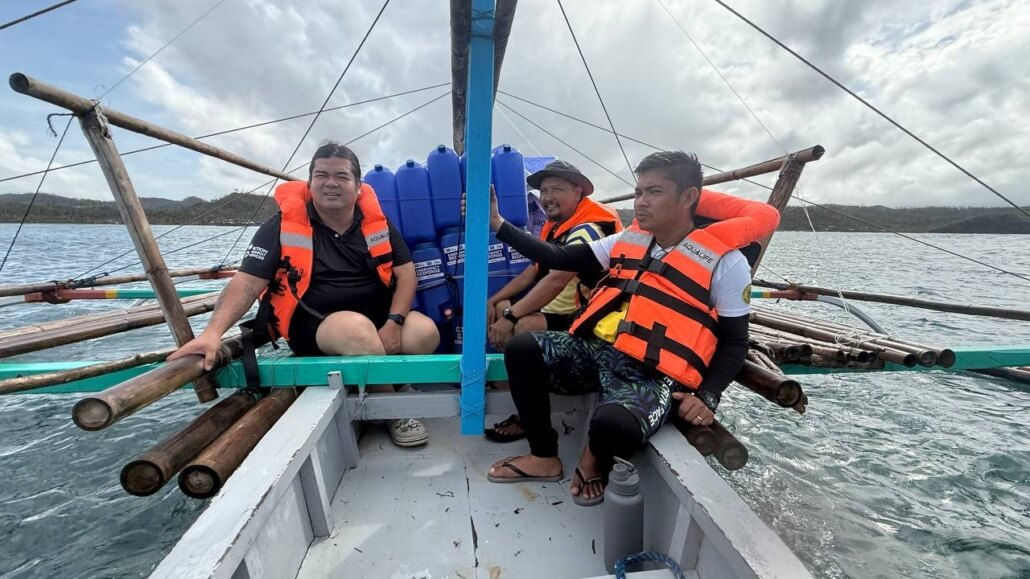
Super typhoon Uwan emergency response in Catanduanes.
Elsewhere, programs in Siargao focused on strengthening water and sanitation systems, promoting preparedness, and advancing circular economy initiatives. In urban and coastal communities in Malabon and Zamboanga, EU-supported initiatives empowered communities to lead nature-based solutions that reduce environmental risks while supporting sustainable livelihoods.
Looking ahead: commitment beyond 25 years
After 25 years in the Philippines, Action Against Hunger remains committed to sustained engagement in fragile, conflict-affected, and climate-vulnerable contexts—particularly in Mindanao, where humanitarian, development, and resilience needs continue to intersect.
As we move into 2026, we carry forward the lessons of the past while strengthening partnerships and approaches that respond to emergencies and build resilience. Working alongside communities, institutions, and donors, we remain focused on saving lives, reducing hunger, and supporting a more resilient future in an increasingly uncertain world.