Tag Archive for: emergency response

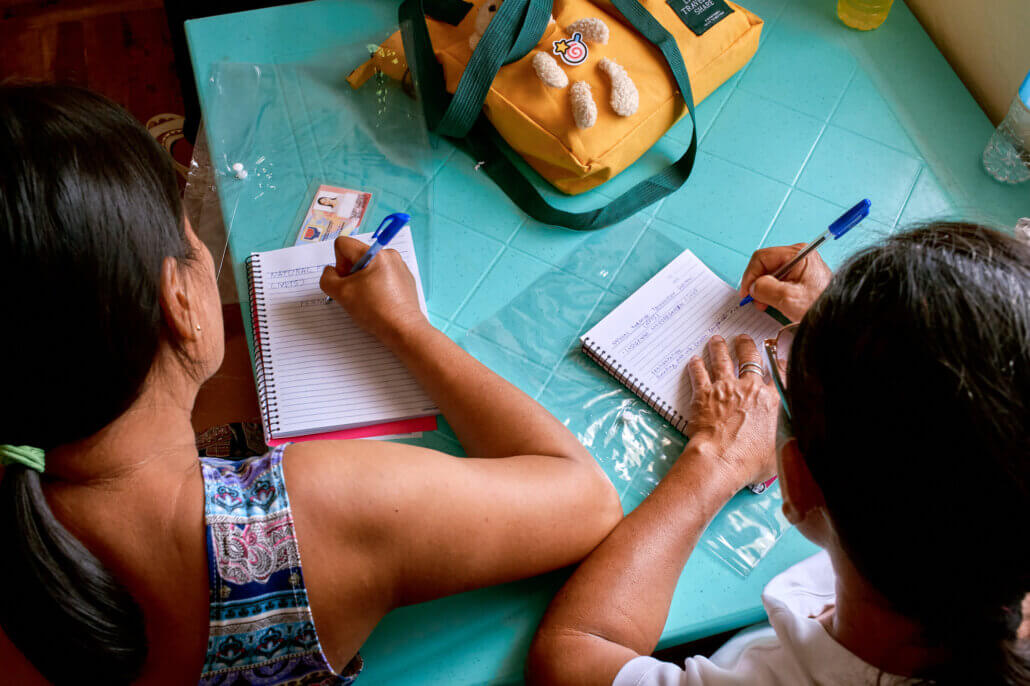
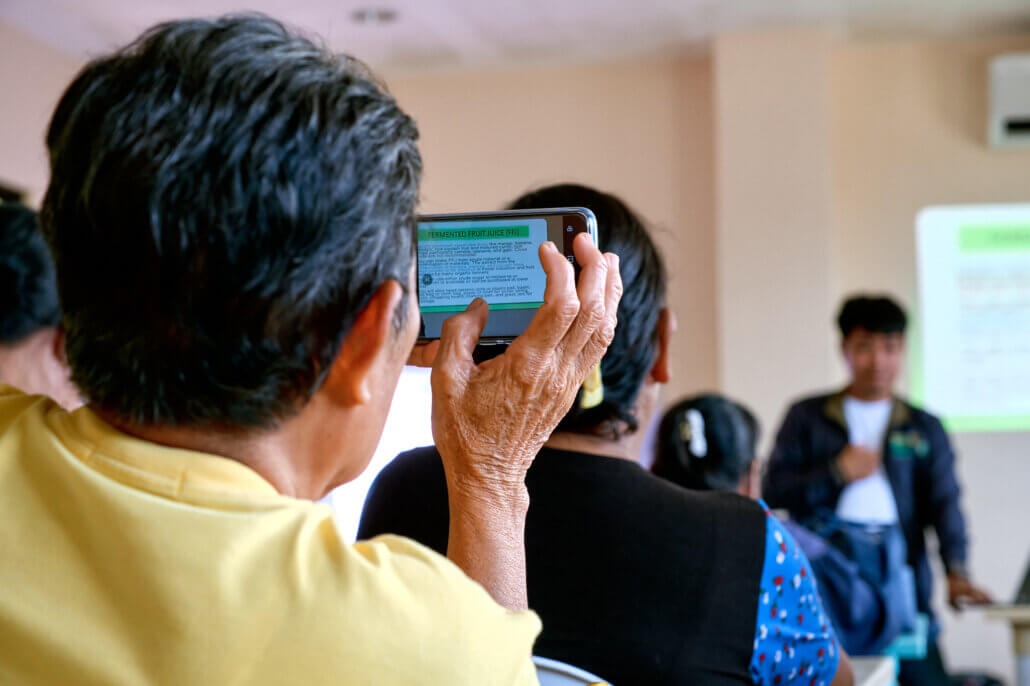
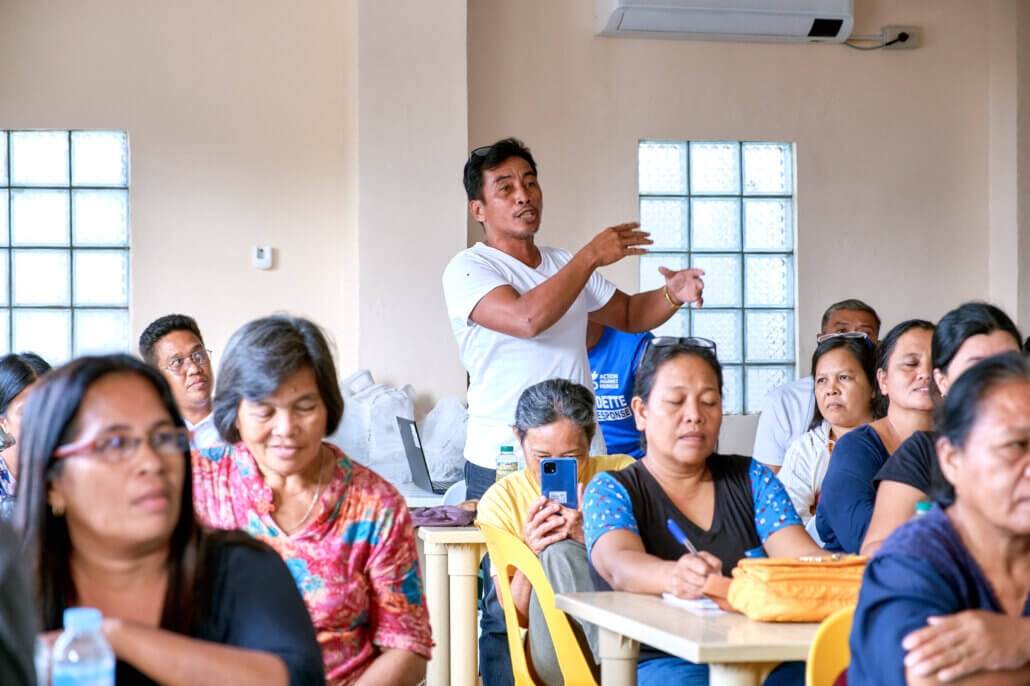
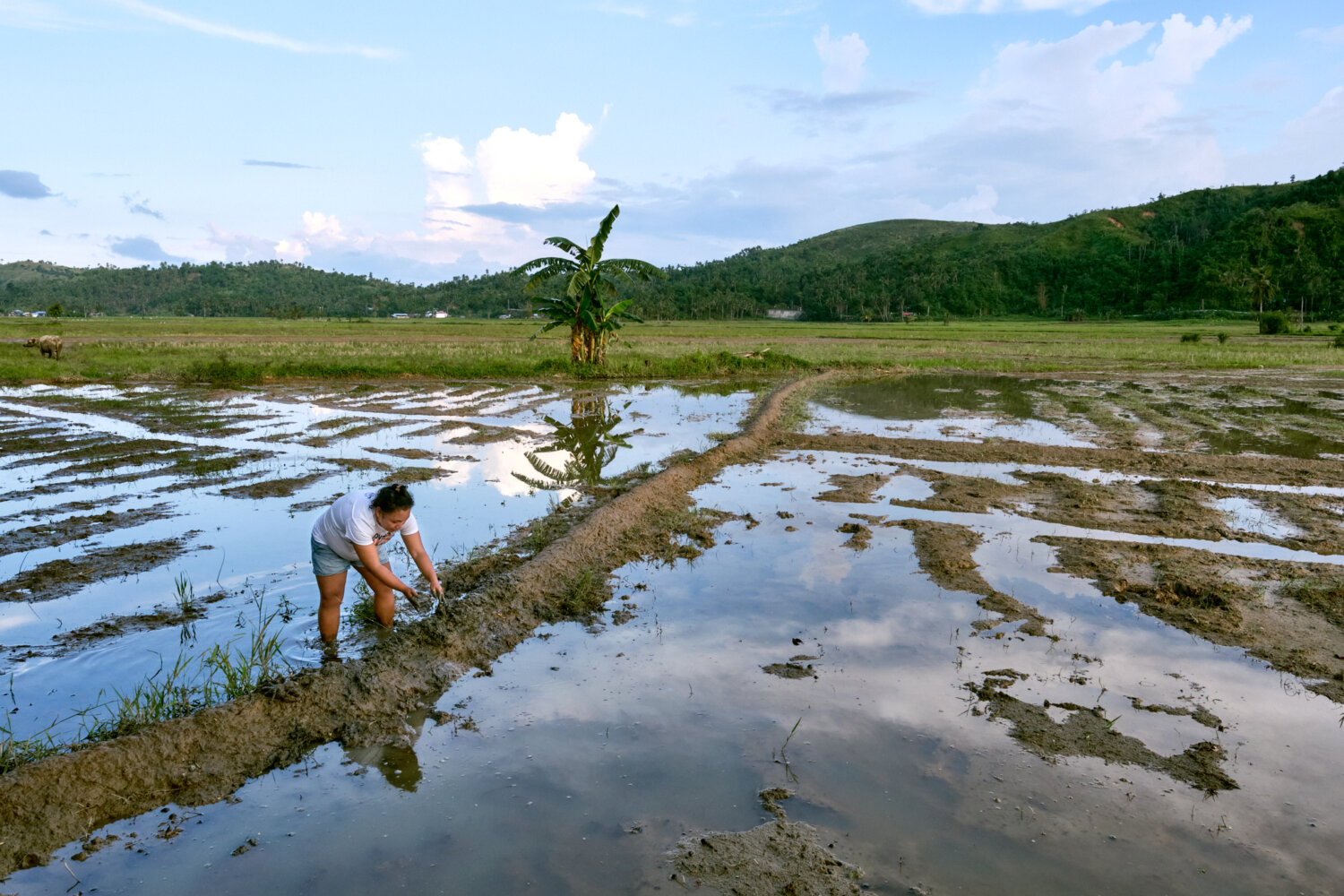
MERT Assessment in Hermosa Bataan

ACTION AGAINST HUNGER DELIVERS LIFESAVING AID AFTER TRIPLE STORM EMERGENCY IN THE PHILIPPINES

Within just one week, three consecutive tropical cyclones—Crising, Dante, and Typhoon Emong (internationally named Wipha, Francisco, and Co-may, respectively)—struck the Philippines, affecting 34 provinces across Luzon, Visayas, and some parts of Mindanao. These storms, intensified by the Southwest Monsoon, unleashed widespread flooding, landslides, and destruction, underscoring the growing toll of climate change on the country’s most vulnerable communities.

The compounding impacts have affected an estimated 7.5 million people or over 2 million families according to the Department of Social Welfare and Development[1], with more than 203,000 individuals displaced and nearly 30,000 homes damaged. Typhoon Emong, the strongest among the three, made two landfalls in Pangasinan and Ilocos Sur, submerging towns, destroying farmlands, and cutting off access to basic services.

Since July 22, Action Against Hunger has been actively responding to the crisis through coordinated humanitarian operations and joint rapid needs assessments. Our Mission Emergency Response Team (MERT) in the Philippines was immediately deployed to affected areas in Metro Manila, as well as devastated municipalities in the provinces of Rizal, Bulacan, Bataan, and Pangasinan.

These efforts are being carried out in close collaboration with local stakeholders as well as partners under the ACCESS Consortium with funding from the European Union Humanitarian Aid (ECHO). Emergency response interventions are also being carried out with funding support from the Spanish Agency for International Development Cooperation (AECID).

Department of Social Welfare and Development (2025). DSWD DROMIC Report #26 on the Combined Effects of Southwest Monsoon and Tropical Cyclones “Crising”, “Dante”, and “Emong” as of 30 July 2025, 6AM. Accessed online on 29 July 2025 from https://dromic.dswd.gov.ph/effects-of-southwest-monsoon-and-tropical-depression-crising-17-jul-2025/

In photo: Action Against Hunger MERT visits one of the affected indigenous peoples’ communities in Payangan, Dinalupihan, Bataan. (Photo by Lorena Sanz for Action Against Hunger)

“We didn’t expect the water to rise and reach our house because we live in what’s considered a high area. We let our guard down, so we didn’t move our things to higher ground. But the flood reached us anyway,” said Janice (not her real name), a 44-year-old mother from one of the river-adjacent barangays in the Municipality of Rodriguez (formerly Montalban), Province of Rizal. “I had to carry my 5-year-old child as we made our way to the evacuation center. The water was chest-deep.”


In photo: Barangay Manggahan in Rodiguez, Rizal is covered in thick mud in the aftermath of the flooding that occurred due to the heavy rains caused by the multiple storms and southwest monsoon.(Photo by Tom Lamache for Action Against Hunger)

According to Janice, flooding has become a regular part of their lives. Just last year, during Super Typhoon Carina (international name: Gaemi), the floodwaters rose all the way to their ceiling. “I just want to experience a life where we don’t always have to evacuate whenever it rains,” she added.

With the support of European Union Humanitarian Aid (ECHO), Action Against Hunger activated its Rapid Response Mechanism (RRM) under the ACCESS Project. Through this, we were able to distribute emergency water and hygiene kits to 150 displaced families in Rizal, 67 in Hagonoy, Bulacan, and 25 in Dinalupihan, Bataan by July 30. These distributions were complemented by awareness sessions on water, sanitation, and hygiene (WASH), disease prevention, Protection from Sexual Exploitation and Abuse (PSEA), child safeguarding, and camp coordination and management. Simultaneously, with support from AECID, hygiene kits were distributed to more than 80 families in the province of Rizal. These efforts form part of a broader emergency response in Rizal Province, where Action Against Hunger is set to reach at least 700 families with Multi-Purpose Cash Assistance (MPCA) and additional WASH support.

In photo: Janice unpacks the contents of the WASH kit she received from Action Against Hunger’s AECID-funded emergency response. (Photo by Joyce Sandajan for Action Against Hunger)

Despite these coordinated efforts, assessments highlight deepening vulnerabilities. Many families have lost access to food and income, creating urgent needs for extended food assistance and livelihood recovery. Contaminated water sources, flooded latrines, and the lack of hygiene supplies continue to increase public health risks. Mental health and psychosocial support services remain limited, with few safe spaces and unclear referral pathways for those in distress. Overcrowded shelters have raised protection concerns, including heightened GBV risks, while damaged homes and disrupted schools add further pressure on already vulnerable families.

In the coming weeks, Action Against Hunger will continue conducting rapid needs assessments in underserved areas, especially those not yet reached by other responders. These efforts will inform expanded interventions, including the distribution of hygiene and water kits, hygiene promotion sessions, minor WASH infrastructure repairs in evacuation centers, and sensitization activities on camp coordination and inclusive protection practices. We are committed to ensuring that our humanitarian response is inclusive, gender-sensitive, and responsive to the specific needs of indigenous peoples, women, and persons with disabilities.

In photo: Members of the Ayta Ambala community in Barangay Payangan, Dinalupihan receive WASH kits funded by the EU Humanitarian Aid through ACCESS. (Photo by Beverly Dycoco for Action Against Hunger)

To support long-term recovery, we will scale up emergency food security and livelihood programs, particularly in areas where flooding has disrupted markets and agriculture. We also aim to expand support for WASH facility repairs, mental health and psychosocial services, and GBV mitigation. Recognizing the environmental dimension of the crisis, Action Against Hunger is also working with local partners to integrate waste management and sanitation into a broader WASH strategy, especially in urban flood-prone areas.

Amid increasingly frequent and intense climate-related emergencies, Action Against Hunger remains committed to delivering life-saving, inclusive, and environmentally responsible humanitarian assistance. By working hand-in-hand with local governments, national agencies, humanitarian partners, and affected communities, we strive to bridge critical response gaps and ensure that vulnerable populations are not left behind in the face of growing climate risks.

Check out our latest situation report for more information about our emergency response.


A SPIRIT OF BAYANIHAN IN ACTION : WORKING TOGETHER FOR SAFER SCHOOLS AND EMPOWERED CHILDREN

Action Against Hunger Philippines, in partnership with UNICEF and with funding from the New Zealand Ministry of Foreign Affairs and Trade, continues to work closely with local governments to implement the “Typhoon Odette Recovery and Rehabilitation Towards Climate-Resilient Programme”, in Siargao Island. At the heart of this initiative is a shared commitment to improve WASH (Water, Sanitation, and Hygiene) services and governance, while also promoting climate adaptation strategies. This June, during the 2025 national campaign “Brigada Eskwela”, we joined hands with local government units (LGUs), schools, and communities to raise awareness and inspire action—especially among children and youth.

In the Philippines, Brigada Eskwela, also known as the National Schools Maintenance Week, is an annual program led by the Department of Education that mobilizes community stakeholders and volunteers to prepare public schools for the start of the next academic year. This year, Brigada Eskwela placed a special emphasis on the Filipino spirit of bayanihan (community spirit / cooperation) , a spirit that aligns closely with our vision.

In fact, at Action Against Hunger, we believe that building a world free from hunger begins with empowering communities, especially the youngest among them. Children are not only among the most vulnerable, but they are also the future advocates, leaders, and changemakers of their communities. That’s why our work doesn’t stop at delivering aid: we also focus on education, prevention, and building lasting partnerships.

And, in Siargao, where we implement two ongoing projects, our efforts highlight the power of cooperation and collaboration. When local governments, schools, and humanitarian actors work together, we can create spaces where children are not only protected but also empowered.

In this way and in the spirit of Bayanihan, we joined hands with local government units (LGUs), schools, and communities by participating at Brigada Eskwela 2025 through several awareness-raising activities focused on engaging children and youth, teachers and health workers. At the heart of our engagement remains the shared goal to strengthen WASH services, while promoting climate-resilient practices.

CHILDREN’S MURAL PAINTING

From June 6 to 17, 2025, as part of the Araw ng Burgos commemoration, we co-organized a Children’s Mural Painting activity along the Burgos seawall. In collaboration with the LGU, and community members, over 170 children expressed their hopes and commitments through colorful, climate-conscious murals focused on water conservation. Many tourists, local artists, and other representatives from tourism-related establishments also participated. 

This vibrant activity not only beautified a public space but also became a platform for children and youth-led climate action.

STRENGTHENING YOUTH PARTICIPATION THROUGH WASH

Alongside the mural, on June 17, a WASH-focused exhibit booth was installed. This promotion session directly engaged 33 children who learned about safe hygiene practices and water-saving behaviors.

In picture : Photo by Victoria Valderama and Roland Pereyra for Action Against Hunger.

Meanwhile, in preparation for the start of classes, we supported the Brigada Eskwela 2025 campaign. Working closely with the Siargao Schools Division of the Department of Education, twelve partner schools from the municipalities of Burgos, Del Carmen, Pilar, San Benito and Santa Monica participated in our WASH initiatives.

Awareness-raising activities on hygiene, handwashing, and the distribution of cleaning kits in these twelve schools were conducted by Action Against Hunger team, to ensure that every child learns in a clean, safe, and healthy environment. 

The main goal of this activity was to raise awareness among teachers and parents about improving WASH in Schools (WinS), to address waterborne related diseases, thereby ensuring a healthy environment for children since it directly affects children’s learning performance.

This initiative aligns with our commitment to help schools improve their WINS star ratings, a Department of Education benchmark that promotes better water and sanitation facilities, regular hygiene practices, and health education.

STRONG LOCAL PARTNERSHIPS

The impact of these activities and the work of our teams on the ground, was recognized during the State of the Municipality Address, where the Mayor of Burgos cited Action Against Hunger’s contributions to local WASH and Circular Economy. 

But its important to remember that our work is possible thanks to the commitment of local leaders — barangay officials, school heads, health workers — who understand that building resilience begins with investing in children. They help open doors, engage communities, and foster a shared sense of responsibility. 

Through our projects like  Typhoon Odette Recovery and Rehabilitation Towards Climate-Resilient Programme and Siargao Green Economy Project in Siargao, we continue to support these actors by providing technical guidance, resources, and capacity-building opportunities. Our goal is to ensure that awareness-raising efforts are not only impactful but also community-owned and sustainable.

By working together, and by integrating WASH education into cultural events and national school campaigns, like Brigada Eskwela, we strengthen the local systems that protect children and promote healthier futures.

SIARGAO YOUTH TAKING THE LEAD IN CLIMATE ACTION

On March 27, Action Against Hunger Philippines, in partnership with UNICEF, organized a meeting with youth leaders from the Sangguniang Kabataan (SK) and Local Youth Development Office (LYDO) to strengthen Social and Behaviour Change (SBC) strategies for climate action. 

Seven youth leaders from the municipalities of Burgos, Del Carmen, Santa Monica, and San Isidro sat down with Action Against Hunger last March 27 to share their ideas, voice the challenges in their communities, and help shape practical solutions for climate action and clean water access. This meaningful discussion marked the start of a series of activities aimed at empowering young leaders in Siargao to take the lead in creating safer, more climate-resilient communities.

This collaboration is one of the initiatives to strengthen climate-resilient Water,  Sanitation, and Hygiene (WASH) services in disaster-affected areas, which is part of the Typhoon Odette Recovery and Rehabilitation Towards Climate-Resilient Programme, a partnership between Action Against Hunger Philippines and UNICEF, funded by New Zealand Ministry of Foreign Affairs and Trade. The program is focused on improving local government WASH services, governance mechanisms, and climate adaptation strategies. 

For one year, the program will focus on improving local government WASH services, strengthening governance systems, and supporting climate adaptation strategies across the municipalities of Burgos, San Benito, Del Carmen, Pilar, and Santa Monica in Siargao — emphasizing both technical upgrades and community empowerment.

YOUTH LEADERS AT THE CENTER OF CHANGE

Our meeting with the youth leaders marks the beginning of deeper conversations and lasting collaboration with youth representatives in Siargao. Our goal is clear: to ensure young leaders — especially from the Sangguniang Kabataan and the Local Youth Development Office — are not just included but actively engaged in our efforts. As key advocates for their peers, they play a vital role in raising awareness on clean water, sanitation, and climate change. By equipping them with practical tools and knowledge, we’re helping empower the next generation to lead meaningful, sustainable change in their communities.

Through this collaboration, we also aim to support youth leaders by helping them develop the skills and knowledge they need to guide positive and lasting changes in their communities, especially as part of local decision-making and leadership. Their unique perspective and strong connection to their communities make them essential in promoting lasting behavior change and ensuring that the voices of young people are heard and reflected in local development efforts.

In photo: Louie Ville Oro, the Municipal Agriculturist in Santa Monica and LYDO Designate of Santa Monica in-charge to perform and supervise all youth programs.

“Young people are crucial in influencing local government policies and implementing sustainable solutions for climate resilience and WASH improvements,” said Louie Ville Oro, the Municipal Agriculturist of Santa Monica and LYDO representative. “I’m positive that through this session, we can harmonize our outcomes at the LYDO level and integrate them into the Local Youth Development Plan. That way, whenever there are financial opportunities or budget alignments, the municipality can support.”

The initial meeting served as a vital space to align youth leaders on shared strategies and directions for climate action, while also laying the groundwork for deeper collaboration.  Importantly, this is only the beginning. This is the first session of planned engagements with this youth leader. Future sessions will support them in developing clear and actionable social and behavior change strategies tailored to the context of their community, ensuring their ideas and initiatives are translated into concrete actions and integrated into local development planning.

During the discussion, Louie emphasized how young leaders can lead locally grounded solutions, even with minimal resources. “The facilitator gave us a toolkit from UNICEF — that is the one I was looking for, and I’m excited to go deeper. Because that toolkit will be the guide for the SK to roll it out at the barangay level: to identify the problem, to analyze a possible solution that can be feasible at the SK level considering the minimal budget.”

Through dynamic focus group discussions, participants carried out a rapid behavior assessment, providing valuable insights into the challenges their communities face around WASH and climate resilience. Working together in a spirit of openness and mutual learning, the youth leaders thoughtfully analyzed key local issues. This process helped them identify specific behavioral changes needed in their communities and propose concrete solutions to address them.


This initiative underlines the crucial role youth play in shaping their future, especially in the face of a climate crisis that disproportionately affects the Philippines.  Between 2016 and 2021, nearly nine million Filipino youth were impacted by climate change-related disasters, according to UNICEF. 

And it’s more than true in Siargao where the environmental pressure is growing. Not just from natural factors but also from tourism, waste management challenges, and fragile ecosystems. 

The island also experiences limited freshwater supply, with local springs drying up during summer and groundwater sources experiencing saltwater intrusion. These issues disproportionately affect disadvantaged and remote communities, leaving them without potable water for drinking and domestic use. 

“I’m expecting that we will go deeper as we move forward…It’s an eye opener because it’s a new challenge but we’re going to be involved more, especially since we live in an island community and taking climate action is very important,” said Louie. 

These young leaders in Siargao are determined now more than ever to dedicate time and energy in helping shape how their communities approach water, sanitation, and hygiene — especially in the face of disasters and a changing climate. Their fresh perspectives and creative ideas open up new ways of tackling long-standing challenges, often bringing to light practical solutions that may not have been considered before.

Additionally, youth leaders are digitally savvy and can leverage technology for awareness campaigns, data collection, and communication about WASH, DRR, and Climate Change Adaptation (CCA). Their ability to harness technology and digital communication tools allows them to run effective awareness campaigns, collect data, and engage peers in positive WASH behaviors and DRR practices.

“I think that [a strong familiarity with technology and digital tools] is one of the best assets of today’s youth. Considering the technology available, it is possible that the SK can elevate strategies and drive changes,” said Louie. However, he also points out that not all communities can rely on digital tools alone, so a combination of traditional and modern channels must be explored and there’s a growing need for adaptive communication strategies. “Maybe we can utilize another platform of communication. Some barangays in Siargao have public audio systems : they can broadcast. Those are early warning systems or even for barangay assemblies.”

A NEW GENERATION DRIVING LOCAL SOLUTIONS FOR THE FUTURE

Action Against Hunger and UNICEF are fostering a new generation of climate advocates who will drive sustainable change in their communities by equipping youth leaders with the knowledge, skills, and tools they need. This initiative affirms the influence and capability of youth-led solutions to tackle the pressing environmental challenges affecting vulnerable populations across the Philippines, especially in Siargao.

COMMUNITIES IN MAGUINDANAO DEL SUR GRAPPLE WITH WIDESPREAD FLOODING AND URGENT NEEDS

Maguindanao del Sur, Philippines — When the rain started pouring hard on May 14, 76-year-old Lambaino from Barangay Dabenayan did not think much of it. “We saw the clouds and thought it would rain,” she said. “But we didn’t expect it would be that strong. Before we knew it, the flood was inside our house.” 

Since May 14, 2025, more than 230,000 individuals across Maguindanao del Sur have been affected by massive flooding following days of continuous heavy rain, according to the National Disaster Risk Reduction and Management Council (NDRRMC). The floods have submerged over 100 barangays across the province. The municipalities of Ampatuan, Datu Piang, and Mamasapano have officially declared a state of calamity as floodwaters continue to rise and disrupt daily life. Flooding has also reached parts of Maguindanao del Norte.

Based on our initial rapid assessments, only limited aid has reached some communities since the flooding began. As a result, there is a growing need for food, clean water, sanitation, and hygiene kits, medicines, and other essential support. Illnesses such as fever, diarrhea, and skin infections are spreading, and mental health support is becoming increasingly important as families cope with stress and uncertainty.

More than 1,000 families in Mamasapano were initially displaced to evacuation centers, but have recently returned to their homes or are staying with relatives in higher areas. People are relying on small loans and borrowing goods from local stores to get by. Others are waiting for the floodwaters to subside so they can return to farming.

Lambaino’s family is one of the families in Mamasapano facing this difficult situation. While they did not evacuate, she shares that ever since the flooding started, whenever it rains, they would seek shelter far from coconut trees or large branches that may fall on their home which they fear may not withstand the impact.

Her family also depends on farming for their daily survival. But the recent floods have destroyed their crops such as rice, vegetables, and even newly planted fields. “Now we’re borrowing rice from stores along the highway just to eat,” she said.

In photo: Lambaino with the emergency kits her family received from ACCESS. (Photo by Aladin Dadir for Action Against Hunger)

Action Against Hunger is rapidly responding to these needs, delivering emergency aid through the ACCESS project, with funding support from EU Humanitarian Aid. In Mamasapano, we are reaching at least 552 families—including those in Barangay Dabenayan—with water, sanitation, and hygiene (WASH) kits and basic food pack, including 10 kilograms of rice per household as an effort to complement the local government’s ongoing initiatives.

When asked how they plan to move forward, Lambaino reflects, “if we ever rebuild, it needs to be a two-story house. You can’t build too high because of the strong winds, but it’s not safe to stay low either.”

In photo: Families from Barangay Dabenayan, Mamasapano affected by the flood received WASH kits and food aid consisting of basic food supplies and 10 kg of rice as part of ACCESS’ rapid response. (Photo by Aladin Dadir for Action Against Hunger)

Recovery will take time, but through the collective efforts of the ACCESS consortium and with the support of EU Humanitarian Aid, we are working with communities in Mamasapano so that affected families like Lambaino’s receive the urgent assistance they need to cope during these hard times. Action Against Hunger is continuously coordinating with local stakeholders and partners to respond to this emergency and identify remaining gaps in access to clean water, food, and safety.

The ACCESS consortium, funded by the EU Humanitarian Aid, comprises five international and nine national and local organizations, including CARE, Action Against Hunger, Save the Children, Humanity and Inclusion, Assistance and Cooperation for Community Resilience and Development (ACCORD), Pambansang Koalisyon ng Kababaihan sa Kanayunan (PKKK), Community Organizers Multiversity (COM), Mindanao Organization for Social and Economic Progress (MOSEP), Integrated Mindanaoans Association for Natives (IMAN), Notre Dame of Jolo College Community Extension Services and Peace Center (NDJC), Nagdilaab Foundation, and Leading Individuals to Flourish and Thrive (LIFT).

 Written by: Joyce Anne Sandajan


PROMOTING CHILDREN’S HEALTH AND HYGIENE DURING EMERGENCIES

Barangay Catanusan, located in Minalabac—one of the three poorest areas in the province—was severely affected by flooding when Tropical Storm Kristine passed through, followed by five other storms. The residents faced tremendous hardship as the rising waters endangered lives, and even now, the community continues to struggle with the aftermath. Homes, livelihoods, and essential services, including daycare centers, were submerged. UNICEF, Action Against Hunger, and the Center for Disaster Preparedness, with support from the UN Central Emergency Fund, are working closely with parents and teachers to ensure that children receive vital hygiene education.

CAMARINES SUR ─ During the storm surge, Barangay Catanusan in the Municipality of Minalabac was heavily impacted. “Our barangay is located in a low-lying area. Due to our geography, we serve as a catch basin for Minalabac. When it rains for three days, we are already flooded,” shared Melinda Nalzaro, a daycare center teacher in the community.

Between October and November 2024, no less than six storms hit the region, bringing heavy rainfall to Barangay Catanusan and leaving homes, livelihoods, services, and residents devastated. The daycare center, located just two meters from the Bicol River, was also severely impacted by the flooding.

In photo: Elna Quirante, a 29-year-old mother whose child attends the daycare center in Barangay Catanusan, shares her experience during the flooding caused by Severe Tropical Storm Kristine. (Photo by Alexane Simon for Action Against Hunger)
For instance, Elna Quirante, a 29-year-old mother whose child attends the daycare center, did not evacuate on October 21, initially thinking it would just be a mild storm. The following evening, floodwaters had already entered their home, forcing them to seek higher ground. For two nights, they sheltered on their roof, surrounded by water more than two meters deep. On October 24, rescuers arrived and evacuated them to a relative’s house for seven days.
In photo: Melinda Nalzaro, a teacher at the daycare center in Catanusan, shares how she braved the floodwaters to save equipment and materials from the daycare. (Photo by Alexane Simon for Action Against Hunger)

The Catanusan Daycare Center, one of the registered evacuation centers, sheltered eight families. However, floodwater quickly rose to about six feet. The rapid increase in water levels prompted an immediate evacuation. “The current was strong, so I prioritized getting the pregnant women and persons with disabilities to safety first. It was terrifying because it took about eight to ten people to push the boat against the strong current,” Melinda recalled.

The next day, despite the flooding, Melinda returned alone to the daycare to rescue their belongings. “I tried to save whatever I could, placing the freezer on a table to prevent damage. Unfortunately, I ended up with body pains from all the heavy lifting. I managed to retrieve my laptop, but it no longer works. I also secured important documents for child development workers, though most of the folders and records were damaged or lost in the flood,” she said.

As she made her way back, the water level had risen even higher. “The flood was already chest-deep. I slipped and nearly drowned, but thankfully, a man nearby saw me and pulled me out,” she recalled.

While Melinda talks about her experience, Elna shares how the disaster took a toll on their emotional well-being. “The flood left not only physical damage but also deep emotional trauma. Since then, every storm warning prompts my family to evacuate immediately, fearing a repeat of the disaster.”

To mitigate the impact on children, Melinda incorporated disaster awareness into her teaching. “At the daycare, I always prepare books about calamities. Whenever there’s a storm or flood, I do storytelling sessions to help ease the children’s fears and prevent them from becoming too traumatized.”

Despite these challenges, they continue to support the children, helping them feel safe and secure in the face of uncertainty

Support for Health and Hygiene During Emergencies


To ensure the health and hygiene of children and their families during emergencies, Action Against Hunger’s team is actively engaging with the youngest members of the community, providing essential hygiene education.

As part of the Emergency Response to Multi-Storms Project supported by UNICEF, children from the Catanusan Daycare Center participated in an interactive session on February 4, focusing on key hygiene habits such as proper handwashing and toothbrushing to prevent waterborne diseases.

In photo: Children of the daycare center learning the importance of proper hygiene practices (Photo by Alexane Simon for Action Against Hunger)

In photo: Children of the daycare center learning the importance of proper hygiene practices (Photo by Alexane Simon for Action Against Hunger)

The recent floods severely impacted access to clean water, damaging the daycare center’s electric water pump—the main source of drinking and cooking water. At the same time, families are now forced to buy bottled water, adding to their financial strain. For families like Elna’s, who were already struggling to meet basic needs before the storms, the situation has become even harder. The added expense of purchasing clean water to avoid contamination-related illnesses costs her family around 280 pesos per month.

Without a reliable water source, children face a higher risk of waterborne diseases. In this context, hygiene promotion activities are more critical than ever. Our efforts not only help prevent illnesses in the immediate aftermath of the storm but also contribute to long-term health and well-being, reinforcing positive hygiene habits that will benefit the community for years to come.

With the support of the United Nations Central Emergency Fund and together with UNICEF, and the Center for Disaster Preparedness, each child received a hygiene kit containing soap, a reusable water bottle, a toothbrush, and toothpaste, equipping them with essential tools to maintain proper hygiene despite the challenges.

In photo: Melinda Nalzaro, with the children of the daycare center after they received the hygiene kits. (Photo by Alexane Simon for Action Against Hunger)

Melinda emphasized the importance of these efforts, stating, “Action Against Hunger’s activities, with UNICEF’s support, are a huge help. They teach children proper hygiene practices, such as daily toothbrushing drills, so these habits become routine. The children are aware of these practices, but parents, especially those with infants, sometimes forget to remind them.”

Ensuring that children learn, and practice proper hygiene remains essential in preventing disease and safeguarding community health. The stories of Elna and Melinda reflect the importance of timely humanitarian aid in disaster recovery. While recovery takes time, sustained support from Action Against Hunger teams on the ground remains crucial in helping communities like Barangay Catanusan rebuild stronger and be better prepared for future disasters.

Aside from UNICEF’s WASH support, Elna’s family also received cash assistance from Action Against Hunger’s emergency response focused on food security and livelihoods, totaling 9,000 pesos for food and essentials during a period of lost income.

From hygiene promotion to cash assistance, humanitarian assistance continues to play a crucial role in helping survivors rebuild their lives.


Written by: Alexane Simon
Contributor: Lileth Lascano and Joyce Anne Sandajan 


HOLDING ON: ANTONIO’S FIGHT FOR SURVIVAL AND HOPE

At the last quarter of 2024, a wave of storms ravaged the Philippines, particularly affecting the Bicol region. The disaster left communities devasted, with thousands of families displaced for weeks. One of the hardest hits was in the Province of Camarines Sur, where unprecedented flooding left residents struggling to survive. Antonio Fernando, a 60-year-old paralytic, found himself stranded as floodwaters rose above six feet, overtaking his home and nearly his life. Nearly four months after the disasters, Action Against Hunger, with support of  the European Civil Protection and Humanitarian Aid Operations (ECHO) continue to support survivors like Antonio through cash-for-food assistance. 

In a span of only a month, from October to November 2024, the Bicol region, particularly Camarines Sur, endured the devastating impact of six consecutive storms, the most destructive being Severe Tropical Storm Kristine and Super Typhoon Pepito. While the region is no stranger to typhoons and flooding, residents had not witnessed floods of this magnitude in over 30 years. 

In some municipalities, floodwaters rose to more than six feet—exceeding the height of an average person—submerging homes and forcing residents to seek safety under desperate conditions. 

One of the hardest-hit municipalities was Minalabac, where the devastation was not only due to the strength of the torrential rains but also its proximity to the Bicol River, which overflowed and unleashed powerful flood waves. In this area, floodwaters reached rooftops, leaving residents with no choice but to fight for survival. 

Among the survivors of this disaster is Antonio Fernando, a 60-year-old man from Barangay Bagombong who lives with paralysis due to polio. His story is a powerful testament to resilience, survival, and the impact of humanitarian assistance. 

A NIGHTMARE UNFOLDS 

On October 23, as Severe Tropical Storm Kristine battered the region, Antonio found himself trapped inside his home. When a flood alert was issued in anticipation of rising waters, his wife was evacuated to the barangay’s designated evacuation center in Bagongbong, Minalabac. Antonio, however, chose to stay behind, unable to imagine that the water would rise so high—something that had not happened in over 30 years. 

Soon, he found himself alone, struggling to escape, and fighting for his life as floodwaters rapidly engulfed his home. As the water surged, he realized the gravity of the situation. Summoning all his strength, he broke a window and managed to climb onto the roof—his only chance of survival. 

Sinikap ko po talaga makaakyat sa bubong habang tumataas at malakas agos ng tubig. – Antonio Fernando

“I tried my best to climb the rooftop while the water was rising rapidly.”

For days, he was stranded on his rooftop and waiting to be rescued. He fought for his life, enduring the fear of drowning, exhaustion, and isolation. Through it all, and according to him, his will to survive and his wish to see his wife again gave him the strength to hold on despite all the difficulties of survival and his condition. Rescue came after a few days when the water started to subside. 

OUR ACTIONS 

In photo : Delivery truck for the ECHO-funded ACCESS Severe Tropical Storm Kristine Rapid Response making its way through flooded waters in Camarines Sur just days after the flooding started. (Photo by Brian Enriquez for Action Against Hunger)

In photo: The Action Against Hunger team, together with members of the Disaster Risk Reduction and Management Office of the Municipality of Minalabac, transport emergency hygiene and water kits via boat to an evacuation center hosting 20 displaced families in Minalabac, Camarines Sur. (Photo by Brian Kae Enriquez for Action Against Hunger)


Following the storm, Action Against Hunger’s Mission Emergency Response Team (MERT) was on the ground, responding to the immediate needs of affected communities in Camarines Sur. In the initial phase of the emergency response, our team activated a rapid response mechanism through the ECHO-funded ACCESS consortium project and in less than 48 hours of the flooding, we were able to provide essential water and hygiene kits to displaced families in Camarines Sur. 

In photo: A farmer from Minalabac, Camarines Sur, receives cash assistance to help recover from the devastating floods brought by Severe Tropical Storm Kristine. Through the ACCESS project, families affected by the disaster can meet their urgent food needs and work toward rebuilding their livelihoods. (Photo by Blanche Cordero for Action Against Hunger)

Since then, Action Against Hunger has continued to support survivors like Antonio through the ACCESS project, providing cash-for-food assistance to help meet essential nutritional needs in this time of crisis. The cash assistance is expected to ensure a daily intake of 2,100 kcal per person for 30 days. Antonio’s family received around 9,000 pesos by December 2024, just in time for the holidays.

“We are so thankful for the help extended to us by the Action Against Hunger and ECHO for this financial assistance. We were able to celebrate Christmas season with a smile and hope that there are still people who care for us. Thank you so much!” – Antonio Fernando 

This support provided Antonio’s family with much-needed relief, helping them meet their basic needs and regain a sense of stability during the holiday season. 

REBUILDING LIVES, RESTORING DIGNITY 

In photo : Antonio shares his story to the Action Against Hunger Team during a visit to his community in February 2025. (Photo by Alexane Simon for Action Against Hunger)

Despite the challenges he faced, Antonio remains grateful—not just for surviving the storm but for the compassion and support that helped him and his family move forward. 

“Buti po andyan ang Action Against Hunger na tumutulong  sa katulad naming [nangangailangan].”  – Antonio Fernando

“It’s good that Action Against Hunger is there to help people [in need] like us.”

Still marked by this traumatic experience, Antonio admits that he now has a lingering fear of floods. However, with resilience, he hopes to return to farming and continue leading a simple life, making the most of the resources available after the disaster. Above everything, Antonio shares his gratitude in the support they’ve been receiving, “simpleng buhay lang po kami, kung ano dumating, pasalamat nalang kami.” (“We live a simple life, and we’re grateful for whatever comes our way.”) 

Antonio’s story is just one among many in the aftermath of Severe Tropical Storm Kristine. It highlights the urgent need for both rapid emergency response and sustained recovery efforts to help vulnerable communities rebuild their lives. The dedication of Action Against Hunger’s team on the ground continues to play a vital role in ensuring that no one is left behind in times of crisis. 


With funding from the EU Civil Protection & Humanitarian Aid, the ACCESS Severe Tropical Storm Kristine (Trami) Emergency Response is implemented by ACCORD Incorporated, Action Against Hunger, CARE Philippines, Humanity and Inclusion Philippines, Plan International Pilipinas, Save the Children Philippines, and Simon of Cyrene Community Rehabilitation and Development Foundation in the provinces of Albay, Batangas, and Camarines Sur. 


Written by: Alexane Simon, Communication Officer 
Contributor: Francy Templo 


WATER, HYGIENE, AND HOPE: SUPPORTING NANAY CARMEN AFTER THE FLOOD

When Typhoon Kristine (Severe Tropical Storm Trami) struck Barobaybay, Camarines Sur, 76-year-old Nanay Carmen faced rising floodwaters, putting her already fragile health at risk. Like many vulnerable individuals, she struggled with limited access to clean water and basic hygiene products. Thanks to our intervention, with the support of UNICEF, we provided her with essential hygiene and water kits, allowing her to regain a sense of comfort and dignity. Discover her story…


Rising waters and anxiety

On the evening of October 20, 2024, 76-year-old Carmen C. Panuelos—known in her community as Nanay Carmen—felt anxious as heavy rains from Typhoon Kristine (known internationally as Severe Tropical Storm Trami) began flooding her neighborhood in Barobaybay, Bicol, Camarines Sur. The swelling Bicol River isolated the entire community for five days, making it too dangerous to seek help in neighboring areas.

Nanay Carmen, who has lived with high blood pressure, arthritis, and an untreated goiter for 30 years, stayed awake all night, worried about the rising waters surrounding her home. By 9:00 AM the next morning, October 21, 2024, the floodwaters had risen to chest height, forcing her to evacuate. With the support of barangay officials, she and her granddaughter, Elma, were transported by boat to the barangay hall, which served as an evacuation center.

Challenges in the Evacuation Center

The evacuation center, though a refuge, presented its own challenges. The cold, crowded conditions and lack of sanitation facilities strained Nanay Carmen’s health. By October 22, she developed a fever, and barangay health workers attended to her immediately. With shared, poorly equipped bathrooms and limited water supply, she struggled to meet her basic hygiene needs. Often, she avoided using the bathroom due to her mobility limitations and the lack of privacy. Unable to bathe, she felt uncomfortable and longed for her home, where she could restore some normalcy.

The long road to recovery

Food shortages added to her struggles, leaving her hungry and yearning to cook her own meals. By October 24, Nanay Carmen returned home, navigating knee-high floodwaters to find comfort in her familiar surroundings. However, she has since battled a persistent cough and cold, and her anxiety spikes whenever it rains heavily.
Nanay Carmen, a widow, lives with her 40-year-old son, her primary source of support. However, her son recently lost his job due to the typhoon’s impact, further straining their already limited financial resources. Together, they face daily challenges, especially in addressing Nanay Carmen’s health and hygiene needs.

Assistance through hygiene and water kits

On November 2, 2024, Nanay Carmen received hygiene and water kits from Action Against Hunger and UNICEF, with support from the UK Foreign, Commonwealth and Development Office, for the first time. The kits contained essential items such as soap, laundry detergent, and water storage containers, which were otherwise unaffordable on her limited budget. These supplies enabled her to bathe, do laundry, and store water, addressing long-neglected needs.

Accompanying hygiene promotion sessions were equally impactful, helping Nanay Carmen understand the importance of proper hygiene practices for health and well-being. She shared her gratitude, saying, “Maraming salamat sa Action Against Hunger at UNICEF sa hygiene and water kits. Dahil sa kakulangan ng budget, hindi namin ito nabibili, kaya malaking tulong ito sa amin. Nabigyan ako ng pag-asa dahil sa malaking tulong ninyo.”

“Thank you to Action Against Hunger and UNICEF for the hygiene and water kits. Due to our limited budget, we can’t usually afford them, so this is a big help to us. Your support has given me hope.”

Nanay Carmen received essential hygiene and water kits.

Through the hygiene and water kits, Nanay Carmen regained the ability to care for herself and her surroundings. Despite her ongoing challenges, she is determined to apply what she learned about hygiene, improving her self-care while moving forward with renewed hope.


To know more about our emergency response : click here


Prepared by: Michelle D. Labay, MEAL Officer
Contributor: Mirriam Solleza, WASH Cluster Information Manager
Edited by: Joyce Sandajan, Communications Manager


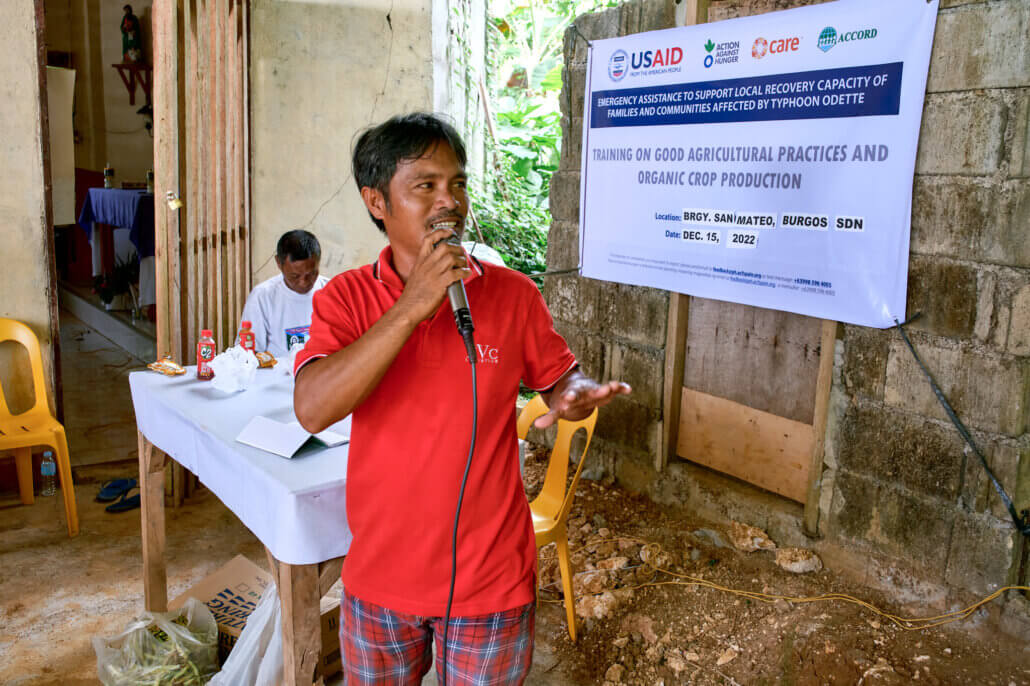
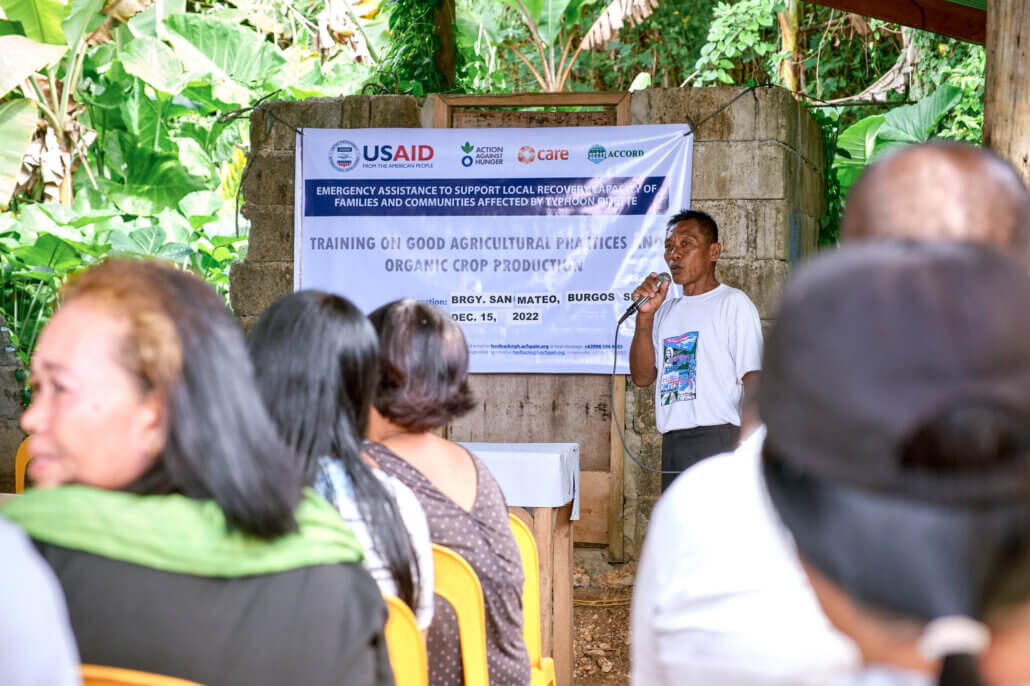
Siargao Farmers Trained on Good Agricultural Practices and Organic Farming

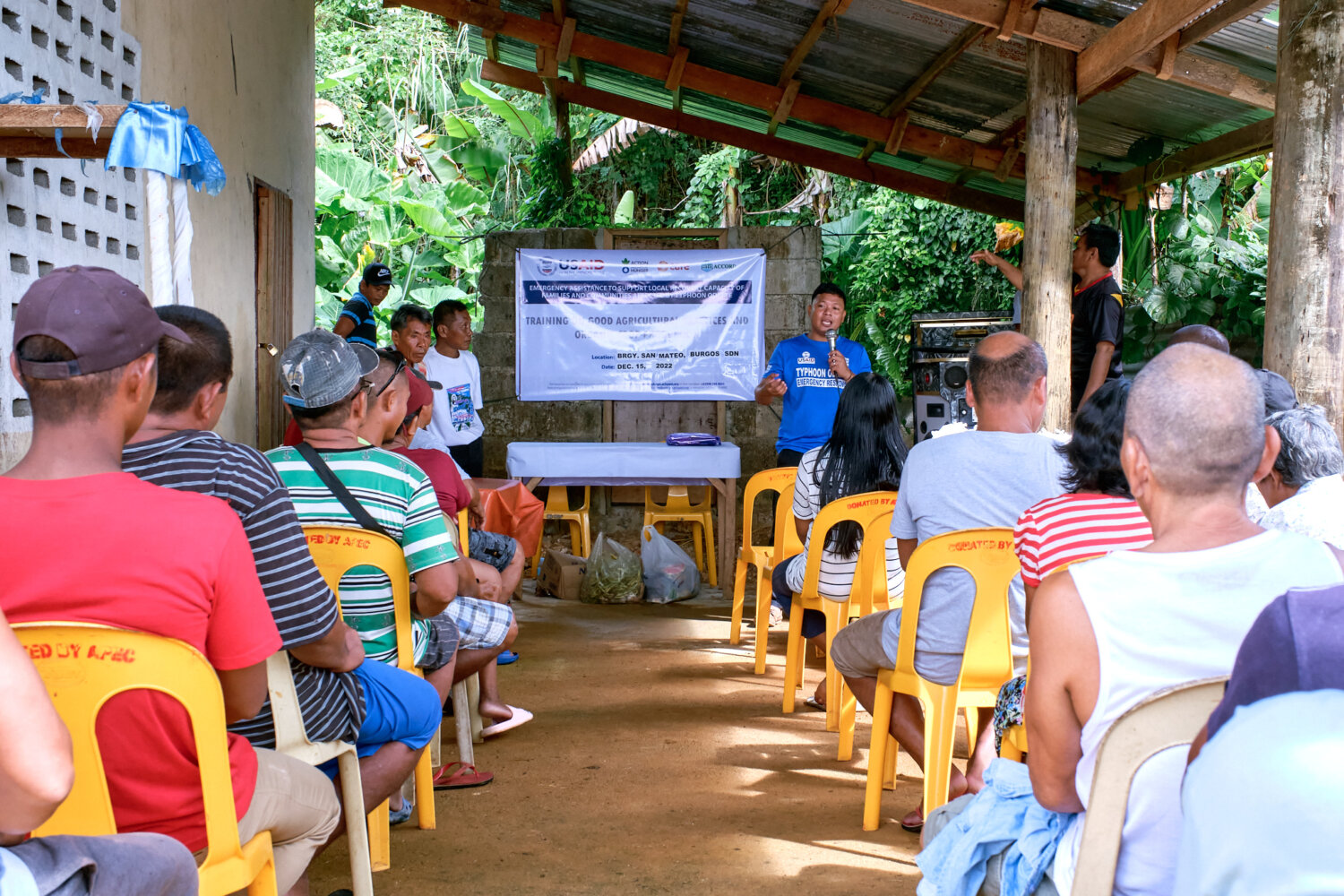
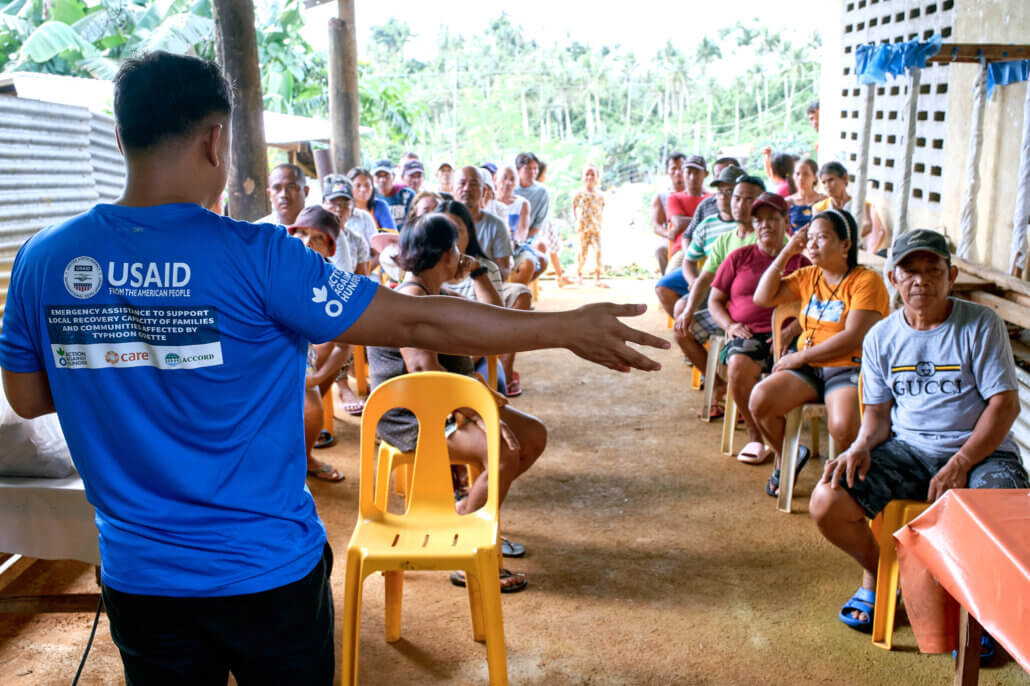
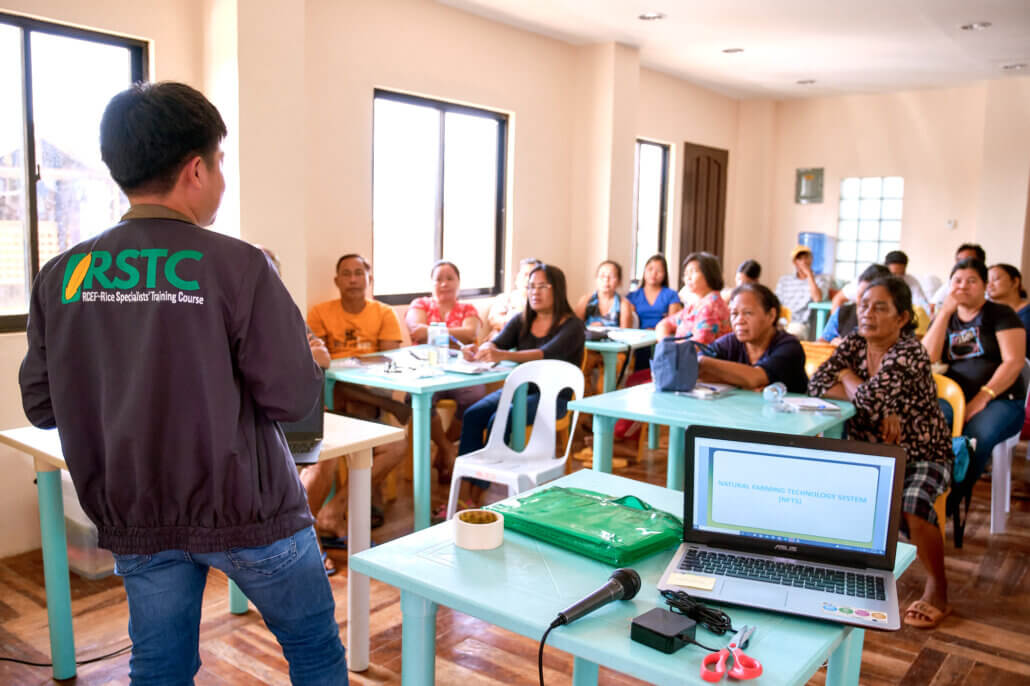
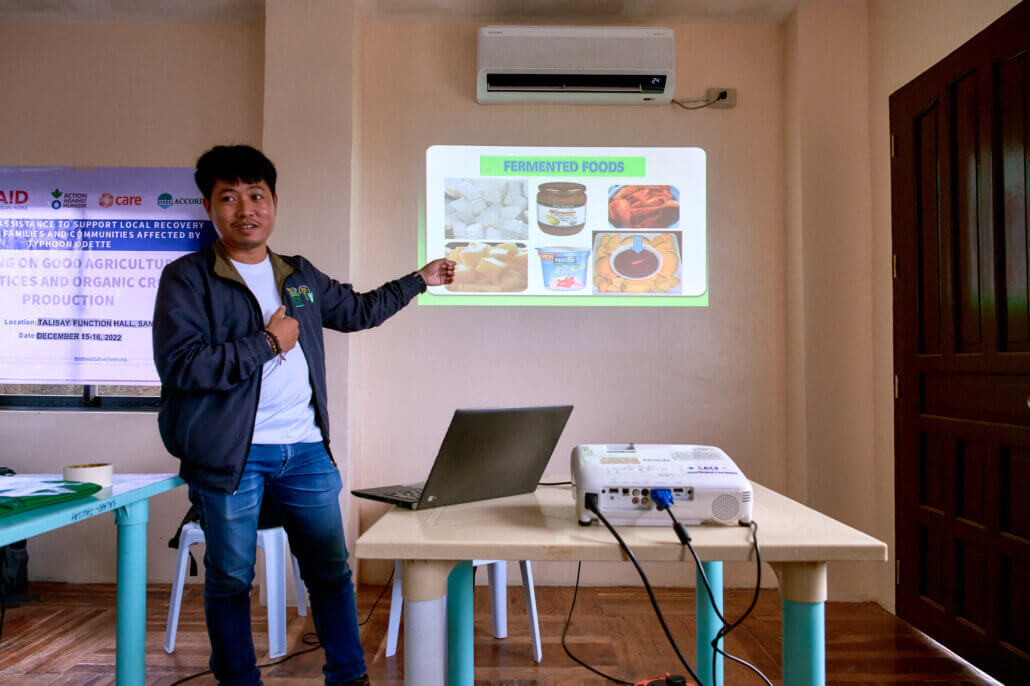
Farmers affected by Typhoon Odette attended a farmer training on Good Agricultural Practices and Organic farming in the municipalities of San Benito and Burgos on the island of Siargao, Surigao del Norte last December 2022.

The training is facilitated by trainers from the Rice Specialists Training Course (RSCT). The participants from barangays Orok and Talisay learn approaches on how to rebuild their agricultural livelihoods and increase their farm yields through sustainable and safe methods.

Among other things, they learn about the importance of intercropping and how to make and apply organic fertilizers and pesticides. They also learned how to transfer their newfound knowledge to others.

After the training, they will facilitate sharing what they learned with other farmers in their communities.

Photos by Arianne Gijsenbergh for Action Against Hunger | December 2022, Siargao, Surigao del Norte

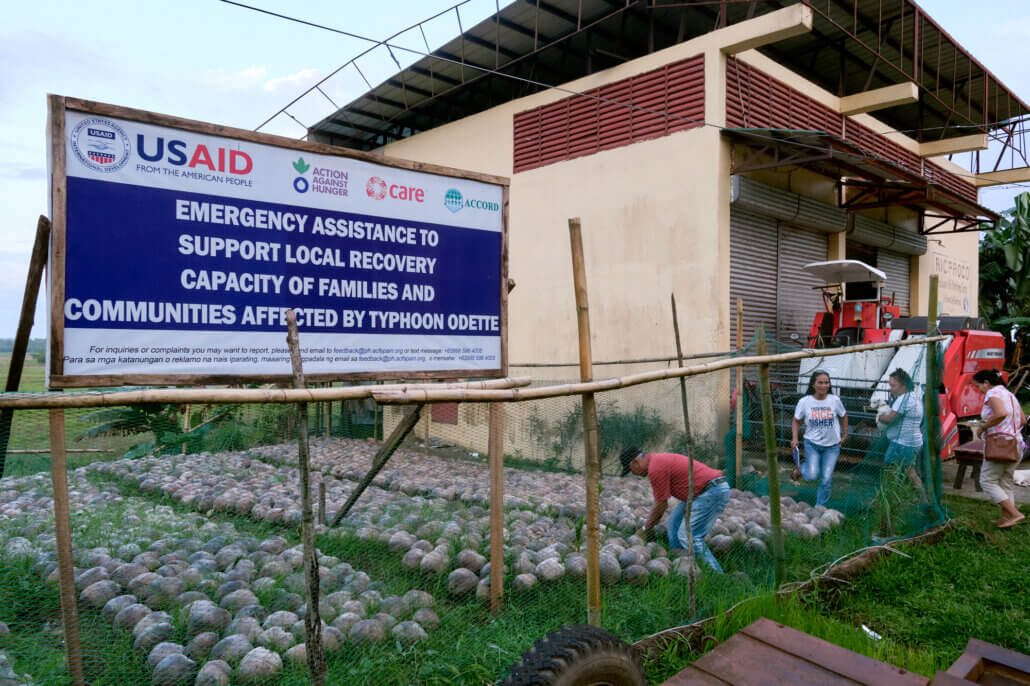
The livelihood support is part of the second phase of the project ‘‘Emergency Assistance to Support Local Recovery Capacity of Families and Communities Affected by Typhoon Odette’, funded by the United States Agency for International Development’s Bureau for Humanitarian Assistance (USAID-BHA) and jointly implemented by Action Against HungerCARE Philippines, and ACCORD Incorporated.


Written by Arianne Gijsenbergh Read more

Restoring the Rice Fields After Typhoon Odette

CAPALAYAN, SURIGAO CITY — Erna Crisologo, 35, is proud to be a rice farmer. Growing up in a family of rice farmers she has lived in the middle of the rice fields her whole life. Besides the rice field bordering their home, Erna and her husband Ruben Cabalan, 35, also own a small coconut plantation higher up the mountain.

The rice paddy near Erna and Ruben’s home. (Photo by Arianne Gijsenbergh for Action Against Hunger | Surigao City, December 2022)

In December 2021, Typhoon Odette raged across the Philippines leaving a trail of destruction along its path. Erna and Ruben’s home in barangay Capalayan, a rural area on the outskirts of Surigao City, was completely washed away, along with their rice plants and coconut trees.

Erna joined the livelihood training sessions and received cash assistance to restore her family’s livelihood. This was part of the Typhoon Odette Emergency Response implemented by Action Against Hunger in the province of Surigao del Norte with funding support from the United States Agency for International Development’s Bureau for Humanitarian Assistance (USAID-BHA),

“Our rice plants were totally washed away, our coconut trees damaged. We had no more source of income, no source of food.”

In the aftermath of the typhoon, Erna, Ruben, and their daughter Shekanaiah, 8, found shelter in the school nearby. The school functioned as an evacuation center. The first days after the storm, the situation was dire. The center was overcrowded and the families were hungry. It took almost a week for food supplies and other relief goods to arrive because the roads were unpassable.

With no home to return to, Erna and her family stayed in the evacuation center for 2 months. “I was very stressed that time due to our situation,” recalls Erna, “Our rice plants were totally washed away, and our coconut trees damaged. We had no more source of income, no source of food.”

Erna cries as she recalls their experience during and after Typhoon Odette (Photo by Arianne Gijsenbergh for Action Against Hunger | Surigao City, December 2022)

Erna was heavily pregnant with a second child, which was due in February. Sadly, the stress took a toll on her body. On January 23 Erna had a miscarriage. “My baby is over there,” says Erna through her tears, pointing at a small grave next to the rice field. “That’s where we buried him. A boy. We named him Anton.”

Thankfully, there was light at the end of the tunnel. Erna’s family received donated housing materials, which they combined with leftover planks from their old house to build a new home.

The newly-repaired home of Erna and her family. (Photo by Arianne Gijsenbergh for Action Against Hunger | Surigao City, December 2022)

Once her family had a roof over their heads again, Erna and other typhoon-affected farmers in barangay Capalayan attended a training on good agricultural practices and organic vegetable production, organized by Action Against Hunger. Erna learned how to make and apply organic insecticide and fertilizer and how to improve their dyke construction. “Before we were making our dykes larger and higher,” explains Erna, “but the trainer told us that if you make the dyke too big, it will attract mice who will make it their home. It should be like this, just high enough to prevent the water and fertilizer from flowing away.”

Erna also joined a training on financial literacy and wrote a business plan to access 15,000 pesos cash assistance. She used the funds to buy a tools like sprayer for the organic fertilizer, a shovel, a raincoat, rubber boots, organic rice seeds and to pay for labor costs for land preparation.  “I feel very happy and excited to start planting rice again,” says Erna.

“I learned that it is very important to save so that we will not be hungry if a disaster comes. We are very thankful that Action Against Hunger gave us funds to restart our business. Now we have no debts to repay and we can start saving immediately.”

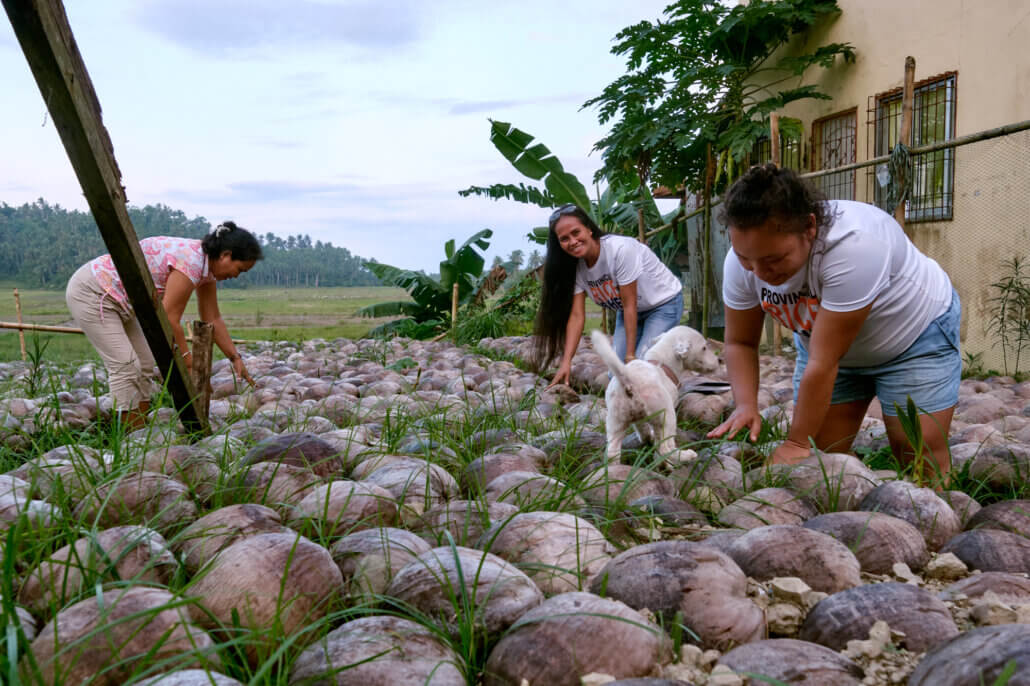
In addition to the training sessions and cash assistance, Action Against Hunger coordinated with the Philippine Coconut Authority to provide seed nuts to the farmers for restoring their coconut plantations. Erna and the other beneficiaries take turns weeding and watering the seed nuts in the nursery until they are ready for transplanting.

Erna with her fellow co-op members. (Photo by Arianne Gijsenbergh for Action Against Hunger | Surigao City, December 2022)

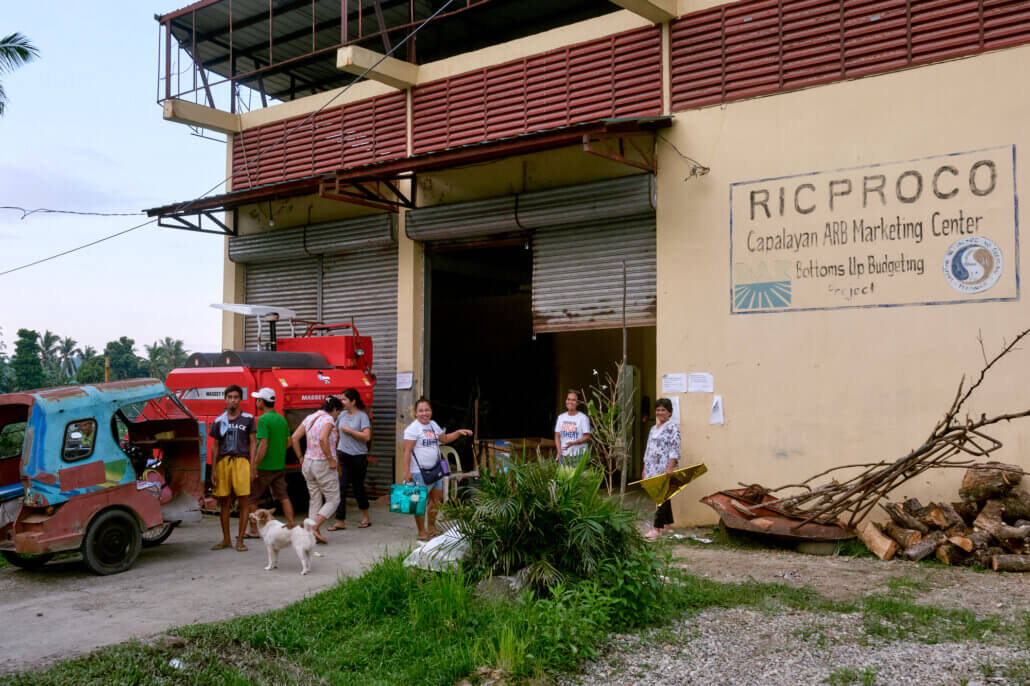
The project’s livelihood support measures are implemented in cooperation with the local farmer cooperative, where Erna volunteers as finance officer. Her mother was one of the founders.

“My mother’s passion is also my passion: serving our co-farmers. Even though we are poor, we are able to help other people,” says Erna.

Erna at the co-op. (Photo by Arianne Gijsenbergh for Action Against Hunger | Surigao City, December 2022)

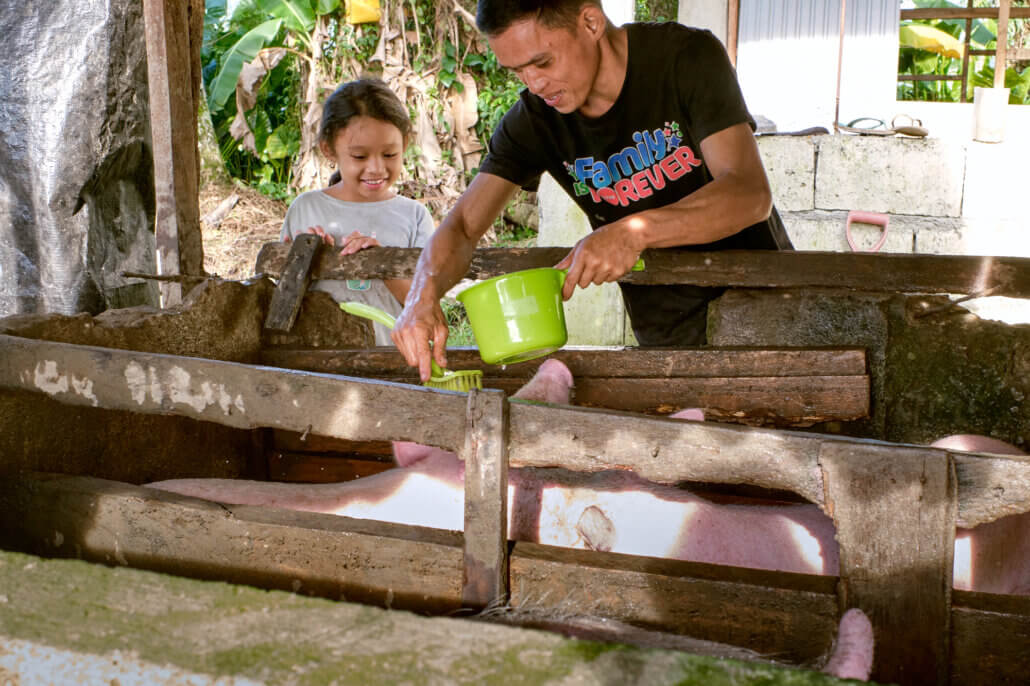
Three months after planting, the rice will be ready for harvest. Erna plans to invest some of their earnings in buying pigs as an additional source of income. The family already owns three pigs which Ruben feeds and washes every morning, while Shekanaiah laughs in delight at the sound of their squeals.

Ruben washing the pigs while Shekainah observes. (Photo by Arianne Gijsenbergh for Action Against Hunger | Surigao City, December 2022)

Erna also wants to open a savings account. “I learned that it is very important to save so that we will not be hungry if a disaster comes. We are very thankful that Action Against Hunger gave us funds to restart our business. Now, we have no debts to repay and can start saving immediately.”

The USAID-funded project supports families like Erna’s to recover from disaster and rebuild fulfilling lives. Erna smiles contentedly, “We are doing well now. Not just well, we are doing good.”

Photo by Arianne Gijsenbergh for Action Against Hunger | Surigao City, December 2022

The livelihood support is part of the ‘Emergency Assistance to Support Local Recovery Capacity of Families and Communities Affected by Typhoon Odette’ project, funded by the United States Agency for International Development’s Bureau for Humanitarian Assistance (USAID-BHA) and jointly implemented by Action Against Hunger, CARE Philippines, and ACCORD Incorporated.


Written by Arianne Gijsenbergh Read more

Stories from the Field: A Mother’s Fortitude

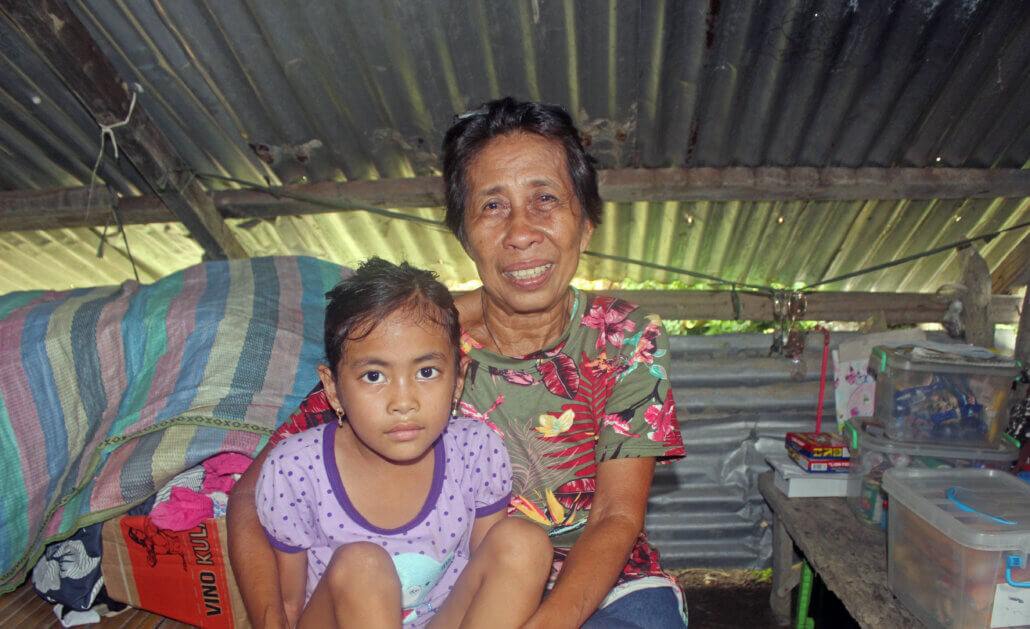
Sitting on a bamboo bed inside a makeshift cob hut, five-year-old Zia bugs her lola (grandmother) about her vitamins, telling her that it is time for her to take them. Emma, 63 years old, tells her to wait for a while as she settles to answer questions and share stories about her life and what she experienced when Super Typhoon Odette hit Bohol.

Emma and Zia sit on their bamboo bed inside their makeshift shelter made of leftover materials from their house that was severely damaged by Typhoon Odette.

Emma lives in a small house near a river in Napo, Inabanga, Bohol. The neighborhood remains isolated from the rest of the town’s mainland since it is located on the other side of the riverbanks.

Emma has been Zia’s guardian since birth. She has acted as the mother since her daughter, Zia’s biological mother is working in another province as a house helper and comes home very rarely.

“Ay sukad pa pag gawas, ma’am. Ako na jud nag bantay ug nagpa dako kay nanarbaho pod lage ang ijang inahan sa Cebu. Magpada pod usahay ahong anak, pero gamay ra pod lage kay 5,000 ra man ijang sweldo,” shares Emma.


“I am the one who has been looking after her since she was born because her mother has to work in Cebu. My daughter [Zia’s mother] also sends money but not that much because she only earns 5,000 pesos per month.”


Meanwhile, Emma vividly remembers the terrors she and Zia experienced during the onslaught of Super Typhoon Odette one early night in December 2021.

“Kusog (ang hangin). Didto mi sa kapelya nanagan oy. Alas syete naman mi namlhin didto, kusog na kaajo ang hangin. Pirte na jud namong likay-likay para di mi maigu sa lubi,” Emma eagerly recalls.


“The wind was very strong. We ran to the chapel. We went there at seven in the evening, the wind was already aggressive at that time. We tried our best to avoid the swaying coconut trees on our way to the chapel,”


Seeking a safer shelter amidst the violent winds and heavy rains, left their small house without anything but Zia. They stayed in the chapel along with the other villagers who were also seeking a more elevated place to avoid the rising water from the river. Two days later, the neighborhood was still flooded after the river overflowed during the typhoon. Emma was able to go back to their place after three days but she went home to almost nothing. Her house was destroyed and everything in and around it was covered with mud.

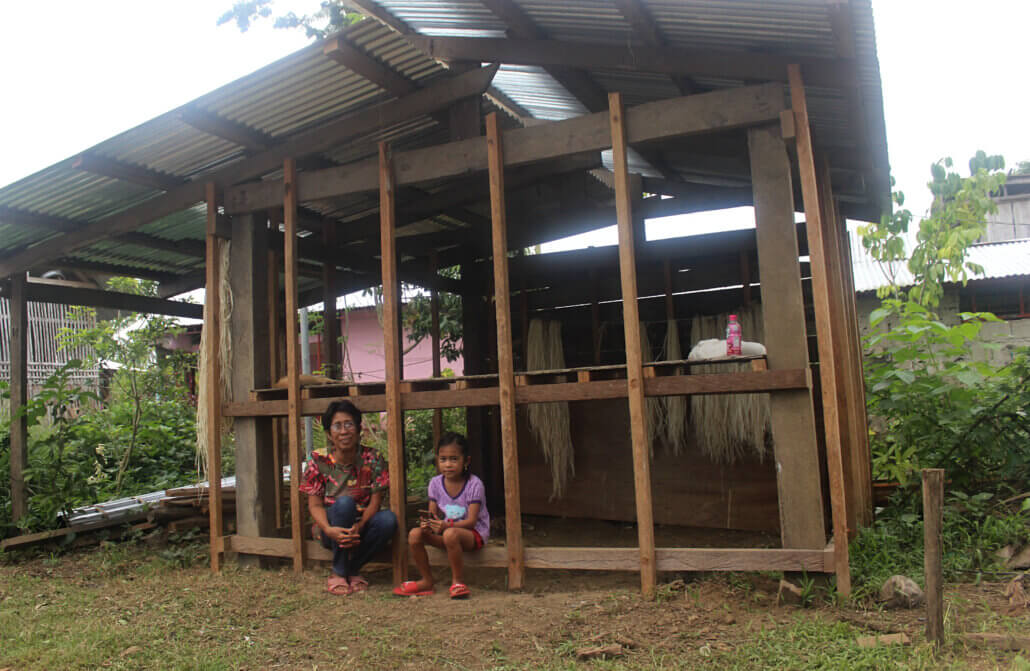
A few meters from their makeshift house, Emma and Zia pose sit by their soon-to-rise new home which was made possible through the support of the ECHO and Action Against Hunger

Today, no signs of muddy surroundings and damaged infrastructure exist anymore. The only thing that serves as a reminder of the typhoon is the makeshift cob house where they are staying temporarily.

About five meters from the makeshift home stood a newly built house frame with galvanized iron sheets roofing, four big wooden pillars, and coconut lumbers ready for the walling. All of the resources used for building the structure were funded by the European Civil Protection and Humanitarian Aid (ECHO) as part of the Immediate and Comprehensive Response for Communities Affected by Typhoon Rai in the Philippines project. The material and financial donations, along with the emotional and mental support, made it possible for Emma to start rebuilding their home and their life.

With teary eyes and a shaky voice, Emma expressed her gratitude to the people behind ECHO through the Action Against Hunger team. Right after she saw the damages left by the typhoon, she thought it was already impossible for her to build back their home due to financial incapacity. But through the ECHO Odette Response, she only had to contribute minimally because most of the things she needed to start again were already provided.

“Perteng lipaja namo ma’am oy. Sa katong diha na ang mga hinabang [sa Action Against Hunger  at ECHO], labi na katong para sa shelter, mga kahoy, mga sin. Bisan pa og kato ra, maka barog naman jud mi adto, bahala’g di ka-igu, majo na raman naay ma puno-punoan.” she shares.


“We were very happy when the aid [from Action Against Hunger and ECHO] arrived, especially those for shelter, the wood, the galvanized iron sheets. Even with only those materials, we can already put up our house back. It is already a great starting point.”


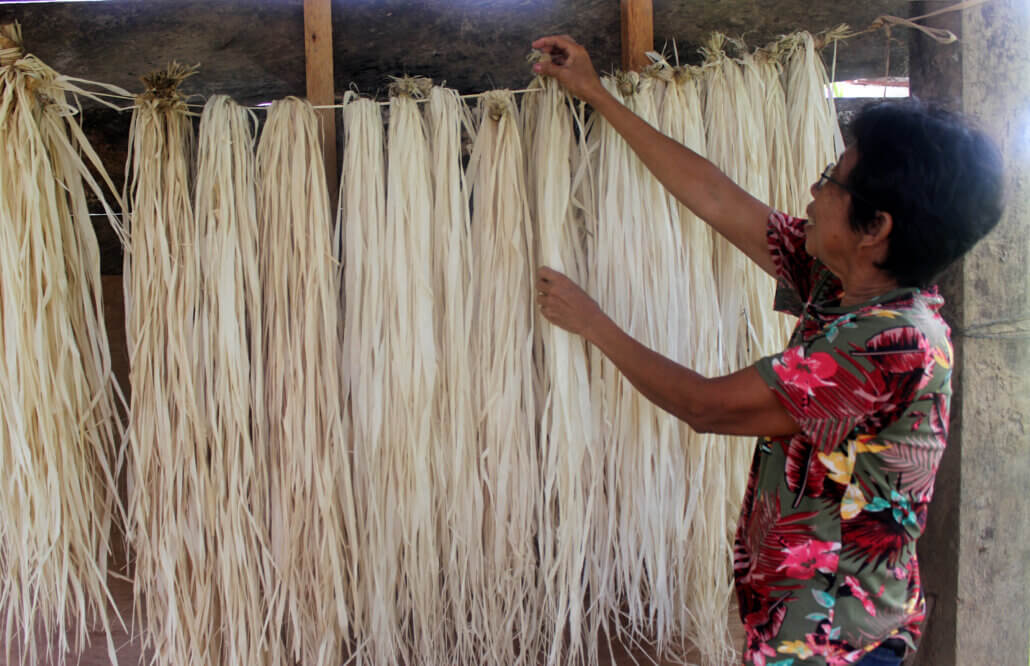
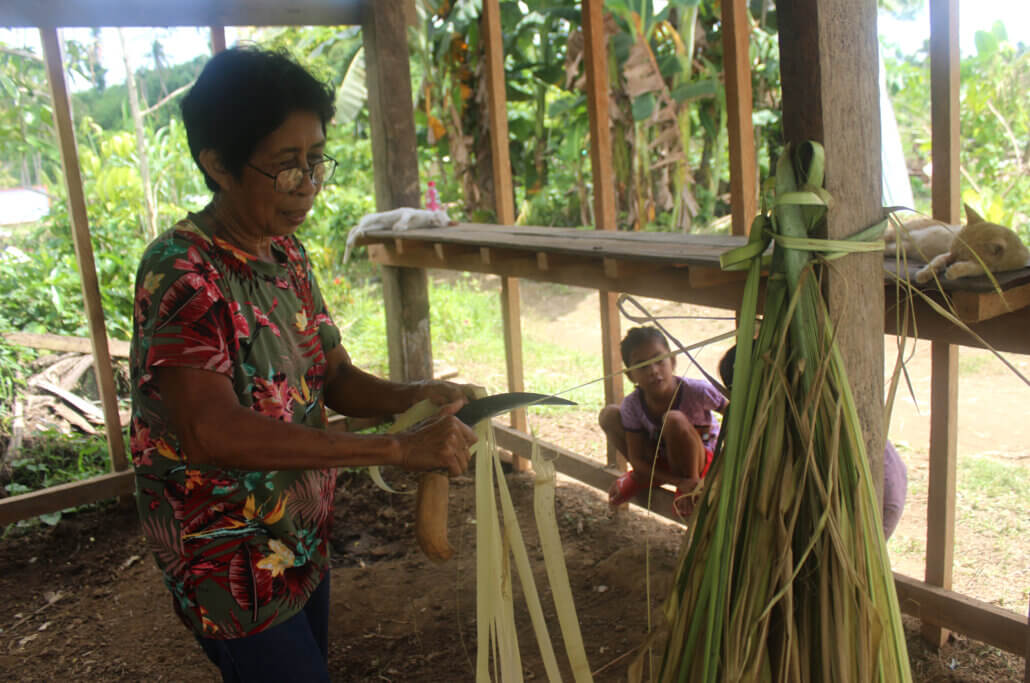
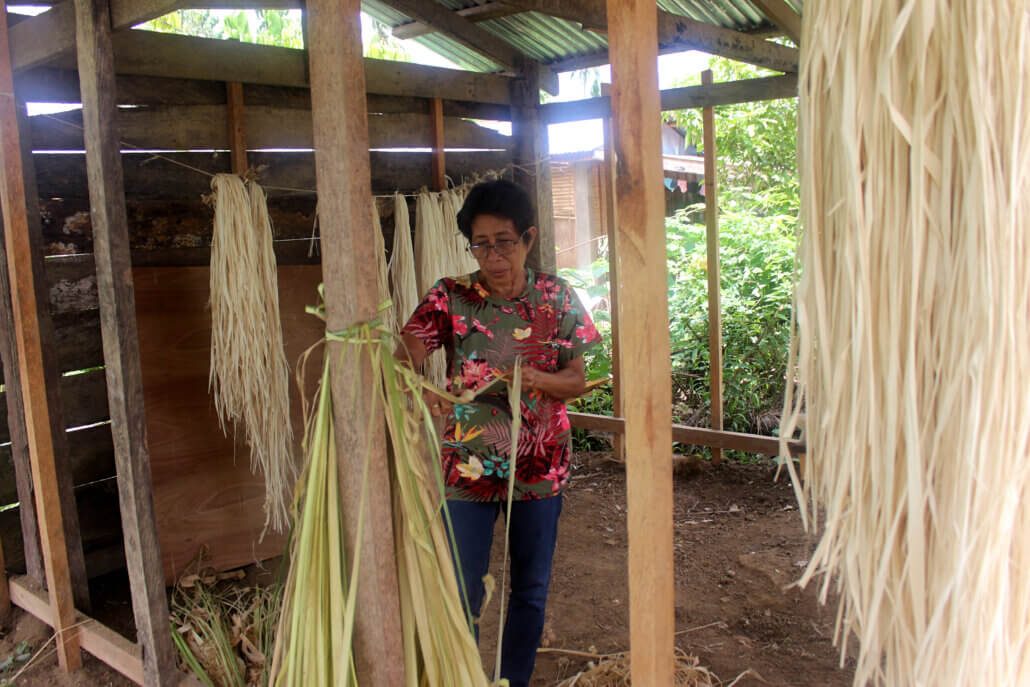
Aside from the shelter assistance, Emma received other kinds of assistance from ECHO such as hygiene kits. Six months later, Emma has eventually returned to her almost-normal life producing fiber materials out of raffia palm leaves while taking care of her granddaughter. Emma earns less than 500 pesos a week from cleaning, drying, and scraping raffia fibers and selling them to local native product manufacturers.

Emma prepares raffia fibers to supply for local handicraft producers

While her new home is not fully done yet, Emma and Zia continue to take shelter in the makeshift cob and hope they can finally move into the new house in a few weeks.

Emma’s motherhood has extended to the next generation by taking the role of a mother and guardian to her granddaughter. Being a widow and a senior citizen did not stop her from taking responsibility for her 5-year-old granddaughter not only during disasters but during Zia’s entire life.

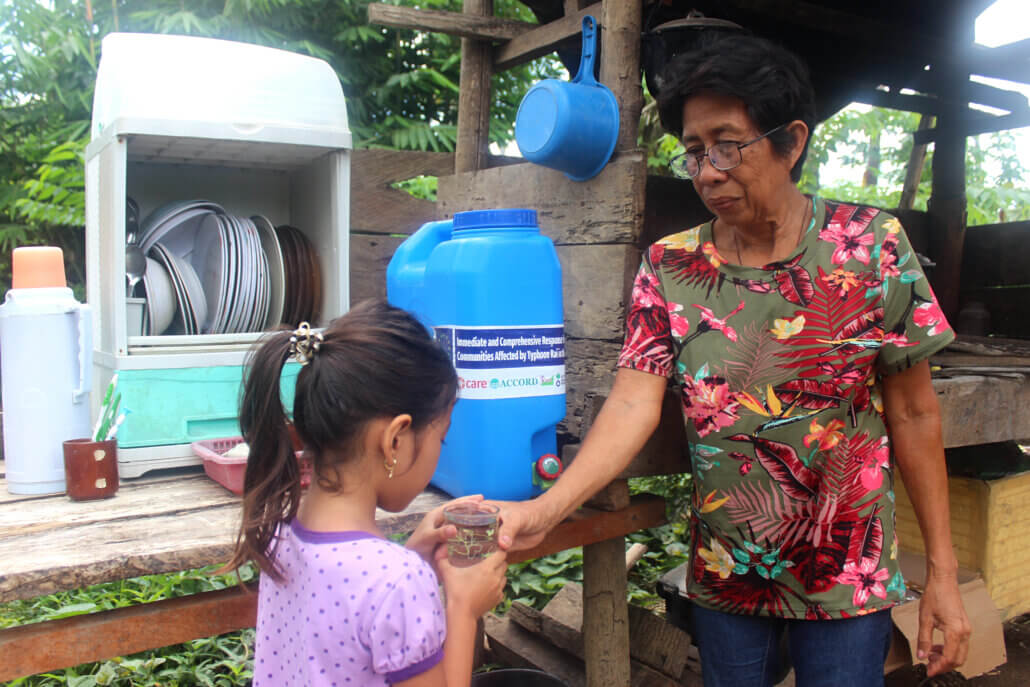
Emma gets drinking water for Zia in their makeshift dirty kitchen after her granddaughter took her daily dose of vitamins. 

As Emma finishes sharing her story and answering questions, she gets up to get the vitamins Zia had been bugging about earlier. She lets Zia take it and gives her water to drink after. Zia leaves with a phone her mother lent Emma for communication purposes and starts playing a mobile game.


The Immediate and Comprehensive Response for Communities Affected by Typhoon Rai (Odette) is funded by the European Civil Protection and Humanitarian Aid Operations (ECHO) and jointly implemented by CARE PhilippinesACCORD IncorporatedAction Against Hunger PhilippinesNational Rural Women Coalition (PKKK) and Plan International in Dinagat Islands, Palawan, Southern Leyte, Bohol, Negros Occidental, and Cebu, in the Philippines.


 Written by Donna Ocmeja | Photos by Donna Ocmeja for Action Against Hunger